Where we heard itBarron’s Streetwise podcast, “America’s Debt Reckoning: 5 Paths Forward,” Nov. 6, 2026: host Jack Hough with Maya MacGuineas, president of the Committee for a Responsible Federal Budget.
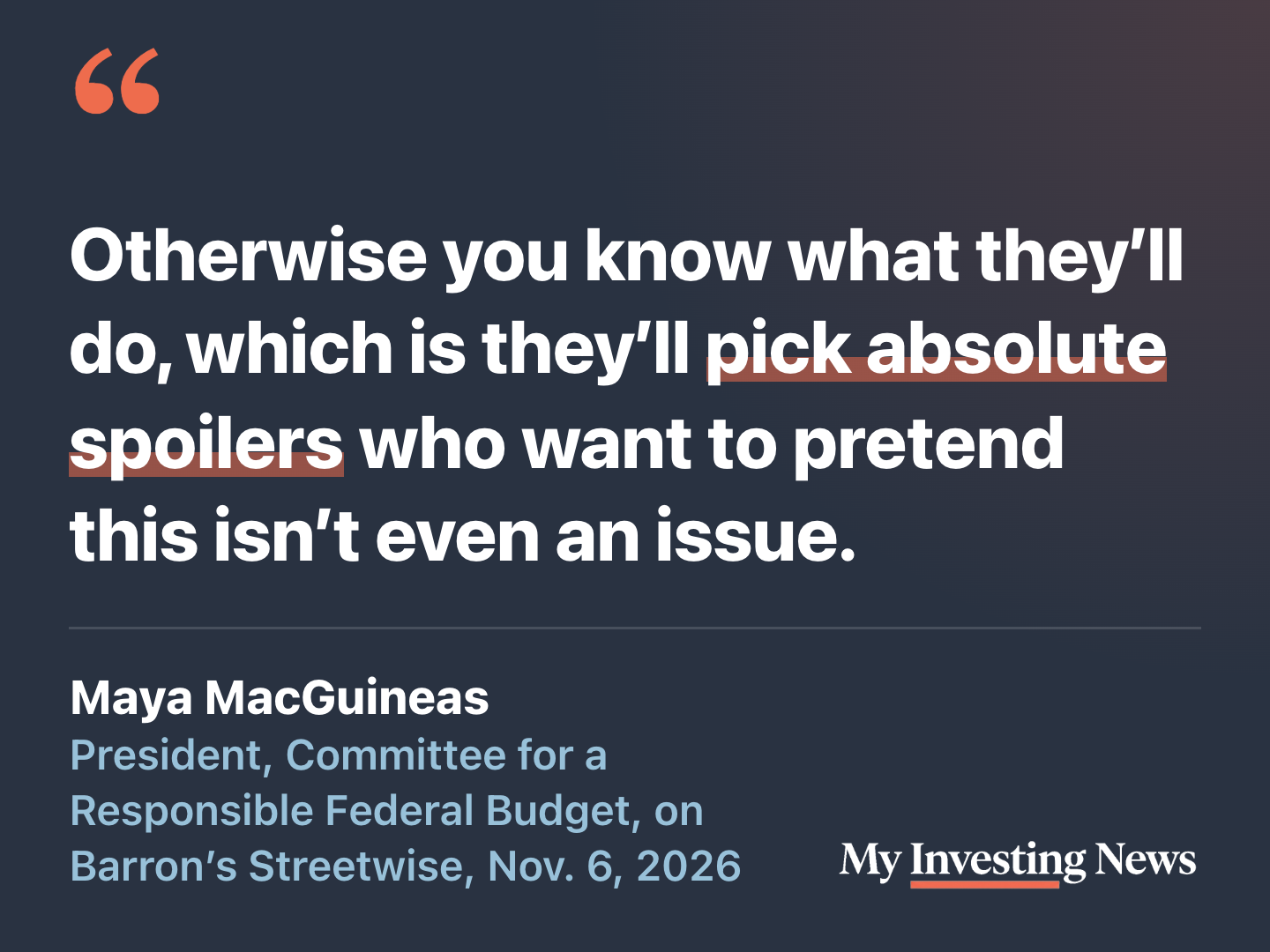
Washington’s favorite answer to the debt is a bipartisan commission, and Maya MacGuineas’s group has pushed for one for years. On Barron’s Streetwise on Nov. 6, the president of the Committee for a Responsible Federal Budget added a twist on who should sit on it. “When they do have a commission, the Republican leaders should pick the Democrats and the Democratic leaders should pick the Republicans to serve on it,” she said. Her reason followed.

Why She Wants Each Side to Pick the Other’s Members
MacGuineas said there are no longer public figures that everyone trusts, which is why a commission “could actually be part of the solution.” The point, in her telling, is a group of “strange bedfellows”: if people who never agree on anything sign off on a plan, that could be “the seal of approval that you’d need.” Spoilers, members who don’t want a deal, would wreck that. “You need people who will try to work together, which is certainly not the norm these days,” she said.
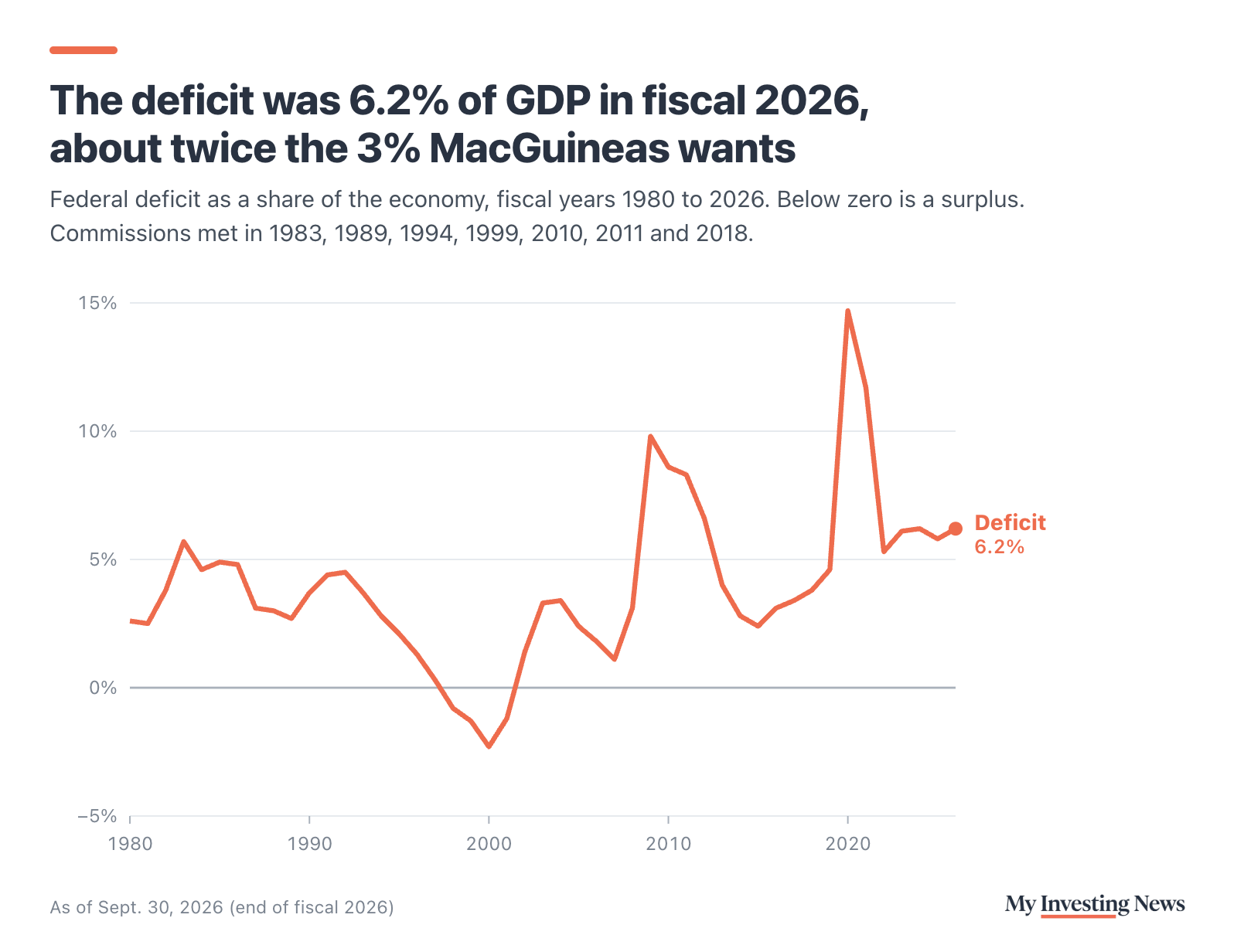
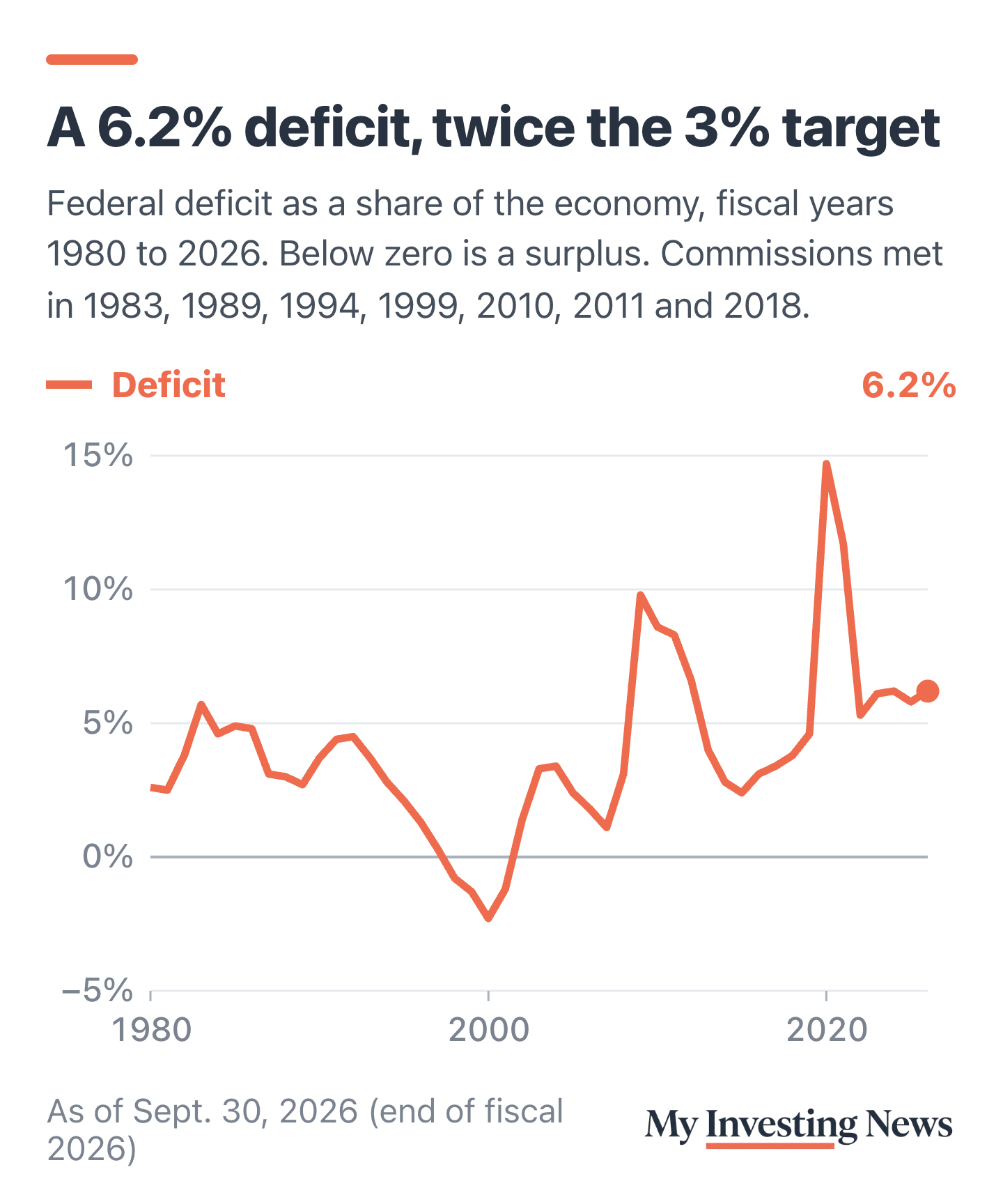
Host Jack Hough added her targets: forget a balanced budget, aim to cut the deficit from about 6% of the economy to 3%, and revive the pay-as-you-go rule. Treasury’s fiscal 2026 numbers put the deficit at $1.99 trillion, about 6.2% of GDP by our count. Hough has also pointed to interest eating more than half the deficit. His own condition for a commission: it “would have to have teeth,” with the power to force an up-or-down vote in Congress.
Seven Commissions, One Law
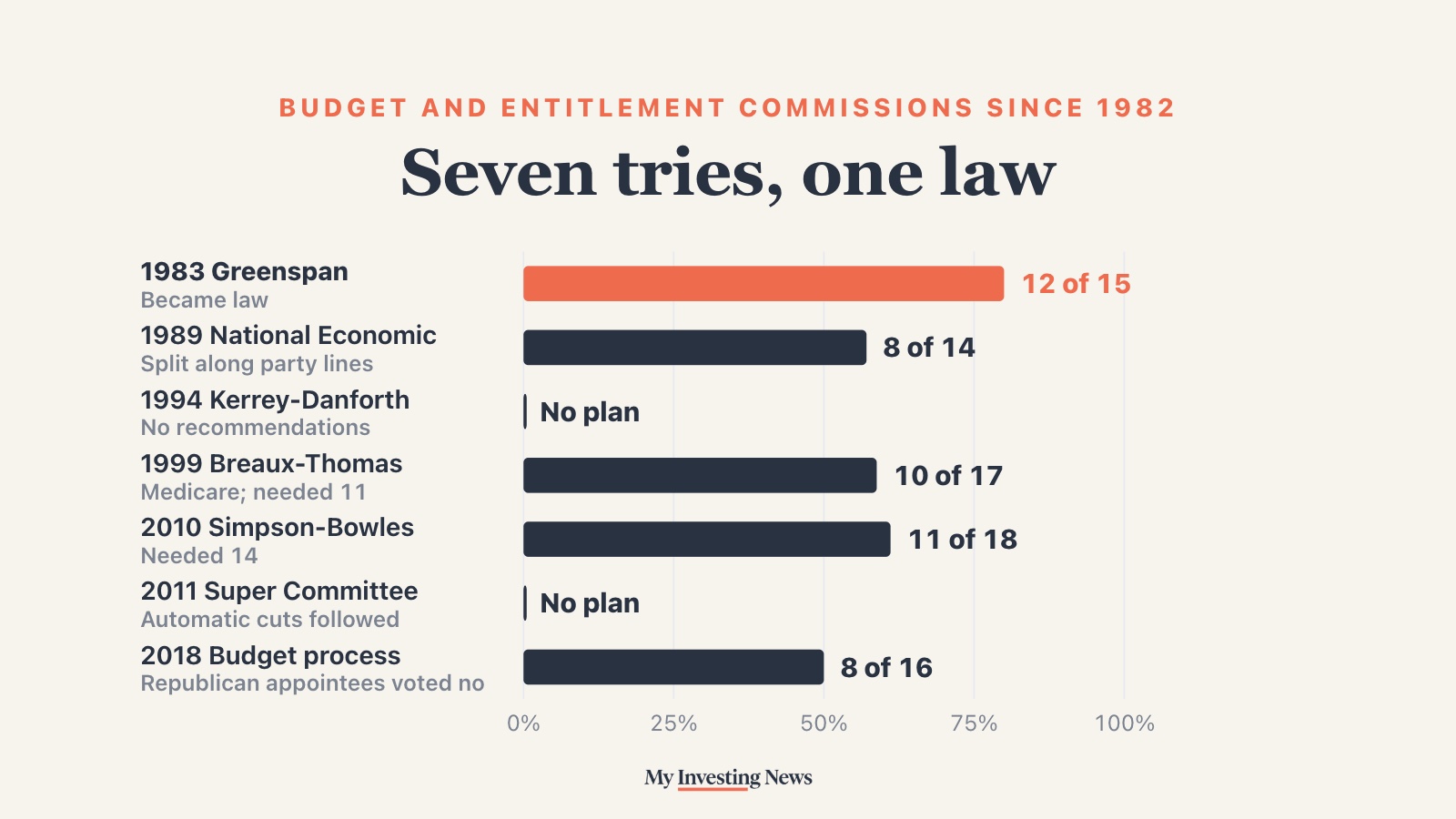
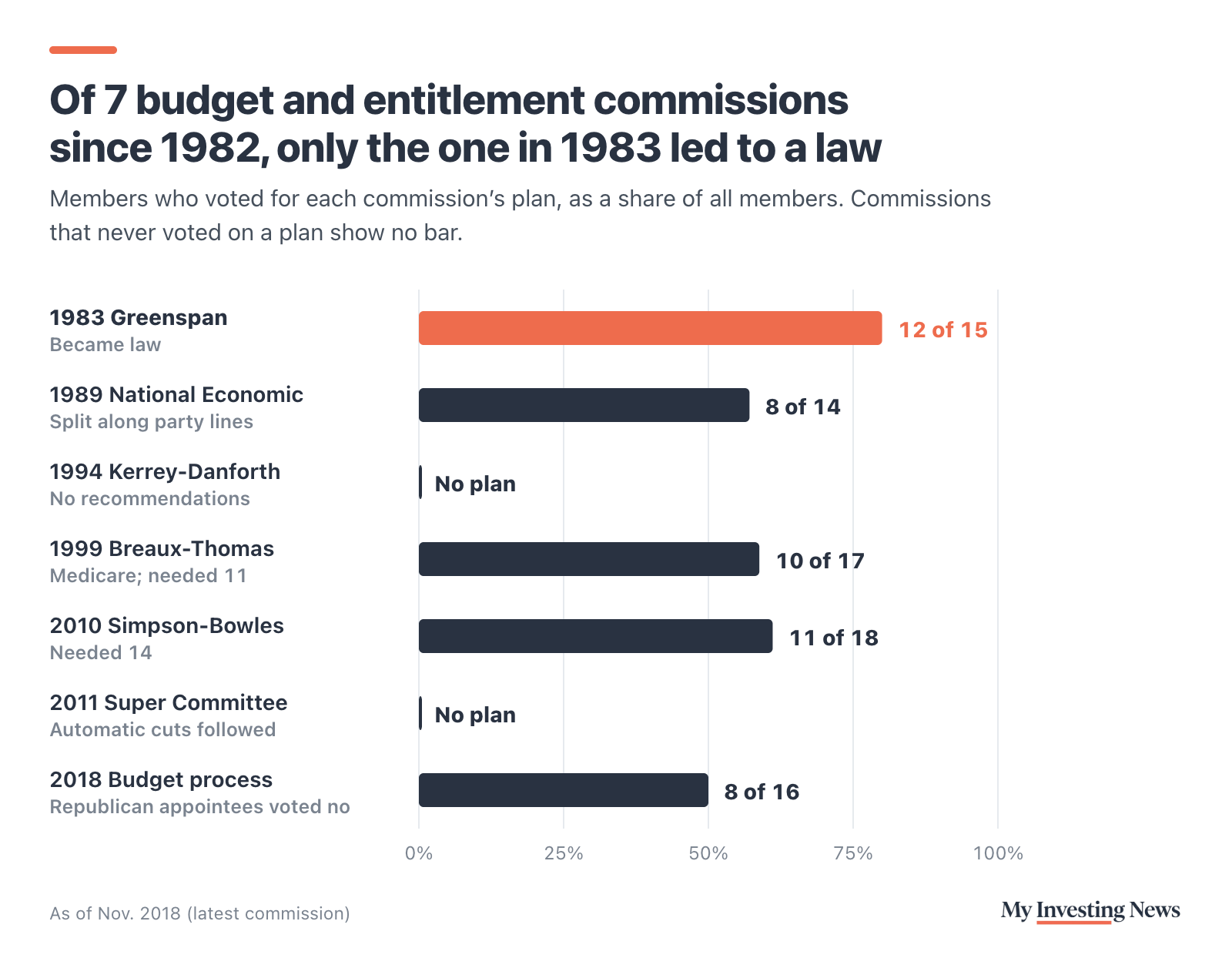
We counted every bipartisan commission or joint committee since 1982 that had lawmakers among its members and was set up to cut the deficit, fix the budget process, or shore up Social Security or Medicare. There were seven. One led to a law.
The one that worked was the National Commission on Social Security Reform, known for its chairman, Alan Greenspan. With the retirement trust fund projected to run dry as early as August 1983, it agreed on a package by a vote of 12 to 3 in January 1983, and Congress wrote most of it into the Social Security Amendments of 1983 that spring. Every attempt since fell short. The National Economic Commission ended in March 1989 with two reports, one signed by its seven Republicans and one Democrat, the other by its six remaining Democrats. The Kerrey-Danforth entitlement commission, 32 members strong, closed in 1994 without recommendations. In 1999 the Breaux-Thomas Medicare commission voted 10 to 7 for its chairmen’s plan, one vote short of the 11 it needed.
The commission record since 1982
The best-known failure came in December 2010, when the Simpson-Bowles plan won 11 of the commission’s 18 votes, three short of the 14 needed to send it to Congress. The next year, the 12-member Super Committee announced on Nov. 21, 2011 that it could not reach “any bipartisan agreement,” which set off the automatic spending cuts known as the sequester. In 2018, a joint committee on fixing the budget process needed a majority of each party’s appointees. Its Democratic appointees voted 7 to 0 to send the bill on, and its Republican appointees voted 7 to 1 against.
The One That Worked Came Closest to Her Idea
How members were chosen tracks the record. For Simpson-Bowles, the Super Committee and the 2018 committee, each of the four party leaders in Congress named members of their own party. So did the 1989 commission, where Republican leaders named six Republicans and Democratic leaders six Democrats.
The Greenspan commission was built differently. Reagan’s executive order let the president, the Senate majority leader and the House speaker each name five members, with no more than three from one party, and the two congressional leaders picked theirs in consultation with the minority leader. Speaker Tip O’Neill, a Democrat, named two House Republicans, Bill Archer and Barber Conable. The Republican-led Senate’s picks included Democrat Daniel Patrick Moynihan and AFL-CIO president Lane Kirkland. It isn’t quite MacGuineas’s plan, where each side would pick all of the other’s members, but it is the closest the record has, and it is the one that passed.
Two caveats. The 1983 deal was finished in private talks between Reagan’s and O’Neill’s negotiators, which MacGuineas’s group itself describes as “proxy negotiations,” and a deadline months away forced the issue. And failures weren’t worthless. Her group credits Simpson-Bowles with shaping the 2011 Budget Control Act, and the deficit fell from 8.6% of GDP in 2010 to 2.4% in 2015.
What to Watch
The design question is what Hough called teeth. The military base-closing commissions are the model her group cites: over five rounds from 1988 to 2005 they closed or consolidated more than 350 installations, because Congress could reject their lists only by passing a resolution of disapproval. Any commission bill in the lame-duck session or the new Congress in January will show how members are picked, how many votes a plan needs and whether Congress must vote on it. The clock MacGuineas keeps pointing to is Social Security’s trust fund, whose run-out date the trustees have moved 29 times since 1983. Other countries are showing what a debt problem looks like when bond markets lose patience.
MacGuineas wants each party to pick the other’s members of a debt commission so neither side can stack it with spoilers. The record backs the worry: of 7 budget and entitlement commissions since 1982, only the 1983 Social Security commission led to a law, and it was the one whose appointers had to reach across the aisle. The risk is that cross-party picks fix the spoiler problem but not the bigger one: a plan still needs Congress to vote on it.