Where we heard itBloomberg Businessweek, “Prediction Markets in Focus After Democrats’ Midterm Sweep,” Nov. 5, 2026. Nicole Kagan, head of research at Kalshi, on why the betting markets missed Brazil’s presidential runoff.
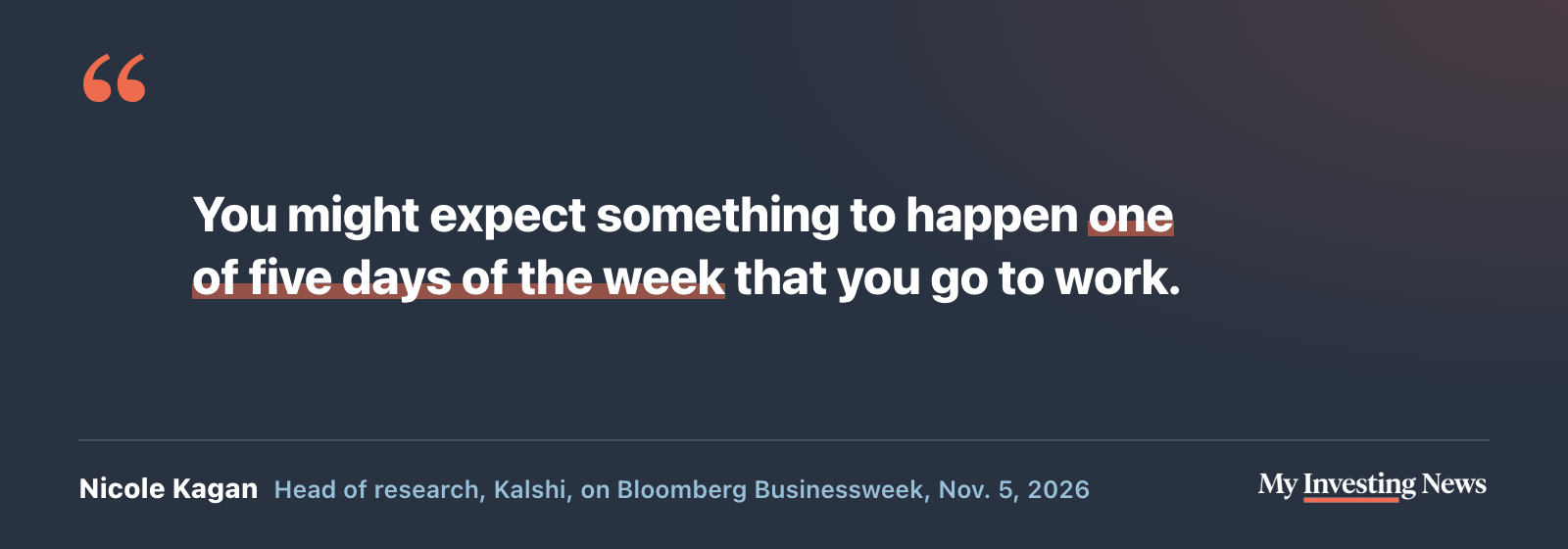
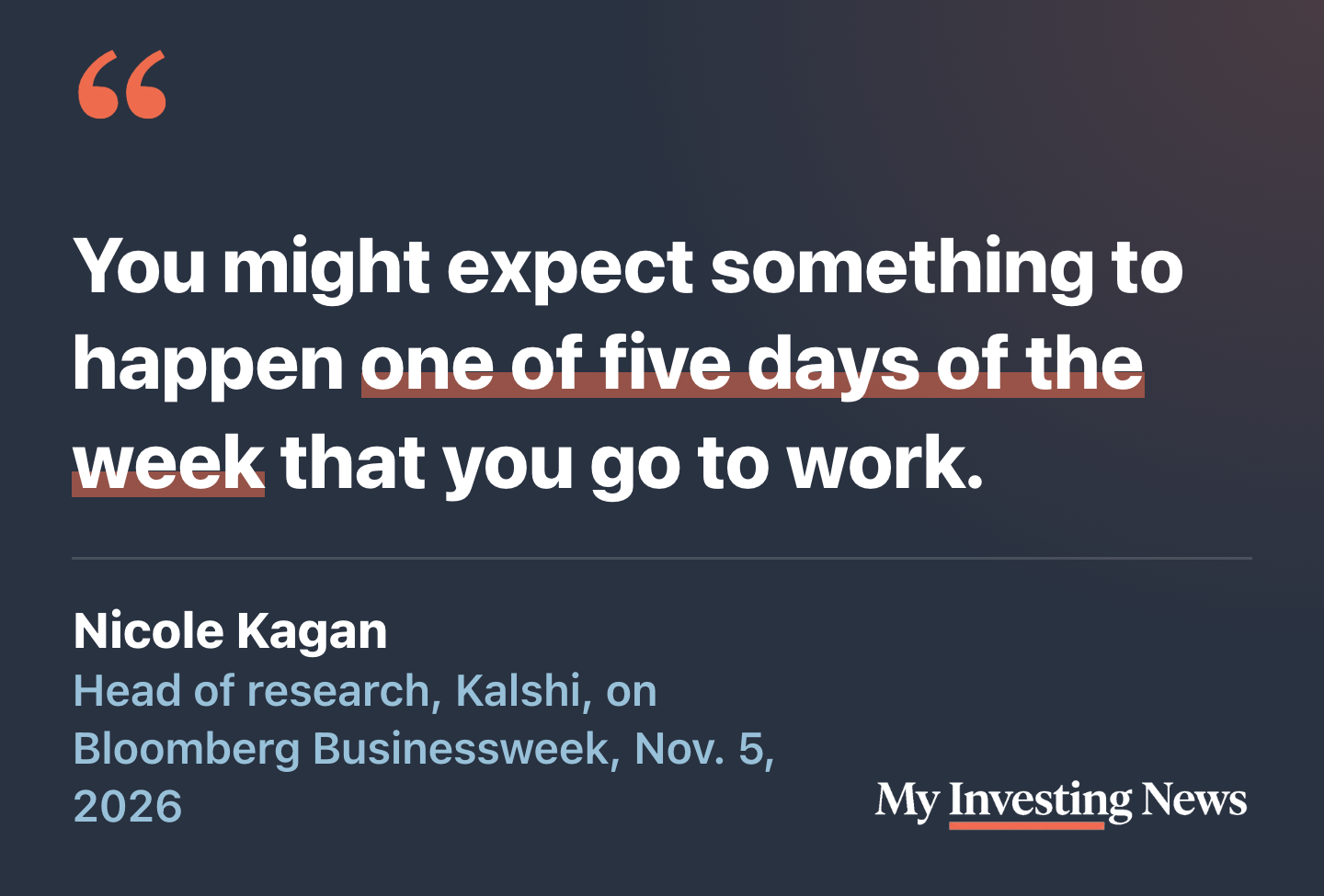
Two days after the U.S. midterms, a Bloomberg Businessweek host asked Kalshi’s Nicole Kagan about the elections prediction markets got wrong, starting with Brazil, where Luiz Inácio Lula da Silva beat Flávio Bolsonaro in the Oct. 25 runoff. Kagan said Kalshi’s markets had given Bolsonaro an 80% chance and Lula 20%. To a person living their daily life, she said, that means “you might expect something to happen one of five days of the week that you go to work. So it’s actually really not that unlikely a scenario that occurs.”
Not everyone bought that. On Bloomberg’s Odd Lots the same day, James Bosworth, author of the Latin America Risk Report newsletter, whose own model had Bolsonaro at about 64%, said the markets “were at 80%” and at one point “hit 87%.” Was this the 20% shot that happened, he asked, or did they miss? “I will tell you they missed. They were overconfident on this election.”
One election can’t settle that argument. A price of 80 cents is a claim about many races: favorites at that price should lose about one time in five, no more and no less. So we collected every Polymarket election-winner market with at least $100,000 traded since February 2024, 318 in all, from presidential and parliamentary votes to governor, Senate, House and mayoral races, and recorded the favorite’s price on the morning of the vote.
Favorites at 80% Lost About One Time in Six
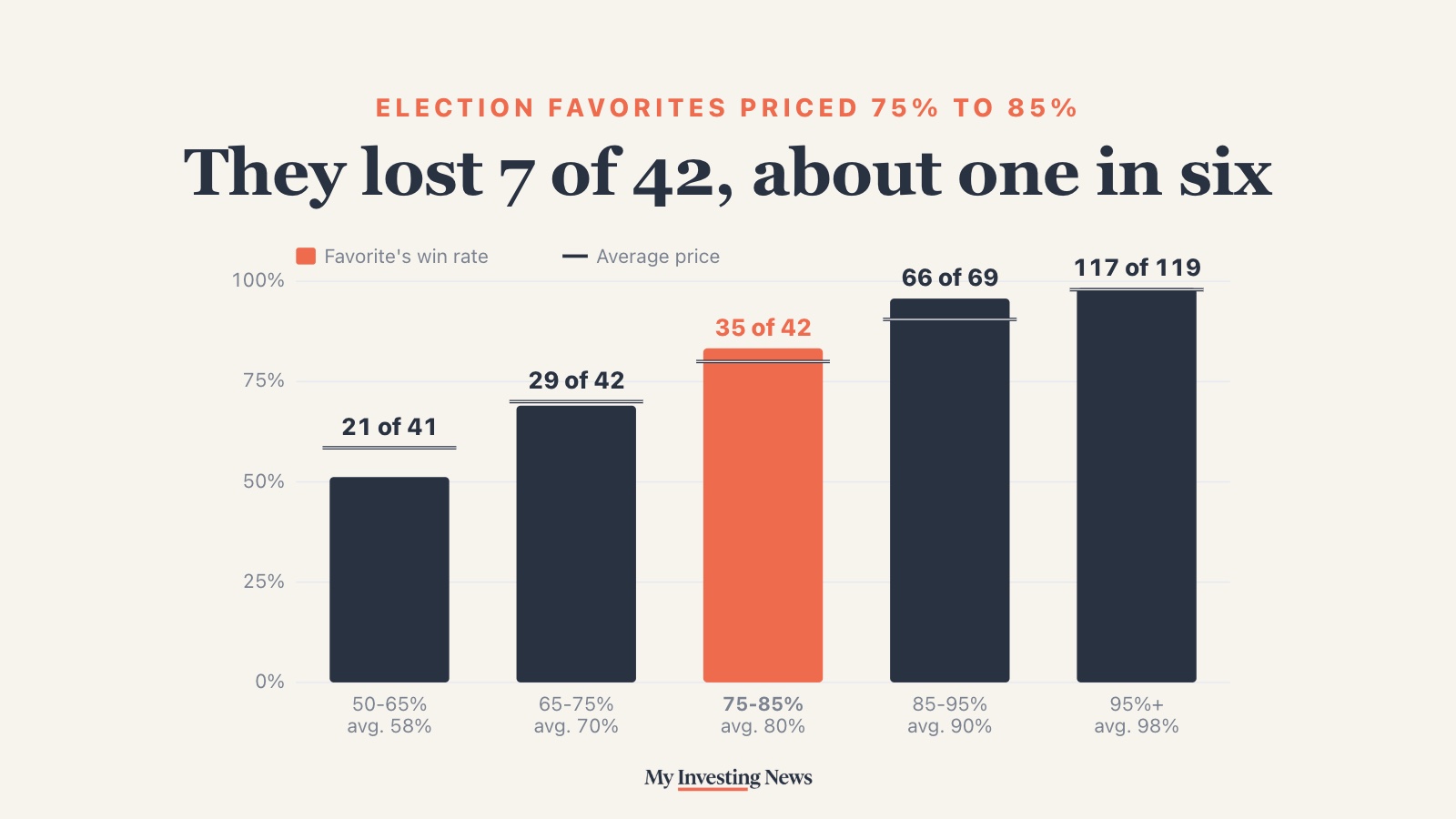
42 markets had a favorite priced between 75% and 85% on election morning, at an average of 80%. Their prices implied about 8 losses. The favorite lost 7 times, or 17%. Bolsonaro, at 79.8% on the morning of the runoff, was one of them. So were Sen. Bob Casey in Pennsylvania in 2024 (76.5%), the favorites for mayor of Seoul and governor of Rio de Janeiro this year, Thailand’s People’s Party in February, and two Republicans in this month’s House races, Victoria Spartz in Indiana’s 5th District and Addison McDowell in North Carolina’s 6th.
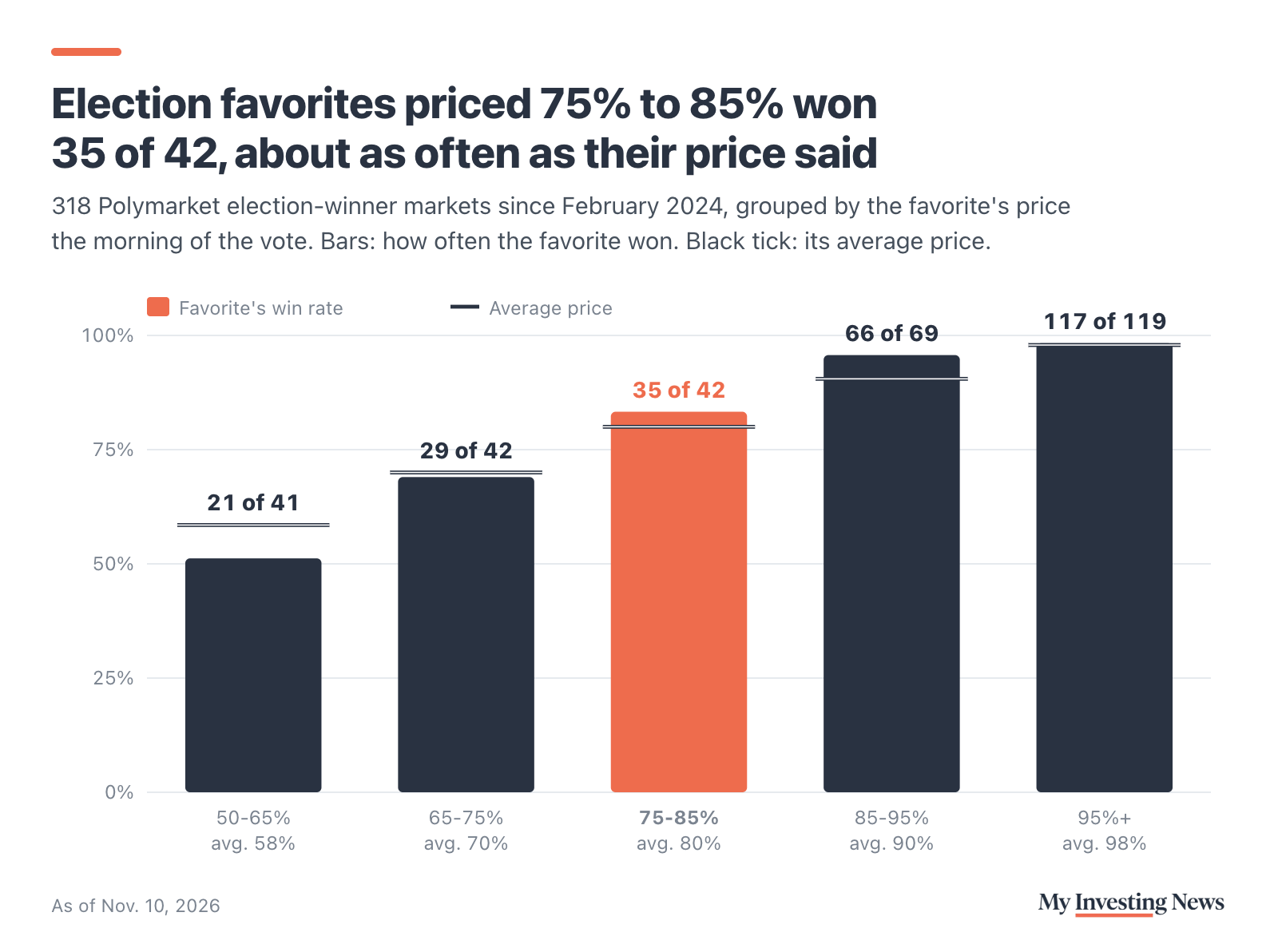
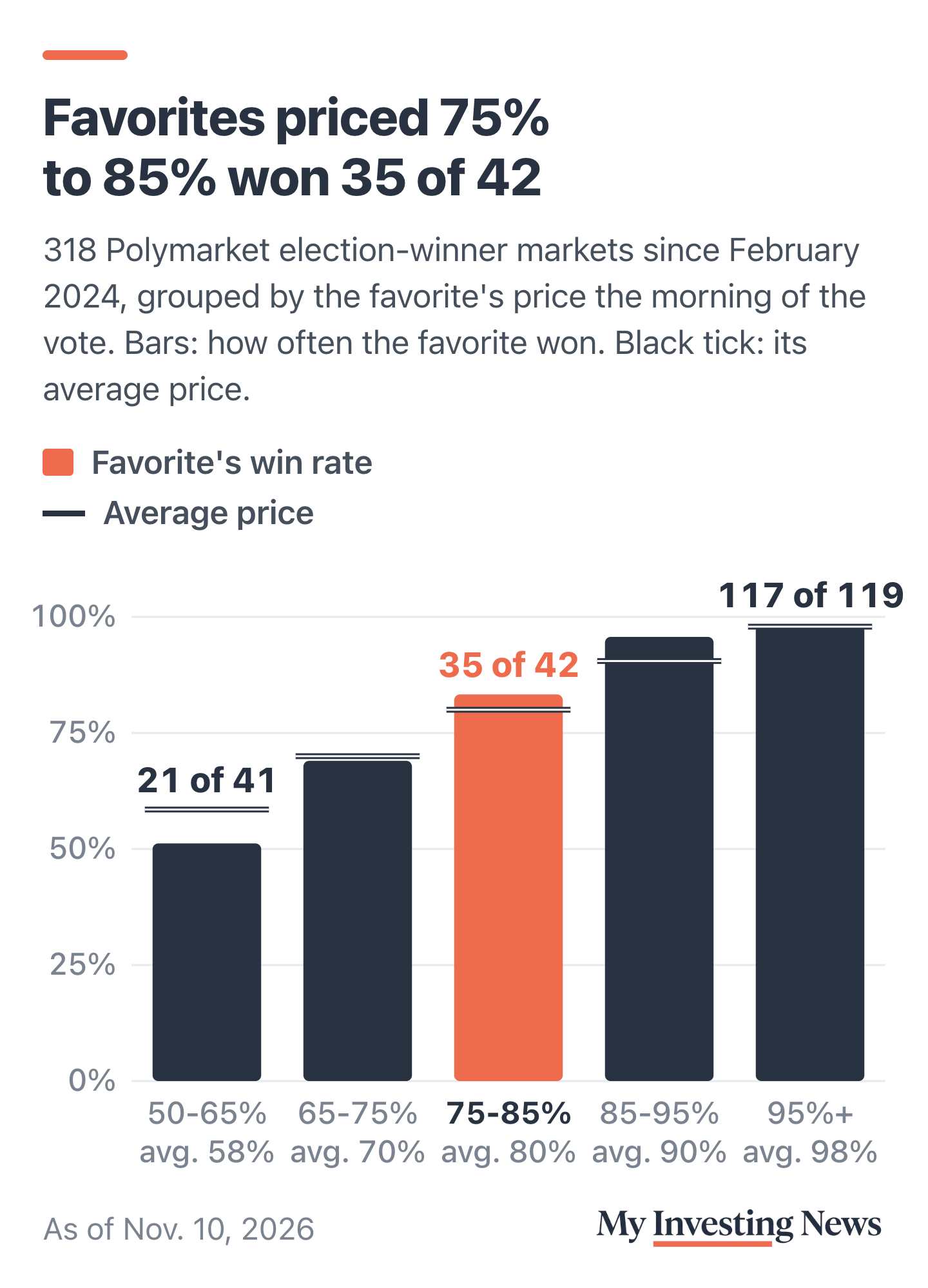
The result holds up when the sample changes. Among markets with $1 million or more traded, 4 of 23 favorites in that price range lost. Leave out this month’s midterms, when many races moved together on one night, and it was 5 of 28. Across all 313 favorites priced at 50% or more, 45 lost, against about 47 the prices implied.
Where the prices were off, the misses ran both ways. Near coin flips were overpriced: favorites at 50% to 65% won only 21 of 41, about half, while their average price was 58%. Strong favorites were underpriced: at 85% to 95% they lost 3 of 69, fewer than the roughly 6 their prices implied. We found the same pattern in an earlier check of Senate favorites from 2018 to 2024, where the close races were the hardest to call.
Election favorites priced 75% to 85%, as of Nov. 10, 2026
Kalshi’s Own Numbers Point the Same Way
Kagan’s 80% checks out. At 7 a.m. Brasília time on Oct. 25, Kalshi’s Bolsonaro contract was bid at 80 cents and offered at 81, with Lula at 19 to 20. Bosworth’s higher figure is real too: Bolsonaro traded as high as 89 cents on Kalshi on Oct. 9 and about 88 cents on Polymarket on Oct. 10, two weeks before the vote, when bettors had put $249 million on the race.
Kalshi’s own book on this month’s midterms tells the same story as Polymarket’s. Using its 6 a.m. Eastern prices on Election Day, 22 House, Senate and governor races had a favorite priced 75% to 85%, and 3 of those favorites lost, all Republican House candidates in Indiana and North Carolina. Kalshi has also said its markets were directionally right in 479 of 487 midterm races, a figure we tested race by race.
Brazil Was Not the Biggest Upset
If the charge is overconfidence, Brazil is a weak exhibit. The bigger misses came at higher prices and drew far less attention in the U.S.: Samoa’s Human Rights Protection Party at 96.5% in 2025, Belgium’s Vlaams Belang at 96% to win the most seats in 2024, Greenland’s governing party at 93% in 2025, and the French far right’s bloc at 91% the morning of the July 2024 runoff, when the left’s New Popular Front won the most seats.
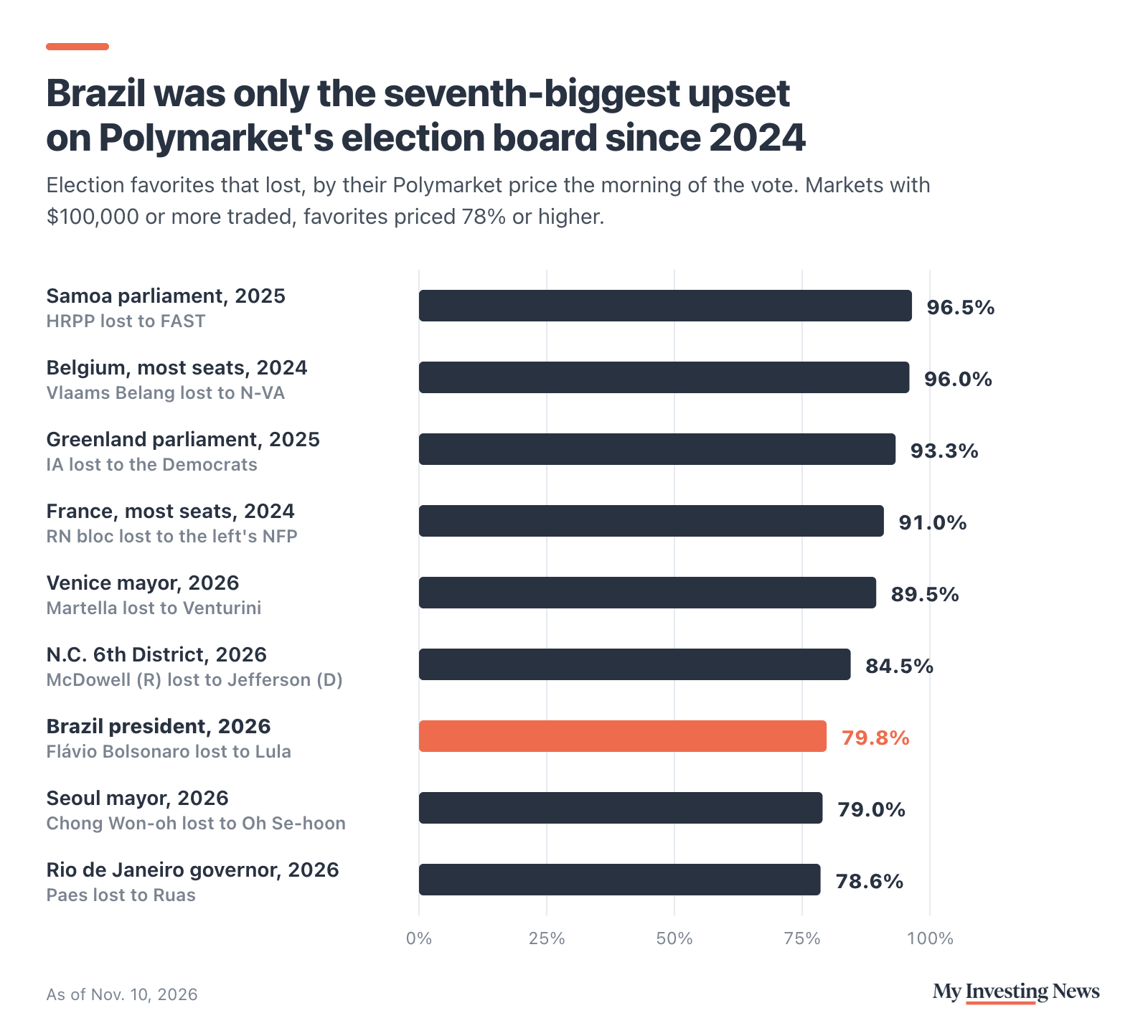
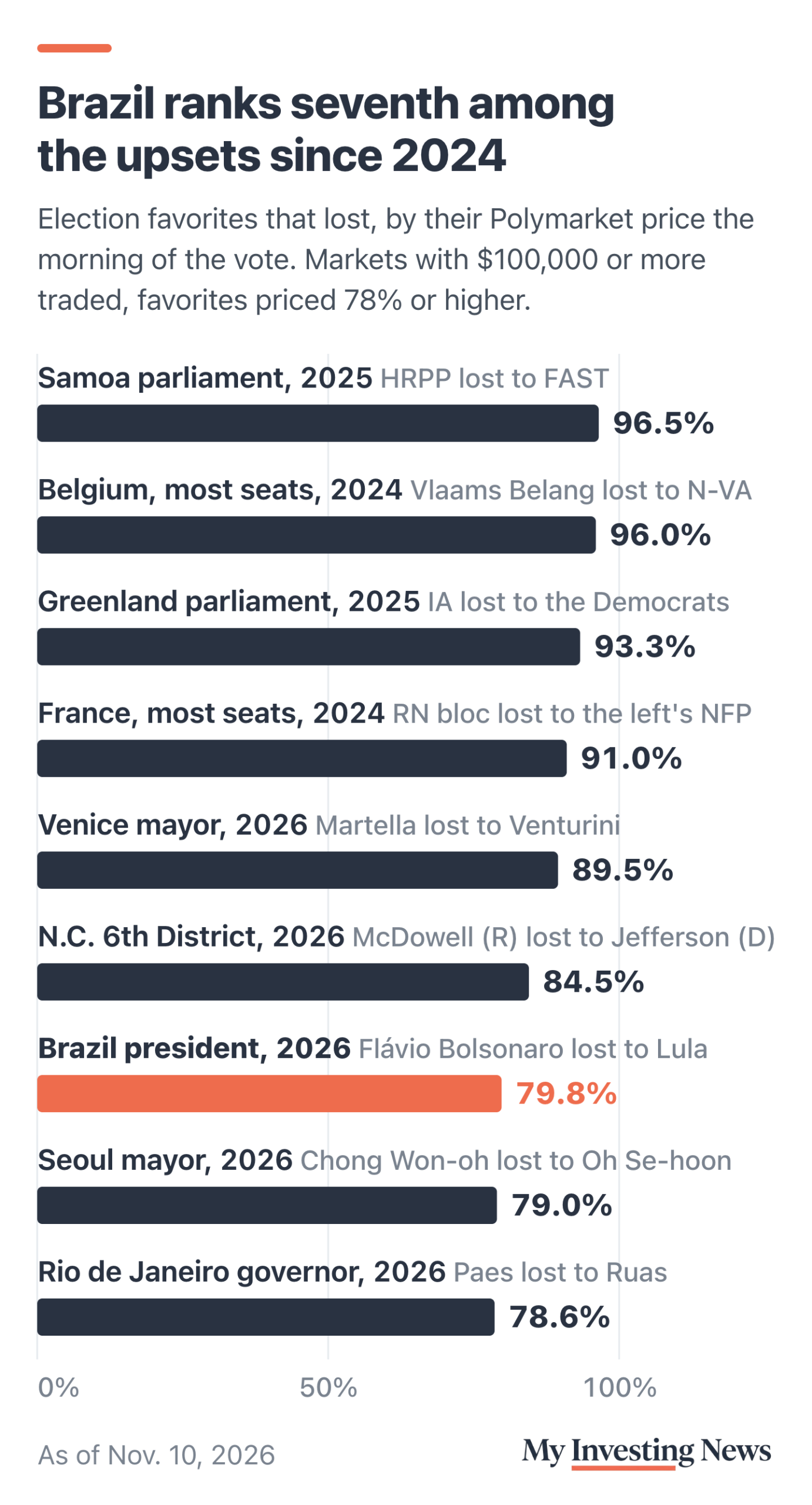
Those are the losses that a well-priced market should rarely produce, and they were rare: favorites priced at 90% or more lost 4 of 161 times, close to the 6 their prices implied. The 42 markets in the 80% range fell on 20 different voting days, but 8 were U.S. races on Nov. 5, 2024, and 14 on Nov. 3, 2026, so a single national swing can move several of them at once. A few more years of results will make the record firmer.
What to Watch
Kagan said Kalshi’s researchers are studying which polls and endorsements traders followed and which they ignored this year. The simplest test is the one above, repeated as results come in: whether favorites at 80 cents keep losing about one time in five. If they start losing one time in three, Bosworth’s word, overconfident, will fit. Close races are the place to watch, since that is where both platforms’ prices strayed furthest from the results.
Kagan’s math holds up. Polymarket election favorites priced 75% to 85% on the morning of the vote lost 7 of 42 times since 2024, about one in six, and Kalshi’s midterm favorites in that range lost 3 of 22. The weak spot is near coin flips, where favorites won only about half the time, so a favorite priced near 55 cents is closer to a coin flip than its price suggests.