Where we heard itThe Ramsey Show, “Don’t Let Debt Delay Your Financial Future,” Nov. 6, 2026. Dave Ramsey, talking with guest Brian Buffini about NAR’s new survey of home buyers.
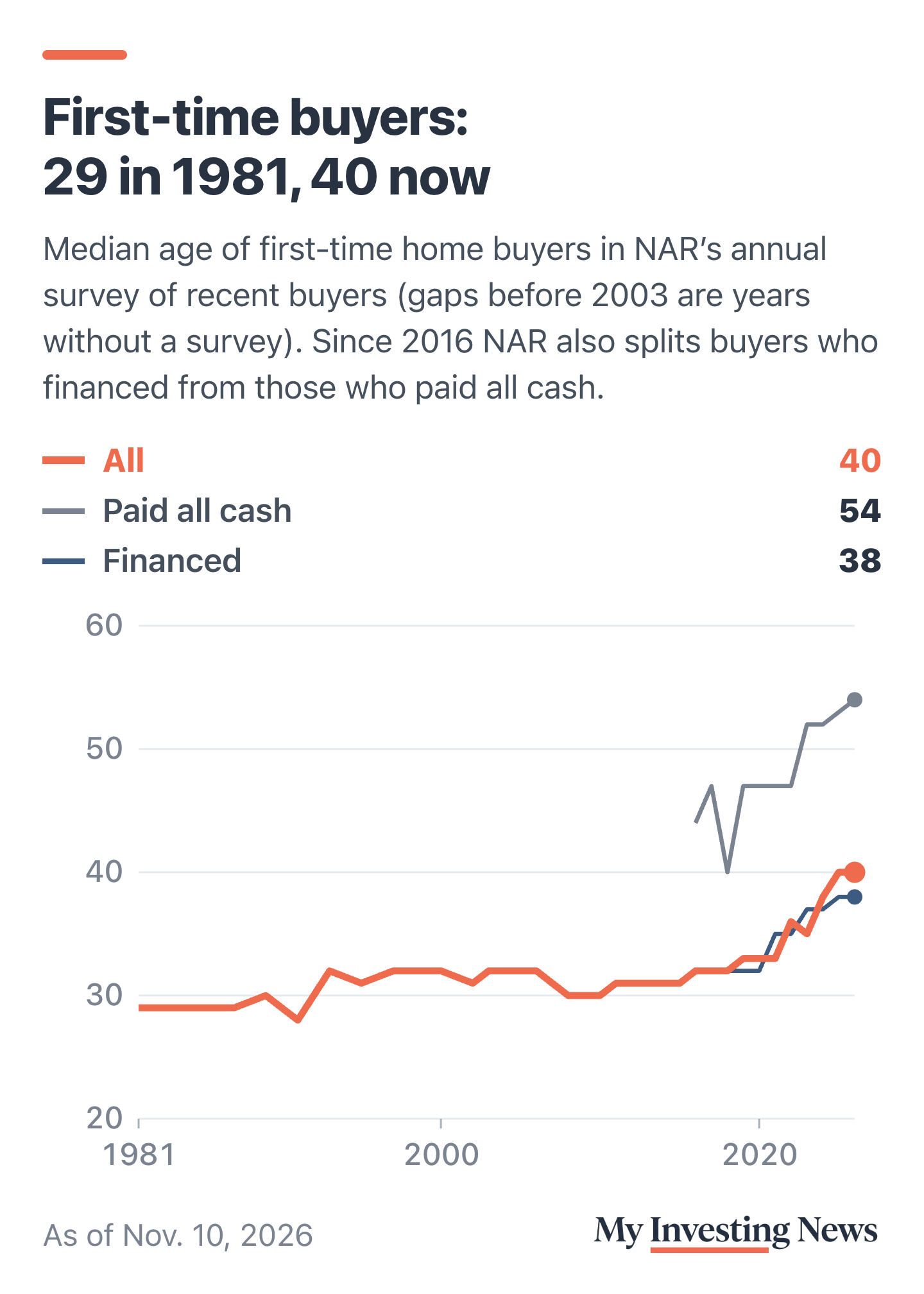
The National Association of Realtors said on Nov. 5 that the typical first-time home buyer is 40 years old, matching last year’s record. In NAR’s first survey, in 1981, the median was 29. First-time buyers made up 22% of purchases from mid-2025 to mid-2026, up from a record-low 21%.
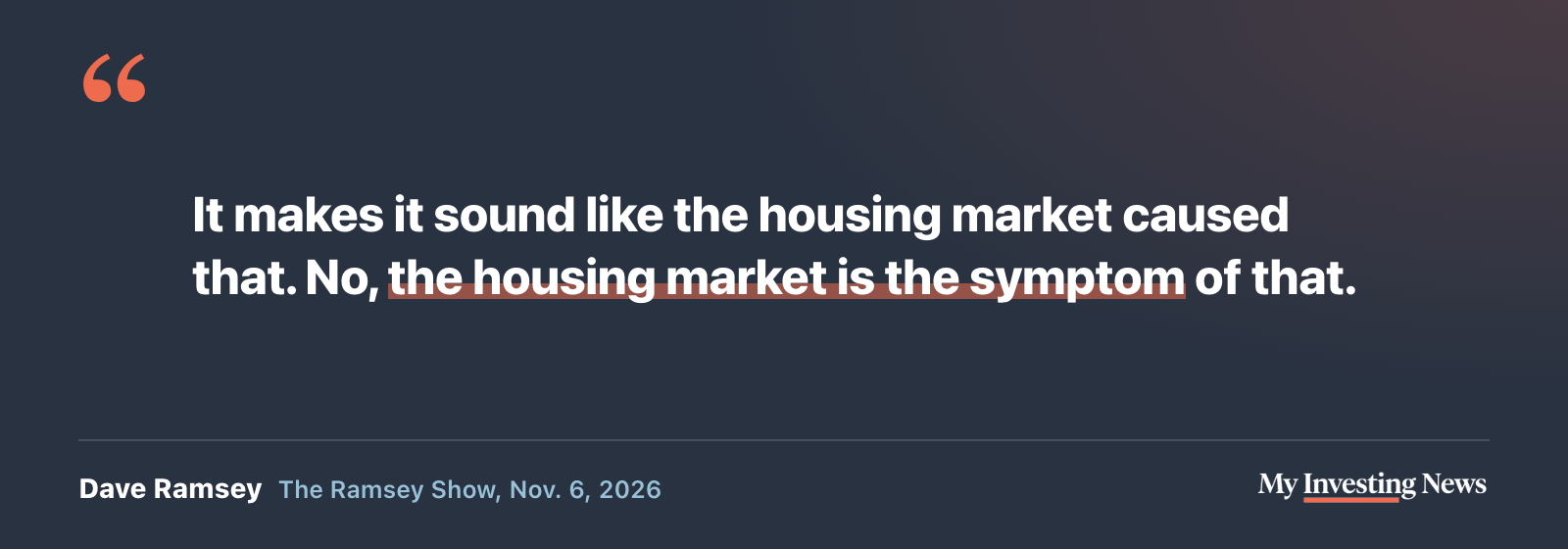
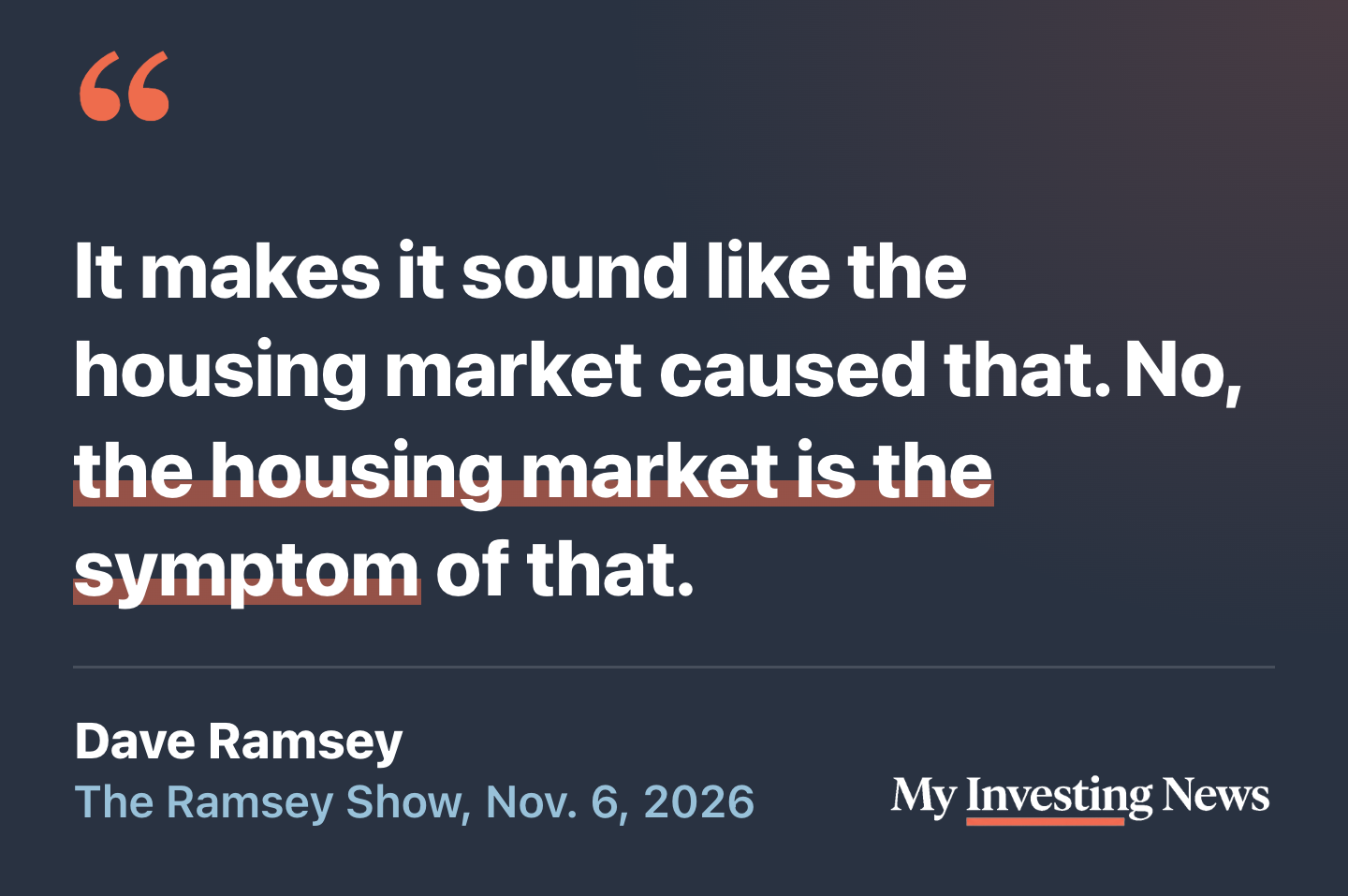
A day later on The Ramsey Show, Dave Ramsey said the number gets the cause backward. Young buyers are carrying student loans and “the largest car debt in history,” he said, and those are what keep them from buying a house. “The problem is the mess these people are in,” Ramsey said.
Ramsey had one detail slightly off: NAR’s figure of 40 is for first-time buyers, and it is 40 exactly. All buyers had a median age of 58. His argument is easy to check, because if debt explains the jump, debt should have grown heaviest when buyers got older.
The Jump Came After 2021
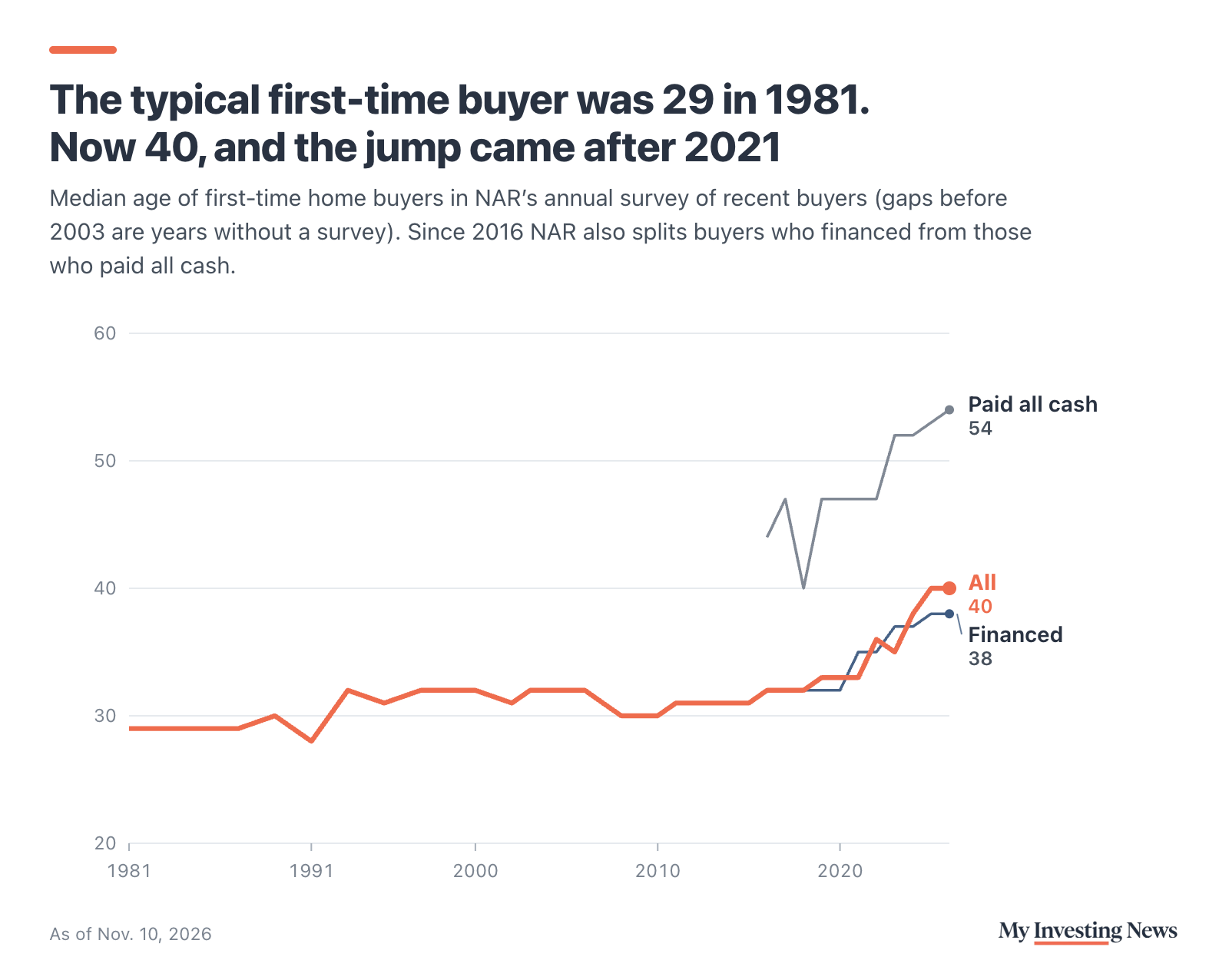
For three decades the first-time buyer’s age barely moved. It was 29 in 1981, 32 in 2005, 30 in 2010 and 33 in 2021. Then it rose seven years in four surveys, to 40. NAR also splits buyers who borrowed from those who paid cash: first-time buyers with a mortgage had a median age of 38 this year, and the record 10% who paid all cash had a median age of 54. More than a quarter of those cash buyers, 28%, used an inheritance.
Debt Payments Got Lighter as Buyers Got Older
The best single gauge of debt pressure is the Federal Reserve’s debt service ratio, which compares what households pay each quarter on auto loans, credit cards, student loans and other consumer debt with their after-tax income. Its highest reading since the series begins in 2005 was 7.3%, in late 2005, when the typical first-time buyer was 32. It hit a low of 4.3% in early 2021, during the pandemic pause on student loan payments. In the second quarter of 2026 it was 5.3%, still below the 2005 to 2008 range.
Ramsey is right that balances are large. New York Fed data show auto loans at a record $1.71 trillion in the second quarter of 2026, up 21% from mid-2021, and credit card balances up 60% to $1.26 trillion. But student loans, the debt most tied to young adults, tell the opposite story from his. They grew 25% from mid-2016 to mid-2021, while the first-time buyer’s age went from 32 to 33. From mid-2021 to mid-2026 they grew 5%, while the age went from 33 to 40.
First-time buyers and debt, as of Nov. 10, 2026
What Changed Was the Price of the House
The payment on a house moved with the age. Take the median price of a new home sold and Freddie Mac’s average 30-year rate over each NAR survey year, with 10% down. The monthly principal and interest was about $1,300 for the year ended June 2021, at a 2.9% average rate, or 23% of median household income. For the year ended June 2024 it was about $2,550 at 7.0%, or 38% of income. That is when the median age jumped from 33 to 38. It has eased since, to about $2,298, but the age has not come back down, in part because buyers paying cash, many of them with inherited money, keep pulling the median up.
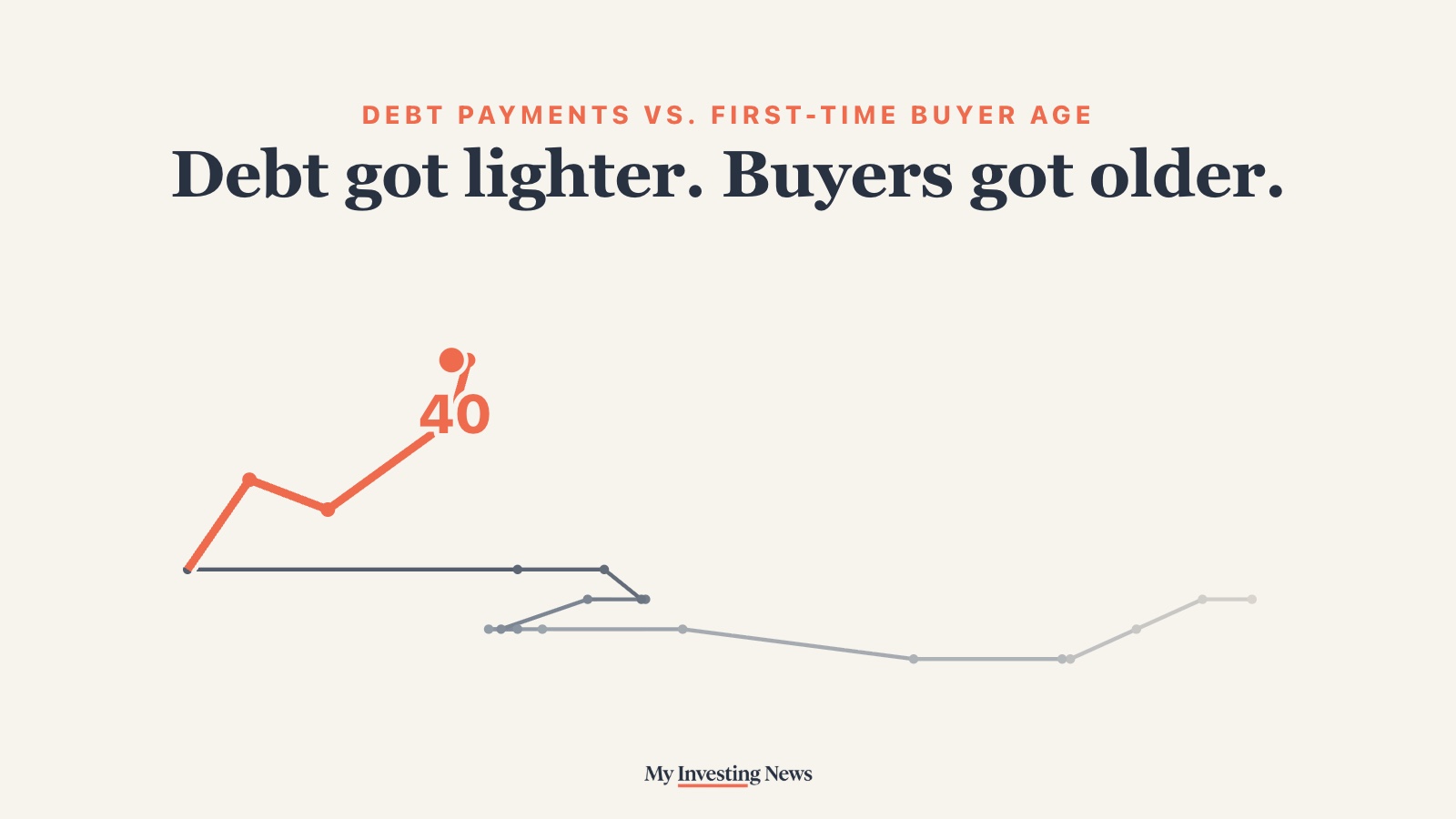
Debt payments took a smaller share of income as first-time buyers aged from 32 to 40
Each dot is one year of NAR’s buyer survey since 2005: consumer debt payments (auto, card, student and other loans) as a share of household disposable income across, and the median first-time buyer’s age up.
The debt ratio covers all households, so it can miss strain that is concentrated among people in their 20s and 30s. NAR’s own economists list student debt among the hurdles, alongside high rents and a shortage of homes buyers can afford. And NAR’s survey is a mailed and texted questionnaire with a 3.1% response rate, and it counts only people buying a home to live in. Still, the timing doesn’t fit a debt story: the burden of debt payments was lighter when first-time buyers got older, and heavier when they were younger.
What to Watch
Mortgage rates are the number that moved with first-time buyers’ age. Freddie Mac’s 30-year average was 7.18% in the week ended Nov. 5, and rates have been under 5.5% in only about a quarter of weeks since 1971. Builders are cutting prices, with builder confidence at a 14-year low in October, and Steve Eisman has argued that the next move in national home prices is down. Either would bring the payment closer to what younger buyers can carry. NAR’s next survey will show whether the share of all-cash buyers, the group lifting the median, keeps rising.
Ramsey’s advice to stay out of debt still matters for any one buyer, since a car payment shrinks the mortgage a bank will approve. But the record of the last 20 years points elsewhere: debt payments took less of household income in 2026 than in 2005, when first-time buyers were 32, and the age jumped when the payment on a median new home nearly doubled.