Where we heard itTim O’Brien, senior executive editor of Bloomberg Opinion, on the Bloomberg Businessweek podcast, “Stocks Plunge as Democrat Sweep Casts Cloud Over AI,” Nov. 5, 2026.
Two days after Democrats won both chambers of Congress, Bloomberg Businessweek asked Tim O’Brien what the result means for President Donald Trump’s last two years. O’Brien, who wrote the 2005 Trump biography TrumpNation, said one option for a leader in that spot is to reach out to the other side. He doesn’t expect it. “I do not expect Donald Trump to sing Kumbaya,” he said, and then:
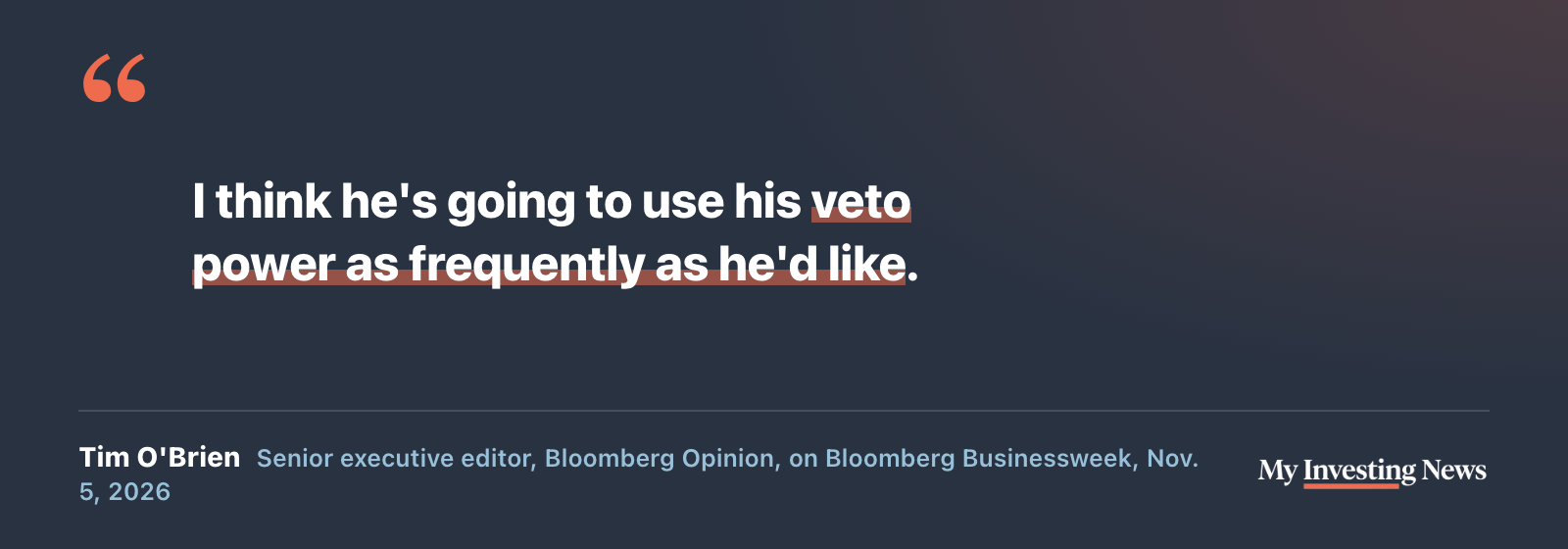
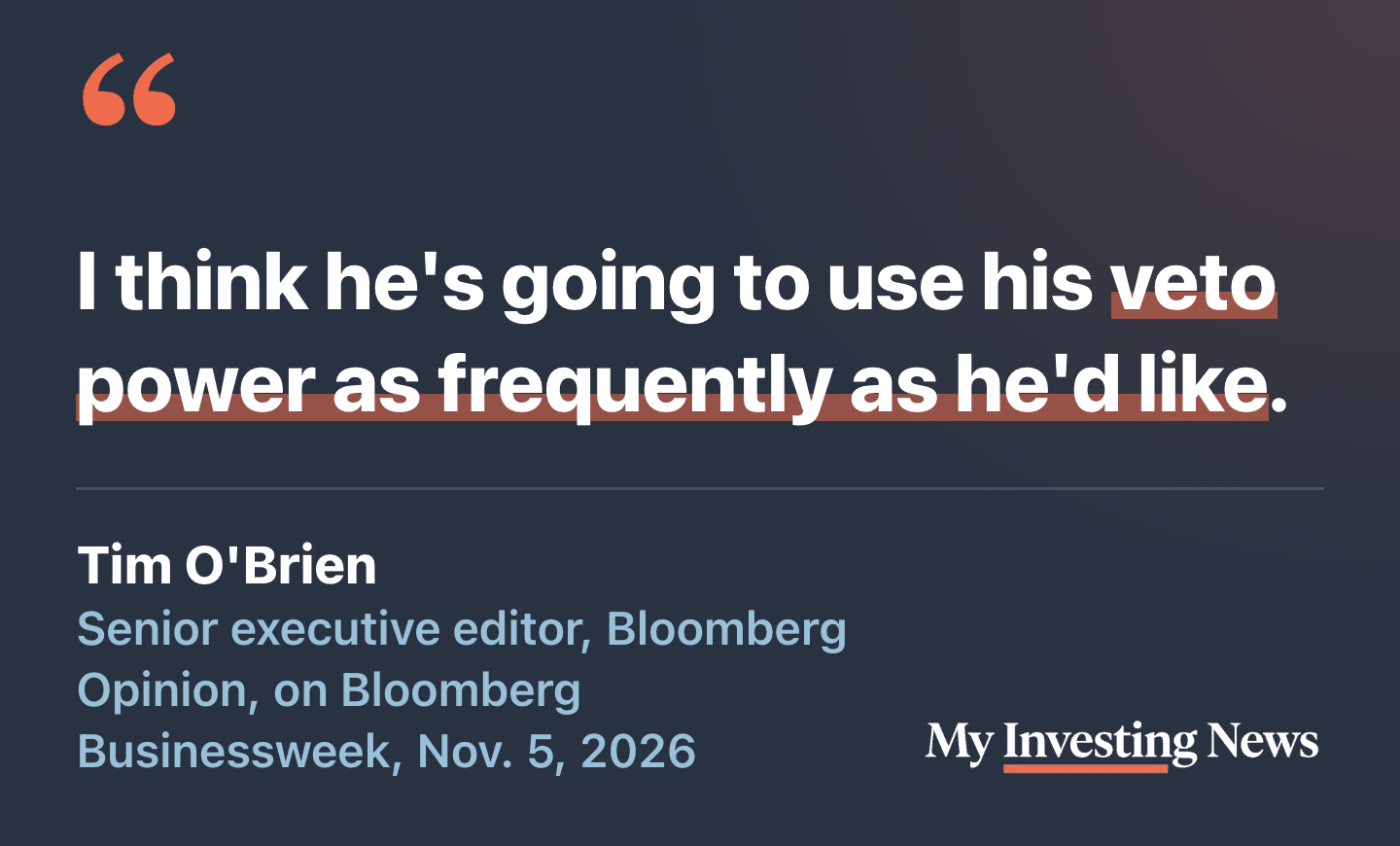
“And I think he’ll lash out,” O’Brien added. That matters for markets because of tariffs. On CNBC’s Mad Money on Nov. 4, Jim Cramer said “the tariff regime will most likely be repealed because that was supposed to be the province of Congress, but the Republicans abdicated it to the president. No more.” Bill Reinsch of the Center for Strategic and International Studies was more cautious on Marketplace the next day. To repeal the tariffs, he said, Democrats would have to “get enough Republicans to make it veto proof,” and “that would be very, very difficult.”
A president who vetoes freely can only be stopped by two-thirds of both chambers. So we checked how often Congress has managed that, and how many Republicans a tariff repeal would need.
Overrides Are Rare: 112 in 237 Years
Presidents have issued 1,533 regular vetoes since 1789, according to the Senate’s veto tally, plus 1,066 pocket vetoes, which Congress can’t override. Congress has overridden 112 of the regular vetoes, or 7.3%.
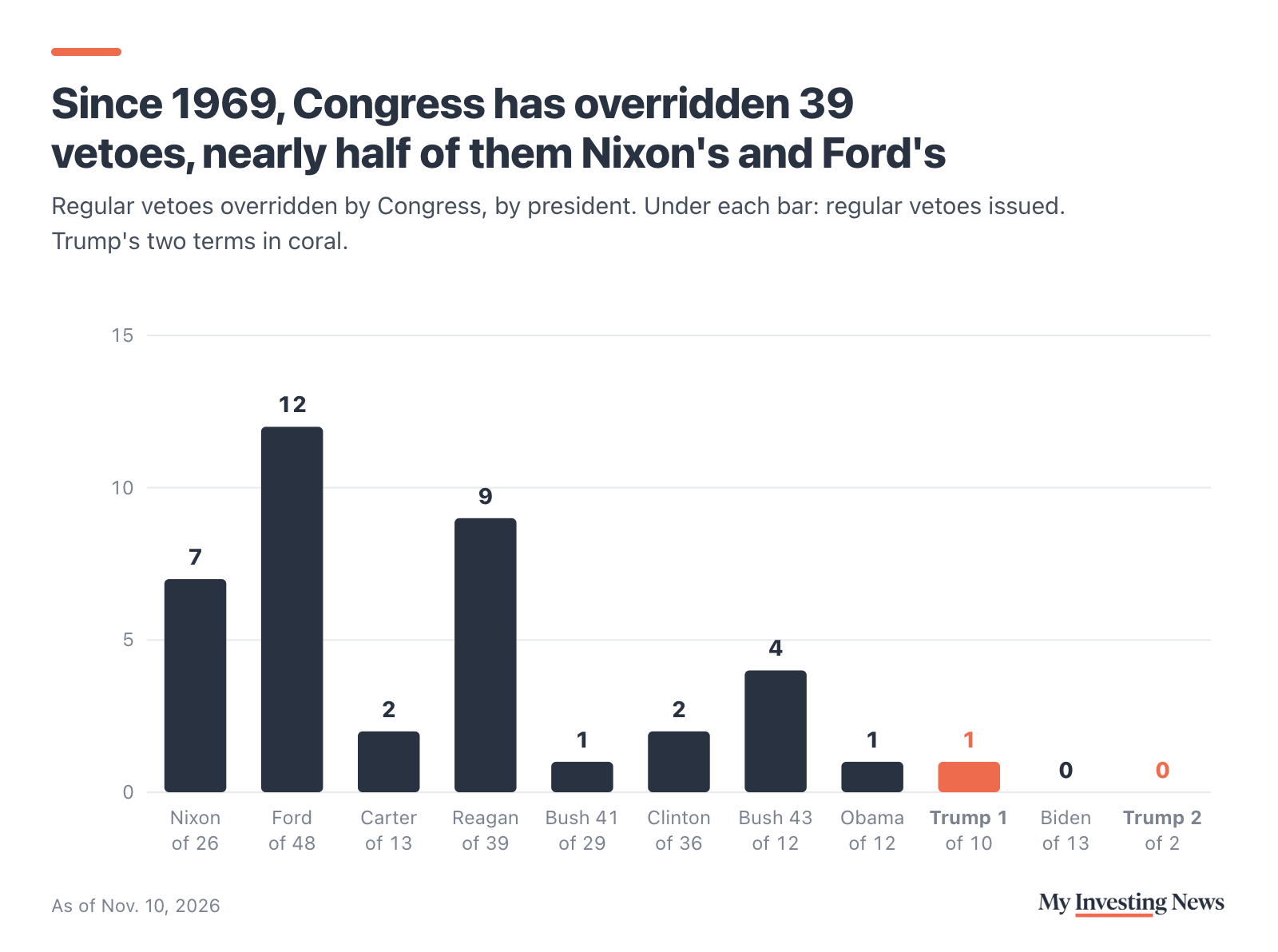
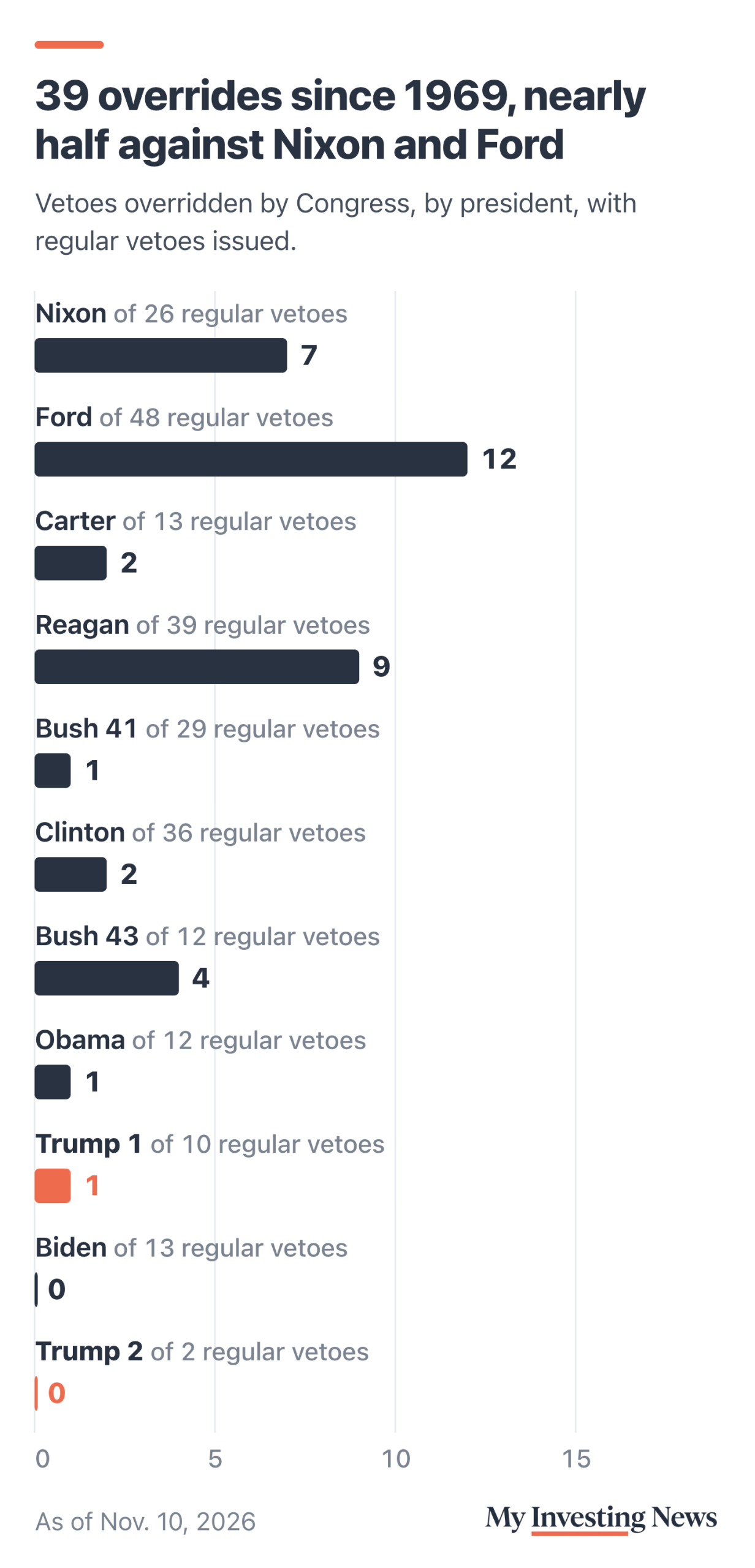
Overrides cluster where a weak president faced a hostile Congress. Since 1969, Congress has overridden 39 vetoes, and 19 of them came against Richard Nixon and Gerald Ford, who faced Democratic majorities during and after Watergate. Ford alone was overridden 12 times on 48 regular vetoes.
Trump’s Own Record
Trump vetoed 10 bills in his first term, and Congress overrode one: the 2021 defense bill, by 322 to 87 in the House and 81 to 13 in the Senate, according to the Senate’s list. The more telling precedent is from 2019, when a Democratic House and a Republican Senate twice passed resolutions to end the national emergency Trump declared to build a border wall. That is the same tool Congress has since used against his tariffs. He vetoed both, and the overrides failed, 248 to 181 in the House and 53 to 36 in the Senate.
In his second term he has vetoed two bills, on Dec. 29, 2025: a Colorado water pipeline bill from Republican Rep. Lauren Boebert and a bill giving Florida’s Miccosukee Tribe more control of some of its land. Both had bipartisan support. On Jan. 8, 2026, the House sustained both vetoes. Only 35 and 24 Republicans voted to override, on bills a Republican Congress had passed.
The veto math, as of Nov. 10, 2026
The Tariff Math
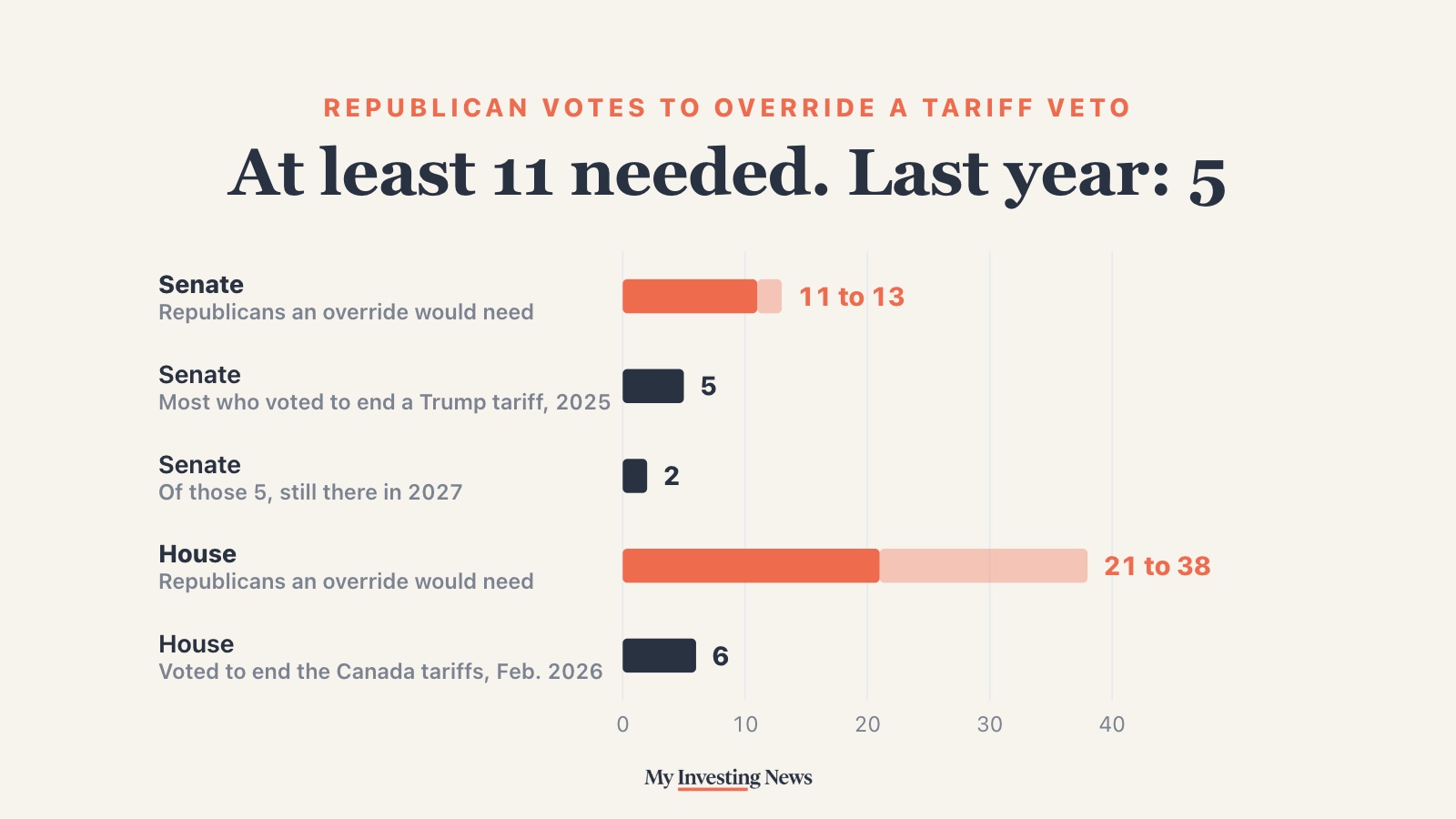
As of Nov. 10, the AP had called 54 Senate seats for Democrats and 44 for Republicans, with Alaska and Mississippi still open, and 252 House seats for Democrats, 166 for Republicans and 17 uncalled, according to NBC News results pages. An override takes two-thirds of the members voting, or 67 senators and 290 House members with everyone present. If every Democrat voted to override, Democrats would still need 11 to 13 Republican senators and 21 to 38 House Republicans, depending on the uncalled races.
That is far more than have broken with Trump on tariffs. The Senate voted five times in 2025 on resolutions to end the emergencies behind his tariffs on Canada, Brazil and imports in general. The most Republicans to vote yes was five, on the Brazil tariffs in October 2025: Susan Collins, Mitch McConnell, Lisa Murkowski, Rand Paul and Thom Tillis. Only two of them will be in the next Senate. Collins lost her seat to Democrat Troy Jackson, according to NBC News’ AP-based results, and Tillis and McConnell did not run. In October, Trump had exempted some Canadian goods from tariffs in a move widely reported as an effort to help Collins hold her seat.
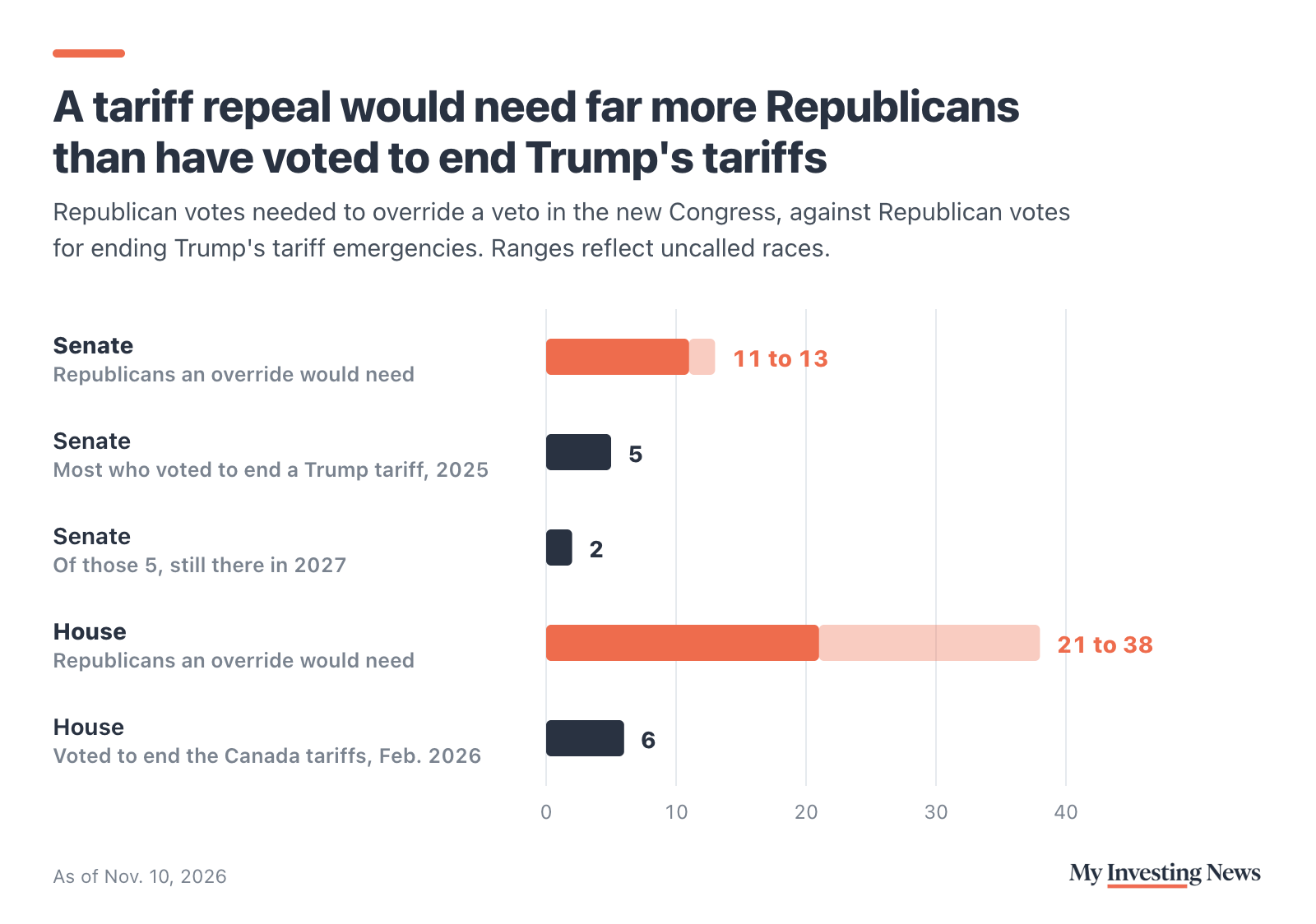
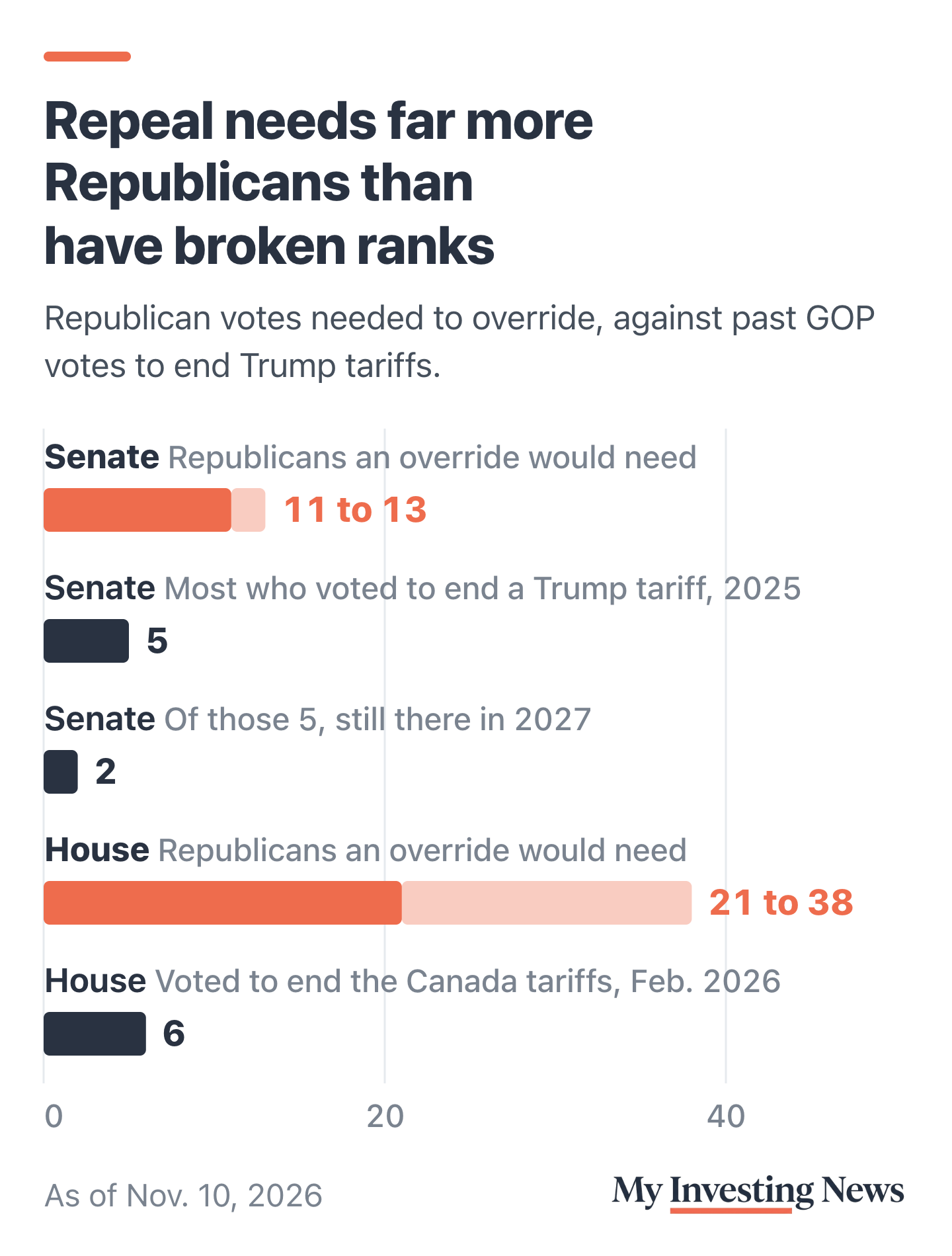
The House record is similar. On Feb. 11, 2026, it voted 219 to 211 to end the Canada tariff emergency, with 6 Republicans joining 213 Democrats (one Democrat voted no), according to the House clerk. That resolution never became law. Wolfe Research’s Stephanie Roth has argued that tariffs will stay high even under a Democratic president, and Cramer himself has called tariff inflation a regressive tax.
What to Watch
The new Congress is sworn in on Jan. 3, 2027, and Alaska, Mississippi and 17 House races will set the exact override math. The record points to one route that has worked against Trump: his only override came on the annual defense bill, which Congress has to pass. Watch whether Democrats attach tariff limits to spending or defense bills rather than stand-alone repeal resolutions, and whether Republicans facing 2028 races start to break ranks.
O’Brien expects Trump to veto freely, and the record says vetoes usually stick: Congress has overridden 7.3% of regular vetoes since 1789 and Trump only once. A stand-alone tariff repeal would need at least 11 Republican senators, more than twice the five who voted against his tariffs in 2025. The risk to that view is a must-pass bill, the one place Congress has beaten his veto before.