Where we heard itSteve Grasso, a trader on the panel of CNBC’s Fast Money, Nov. 4, 2026, in a segment on the post-election rally in housing stocks.
Housing stocks jumped the day after the midterm elections, and the Fast Money panel spent a segment on whether the move could last. Trader Steve Grasso said the rally would need help from mortgage rates. He laid out his math: “50% of the country is below 4%. 80% is below 6%. So the golden rate is five and a half percent.” Then he added a number about buyers:
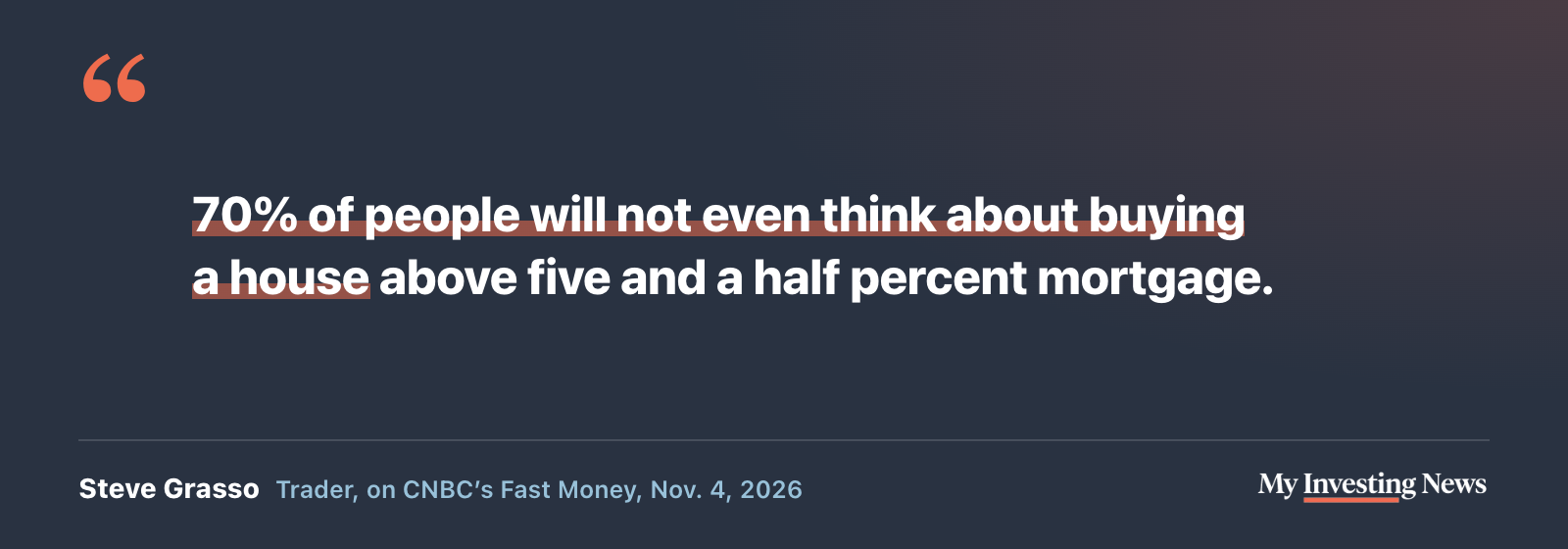
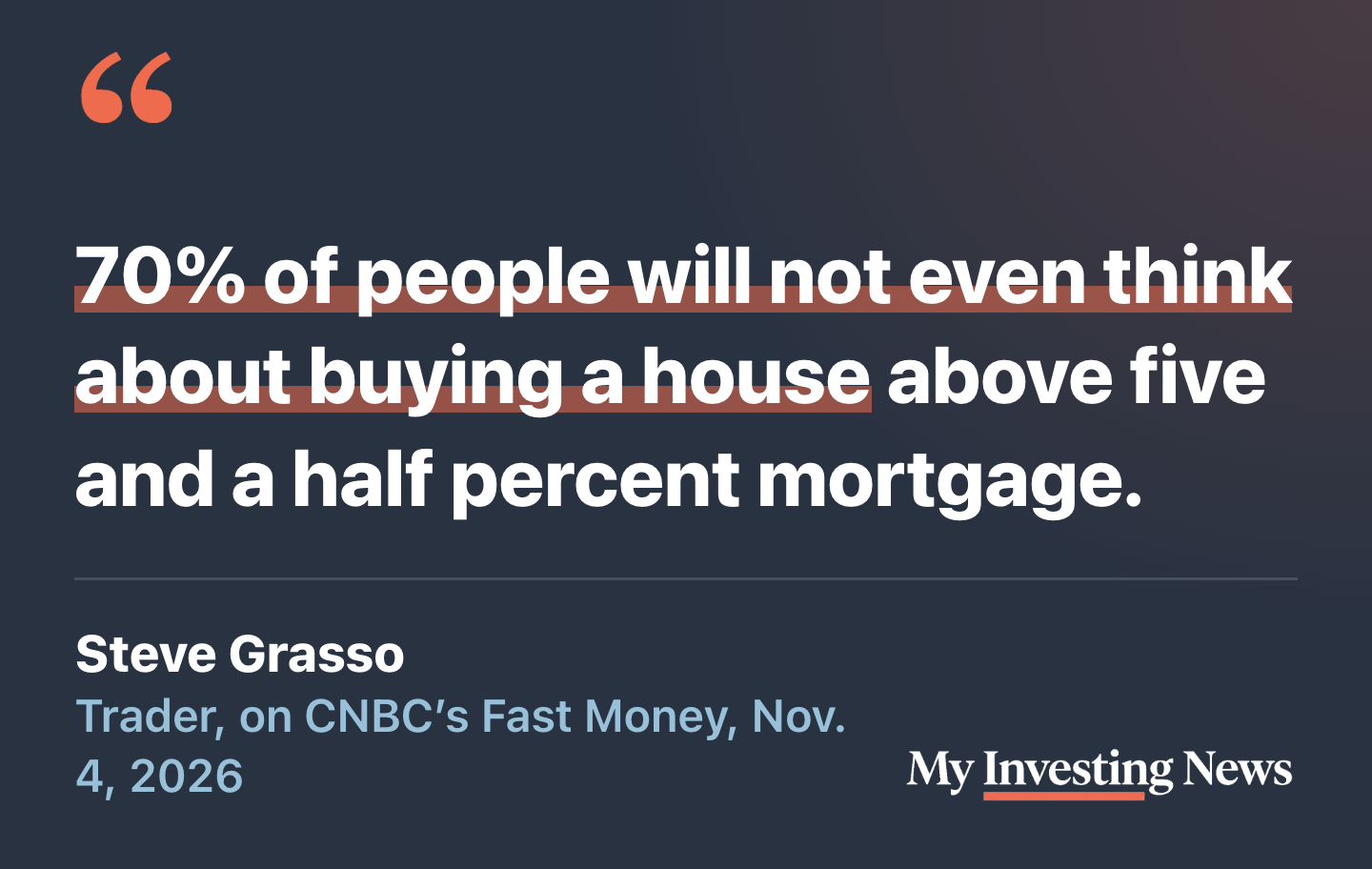
“You really have to have mortgage rates really comply to get this housing market moving again,” he said. We traced the 70% figure, counted how often rates have actually been under 5.5%, and checked his lock-in math against federal mortgage records.
Where the 70% Comes From
Grasso didn’t name a source on air. The closest match is a survey by John Burns Research and Consulting, taken in late February and early March 2023 among more than 1,300 homeowners and renters. It found that 71% of would-be buyers planning to use a mortgage would not accept a rate above 5.5%, the National Association of Realtors reported. The same survey found that 62% thought a “historically normal” rate was below 5.5%.
So the figure is more than three and a half years old. When the survey was in the field, Freddie Mac’s average 30-year rate ran from 6.50% to 6.73%. Later polling moved a little. In September 2024, the firm found 47% of homeowners would accept a rate of 5% to 5.5% on their next home, according to ResiClub.
Rates Under 5.5% Were the Exception
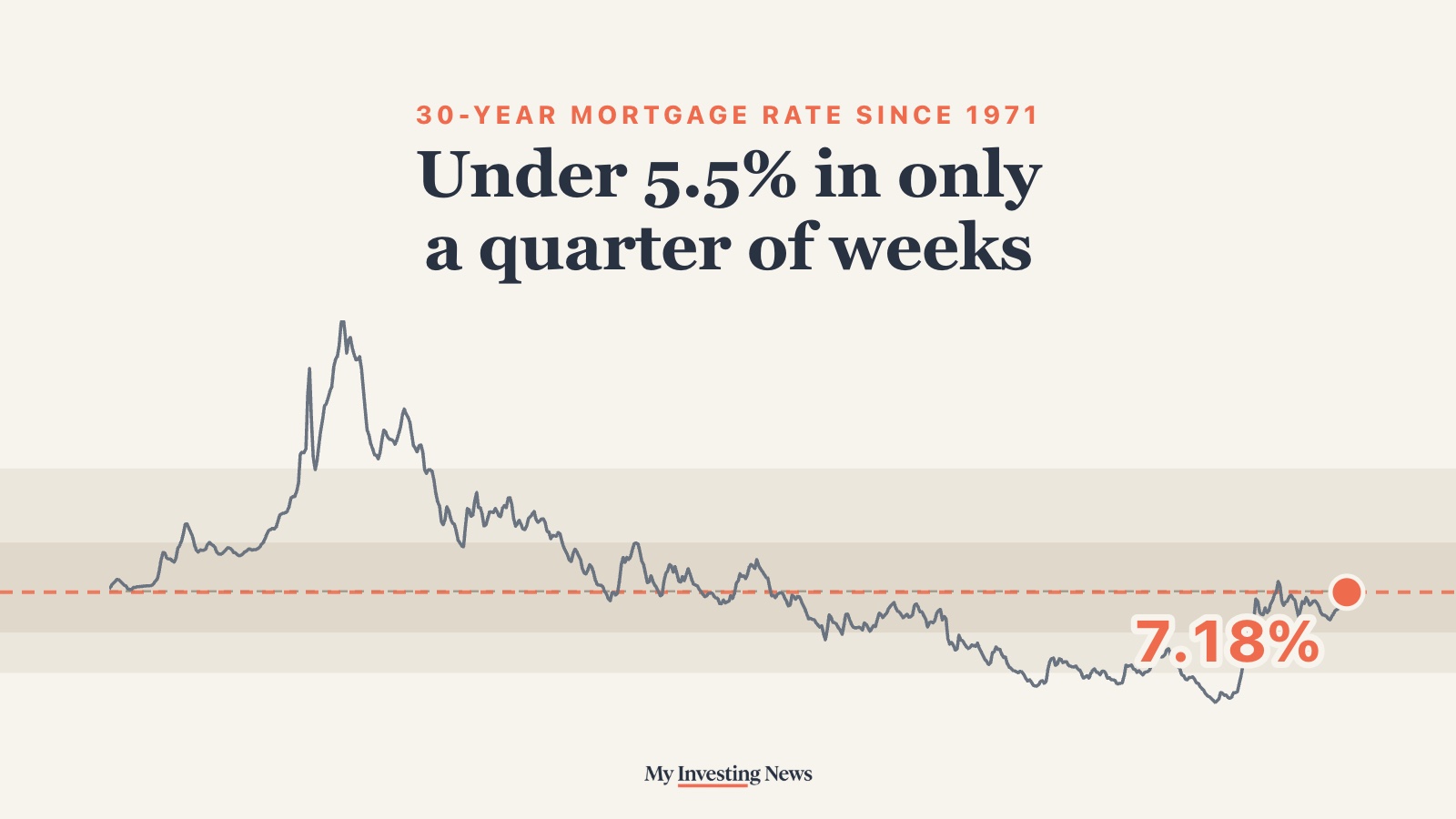
Freddie Mac has published its weekly average since April 1971. In 2,902 weeks through Nov. 5, 2026, the 30-year rate was under 5.5% in 721 of them, or 24.8%. None of those weeks came before May 2003. The longest stretch ran 13 years, from June 2009 to June 2022, when the Fed held short-term rates near zero for much of the time. The last week under 5.5% was Aug. 18, 2022, at 5.13%.
The 7.18% reading for the week ended Nov. 5, 2026 sits almost exactly in the middle of that history. The median week since 1971 came in at 7.22%, and rates were lower in 49.3% of weeks. By the record, a “historically normal” rate is closer to 7% than to 5.5%.
Mortgage rates sat under 5.5% in just 25% of weeks since 1971, all of them from 2003 to 2022
Average 30-year fixed mortgage rate, Freddie Mac’s weekly survey, shown as monthly averages since April 1971. The shaded bands hold the middle half and the middle 80% of all 2,902 weekly readings; the bottom of the darker band is 5.53%.
Getting to 5.5% from here would take a drop of 1.68 percentage points. That is more than the whole range of 2026 so far, from 5.98% on Feb. 26, 2026 to 7.40% in early to mid-October, when mortgage rates followed the 10-year Treasury higher. On a $400,000 30-year loan, the gap between 7.18% and 5.5% is about $439 a month in principal and interest ($2,710 against $2,271).
The 5.5% threshold, by the numbers
Checking the Lock-In Math
Grasso’s other numbers hold up. The Federal Housing Finance Agency’s National Mortgage Database counted 51.4 million home mortgages outstanding at the end of June 2026. Of those, 49.1% carried a rate under 4%, close to his 50%, and 77.6% a rate under 6%, a bit short of his 80%. In all, 65.6% were under 5%. The data counts loans in rate buckets one point wide, so it can’t say exactly how many sit under 5.5%.
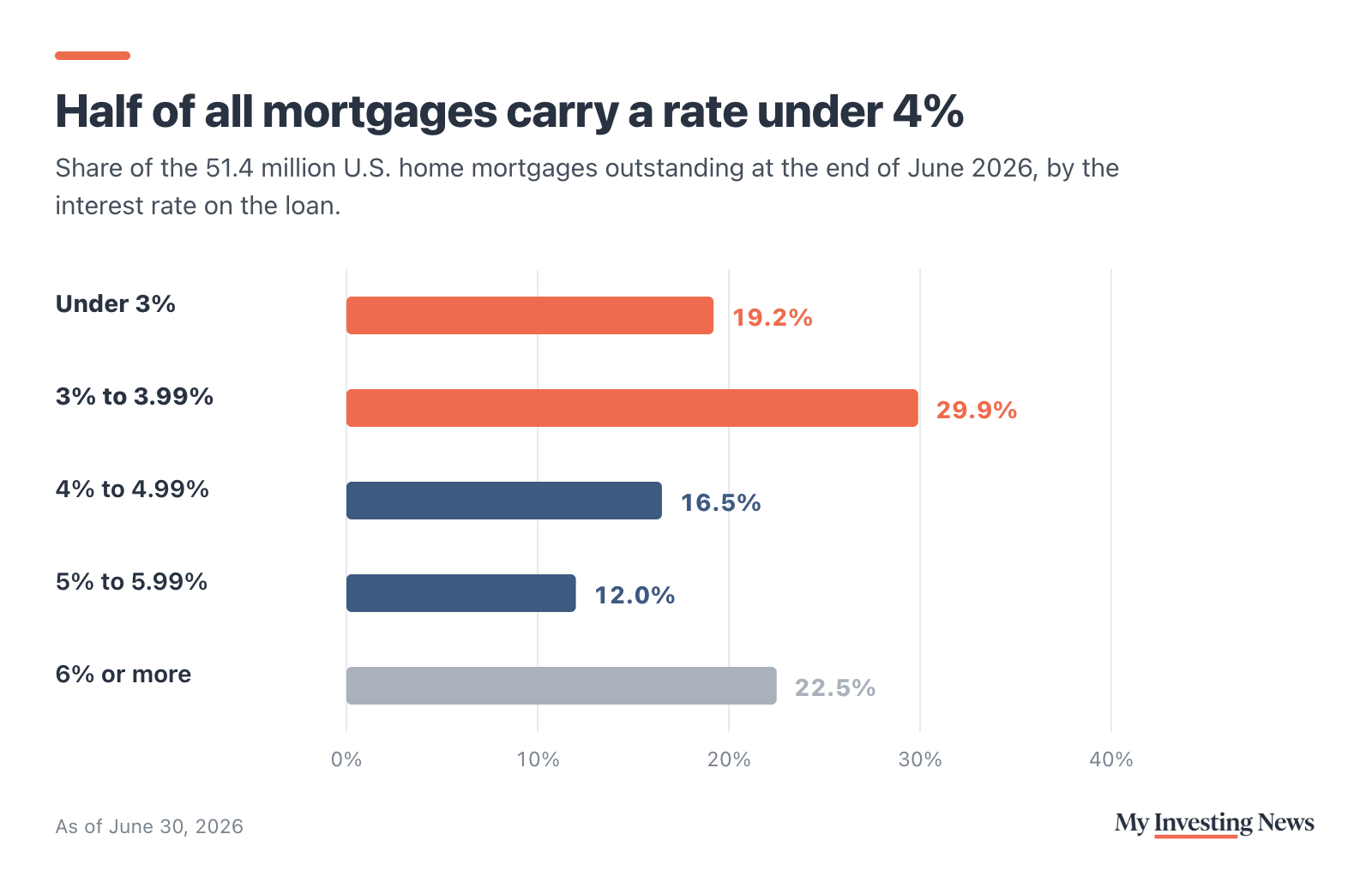
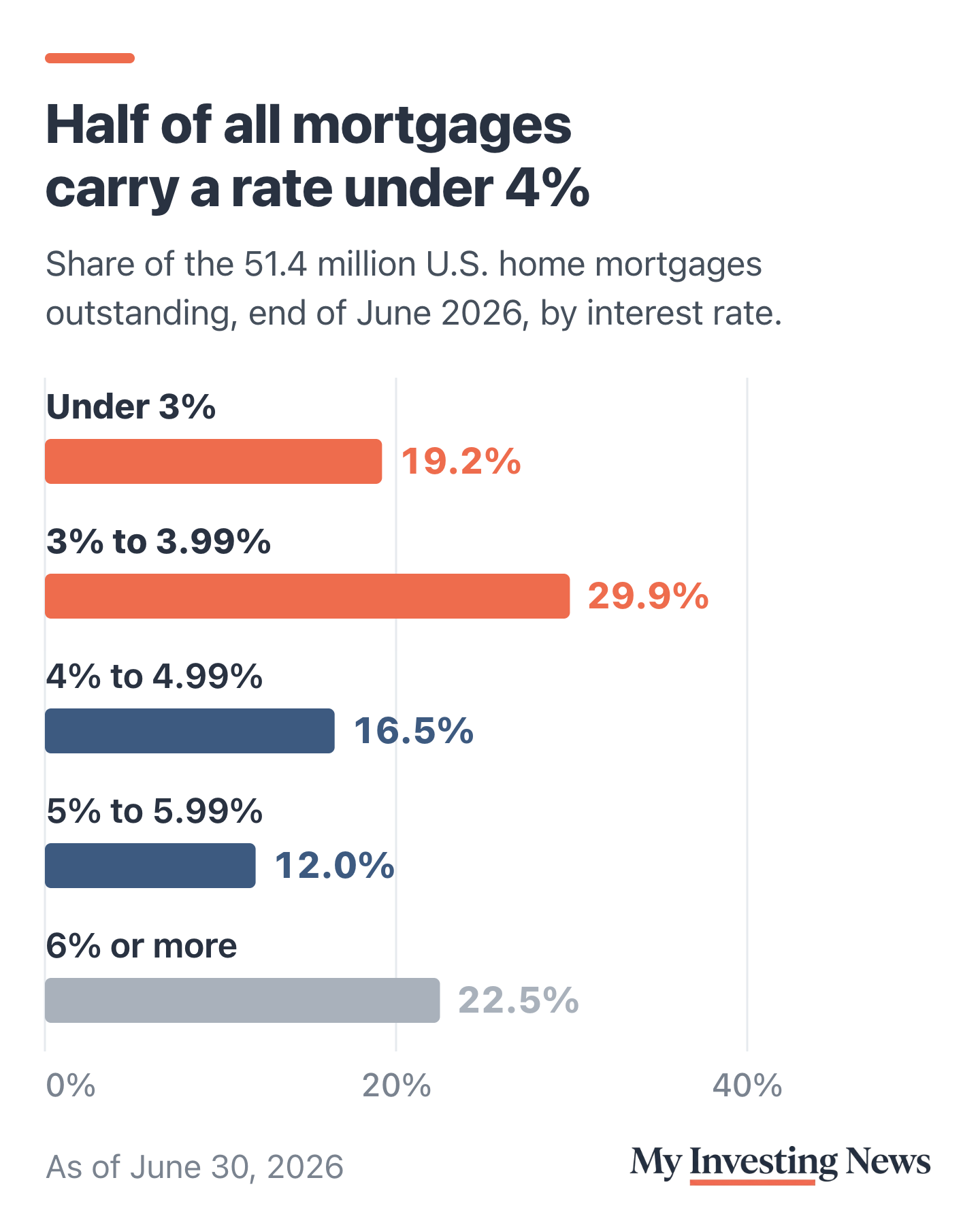
The lock is slowly loosening. Loans at 6% or more made up 22.5% of the total in June, up from 7.8% at the end of 2021, while the share under 4% fell from 64.2% to 49.1%. Owners who sell to move still trade a rate that averages 4.4% for one near 7%. Builders feel it too: in October, builder confidence fell to its lowest since 2012.
What to Watch
Freddie Mac posts its survey on Thursdays at noon Eastern. The next readings are due Nov. 19 and, because of Thanksgiving, Wednesday, Nov. 25. The Fed meets Dec. 8 to 9. The 30-year rate tends to follow the 10-year Treasury, and Morgan Stanley’s Andrew Sheets has argued that the blue wave could help push long-term yields down. For buyers who answered that 2023 survey, a rate under 5.5% would still be a level last seen in August 2022.
Grasso’s 70% traces back to a 2023 survey in which 71% of would-be buyers said 5.5% was their limit. History makes that a high bar: rates were under 5.5% in 24.8% of weeks since 1971, all of them between 2003 and 2022, and the latest 7.18% sits near the long-run middle. His lock-in math checks out, so the housing market may wait on rates that most of the record never saw.