Where we heard itCitadel’s Future of Global Markets Conference, New York. Oct. 20, 2026. Interview with Bloomberg’s Dani Burger. Speaker: Citadel founder and CEO Ken Griffin.
Citadel founder Ken Griffin gave investors a simple way to think about the AI hardware boom. On Oct. 20, he spoke with Bloomberg’s Dani Burger at Citadel’s Future of Global Markets Conference in New York and compared GPUs to airline seats. An airline still makes money on a seat it sells cheaply, he said, but fares collapse once there are more seats than travelers. GPU prices could fall sharply in the same way if supply exceeds demand.
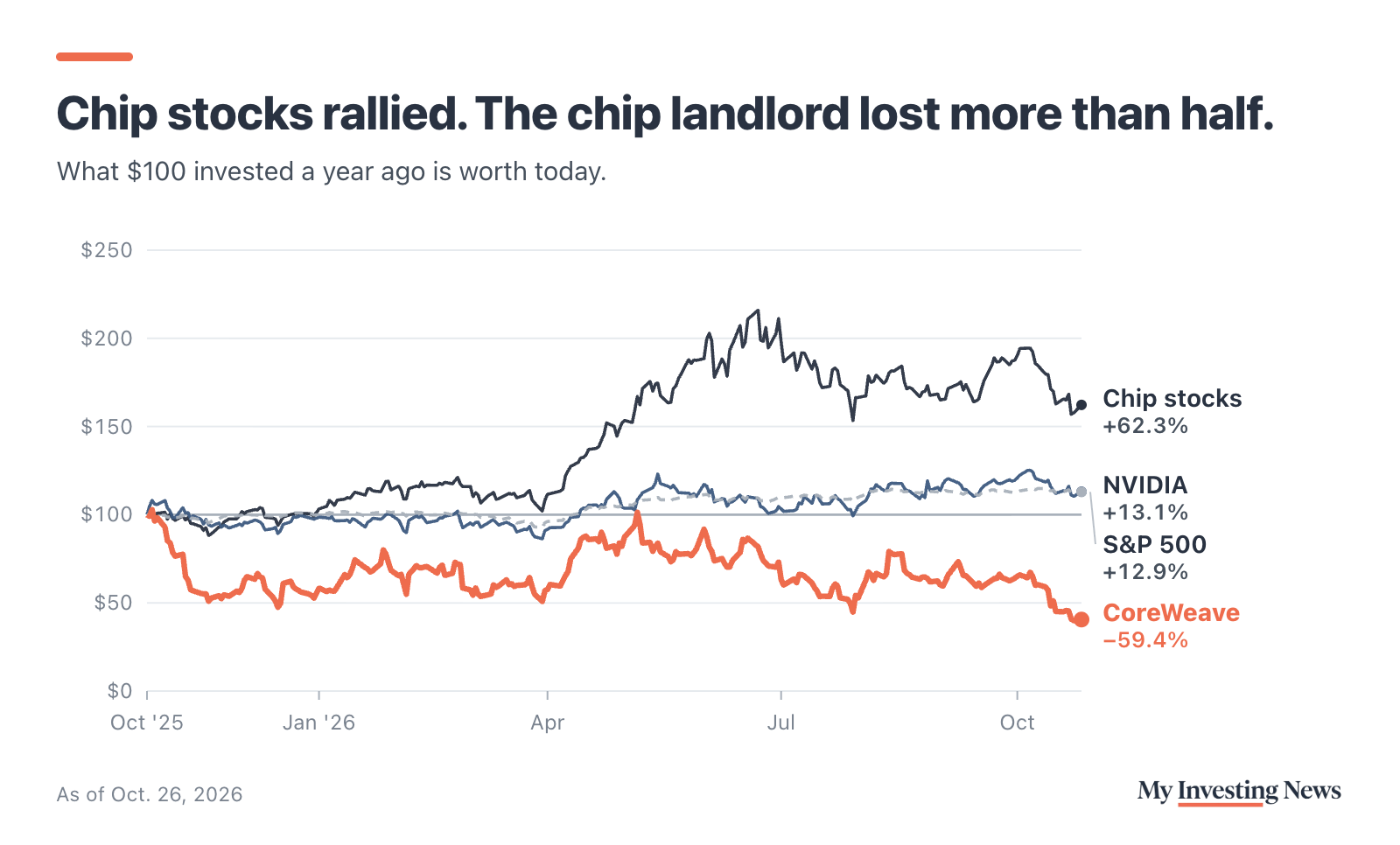
The comparison matters most for CoreWeaveCRWV, the largest company that does nothing but rent out GPUs. Its shares traded at $57.16 in premarket trading on Oct. 27, up 3.57%, after falling 34.74% over the past month.
Why Idle GPUs Drag Prices Toward Cost
A GPU hour works like a seat on a flight. If nobody rents the hour, that revenue is gone for good, and once the chip is paid for and the data center is built, serving one more customer costs little beyond power and cooling. When there are too many chips, owners would rather rent them cheaply than leave them idle, so prices can fall toward operating cost.
That math is hardest on companies that borrow to buy chips, because their debt payments stay fixed while rental rates move, and Griffin pointed to the telecom fiber expansion around the turn of the century, when overbuilding drove communication prices down. He also wondered how long GPUs stay useful. Chips five or six years old still earn rates he called extraordinary, but he doubted that would hold for another five or six years.
Chip Selloff Started Before Griffin Spoke
Mitrade reported the Philadelphia Semiconductor Index fell 11.4% in a week, its largest drop since April 2025. The iShares Semiconductor ETFSOXX tracks a similar but not identical chip index. Its steepest drop came in the week ending Oct. 16, when it fell 11.8%, days before Griffin’s interview. It fell 3.08% the following week, then rose 2.85% on Oct. 26 as tech shares rallied after Anthropic filed for its IPO. As of that day, the fund was down 14.12% over the past month.
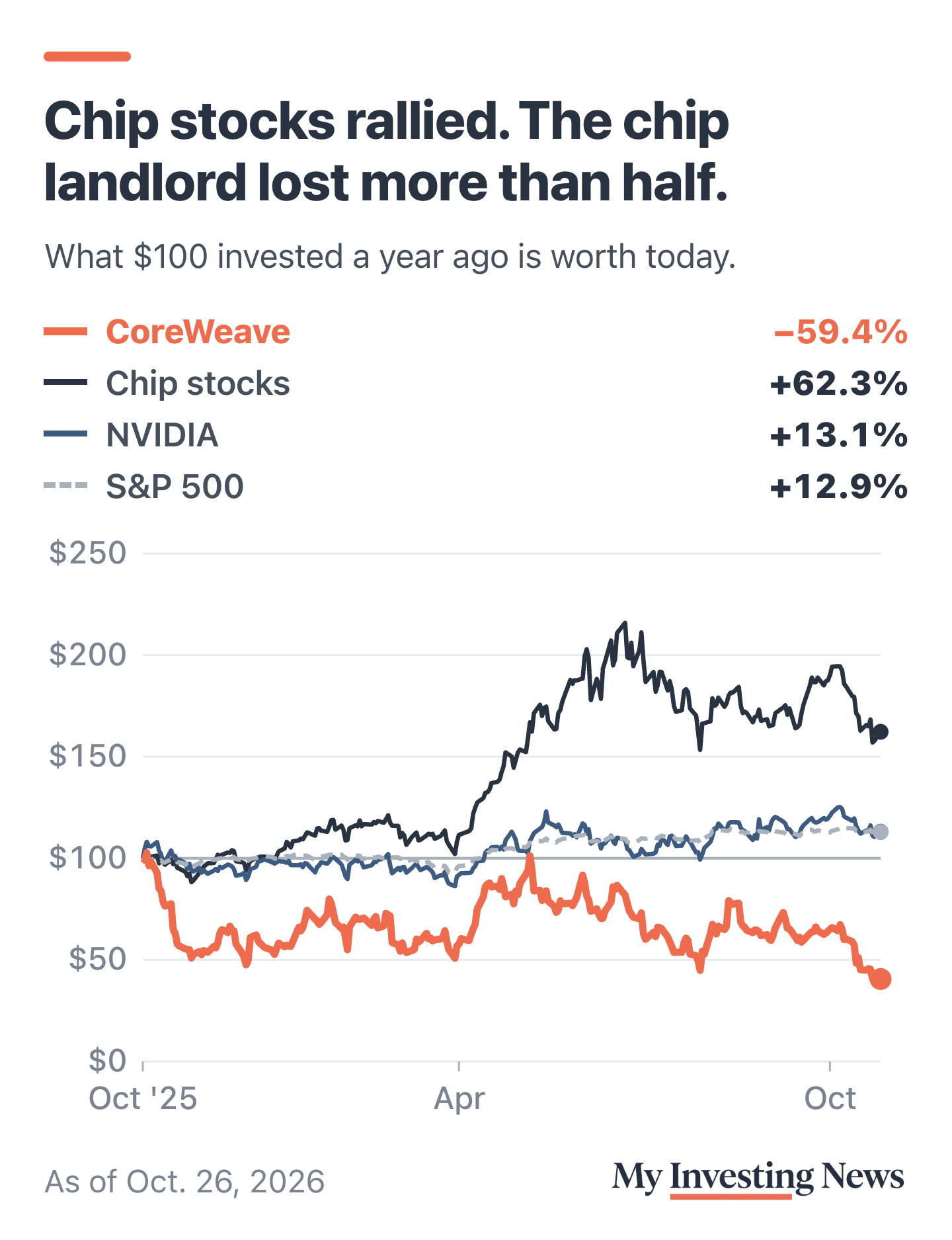
No source links the selloff to Griffin’s remarks. Per Mitrade, Griffin said the recent AI-linked selloff reflected investors doing their research, and that hedge fund deleveraging should be about the tenth explanation people reach for. BTIG expects a chip slump that could last into 2027, Mitrade reported.
CoreWeave Has the Most to Lose
CoreWeave’s second-quarter revenue rose 112.3% to $2.575 billion, according to its earnings release filed with the SEC. Its costs are climbing too. Interest expense hit $640 million, up from $267 million a year earlier, and $6.42 billion of capex drove free cash flow to -$5.74 billion.
CoreWeave’s second quarter
Startup Fortune reported that CoreWeave fell about 38% in October through Oct. 23, that its unsecured notes yield above 15%, and that about 80% of its debt is backed by GPUs. Those chips lose value as newer versions arrive. Startup Fortune’s figures come from a different source and cover a different period than the one-month decline above.
NVIDIANVDA, at $217.59 premarket, is one step further from GPU rental prices. Its latest quarterly filing put its supply commitments at $279 billion. That is where it is exposed if customers slow their spending.
Griffin’s Caveats and the Counterargument
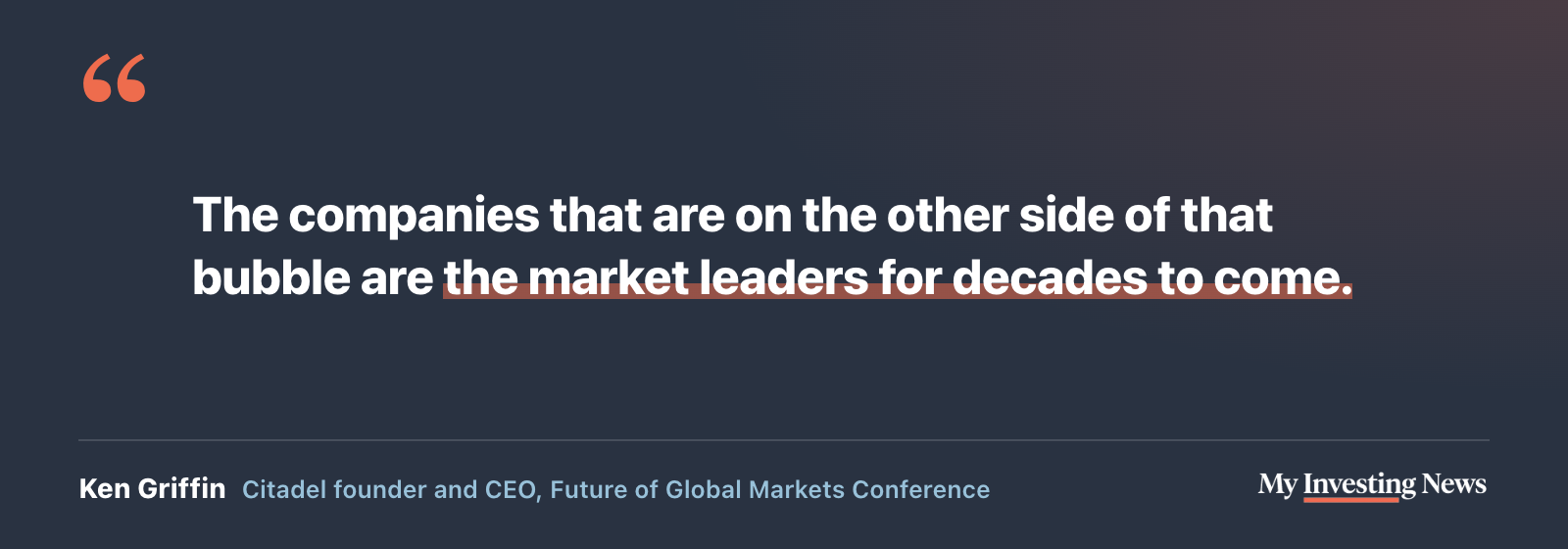
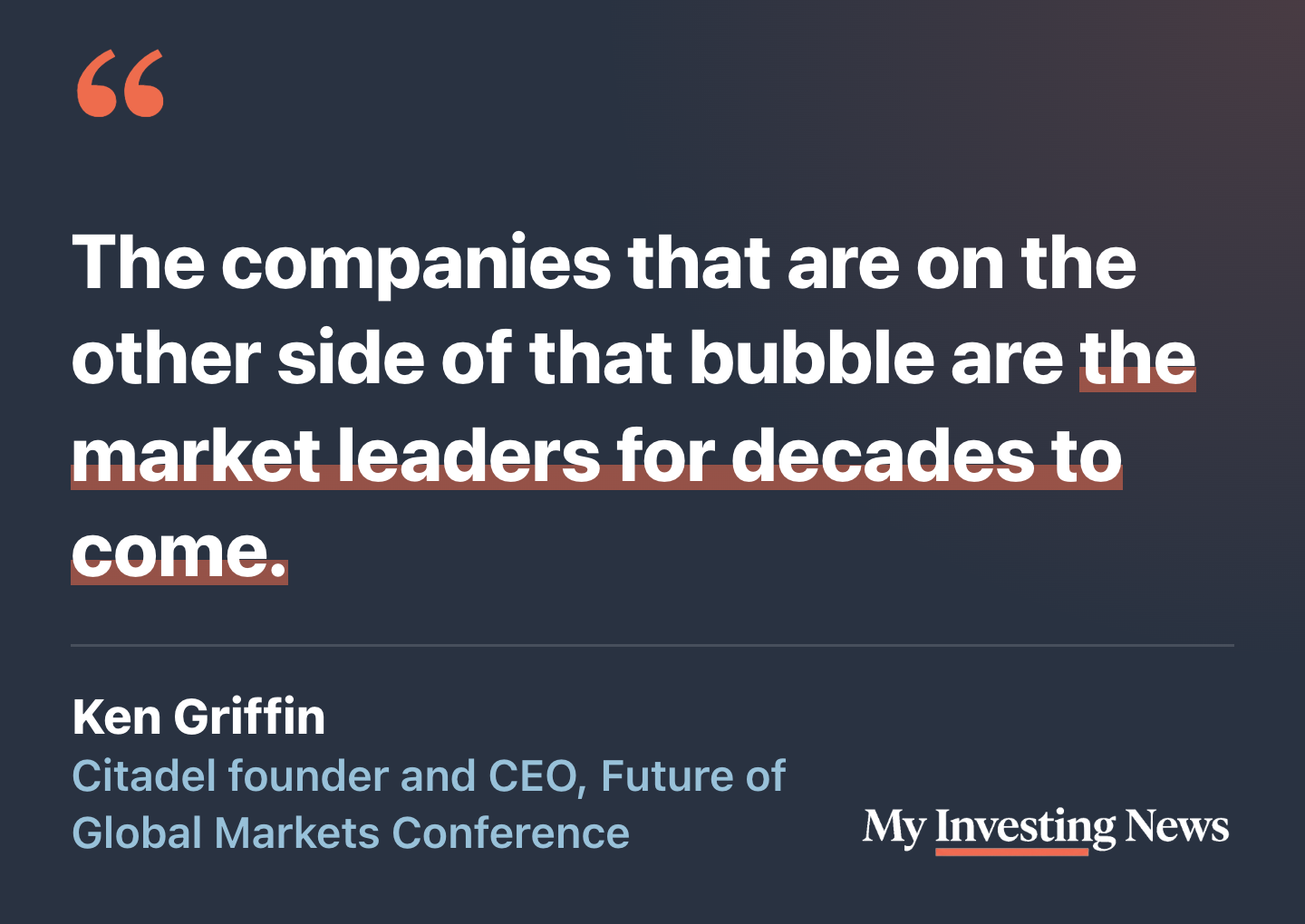
Griffin framed his remarks as analysis, with caveats. He said investors are “almost certainly” in an AI bubble. He added that radical economic change usually comes with bubbles and that “the companies that are on the other side of that bubble are the market leaders for decades to come.” He also said corporate finance teams are checking their bills from Anthropic and OpenAI to make sure the spending pays off in productivity.
Ed Yardeni of Yardeni Research disagrees with the dot-com comparison, per Mitrade. In August, NVIDIA’s CFO said “NVIDIA compute is fully utilized across every cloud we serve.” According to roic.ai, CoreWeave’s CEO says its about $104 billion signed backlog more than covers its debt. Backlog is revenue customers have committed to pay in future years. It becomes cash only as CoreWeave delivers the capacity and bills for it.
What to Watch Next
Capex guidance in upcoming earnings from MicrosoftMSFT and AlphabetGOOGL will show whether the biggest buyers keep adding capacity.
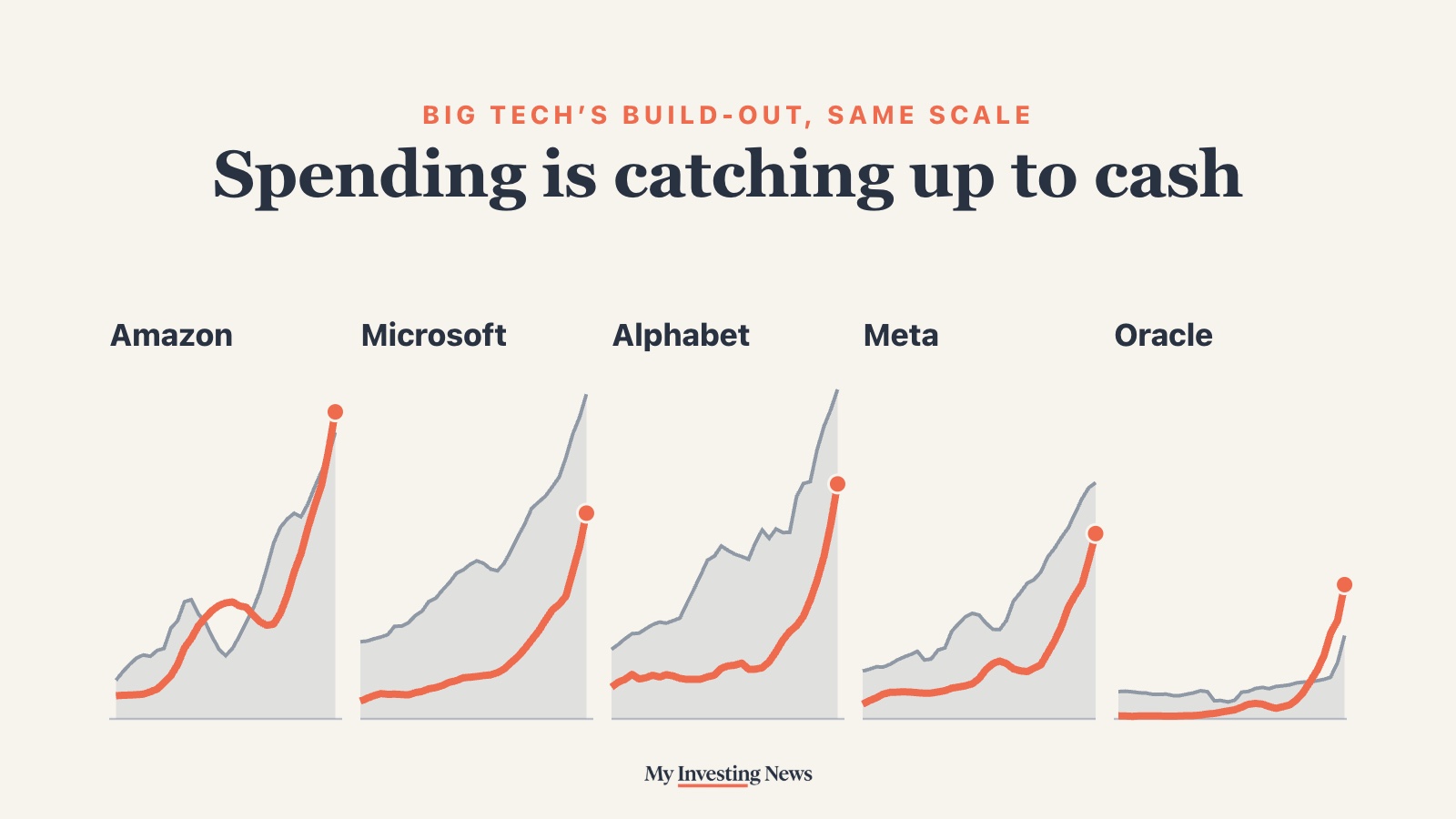
Amazon and Oracle now spend more on their build-out than their businesses bring in
Cash spent on property and equipment (coral) against cash from operations (gray), trailing four quarters, in billions. Same scale in every panel. Together the five spend 85 cents of each operating dollar.
GPU rental price data matters just as much. Falling hourly rates for older chips would be the first sign that Griffin’s airline-seat math is starting to apply.
Griffin thinks AI is almost certainly in a bubble and that GPU rents could sink toward operating cost if chip supply outruns demand, the way fares fall when a plane has too many empty seats. The companies most at risk are the ones that borrowed to buy chips, like CoreWeave, whose interest bill has more than doubled in a year. Big backlogs and fully booked clouds are the counterargument, and falling rental rates for older chips would be the first sign he is right.