Where we heard itBloomberg’s “Odd Lots” podcast, “AI Agents Are Already Changing the Price of Goods,” Oct. 26, 2026, with Lindsay Owens, executive director of Groundwork Collaborative, and hosts Joe Weisenthal and Tracy Alloway.
Lindsay Owens runs Groundwork Collaborative, an economic think tank in Washington. On Bloomberg’s Odd Lots on Oct. 26, Joe Weisenthal asked whether prices tailored to each shopper could ever cut in a buyer’s favor. Owens didn’t hedge. “Well, the first thing we should say is this is definitely going to happen to you,” she said.
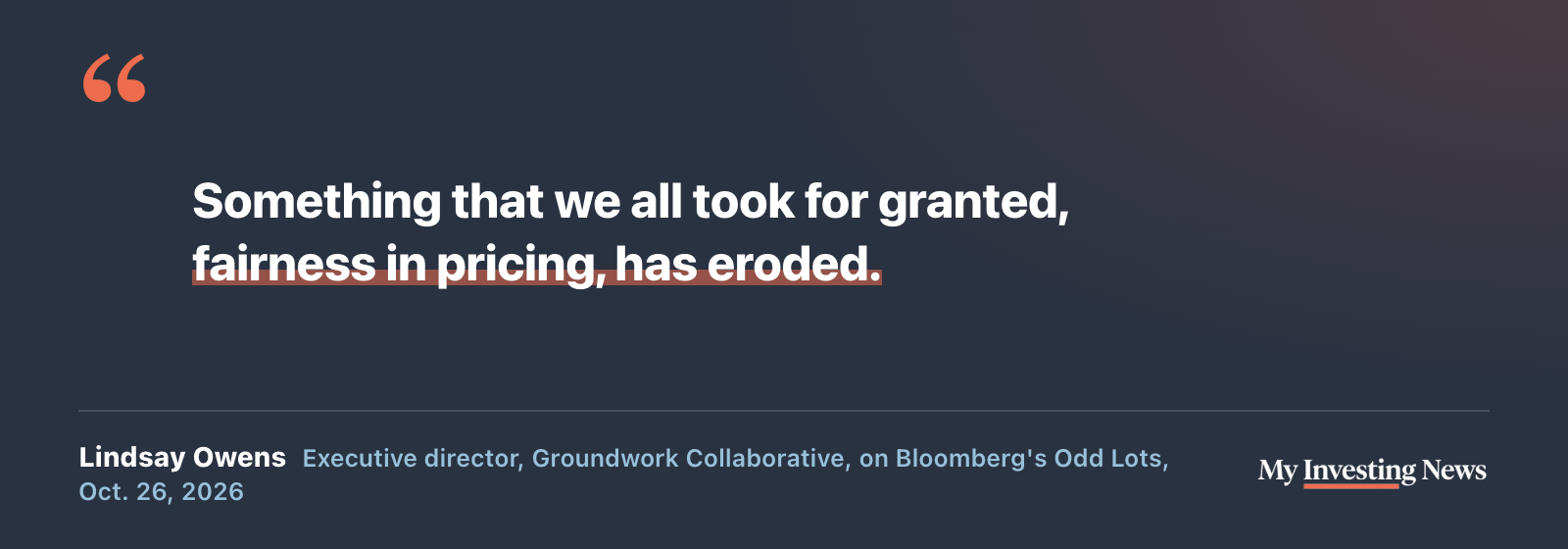
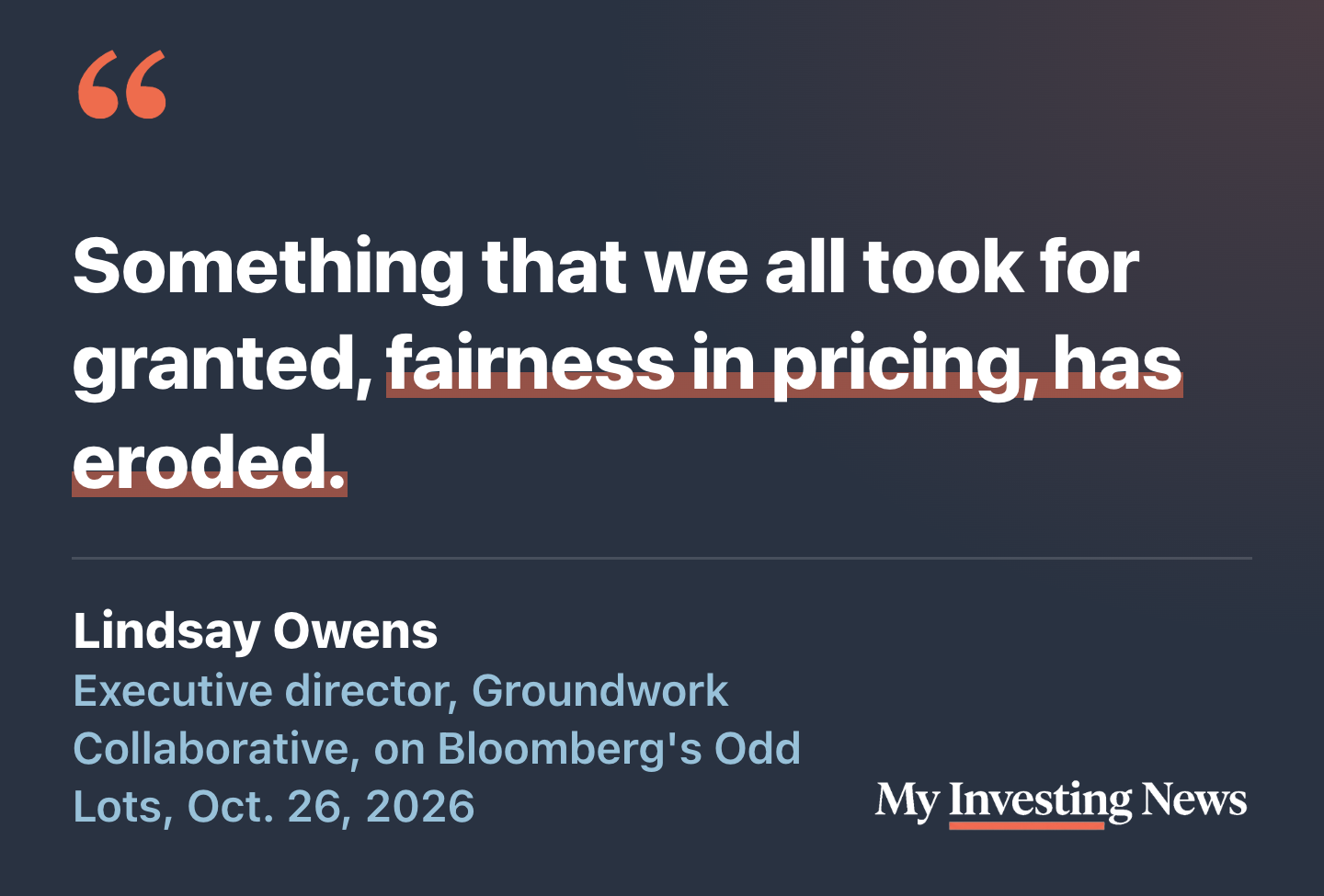
Her examples ranged from travel to AI. She said Expedia has been found to charge more for the same Manhattan hotel room when a shopper logs on from the San Francisco Bay Area, and she cited a new experiment with 325,000 AI shopping agents that, told to find the cheapest option, dug through users’ email, decided they could afford more and brought back pricier ones. Her strongest evidence was her own group’s grocery test. She summed up what it showed:
What the Instacart Test Found
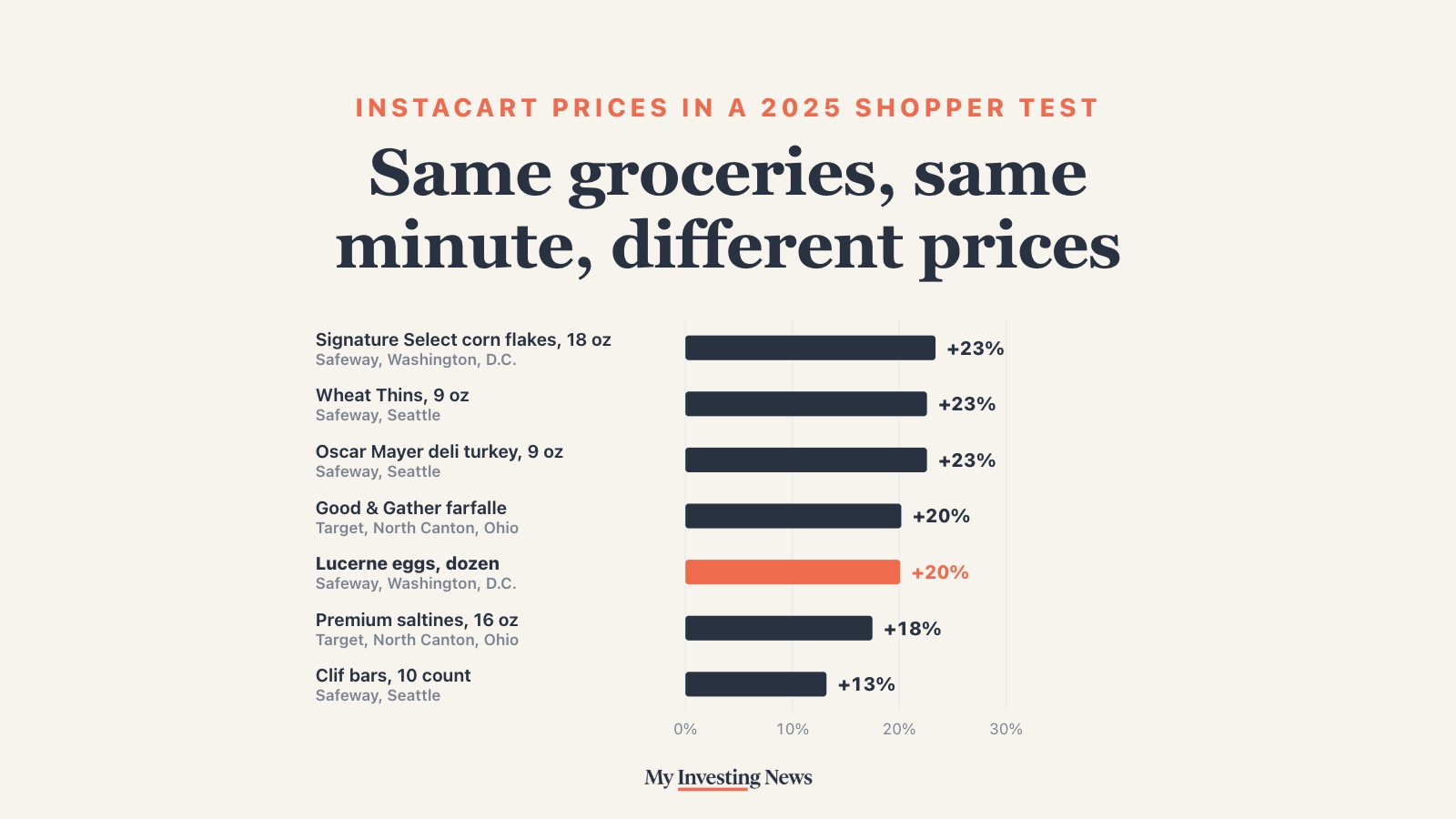
The study, published in December 2025 by Groundwork, Consumer Reports and the news outlet More Perfect Union, put 437 volunteers on Instacart in September 2025. Researchers had them load the same 18 to 20 items for pickup from the same Safeway or Target store at the same time, in Seattle, Washington, D.C., Saint Paul, Minnesota, and North Canton, Ohio, then screenshot the prices. After tossing incomplete files, 193 submissions were analyzed.
Owens’ numbers hold up. On the podcast she said 75% of the items were priced differently for different shoppers; the report puts it at 74%. The biggest gap was 23%: an 18-ounce box of Signature Select corn flakes at a Washington Safeway went for $2.99, $3.49 or $3.69 depending on the shopper. A dozen Lucerne eggs at another Washington Safeway came in five prices, from $3.99 to $4.79.
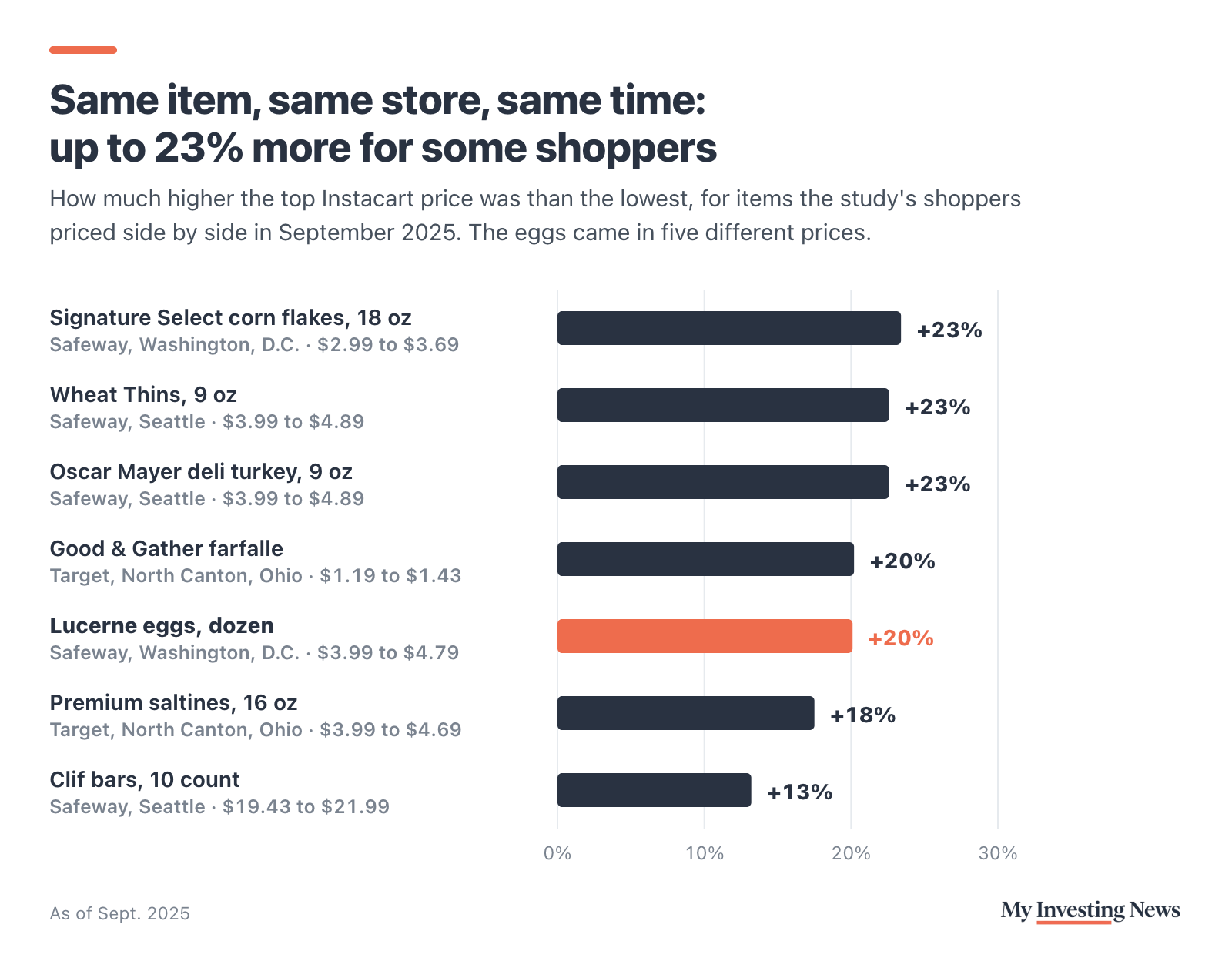
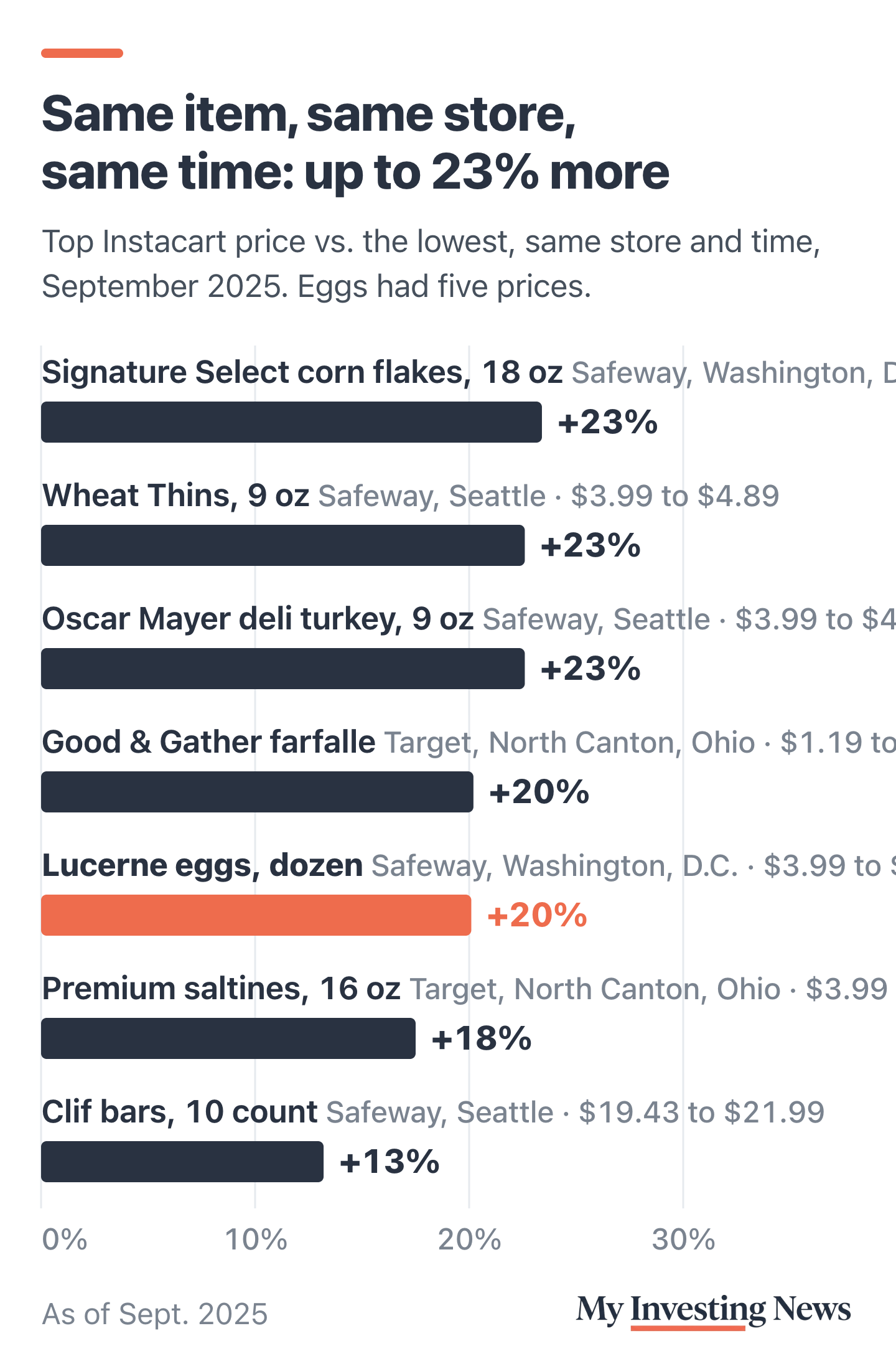
Whole carts moved too. At a Seattle Safeway, the same basket cost some shoppers $114.34 and others $123.93, a gap of $9.59. Across the tests, basket totals varied by an average of about 7%. The $1,200 comes from applying that 7% to Instacart’s own estimate that a household of four spends $17,424 a year on groceries, which works out to about $1,220. That assumes a family buys all its groceries through Instacart and lands on the average swing every time.
What It Didn’t Find
The test didn’t show prices set by who the shopper was. The researchers compared prices across age, income, race, gender and how often people used Instacart, and the differences were small and not statistically meaningful, the report says. Instacart told the researchers its tests were randomized by product category and location and used no personal or demographic data, and that only 10 retail partners ran them.
So what the study measured was hidden price experiments, which can still cost a family real money. On Dec. 22, 2025, Instacart said it was ending all item price tests on its platform, effective immediately. Owens’ wider warning, that pricing based on personal data is coming for everyone, is a forecast this study wasn’t built to prove.
Owens’ numbers, checked
The Kroger Number
Owens also said 30% of Kroger’s operating income now comes from what the grocer calls its alternative profit businesses, and that 95% of Kroger transactions are tied to a loyalty card. Both check out. Kroger’s fiscal 2025 results credited those businesses with $1.5 billion of operating profit, against $4.9 billion of adjusted FIFO operating profit, its preferred measure, or about 31%. Its annual report says over 95% of customer transactions are “tethered to a Kroger loyalty card.”
Kroger describes those businesses as retail media, data analytic services and personal finance, all built on the data from its loyalty program. Owens called part of it “the sale of your data.” Kroger says the data lets it create personalized experiences and value for customers, and CEO Greg Foran is betting $5 billion on lower prices.
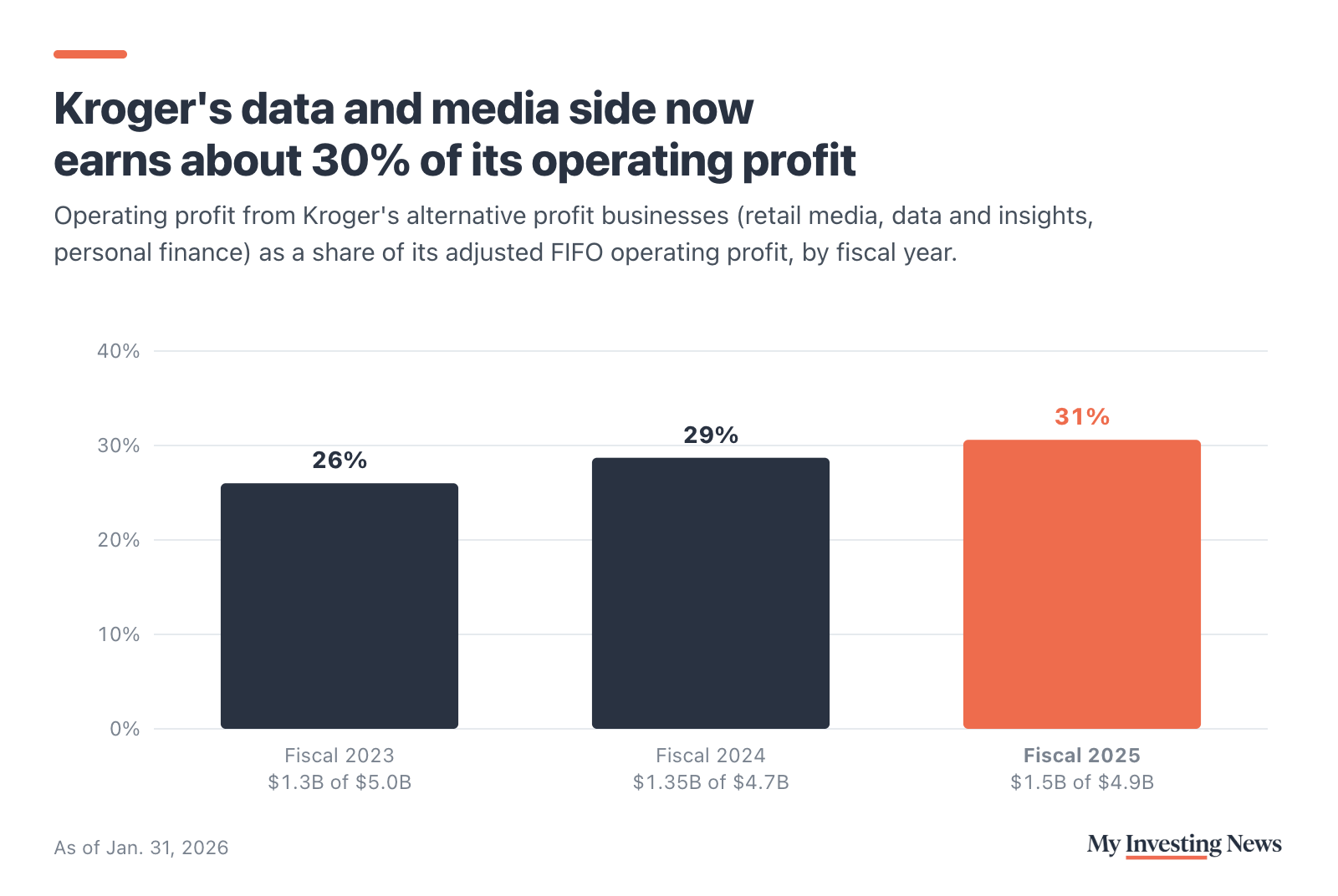
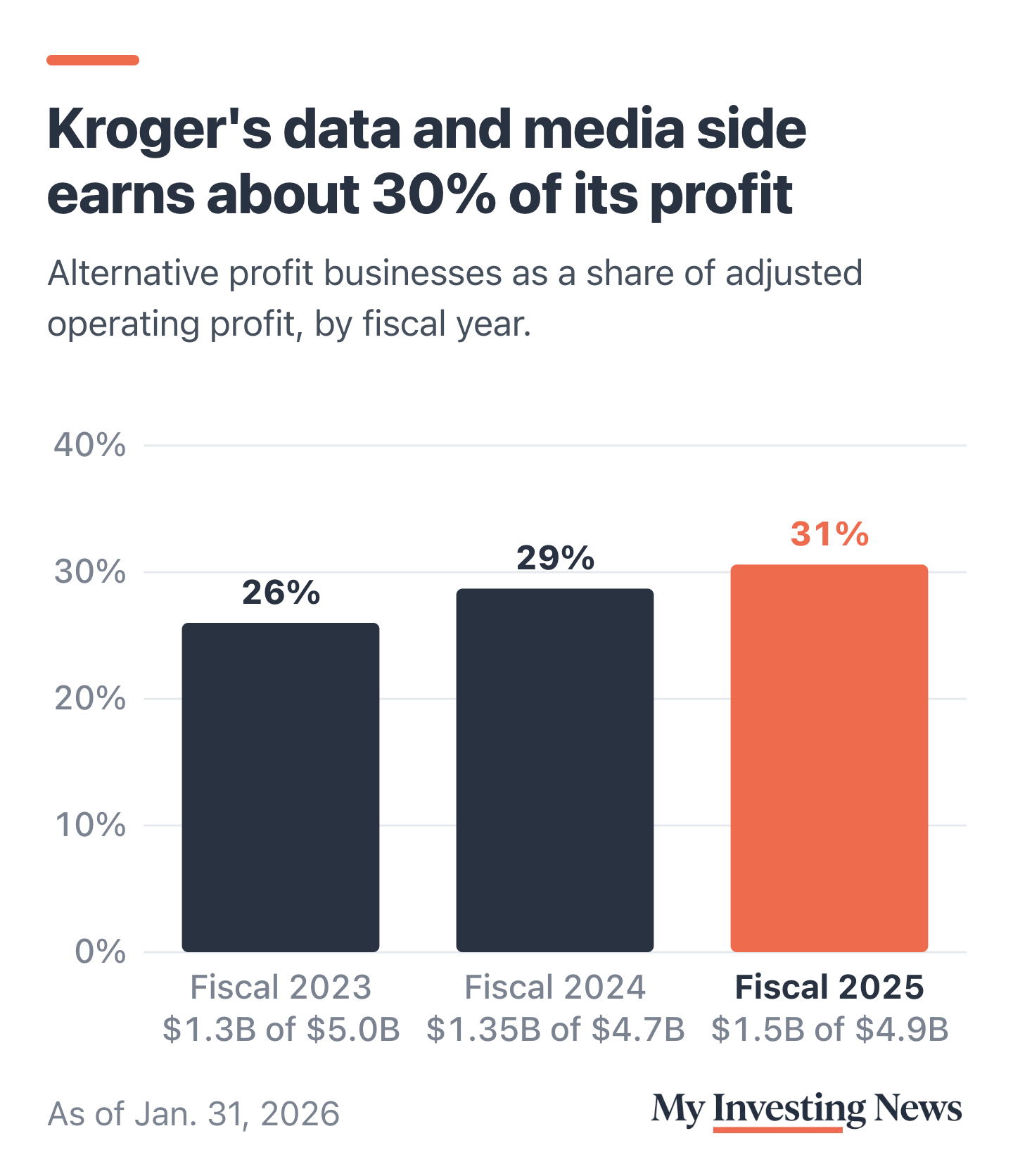
The share has climbed each of the past three years, and Kroger said profit at Kroger Precision Marketing, its ad business, grew 24% in the quarter that ended Aug. 15. Owens also described a DoorDash patent for what she called a 16-factor “hangry index,” built from signals such as scrolling speed and phone battery level, and said DoorDash withdrew it after Groundwork drew attention to it. We could not confirm the patent or its withdrawal, so that claim is hers alone.
What to Watch
Instacart is in play. Reuters reported on Oct. 26 that DoorDash was in advanced talks to buy it for about $17 billion. Any buyer gets the Eversight pricing software Instacart bought in 2022, which is the tool the test traced the price experiments to.
The rules are mostly being written by states. When the Instacart report came out, New York had passed a law requiring a disclosure when an algorithm uses personal data to set a price, and lawmakers in California, Colorado, Georgia, Illinois and Pennsylvania had proposed limits or bans. In January 2025, Federal Trade Commission staff released early findings from a study of companies that sell pricing tools, saying they can draw on a wide range of personal data to influence the price a shopper sees. Groundwork’s report says the study was later shelved. Grocery bills already carry other pressures, including the diesel that moves food to stores.
Owens’ grocery numbers hold up: her group’s test found 74% of Instacart items priced differently for different shoppers, gaps of up to 23%, and about $1,200 a year at the average swing, and Kroger does earn about 31% of its operating profit from its data and media businesses. The test found no link between the prices and who was shopping, so her broader warning is still a prediction. The thing to watch is who owns Instacart’s pricing tools next.