Where we heard itFox News’ Fox & Friends, a phone interview with President Donald Trump on Election Day, Nov. 3, 2026 (Fox News video, about two minutes in).
President Donald Trump called in to Fox & Friends early on Election Day to make his closing case for Republicans. Between a passage on the border and one on oil, he declared inflation finished:
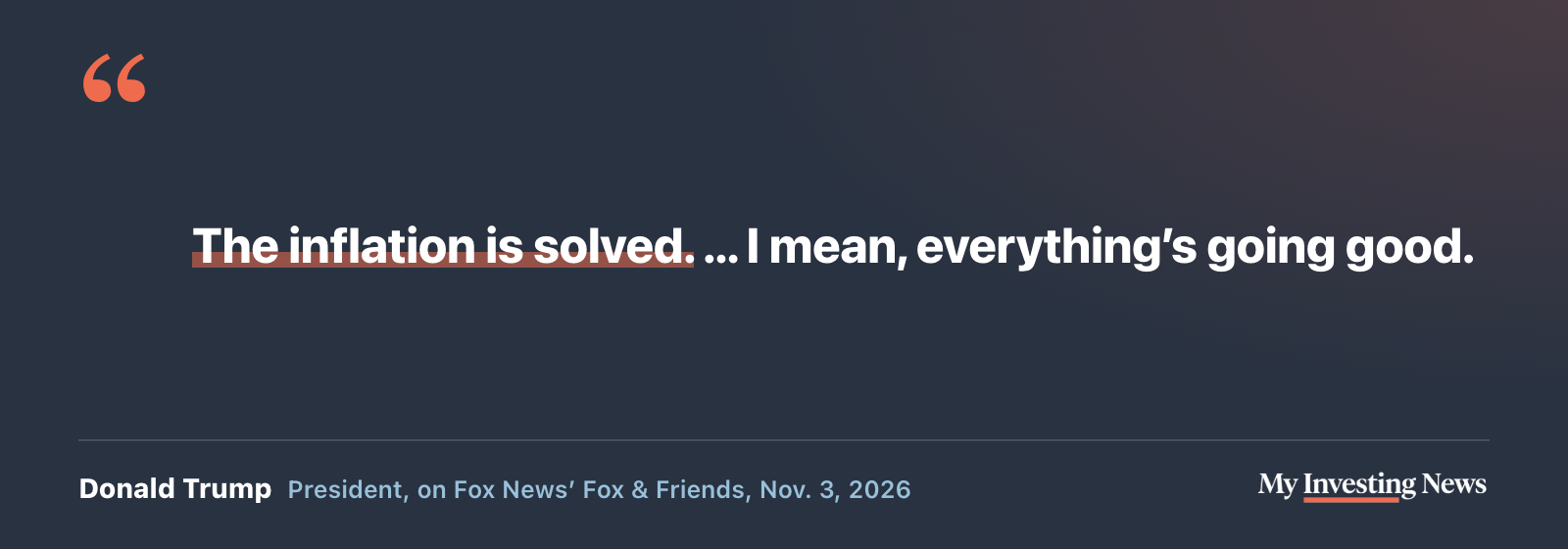
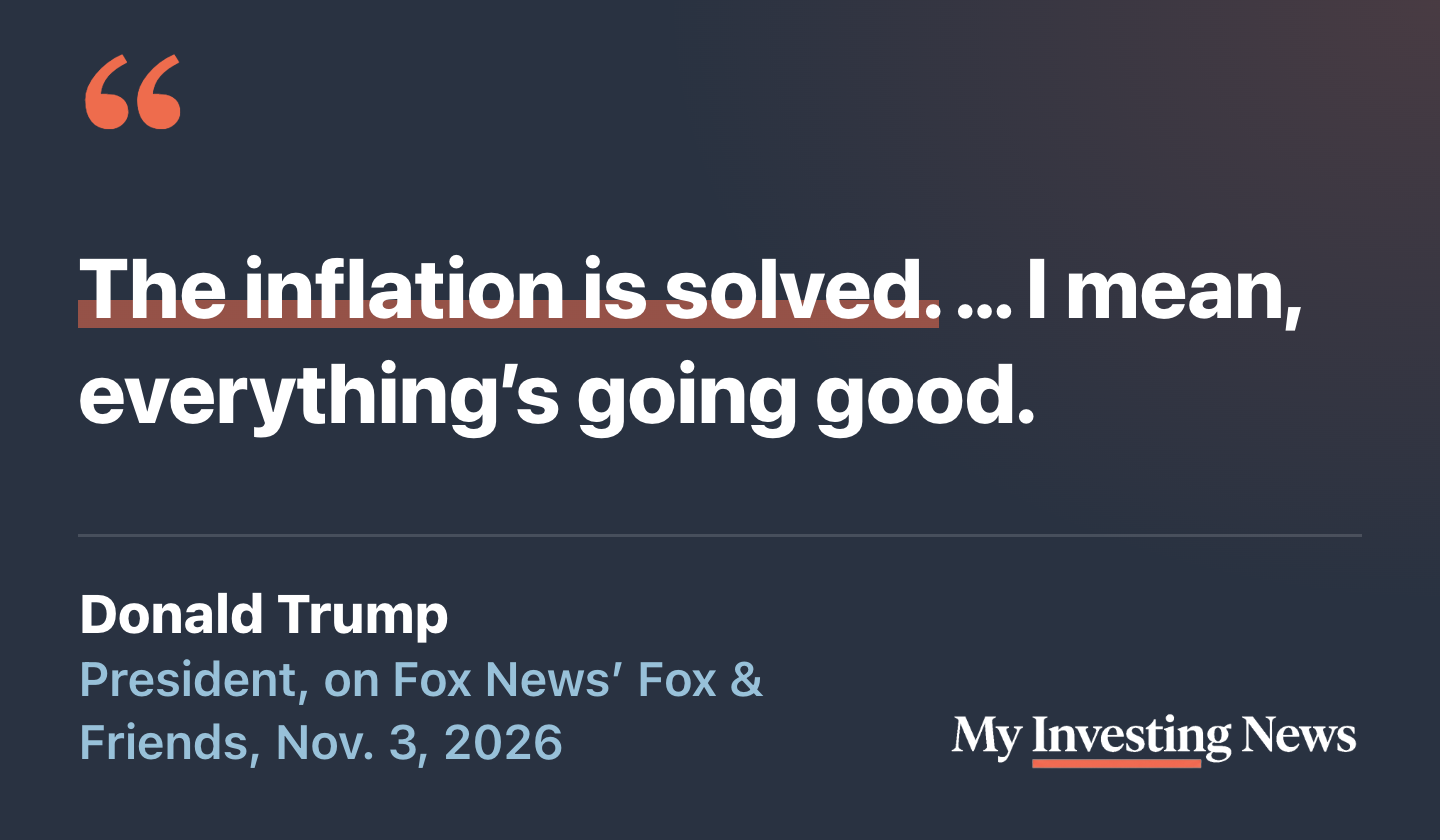
He pointed to oil, saying it “came down $10” the day before. Brent crude futures fell from $117.64 on Oct. 30 to $104.77 at the Nov. 2 close, a drop of more than $12. But the latest inflation report he had to go on, for September, showed consumer prices up 3.7% from a year earlier, with a 0.6% jump in that month alone. The first test of his claim came a week later, when the Bureau of Labor Statistics released the October numbers on Nov. 10.
A Report With No Year-Over-Year Number
Consumer prices rose 0.35% in October, seasonally adjusted, which BLS rounds to 0.4%. Prices excluding food and energy, the core measure the Federal Reserve watches most closely, rose 0.30%. That was hotter than the forecasters had expected.
The usual headline number was missing. BLS did not collect prices in October 2025 because of the government shutdown, so it said it “cannot publish 12-month percent changes for October 2026” for most of the index. That leaves the claim to be tested other ways. We used three.
Three Ways to Measure It
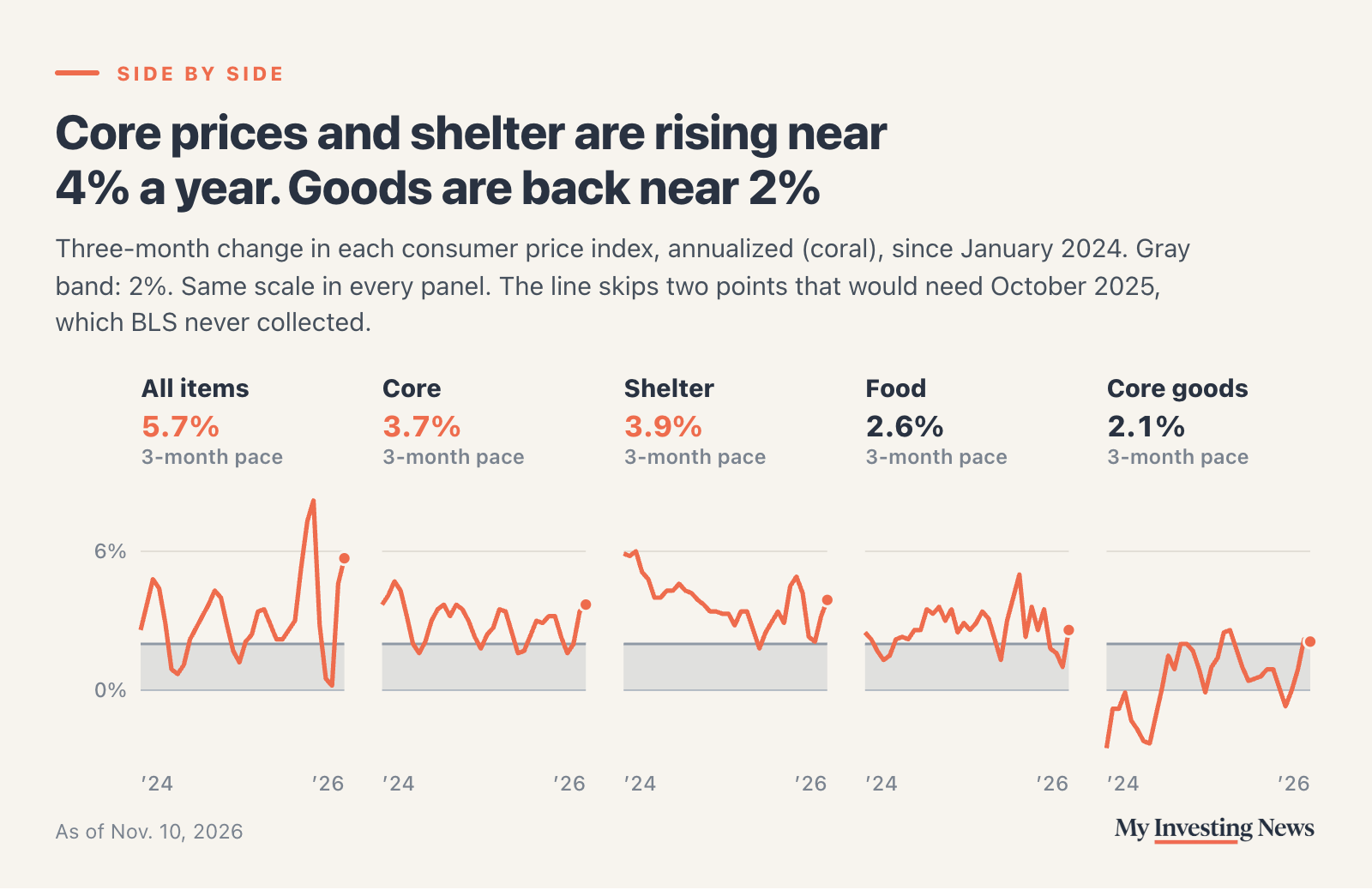
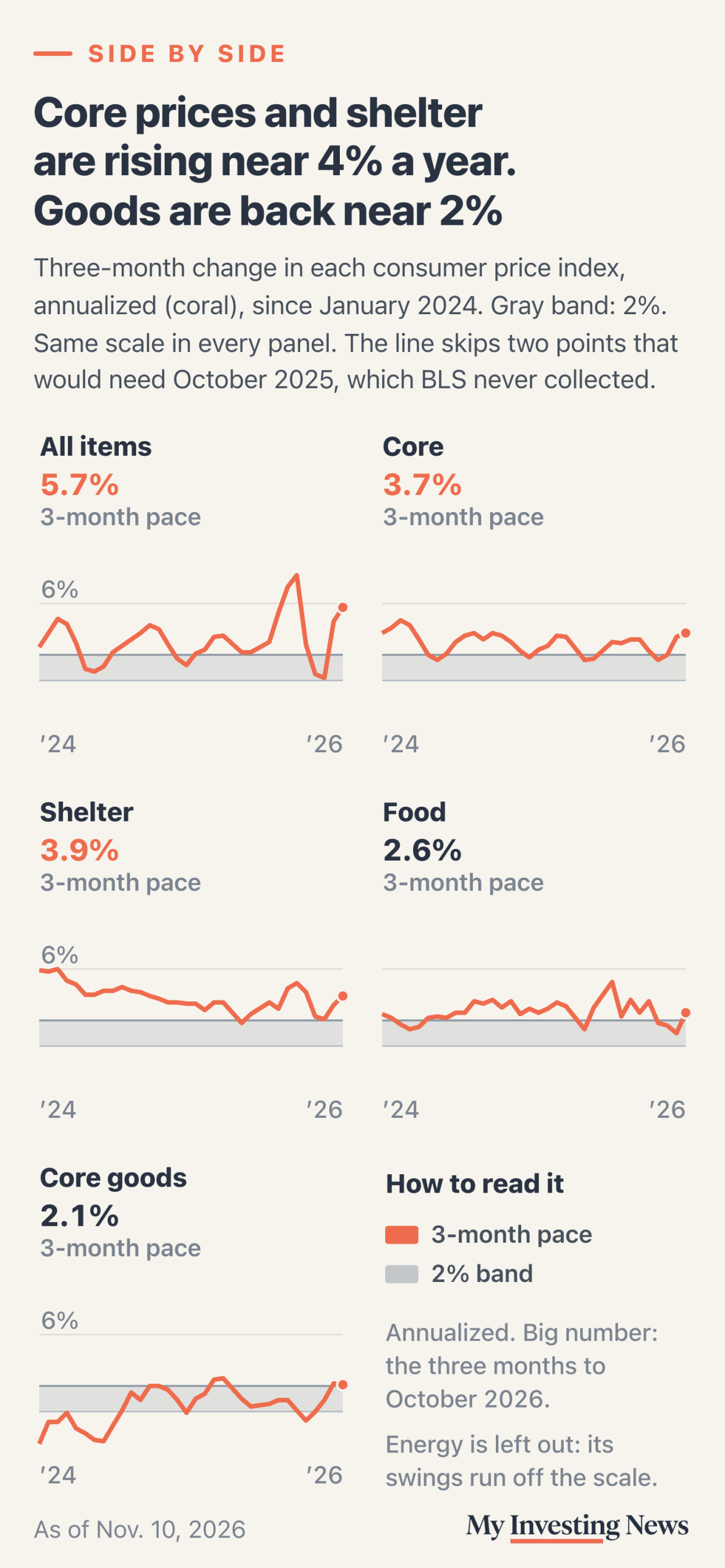
The recent pace. Over the three months from July to October, core prices rose at a 3.7% annual rate, and all prices at 5.7%, lifted by energy. Over six months, the core pace is 2.7%, held down by a slight dip in June. The two-year rate. From October 2024 to October 2026, prices rose 3.4% a year on average, and core prices 2.8%. The last annual reading. In September, prices were up 3.7% from a year earlier, and core prices 2.6%.
BLS also describes a way to fill in a missing month: take the geometric mean of the months on either side. Applied to September and November 2025, it puts October’s unofficial annual rate at about 4.0% for all items and 2.8% for core. BLS warns that such estimates are not official CPI figures.
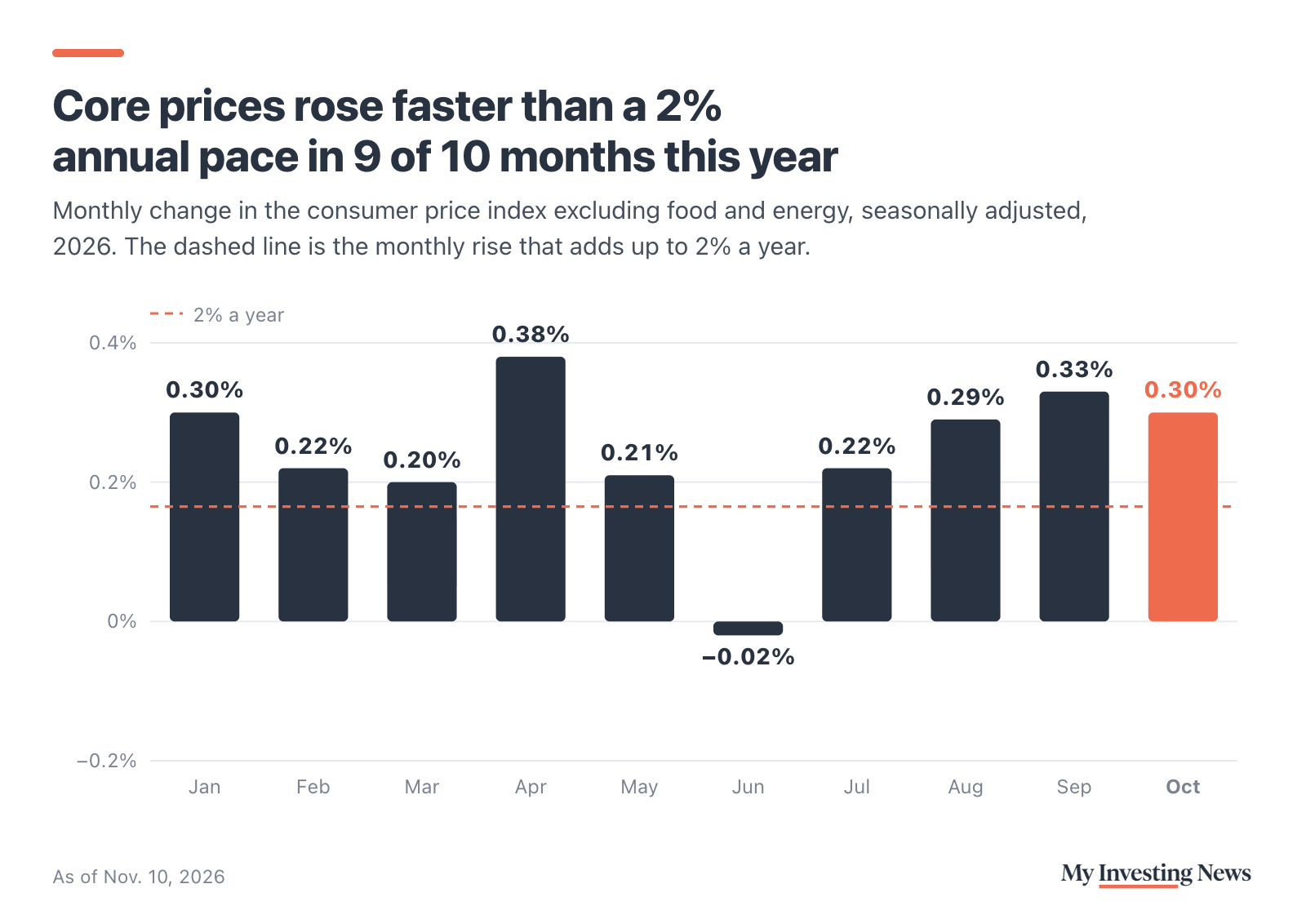
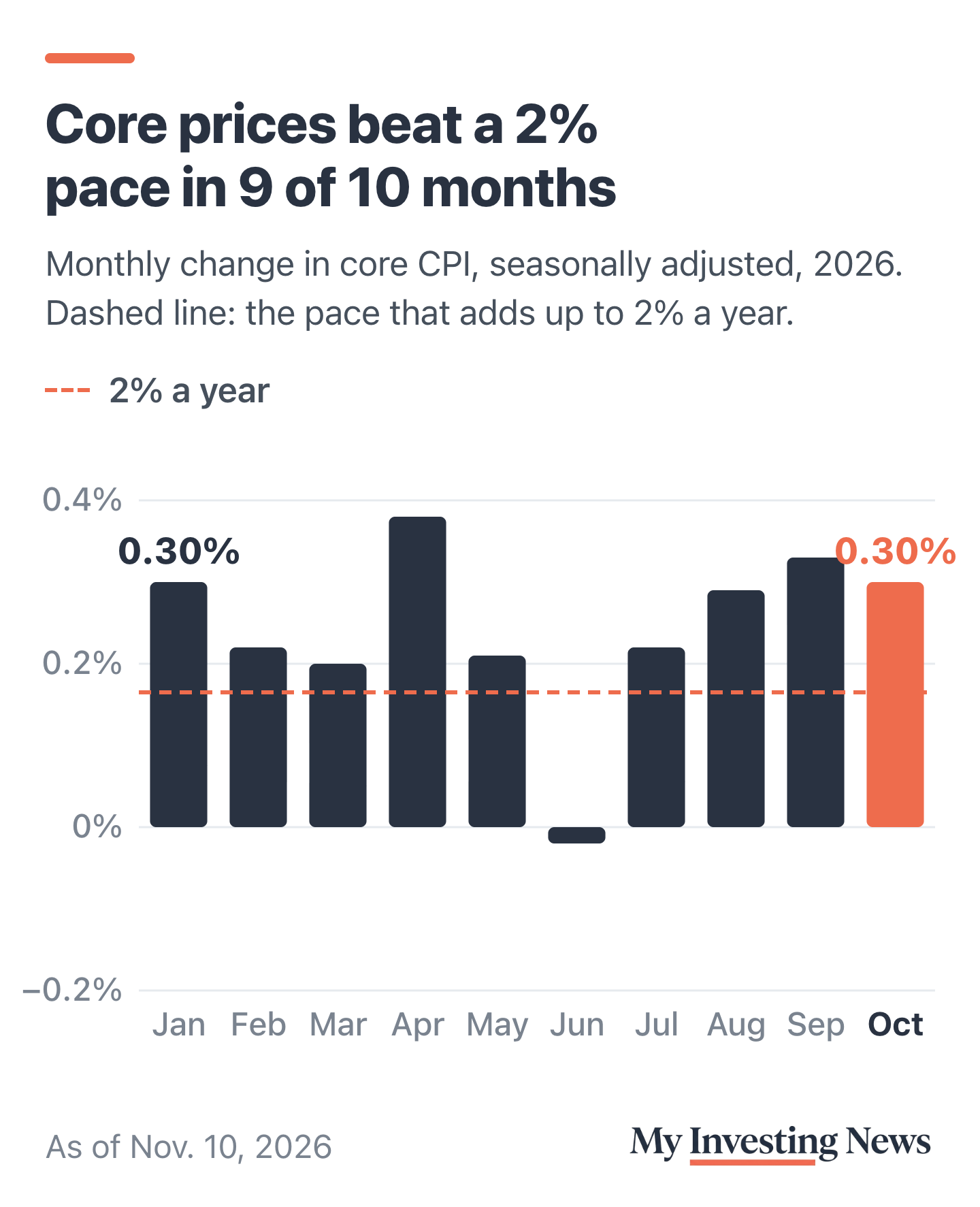
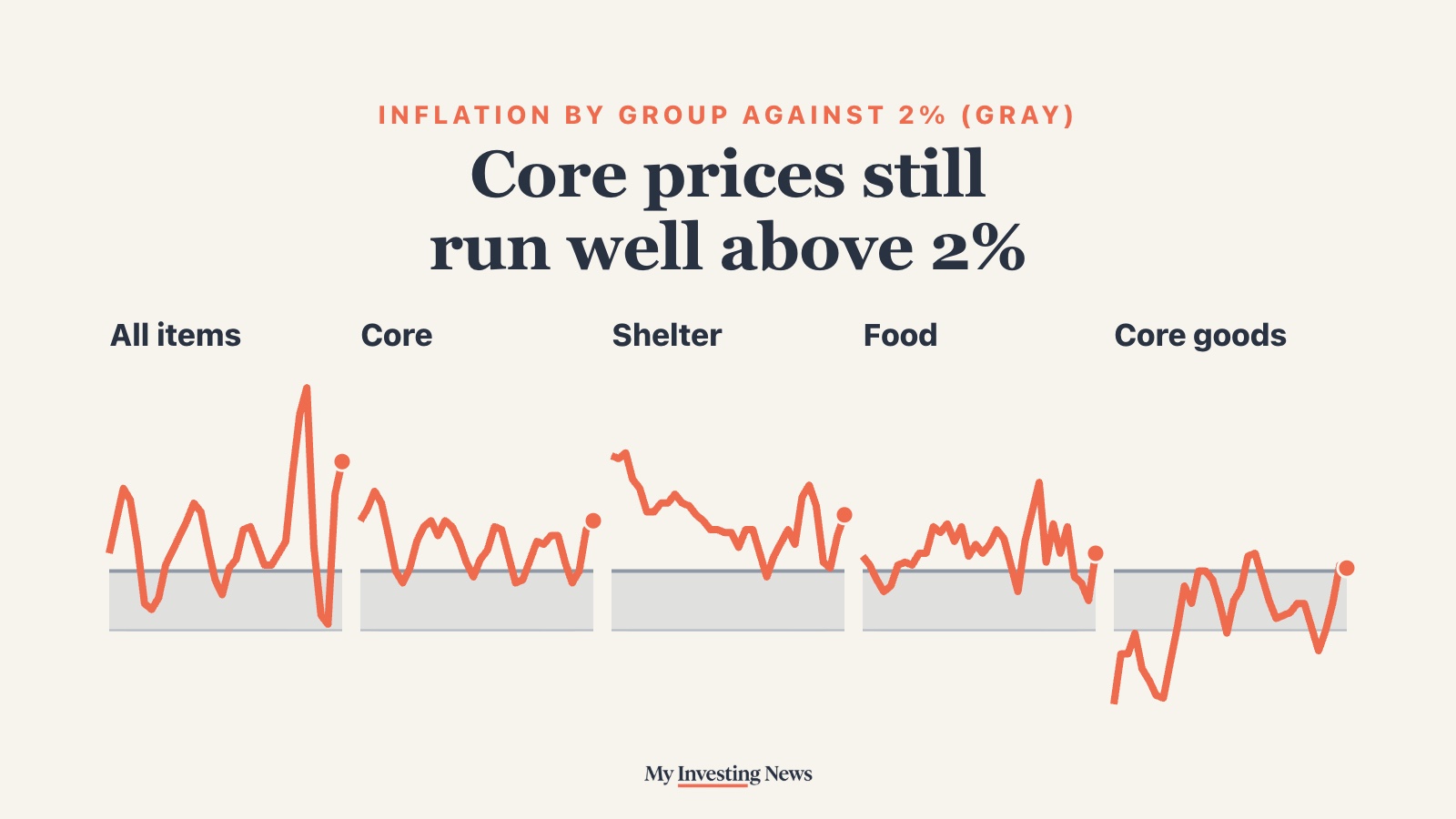
None of these measures is near the Fed’s 2% goal, which it sets for a different gauge, the personal consumption expenditures price index. Core consumer prices rose faster than a 2% annual pace in 9 of the 10 months so far this year. Charlie Bilello has counted 67 straight months of inflation above 2%.
October 2026 consumer prices, released Nov. 10
Where Prices Are Still Hot
Shelter, the biggest piece of the index, rose 0.3% in October and is running at a 3.9% pace over three months. Core goods, such as cars, furniture and clothing, are back near 2%, at 2.1%, and food is at 2.6%. Energy did the most damage to the headline number: it jumped 5.2% in September and 0.7% more in October.
Some argue part of it will fade. Former Fed governor Stephen Miran has said more than a point of core inflation is temporary. Even so, core inflation has to slow from its current pace to get anywhere near 2%.
What to Watch
Oil has kept falling since the interview. Brent closed at $92.57 on Nov. 9, down 21.3% from Oct. 30, which should pull November’s headline number down. Core prices are the better test of Trump’s claim. Producer prices come out Nov. 13 and the PCE price index Nov. 25. The November CPI is due Dec. 10, and because BLS did collect prices in November 2025, it should come with a year-over-year rate.
Trump said “the inflation is solved” a week before the October CPI. By every measure the report allows, it is not: core prices are rising at a 3.7% pace over three months and 2.8% a year over two years, and shelter is near 4%. Falling oil prices should help the headline number in November, but core inflation would have to slow for the claim to hold.