Where we heard itBloomberg interview, Oct. 21, 2026. Speaker: Maria Ferraro, chief financial officer of Siemens Energy.
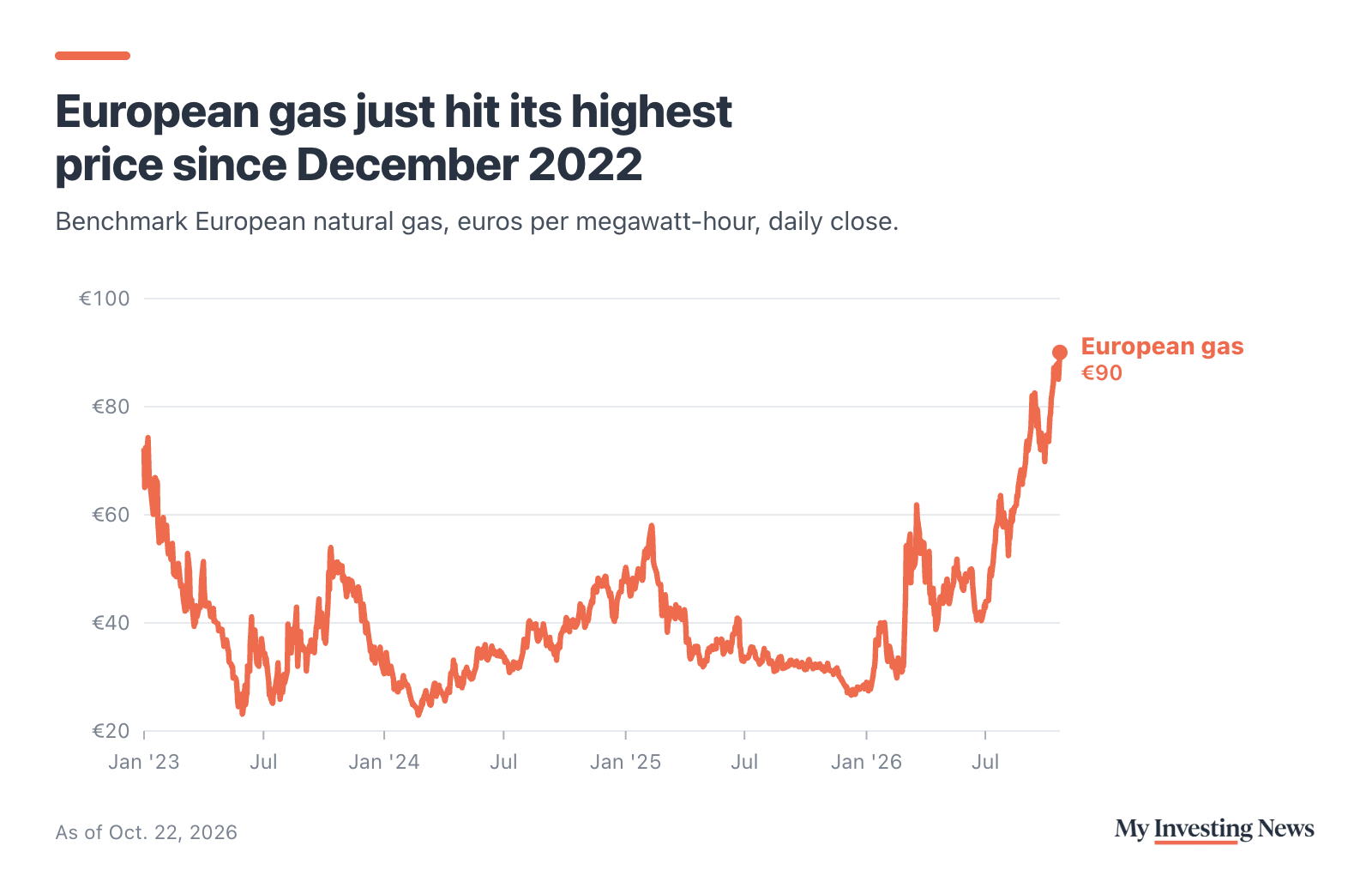
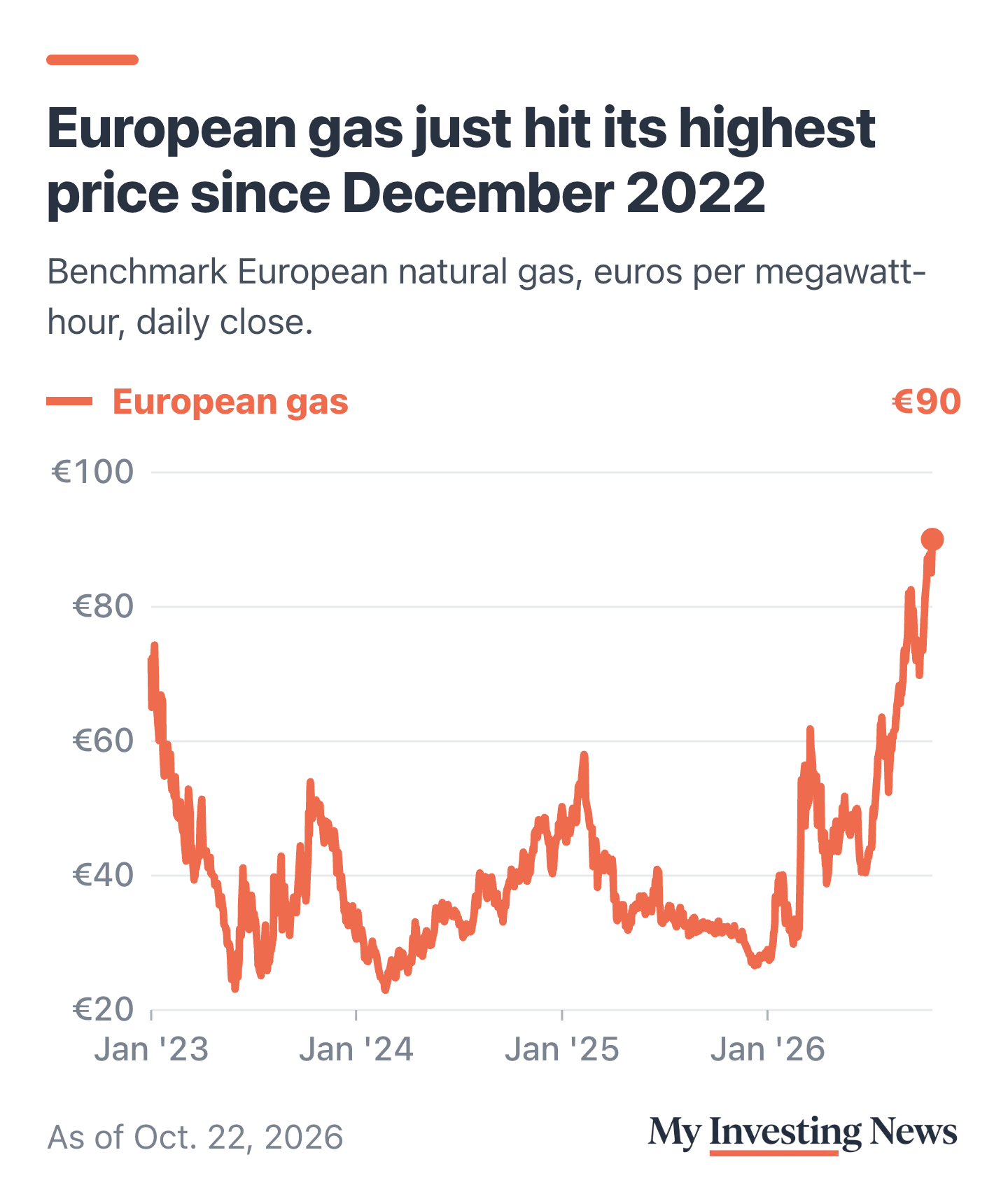
Europe is heading into winter with its energy bill climbing. According to Bloomberg, European natural gas reached 90 euros per megawatt-hour, the highest level in nearly four years. Yahoo Finance UK reported Oct. 19 that prices are holding near four-year highs as supply risks and borrowing costs stay in focus. The Wall Street Journal reported Oct. 13 that Europe enters the cold season with low gas reserves and uncertain Gulf supplies, and the Financial Times reported the same day that European gas hit its highest level since the Iran war began. Back in August, CNBC warned that prices could top 100 euros this winter.
Maria Ferraro, identified by Bloomberg as chief financial officer of Siemens Energy, argues the squeeze shows how slowly Europe builds. In an Oct. 21 Bloomberg interview, she called for urgency: “It is about speed, speed, speed. Let’s get permitting, let’s execute, and certainly we are ready to go.”
Why Permitting Is Europe’s Real Bottleneck
Siemens Energy is a German company that makes much of the hardware behind a modern power system. Its investor relations site lists gas turbines, transformers, HVDC links, substations and offshore grid connections among its products alongside data center solutions. When projects stall, that equipment waits.
Ferraro said the price spike reinforces a message the company has delivered for years: “This is obviously an indicator that we have to speed up, and this is something that we have said for the last quarters, actually a few years now: where are we with ensuring things like permitting? For us, these projects are not only multi-year to develop, construct and complete. For our customers, these are multi-decade investments.”
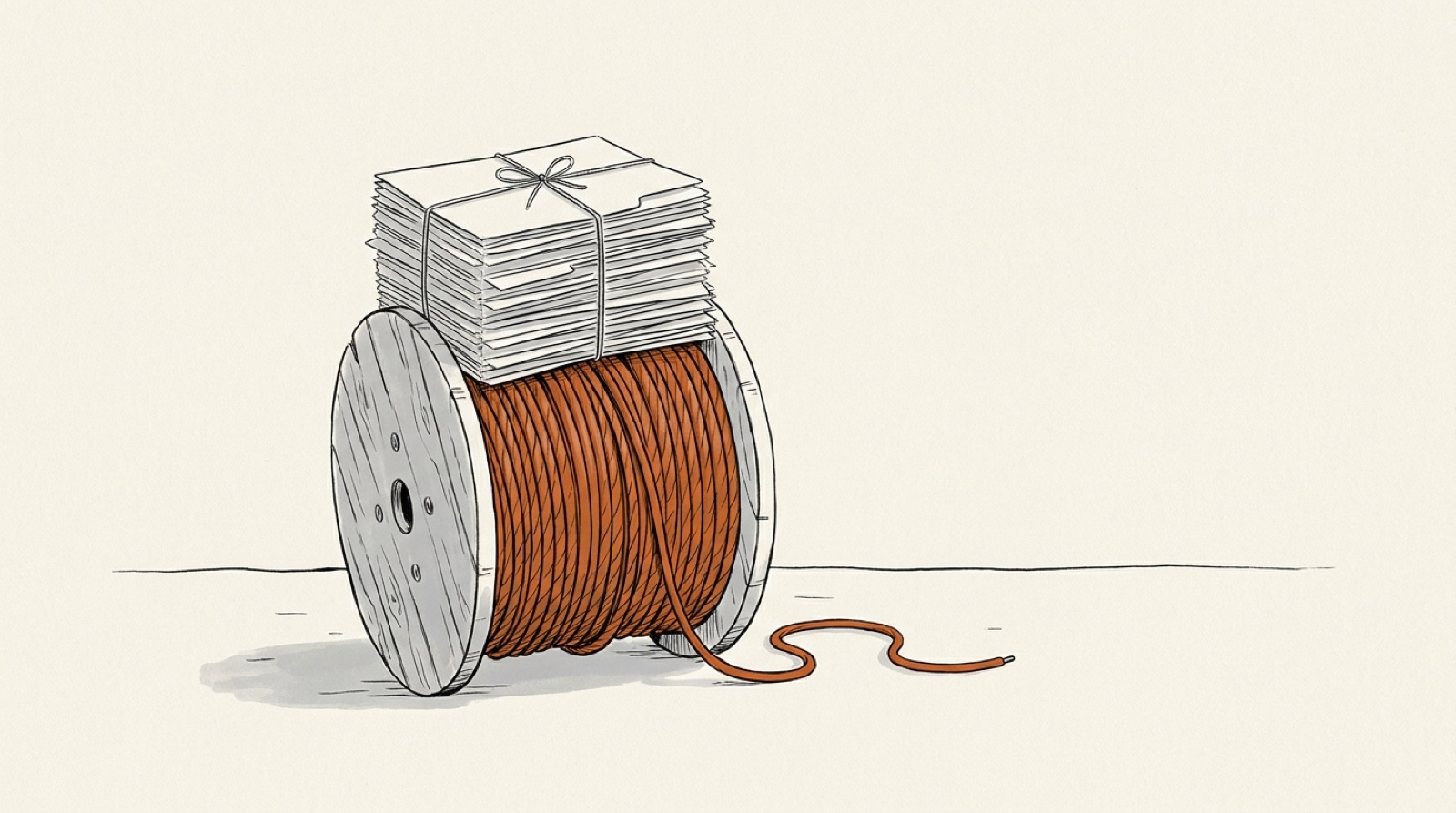
Permitting is the government approval process a project must clear before construction starts, covering environmental reviews, land rights and grid connection sign-offs. A transmission line or power plant can spend years in that queue. For a utility investing capital for decades, each year of delay pushes back the return.
Electrification Carries a Price Tag of up to $800 Billion
Electrification means shifting energy use such as heating, transport and industrial processes from burning fuel directly to running on electricity. Per the Bloomberg section, the EU targets 46% electrification by 2040. Citing a report, Ferraro said reaching that goal requires infrastructure investment of $750 billion to $800 billion.
She sees early signs of movement: “I do welcome some of the announcements that we’ve seen recently, I really do. I think the momentum hopefully starts to build with that, but the time is now.”
Europe Lags the U.S. and China on Execution
Ferraro drew a direct comparison with Europe’s largest rivals: “This is where I think it is fair to say that Europe is lagging. If you look at other parts of the world, the U.S. or China, certainly the progress is quicker. And we are benefiting from that momentum. But certainly when it comes to Europe, it is not a strategy issue. It is about how we execute upon that.”
The section noted that Germany has made some progress, while demand from AI data centers is adding strain to grids. That pressure is global. A Colorado legislative staff report notes that a single data center can consume over a gigawatt of power, roughly enough for 750,000 homes.
Europe’s energy squeeze in numbers
Why U.S. Investors Should Pay Attention
Europe’s energy costs feed into the earnings of global companies with European factories, customers and supply chains. Higher gas prices raise input costs for chemicals, metals and manufacturing, and they can weigh on European consumer demand.
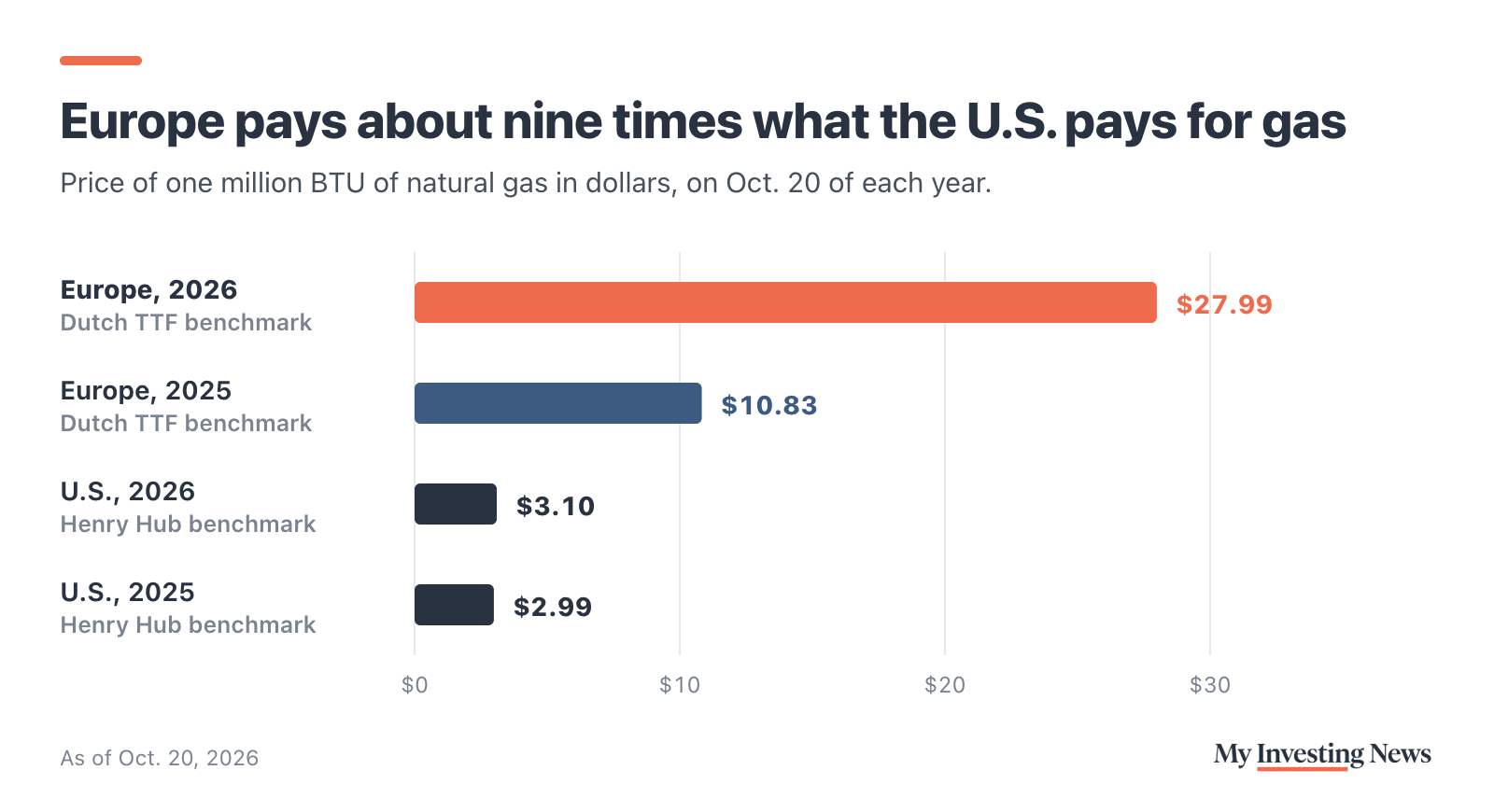
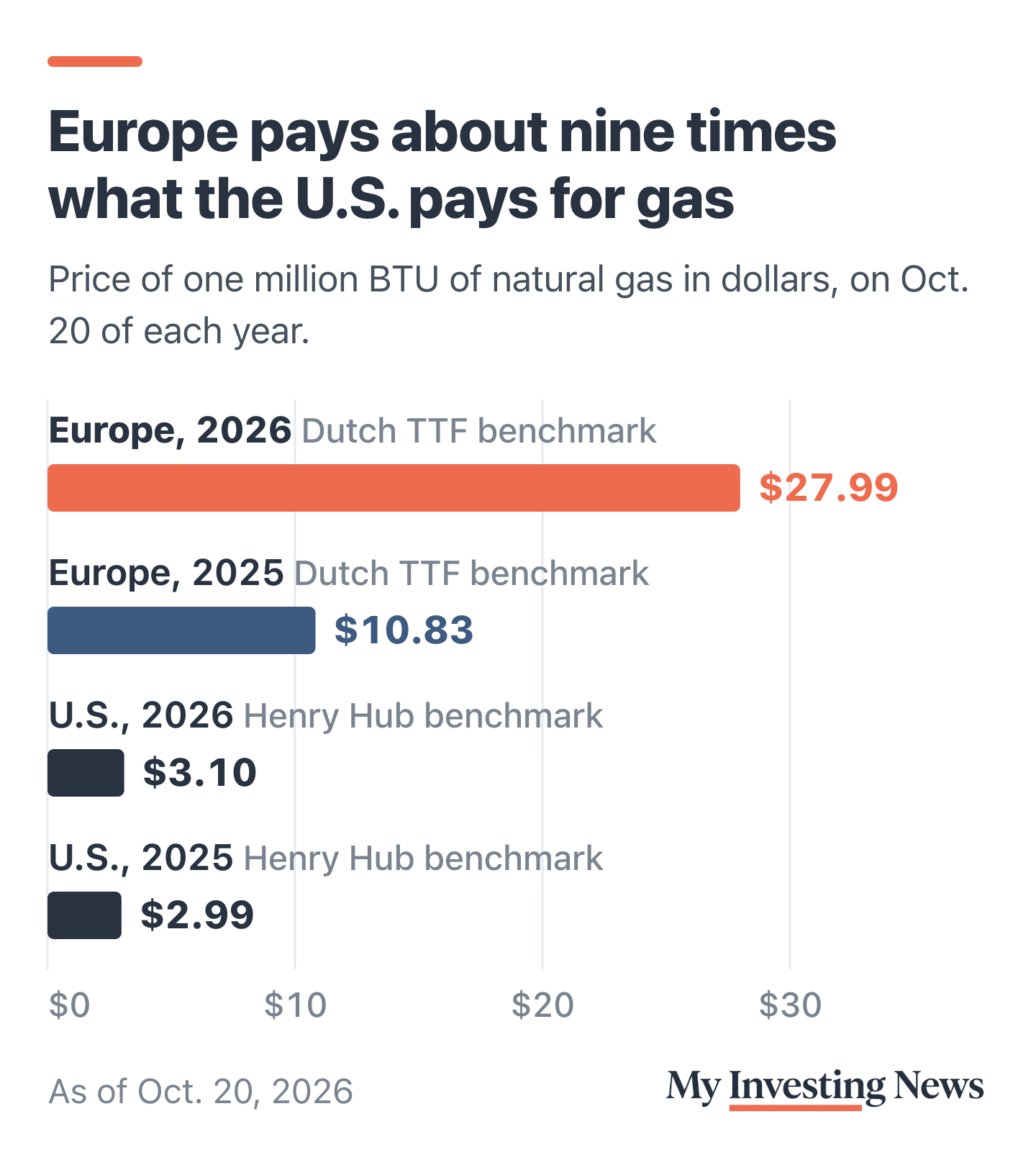
Demand for grid and power equipment is worldwide, so delays in one region shift where manufacturers deploy capacity. Ferraro’s remarks suggest the faster U.S. expansion is a relative advantage, one her company says it is already profiting from. U.S. gas also remains far cheaper: the Henry Hub benchmark stood at $3.10 per million BTU on Oct. 9, after spiking to $30.72 on Jan. 23.
Siemens Energy is also returning cash. On September 23, 2026, it announced a third buyback tranche of up to €2 billion under its €6 billion program.
Europe Has the Plan and Now Needs the Speed
Ferraro’s view is that the EU’s goals hold up on paper and the gap lies in approvals and execution. Things to track this winter include whether gas prices approach the levels CNBC highlighted, whether Brussels and national governments cut permitting timelines, and whether Europe’s grid expansion begins closing the gap with the U.S. and China.
Academy Securities’ Peter Tchir has told investors to look at Europe’s energy, infrastructure and manufacturing build-out.
Ferraro says Europe has the right energy goals and is too slow to approve and build the projects behind them, while the U.S. and China move faster. The risk is a winter with European gas near €90 per megawatt-hour, about nine times the U.S. price, while new grid and power projects still wait on approvals.