Where we heard itCNBC, report on data centers and the aging grid in Pine Island, Minnesota, Oct. 19, 2026. Speakers include Jigar Shah of Multiplier, an Xcel Energy representative and David Pomerantz.
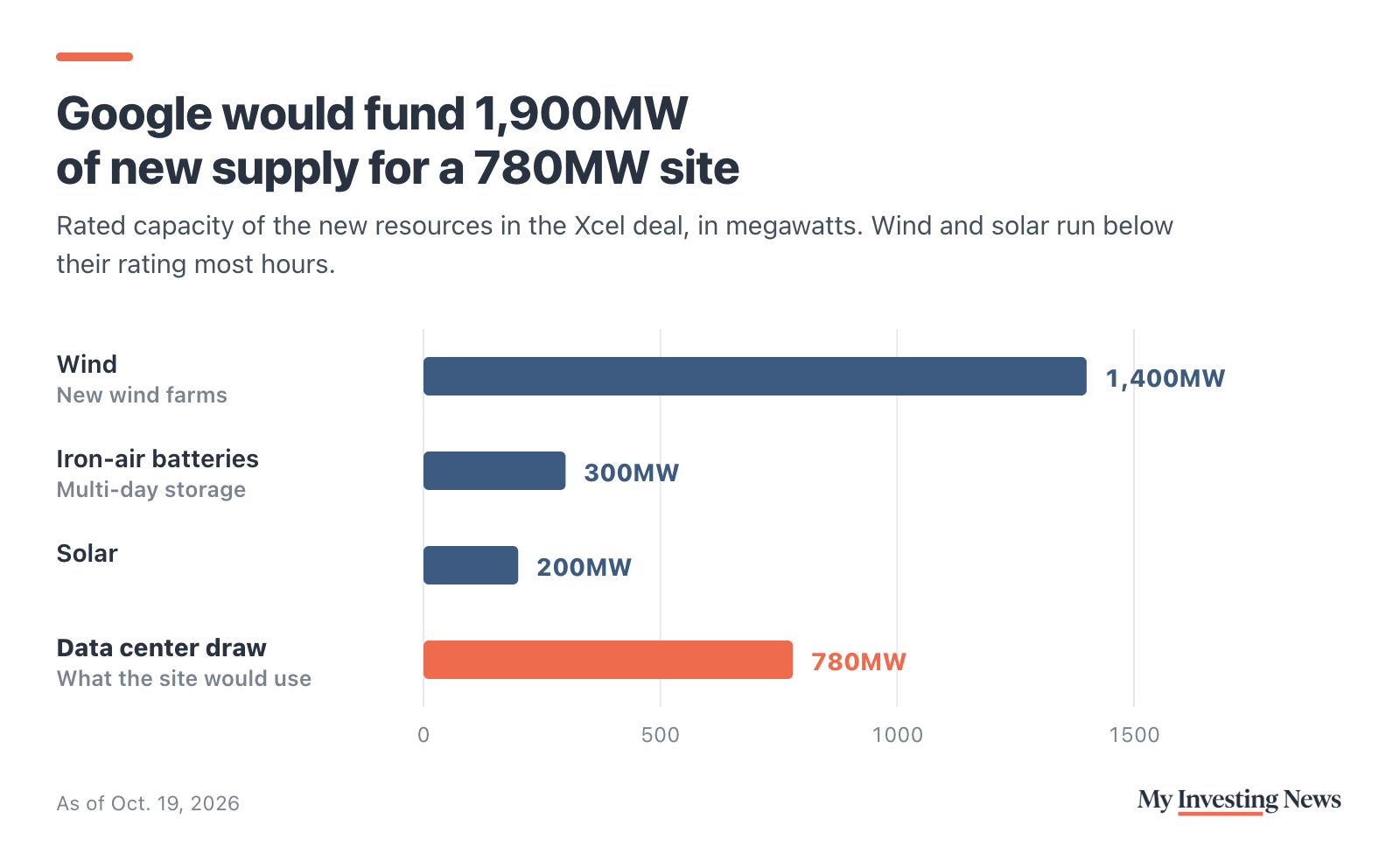
AlphabetGOOGL unit Google wants to build a data center in Pine Island, Minnesota, that would draw 780MW, which is enough to power more than half a million homes, according to a CNBC report published Oct. 19. Google is building the project with Xcel EnergyXEL, and it has become a test case for whether tech companies can pay to upgrade the grid without raising local bills. The Minnesota Public Utilities Commission still has to approve it.
Aging Grid Meets Thousand-Megawatt Demand
An industry expert in the report said: “70% of our transmission grid in the US is over 25 years old, and it’s starting to reach the end of its natural life. And that means we need to invest more capital as a country to update these grids.”
An industry observer described how much bigger the new facilities are: “What’s happened in the last few years is we’ve gone from data centers that are 25, 50MW to data centers that are now 1000MW or 5000MW, or we’re even talking about 10,000MW. So all of a sudden, it’s a couple orders of magnitude larger.”
A megawatt is one million watts. It measures how much power a facility draws from the grid at any given moment. CNBC counts more than 2,600 data center projects planned across the U.S., and together they could add nearly 400GW of demand. The report also says U.S. gas-fired capacity built to power data centers nearly doubled in the first half of 2026. Google, Meta PlatformsMETA, MicrosoftMSFT and AmazonAMZN are all racing to lock up power. Alphabet alone spent $44.9 billion on capital expenditures in Q2 2026.
Elsewhere in the data center buildout, CoreWeave’s unsecured bonds fell far enough to yield about 15%. In energy stocks, futures trader Bill Baruch says three refiners did the heavy lifting in this year’s rally, which many credit to AI and rising electricity demand.
Google’s “Right Way” Pitch
A speaker in CNBC’s report said: “The truth of the matter is that data centers can be designed the wrong way, and they can be designed the right way. And if you design them the right way, they can reduce electricity rates for everybody.”
Here are the deal terms as reported:
- Google pays the cost of connecting to the grid.
- Google funds 1,900 megawatts of new resources: 1,400MW of wind, 200MW of solar and 300MW of iron-air battery storage.
- Minimum demand charges require Google to pay for a set level of power even if it uses less. Exit fees charge Google if it leaves early. Both keep Google on the hook if demand falls short.
- Xcel expects the agreement to deliver approximately $1.1 billion of benefits to customers.
- Google has committed $127 million in direct community investment: $100 million for infrastructure, $24 million for Pine Island Public Schools and $3 million for the city.
A Former Energy Official’s Case for Spare Capacity
Jigar Shah, a partner at Multiplier, said: “If you fit the load growth that the data centers want into the existing grid, everybody’s rates go down by a lot.” Utilities have to pay for poles, wires and substations no matter how much power flows through them. A large customer that runs on spare capacity spreads those fixed costs across more usage, so each household’s share can shrink.
The Pine Island deal by the numbers
Even Xcel Says Bills Will Rise
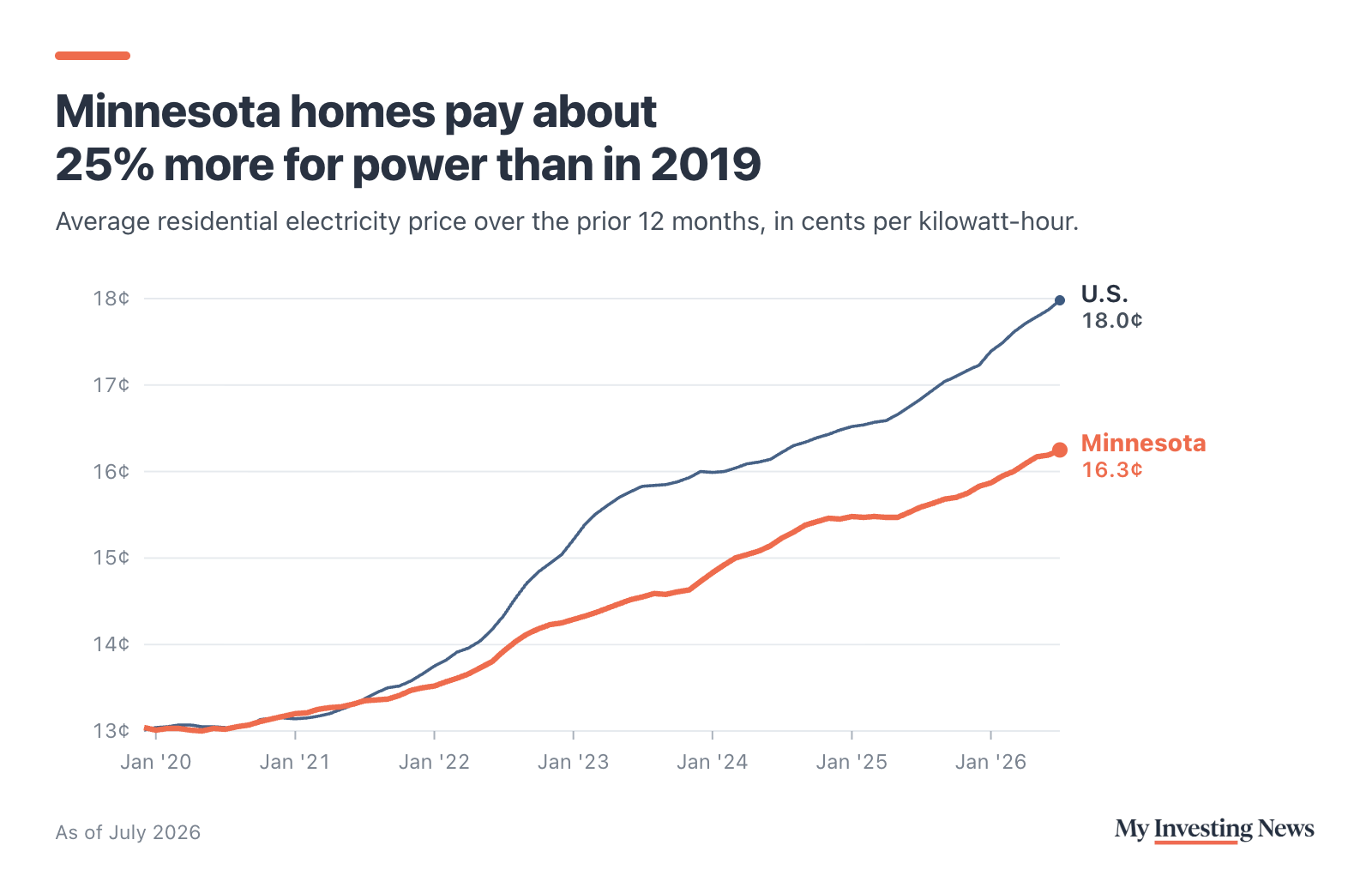
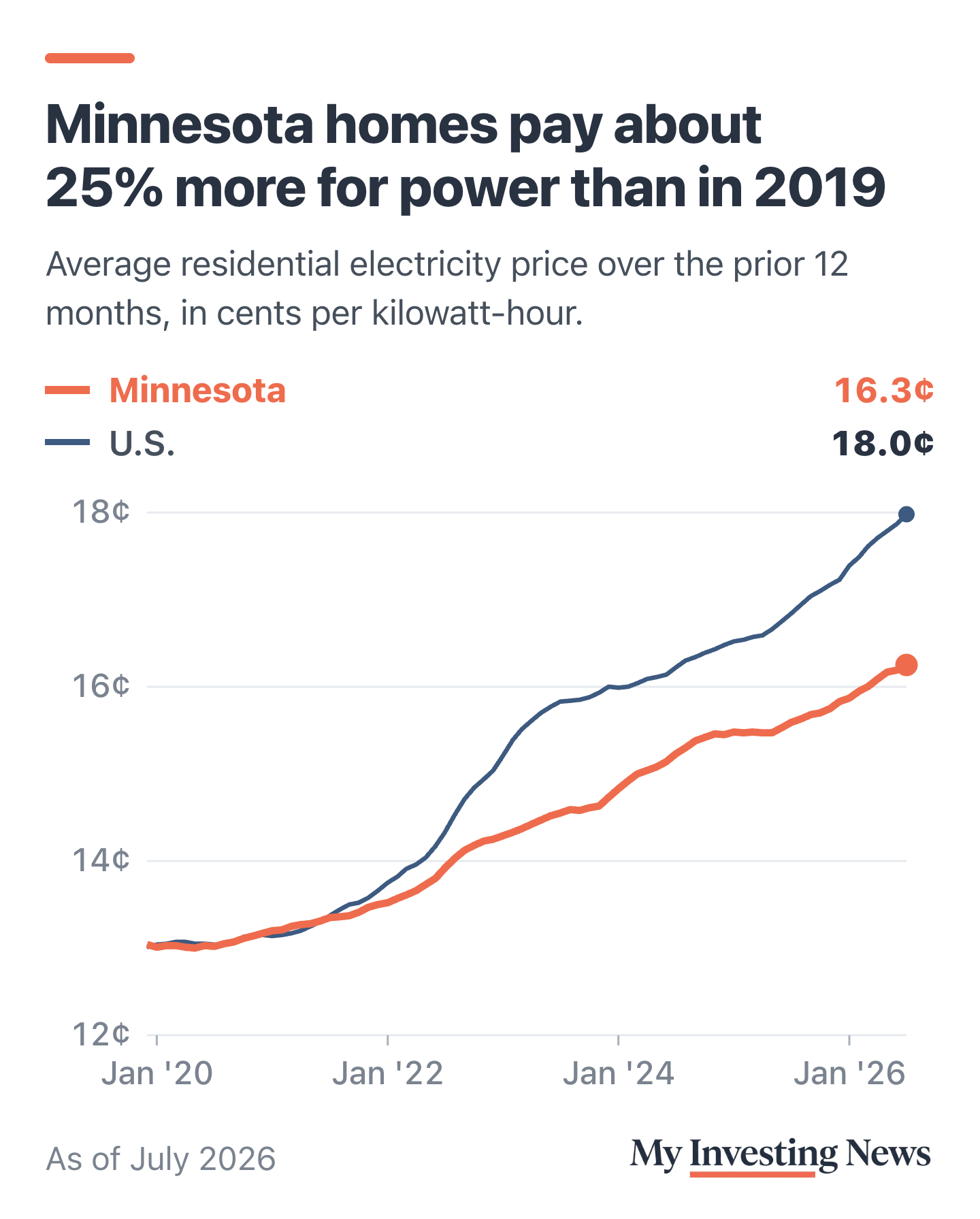
An Xcel Energy representative said: “You’re not going to see your bills lower. There’s inflation everywhere else that we’re all experiencing, but when we bring these large users onto the system and do it right like we have with Google, it can actually help drive down that inflation, even though bills are going to increase.” In other words, Xcel’s claim is about how fast bills go up. Households should expect increases that come more slowly than they otherwise would.
Skeptics Flag Billions in Potential Costs
David Pomerantz, described in the report as an independent monitor, said: “I buy that data centers could lower costs for ratepayers in theory. There are a lot of things that have to happen for that promise to be made true. If those things don’t happen, it’s very possible for data centers to raise customers’ costs.”
On October 1, 2026, the Minnesota Attorney General’s Office warned that costs tied to the project may rise into “billions” for Xcel ratepayers. CBS News and KTTC reported that the office asked Xcel for more information to make sure Google pays all of the costs of its own data center. Analysts also point out that utilities earn returns on the infrastructure they build. That gives them little reason to favor models that require building less.
One Pine Island resident said: “I don’t think it’s worth it. I’m concerned that they’re going to use all of our electricity. Where’s all that energy coming from?”
Why Pine Island Matters Beyond Minnesota
Whatever Minnesota regulators decide could shape how other tech giants negotiate for power and how commissions handle utility contracts with large data center customers. For Xcel, the question ties directly to its plans. The company reaffirmed 2026 ongoing EPS guidance of $4.04 to $4.16 per share, which assumes constructive outcomes in all pending rate case and regulatory proceedings.
On paper, the promise holds up: Google covers the costs, funds new supply and bears contractual penalties if its demand falls short. Whether households actually feel the benefit depends on that contract holding and on regulators implementing it.
Supporters in CNBC’s report say a data center that pays its own way and fills spare grid capacity can spread fixed costs and slow the rise in everyone’s bills. Even Xcel says bills will still go up. The risk is that Google’s costs end up on other customers if the contract falls short or Google cuts its demand, a gap Minnesota’s attorney general puts in the billions.