Where we heard itCampaign rallies before the Nov. 3, 2026 midterms, including Crossroads Arena in Corinth, Miss., on Oct. 26, with President Donald Trump. We checked the line against a video clip of one October rally.
In the last weeks of the midterm campaign, President Donald Trump gave rally crowds a warning about the economy. If Republicans kept Congress, he said, voters would see success “the likes of which we have never seen before.” If Democrats won, he said, the country would get a repeat of the worst economic collapse in its history.
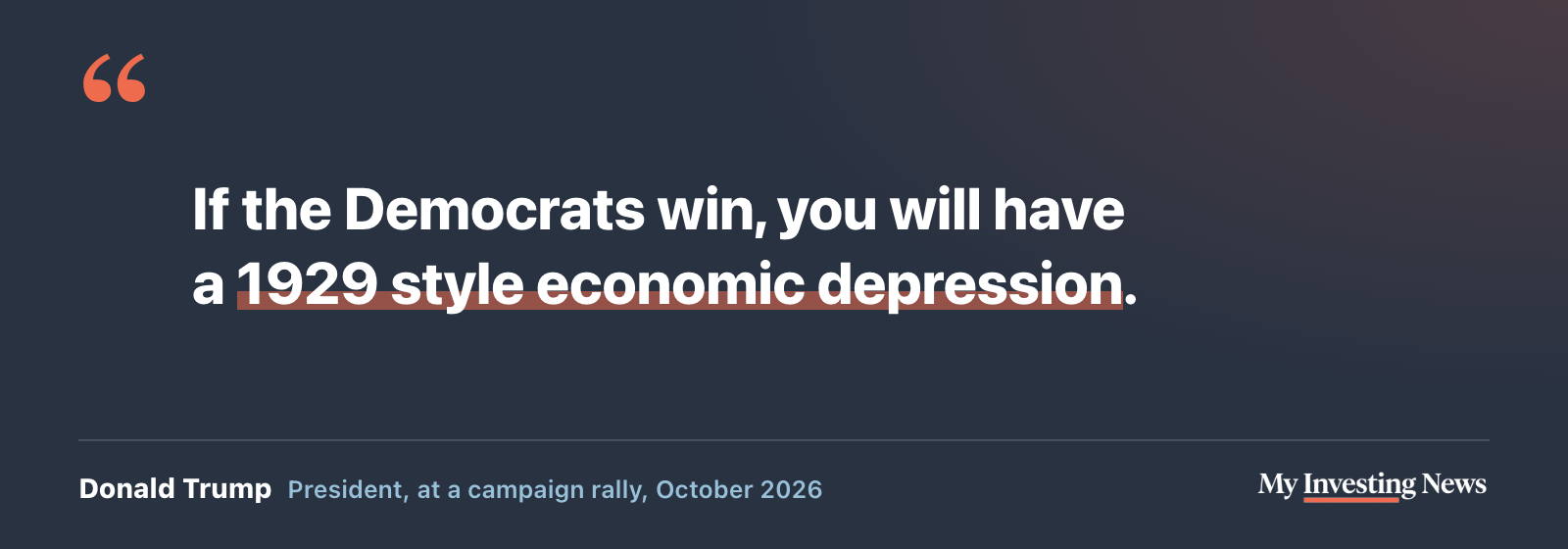
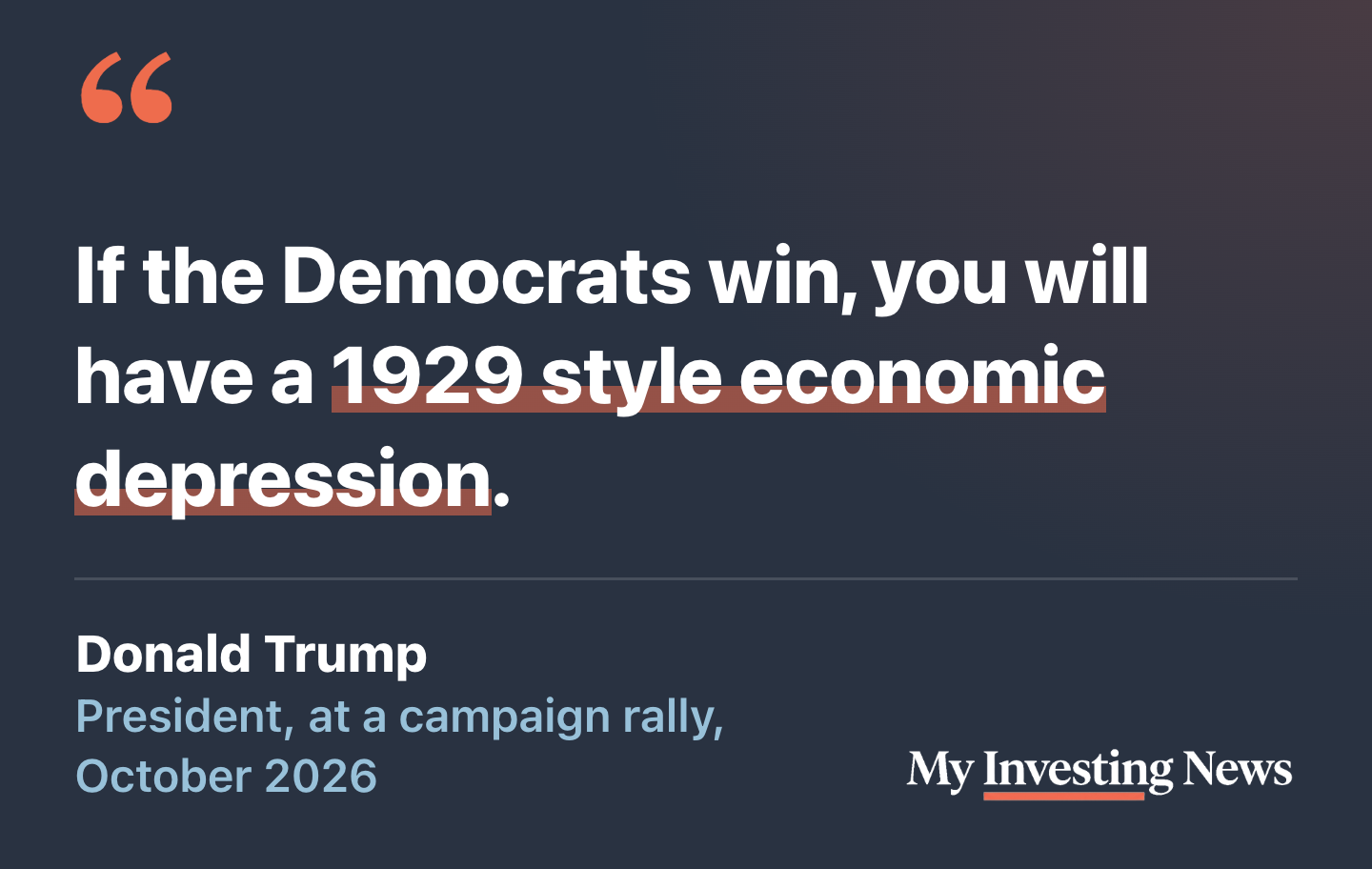
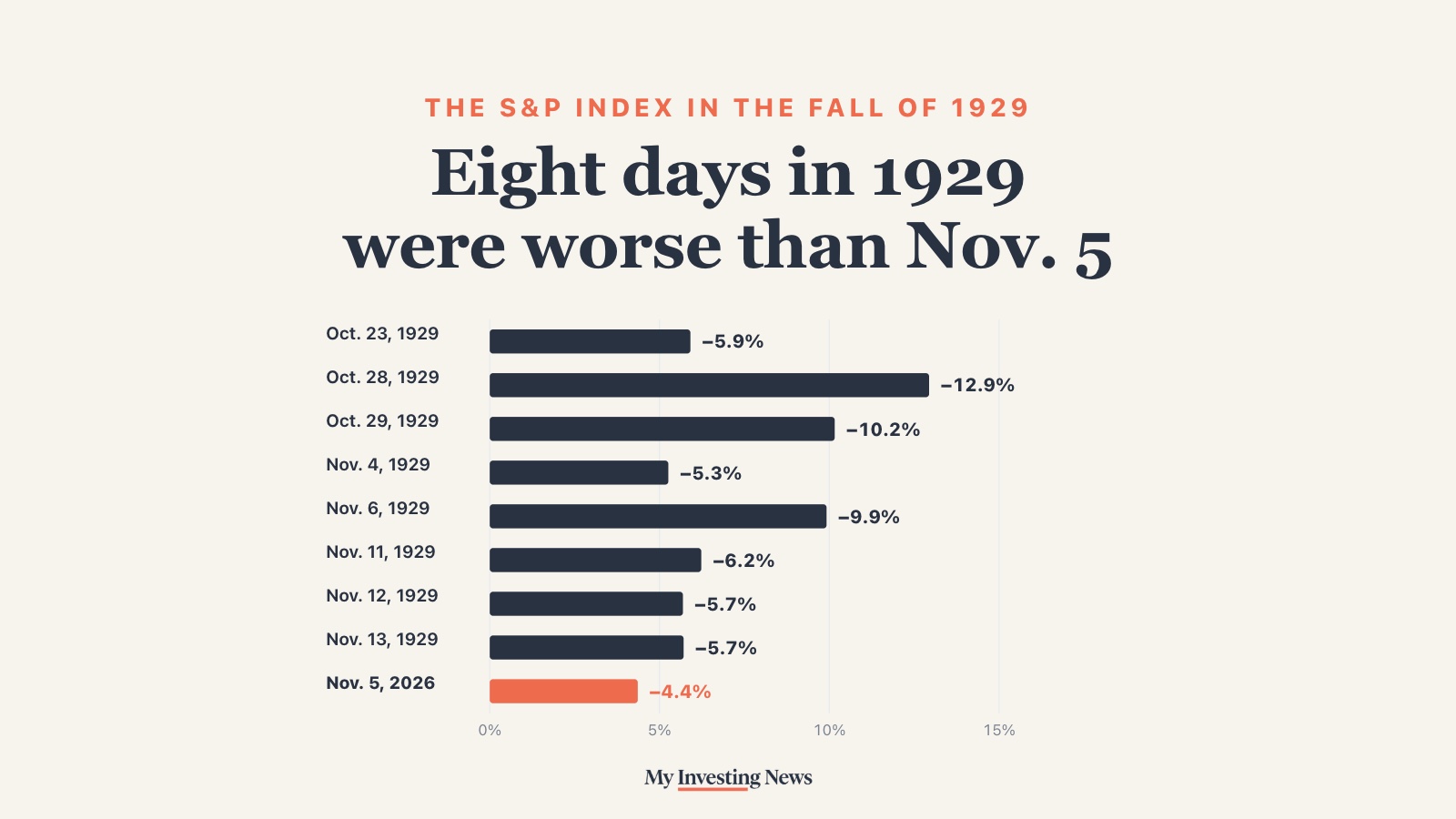
“I don’t like saying it, but they don’t know what the hell they’re doing,” he added in the clip we checked. He said it in the same words at a rally in Corinth, Miss., on Oct. 26, according to news reports. Democrats won control of the House and the Senate on Nov. 3. Two days later, the S&P 500 fell 4.4%, its biggest one-day drop since April 4, 2025. On Bloomberg Businessweek, host Carol Massar said “the possibility that newly elected Democrats will slow data center development was enough to send stocks reeling.”
So what did 1929 look like? The record runs in a different order from the warning. The crash came first, under a Republican president and a Republican Congress. The voters’ verdict came a year later.
The Crash Came Under One-Party Rule
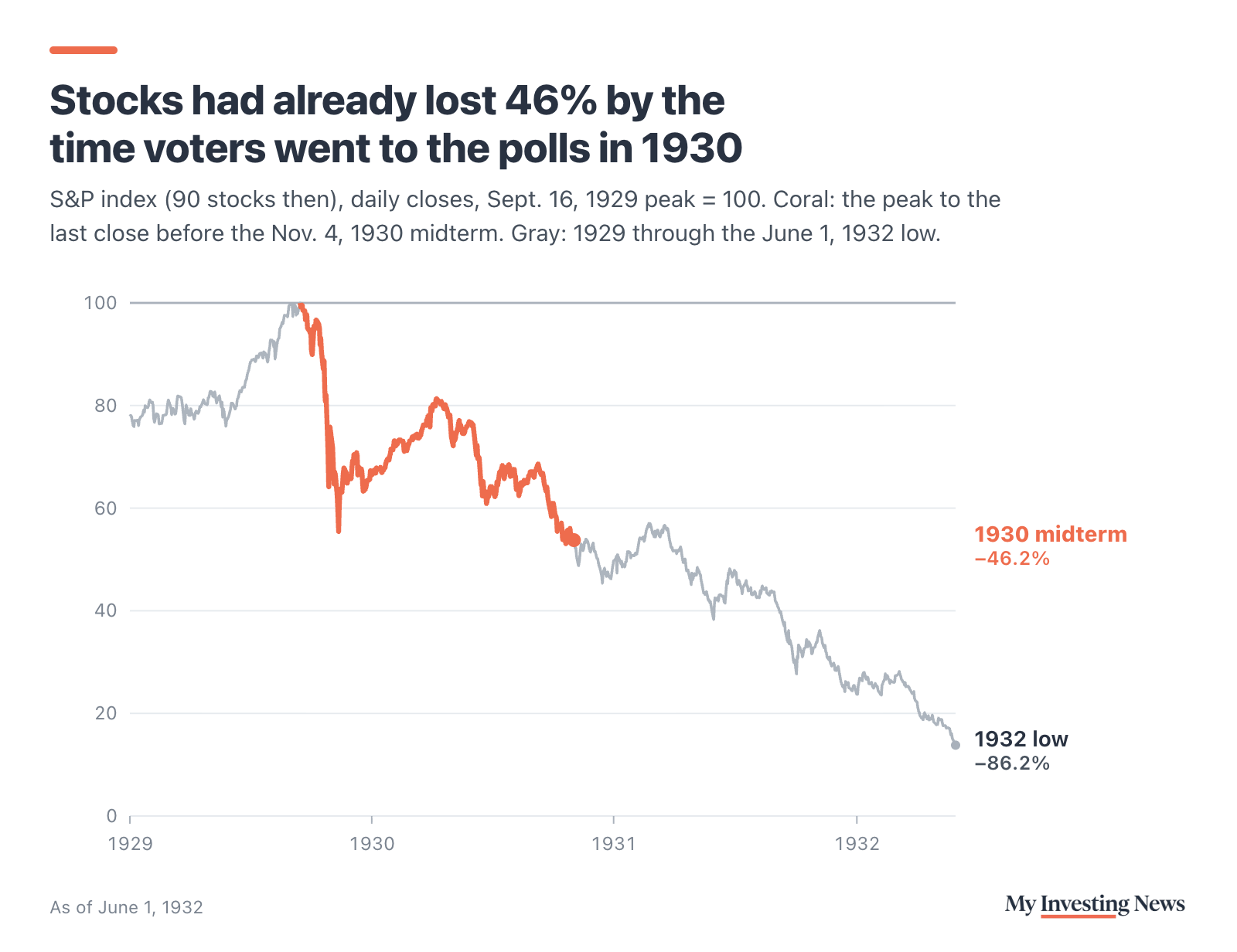
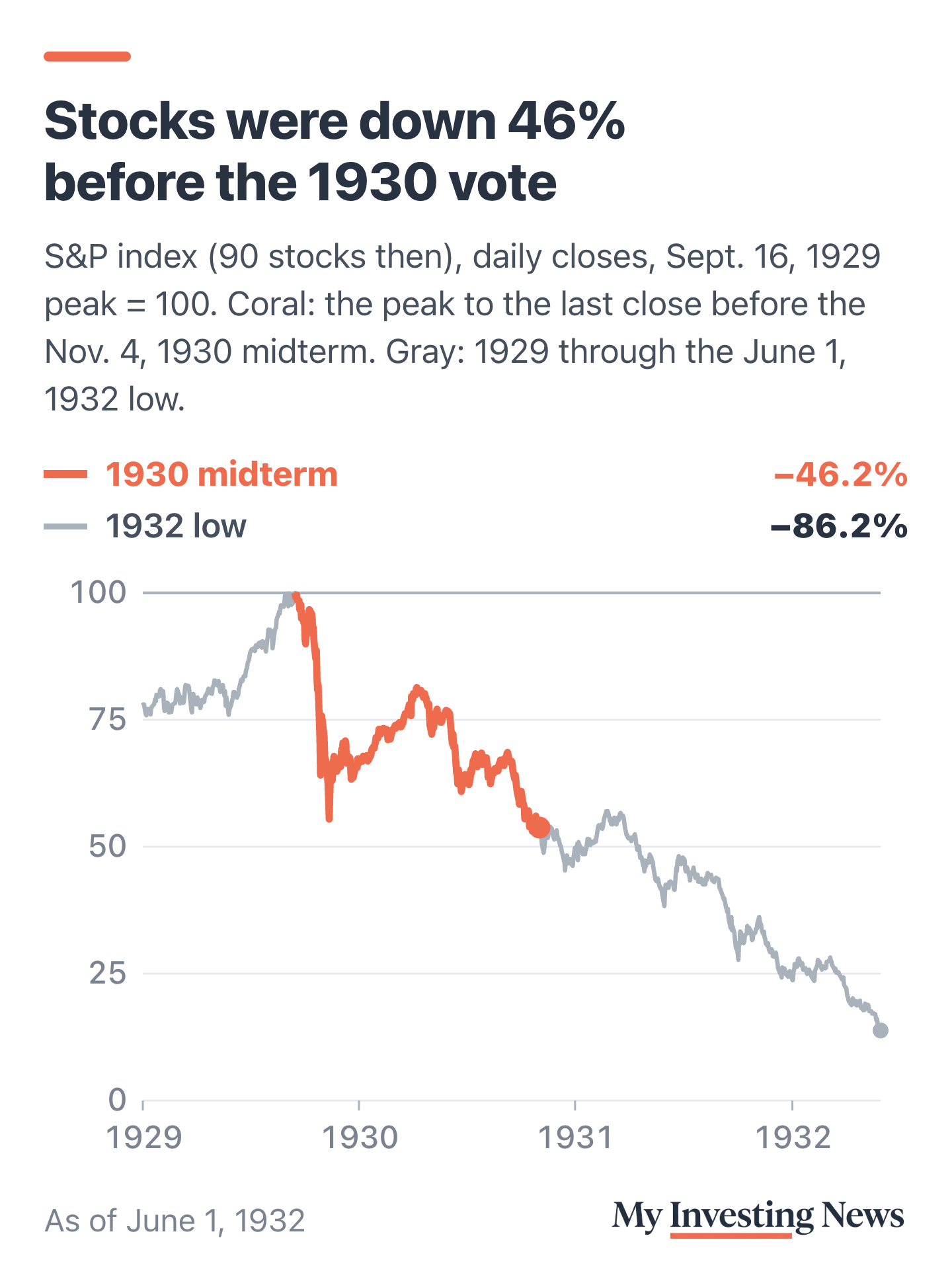
Herbert Hoover took office in March 1929 with his party firmly in charge of Congress: Republicans held 270 House seats to the Democrats’ 164, and by 1930 they held 56 of 96 Senate seats. The S&P index, then made up of 90 stocks, peaked on Sept. 16, 1929. The Dow Jones Industrial Average had topped out two weeks earlier, at 381.17 on Sept. 3.
Then came the crash. The index fell 12.9% on Monday, Oct. 28, and 10.2% the next day. By Nov. 13 it was 44.6% below its peak. It then rallied 46.8% into April 1930, which made the crash look survivable for a while.
Then the Voters Weighed In
The rally didn’t last. In June 1930, the Senate passed the Smoot-Hawley tariff, and Hoover signed it on June 17. By the last close before the Nov. 4, 1930 midterm, the index was 46.2% below its 1929 peak.
Republicans lost 52 House seats that November, falling from 270 to 218. That still left them a 218 to 216 edge on election night. But 14 representatives-elect died before the new Congress met, and the special elections that followed gave Democrats the majority, according to the House historian’s office. In the Senate, Republicans went from 56 seats to 48.
1929 to 1932, and the first week after the 2026 vote
The worst was still ahead. The index hit bottom on June 1, 1932, 86.2% below its 1929 peak, and the Dow closed at 41.22 on July 8, 1932, 89% below its high. Unemployment, about 3.2% in 1929, reached an estimated 23.6% in 1932 and 24.9% in 1933, according to economist Stanley Lebergott’s annual estimates. Hoover lost the White House in November 1932, and Republicans fell to 117 House seats. The Dow didn’t get back to its 1929 peak until November 1954.
How Nov. 5 Compares
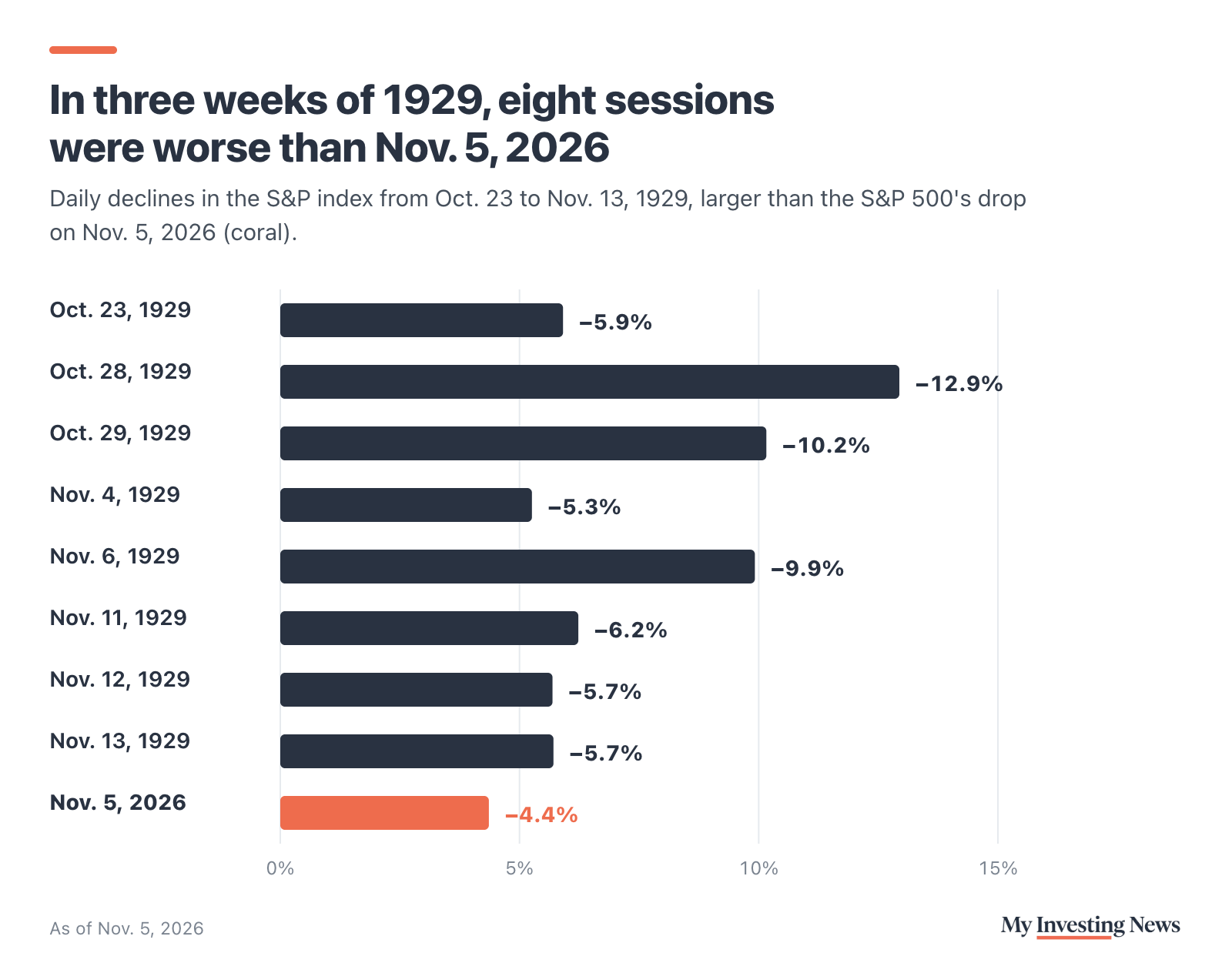
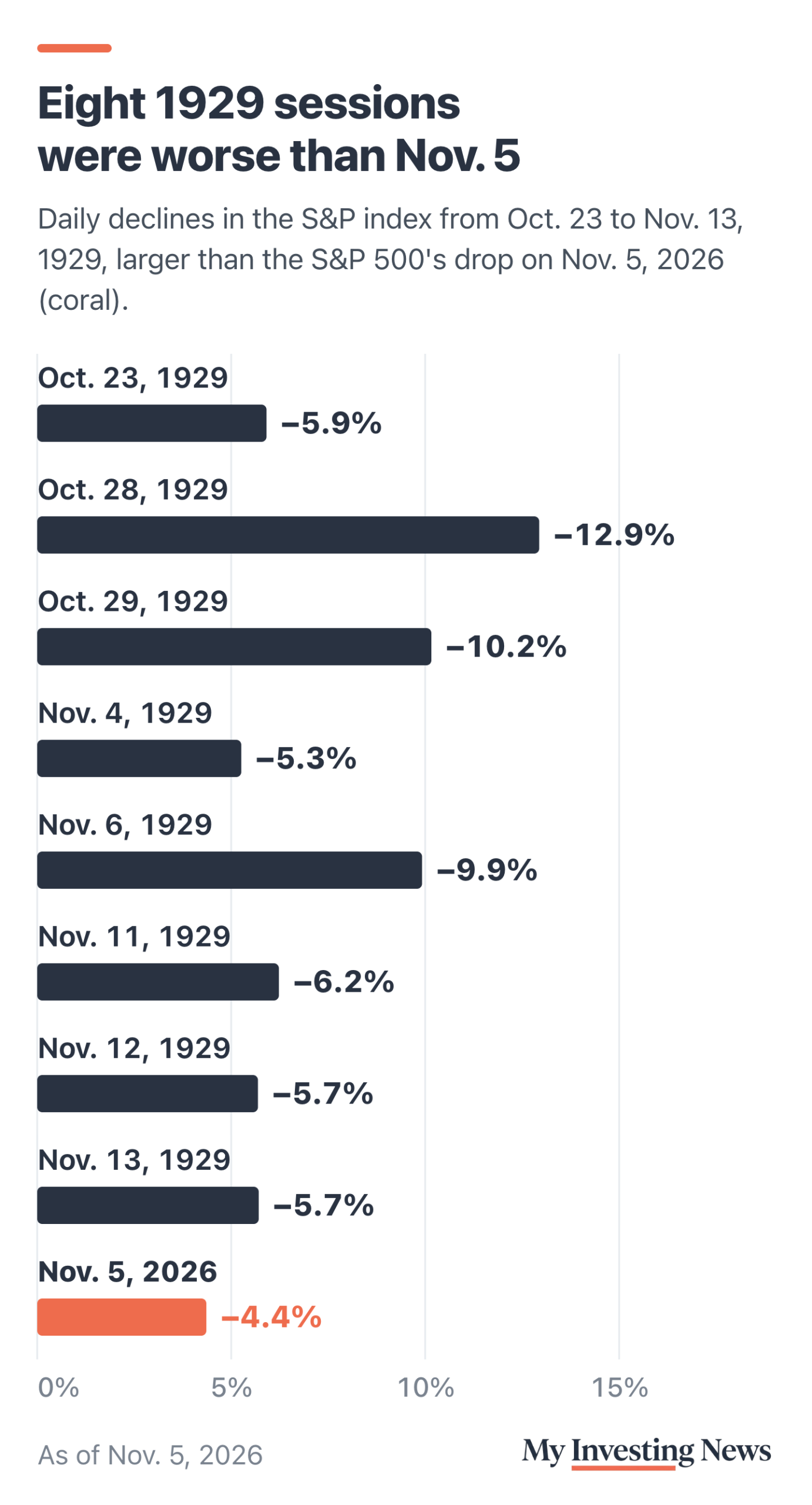
A 4.4% day is rare in modern markets. In the fall of 1929, it was routine. In the three weeks from Oct. 23 to Nov. 13, 1929, the index fell by more than that on eight separate days, and by more than 9% on three of them.
The week after the 2026 vote looks nothing like that so far. The S&P 500 rose 1.6% the day after the election, fell on Nov. 5, then gained 0.3% and 2.4% in the next two sessions. As of the Nov. 9 close, it stood at 7,549.94, 0.2% below its Election Day close of 7,568.92 and 3.4% below its Oct. 6 record. Morgan Stanley’s Mike Wilson had told clients to be ready to buy a sharp downdraft around Election Day.
What to Watch
The 1929 comparison has a timing problem. The crash, the tariff and the first year of the slump all came while one party ran Washington, before voters had their say. From January, the 2026 setup will be a Republican president and a Democratic Congress. The closest match in that era was 1931 and 1932, when Hoover faced a Democratic House, and by then the slump was two years old.
The market record after midterms is calmer than Trump’s warning. After all 19 midterms since 1950, stocks were higher a year later. The number to watch is the S&P 500’s distance from its Oct. 6 record. A drop of 20% or more would make this a bear market; the index has had two of those since 2009, and both healed within about two years. In 1929, the market needed 25 years.
Trump warned that a Democratic win would bring a 1929-style depression. In the real 1929, the crash came first, under a Republican White House and Congress, and Republicans lost 52 House seats a year later. The S&P 500’s 4.4% drop on Nov. 5 was its worst day since April 2025, but the fall of 1929 had eight worse days in three weeks.