Where we heard itCNBC, “Power Lunch”, Oct. 27, 2026. Speaker: U.S. Energy Secretary Chris Wright.
Energy Secretary Chris Wright was on CNBC’s “Power Lunch” on Oct. 27 to talk about nuclear power, speaking from a plant in Byron, Illinois. Co-anchor Kelly Evans asked him about something else: the Russian diesel cargo headed for the U.S. East Coast, and whether American refineries or an ally could fill the gap instead. Wright answered with a diagnosis.
“Well, look, it’s a global shortage of diesel. It is a global problem,” he said. Russia, he added, “can’t export diesel right now. They’re short diesel themselves.”
“Shortage” is a strong word, and it is easy to check. The Energy Information Administration has published U.S. inventories of distillate fuel, the category that holds diesel and heating oil, every week since August 1982. We lined up the same week of every year, then looked at what the International Energy Agency says about the rest of the world.


U.S. Stocks Are the Lowest for the Date on Record
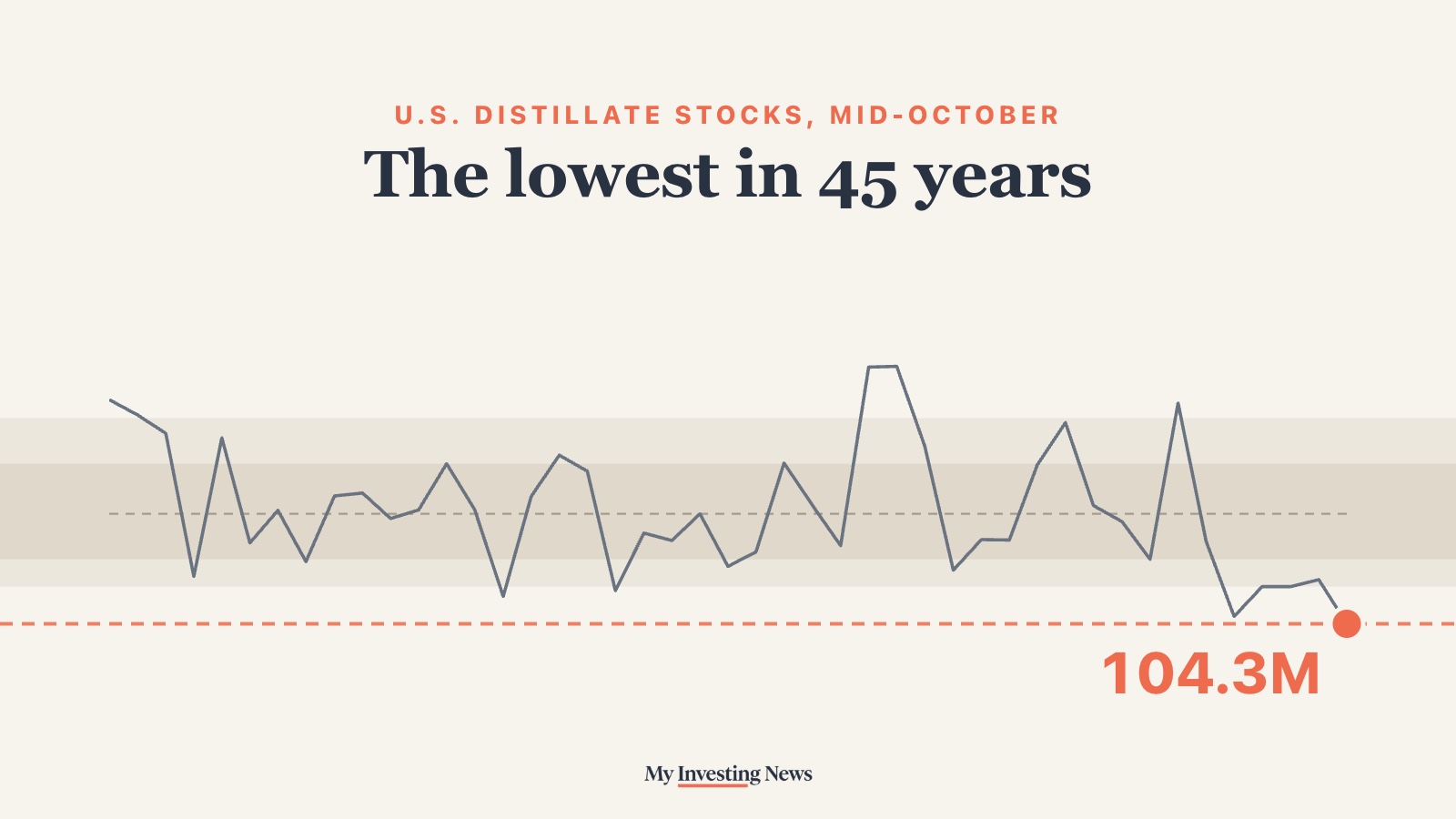
In the EIA’s latest weekly report, for the week ended Oct. 16, U.S. distillate stocks stood at 104.3 million barrels. That is the lowest reading for mid-October in all 45 years of the weekly data. The previous low for the date was 106.2 million barrels in October 2022, and the one before that was 111.3 million in 1996.
Stocks were 9.7% below the same week of 2025 and 9.3% below the five-year average for the week. The low is about the time of year. Inventories normally build into the fall before winter heating demand, and the all-time weekly low, 87.2 million barrels, came in the spring of 1996.
U.S. distillate stocks are the lowest for mid-October in 45 years of weekly data
U.S. stocks of distillate fuel, mostly diesel and heating oil, in the same mid-October week of every year since 1982, million barrels. The shaded bands hold the middle half and the middle 80% of the 45 readings.
By Another Measure, 2022 Was Tighter
Raw barrels leave out how fast the country burns through them. The EIA also reports days of supply: stocks divided by recent demand. On that measure the week of Oct. 16 came in at 26.7 days, the second lowest for the date since the series began in 1991. October 2022 was tighter, at 25.4 days.
Two things sit behind the difference. Demand is a little softer, which stretches each barrel further: product supplied, the EIA’s stand-in for consumption, averaged about 3.9 million barrels a day over the four weeks to Oct. 16, against 4.0 million a year earlier. And more barrels are leaving, which helps explain why the stockpile itself is so thin. Distillate exports averaged 1.51 million barrels a day over those four weeks, up 24% from the same stretch of 2025. U.S. refiners are shipping diesel to a world that is short of it, which fits Wright’s point that the problem is global.
Diesel at a glance
Abroad, the IEA Describes the Same Squeeze
The International Energy Agency, which advises industrialized countries, made the global case in its Oct. 14 Oil Market Report. “Diesel markets remained under significant strain as prolonged supply disruptions forced counter-seasonal stock draws ahead of autumn refinery maintenance and peak winter demand,” the agency said, according to Reuters. It put combined losses of diesel exports from the Middle East and Russia at 1.3 million barrels a day in September and said tight supplies could last well into 2027. Diesel refining margins hit a record of almost $95 a barrel in September, Reuters reported.
Europe shows a little relief. Independent gasoil stocks in the Amsterdam-Rotterdam-Antwerp hub, which include diesel and heating oil, averaged 13.33 million barrels in October through Oct. 23, up 6% from September, according to Insights Global data reported by ENGINE. That is one month of rebuilding, and the IEA still expects the deficit built up this year to outlast the recovery in refinery runs.
The Russian License Is Small Next to the Gap
Wright defended the sanctions relief behind the Russian cargo. “We’ve done a temporary six-month suspension of sanctions, not on Russian oil, not on any other Russian products, only on diesel,” he said. The Treasury’s Office of Foreign Assets Control issued General License 135 on Oct. 9. It authorizes the sale, delivery and importation of Russian-origin diesel through 12:01 a.m. on April 7, 2027, and bars debits to accounts of Russia’s central bank, its National Wealth Fund and its finance ministry. CNBC reported that the first shipment of 300,000 metric tons works out to about 75,000 barrels a day if spread over a month. That is under 2% of U.S. distillate demand alone.
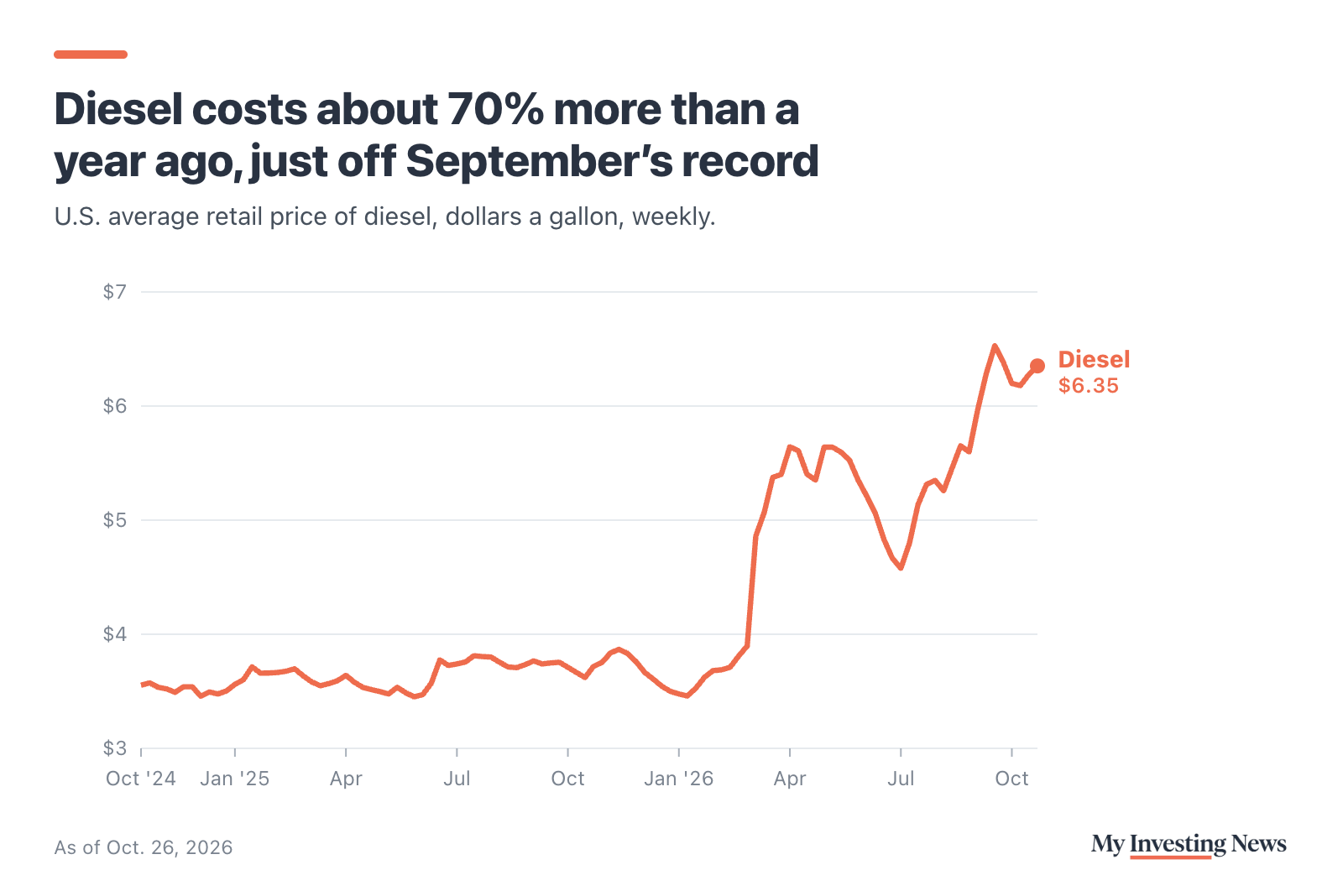
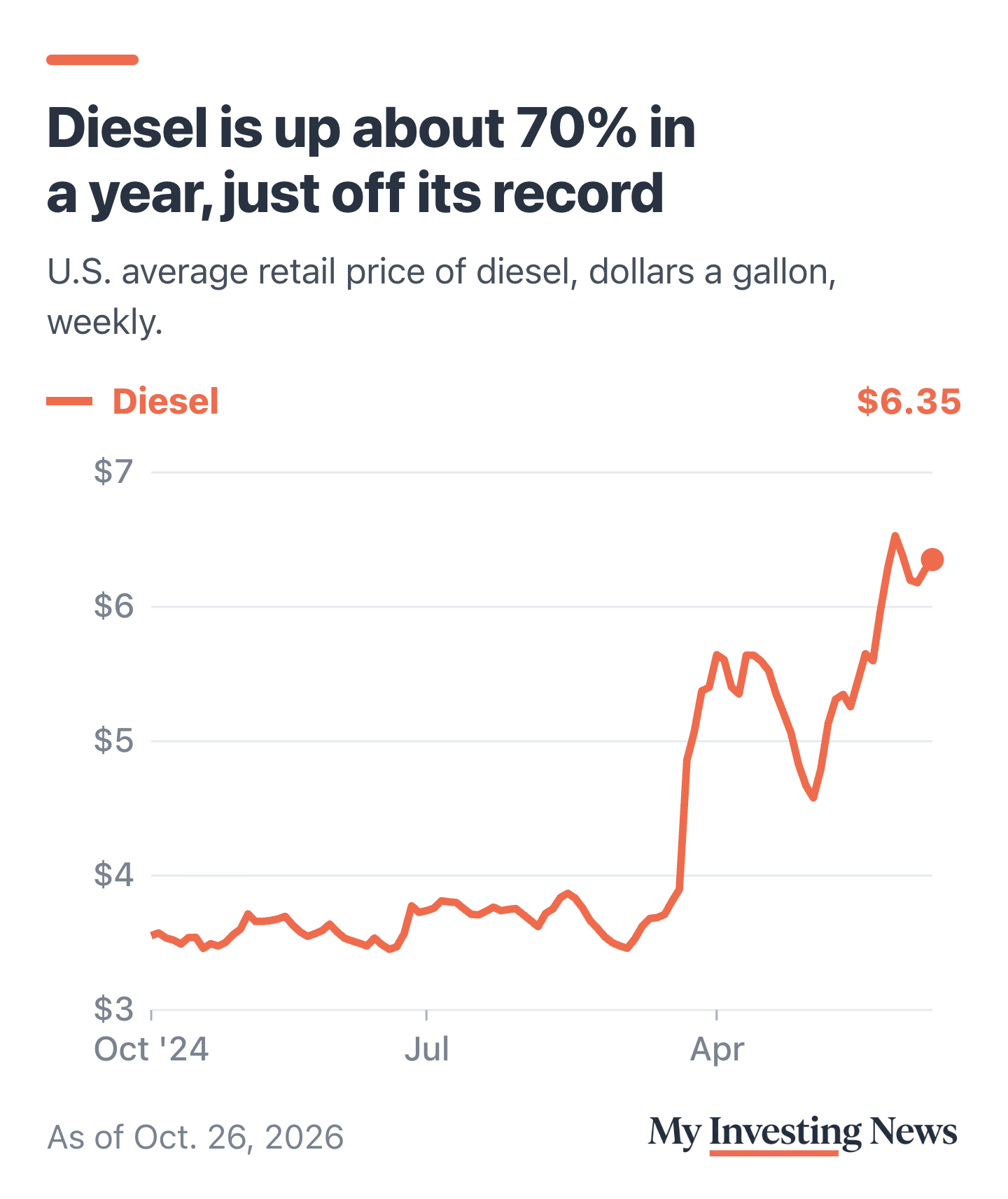
Pump prices show the strain. Diesel averaged $6.35 a gallon in the week of Oct. 26, up from $3.72 a year earlier and just below the $6.53 reading of Sept. 21, the highest in the EIA’s weekly data since 1994. Those costs reach the grocery bill through freight, and jet fuel, another distillate, is pushing airlines to raise fares.
What to Watch
- The next EIA reports: the weekly petroleum report comes out on Wednesdays. Heating season usually draws distillate stocks down from here, so the gap with past years could widen or narrow quickly.
- An export ban: bettors on Polymarket put the odds of a U.S. diesel export ban announced by Dec. 31 at 15.5% as of late Oct. 27, in a thinly traded market. The October version of the bet peaked at 21.5% on Sept. 30 and was near 1% with four days left.
- Russian cargoes: Wright said more tankers were “quite possibly” coming. The license runs to April 7, 2027.
- The IEA’s November report: whether refinery runs recover as the agency expects, and start to rebuild stocks.
The U.S. record backs Wright’s word. Distillate stocks are the lowest for mid-October in 45 years of weekly data, diesel sits just off its record and exports are up, while the IEA says the global squeeze could last into 2027. Measured against demand, October 2022 was a bit tighter, and the Russian license adds only a sliver of supply.