Where we heard itDarren Woods, chairman and CEO of ExxonMobil, on CNBC’s Squawk Box, Oct. 30, 2026.
ExxonMobil CEO Darren Woods went on CNBC the morning his company reported third-quarter results and spent most of his time on refining. “Refining capacity is very tight today,” he said. Clean fuels aren’t moving through the Strait of Hormuz the way they did before the conflict there, and he said Ukrainian strikes had taken out about half of Russia’s refining capacity. “Today, it’s a very tight world.” Then he named the fuel that worries him most:
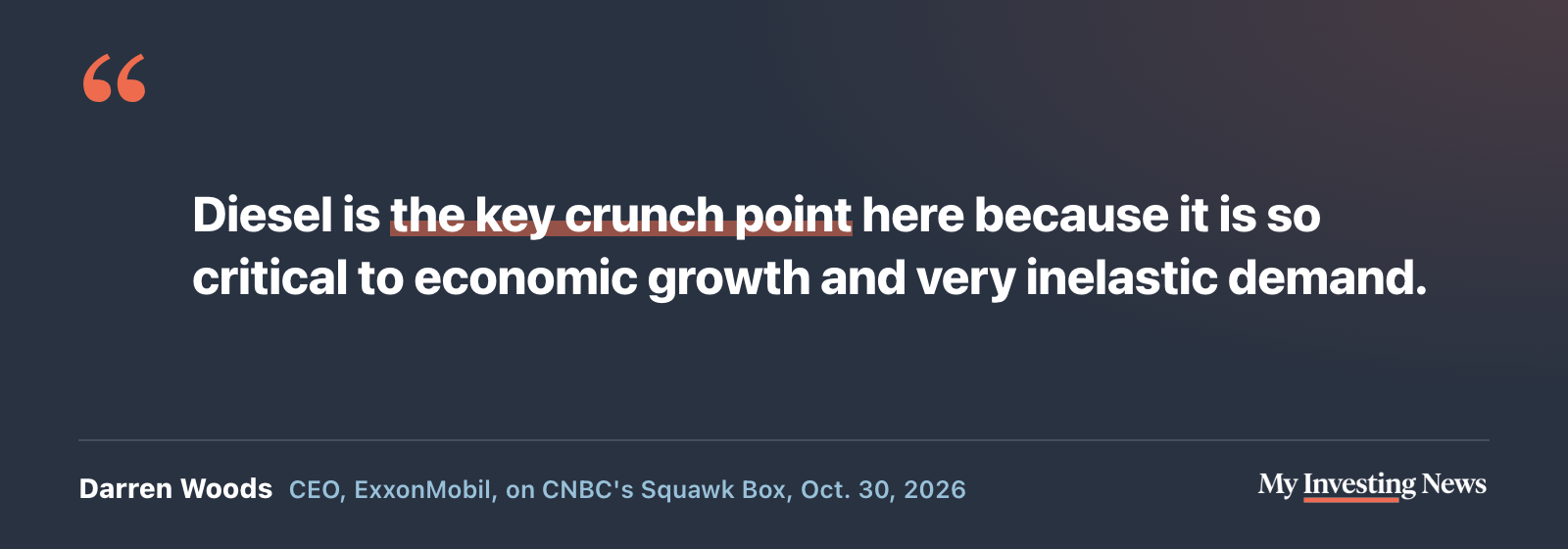
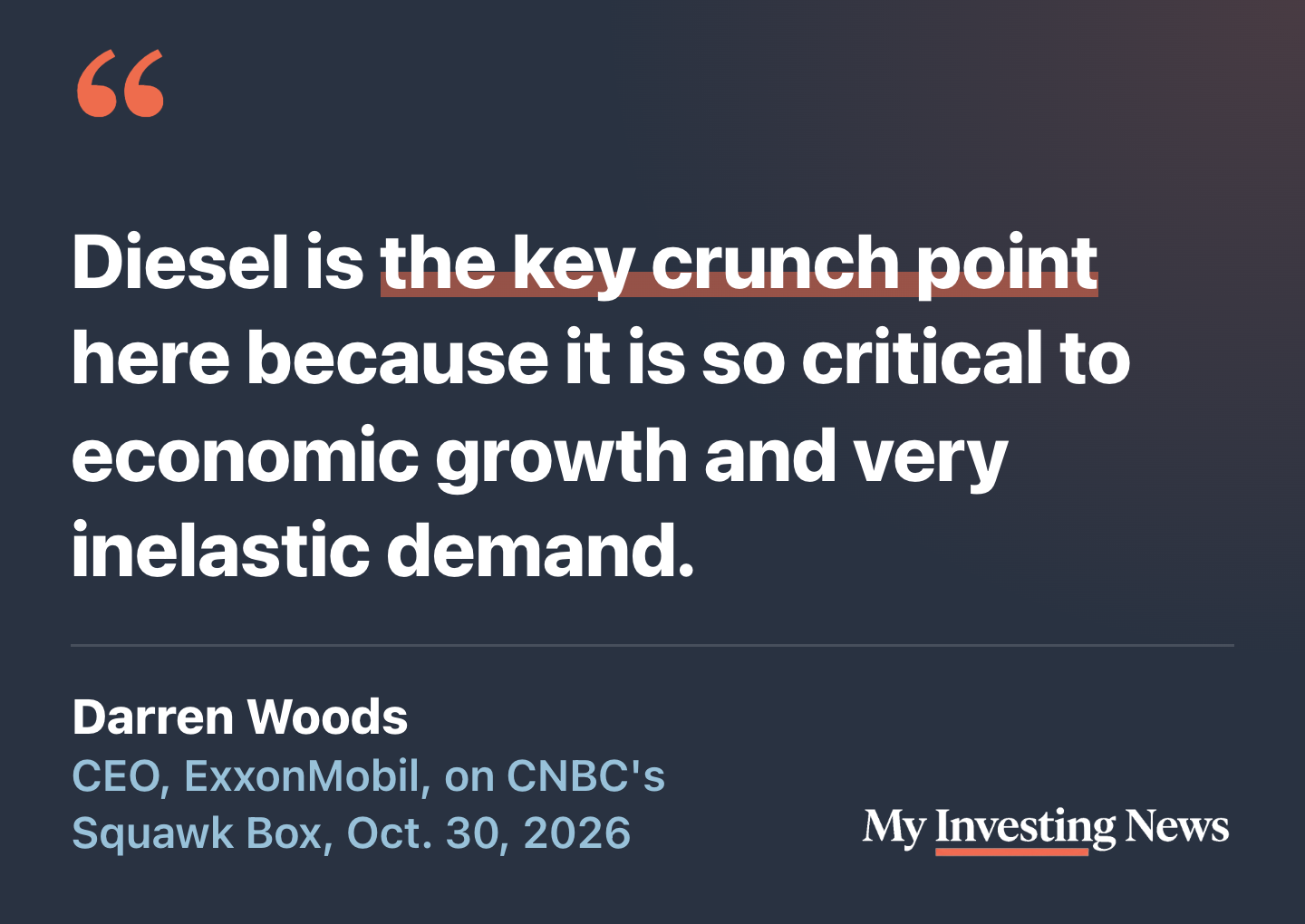
Inelastic demand means trucks, trains, tractors and generators keep burning diesel even when it gets expensive. The pump prices show what that does. This fall, diesel has run further above gasoline than at any time in the government’s weekly records.
The Widest Gap in 32 Years of Records
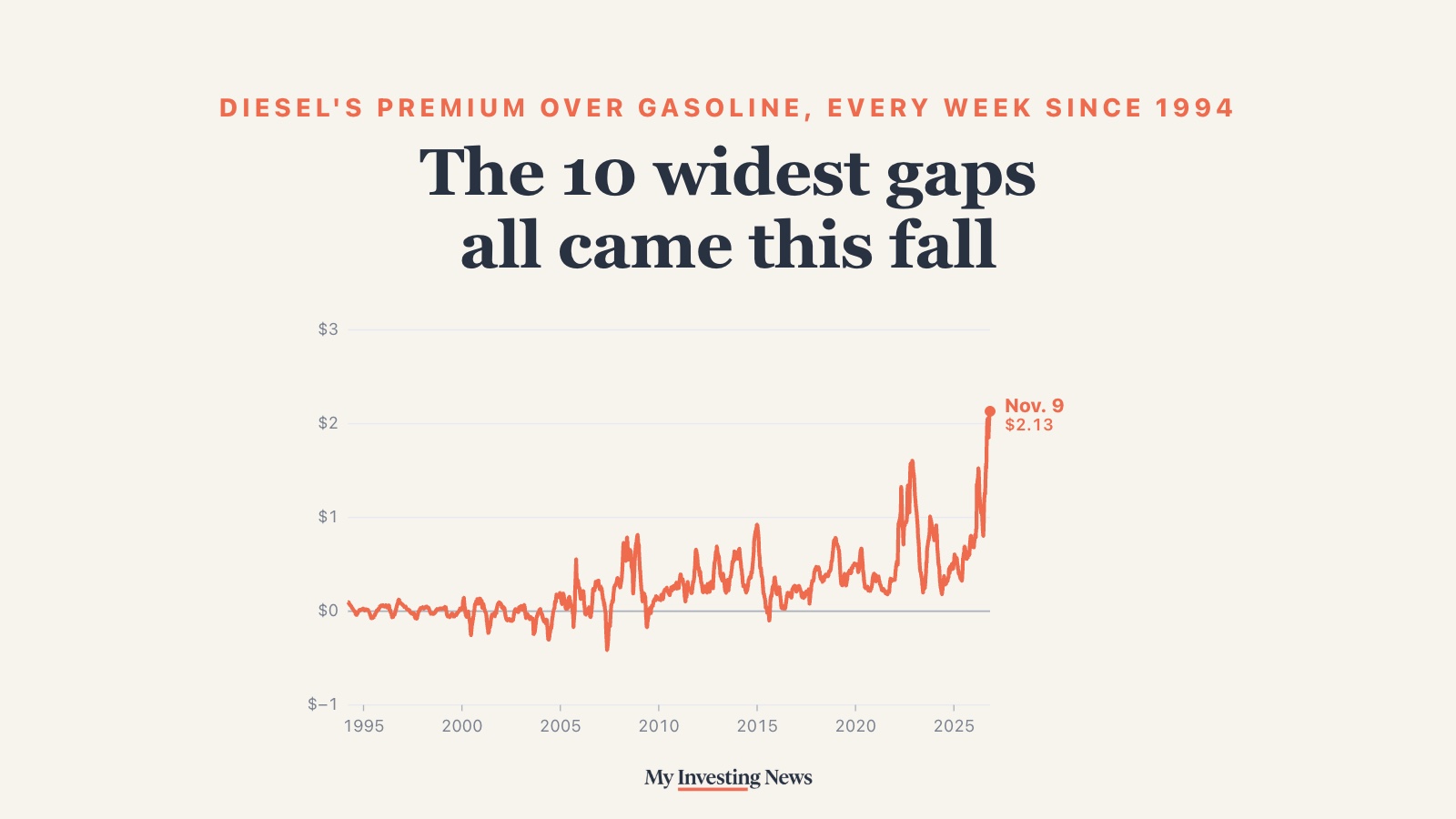
In the week of Nov. 2, the average U.S. retail price of diesel was $6.29 a gallon and regular gasoline was $4.15, a gap of $2.14, according to the Energy Information Administration. That is the widest since EIA’s weekly diesel series began in March 1994. The Nov. 9 survey, the latest before EIA’s next release on Nov. 17, put diesel at $6.13 and gasoline at $4.00, a $2.13 gap that ranks second.
The 10 widest weeks on record all fell between Sept. 7 and Nov. 9 of this year. The record before 2026 was $1.61, in the week of Nov. 28, 2022. Measured in percent, diesel cost 53.4% more than gasoline in the Nov. 9 survey, also a record; the previous high was 48% in December 2008.
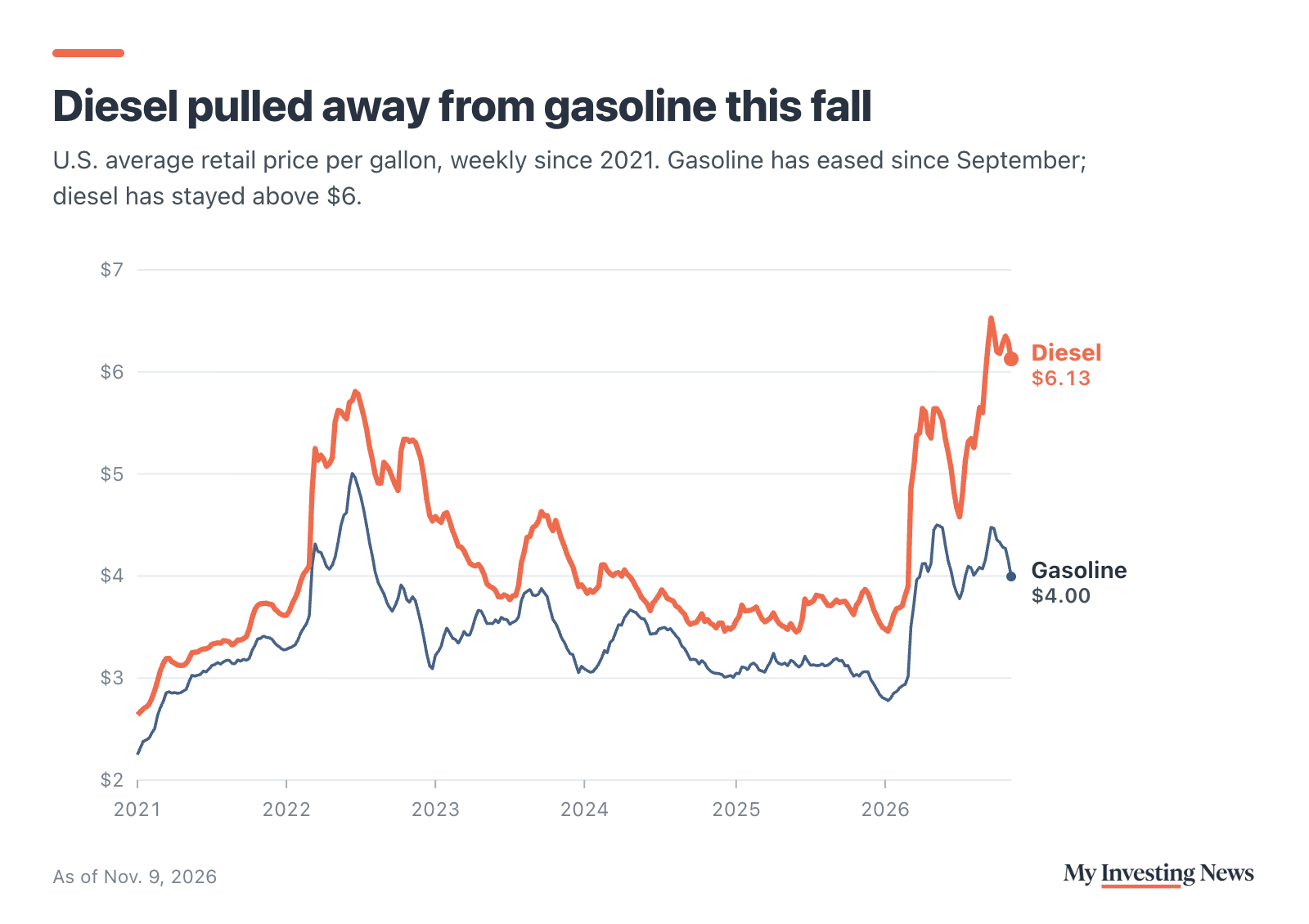
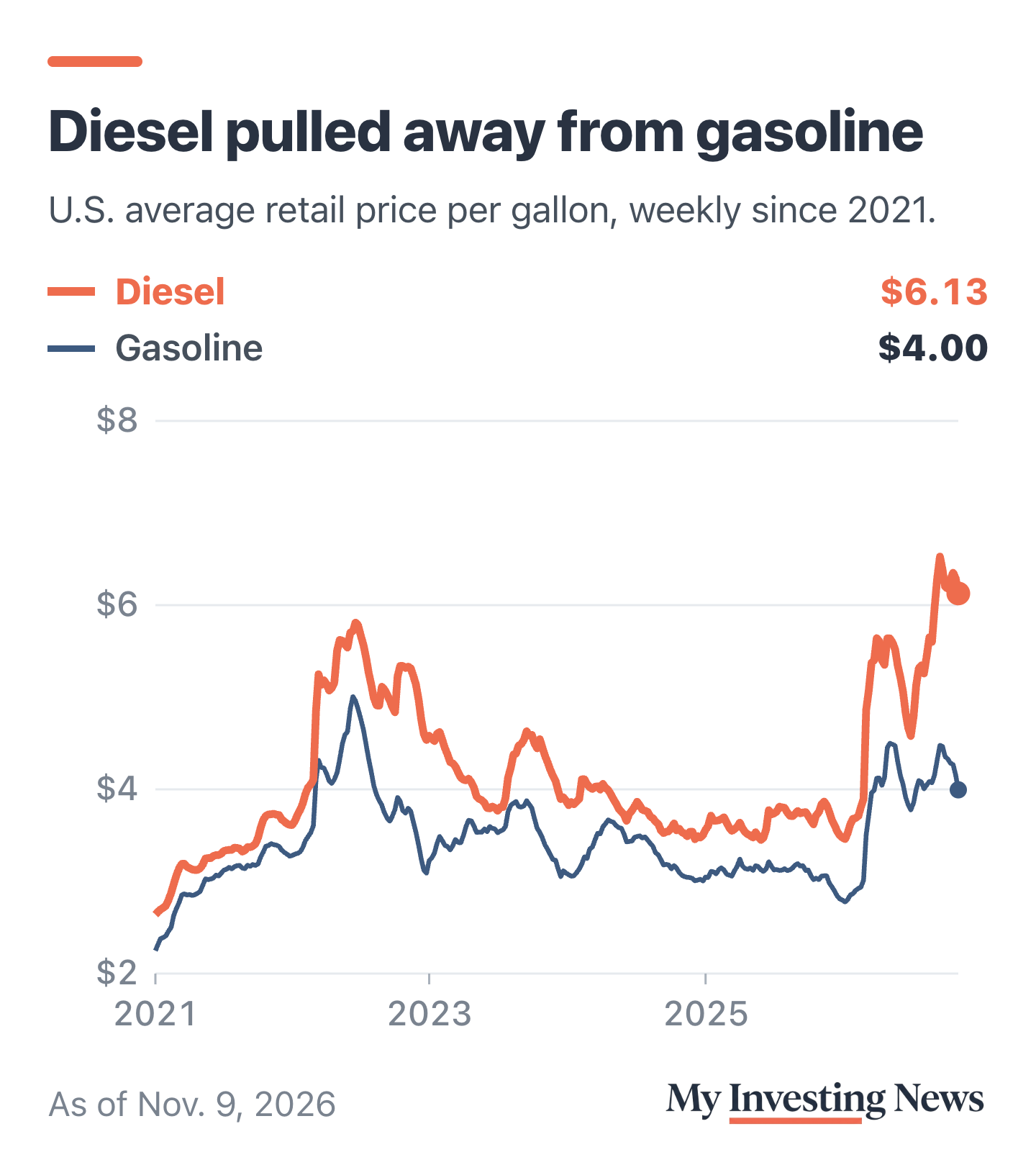
Both fuels have come off their September highs, but not equally. Since diesel’s record $6.53 in the week of Sept. 21, gasoline has fallen 48 cents and diesel 40 cents, so the gap kept widening.
Why Diesel Stays Expensive
Woods’ answer is supply. Refiners worldwide can’t make enough diesel, so U.S. plants are making as much as they can and shipping more of it abroad. He said Exxon’s refineries are running at record utilization, its diesel yield is at a record high, and “if you look at North America, we produced record volumes of diesel.”
Exports show where it goes. U.S. distillate exports averaged 1.48 million barrels a day from January through October, 18% more than in the same stretch of 2025 and the most for those months since EIA’s weekly export series began in 2010. Marketplace reported Nov. 6 that U.S. refineries have been shifting output toward diesel and jet fuel and away from gasoline. At home, distillate stocks hit the lowest for mid-October in EIA’s weekly records last month.
Retail fuel prices, week of Nov. 9, 2026
What It Costs a Truck
The American Transportation Research Institute put the average cost of running a truck at $2.336 a mile in 2025, $1.854 of it before fuel, which leaves about 48 cents a mile for fuel. Diesel averaged $3.66 a gallon that year. At the Nov. 9 price, the same miles on the same fuel would cost about 81 cents, our estimate, or roughly 14% more per mile in total. Carriers pass that on through fuel surcharges, the way FedEx’s ground surcharge at a given diesel price has more than doubled since 2021, and from there diesel prices reach grocery bills.
How the Last Gap Closed
For most of EIA’s history the two fuels cost about the same. Before 2005, diesel was cheaper than gasoline in 48% of weeks and never more than 20 cents dearer. The premium averaged 56 cents in 2025. It started 2026 at 68 cents and has averaged about $1.30 this year.
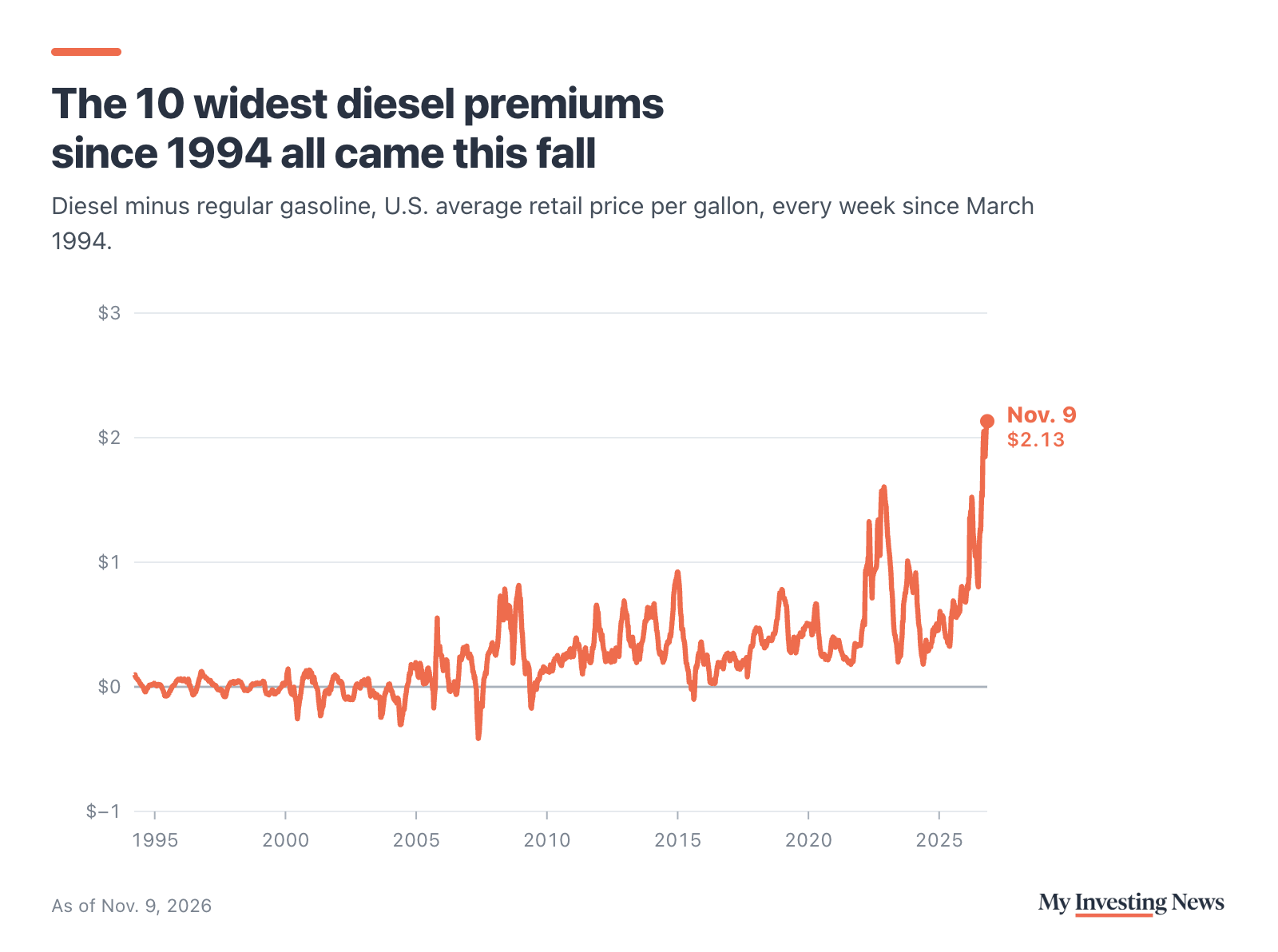
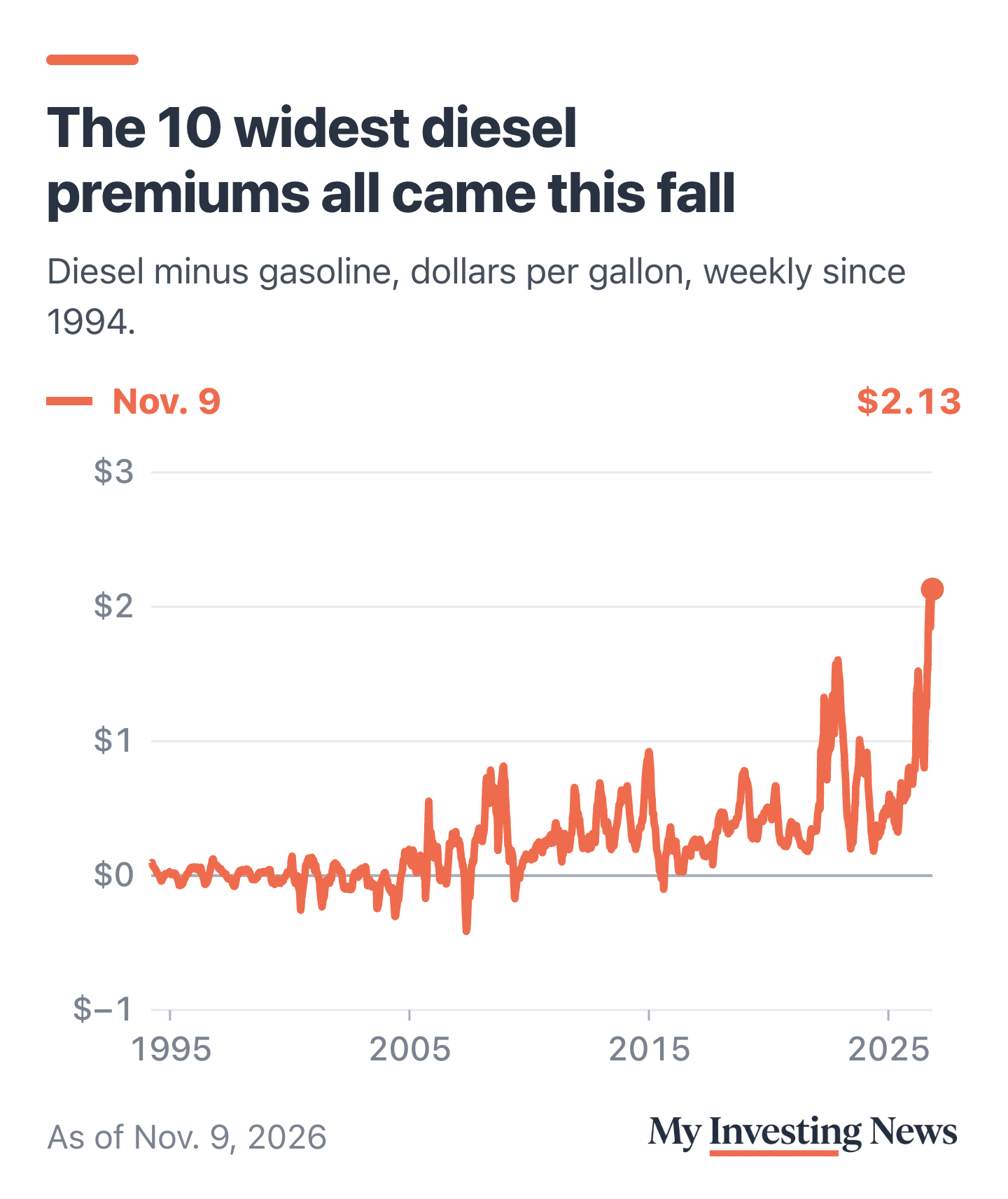
The last spike shows how fast it can unwind once supply catches up. After peaking at $1.61 in late November 2022, the gap was below $1 by Feb. 20, 2023, and below 50 cents by April 17, less than five months after the peak.
What to Watch
EIA’s Nov. 17 survey is the next test of whether the gap has peaked. Winter adds heating-oil demand for the same distillate barrels, and Woods said Exxon plans to add about 100,000 barrels a day of distillate output over time, mostly by upgrading its Gulf Coast refineries. Watch weekly distillate stocks and exports alongside the pump price: if exports stay near record levels while stocks sit low, the premium has little reason to shrink.
Woods calls diesel the crunch point, and EIA’s prices agree: diesel cost $2.13 more a gallon than gasoline in the week of Nov. 9, and the 10 widest gaps since 1994 all came this fall. Tight refining and strong exports are holding it there. The risk is winter demand: the 2022 gap took about five months to shrink once supply caught up, and this one has not started.