Where we heard itCNBC’s Mad Money, Oct. 26, 2026, and a post on X on Oct. 27. Speaker: host Jim Cramer.
Jim Cramer opened Mad Money on Oct. 26 with a warning about the AI boom that had nothing to do with chips or earnings. His worry is the sheer amount of new stock companies are selling. “I have always contended that the stock market, driven by supply and demand, goes higher when there’s not much supply and there’s stocks being taken out, and it goes lower when there’s an endless amount of new supply,” he said.
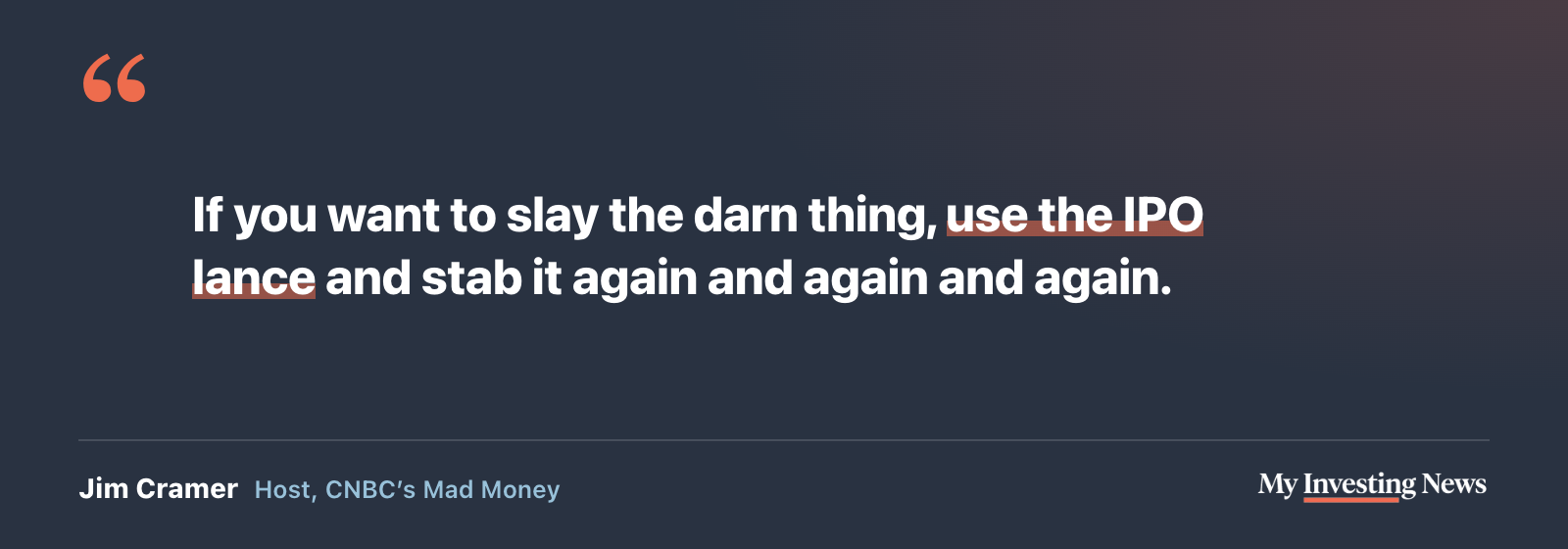
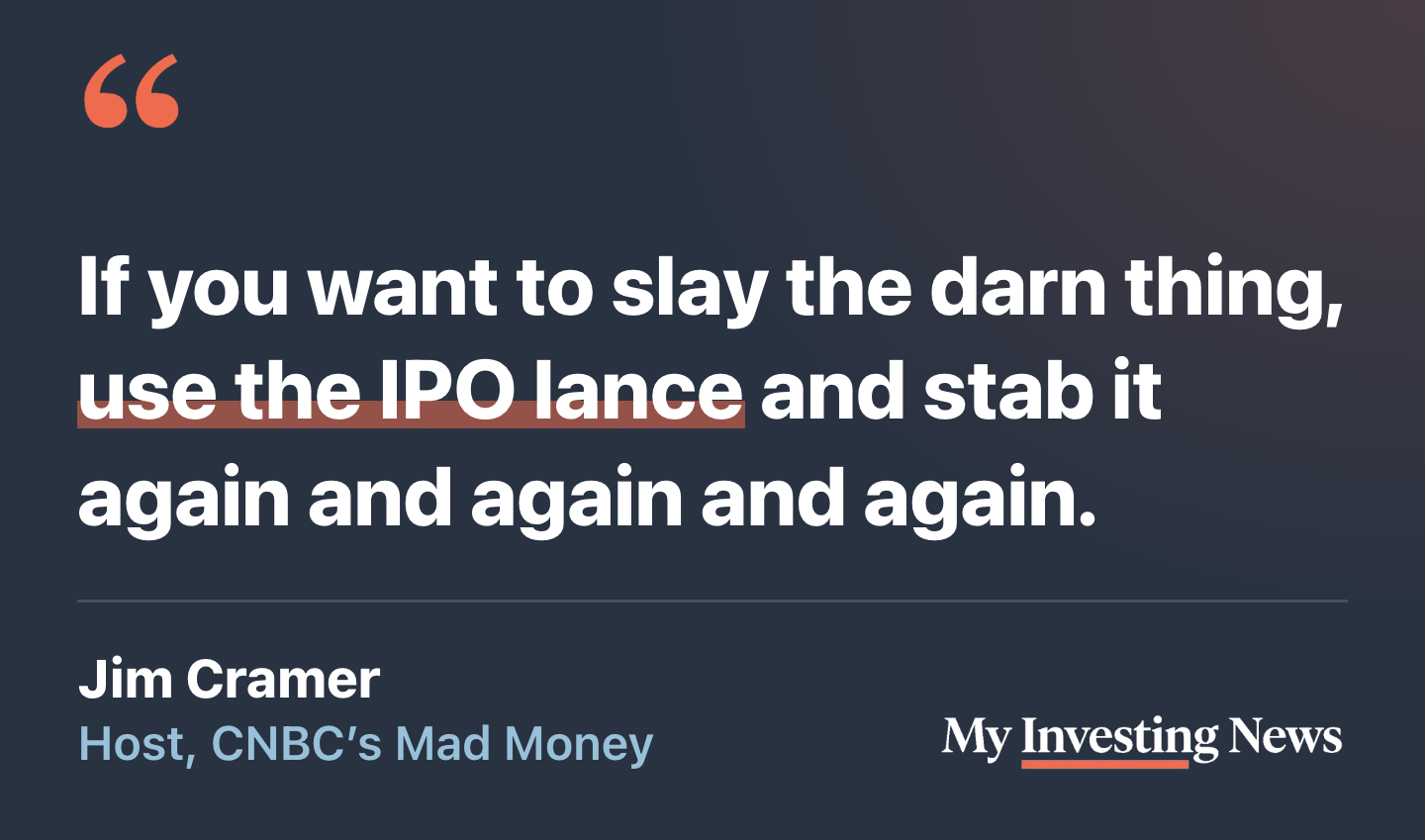
He pointed to the dot-com era as the template. “We didn’t have enough money to fund all those IPOs and the secondary offerings that followed,” he said of 2000. “Too much supply, not enough demand. That’s what killed it.” He then closed the segment with a warning for 2026:
The IPO Record Is Real, and Two Deals Made It
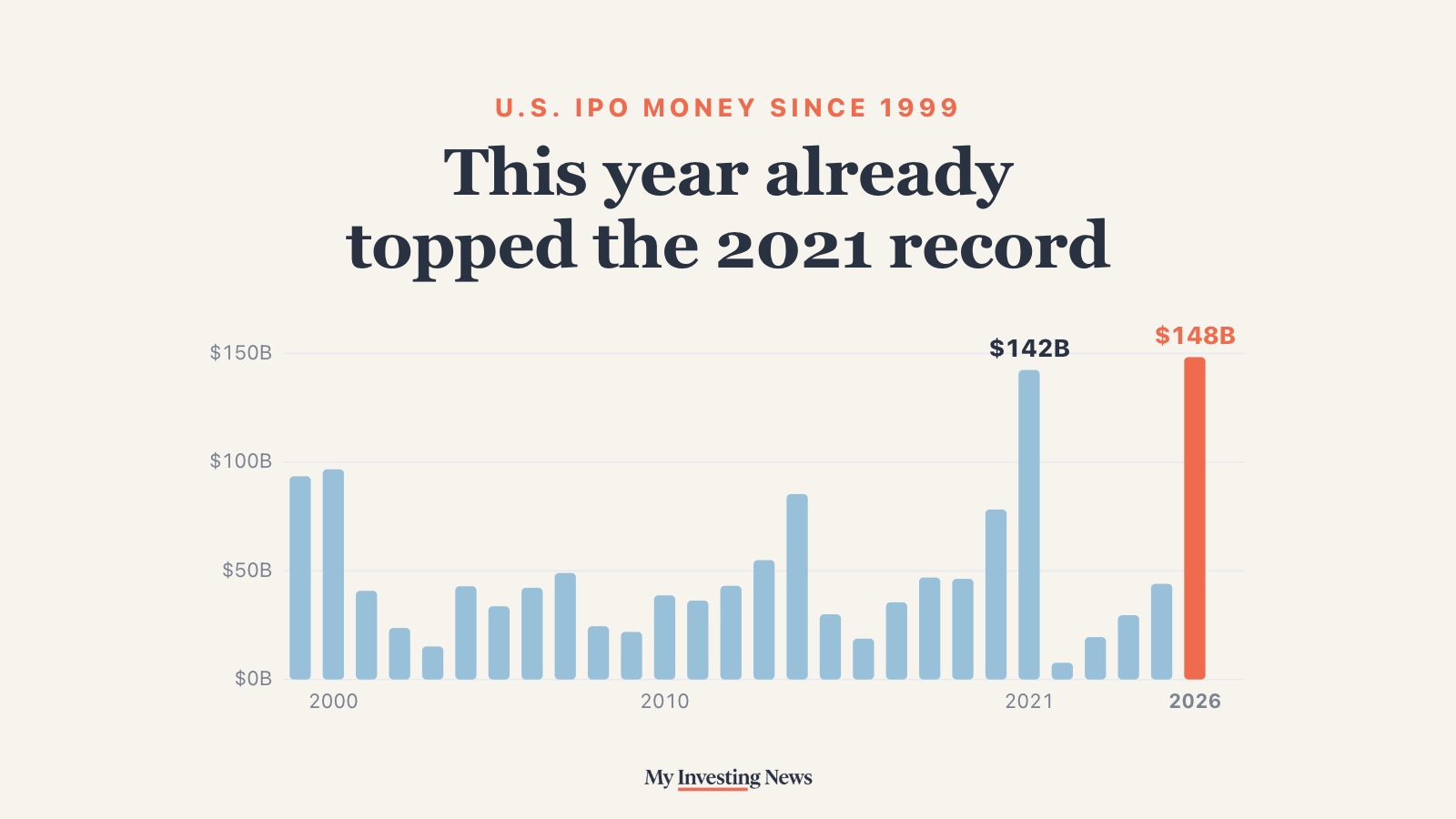
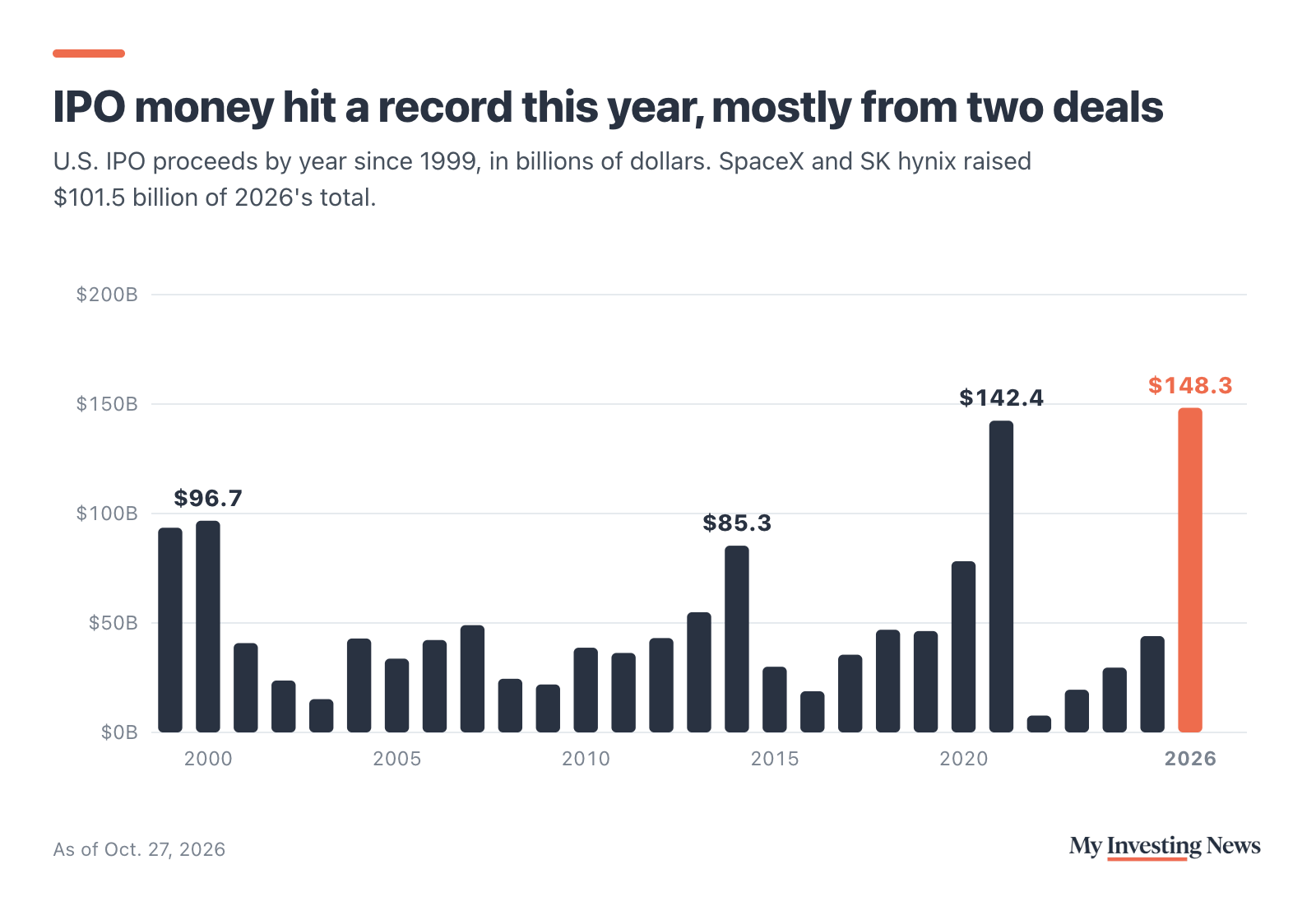
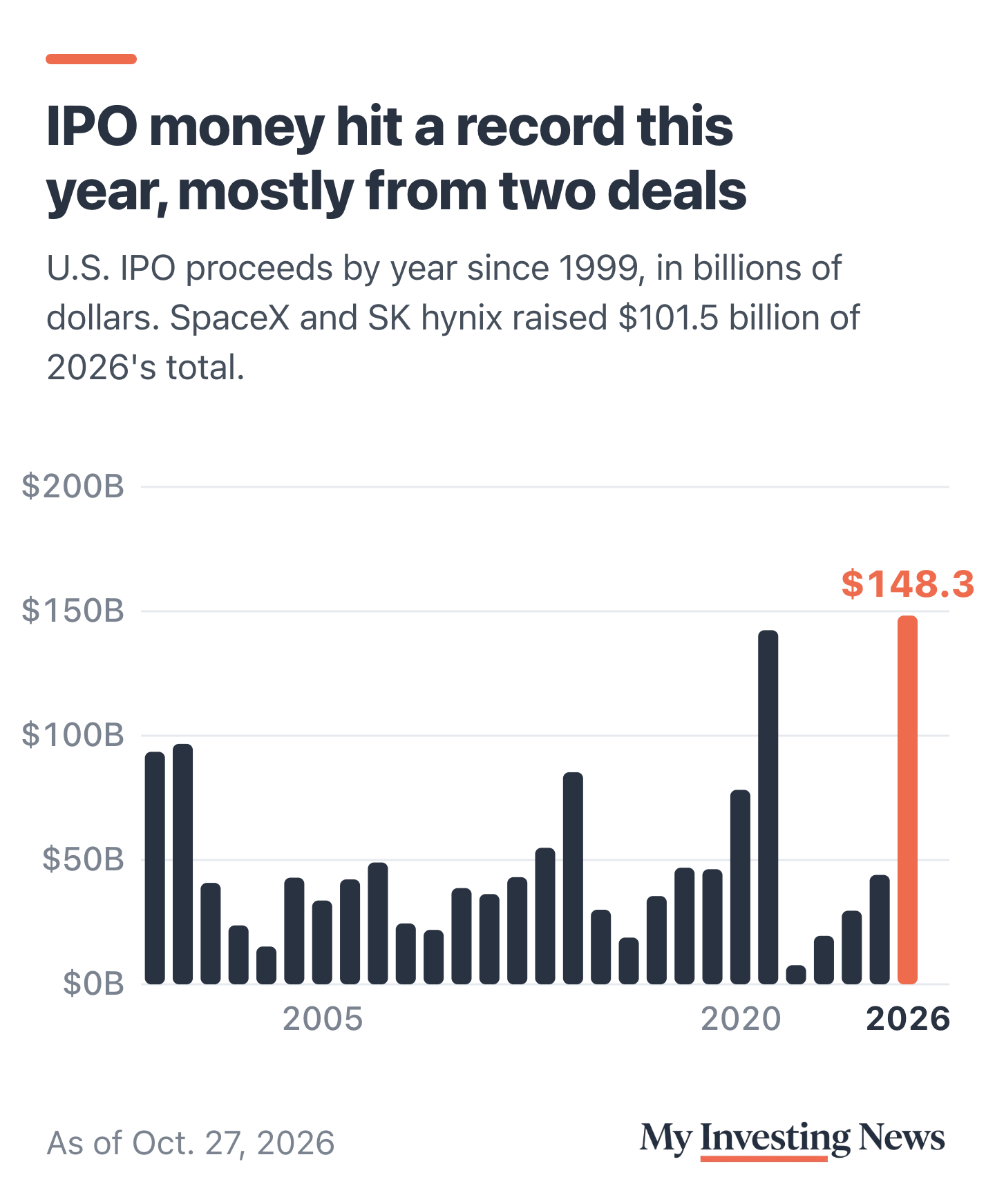
Cramer cited Renaissance Capital’s count of more than $148 billion in IPO proceeds this year. The firm’s running tally stood at $148.3 billion as of Oct. 27, above the $142.4 billion raised in all of 2021. Renaissance called 2021 the biggest year for proceeds ever, so 2026 has already set a new mark with two months left.
Cramer also said much of that money came from two deals, and the numbers back him up. SpaceX raised $75.0 billion in its June IPO, selling 555.6 million shares at $135, according to its prospectus. Memory maker SK hynix raised $26.5 billion in a U.S. offering in the third quarter, per Renaissance. Together that is $101.5 billion, or 68% of the year’s total. Without them, 2026 would be at about $46.8 billion, close to the $44.0 billion raised in all of 2025.
The deal count tells the same story. Renaissance counts 118 IPOs so far this year, 34.8% fewer than at the same point in 2025. Fewer companies are going public, but the ones that do are selling far bigger blocks of stock.
Meta’s Stock Sale and the ATM Problem
IPOs are only part of the flood. On the same day, Meta PlatformsMETA launched what Cramer described as a raise of “up to $95 billion in the stock market, 35 billion now, another 60 billion next year.” Meta’s pricing terms show it sold 40 million Class A shares at $625, upsized to $25.0 billion, plus $12.5 billion of mandatory convertible preferred shares. That is $37.5 billion priced on Oct. 26. Meta also said it plans an at-the-market program of about $60 billion once its new Class C shares start trading, though it has not signed an agreement or set the timing.
An at-the-market offering, or ATM, lets a company sell shares into the market a little at a time instead of in one block. Cramer made his view clear on X the next morning: “The corporate treasurers are so stupid. NEVER EVER do an ATM, You do a big spot and forget about it.” He didn’t name a company in the post.
Meta is in good company. AlphabetGOOGL announced an $84.75 billion equity raise in June that included a $40 billion ATM program. OracleORCL set up a $20 billion ATM in February and took in $19.9 billion from selling common stock in the quarter ended Aug. 31, its filings show. IntelINTC sold $20 billion of stock at $95 a share in August. Meta closed at $620.19 on Oct. 27, below the $625 offering price, and is down 6.0% this year.
The supply Cramer is worried about
Does a Flood of New Stock Really Come Before Bad Years?
Cramer pointed to the most recent example. “The last bear market, 2022, came after we reached $142 billion in IPO proceeds the previous year,” he said. That checks out. The S&P 500 fell 19.4% in 2022, its worst calendar year since 2008.
We tested the idea across Renaissance’s annual data back to 1999. The five biggest IPO years before 2026 were 2021, 2000, 1999, 2014 and 2020. In the calendar year after four of them, the S&P 500 fell: by 10.1% in 2000, 13.0% in 2001, 0.7% in 2015 and 19.4% in 2022. The exception was 2021, when the index rose 26.9% after the 2020 IPO wave. Over all 26 years from 2000 through 2025, the S&P 500 averaged a 7.7% gain and fell in only 8 of them.
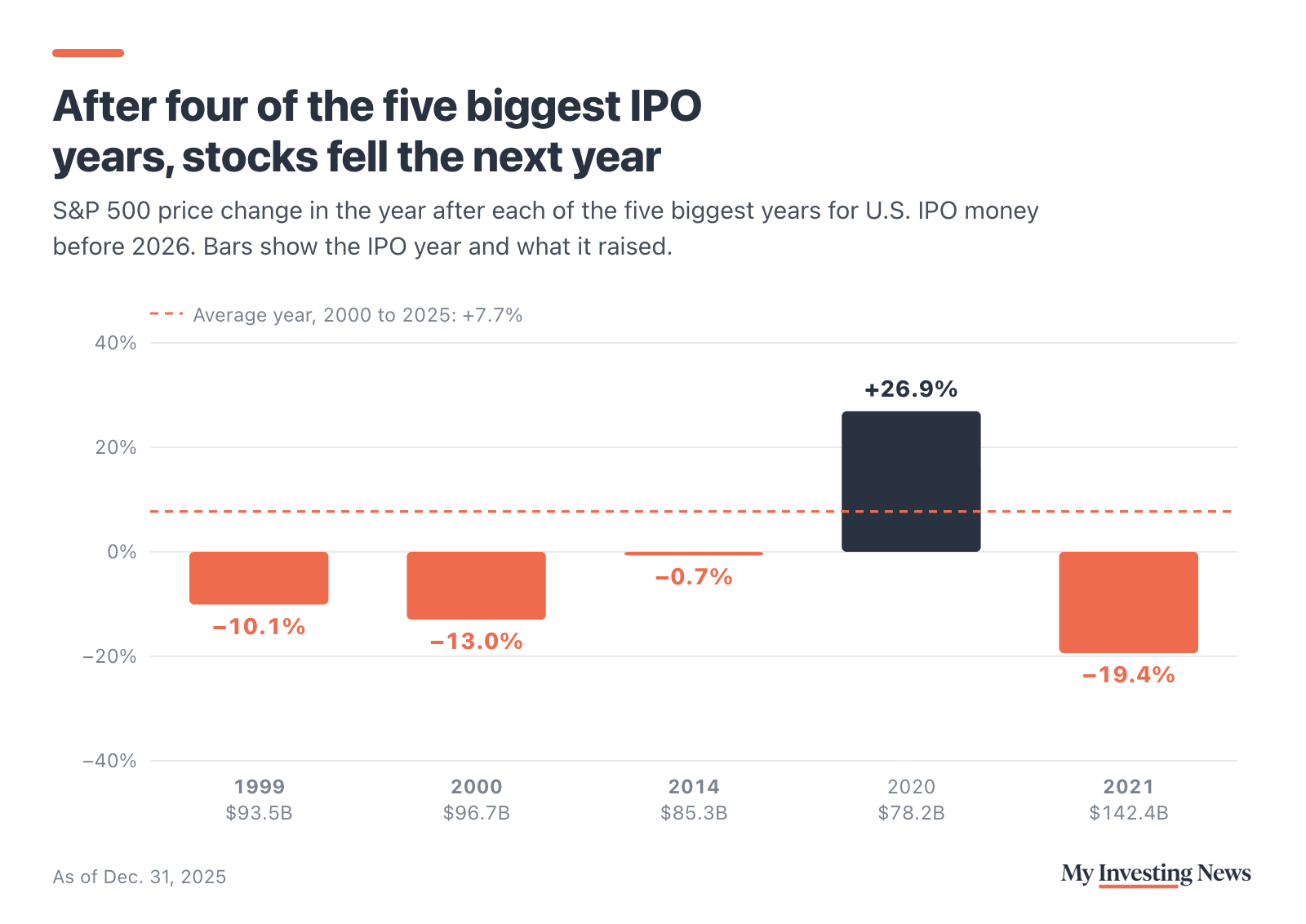
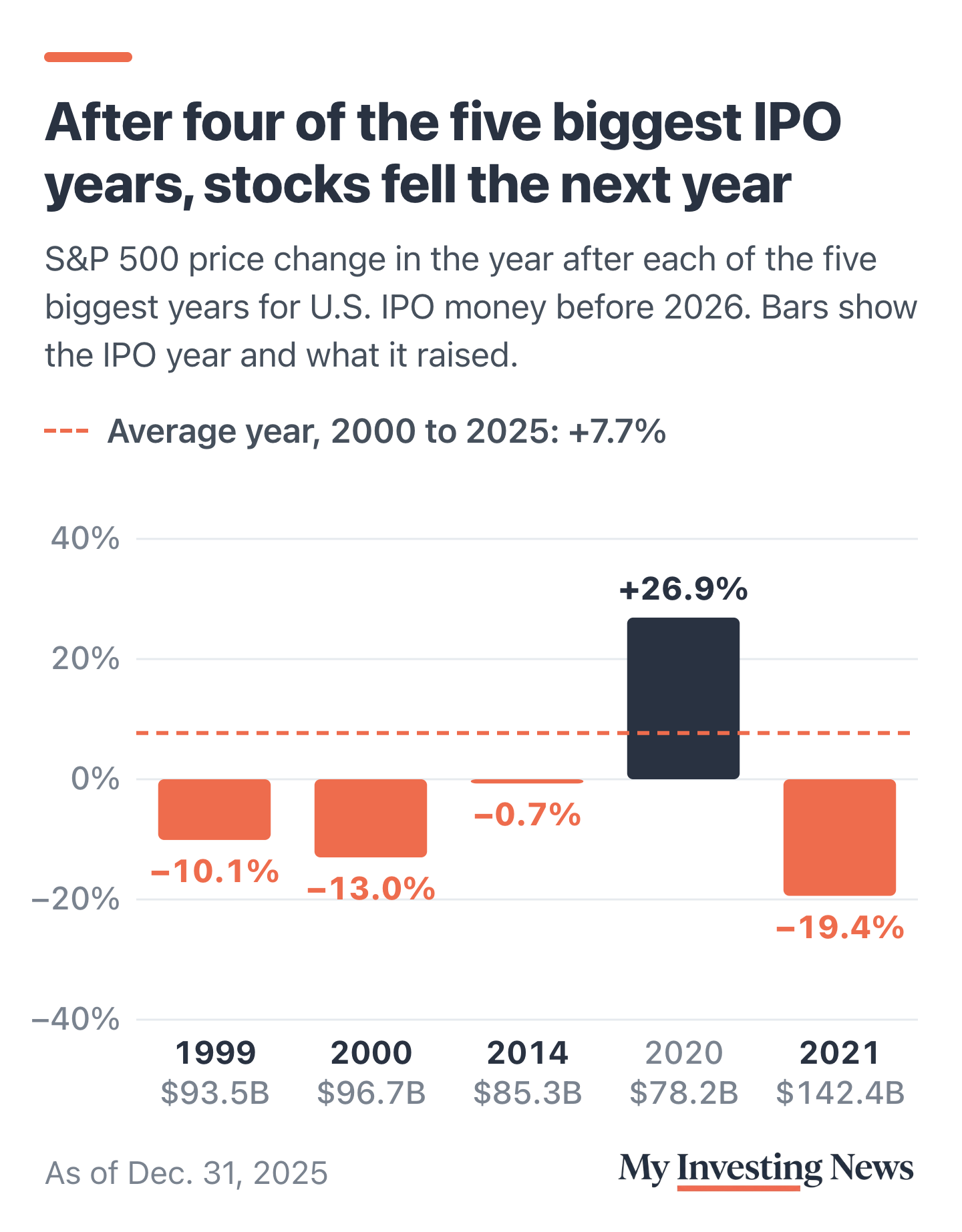
Five examples are a small sample, and big IPO years tend to arrive late in long rallies, when prices are already high. The pattern fits Cramer’s argument without proving that new stock alone caused the declines. He was careful to say as much himself: “I’m not calling a top. I am not calling a top. I’m just saying that I don’t like what I see.”
What to Watch: Anthropic and the 10-Year
The next big test is already on the calendar. Anthropic made its IPO filing public on Oct. 26, and Cramer guessed it could raise “perhaps as much as 75 or 100 billion dollars.” Bettors on Polymarket put the odds of an Anthropic IPO by Nov. 30 at 87.5% as of Oct. 27, and at 94.5% by year end. A deal near Cramer’s low end would match SpaceX’s $75 billion, the biggest IPO of the year so far.
Cramer also argued that the debt market is tapped out. “I think both the debt and the equity markets are running out of money. I think they’re sated,” he said. SpaceX, which wants to borrow $40 billion for Nvidia chips, is one sign of how much credit the build-out needs. Borrowed money is already high in the stock market too: margin debt hit a record $1.5 trillion recently.
Rates are the other pressure Cramer named. The 10-year Treasury yield closed at 4.99% on Oct. 27, which he said makes bonds a real alternative to stocks for many investors.
Cramer thinks the biggest threat to this bull market is the supply of new stock, from record IPOs to Meta’s $37.5 billion sale and the ATM programs he says companies should avoid. The record is real, and four of the five biggest IPO years before this one were followed by a falling market. The risk to his view is that the 2026 total rests on two giant deals, and five past cases are too few to show that supply alone sinks stocks.