
Where we heard itCNBC’s Squawk Box, Oct. 14, 2026. Speaker: Macrae Sykes, portfolio manager at Gabelli Funds.
Macrae Sykes, a portfolio manager at Gabelli Funds, went on CNBC on October 14, 2026 to review this week’s big bank earnings, and he gave a verdict on four names: buy Wells Fargo, buy Morgan Stanley, treat JPMorgan as fully valued and wait on Bank of America.
Trading that day mostly ran against him. At the Oct. 14 close, Wells FargoWFC was at $80.90, up 0.20%. Morgan StanleyMS was at $181.51, down 2.75%. JPMorgan ChaseJPM was at $335.28, up 1.16%, and Bank of AmericaBAC was at $51.39, down 4.76%. Morgan Stanley fell, Wells Fargo barely moved and the bank he calls fully valued rose. The split reflects his value-oriented approach.
Wells Fargo Tops His List at a Discount Multiple
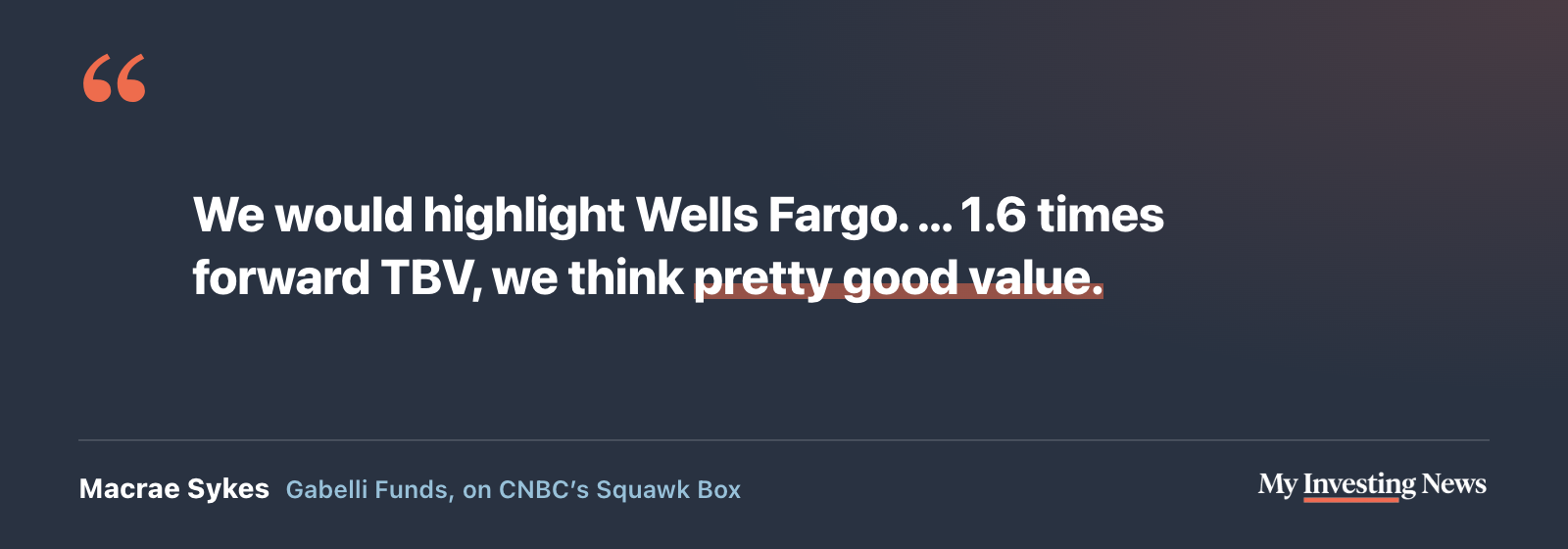
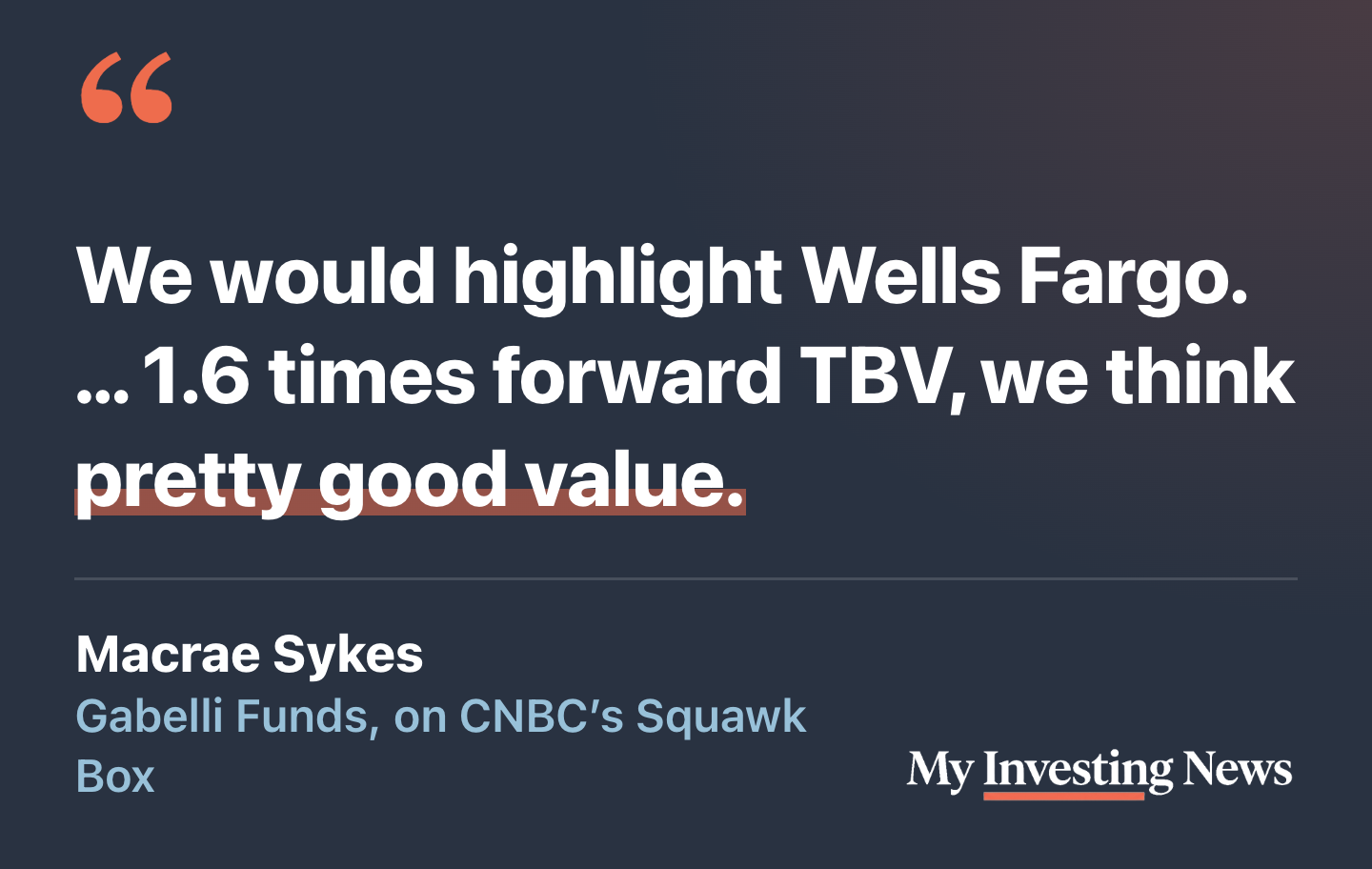
Sykes said: “We would highlight Wells Fargo. We think continued efficiency gains there. Management’s turning around, you know, a nice propulsion in terms of the NII going forward. They’re building up their capital markets business. So we think they’re well positioned and, you know, 1.6 times forward TBV, we think pretty good value.”
Tangible book value (TBV) is a bank’s shareholder equity minus intangible assets such as goodwill. In other words, it is the hard capital behind each share. A bank’s balance sheet is what it sells, so investors judge it by how much it earns on that capital and what multiple of TBV the market pays for it. Earnings can swing from quarter to quarter, which makes TBV a steadier metric.
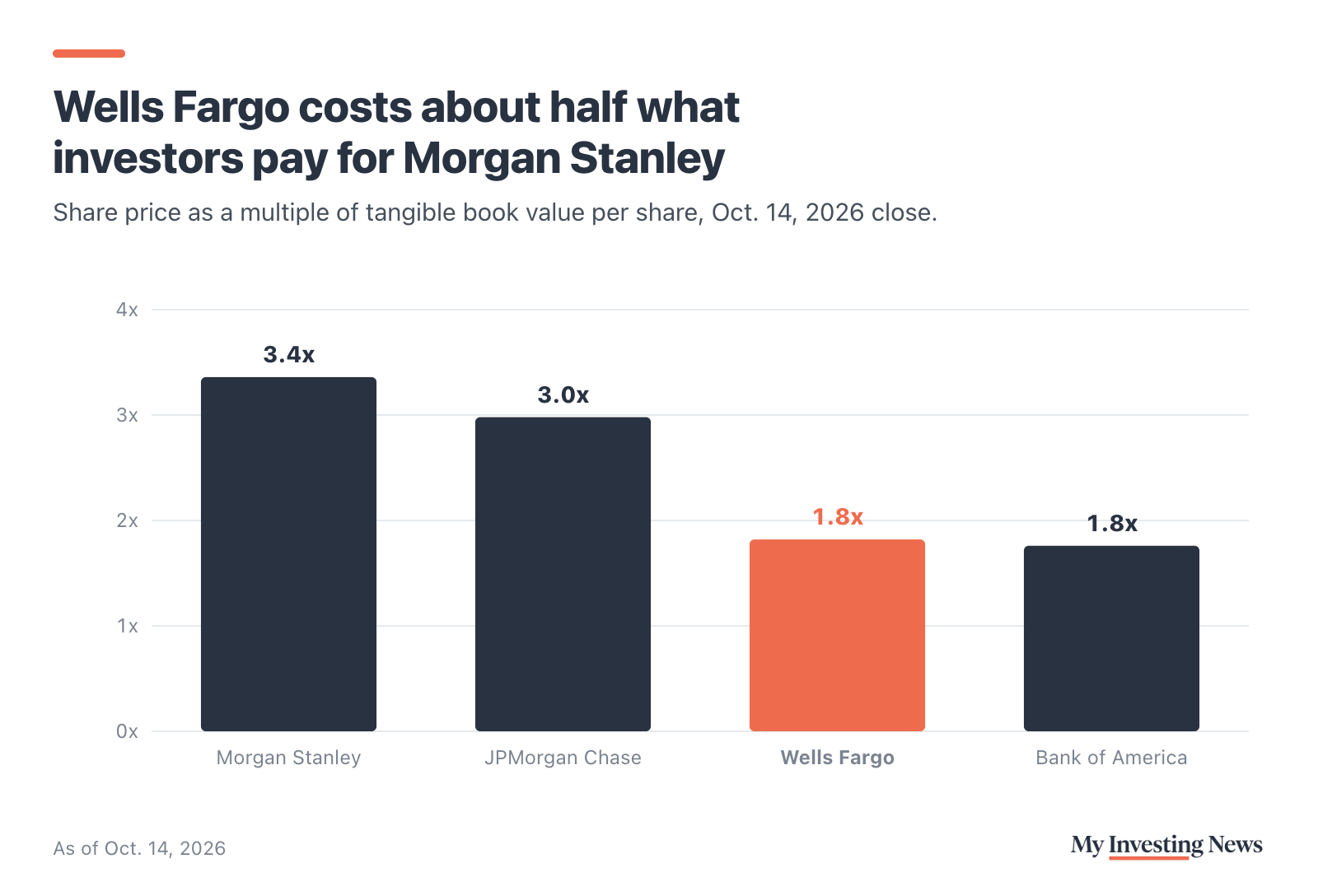
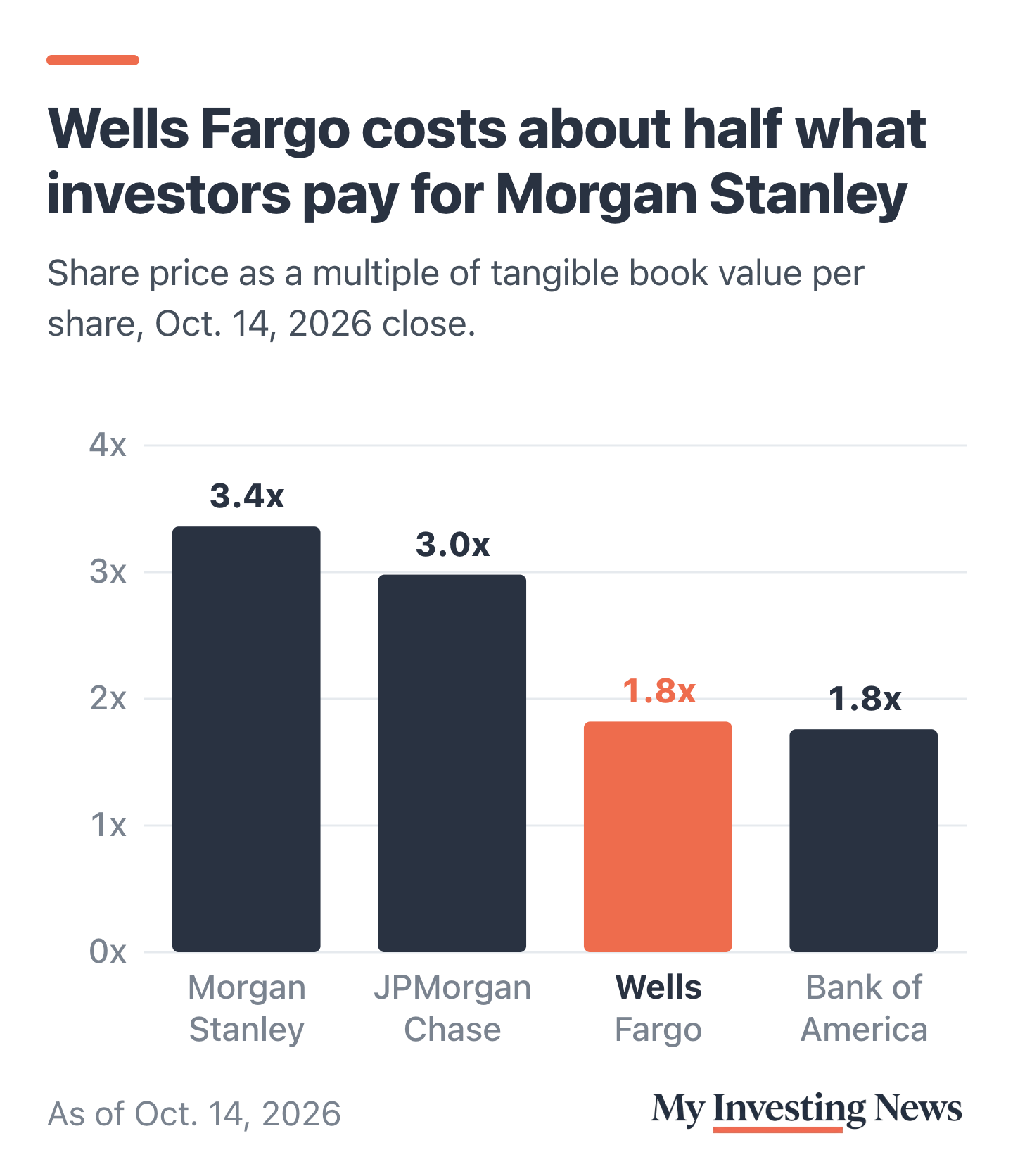
Wells Fargo is down 13.2% year to date through the Oct. 14 close. That decline supports the discount Sykes is pointing to. For his thesis to work, management has to deliver what it guided for. That means fourth-quarter net interest income of about $13 billion and a return on tangible common equity (ROTCE) that rises from 16.3% this quarter toward the bank’s 17% to 18% target.
Morgan Stanley’s Wealth Engine Wins Him Over
In Macrae Sykes’s words, Morgan Stanley was “lights out in terms of their ROTCE, 27% for the first half, but they reported 22% record NNA for their wealth management group. Their securities group continued to do well. And obviously very levered to sort of this demand for capital and the wealth trends.” NNA is net new assets, the money clients bring in minus what they take out.
The bank’s third-quarter numbers back up the wealth story. In its SEC earnings release, Morgan Stanley reported record Wealth Management revenue of $9.1B, $232B in net new assets and firmwide ROTCE of 22.6%. Even so, the stock fell 12.1% in the month through Oct. 14.
Morgan Stanley’s third quarter at a glance
JPMorgan Gets a Pass on Valuation
A “fully valued” stock is one whose good news is already reflected in the share price. Earnings yield is annual earnings per share divided by the share price, so it tells you how much profit each dollar of stock buys. Macrae Sykes pointed to a 6% earnings yield as evidence: “I don’t like to pick on JPMorgan, but they, I would say they’re more fully valued at this point. We got some confirmation with the, you know, the diminished buybacks in the quarter. And even Jamie saying, you know, he wasn’t thrilled about buying it, you know, 6% earnings yield.”
JPMorgan is up 4.1% year to date and rose 1.2% on Oct. 14, the biggest gain of the four.
Bank of America Lands in Wait-and-See Territory
Sykes held off: “Bank of America, I think it’ll be interesting to see how it settles out here. I think there were some idiosyncratic components to sort of how they weren’t as competitive on the markets business in the quarter.” Macrae Sykes also credited the bank with a net interest margin gain of 8 basis points.
Of the four, Bank of America has fallen the most over the past month, down 13.6% through Oct. 14. Its third-quarter release included a $1.2B charge for civil money penalties tied to anti-money-laundering orders. Earnings missed estimates even without that charge: adjusted EPS was $1.08 vs. a $1.11 consensus.
Yield Curve Gives Banks a Tailwind
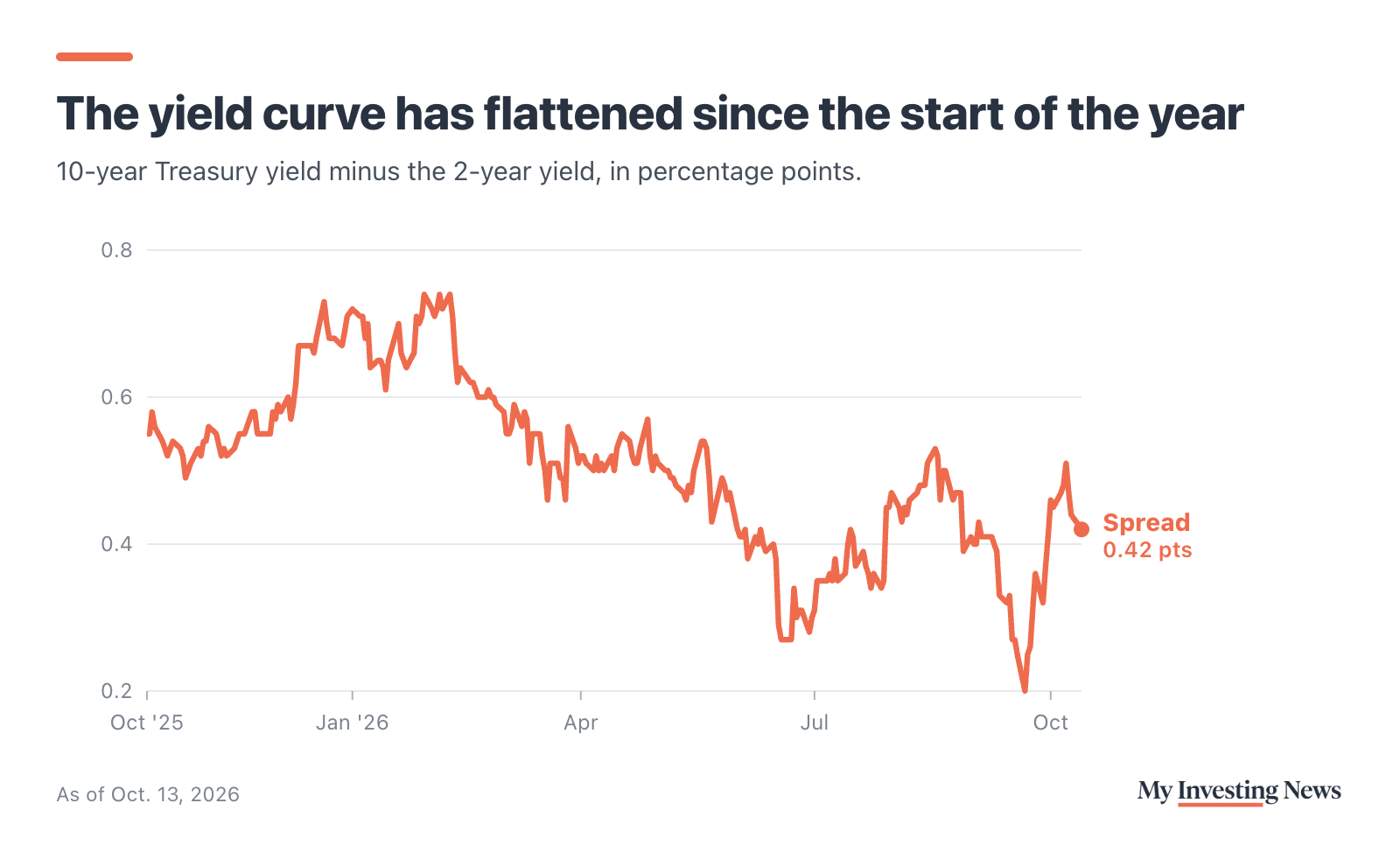
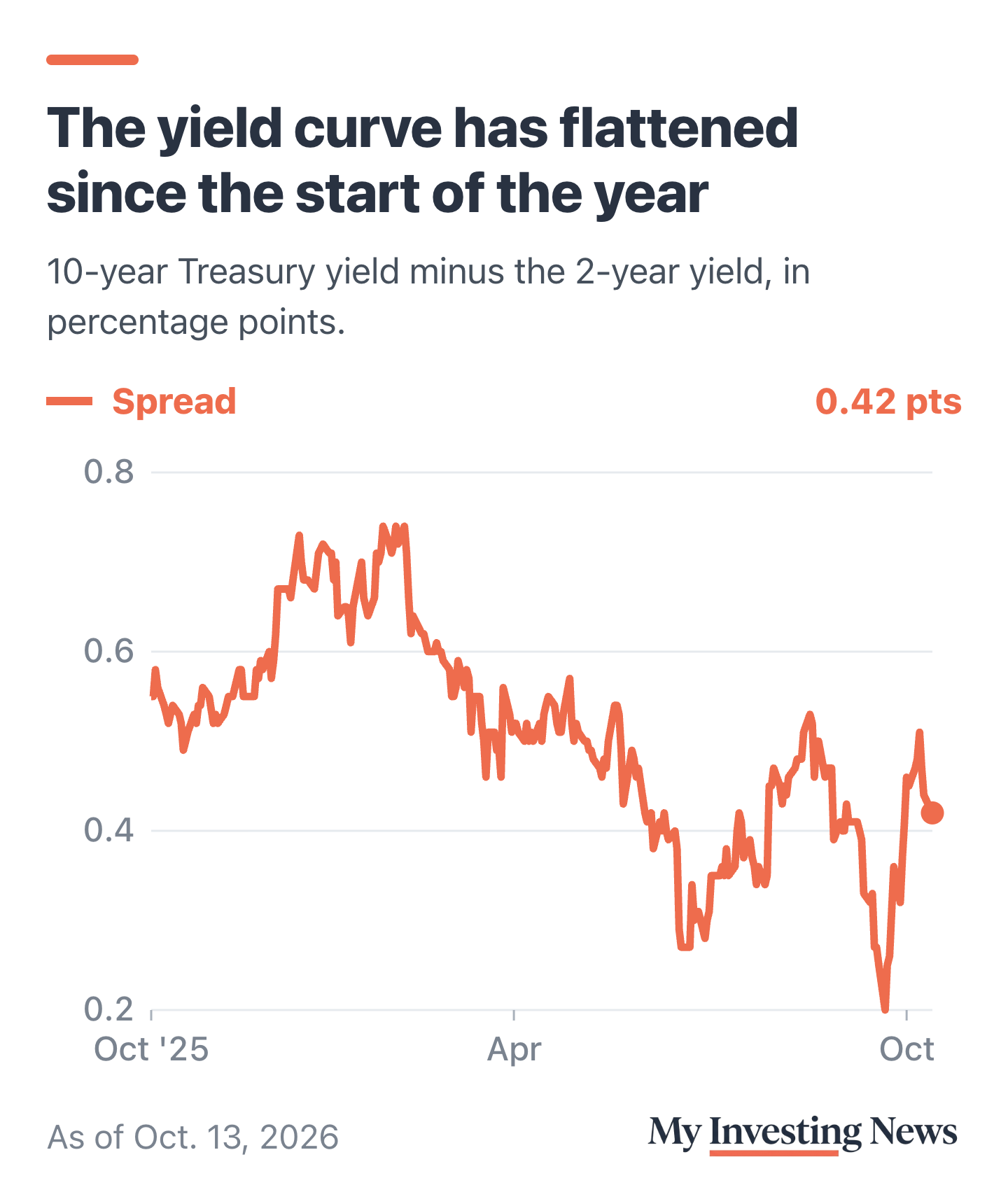
The gap between the 10-year and 2-year Treasury yields stood at 0.42% as of October 13, 2026, according to Federal Reserve data. Earlier in the month, the 10-year yield closed at its highest in a year. Banks pay short-term rates on deposits and earn long-term rates on loans, so a wider gap increases net interest income. On air, Macrae Sykes put the current spread at 45 basis points and said it was 70 basis points at the end of last year. The spread is up 0.09 from a month ago, so the curve has steepened lately even if it is flatter than last year.
What Could Prove Sykes Right on Wells Fargo
Sykes’s framework favors improving businesses trading at reasonable multiples of tangible book value. The clearest test arrives with Wells Fargo’s next earnings report. If net interest income comes in near the guided $13 billion and ROTCE moves into the target range, his call looks right. If either falls short, today’s discount may stick around.
Not every investor is this upbeat on banks. Investor Jordi Visser has argued that AI agents could hit banks the way AI fears hit software stocks, which he calls a “bank-pocalypse.”
Sykes favors Wells Fargo and Morgan Stanley after bank earnings, and calls JPMorgan fully valued. Wells Fargo trades at about 1.8 times tangible book value, about half Morgan Stanley’s multiple. The risk is that Wells Fargo misses its guidance for about $13 billion in fourth-quarter net interest income or stays below its 17% to 18% ROTCE target, and the discount sticks.