
Where we heard itBarron’s Streetwise podcast, “The Disruption Scorecard.” Released Oct. 16, 2026. Speaker: Brian Foran, analyst at Truist Securities. Listen at Barron’s
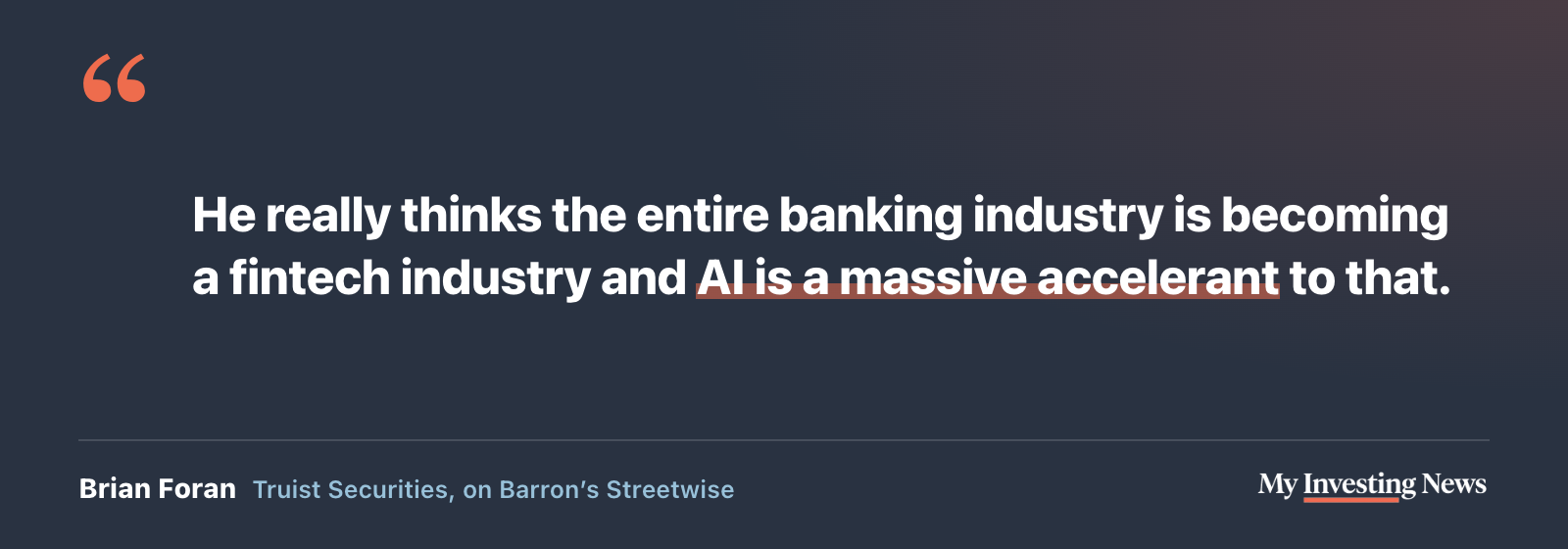
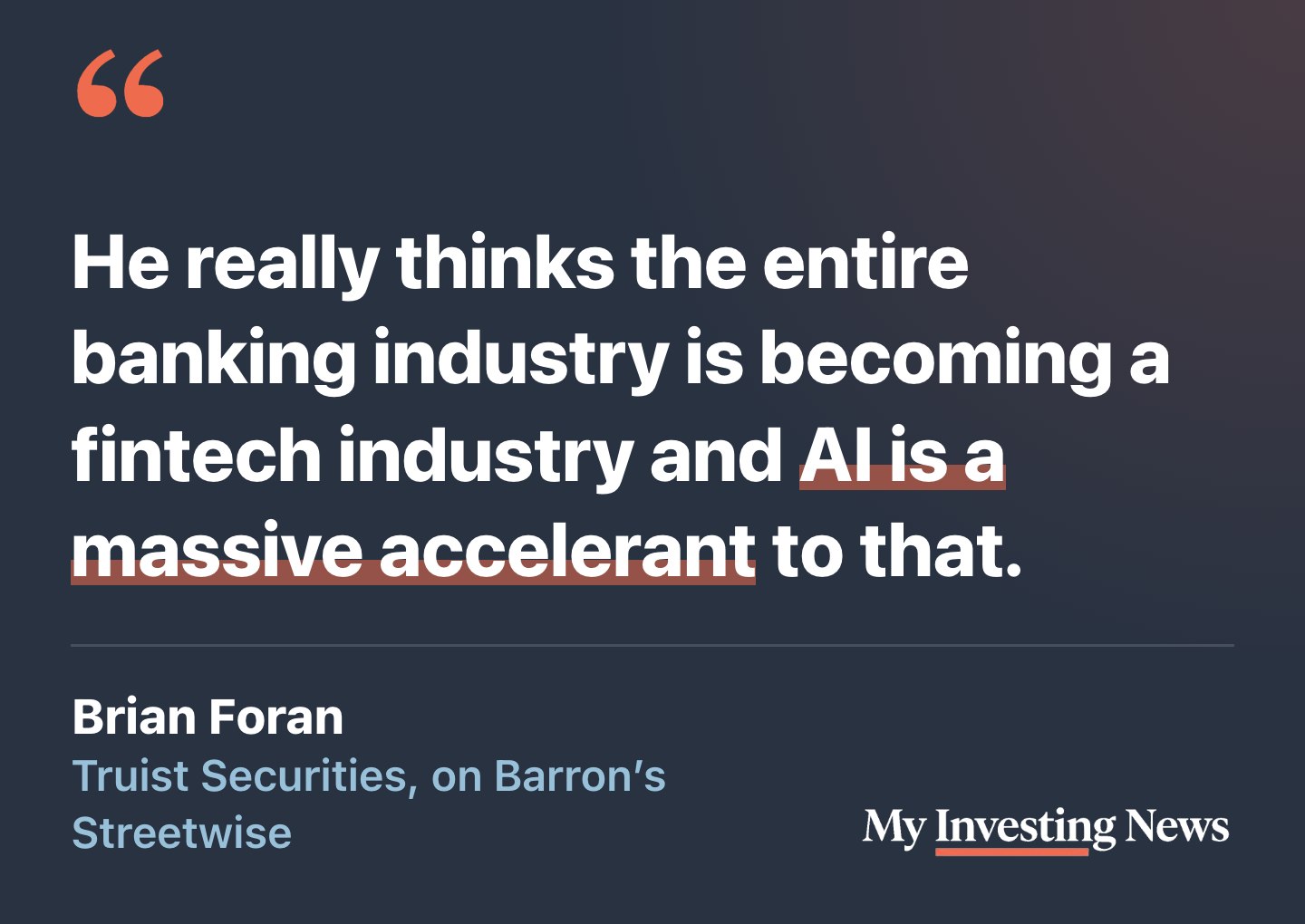
Capital OneCOF CEO Rich Fairbank has a line he keeps coming back to. On the Barron’s Streetwise episode The Disruption Scorecard, released October 16, 2026, Truist Securities analyst Brian Foran said Fairbank first claimed technology was as important as fire and the wheel. He now says the same thing about AI. “He really thinks the entire banking industry is becoming a fintech industry and AI is a massive accelerant to that,” Foran said.
Fairbank cares most about the inputs, meaning technology and AI. Investors want results they can see in the numbers. Foran said Fairbank would “kind of listen to my to-do list and laugh a little bit and say those are the outputs you want to see in your spreadsheet in terms of getting the input right.” On the July earnings call, Fairbank said: “We are in the 14th year of our technology transformation from the bottom of the tech stack up.” Wharton’s Ethan Mollick has made a related point about AI at work: it makes workers better, but making companies better is the hard part.
Three Tests Investors Want Capital One to Pass
Foran’s to-do list breaks down into three items:
- Get Discover right. Management said 50% of Discover card originations were on Capital One’s technology platform and that the existing portfolio should be fully migrated in the first quarter of 2027.
- Turn spending into revenue. The money going into technology needs to start coming back out as growth.
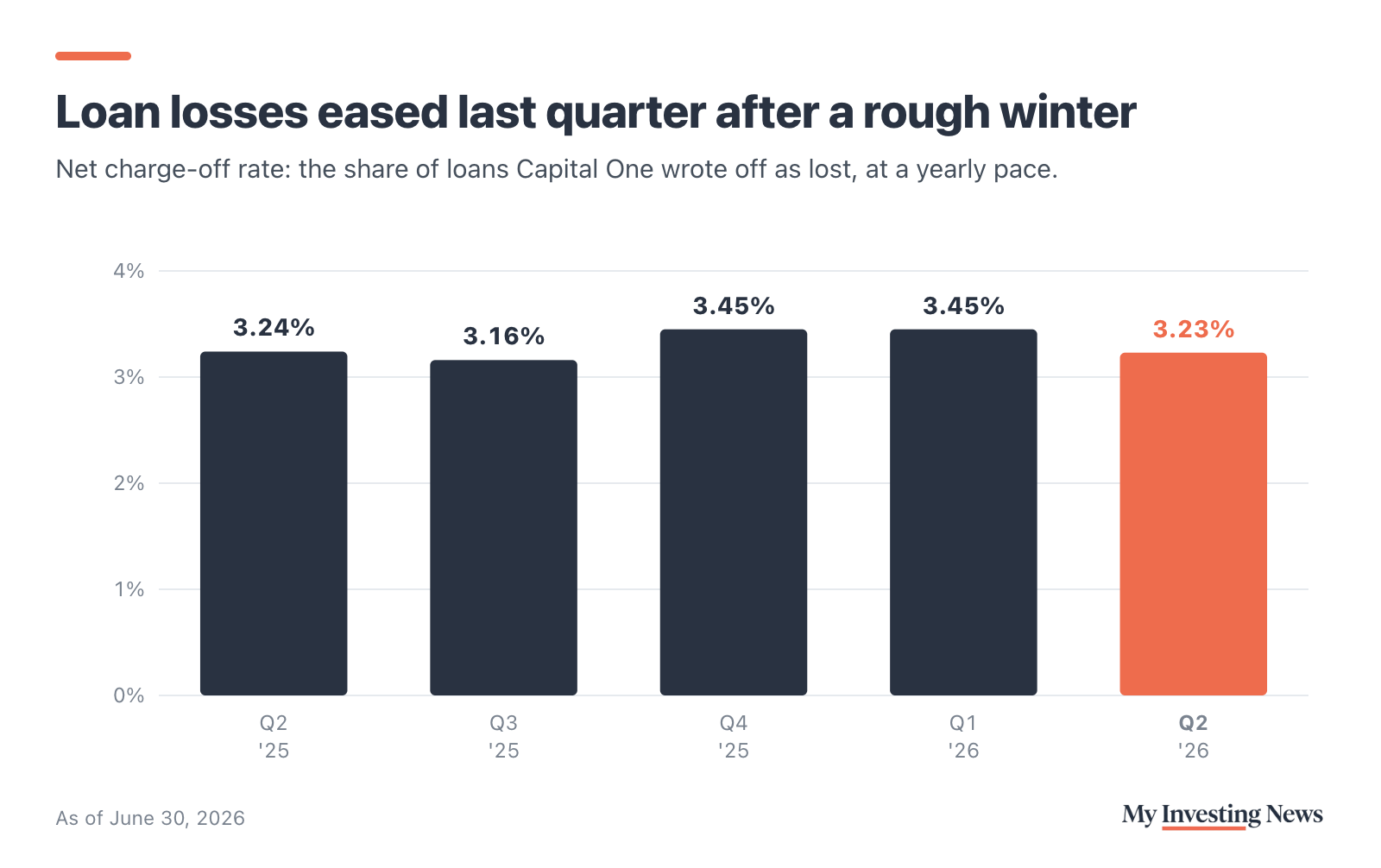
- Survive the rate cycle. The consumer loan book has to get through the rate cycle without large losses. In Q2, the net charge-off rate fell to 3.23%, but net charge-offs were still $3.6B.
Expenses Are Outrunning Revenue for Now
Foran, the Barron’s Streetwise podcast guest analyst, said Capital One’s revenue growth is running around 5% year over year, with expenses growing faster than revenue. The second-quarter results back up the second part. Revenue rose 4% from the first quarter to $15.9B, while non-interest expense rose 7% sequentially to $9.0B, which included $298M in Discover integration costs and $96M for Brex. Marketing ran about $1.7 billion, up 23% year over year.
Earnings have been uneven against forecasts. Capital One missed EPS estimates in the fourth quarter of 2025 and the first quarter of 2026, then beat in the second quarter with adjusted EPS of $5.81. Q2 diluted EPS came in at $4.73, according to the company’s second-quarter earnings release. Fairbank admits some of this spending is hard to measure: “I don’t know a way to create a horizontal P&L for a data ecosystem or the move to the cloud.” He also said that if it could be measured, “it would turn out to be the most high yielding investment that we’ve ever made.”
Why Some Investors Are Willing to Wait
Foran summed up the situation as “a lot of trust us and a lot of reason to trust them.” Foran, the Barron’s Streetwise podcast guest analyst, said Capital One “built a great company over 30 years from scratch” and has gone through big investment cycles before. The benefits haven’t shown up in the P&L yet. The P&L, or profit and loss statement, is the income statement: revenue minus expenses equals profit.
Some of the core numbers are already solid. Net interest margin, the gap between what the bank earns on loans and pays on deposits, expanded to 8.01%. Return on tangible common equity reached 18.04%. Global Payment Network volume grew 156% year over year to $189.6B. Capital One also says it is the only major U.S. bank that has migrated entirely to the public cloud. Not every investor sees AI as good news for banks: one expects AI agents to squeeze the spreads banks earn on idle money.
Second quarter at a glance
The host followed up by noting that banks seem to complain about every rate environment. Foran said conditions look very good today, but investors are nervous about 2027.
What Would Count as Proof in Capital One’s Next Report
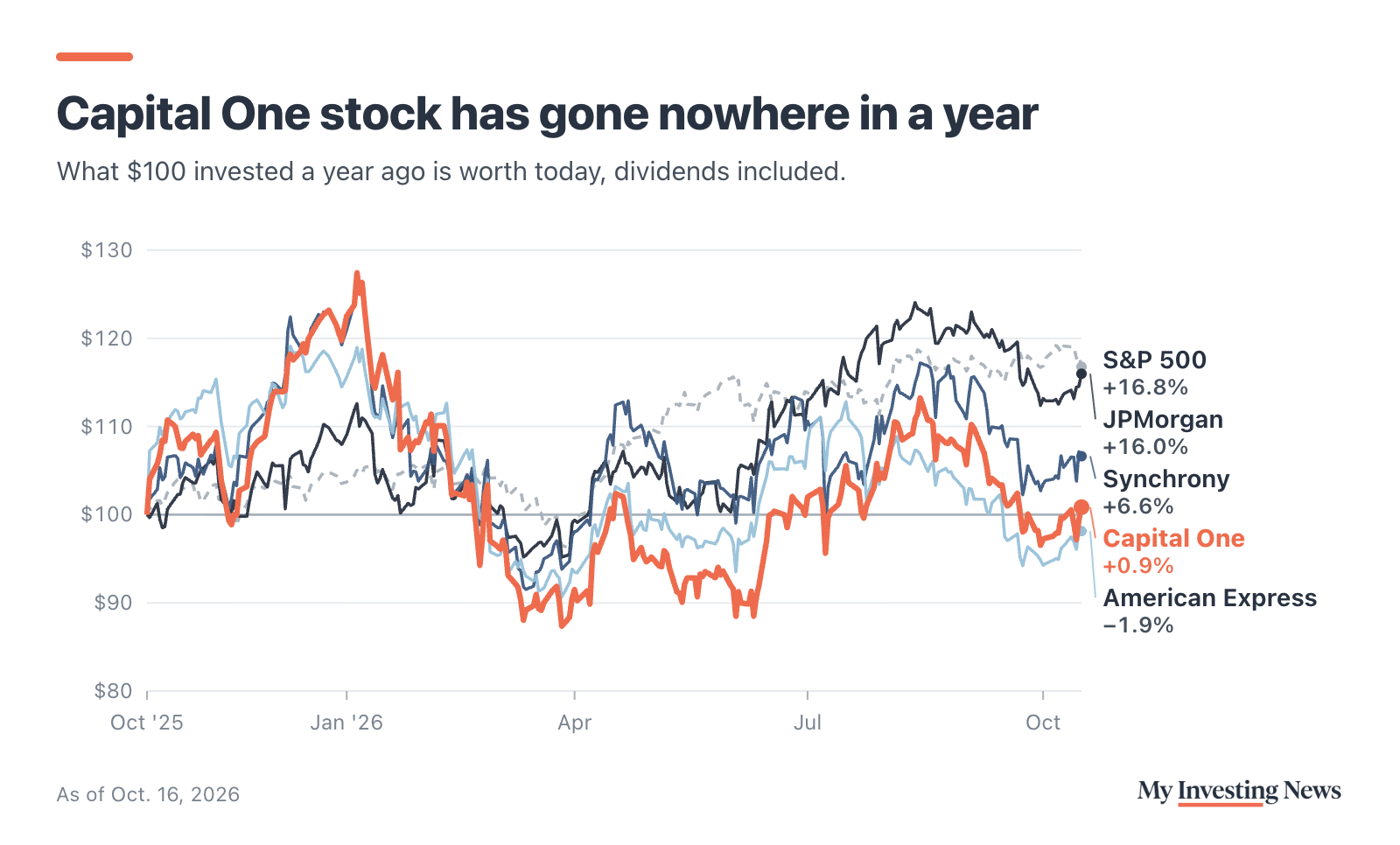
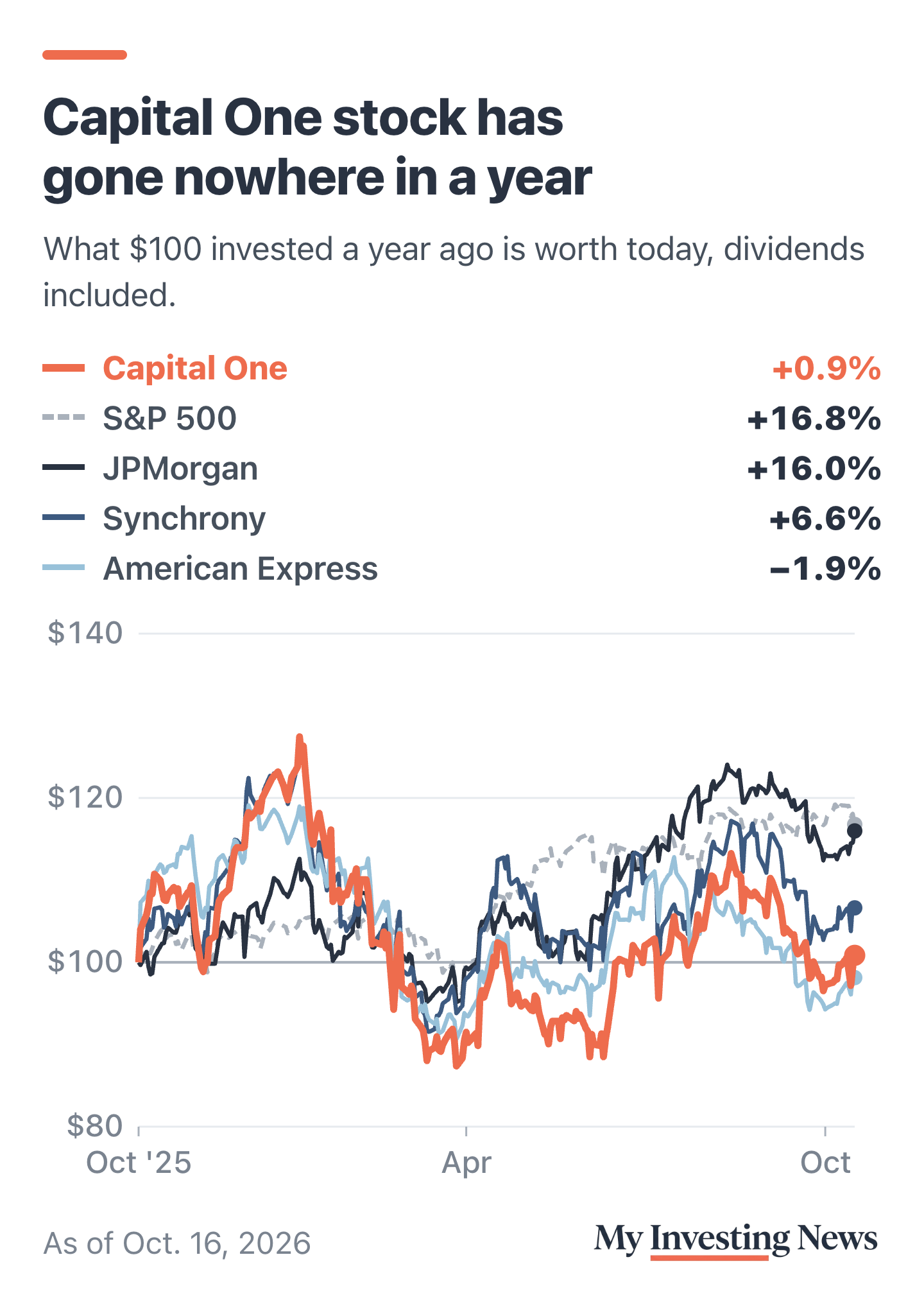
Shares closed at $201.74 on October 16. That puts the stock down 16.8% this year and up 0.9% over the past year including dividends. The market is still waiting for evidence.
In the next quarterly report, watch three things:
- Whether revenue growth is starting to close the gap with expense growth
- Whether all new Discover originations moved onto Capital One’s technology stack by the end of the third quarter, as management expected
- Whether consumer charge-offs keep falling
A single quarter where revenue grows faster than expenses and credit losses stay contained would be the first real proof that Fairbank’s investments are paying off. Until then, long-term holders are taking a management team with a 30-year track record at its word. Weak expense discipline and a stalled Discover migration would be signs that the cost of transforming the bank is still rising.
Fairbank sees AI as a turning point on the scale of fire and the wheel, and Foran sees “a lot of reason to trust” a team that built the company from scratch over 30 years. The risk is that expenses keep growing faster than revenue while the Discover move drags on, and the stock has gone nowhere in a year while investors wait.