Where we heard itCNBC’s Fast Money, “Cracks in the AI Trade… and AMD Reports Results,” Nov. 3, 2026: Keri Findley, CEO and chief investment officer of Tacora Capital Management, interviewed by Melissa Lee.
Keri Findley lends against assets for a living, and she keeps turning down one kind. “We see about a GPU financing opportunity a week, sometimes three, and we’ve stayed away,” the Tacora Capital Management CEO said on CNBC’s Fast Money on Nov. 3. Her reason was the chips themselves: if newer, faster GPUs are plentiful, “you may use them for only 18 months,” and on a loan that runs 24, 36 or 48 months, “there may not be much left, much usable life left at the end of that time.”
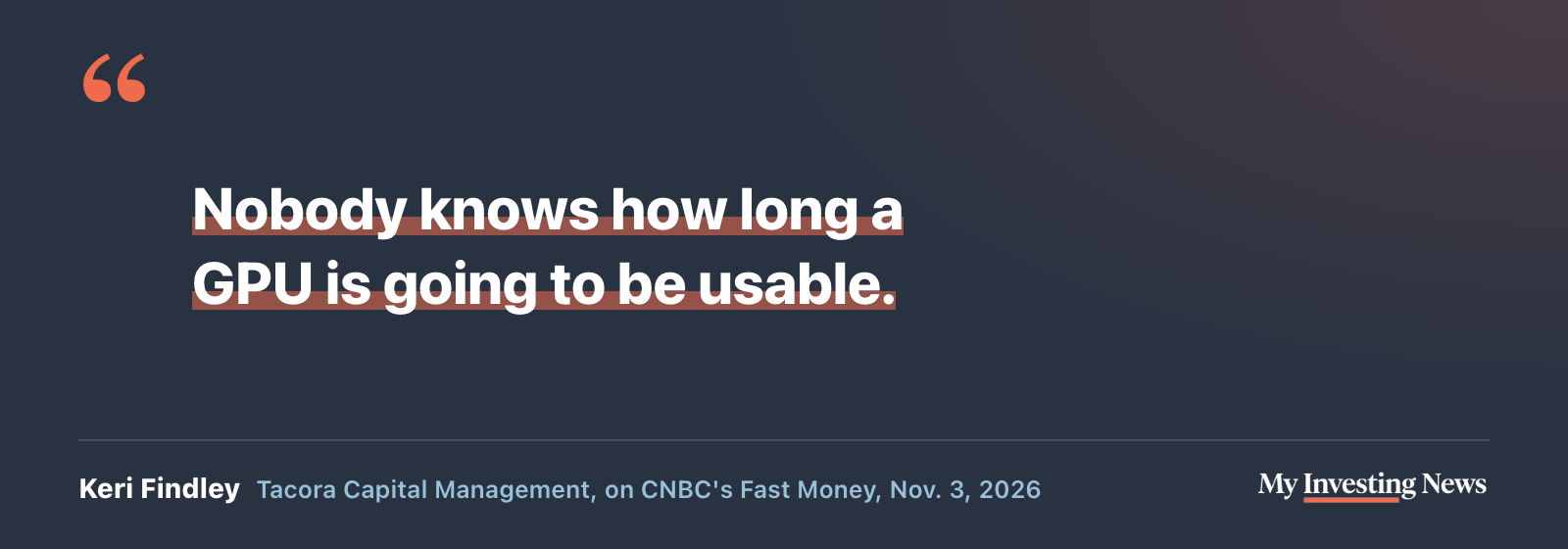
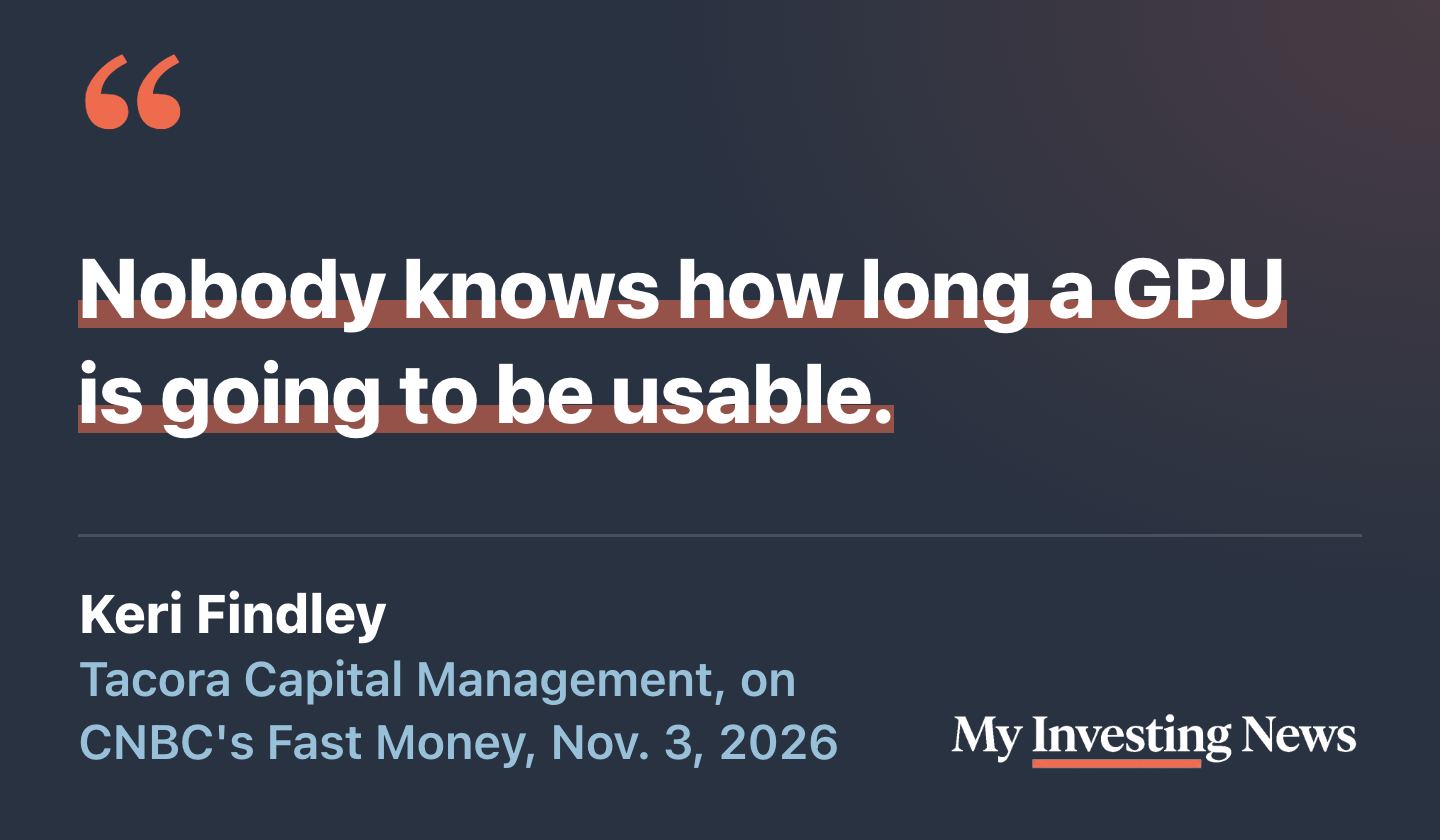
“And so if you’re financing it on a 10-year life or a 3-year life, it’s just an incredibly different proposition,” she added. The GPU sellers want deals financed for as long as possible, she said, but “we can’t get comfortable with the depreciation risk. You just don’t know when new technology is going to take over.” The same question sits inside the income statements of the biggest buyers of those chips. How long a company says its servers last decides how fast their cost hits profits, and the five biggest cloud spenders have answered it in their annual reports, again and again.
Three Years Became Six
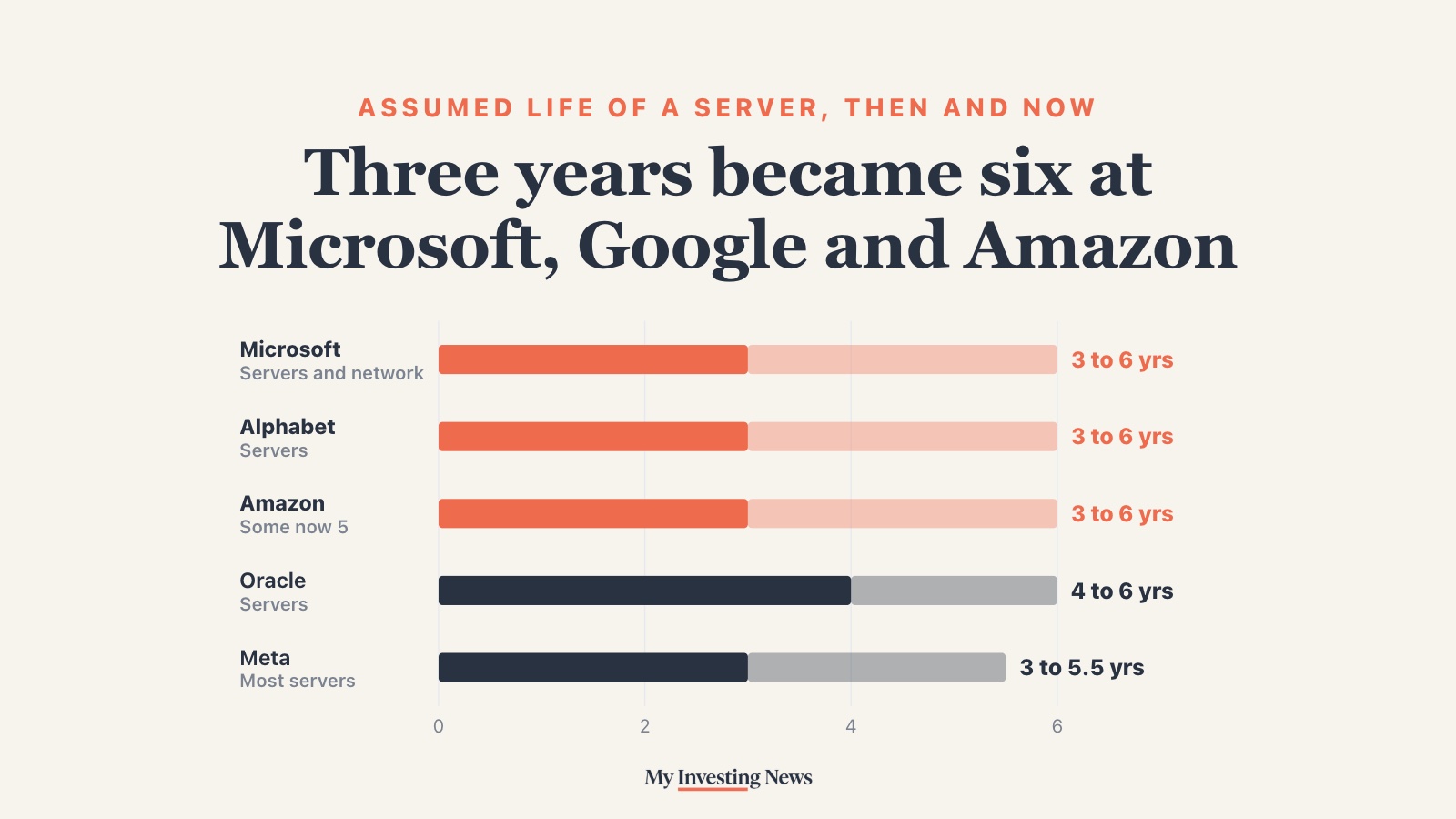
In 2019, Microsoft MSFT, Alphabet GOOGL and Amazon AMZN each wrote off servers over three years. Meta Platforms META had moved its servers from three years to four by 2021, and Oracle ORCL used four years until 2022. Now Microsoft, Alphabet, Amazon and Oracle top out at six years, and Meta uses five and a half for most servers. Microsoft and Amazon credited better software, hardware and data center design; Meta cited longer refresh cycles.
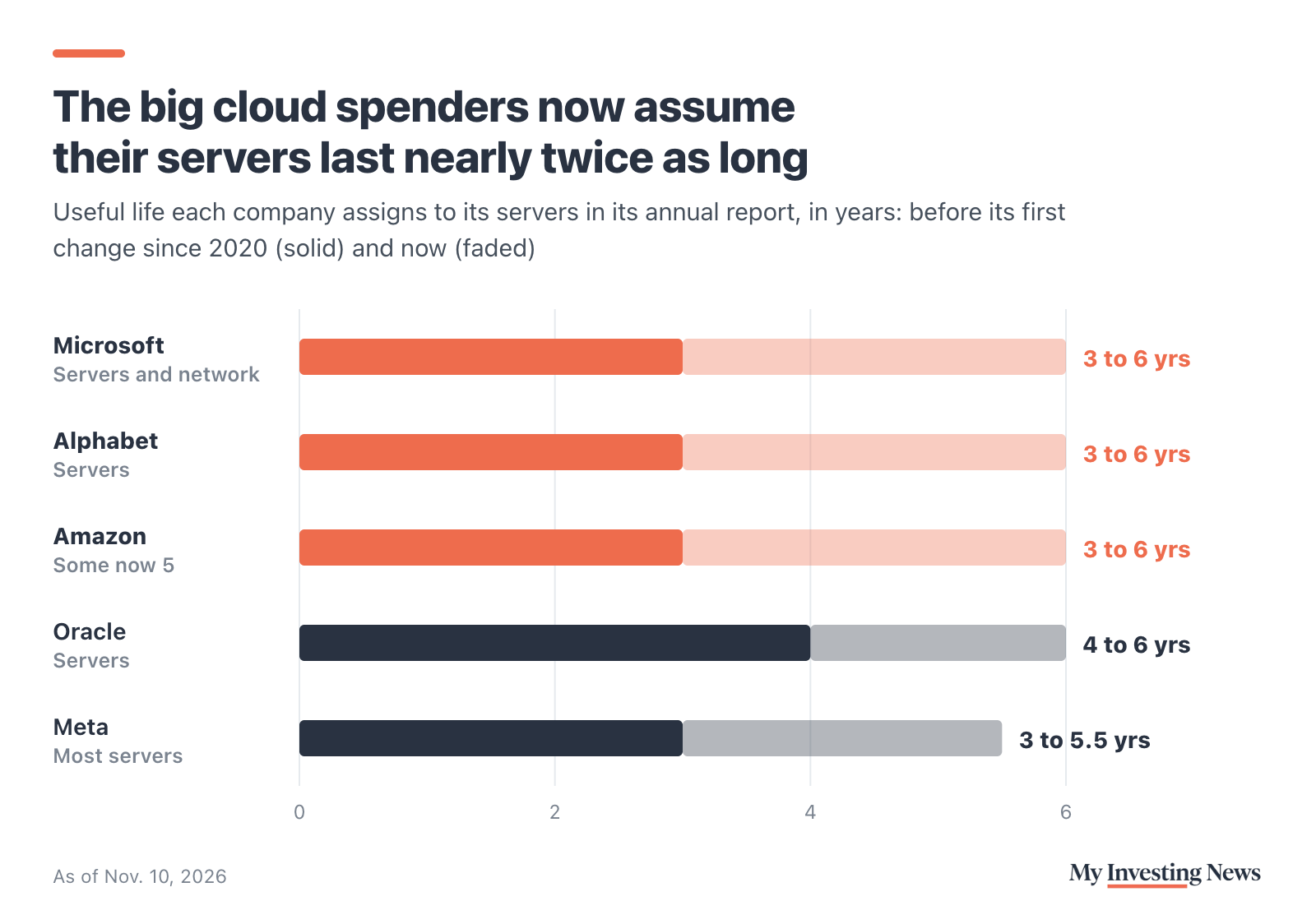
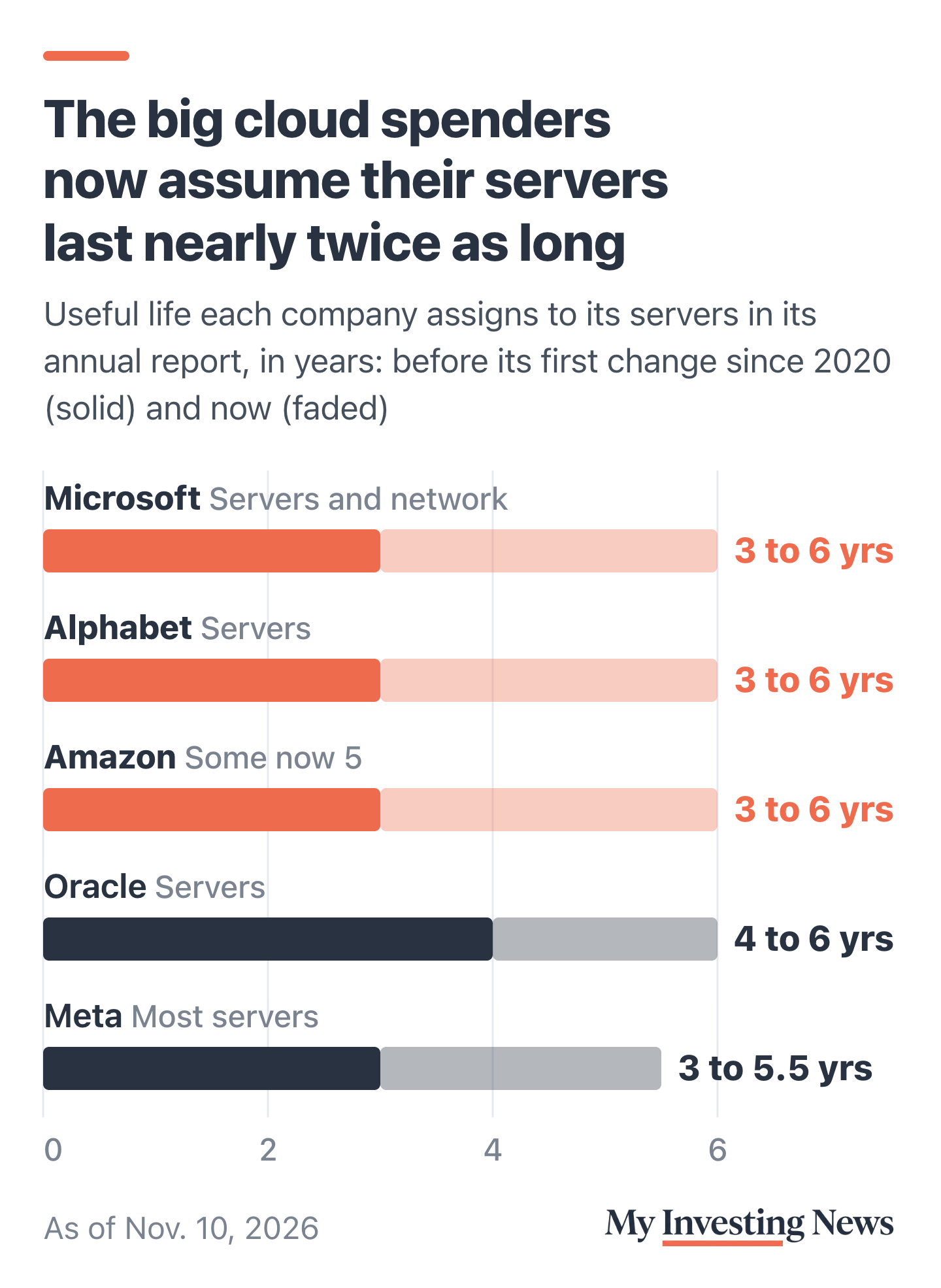
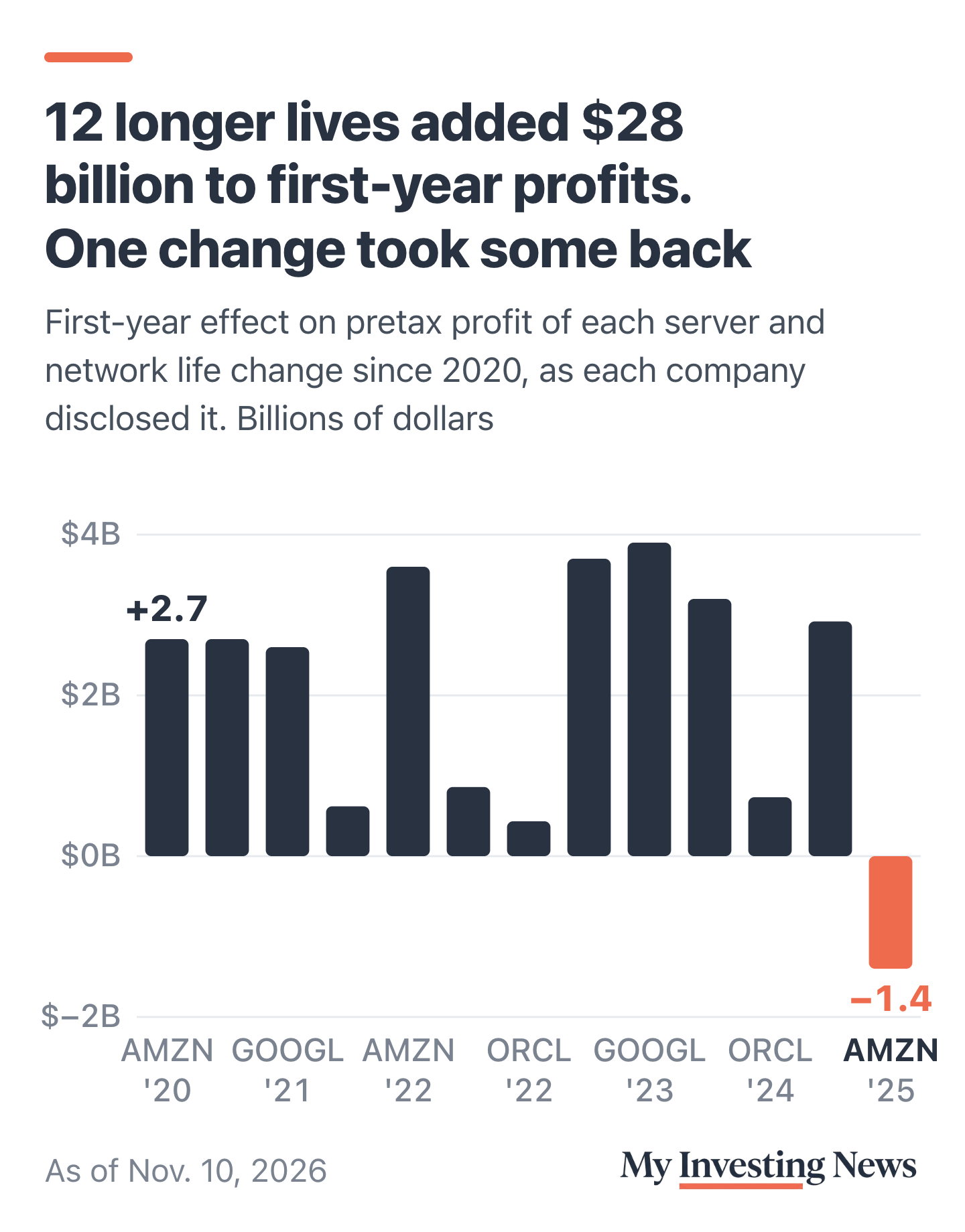
Each change has a price tag, and the companies disclosed it. We counted 12 extensions since 2020 in the five companies’ annual reports. In the first year alone, they cut depreciation or raised operating income by $28 billion combined, and added about $22 billion to net income (Oracle gave no net income figure for its 2022 change). Amazon got the most, $9.5 billion across three changes, followed by Alphabet at $6.5 billion and Microsoft at $6.4 billion. Those are first-year effects only. The savings keep coming in later years, and the companies don’t report them.
The server life record, from the 10-Ks
One Company Blinked
Only one of the 13 changes went the other way. Starting in January 2025, Amazon cut a subset of its servers and networking gear from six years back to five, which added $1.4 billion of depreciation that year. Its explanation, in its annual report, is close to Findley’s worry: “The shorter useful lives are due to the increased pace of technology development, particularly in the area of artificial intelligence and machine learning.”
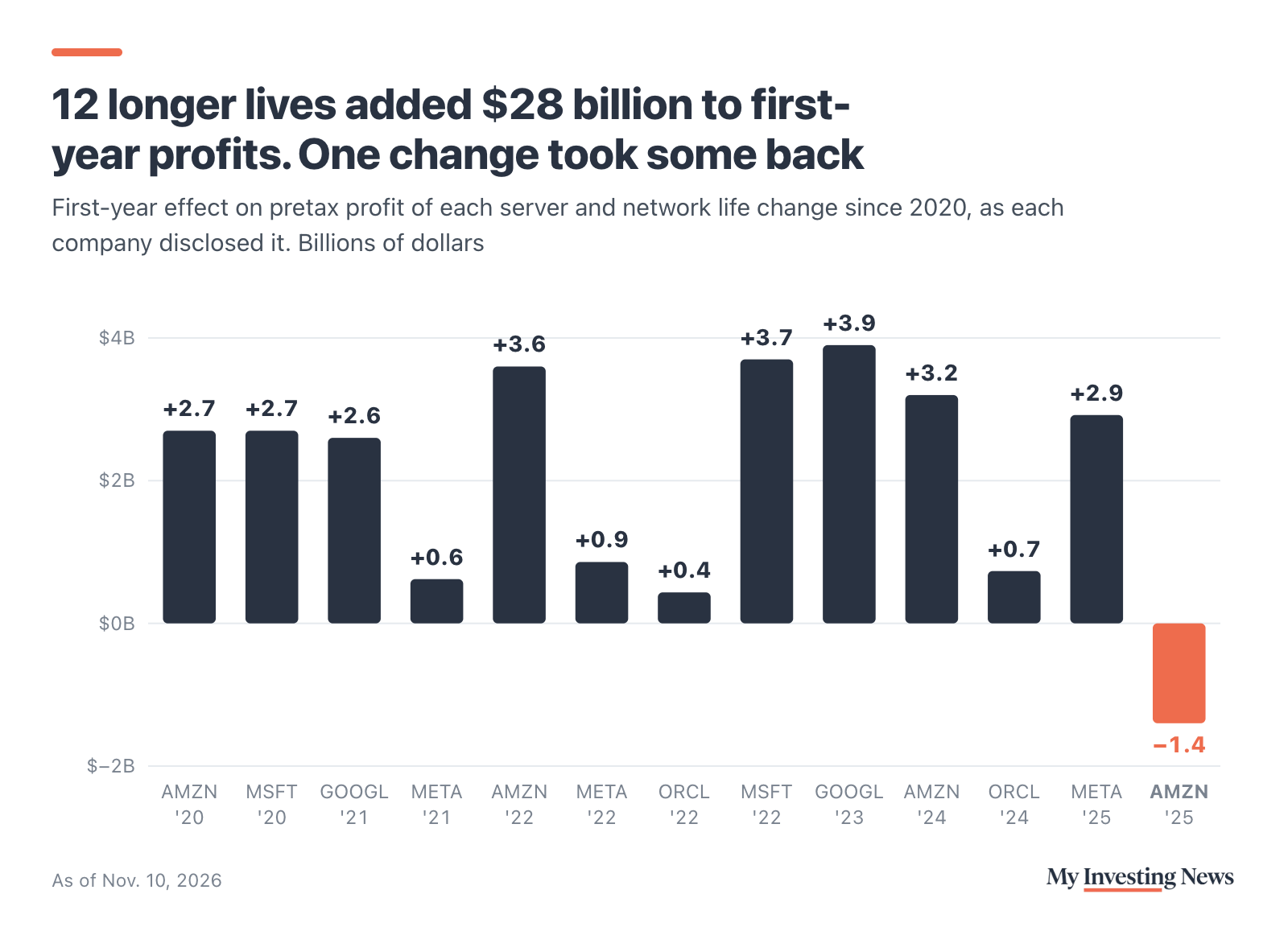
Meta went the other direction the same month, lengthening most servers to 5.5 years and cutting 2025 depreciation by $2.92 billion. None of the five gives GPU servers a separate life in its latest annual report, so the AI gear sits inside these same five-to-six-year buckets.
Why It Matters More Now
The stakes grow with the spending. Meta’s depreciation on servers and network gear was $5.34 billion in the third quarter of 2026, up 48% from a year earlier. Microsoft’s total depreciation was $11.1 billion, up 56%. On a straight line, writing the same gear off over four years instead of six raises the yearly charge by half.
Nvidia’s release pace is the yardstick skeptics use. It announced its A100 data center chip in May 2020, the H100 22 months later, Blackwell 24 months after that and Blackwell Ultra 12 months later, in March 2025. Others have weighed in on what that pace means: Eric Hippeau has argued AI chips won’t last nearly as long as dot-com fiber, and Ken Griffin compared GPUs to airline seats whose price can collapse when supply catches up. Findley’s firm has decided the uncertainty is too big to lend against.
What to Watch
Annual reports are where these changes show up. Alphabet, Amazon and Meta file theirs in late January or early February, Oracle in June and Microsoft in July, and the 2027 round will show whether anyone else follows Amazon and shortens. Watch depreciation growth against cloud revenue growth each quarter, and cash flow alongside earnings, since accounting choices move profits but not cash.
Findley says nobody knows how long a GPU stays useful. In their books, the biggest buyers have decided: about six years, after 12 extensions since 2020 that added $28 billion to first-year profits. The risk is that Nvidia’s faster release pace proves her right, and the next change, like Amazon’s in 2025, runs the other way.