Where we heard itCNBC’s “Fast Money,” Nov. 9, 2026, with Dan Niles, founder of Niles Investment Management, interviewed by host Melissa Lee.
Nvidia NVDA fell 4.3% on Nov. 9 while the S&P 500 rose 2.3%, as the board’s investigation of CEO Jensen Huang raised the question of whether he will stay. Dan Niles, the hedge fund manager who runs Niles Investment Management, went the other way. On CNBC’s “Fast Money” that night, host Melissa Lee noted that he had started buying the stock during the session, and he explained why. Part of his case was a history lesson about what happens when a founder leaves.
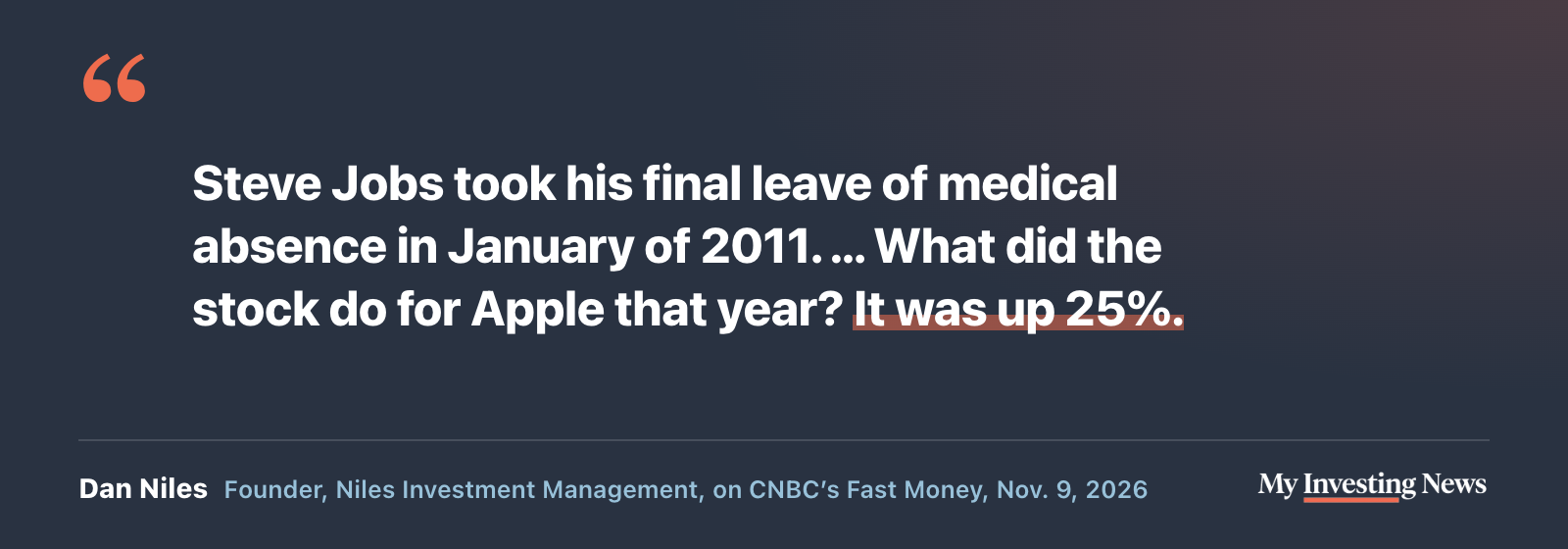
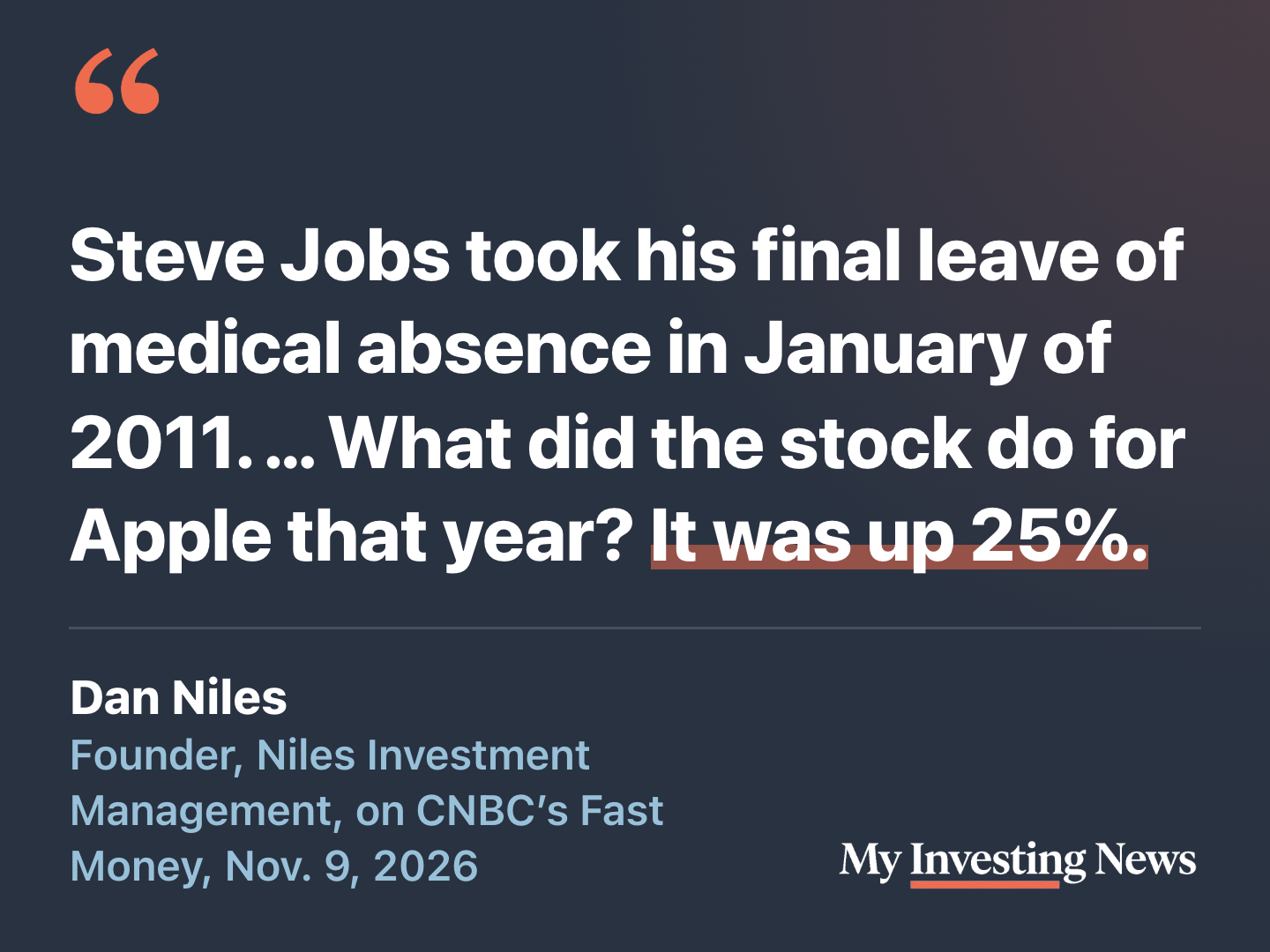
Niles called Jobs “a visionary CEO in the same mold” as Huang. He also stressed that the Nvidia position is one piece of a long and short portfolio, with short bets on other chip stocks that had jumped, and said a lot was already priced in at 12 times earnings. Asked whether Huang could be asked to leave, he said, “Absolutely. And as the facts change, you know, I’ll change my position if that occurs.”
The Apple Number Checks Out
Apple AAPL closed 2010 at $322.56 a share and 2011 at $405.00, before later stock splits, a gain of 25.6%. The S&P 500 ended 2011 almost exactly where it started and returned 2.1% with dividends. Jobs announced his final medical leave on Jan. 17, 2011, a market holiday, resigned as CEO on Aug. 24 and died on Oct. 5.
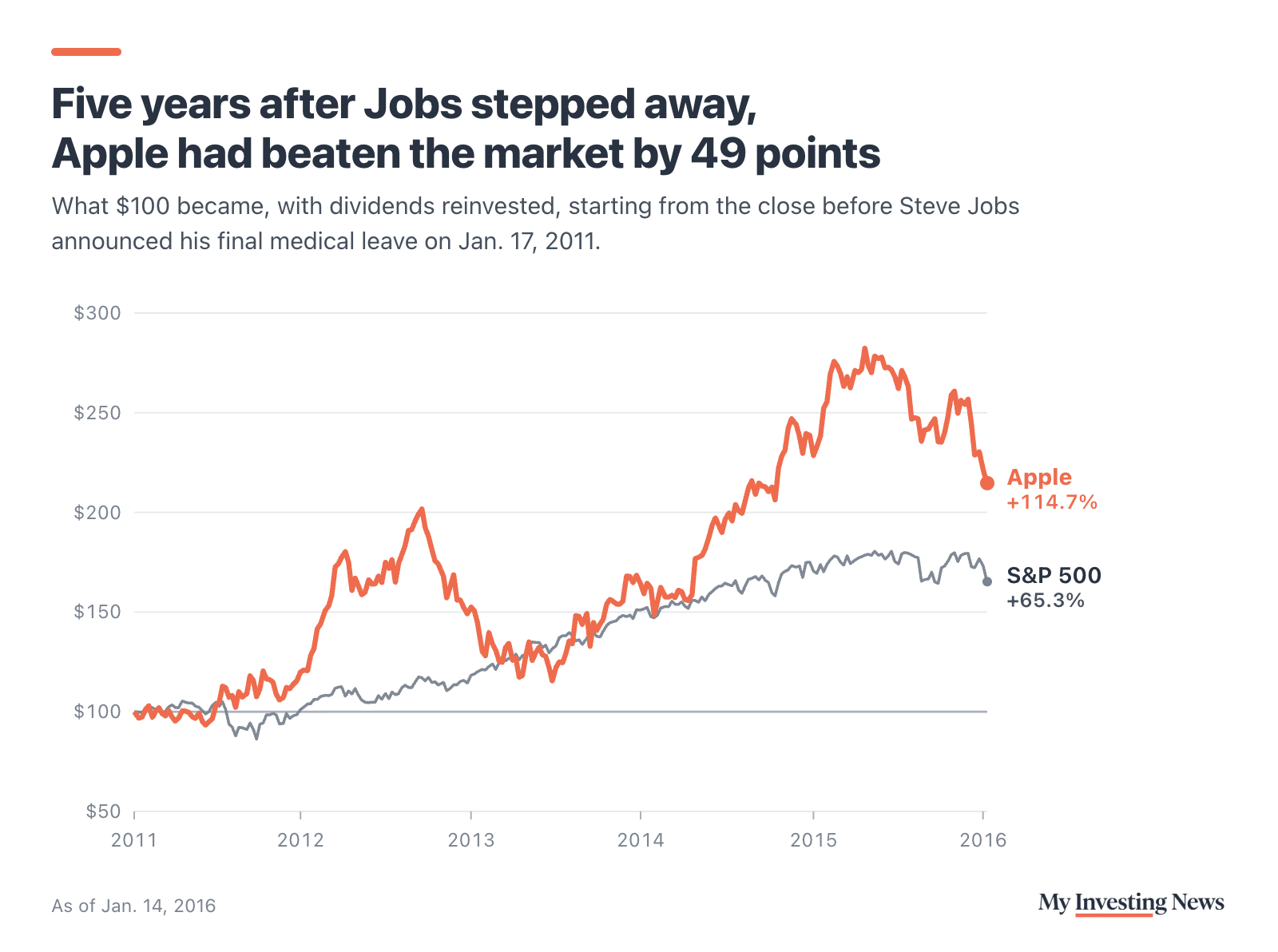
Measured from the last close before the leave was announced, the result is about the same. Apple slipped 2.2% the next trading day and was up 20.5% a year later, against 1.8% for the S&P 500 with dividends. Five years out, it had returned 115%, beating the index by 49 points.
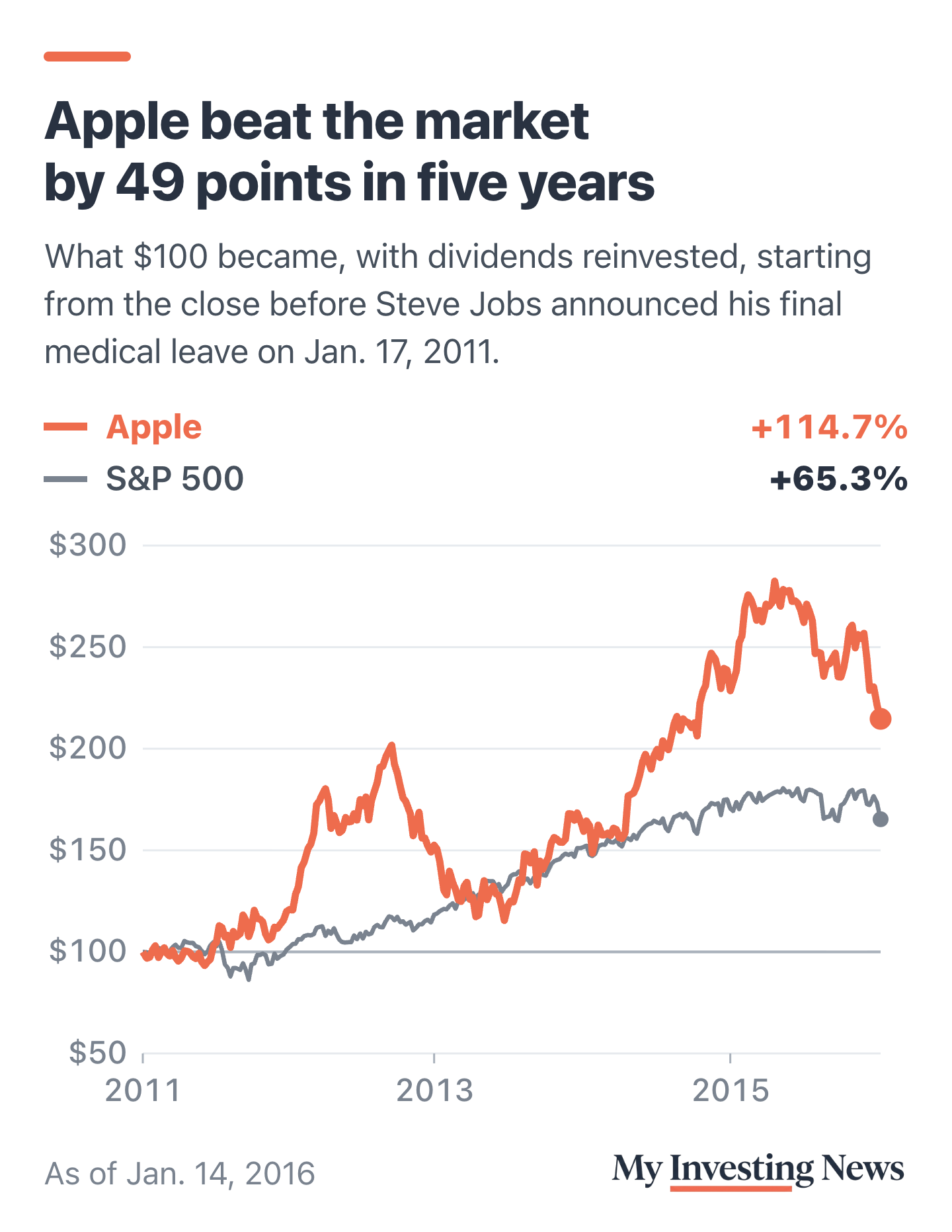
Apple is also the example investors reach for first, because it worked. The question for Nvidia holders is how often it works. Apple closed at a record $350.69 on Nov. 9, and it has been trading on its own lately: its link to the Nasdaq 100 turned negative this fall for the first time since 1985.
Nine Handoffs, Four Winners
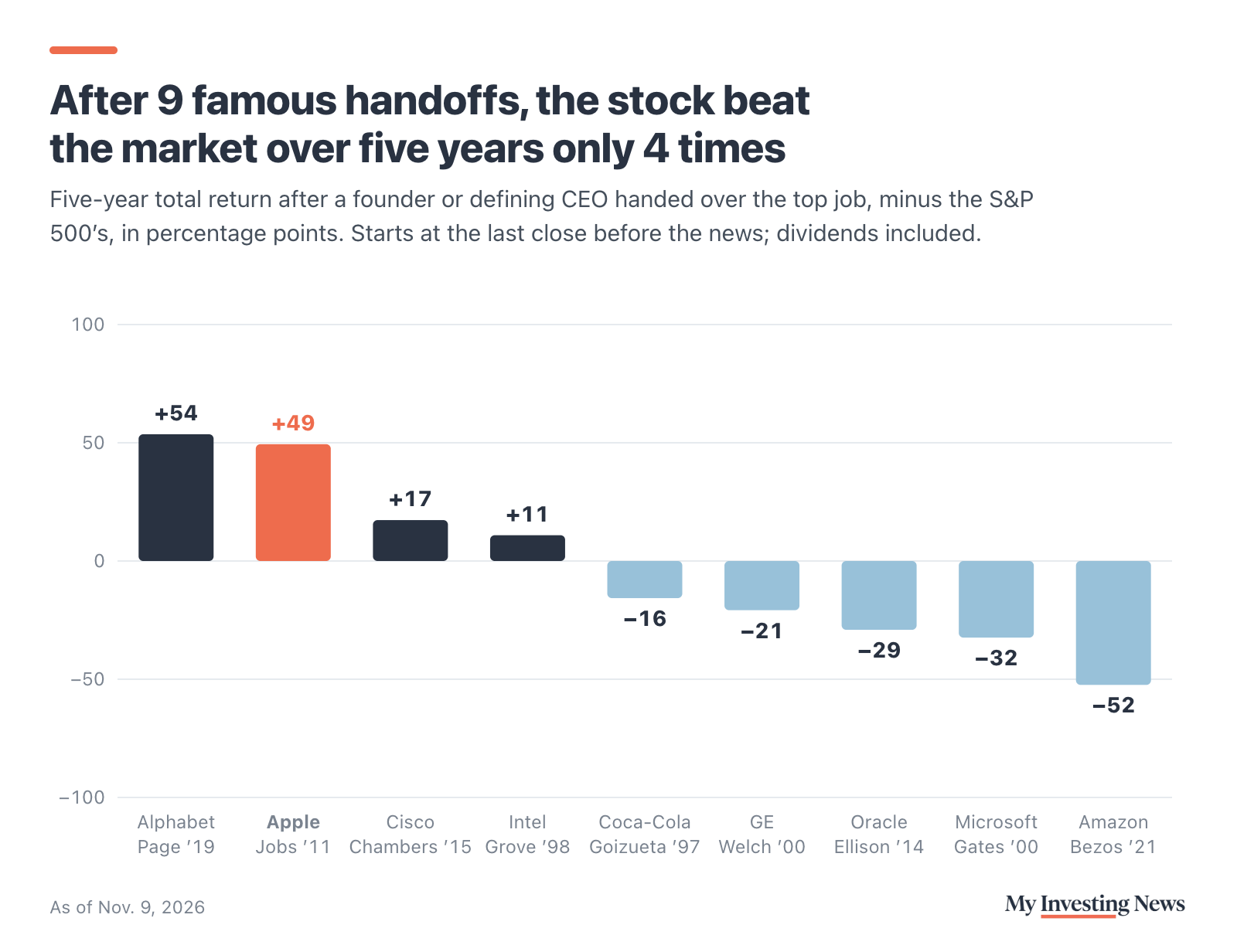
We took the founder handoffs investors usually compare with an Nvidia succession, plus the long-serving CEOs most identified with building their companies, all at big U.S. companies since 1990: Roberto Goizueta at Coca-Cola (he died in office in 1997), Andy Grove at Intel (1998), Bill Gates at Microsoft (2000), Jack Welch at GE (2000), Jobs at Apple (2011), Larry Ellison at Oracle (2014), John Chambers at Cisco (2015), Larry Page at Alphabet (2019), Jeff Bezos at Amazon (2021) and Warren Buffett at Berkshire Hathaway (2025). The list is a judgment call. Each return starts at the last close before the news reached the market and includes dividends.
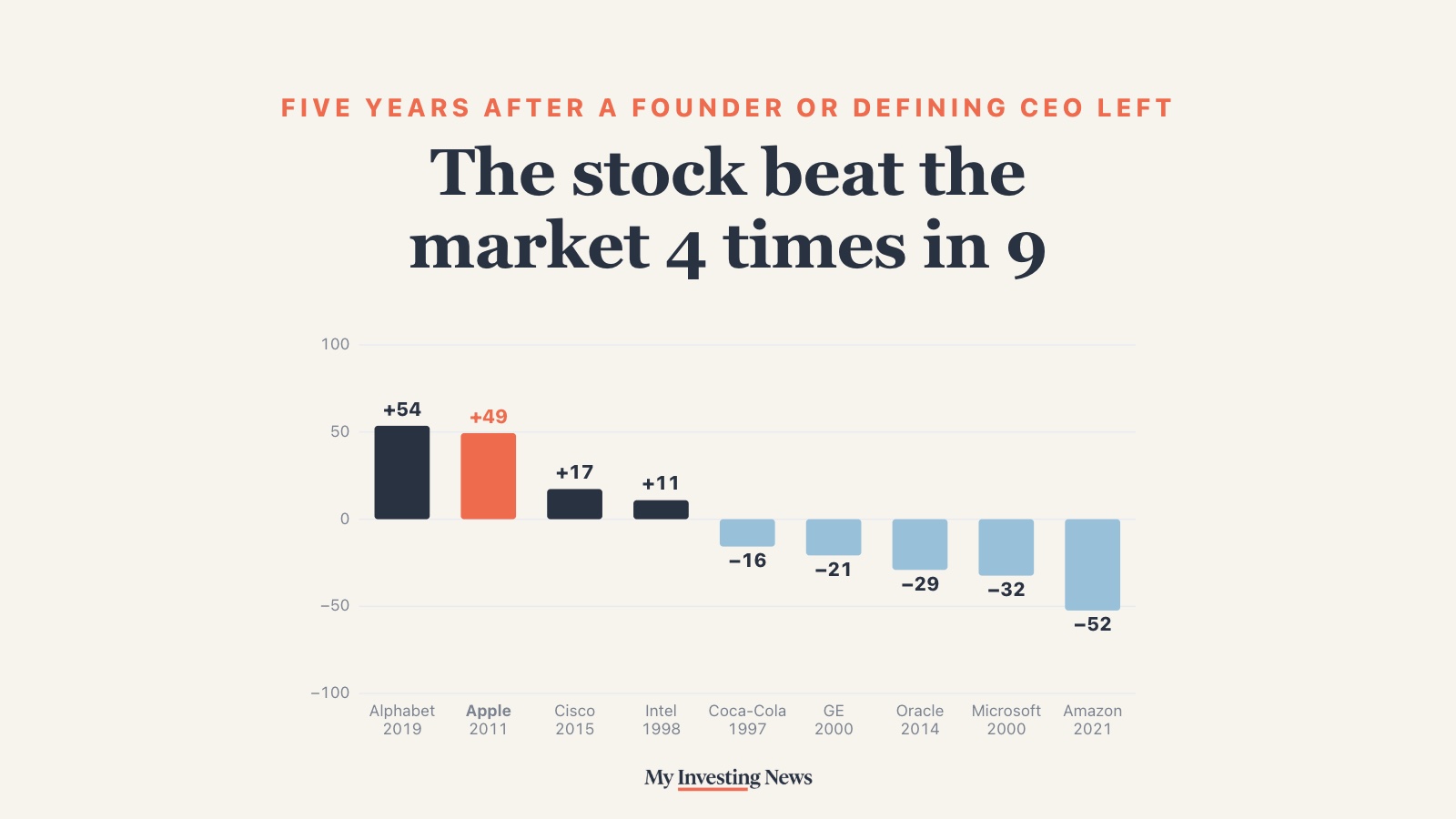
Over five years, the stock beat the S&P 500 in 4 of the 9 cases with five years of data: Alphabet, Apple, Cisco and Intel. The middle result trailed the index by 16 points. The best was Alphabet, 54 points ahead after Page handed the CEO job to Sundar Pichai. The worst was Amazon: from Bezos’s announcement in February 2021, the stock returned 44% in five years while the S&P 500 returned 96%.
The handoff record, and where Nvidia stands
Timing Mattered More Than the Founder
Three of the handoffs came from 1998 to 2000, around the peak of the dot-com boom, and the market explains much of what followed. Microsoft lost 43% in the five years after Gates gave Steve Ballmer the CEO job in January 2000, while the S&P 500 lost 10.5%. GE lost 18% in the five years after it named Jeff Immelt to succeed Welch. Intel lost 4% after Grove stepped aside, but the index lost 15%, so Intel still counts as a win.
Coca-Cola is the other case where a celebrated CEO’s illness and death brought the handoff. Its stock beat the market in the first year after Goizueta’s death in October 1997, up 19% against 14%, then fell behind. Five years out it was down 16%, while the index was about flat.
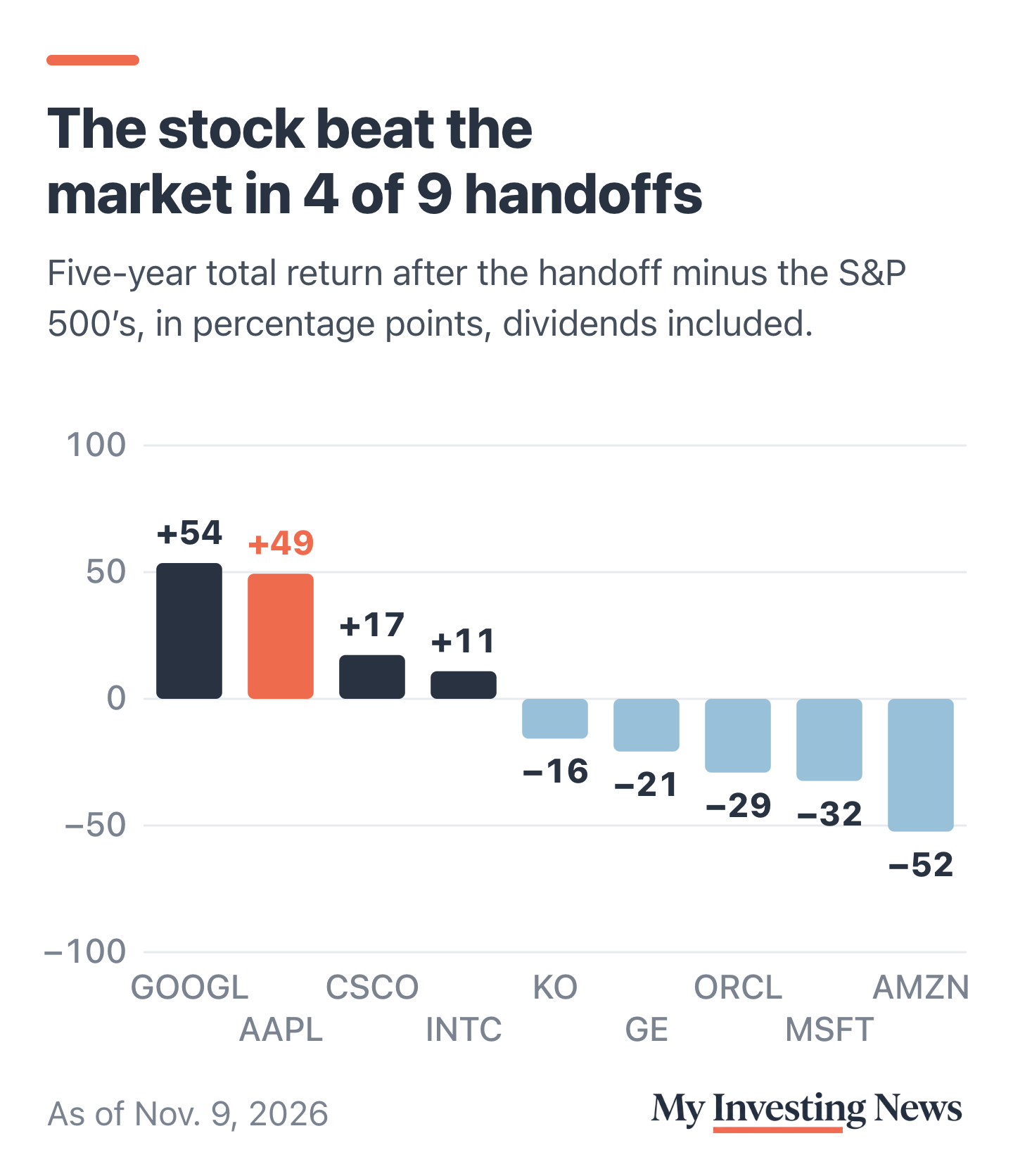
The first year was just as mixed: 4 of 10 stocks beat the market over the first 12 months. That count includes Berkshire, the newest case. From the close before Buffett said in May 2025 that Greg Abel should take over, Berkshire’s Class B shares lost 12.4% in a year while the S&P 500 returned 28.7%. A top Berkshire watcher said in October that the market has finally decided Abel can run it.
What It Means for Nvidia
Nvidia closed at $178.67 on Nov. 9, down 25.3% from its record close of $239.24 on Oct. 6. Huang co-founded the company in 1993 and has run it ever since, so any successor would be its first new CEO.
The record says the first day tells investors little. Apple’s moves after Jobs’s leave and resignation were small, while the five-year results across the nine handoffs ranged from 54 points ahead of the market to 52 points behind. What mattered was the market the successor inherited and what the successor did with the business. For Nvidia, the things to watch are what the board’s review finds, whether it names a successor or an interim leader, and who that person is.
Niles is right that Apple rose about 25% in 2011, the year Jobs stepped away, and he started buying Nvidia on Nov. 9 as questions about its founder’s future hit the stock. Across nine famous handoffs, though, the stock beat the market over five years only 4 times, and Apple sits near the top of that list.