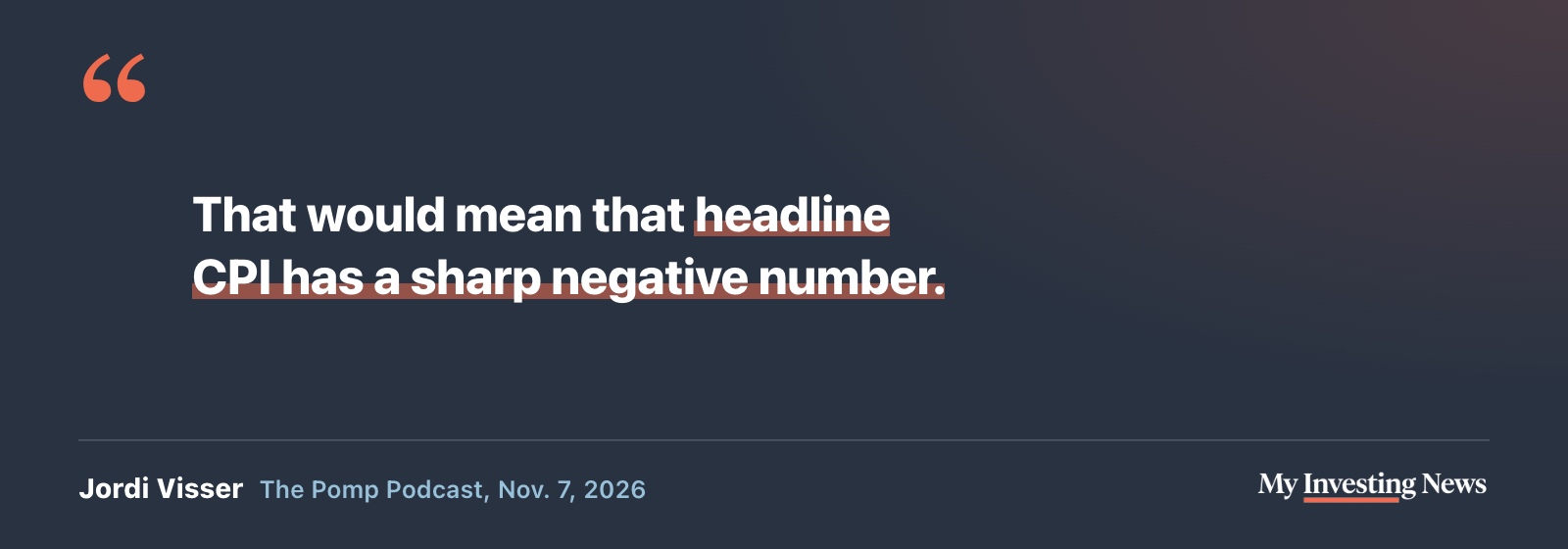
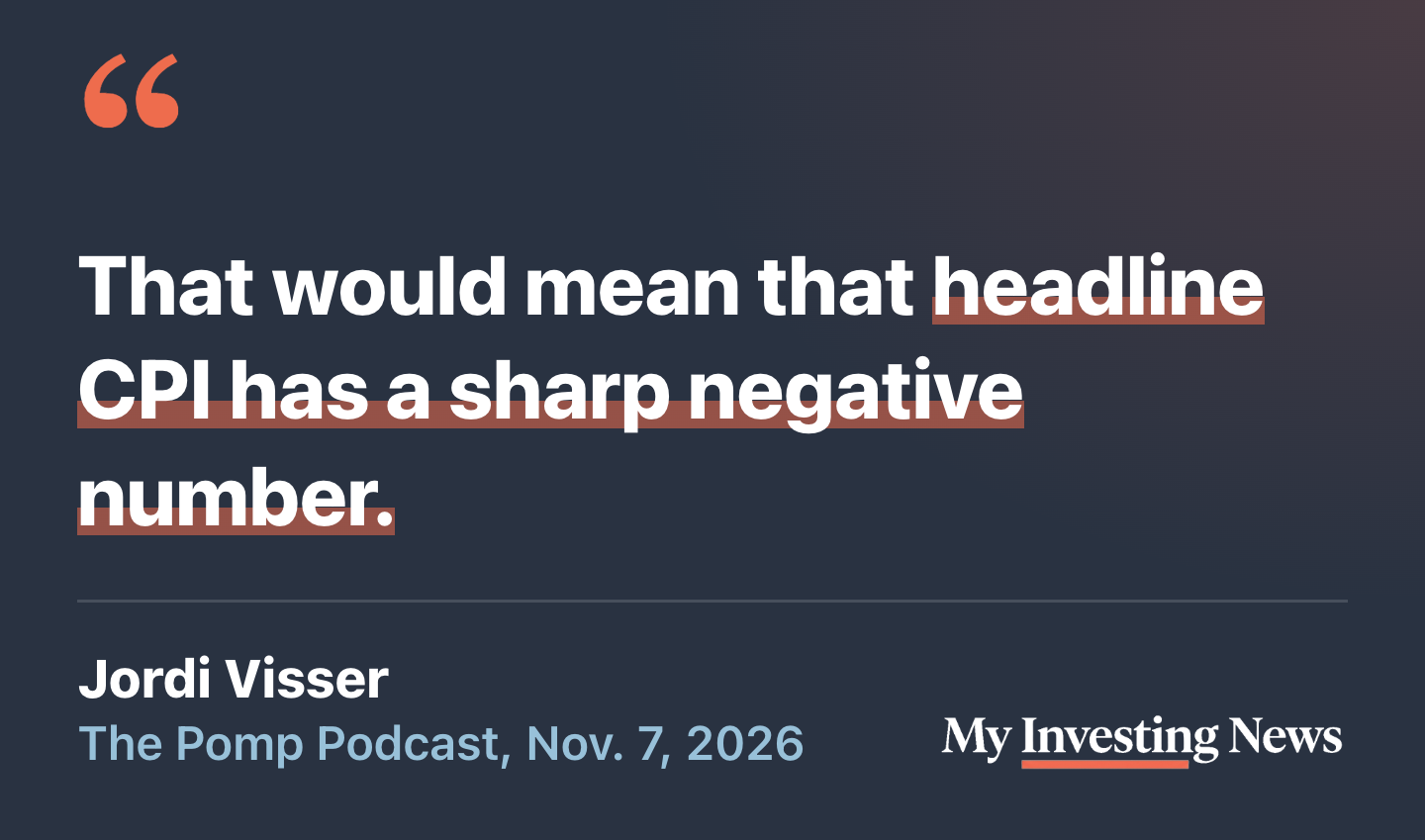
Where we heard itThe Pomp Podcast, “Bitcoin Beats Stocks for the Next 5 Years?”, Nov. 7, 2026: Jordi Visser of 22V Research, talking with Anthony Pompliano.
Jordi Visser thinks falling gas prices are about to show up in the inflation numbers in a big way. “CPI will be negative for the December reading for November, most likely,” the 22V Research macro investor said on The Pomp Podcast on Nov. 7, meaning the November consumer price report that comes out Dec. 10. His reasoning: “Gas at the pump has already fallen from four forty to four ten,” and gasoline futures were “equivalent as of this morning” to $3.75 at the pump.
Monthly declines in the consumer price index are not rare when gas drops. It happened in June, when the index fell 0.4% as gasoline prices slid 9.7% during the spring ceasefire. But one part of Visser’s math runs hot. A drop from $4.40 to $3.75 is 14.8%, not the “pretty close to a 20% fall” he described, and a smaller drop makes a negative reading harder to reach.
What Gas Would Have to Do
Gasoline carries a big weight in the index right now. Its share was 2.9% in December 2025, and after this year’s run-up we estimate it at about 4.0% (the Bureau of Labor Statistics updates each item’s share as its price moves relative to everything else). The Nov. 10 report implies that in October everything other than gasoline rose about 0.32% after seasonal adjustment, and core prices, which leave out food and energy, rose 0.3% for a third straight month.
If the rest of the basket does that again, gasoline has to fall about 9% after seasonal adjustment for the headline index to print −0.1% or lower. Seasonal adjustment works against Visser here: pump prices usually fall in November, so the bureau’s adjustment shrinks the drop. From 2013 to 2025, the adjusted November gasoline change ran an average of 3 points above the raw one. That means a raw drop of about 12% from October, when regular gas averaged $4.31 in the Energy Information Administration’s weekly survey. Our estimate of the November average needed: about $3.80 a gallon.
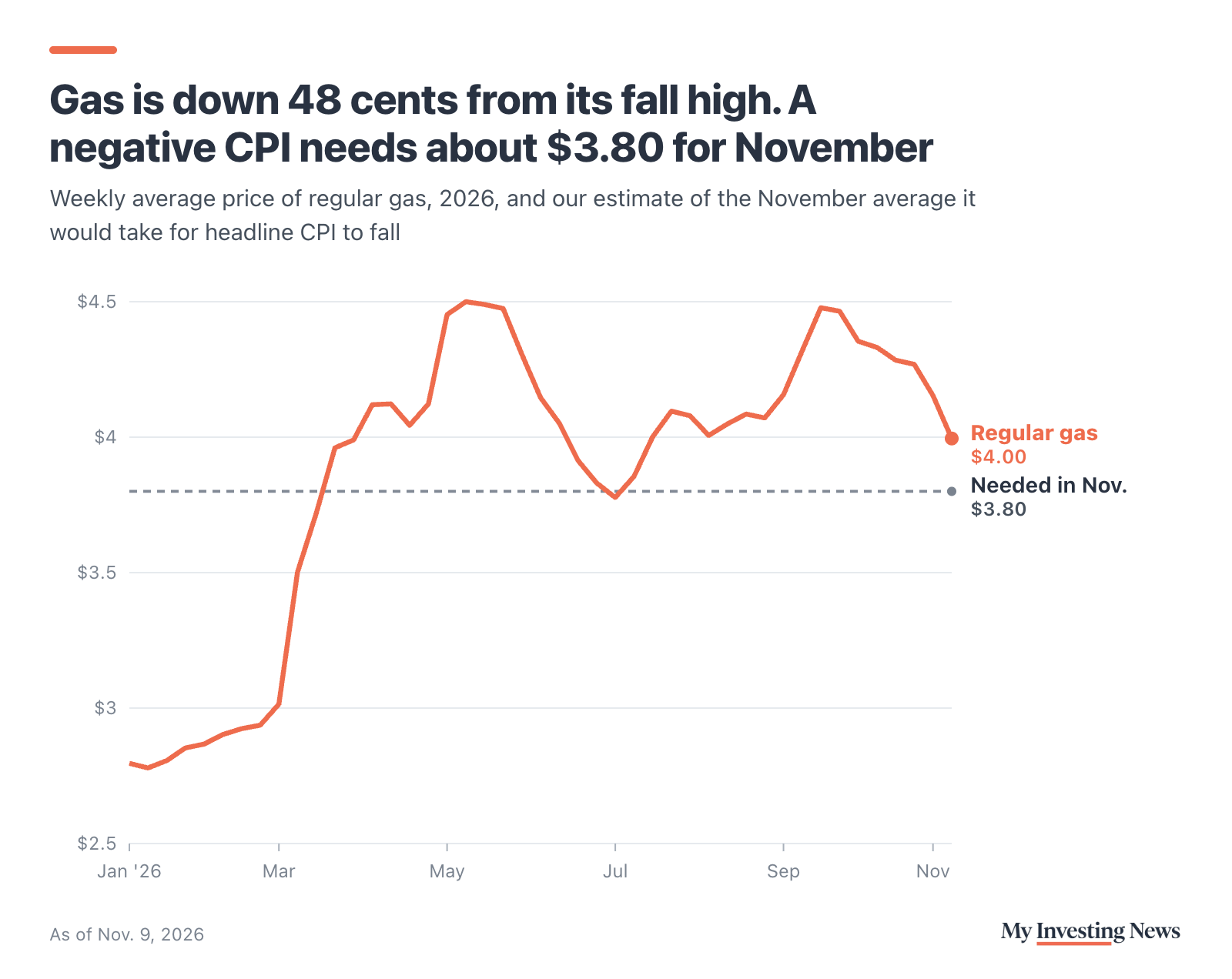
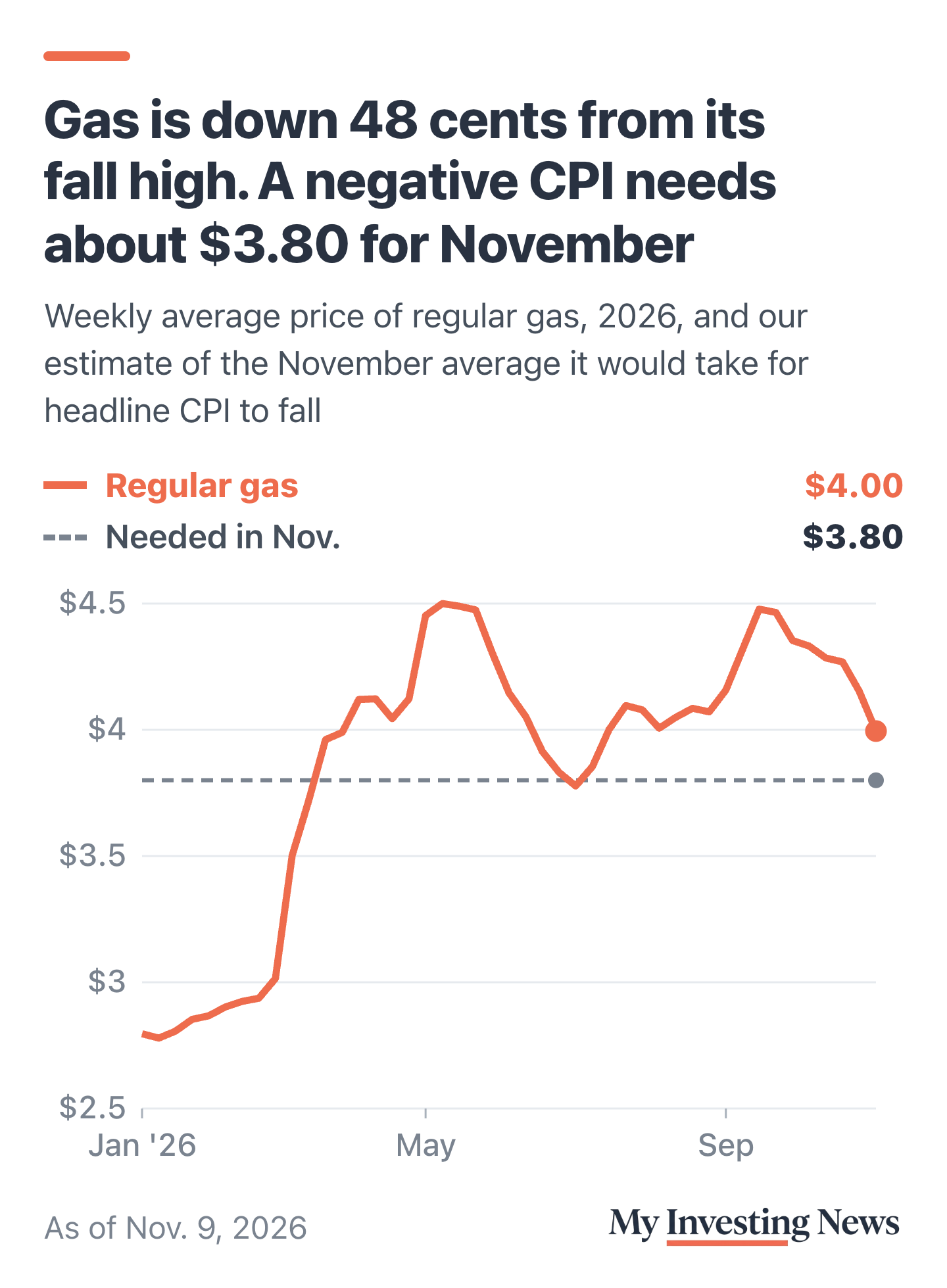
Regular gas averaged $4.00 on Nov. 9, down 48 cents from $4.48 on Sept. 21. With two November surveys in, the last three would need to average about $3.61 to hit the target. At Visser’s own $3.75 for the rest of the month, our math lands at about 0.03% for headline CPI, which rounds to zero. If pump prices hold at the Nov. 9 level, it comes out near 0.2%, a small rise. We checked his futures math against the pump ahead of Thanksgiving, and the futures point the same way.
The November CPI setup, as of Nov. 10, 2026
Traders are less sure than Visser. On Kalshi, the odds that November’s CPI comes in at −0.1% or lower were about 33% on the morning of Nov. 10, based on the middle of the bid and ask. The odds of zero or lower were about 58%.
What Happened Every Time Gas Fell This Hard
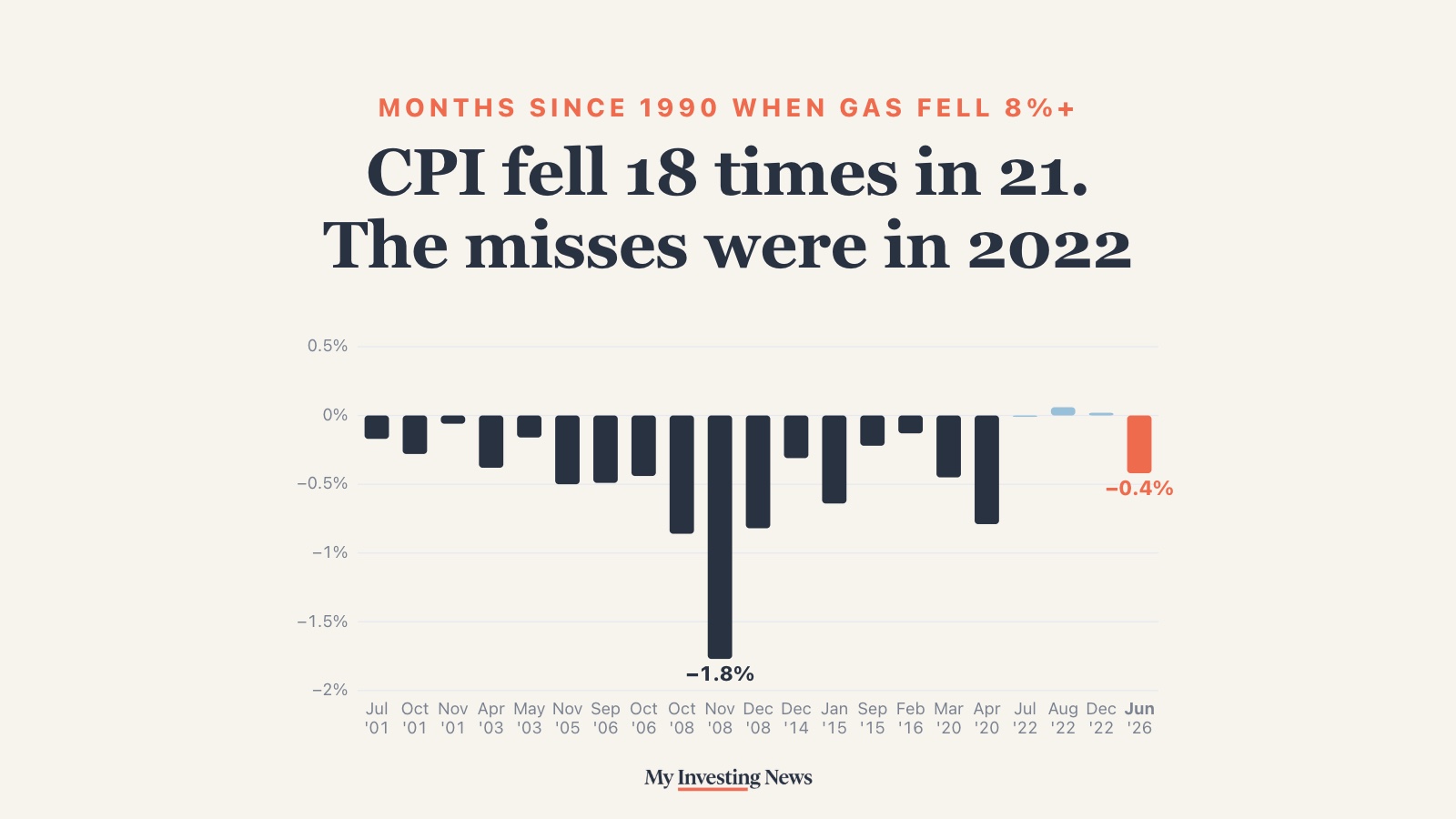
Since 1990, headline CPI has fallen in 39 months, using today’s seasonally adjusted data, and gasoline fell in every one of them. Adjusted for the season, gasoline fell 8% or more in 21 months over the same stretch, and headline CPI fell in 18 of them. The biggest was November 2008, when gas dropped 31% and the index fell 1.8%.
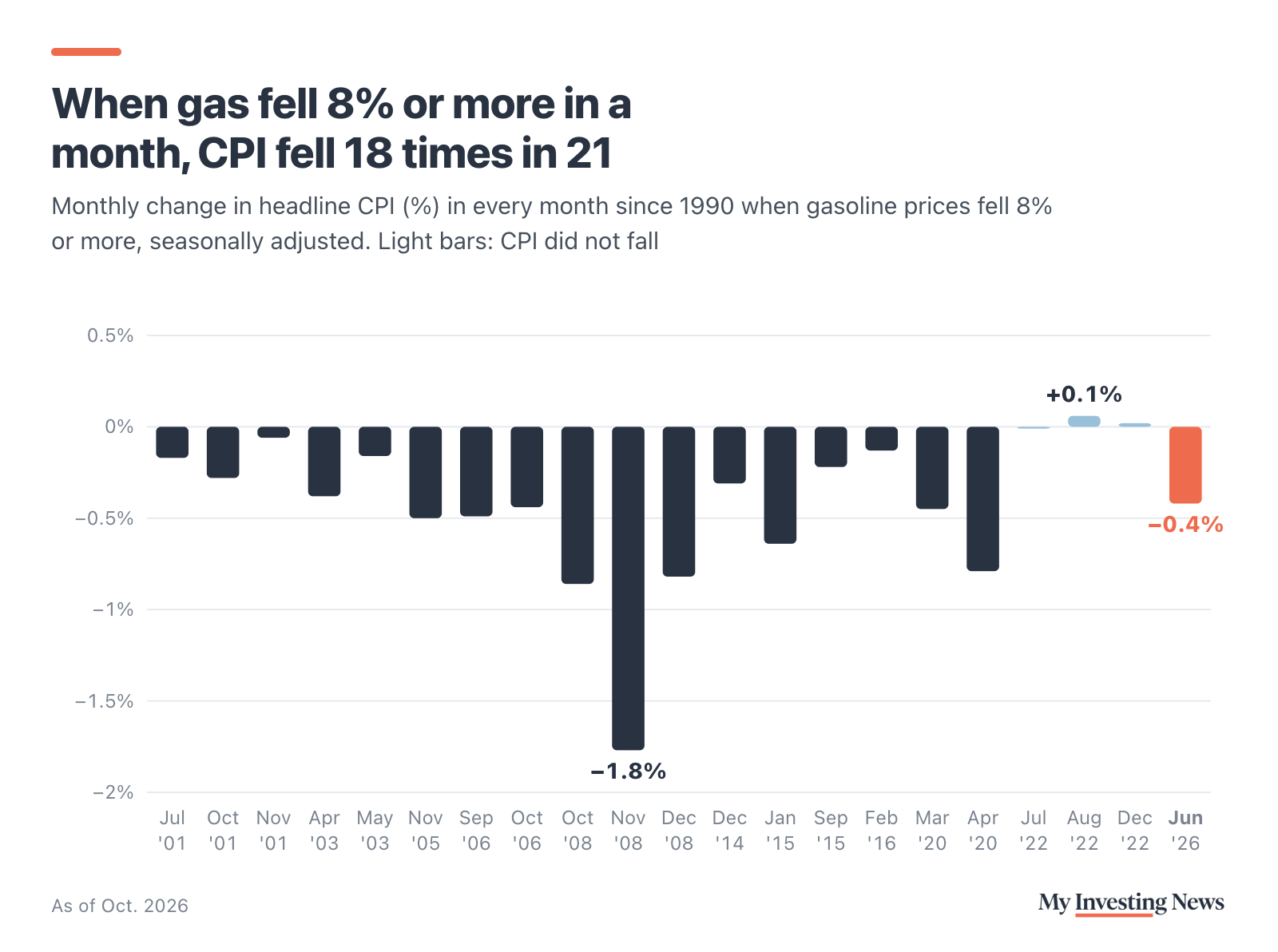
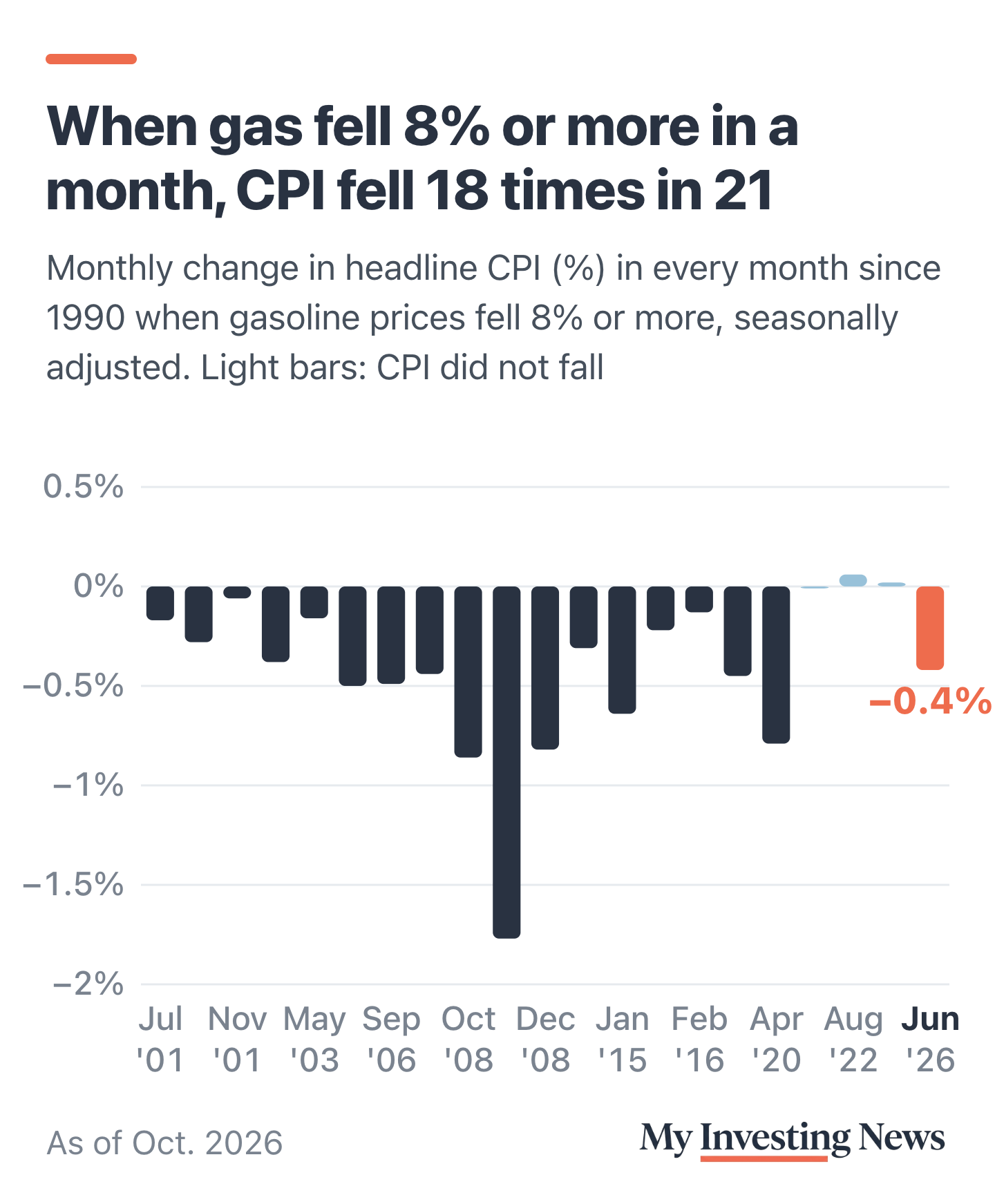
The three misses all came in 2022, and they look a lot like today. Gas fell 8.4% in July, 10.7% in August and 8.1% in December, but core prices were rising 0.35% to 0.49% a month, and the headline index came in at 0.0% to 0.1%. June’s drop this year worked because core prices were flat that month (-0.02%). October’s core reading was 0.3%. Inflation has been running mostly on fuel this year, which is why David Sacks expects it to drop quickly if the war ends.
What to Watch
The weekly EIA pump price on Nov. 16, Nov. 23 and Nov. 30 will show how close November gets. Gasoline futures lead pump prices by a few weeks, and gas has been unusually high for the fall, so a quick drop is possible. The November CPI report comes out Dec. 10. Watch the core number as closely as gasoline: with core at 0.3%, even a big gas drop may only get the headline to zero.
Visser is right that falling gas will pull November’s CPI down hard, and big gas drops have pushed the index negative 18 times in 21 since 1990. But with core prices rising 0.3% a month, our math needs a November pump average near $3.80, below his own $3.75 path, and the last time core ran this hot, in 2022, big gas drops left the index flat.