Where we heard itMarsha Blackburn, Tennessee governor-elect and U.S. senator, on CNBC’s Squawk Box, Nov. 9, 2026.
Marsha Blackburn won Tennessee’s governor race on Nov. 3 while Republicans lost ground across the country. She took 45.5% of the vote to Democrat Jerri Green’s 43%, in a field with independents, and will be the state’s first woman governor when she is sworn in in January. Asked on CNBC’s Squawk Box on Nov. 9 what a governor can do about property taxes, she pointed to a vote held the same day as her election.
“We passed an amendment to our state constitution on November 3rd that you cannot have a state property tax in Tennessee,” Blackburn said. “Now, we also have an amendment to our state constitution that was passed years ago that you cannot have a state income tax. This is a good thing for Tennesseans,” she said, adding:


The pitch is that low taxes and light rules draw people and money to Tennessee. The IRS tracks exactly that: every year it counts the tax returns, and the income on them, that move between states. We pulled 12 years of it.
Twelve Straight Years of Gains
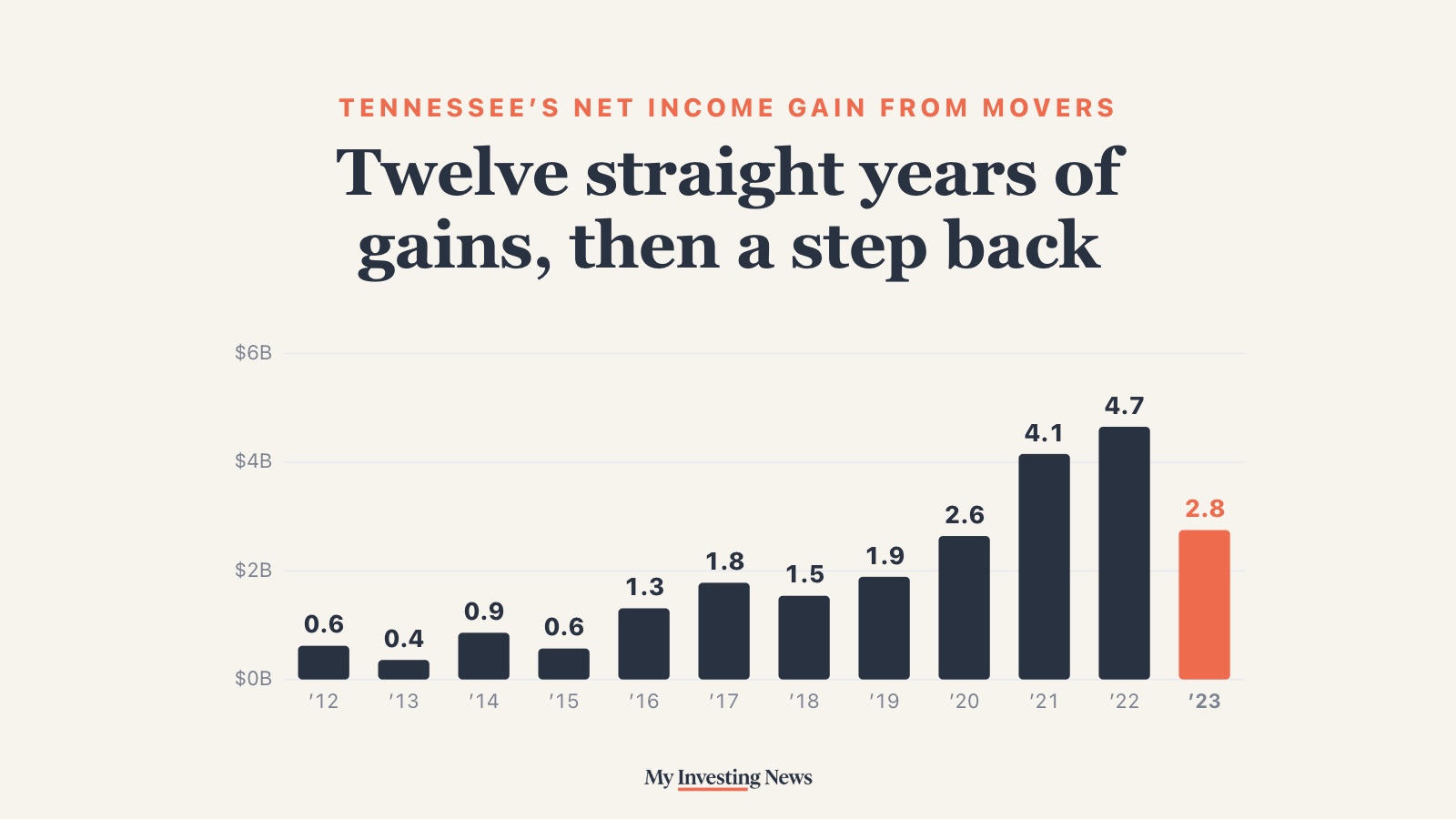
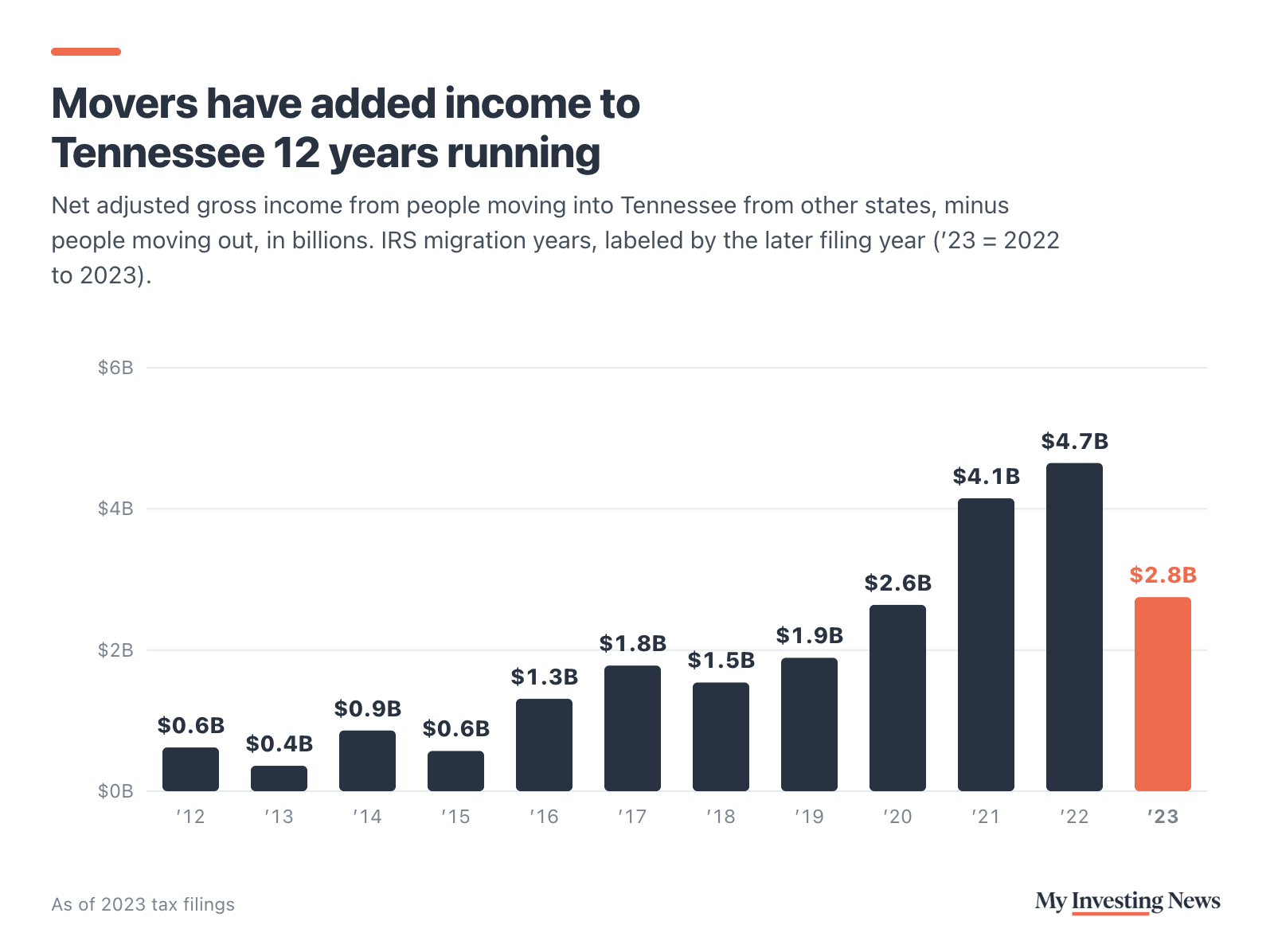
In every year of the IRS migration data, from the 2011 to 2012 filings through the latest, 2022 to 2023, the income reported by people moving into Tennessee from other states exceeded the income of those who left. Added up, the net gain in adjusted gross income was $23.1 billion, the seventh-largest of any state.
The gains grew through the decade and jumped during the pandemic, peaking at $4.7 billion in the 2021 to 2022 data, fourth among the states. The peak lined up with the end of Tennessee’s tax on interest and dividends, which was fully repealed as of 2021. In the latest year, the net gain fell 41% to $2.8 billion, sixth among the states, from 24,104 more returns arriving than leaving.
Low Taxes Help, but They Aren’t the Whole Story
Tennessee’s pull is real, but it is a step behind the leaders. Florida, where Gulf Coast home prices have since given back years of gains, gained $223.7 billion over the same 12 years and Texas $62.8 billion, and both, like Tennessee, have no income tax on wages. Arizona, North Carolina and South Carolina each gained about $33 billion, more than Tennessee, and all three tax wages. Nevada, another no-income-tax state, gained $23.9 billion, about the same.
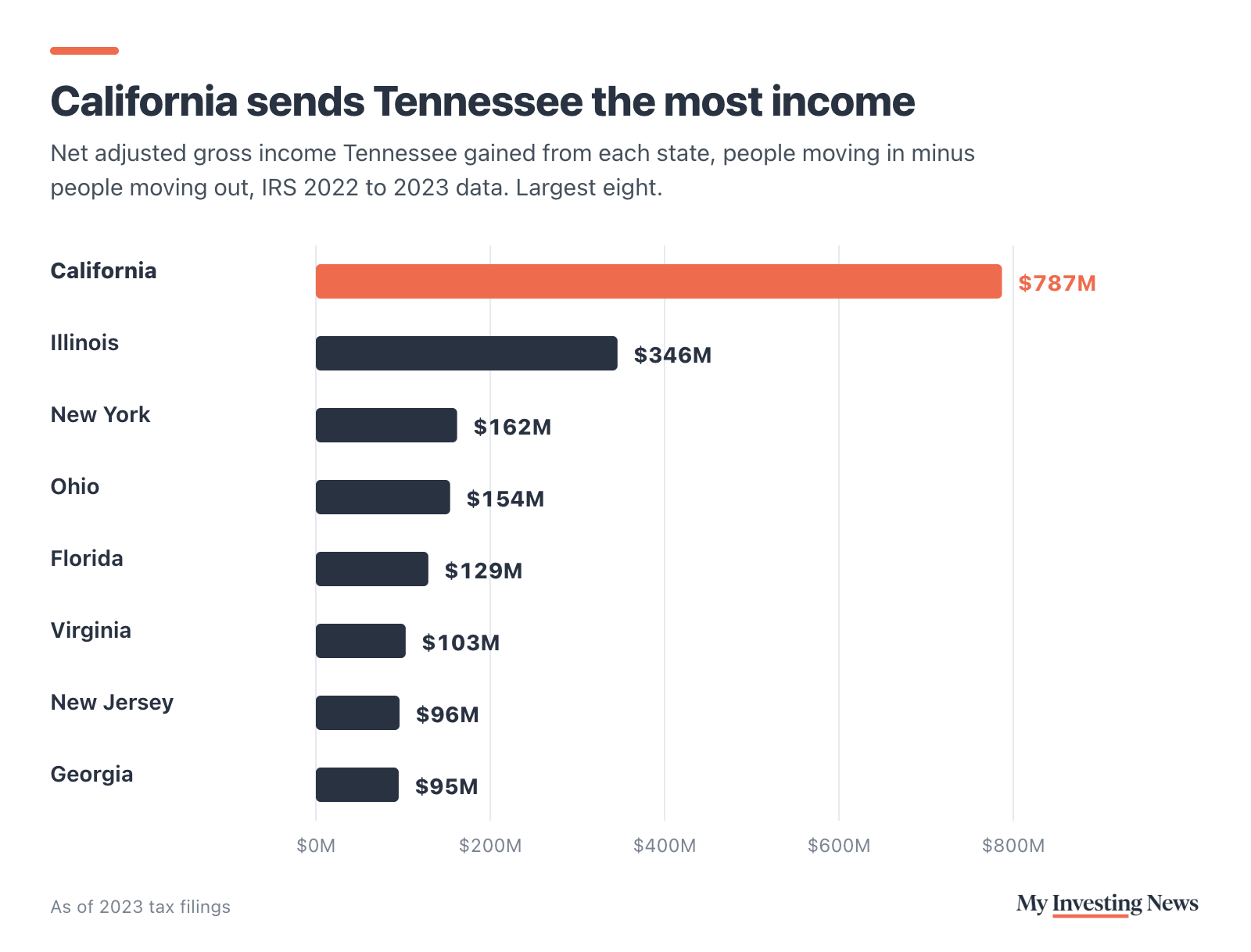
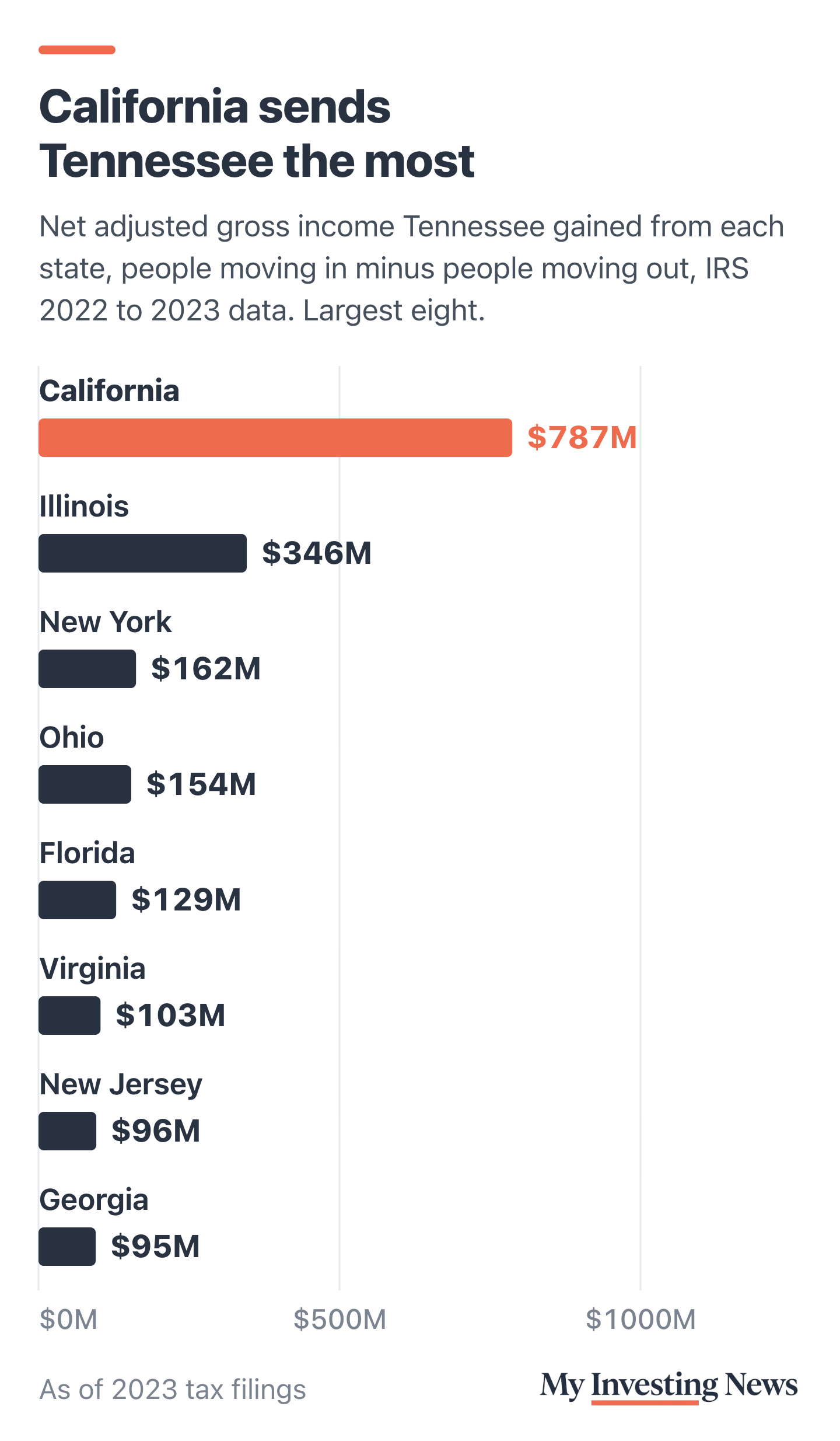
The newcomers also earn more than the people leaving. In the latest year, the average return moving into Tennessee reported $79,430 of income, against $70,076 for returns moving out. California sent the most: Tennessee’s net gain from California alone was $787 million, more than twice the $346 million from Illinois, the next-largest source. The flow ran the other way with neighbors: Tennessee lost a little income on net to South Carolina, Alabama and Mississippi.
Tennessee and its movers, IRS data
Checking the Rest of Her Pitch
The tax claims hold. Amendment 2 passed with about 67% of the vote in unofficial results, and it bars the legislature from creating a state property tax. Tennessee hasn’t levied one since 1949, so the amendment locks in the status quo; cities and counties still set their own property taxes, which is where Blackburn’s talk of caps and senior relief would apply. Voters banned a state tax on wages and other earned income in 2014.
The “light regulation” claim is harder to square with her own number. “27.5% of new build construction in Tennessee is due to permitting and regulation,” Blackburn said on the show, a figure she said was pointed out to her. We couldn’t find the study behind it. The closest benchmark, the National Association of Home Builders’ 2026 estimate, puts regulation at 26.4% of the average new single-family home’s price nationally, or $131,734. If her figure is right, Tennessee’s regulatory cost runs a little above the national average. Builders were already cutting prices to move new homes this fall.
What to Watch
The IRS posts migration data about two years after the fact, so the next release, covering 2023 to 2024 filings, will show whether Tennessee’s gains kept shrinking as mortgage rates rose and pandemic moves faded. Watch Blackburn’s first budget and the General Assembly’s session in January for the property tax caps, senior relief and permitting changes she described, and watch whether the state can show a source for its 27.5% figure.
Marsha Blackburn’s pitch has the record behind it: movers have added income to Tennessee for 12 straight years, $23.1 billion in all, seventh among the states. But the gain fell 41% in the latest data, states with income taxes such as the Carolinas and Arizona drew more, and the 27.5% regulation figure she cited is higher than the national estimate of 26.4%.