Where we heard itDavid Friedberg, co-host, on All-In, “Midterm Blood Bath, $4T AI Sell Off, Data Center Freeze, What’s Next for Trump”, Nov. 7, 2026.
On the first All-In episode after the Nov. 3 midterms, David Friedberg argued that artificial intelligence had become an easy political target. Voters who don’t feel they are getting ahead, he said, look at a growing economy and a rising stock market and ask who is getting the gains. “The AI guys are, the tech oligarchs are, and so on,” he said. His co-host David Sacks called the result the biggest midterm loss since Watergate.
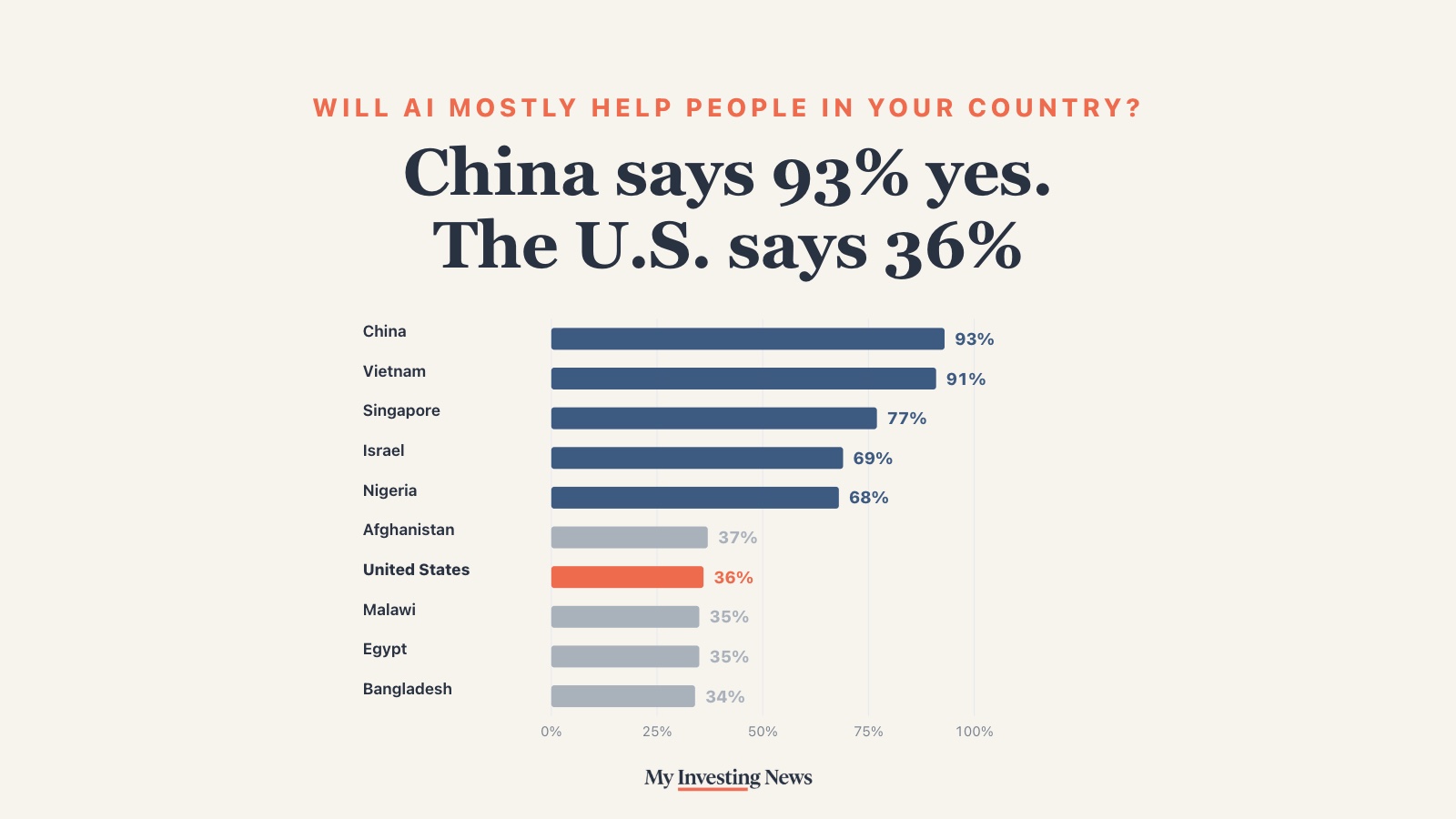
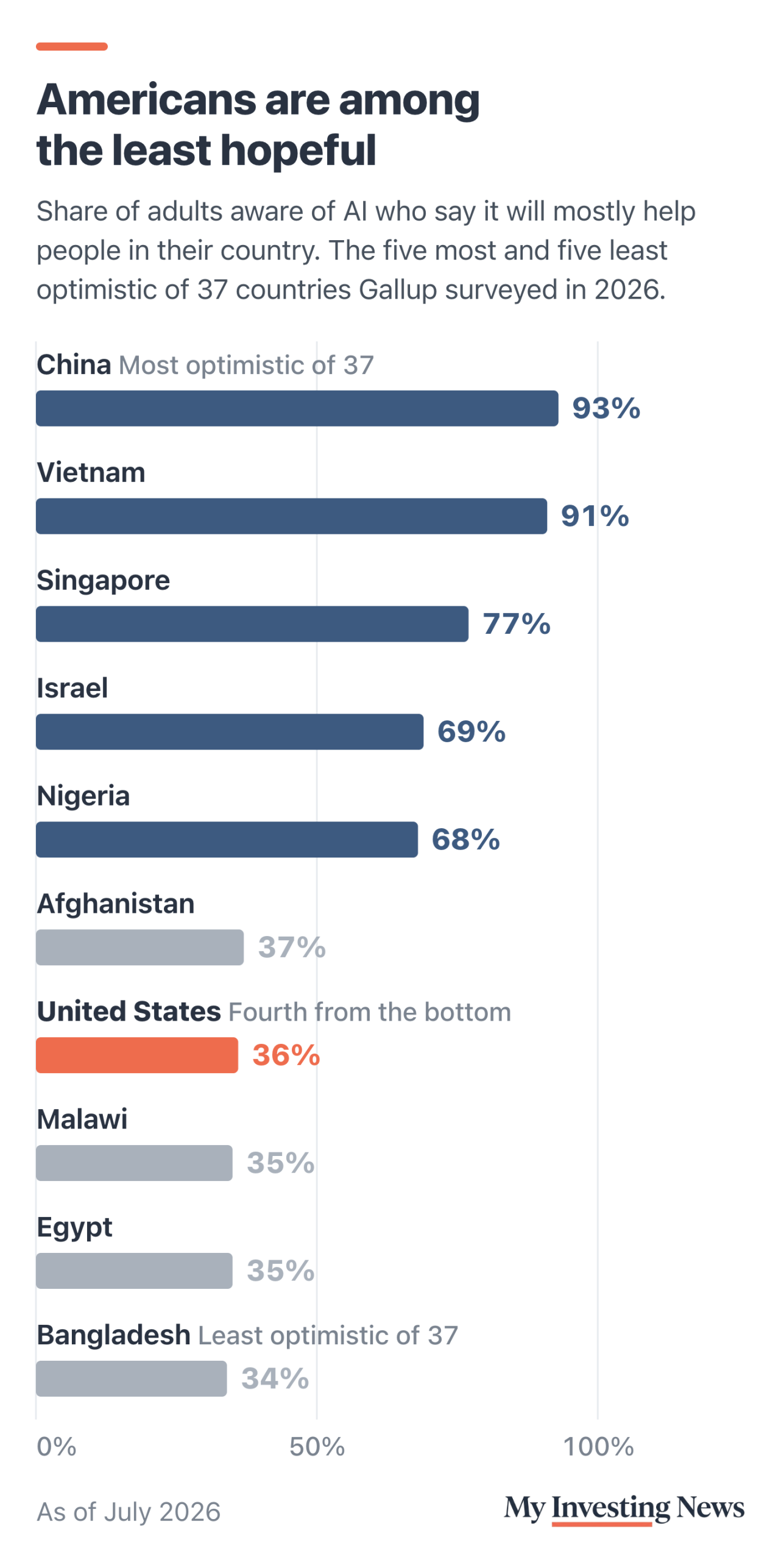
Friedberg then pulled up what he called “an incredible Gallup study that shows AI optimism and pessimism in countries around the world.” “The most optimistic country for AI is China,” he said. “93% of Chinese citizens think AI will mostly help people in the country.” Then came the U.S.:
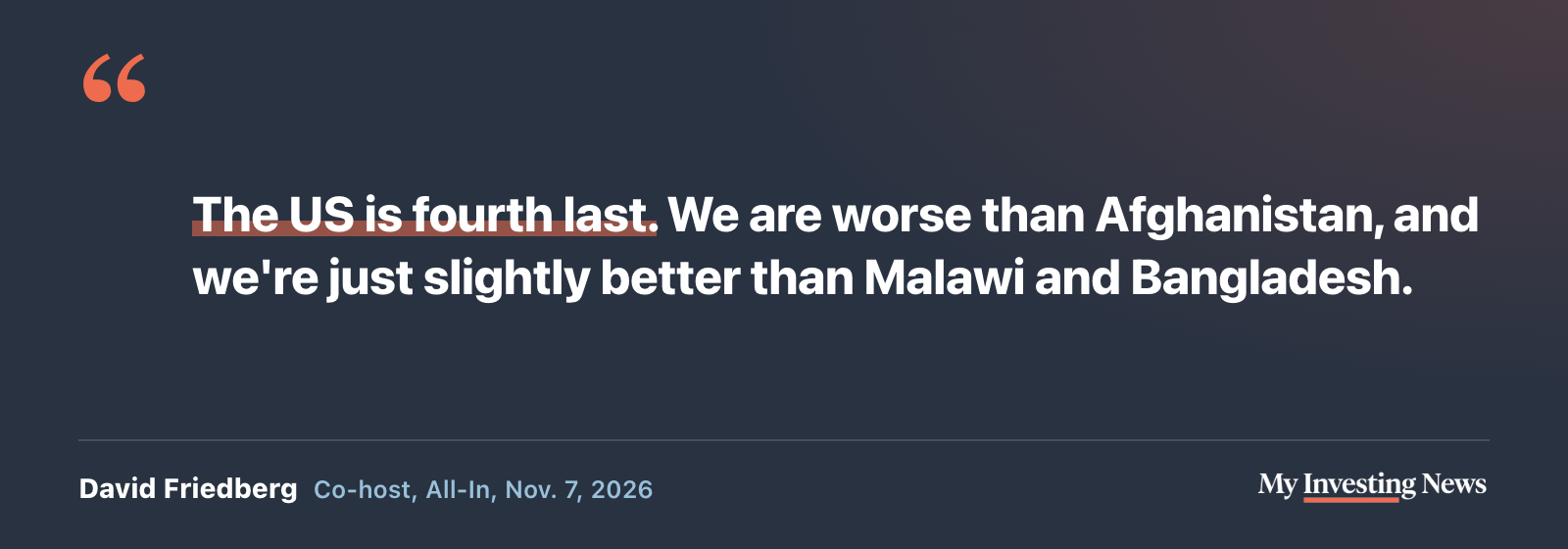
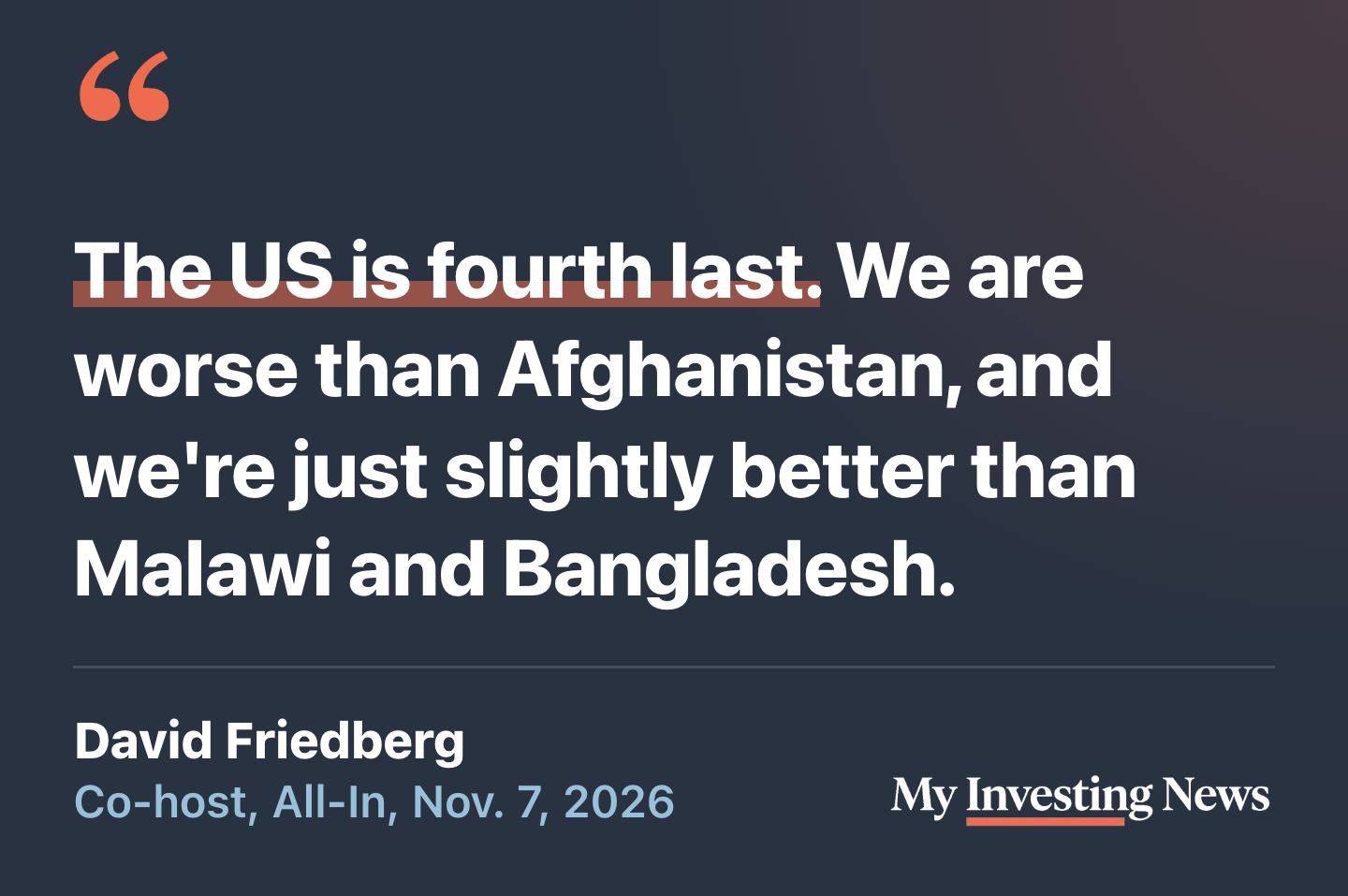
“We’re fourth on the list of countries at 36% of Americans believing that,” he added. We checked his numbers against Gallup’s release and its published tables, then against the longest-running U.S. series on the question.
Friedberg’s Numbers Match Gallup’s
The study is Gallup’s survey with Microsoft, published Sept. 22. It polled about 1,000 adults in each of the first 37 countries to finish fieldwork, between April and July 2026, and Gallup plans to cover 140. People who had heard of AI were asked whether it will mostly help or mostly harm people in their country.
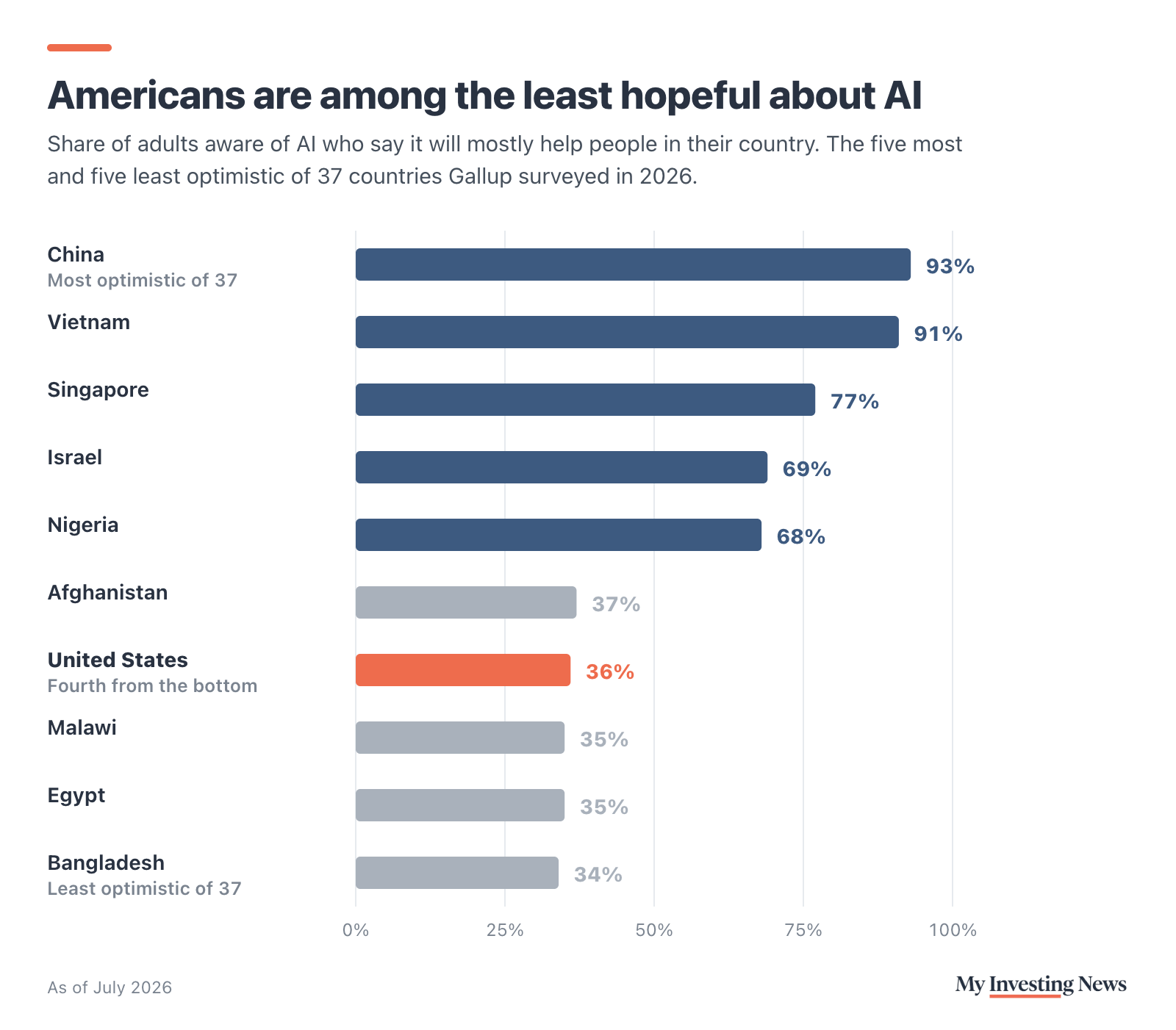
China led at 93%, followed by Vietnam at 91% and Singapore at 77%. The U.S. came in at 36%. Only Malawi and Egypt (35% each) and Bangladesh (34%) were lower, so “fourth last” is right, and Afghanistan was one point higher at 37%. Friedberg also said 93% of Chinese expect AI to make their daily lives better; Gallup’s figure is 92.7%.
What the Bottom of the List Compares
Two details matter. First, the gaps at the bottom are smaller than the survey’s margin of error, which Gallup puts at 2.2 to 4.9 points per country. The U.S., Afghanistan, Malawi, Egypt and Bangladesh are effectively tied.
Second, the question went only to people who had heard of AI. In the U.S., that is 98.3% of adults. In Afghanistan, 78% of adults said they were not aware of AI, and in Malawi it was 88%, so those countries’ answers come from a small minority. The U.S. result describes nearly the whole country. On the second question, about people’s own daily lives, the U.S. is not in Gallup’s bottom five; every country listed there scored 40.6% or lower.
Where the U.S. does stand alone is worry. Asked which feelings AI stirs, 74% of Americans who know about it said worried, the most of any of the 37 countries and well above the 32% median. The Netherlands was next at 67%. The U.S., Egypt and the Palestinian Territories were the only places where negative feelings outweighed positive ones.
Americans and AI, by the numbers
U.S. Worry Jumped in 2023 and Has Stayed
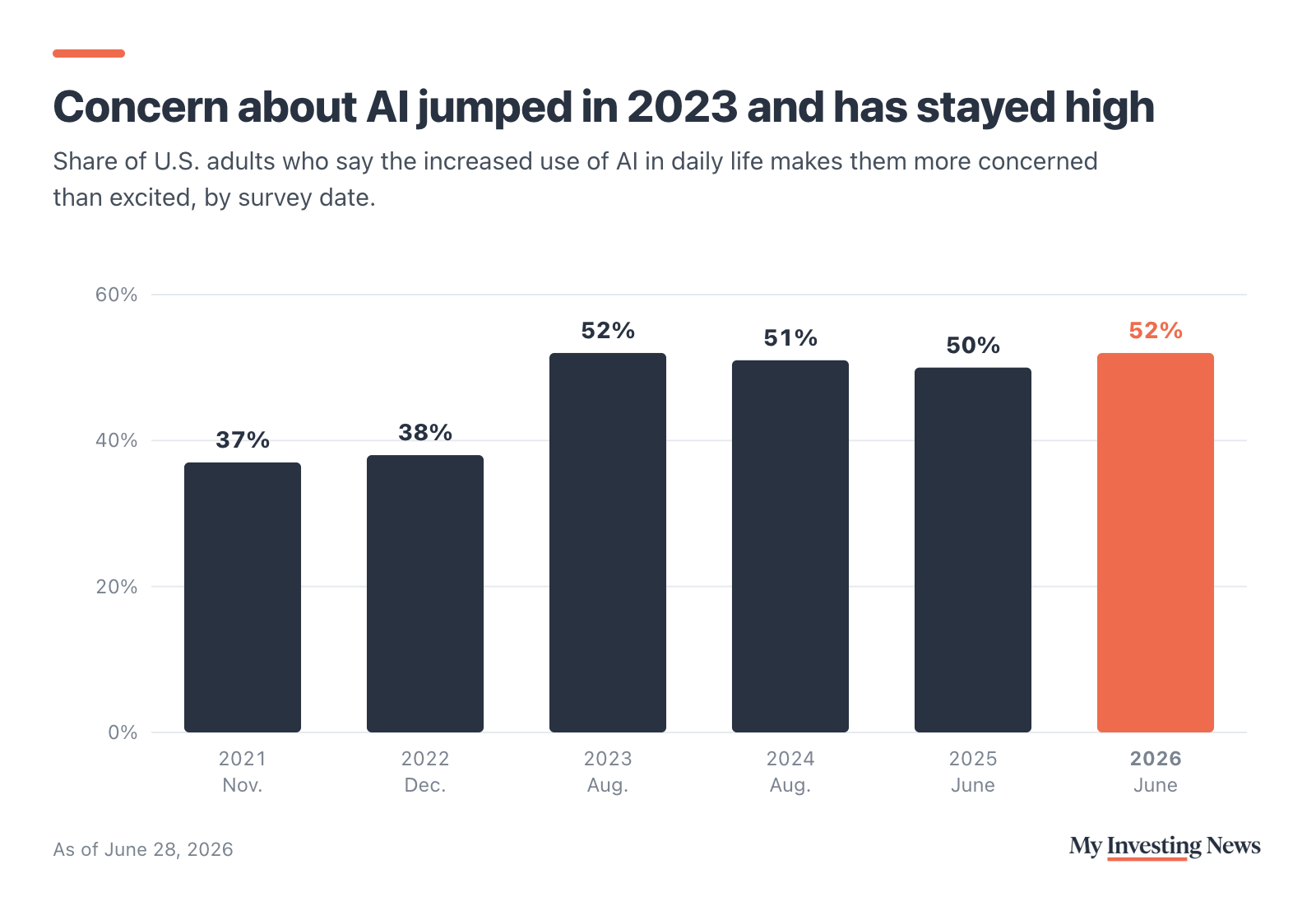
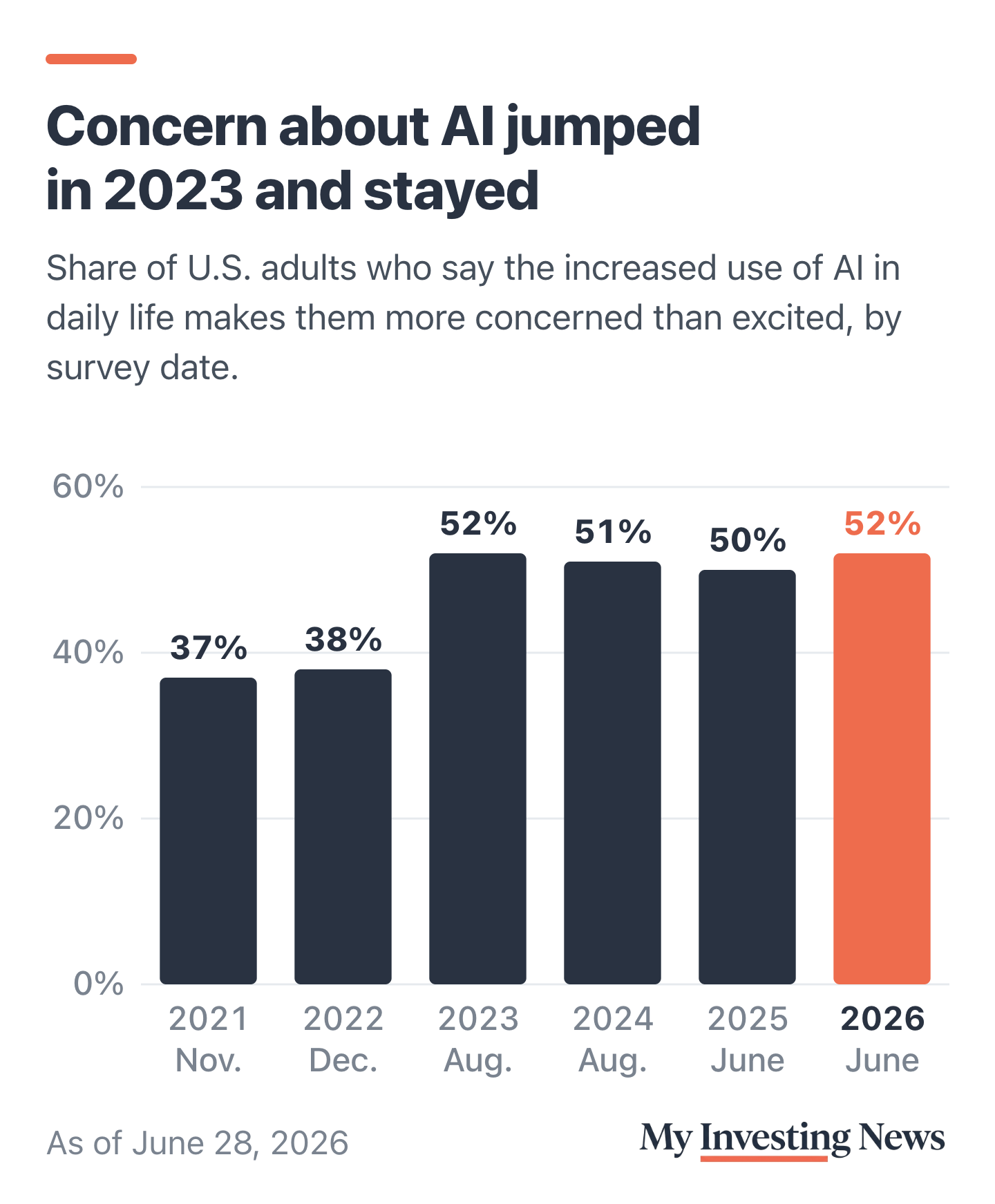
Gallup’s country study is new, so it can’t show a trend. Pew Research Center has asked Americans the same question since 2021: does the increased use of AI in daily life make you more excited or more concerned? In November 2021, 37% said more concerned and 18% more excited. The concerned share jumped to 52% in August 2023, the year ChatGPT went mainstream, and has stayed between 50% and 52% since. In June 2026 it was 52%, with 9% more excited and the rest about equally both. (The 2021 survey used slightly longer wording.)
The worry doesn’t come from lack of use. About 23% of American adults use AI daily, more than in most countries surveyed, and daily users are less worried than others. Even so, 68% of U.S. daily users told Gallup AI makes them feel worried, against 74% of people who have never used it.
From Opinion Polls to Ballot Boxes
The midterms put that mood on the ballot. “I think we counted something like 40 ballot measures in towns that would in some way restrict data center development, and by our count, all but one of them went against data centers,” Bloomberg News tech reporter Brody Ford said on the Bloomberg Businessweek podcast on Nov. 4. That day, CoreWeave CRWV closed down 9.9% and Nebius Group NBIS 6.7%, while the SPDR S&P 500 ETF rose 1.7%. By the Nov. 5 close, CoreWeave was down 18.8% from its election-day close.
The industry had spent heavily before the vote. The AI industry’s super PACs spent $59 million on the midterms, mostly backing favorites. And companies are now pitching local benefits to win approvals: Google says data centers built the right way can lower everyone’s electric bills.
What to Watch
Gallup is adding countries toward its goal of 140, so the U.S. rank could move as more results come in. Pew usually repeats its question each summer, and a reading below 50% would be the first sign the 2023 jump is fading. The new Congress sits on Jan. 3, and local fights over data center permits, power prices and moratoriums are where public opinion meets AI spending most directly.
David Friedberg read the Gallup survey correctly: 36% of Americans who know about AI expect it to mostly help the country, fourth from last of 37 countries and far behind China’s 93%. The countries around the U.S. at the bottom are statistically tied with it, and in three of them, most adults have never heard of AI. The clearer finding is worry: 74% of Americans say AI worries them, the most of any country surveyed, and Pew’s data shows that concern has held above 50% since 2023.