Where we heard itCNBC, Oct. 19, 2026, on the NAHB/Wells Fargo Housing Market Index released that morning. Speaker: Diana Olick, CNBC correspondent.
Home builders just reported their lowest mood in more than 14 years. The National Association of Home Builders’ Housing Market Index fell three points to 29 in October. CNBC correspondent Diana Olick reported on Oct. 19. In her words: “That is the lowest level since June of 2012.”
She added: “It’s a miss. The Street was looking for 31. Anything below 50 is considered negative.” The index comes from a monthly survey of builders. A reading below 50 means more builders describe conditions as poor than good. A year earlier, the section noted, the index was at 37.
As mortgage rates climbed, builder confidence sank to its lowest since June 2012
Each dot is one month since January 2019: the average 30-year mortgage rate across and the builders’ confidence index up. Readings under 50 mean more builders call conditions poor than good.
If you are downsizing, relocating, or helping an adult child buy, this reading has two effects. Builders now have more reason to negotiate. The loan that pays for the house costs more. If you judge an offer on only one of those two things, you can overpay by thousands of dollars.
Olick Is Right About Rates, and the Payment Math Proves It
Olick’s diagnosis was frank: “This is all about rising mortgage rates. The average rate on the 30-year fixed began moving higher in September and it just kept going.” Her diagnosis holds up. The facts bear it out. Freddie Mac’s weekly average for the 30-year fixed was 6.71% in the week of Sept. 3. By the week of Oct. 15, it had reached 7.40%. Earlier in the month, mortgage rates followed the 10-year Treasury to a one-year high.
Here is what that move does to a buyer. Take an example $400,000 loan over 30 years. At 6.71%, principal and interest come to about $2,584 a month.
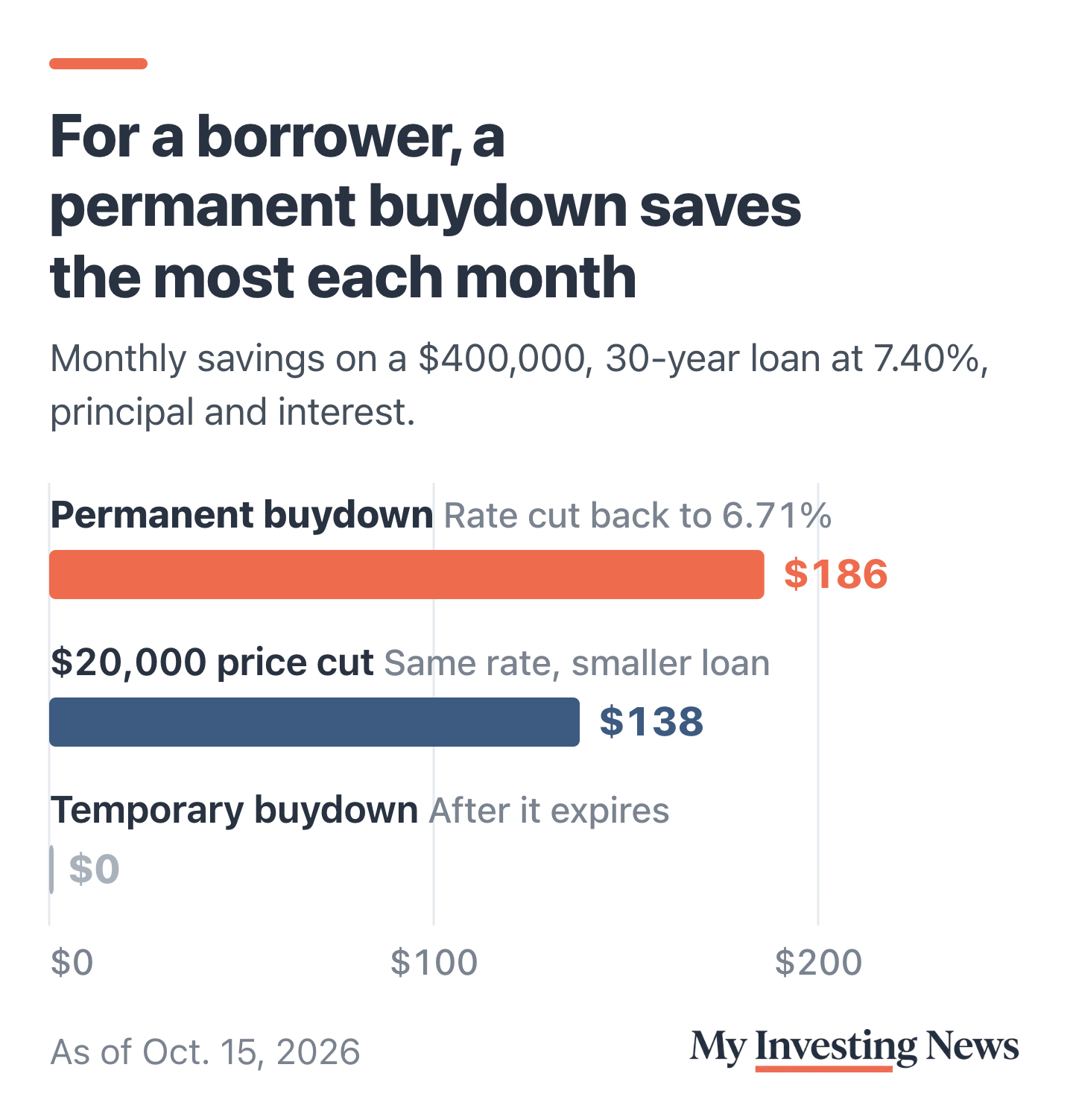
At 7.40%, the payment rises to about $2,770. That gap is about $186 a month, or roughly $2,229 a year.
Keep the loan seven years and you pay about $15,603 more for the same house.
Costs are also squeezing builders. The section cited high gas prices and inflation pushing up prices for building materials and diesel fuel. Regular gasoline averaged $4.28 a gallon nationally in the week of Oct. 19, according to the U.S. Energy Information Administration. In September, CNBC’s Steve Liesman tied a second straight monthly drop in small business optimism to rising energy and interest rate costs.
Buyer Traffic Sank to 18, the Weakest Part of the Index
Olick broke down the components: “Of the index’s three components, buyer traffic fell five points to just 18. Current sales conditions fell two points to 33, and sales expectations in the next six months dropped five points to 32.”
Buyer traffic measures how many serious prospects are walking through model homes, and current sales conditions show how deals are closing today. Expectations capture what builders think the next six months hold. Traffic at 18 is the lightest of the three. That means the payment shock is keeping buyers away before they ever sit down to talk price.
October’s builder survey at a glance
43% of Builders Are Cutting Prices to Win Buyers Back
Builders are responding with discounts. Olick reported: “43% of builders cut prices in October. That’s the highest share during the 2020 to 2026 period. 65% reported using sales incentives.”
Builder incentives typically include rate buydowns, help with closing costs, and free upgrades. In a buydown, the builder pays the lender upfront to lower your rate, either permanently or for the first few years. Resale sellers face this competition directly. Existing-home sales ran at a soft 3.99 million annualized rate in September.
How Much You Borrow Decides Which Deal Wins
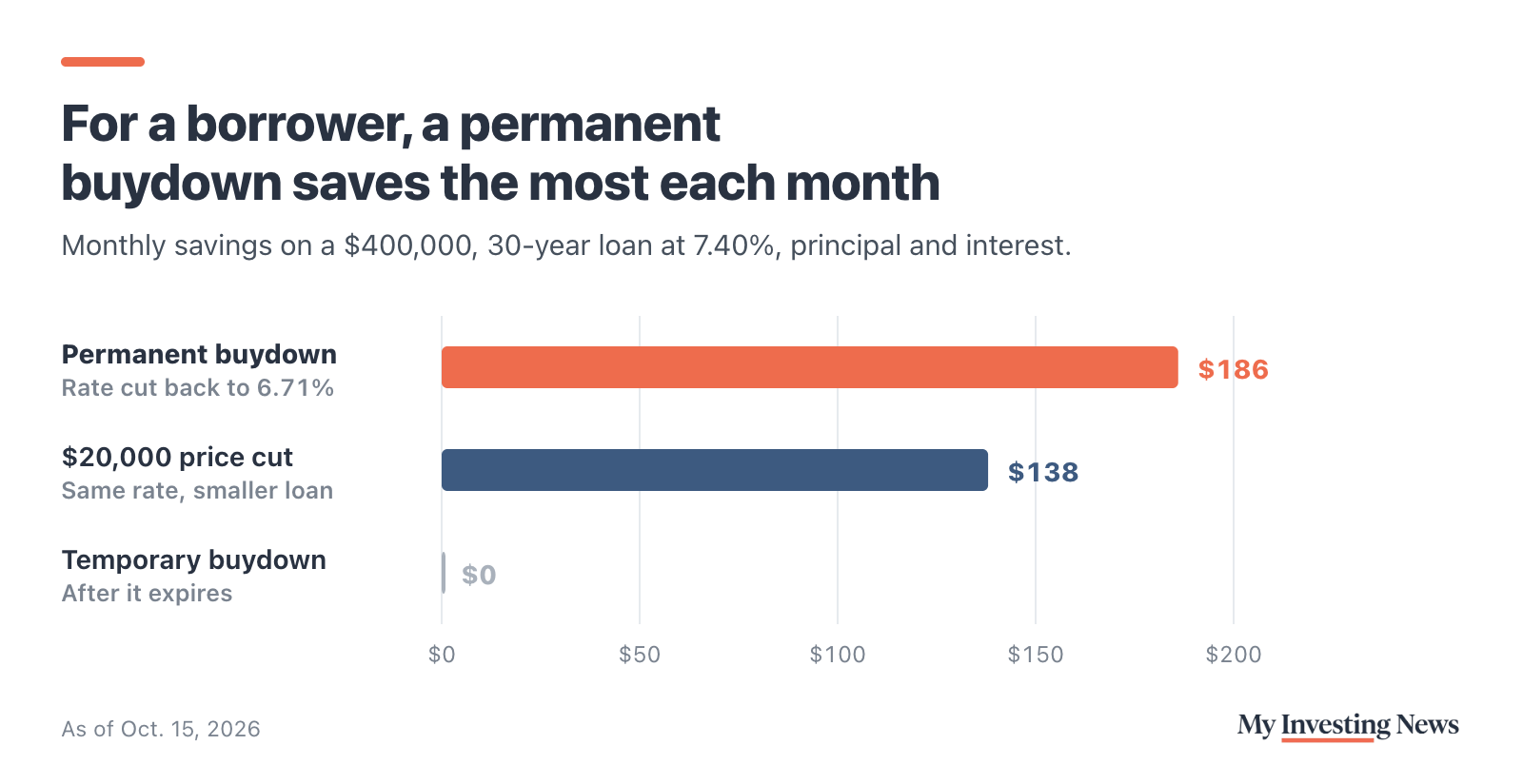
The single variable that matters most is the size of your mortgage, so picture a downsizer paying cash from home equity. For that buyer, a rate buydown is worth nothing, and a $20,000 price cut is worth the full $20,000.
Now picture the example borrower. In this example, a $20,000 price cut lowers the payment to about $2,631, saving roughly $138 a month for the life of the loan.
A permanent buydown back to 6.71% saves about $186 a month. However, that saving lasts only as long as you keep the loan, and if you sell or refinance early, it ends. A temporary buydown expires on schedule and leaves you with the full-rate payment.
Run These Numbers Before You Sign Anything
- Ask for the cash value of every incentive, and request the dollar cost of the buydown, closing-cost credit, or upgrade package. Then ask whether the builder will take the same amount off the price instead.
- Compare at least three Loan Estimates. Include the builder’s associated lender and two outside lenders. The “In 5 Years” line on the standard Loan Estimate form shows the total you would pay over five years. That makes offers directly comparable.
- Confirm whether a buydown is permanent or temporary. For a temporary one, budget for the full-rate payment that kicks in later.
- If you are selling, price against nearby new construction. Check what local builders are offering in cuts and incentives, because your buyer will check too.
Builder sentiment now rises and falls with mortgage rates. Your best deal is whichever offer gets the lowest total cost for the amount you actually borrow.
Olick puts the slump in builder confidence down to mortgage rates, which climbed from 6.71% to 7.40% in six weeks and helped push the index to 29, its lowest since June 2012. Builders are answering with price cuts and incentives, and which one is worth more depends on how much you borrow and how long you keep the loan. The main risk for buyers is a temporary buydown that runs out and leaves them with the full-rate payment.