Where we heard itSuze Orman, on Suze Orman’s Women & Money, “Classic Suze School: The Dollar of the Decades,” released Nov. 5, 2026. The episode is a rerun of one first released Dec. 6, 2020.
Suze Orman was telling a holiday story. Back when she saw clients, she said on her podcast, they would work all year to pay off $700 of debt or save $1,000, then spend it all again in December. Along the way, she offered a guess about how much Americans have saved: “Do you know that it used to be that only 50% of the people in the United States had more than $1,000 in savings?”
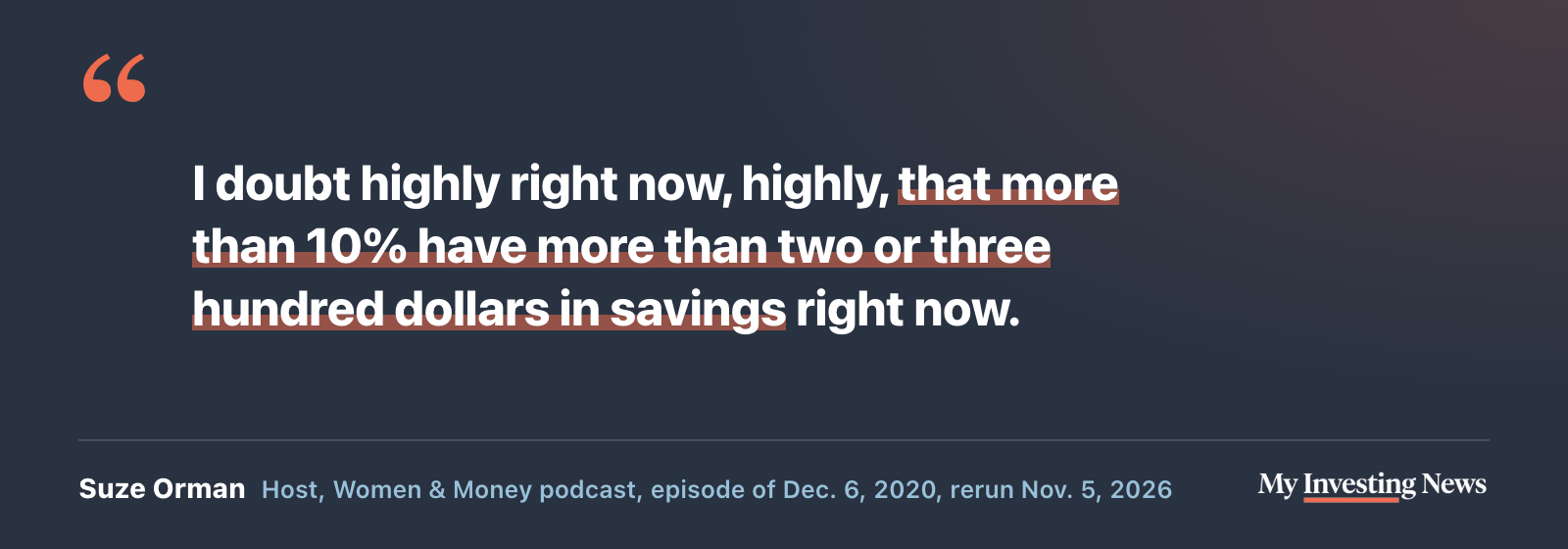
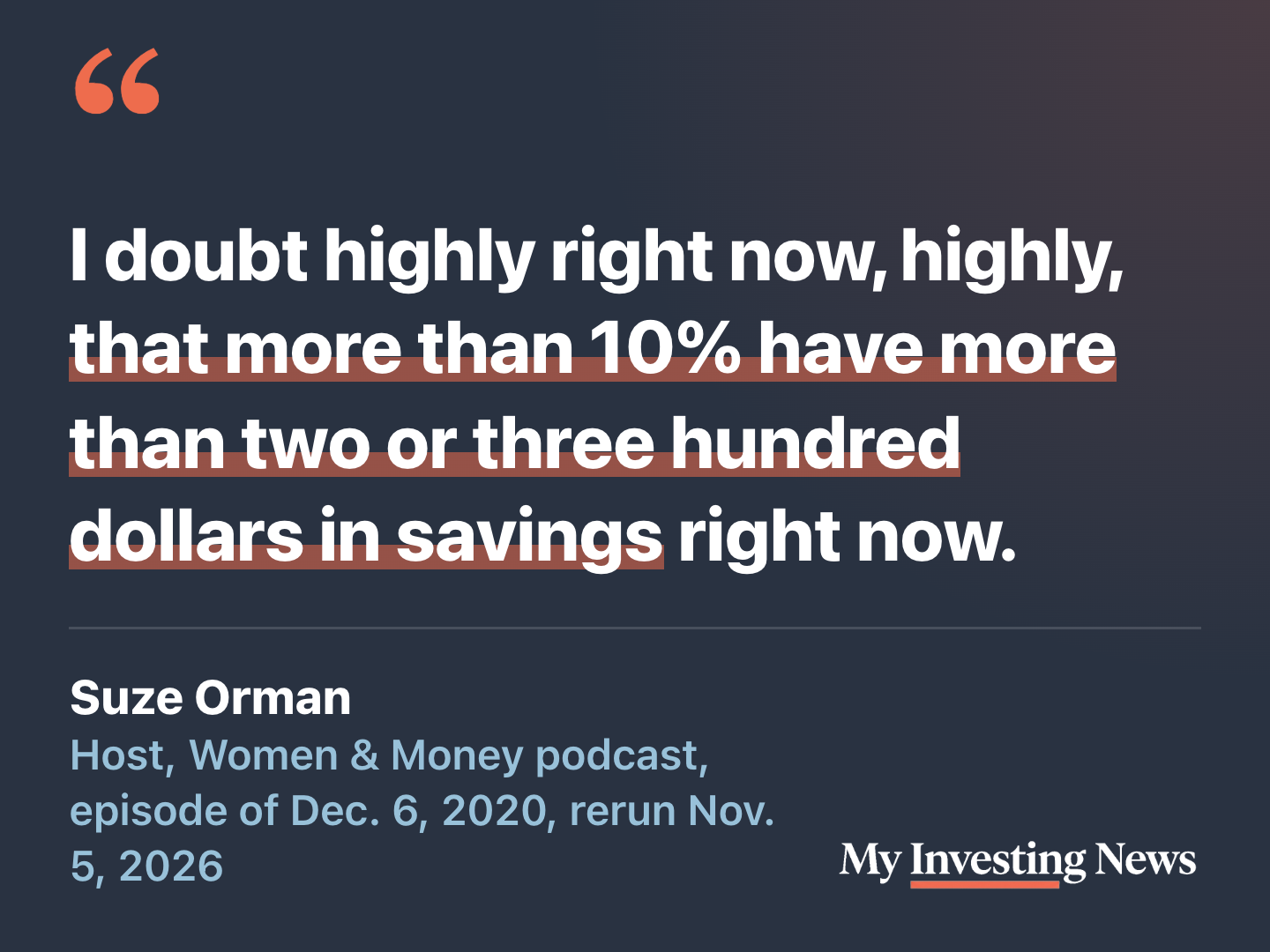
“So it’s gotten really bad,” she added. Her producer introduced the Nov. 5 episode as a classic, and the same episode first ran in December 2020, so the remark is almost six years old. Either way, the Federal Reserve measures this every year, and its numbers don’t come close to Orman’s guess.
Nearly 9 in 10 Families Have More Than $300 in the Bank
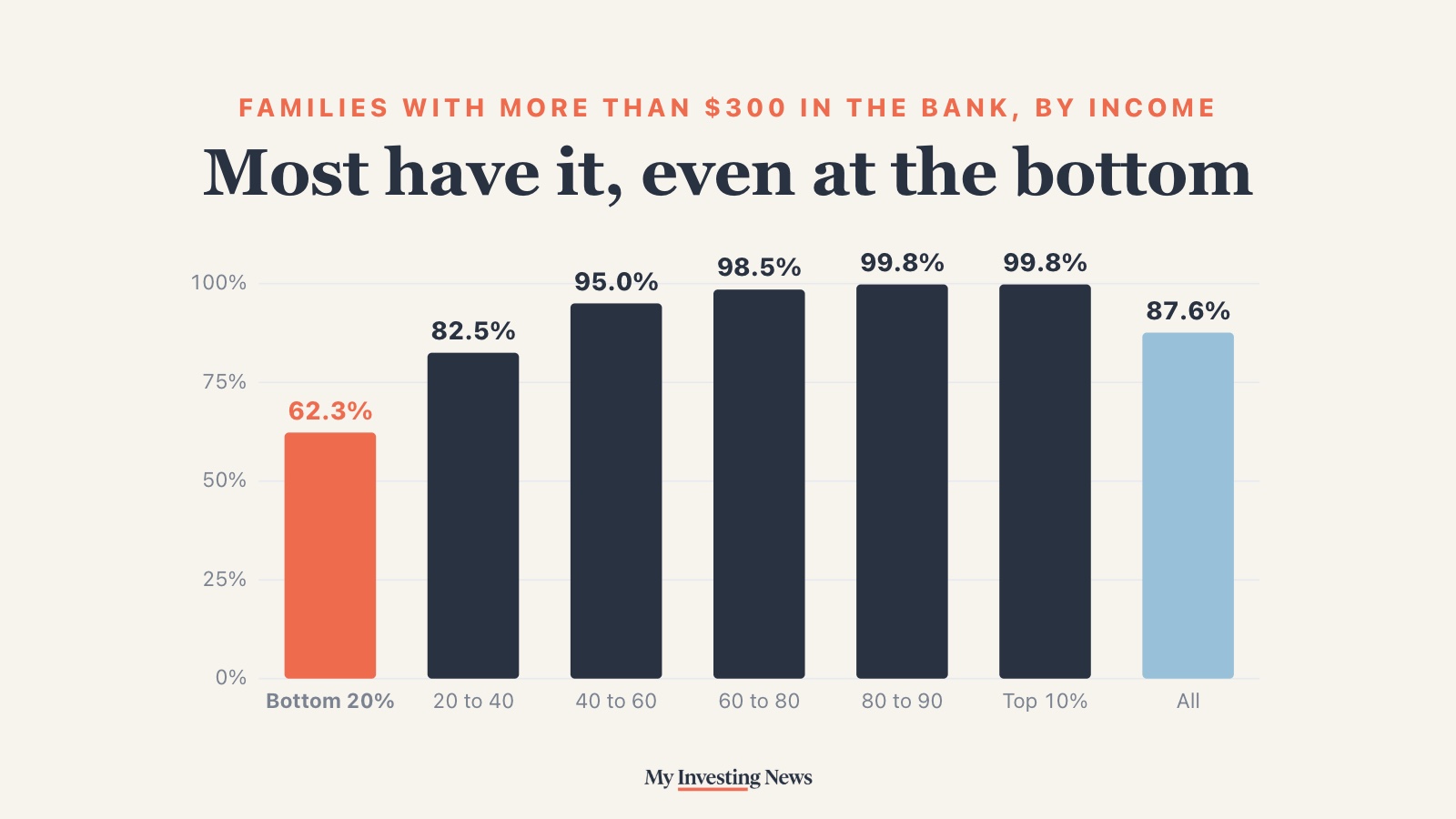
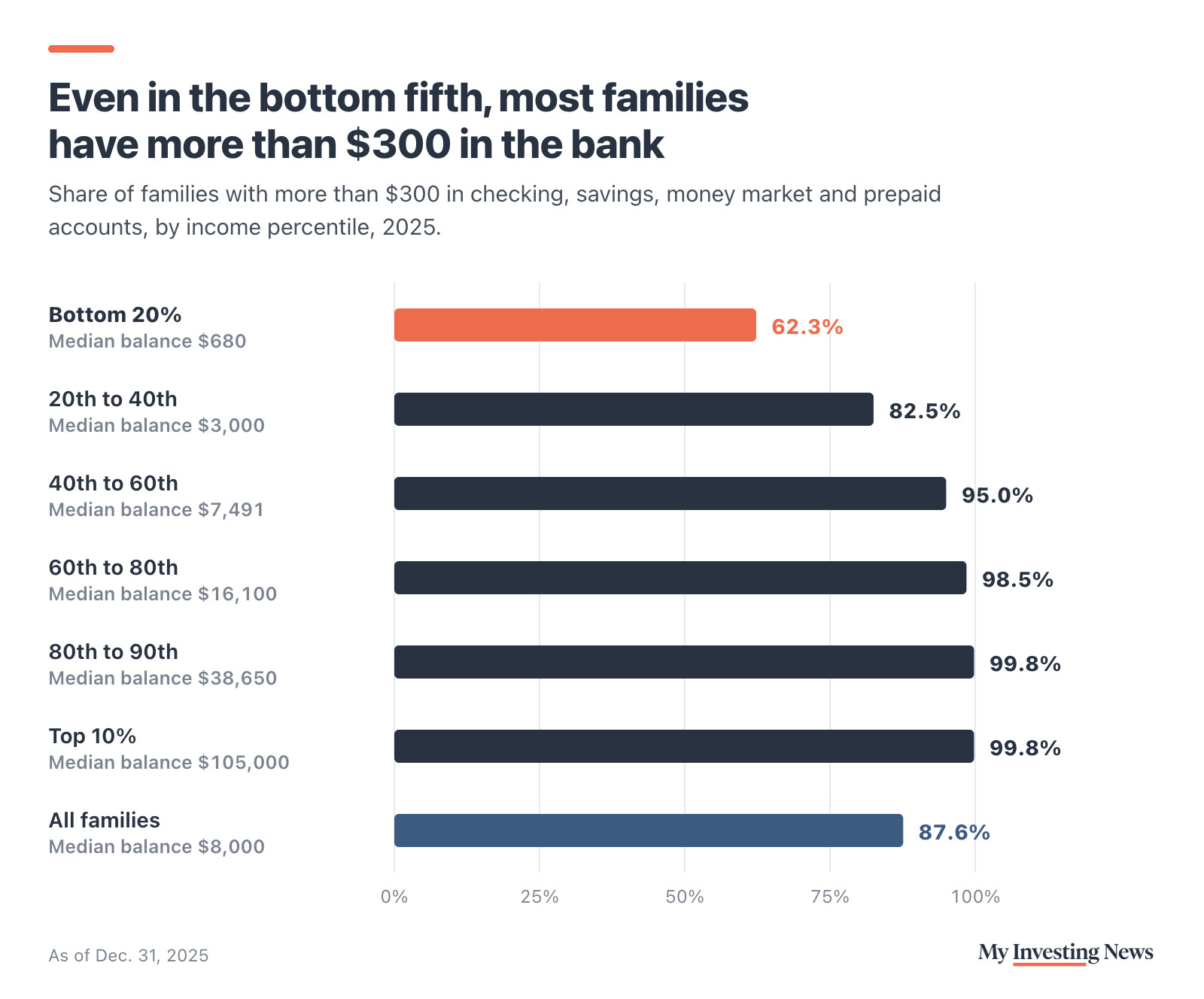
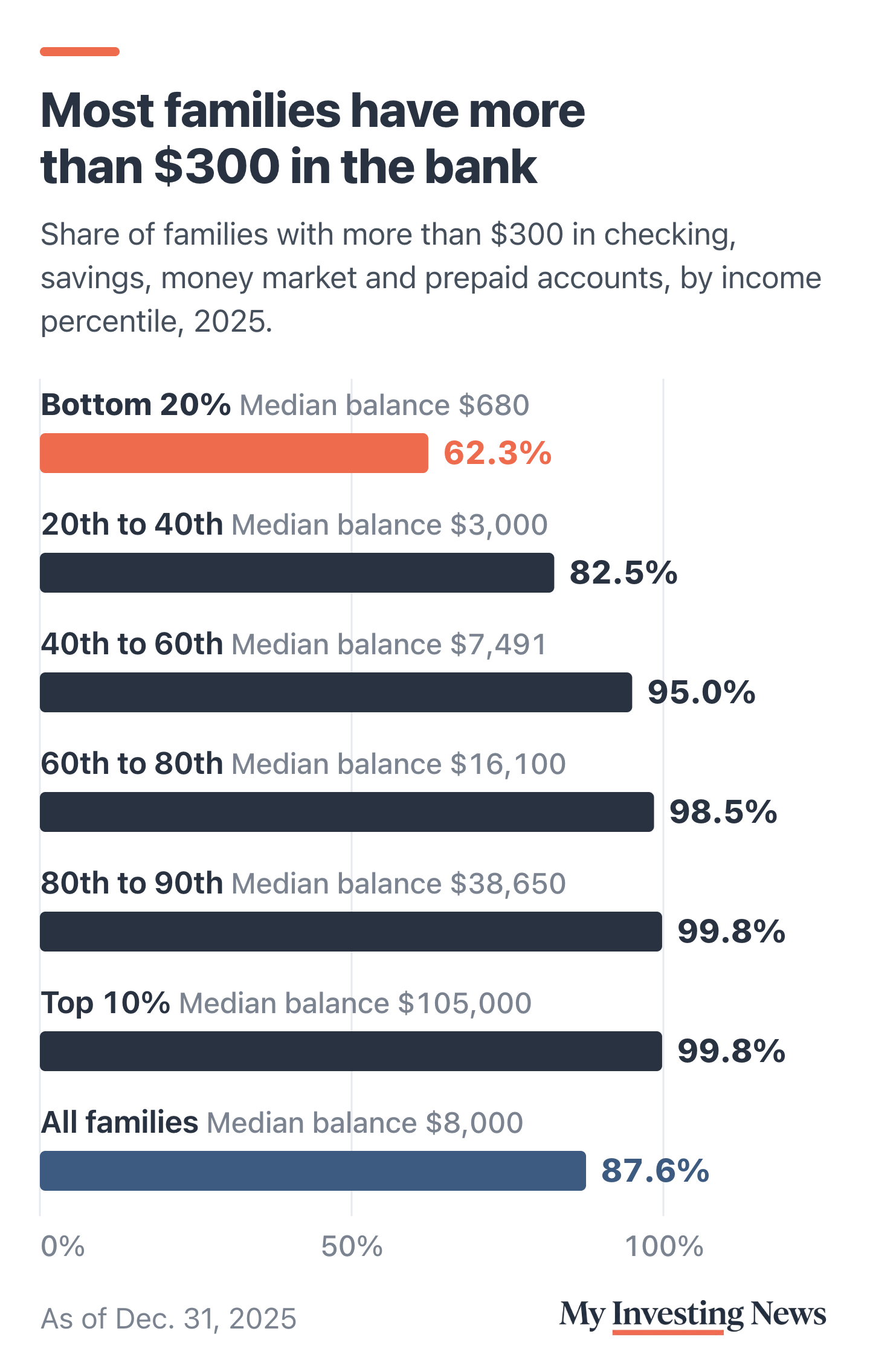
The Fed’s Survey of Consumer Finances, run every three years, asked families about their accounts in 2025. In the survey’s public data, 87.6% of families had more than $300 in checking, savings, money market and prepaid accounts combined. Only 12.4% had $300 or less. The typical family had about $8,000, and 78.6% had more than $1,000.
Checking accounts hold money for bills as well as savings, so these balances overstate what people have set aside. The Fed’s other survey asks about savings directly.
The Fed Asks About Savings Every Year
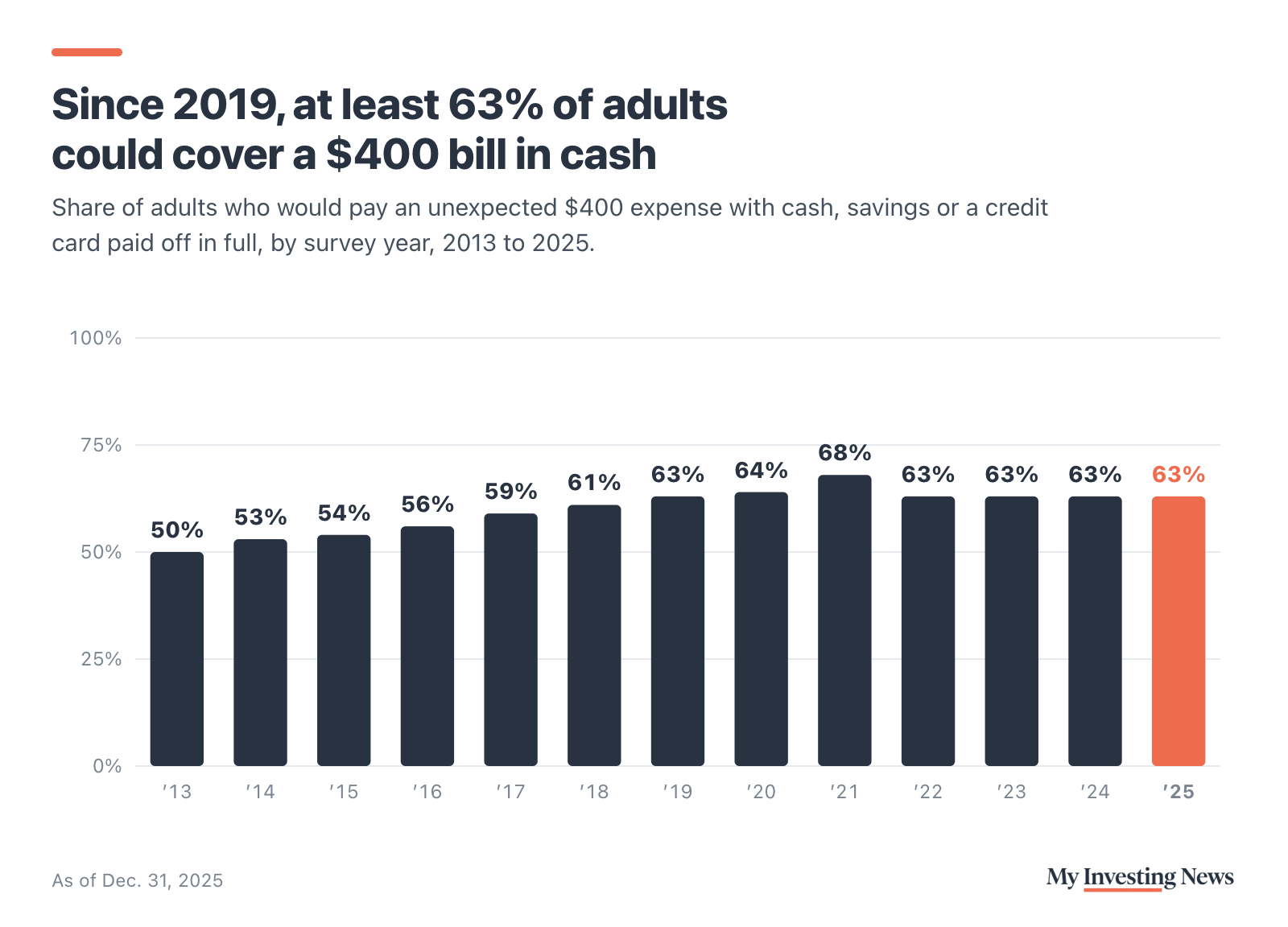
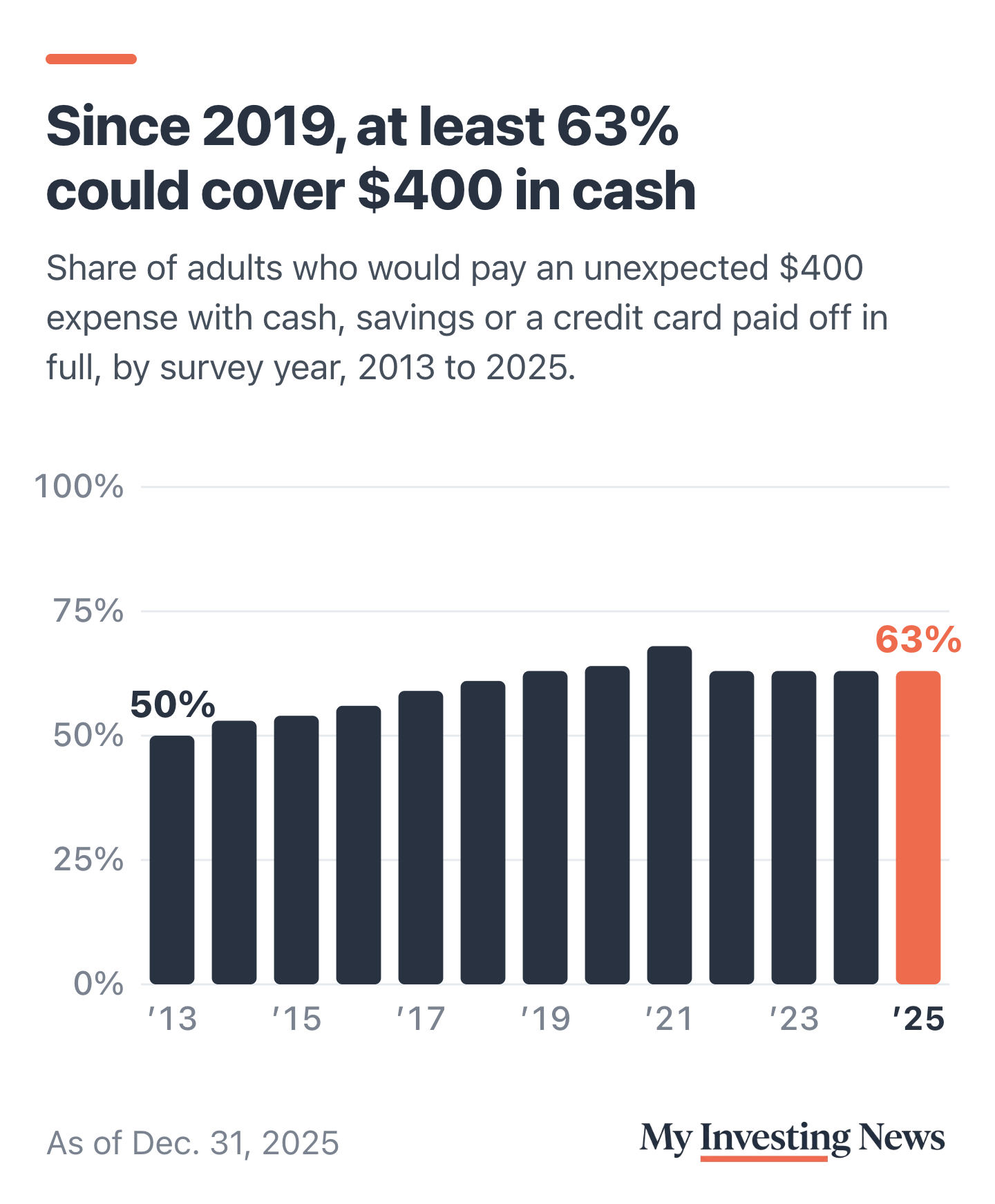
The Fed’s annual survey of household economics, published each May, asks adults how they would pay an unexpected $400 bill. In 2025, 63% said they would cover it with cash, savings or a credit card paid off in full. That share was 50% when the question was first asked in 2013, climbed to a high of 68% in 2021, and has held at 63% for four straight years.
The same survey asked the largest emergency expense people could cover right now using only savings. Seventy percent of adults said at least $500. That is seven times Orman’s 10%, and it uses a higher bar than her $200 or $300. When the episode first aired in December 2020, the Fed’s latest reading on the $400 question was 63%.
What the Fed’s surveys show
Where Orman Has a Point
Orman’s number is far off for the country as a whole, but she is right that a large group is living close to the edge. In the Fed’s 2025 survey, 18% of adults said the most they could cover from savings was under $100, and another 12% said $100 to $499. And 12% said they could not pay a $400 bill at all, by any means. Among adults earning less than $50,000, 4 in 10 could not cover even a $100 emergency with savings alone.
Income is the dividing line. Among families in the bottom fifth by income, the median balance across all bank accounts was $680, and 37.7% had $300 or less. In the next fifth, 82.5% had more than $300; in the middle fifth, 95.0%. The same survey found that lower earners got raises and still got poorer between 2022 and 2025.
What to Watch
The Fed’s next household survey, covering 2026, should arrive around May 2027 and will show whether the share able to cover $400 in cash finally moves off 63%. The nearer test is the one Orman was really talking about: whether people who saved all year spend it in December. Across the economy, Americans are saving a smaller share of their income than in most months since 1959.
Suze Orman doubts more than 10% of Americans have over $200 or $300 saved. The Fed’s data says 87.6% of families have more than $300 in the bank and 70% of adults could cover a $500 emergency from savings alone. Her worry fits the bottom of the income ladder, where the typical family has a few hundred dollars and 4 in 10 lower-income adults can’t cover $100 from savings.