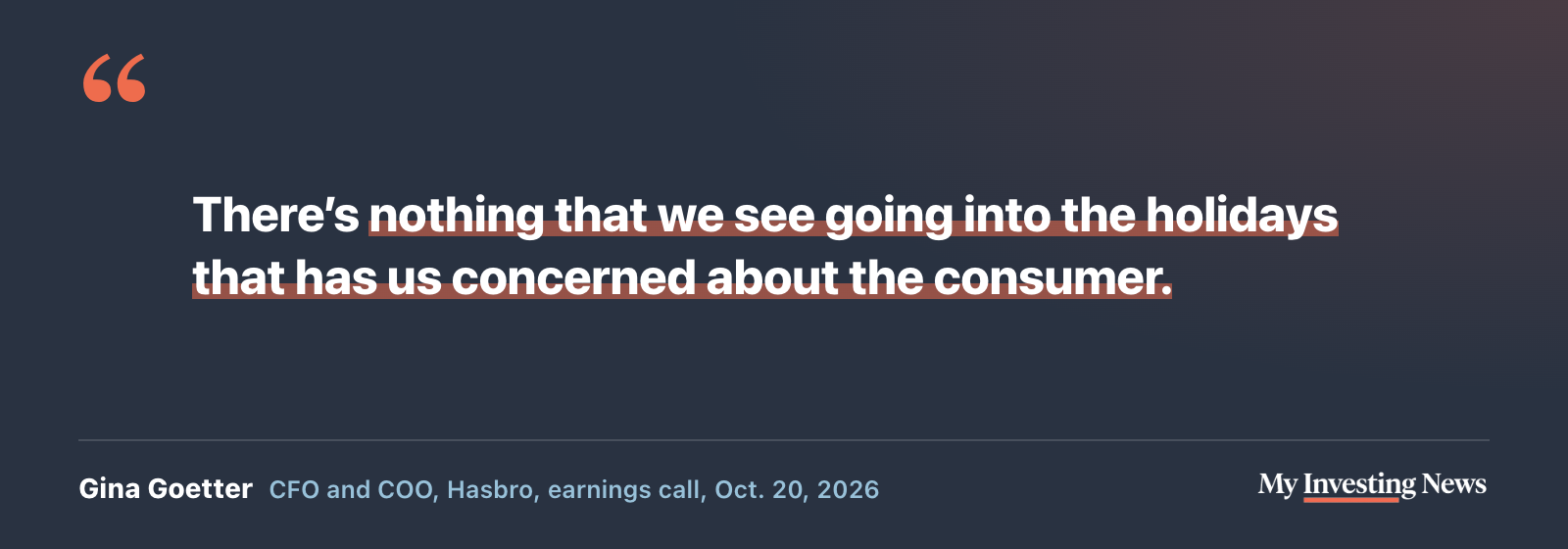
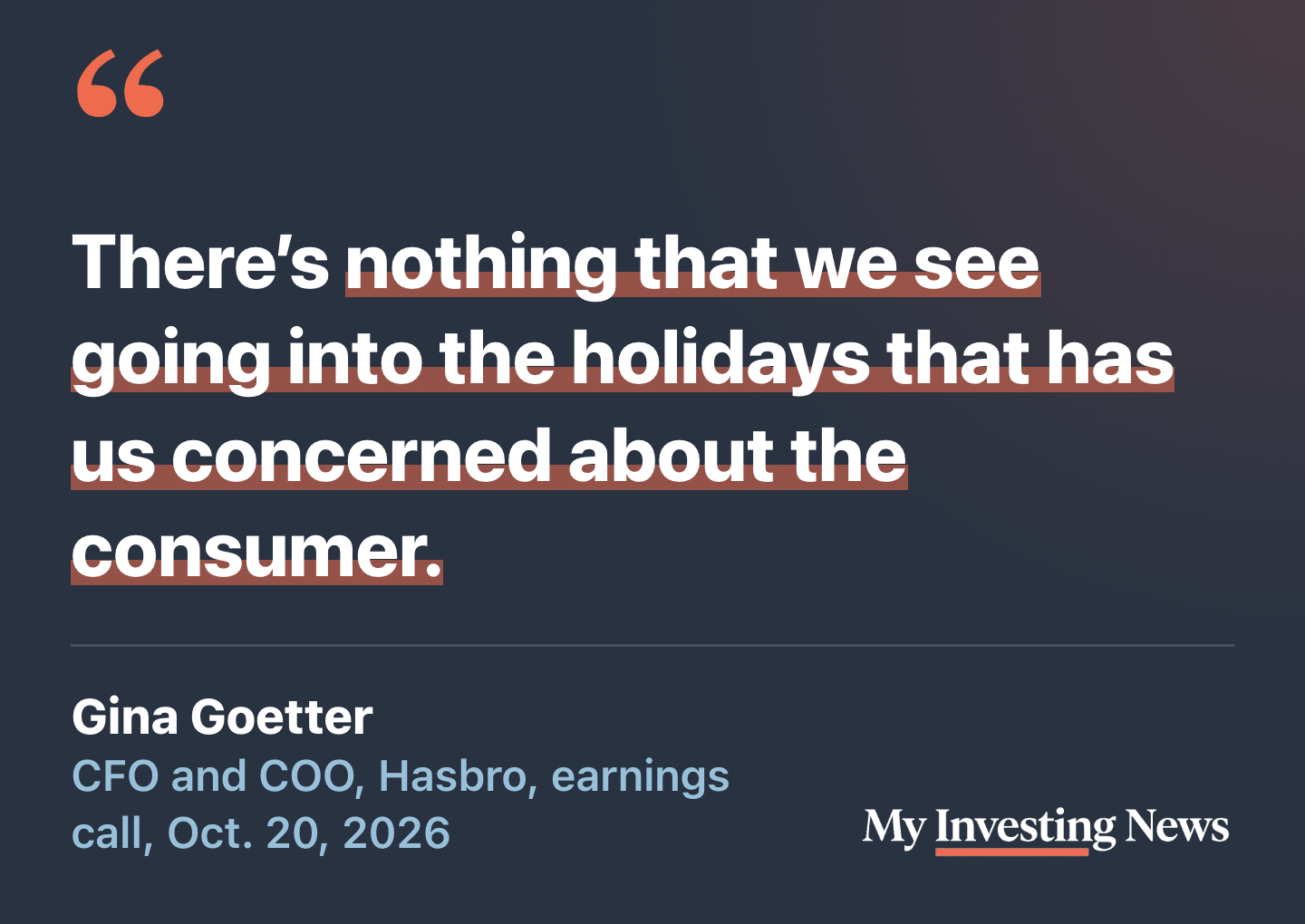
Where we heard itGina Goetter, chief financial officer and chief operating officer of Hasbro, answering an analyst on the company’s third-quarter earnings call, Oct. 20, 2026.
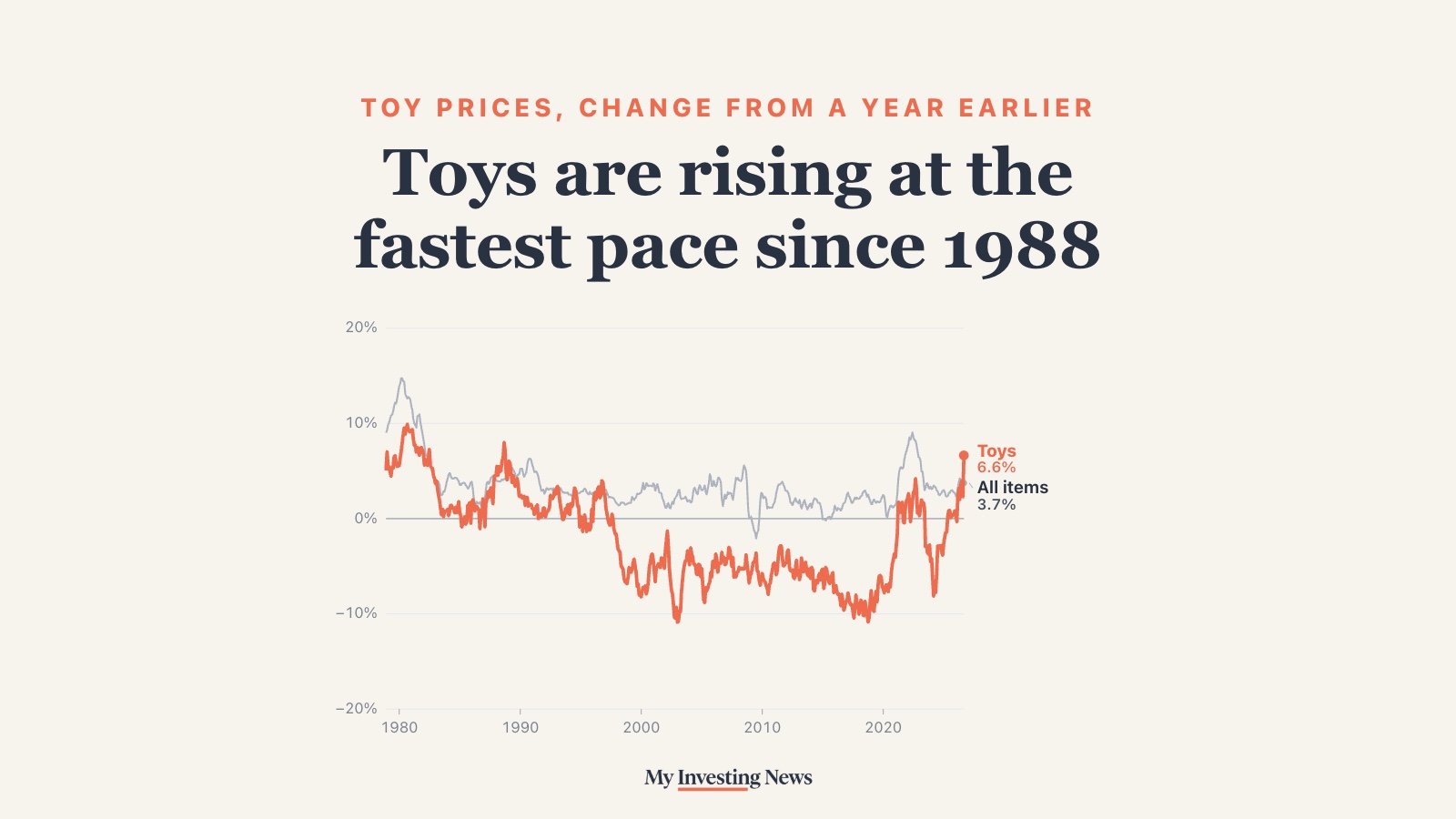
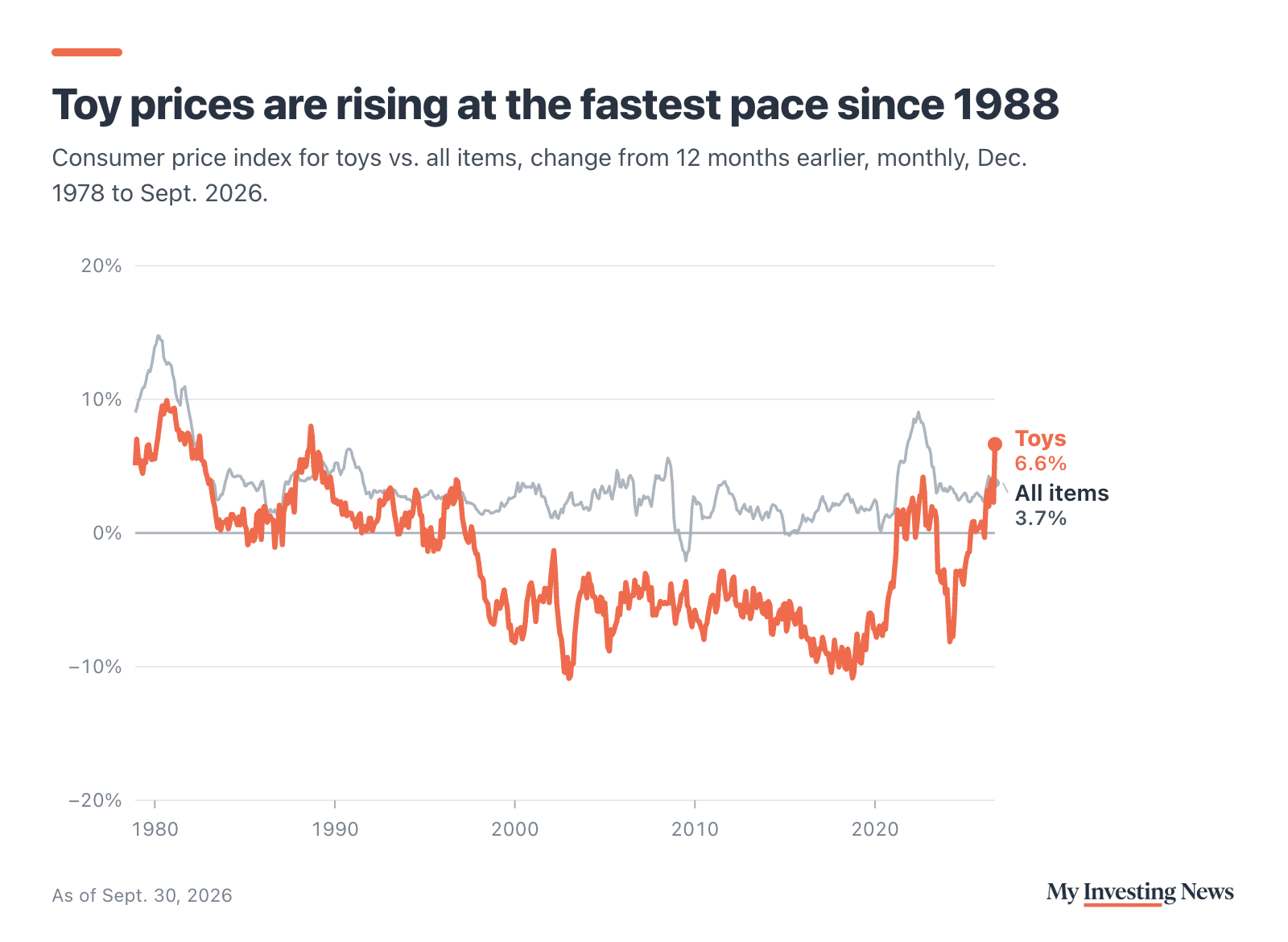
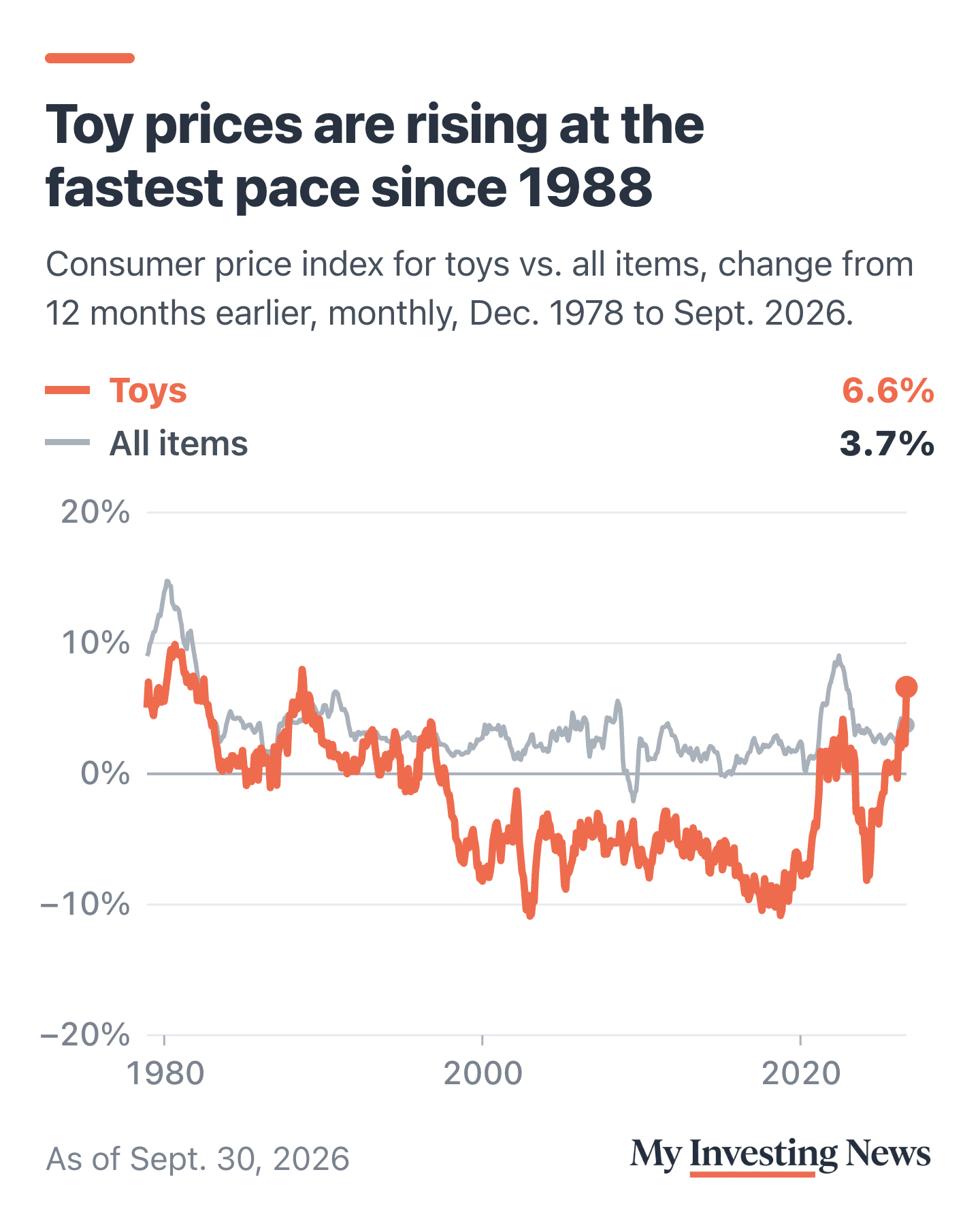
Toy shoppers this holiday season are paying up. The consumer price index for toys rose 6.6% in the 12 months to September, according to the Bureau of Labor Statistics, against 3.7% for all prices. That is the fastest increase since October 1988.
Hasbro HAS isn’t worried. On the company’s Oct. 20 call, an analyst asked whether inflation and weak consumer sentiment could make shoppers pull back. Goetter said the company was “continuing to see a pretty resilient consumer,” helped by its shift toward games and fan-driven toy lines:
Mattel MAT sounds less sure. On Nov. 5 it lowered its full-year sales forecast to growth of 1% to 4% in constant currency, and its new chief financial officer, Peter Griffith, told analysts that sales to shoppers slowed late in the third quarter. “We see those deceleration trends continuing to occur through the fourth quarter,” he said. We looked at how unusual this year’s price increases are, who is collecting the tariff money, and how the toy makers’ calls held up last year.
Toy Prices Haven’t Risen This Fast Since 1988
The September jump was sudden. In August, toy prices were up 2.3% from a year earlier. Adjusted for the season, they then rose 4.2% in September alone and another 1.8% in October, the latest month.
October’s 12-month change can’t be calculated, because the government shutdown stopped price collection in October 2025. Over two years, toys were up 9.1% from October 2024 to October 2026, against 6.9% for all prices. The only faster stretches for toys in the index, which starts in December 1977, came in the high-inflation years from 1979 to 1982 and in late 1988.
Thirty Years of Cheaper Toys, Reversed
For most of the past three decades, toys kept getting cheaper. The toy index peaked in November 1996. From January 2000 through December 2020, toy prices were lower than a year earlier in every single month, all 252 of them. Halloween candy, by contrast, rose 7.7% in a year.
By December 2024, the index had fallen 78.8% from its 1996 peak. Even after this year’s run, toys cost 71.7% less than in January 2000, while overall consumer prices have about doubled (up 99.9%). What has changed is direction: toy prices are up 12.1% from the December 2024 low.
Toy prices, then and now
The Tariff Refunds Went to the Toy Makers
Tariffs are the obvious suspect, and the toy industry fought them all the way up. The Supreme Court struck down the tariffs imposed under emergency powers on Feb. 20, in a 6 to 3 decision on a challenge brought by Learning Resources, a family-owned educational toy company in Vernon Hills, Illinois. Refunds of those duties are now reaching importers. Customs duties still raised $173 billion in fiscal 2026 after refunds, so plenty of tariffs remain.
The refunds showed up in the toy makers’ third quarters, not on store shelves. Mattel said $88 million of tariff refunds lifted its gross margin, and that without them, inflation and higher royalties more than offset its other gains. Hasbro booked about $48 million of refunds in its toy and consumer products segment and said it now plans around a lower China tariff rate of 12.5%.
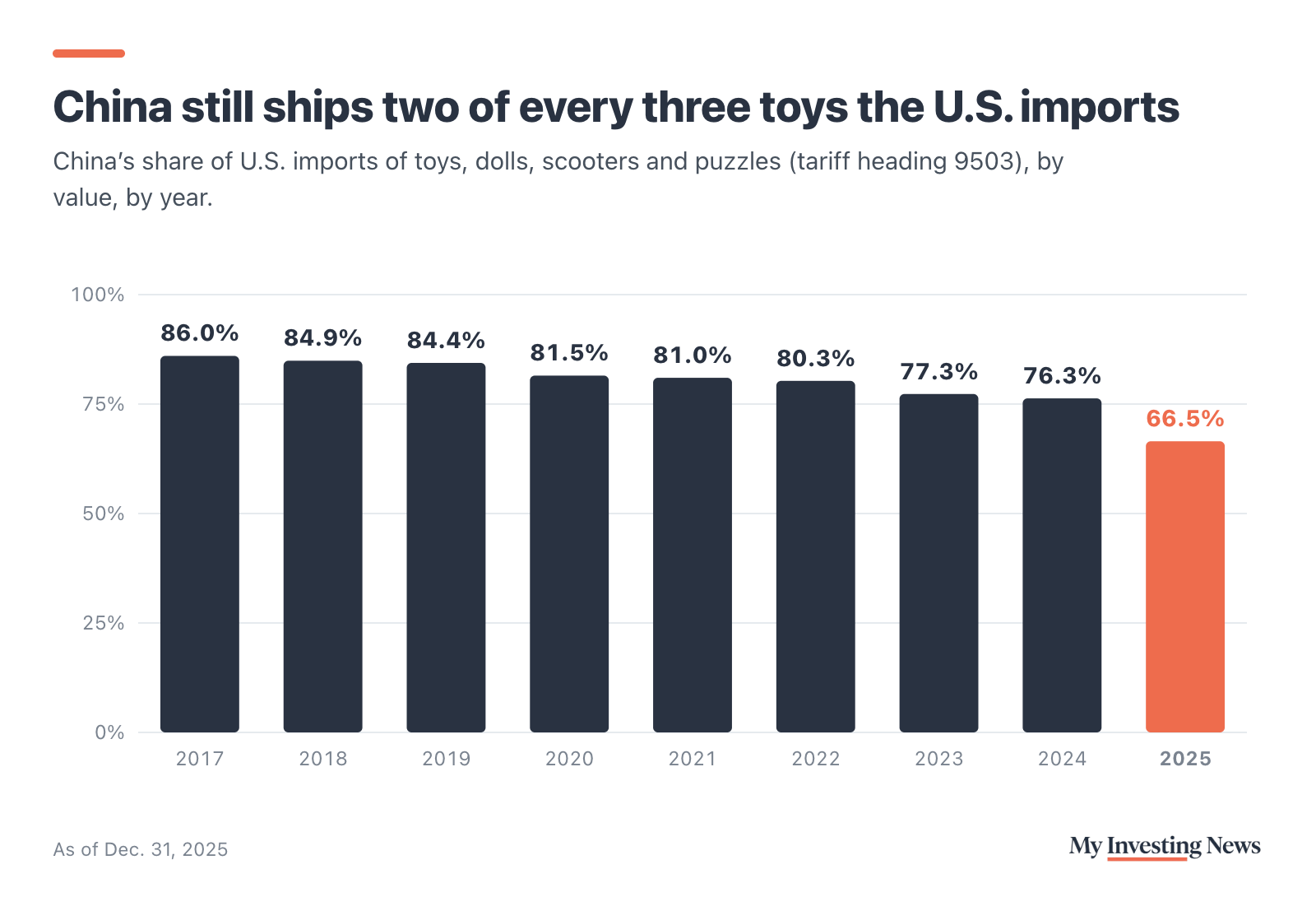
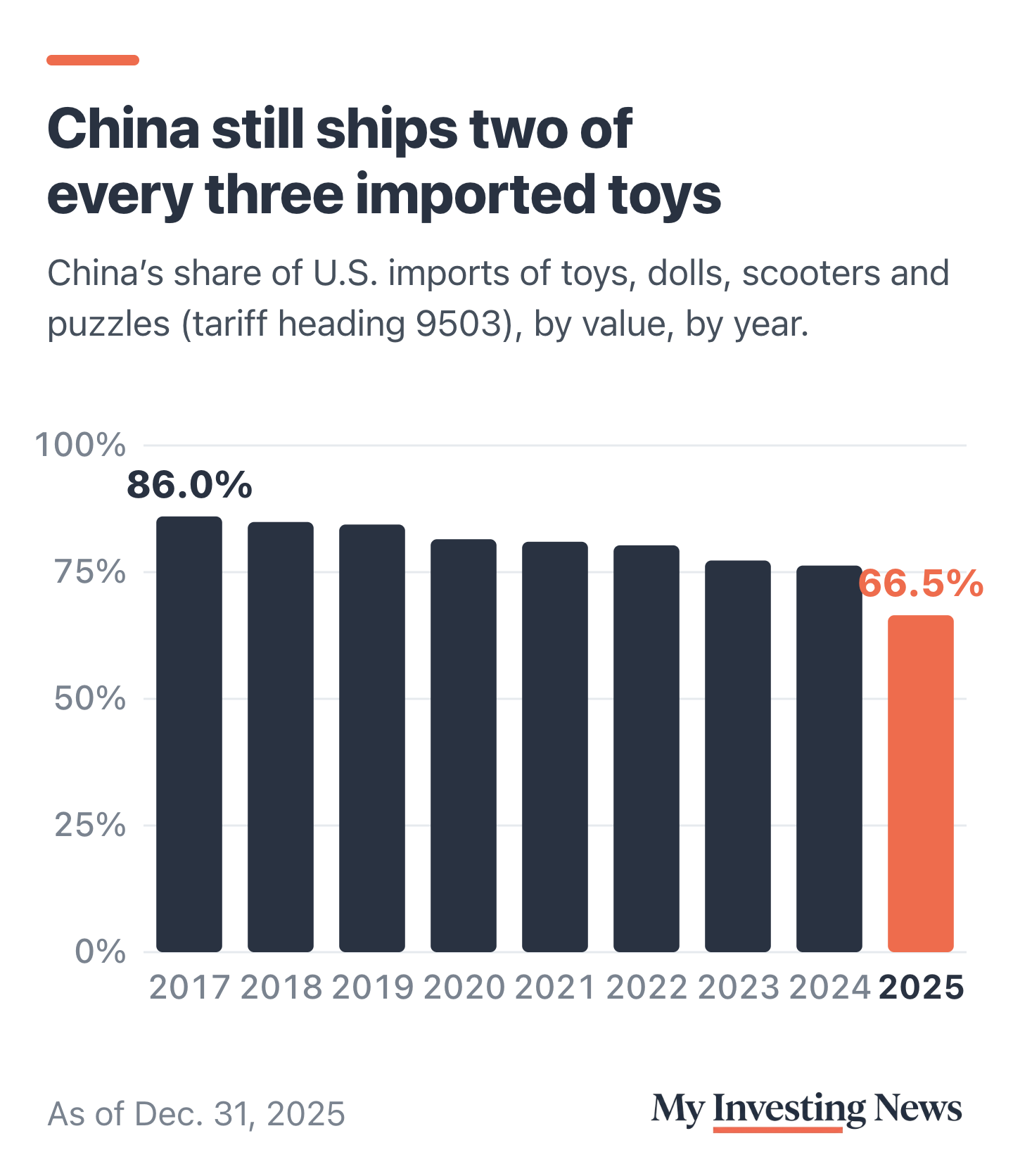
The industry’s supply chain is still mostly in China. China shipped 66.5% of the toys, dolls, scooters and puzzles the U.S. imported in 2025, by value, according to United Nations trade data, down from 86.0% in 2017 and 76.3% in 2024. Vietnam was second at 13.3%. Total U.S. toy imports fell 22.4% in 2025, the year the new tariffs took effect.
What Last December Says About This One
The two companies were in a similar spot a year ago. On its October 2025 call, Hasbro said it hadn’t seen shoppers pull back much from higher prices. Its fourth-quarter revenue then rose 31%. Mattel had a harder December. In February, it said its U.S. sales to retailers in December grew less than it expected, and its then-chief financial officer, Paul Ruh, described a more promotional market with price-sensitive shoppers hunting for deals. Mattel took on more discounting to clear inventory, which cut into its margins.
The difference this year is that the prices themselves are rising faster. Hasbro’s growth leans on Magic: The Gathering, whose revenue topped $600 million in the third quarter, a first. Mattel is leaning on its own brands, and Roger Lynch, who became chief executive this fall, said on his first call that Barbie’s current performance is “frankly not where it needs to be.”
What to Watch
November’s consumer price index, due Dec. 10, will show the first clean 12-month change for toys since September, because November 2025 prices were collected. Watch for discounting: if toys don’t sell, retailers will cut prices in December, as they did last year. The National Retail Federation’s holiday forecasts have missed by an average of 1.4 points since 2010, so early sales calls are worth only so much. Both toy makers usually report fourth-quarter results in February.
Toy prices rose 6.6% in the year to September, the fastest since 1988, ending two decades in which toys got cheaper every year. Hasbro says nothing has it concerned about holiday shoppers, while Mattel says its sales slowed late in the third quarter. The risk is a repeat of last December, when price-sensitive shoppers forced deeper discounts.