Where we heard itShiv Verma, chief financial officer of Robinhood, on Bloomberg Businessweek Weekend, episode dated Nov. 6, 2026.
RobinhoodHOOD wants a bigger piece of the next blockbuster stock offerings for its customers, and its chief financial officer says companies are more willing to give it. Shiv Verma told Bloomberg Businessweek that about five years ago, when Robinhood built its IPO platform, individual investors got only a sliver of a typical deal:
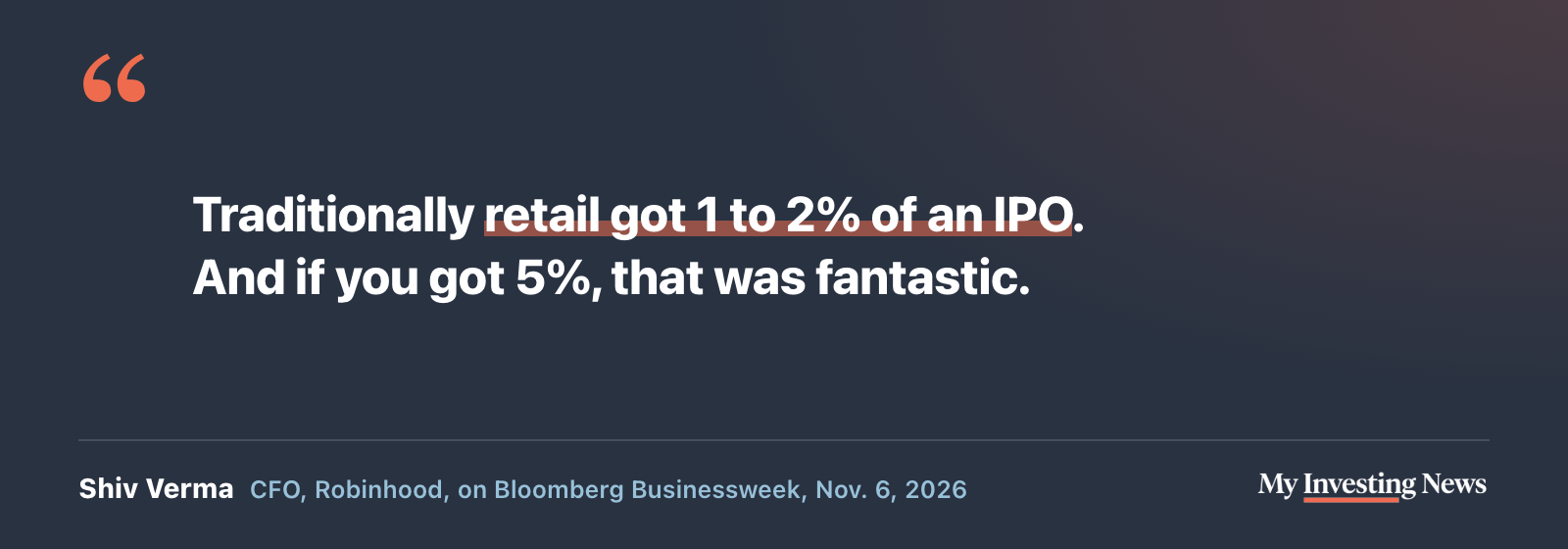
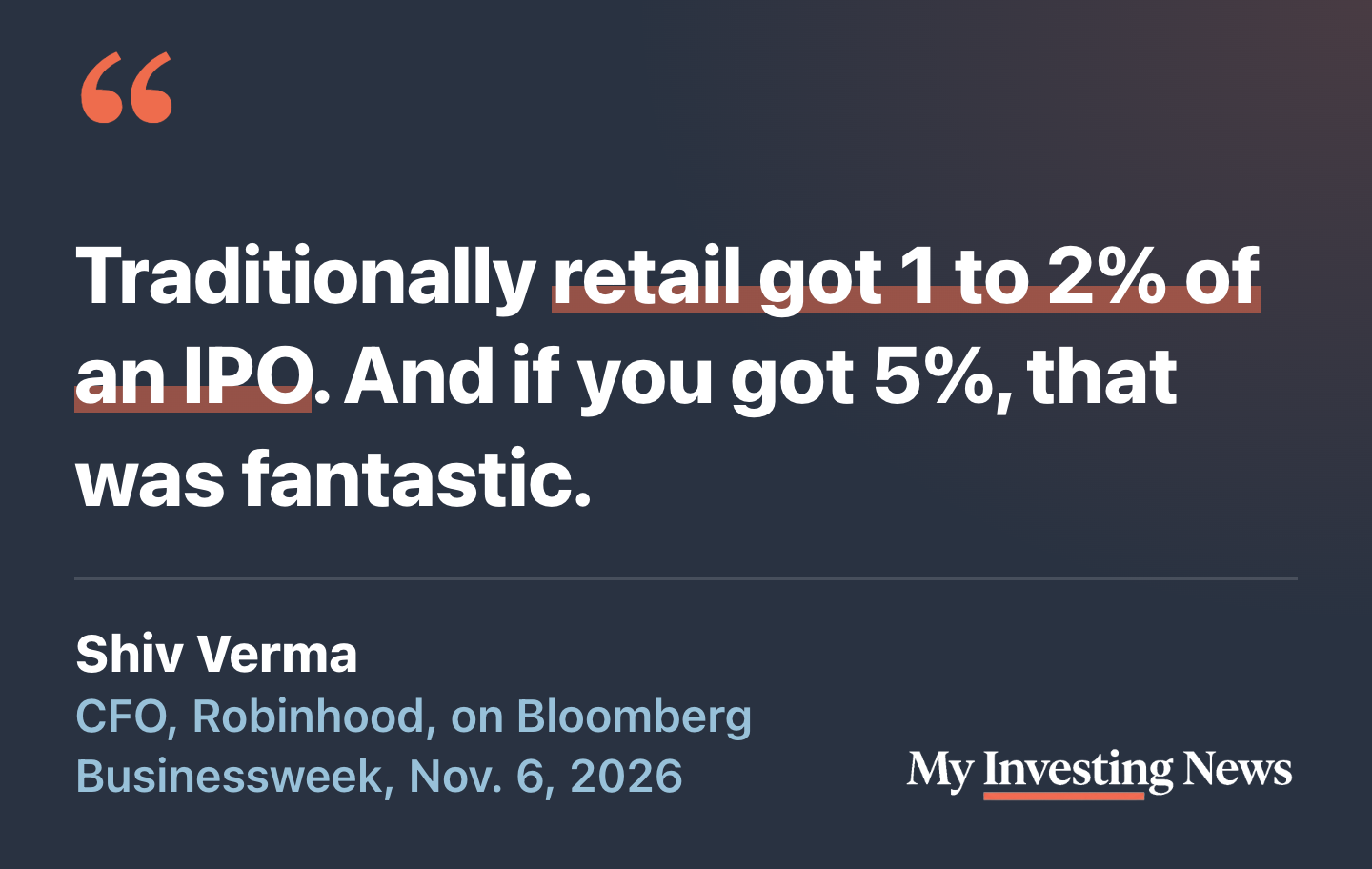
“Now when we talk to companies, they say, hey, how big can I go? Can I go to 5? Can I go to 10? Can I go to 20?” Verma said. Robinhood, he added, set the bar itself: “When we did our own IPO, we gave 20% to retail, which at the time was the highest in history.” He said Anthropic’s amended filing showed Robinhood will be on that deal, but he wouldn’t say how many shares individuals might get, citing the quiet period. “It’s a food fight out there,” he said.
The demand is real. The harder question for the people placing orders is what a big retail slice has meant once the stock starts trading. We looked at the record.
Checking the Claims
Verma’s trend holds up. Renaissance Capital, which tracks IPOs, counted 10% of 2025’s IPOs raising $50 million or more that formally disclosed a retail component, up from 3% the year before. Most of those deals reserved around 1% to 5% for individuals, close to the range Verma described.
“Highest in history” is harder to support. Robinhood’s July 2021 prospectus said the underwriters expected to reserve about 20% to 35% of the shares for its customers. But nine years earlier, Facebook went public with more than 25% of its shares allocated to individual investors, Bloomberg News reported at the time, citing two people familiar with the offering. The Los Angeles Times put it at 25% of the 421 million shares sold.
What Happened Next
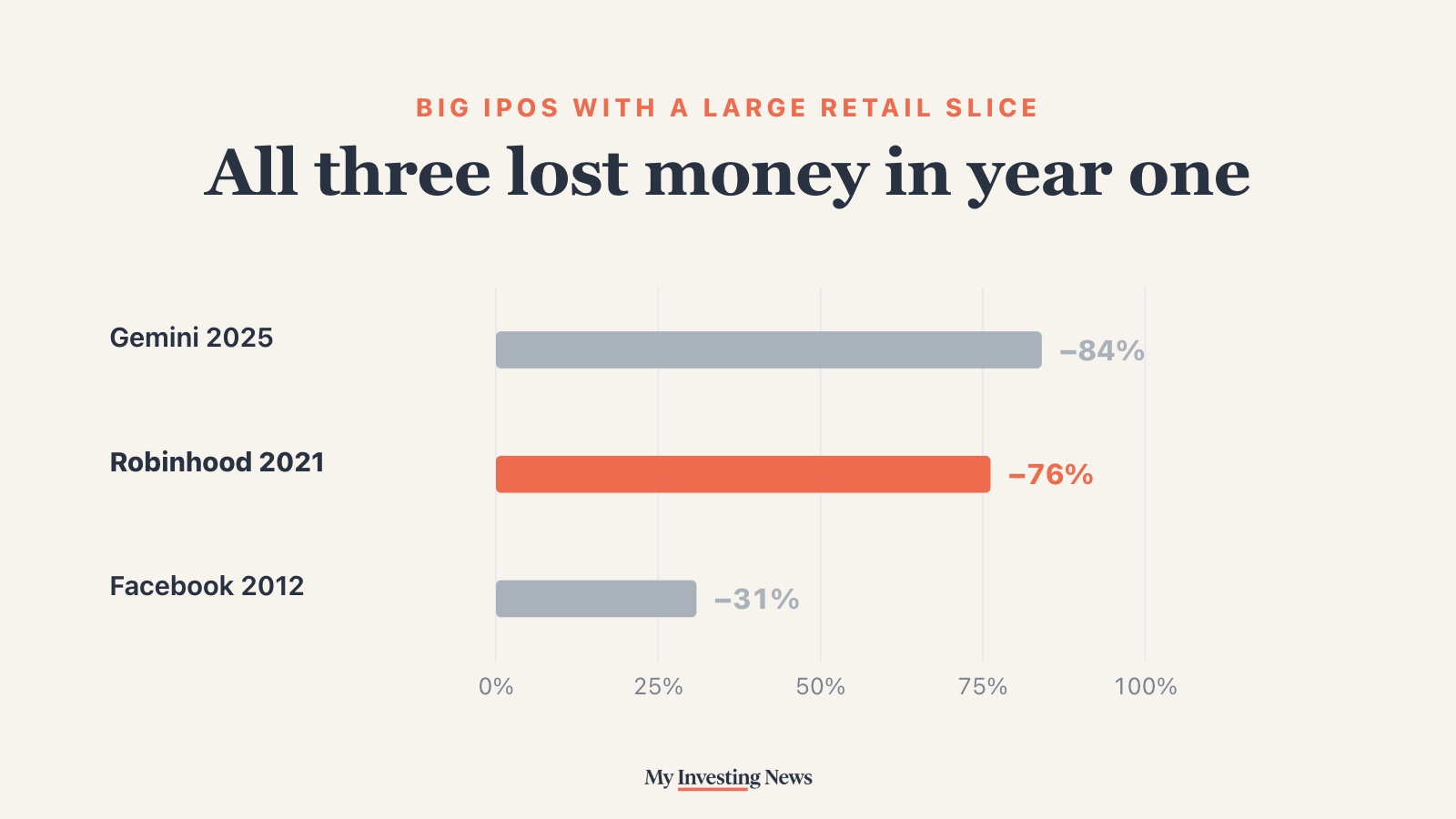
We found three big U.S. IPOs that earmarked a fifth or more of their shares for individual investors, in the prospectus or in reports at the time, and have now traded for a full year. All three ended that year well below the IPO price. Facebook, now MetaMETA, sold shares at $38 in May 2012 and closed at $26.25 a year later, down 30.9%. Robinhood also priced at $38 and stood at $9.05 a year on, down 76.2%. GeminiGEMI, the crypto exchange, said in its September 2025 prospectus that up to 30% of the shares would go to retail investors through Robinhood, SoFi and other platforms. It sold them at $28 and closed at $4.46 on Sept. 11, 2026, down 84.1%.
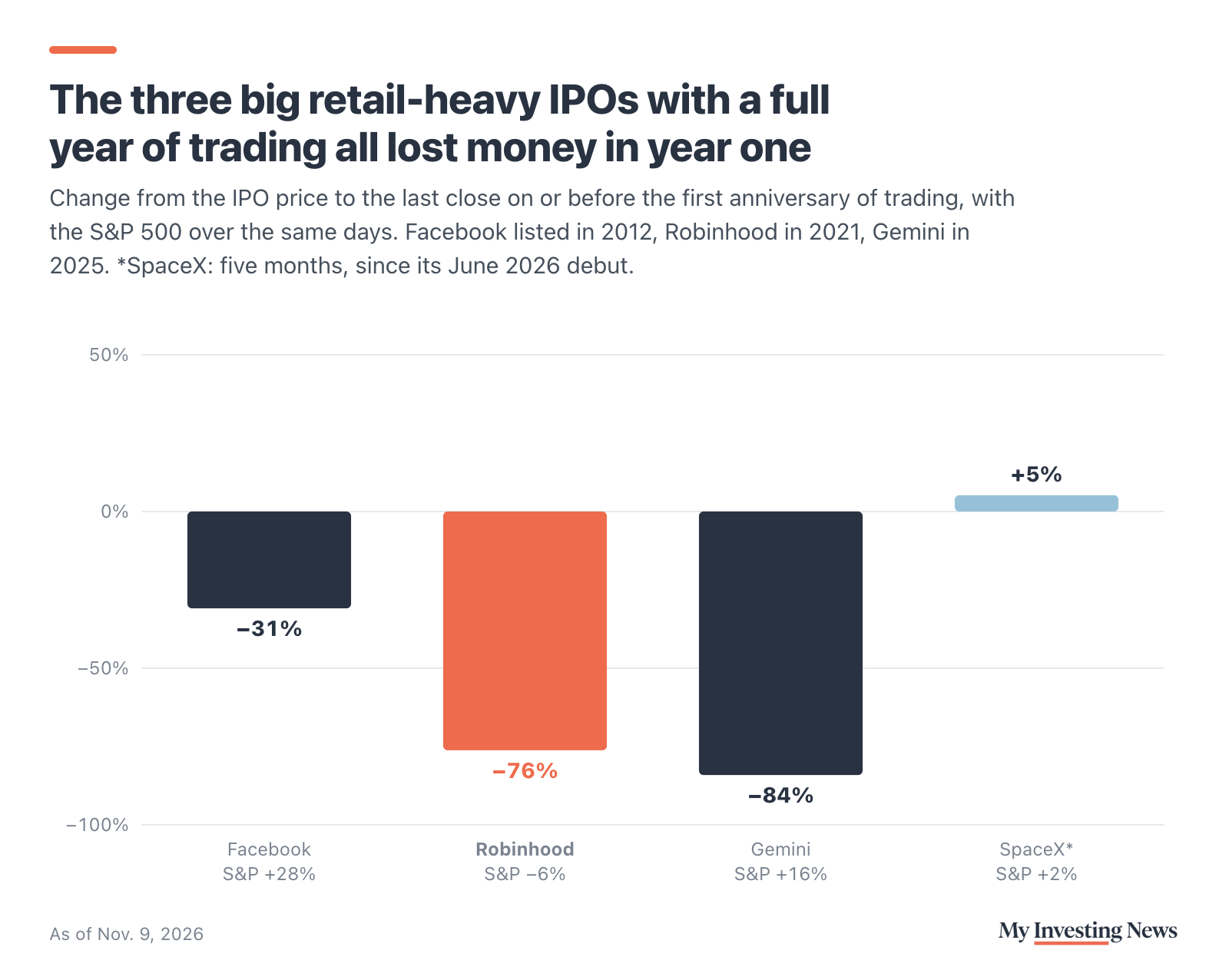
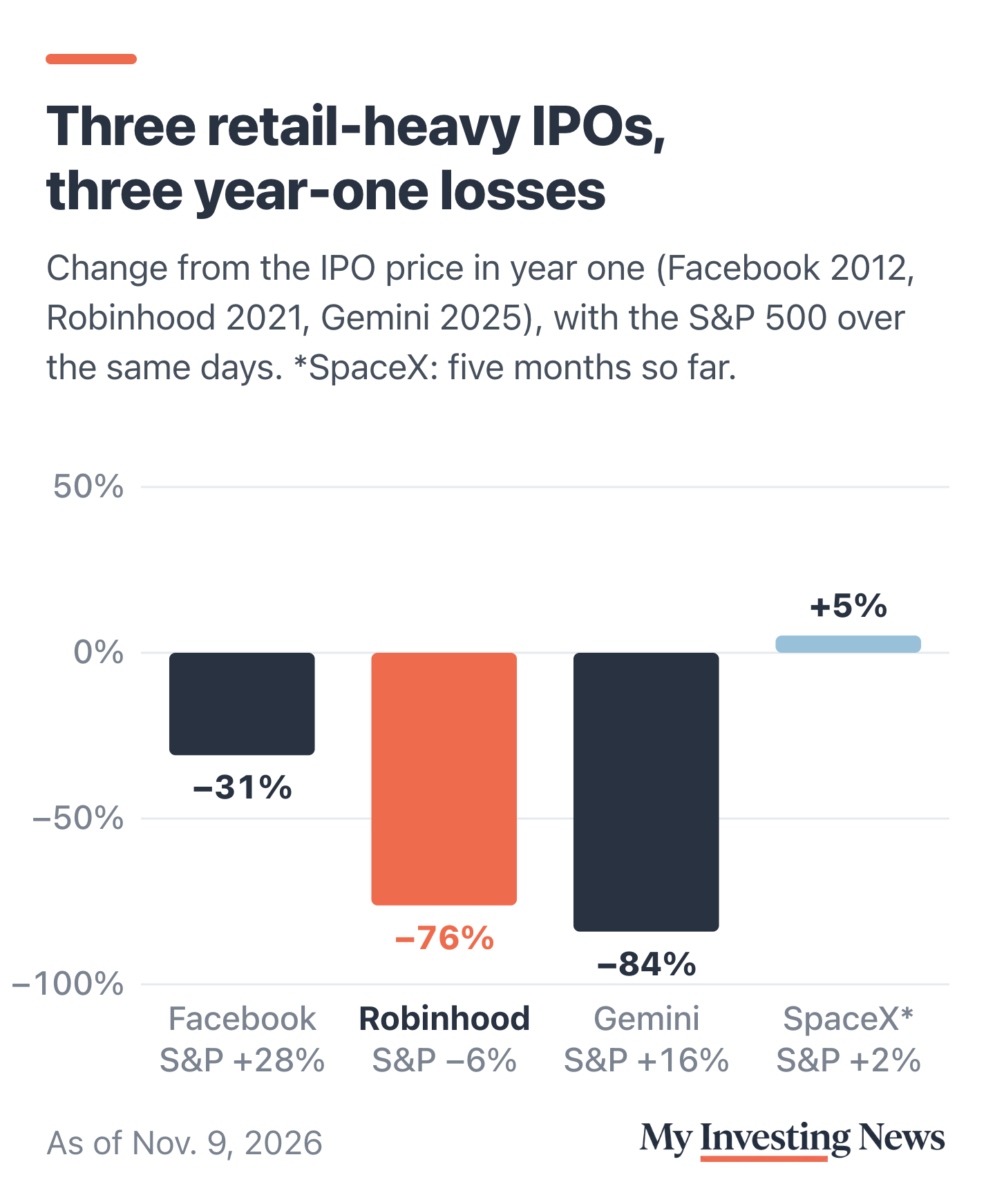
The broader market doesn’t explain it. The S&P 500 rose 27.8% over Facebook’s first year and 16.2% over Gemini’s, and fell only 6.1% over Robinhood’s. Three deals are too few to prove that a big retail slice hurts a stock, and each had its own trouble: Facebook’s debut was marred by a trading glitch at Nasdaq, Robinhood listed in the middle of the 2021 trading boom, and bitcoin fell about a third over Gemini’s first year. Still, Renaissance Capital suggested in November 2025 that heavy retail participation may have weighed on Gemini, since individual investors are usually an important source of buying after a deal prices. Big IPOs in general have a rough first year too: nine of the 10 most valuable U.S. IPOs of the past 20 years were below their offer price a year later.
Robinhood’s own IPO, priced July 2021
The Long Wait Back
Year one isn’t the whole story. Facebook closed back above $38 on Aug. 2, 2013, after 14 months below it, and Meta closed at $641.37 on Nov. 9, 2026, up more than sixteenfold from the IPO price. Robinhood took longer. After a brief run above its IPO price in its first weeks, it fell below $38 in late October 2021 and didn’t close above it again until Dec. 3, 2024, 37 months later. As of the Nov. 9 close it was at $83.32, more than double its IPO price. Verma made the same case on air: “if you treat them well, they become long-term supporters of the equity.”
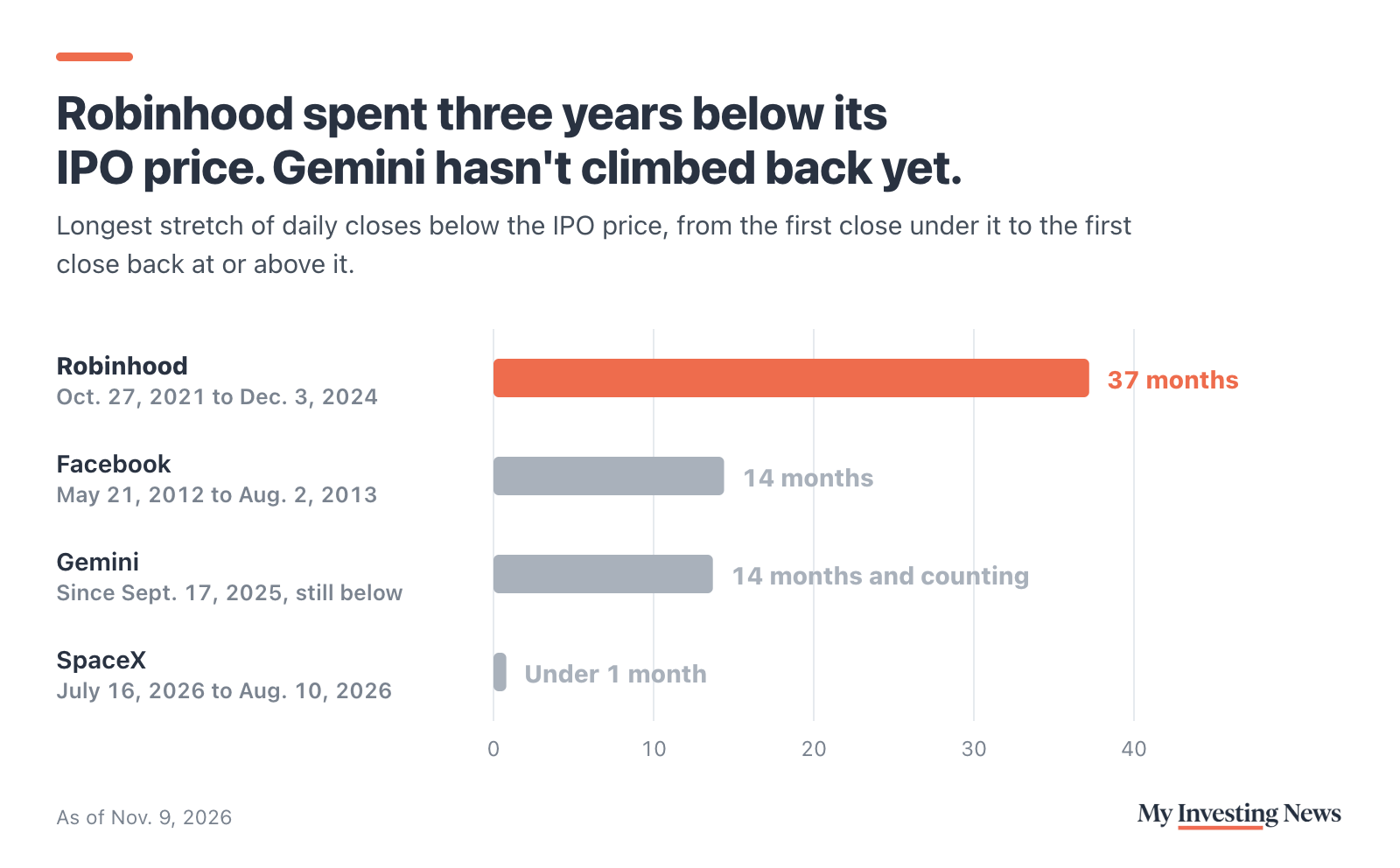
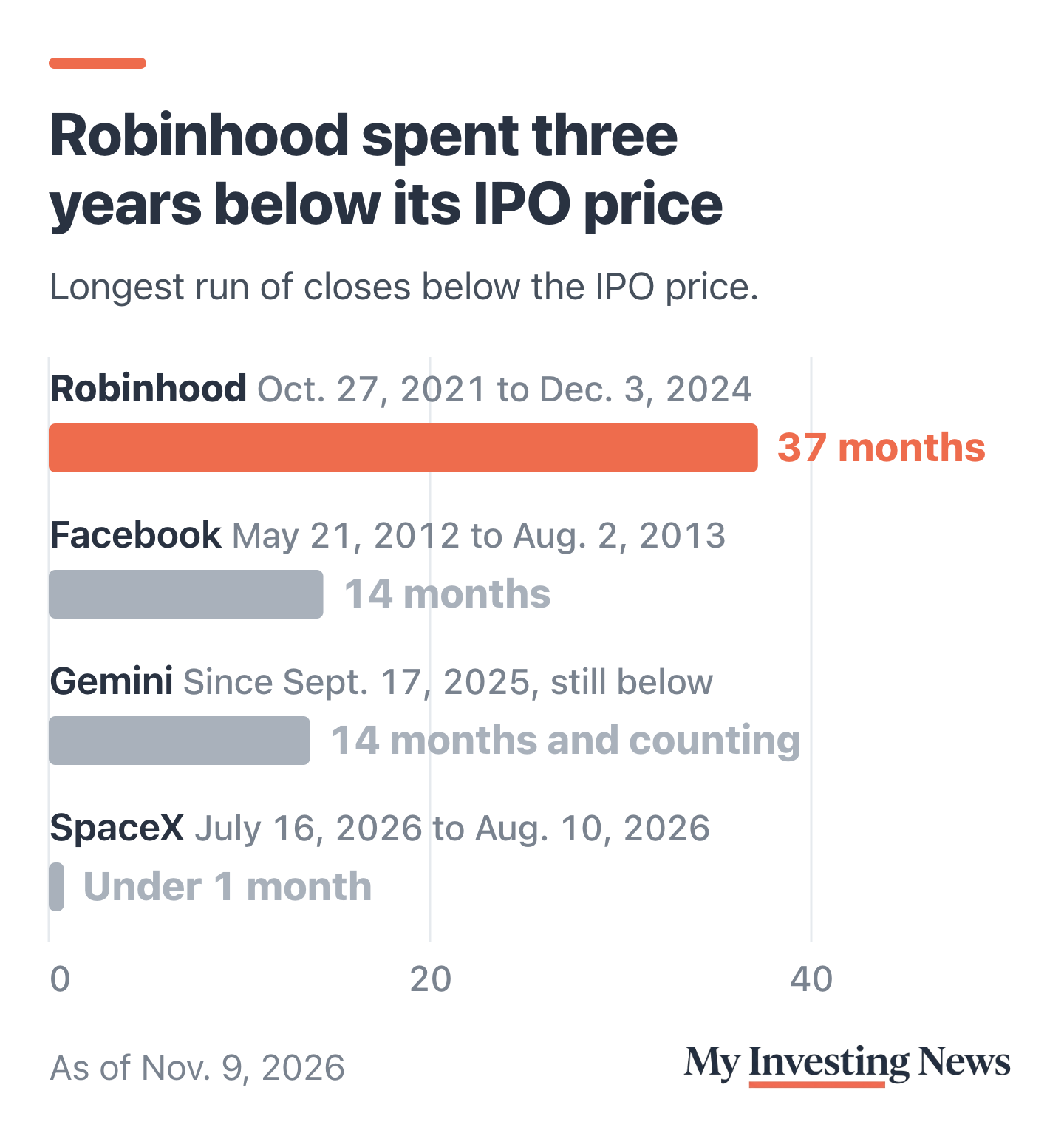
Gemini hasn’t made it back. It has closed below $28 every day since Sept. 17, 2025, hit a record closing low of $2.39 on Nov. 5 and finished Nov. 9 at $2.72, down 90.3% from its IPO price. SpaceXSPCX, the biggest retail push yet, is too new to score. Its June prospectus named Schwab, Fidelity, Robinhood, SoFi and E*Trade as retail sellers without giving a percentage; Verma said the company had talked about 15% to 20%. The stock closed its first day at $160.95, up 19.2% from the $135 IPO price, fell as low as $108.27 on Aug. 5 and closed Nov. 9 at $142.07.
What to Watch
Anthropic’s final prospectus is the next test. Robinhood is one of several brokerages lined up to sell its shares to individual investors, and the size of the retail slice will show whether Verma’s “Can I go to 20?” conversations turn into allocations. Anthropic’s own IPO filing gives buyers plenty to read before then. OpenAI could follow, and some investors are already sizing up that deal: Jason Calacanis has said he’d take a deep look at putting 10% of his net worth into OpenAI at a $1.25 trillion valuation. For Robinhood itself, the IPO push sits alongside faster-growing lines: event contracts, the prediction markets Verma said now run at more than $500 million a year, brought in $173 million in the third quarter. SpaceX reaches its first anniversary on June 12, 2027.
Shiv Verma is right that companies now offer individual investors far more of their IPOs than the 1% to 2% he says was typical five years ago. The three big deals that gave them a fifth or more and have traded a full year all lost 30.9% to 84.1% in year one, even as the S&P 500 mostly rose. Facebook and Robinhood buyers who held on came out ahead, but only after waits of 14 and 37 months.