Where we heard itCNBC, Squawk on the Street, “Apollo’s Torsten Slok: We have a shortage of capital, but an abundance of good ideas to invest in.” Aired Oct. 23, 2026. Speaker: Torsten Slok, chief economist at Apollo. Watch at CNBC
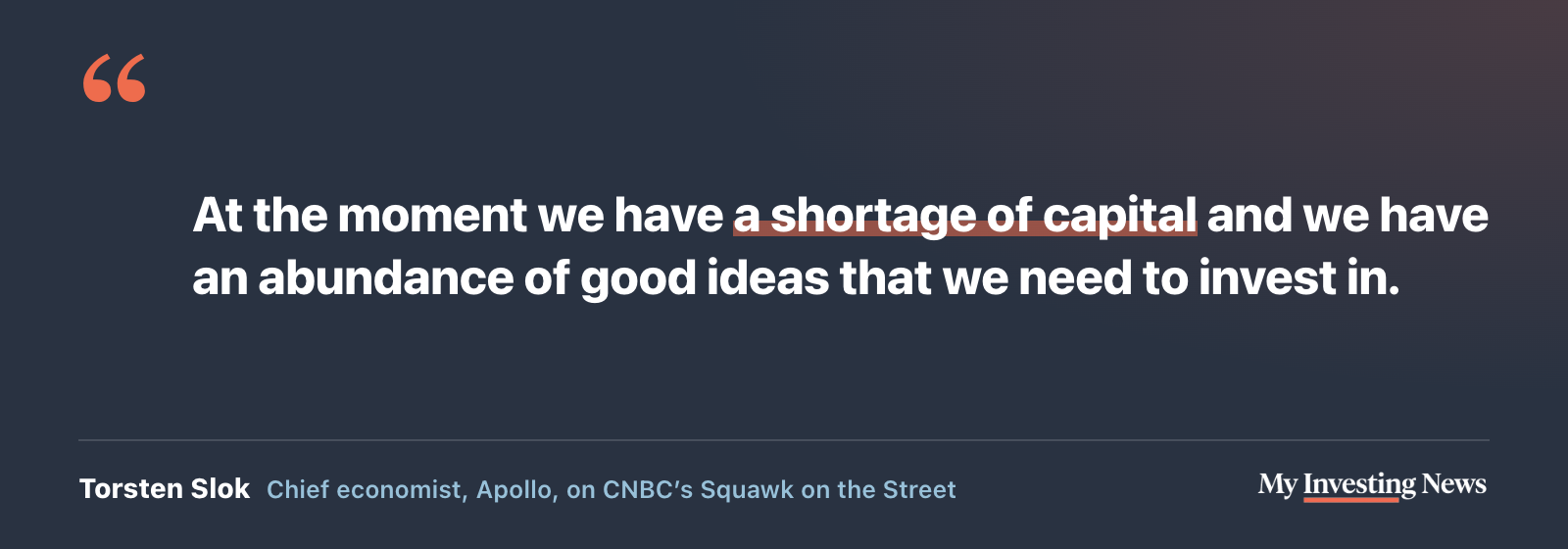
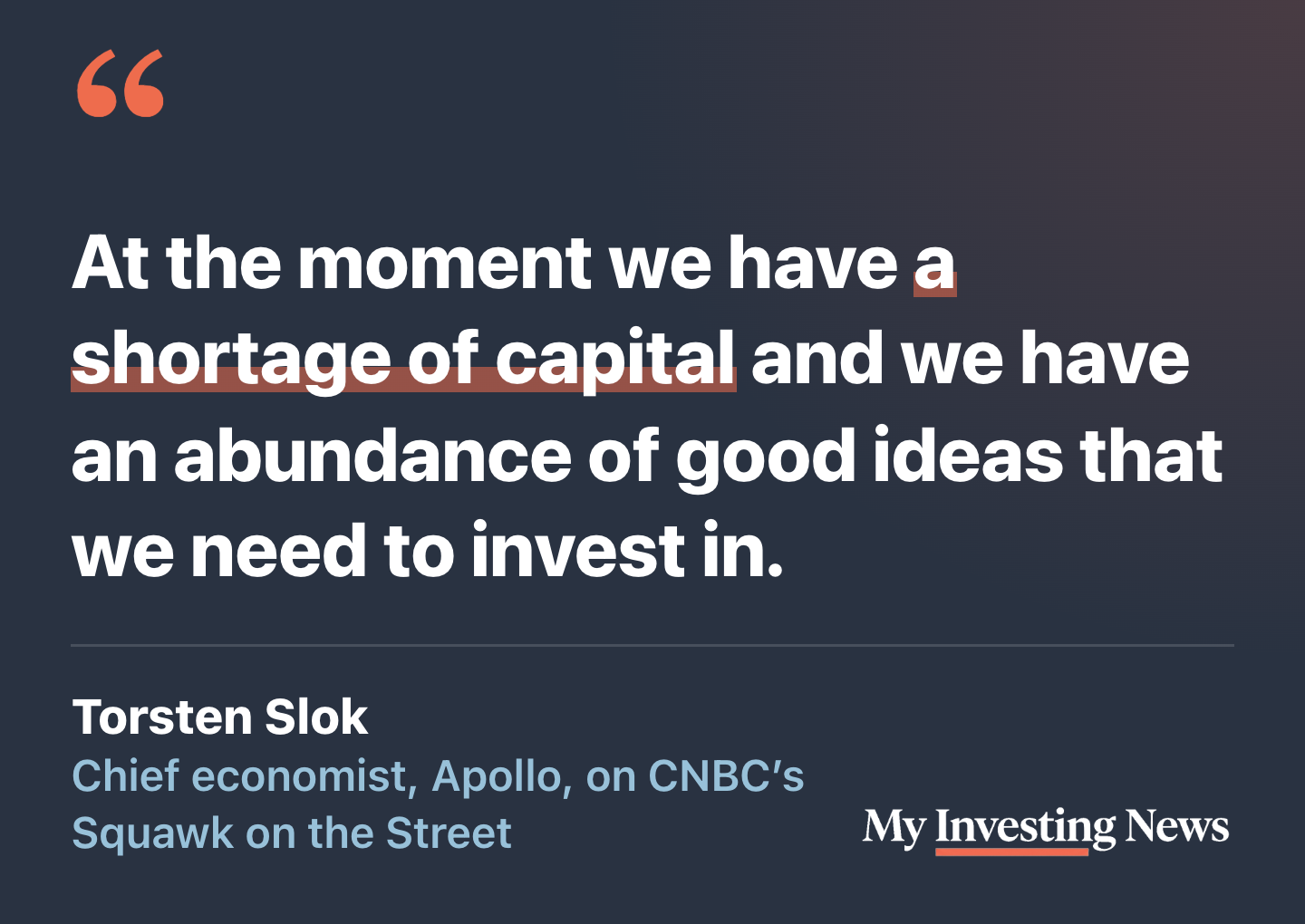
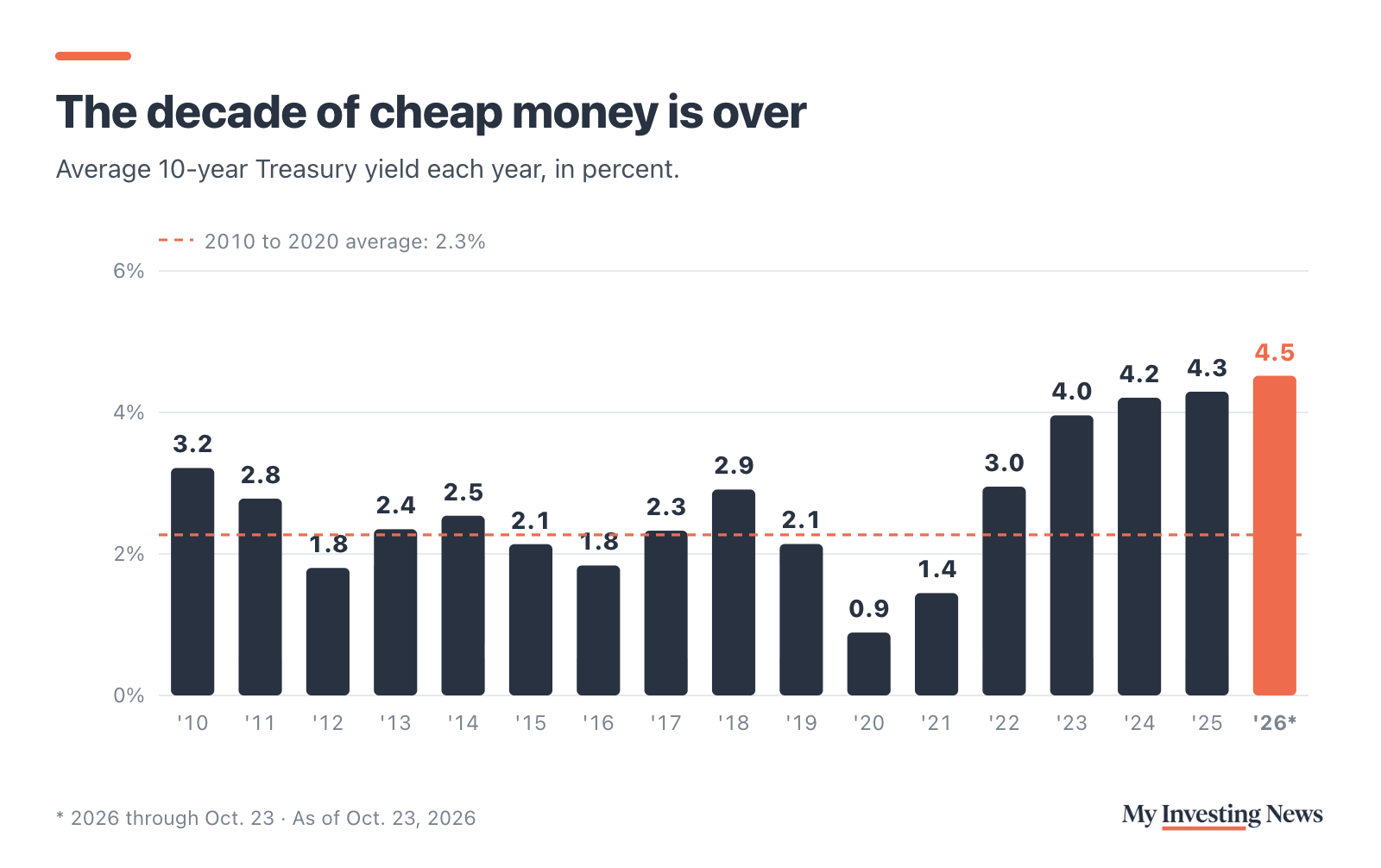
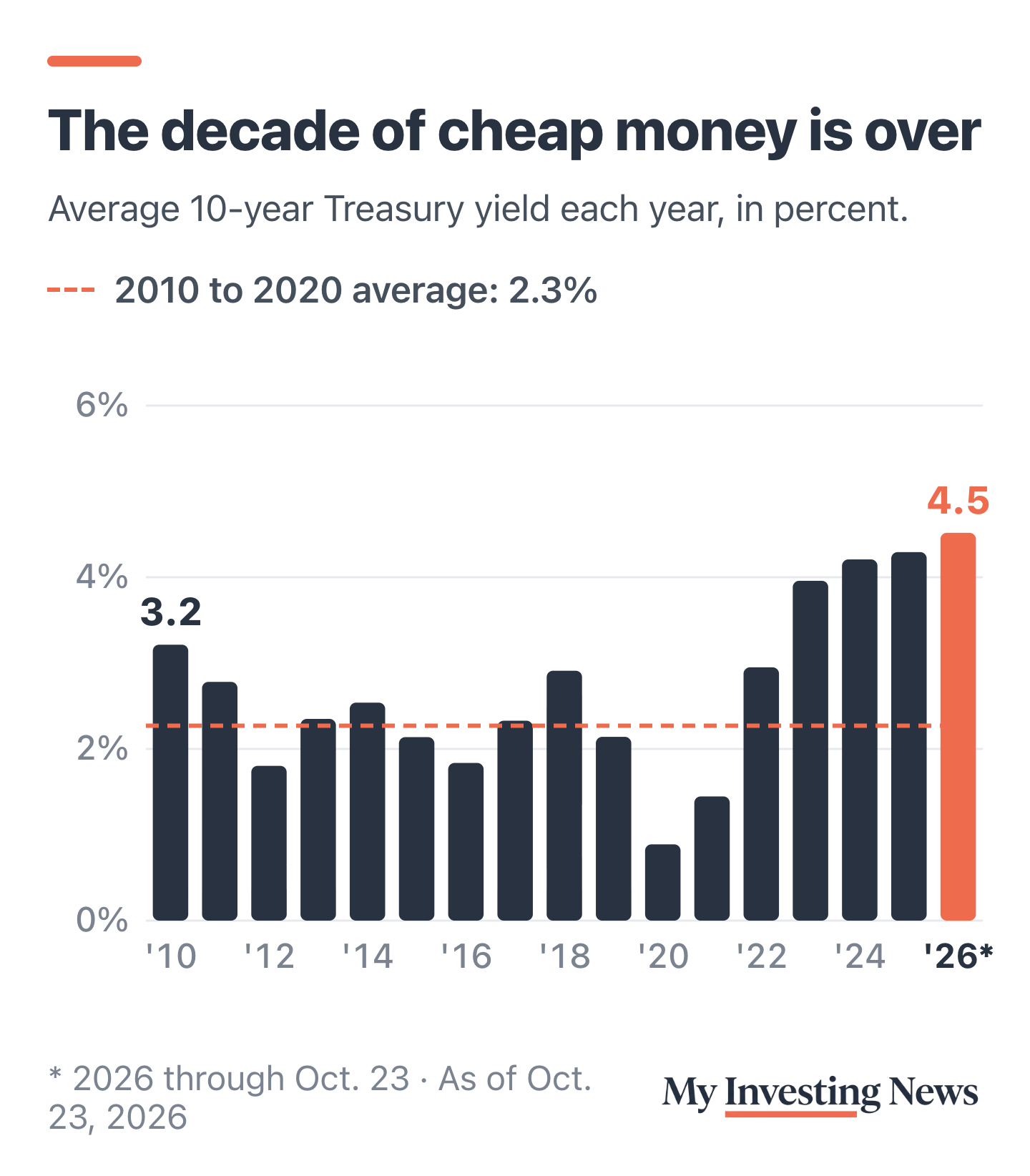
A leading Wall Street chief economist says the cheap money that powered the last decade is gone. Speaking on CNBC’s Squawk on the Street on October 23, 2026, Torsten Slok of Apollo Global ManagementAPO said: “At the moment we have a shortage of capital and we have an abundance of good ideas that we need to invest in, which is the complete opposite of where we were from 2010 to 2020, where we had a savings glut. Now we have a savings shortage.”
A savings glut means the world has more savings looking for a home than it has projects to fund. Lenders compete to put that cash to work and borrowing costs fall, which helped keep rates near historic lows in the 2010s. Slok says the balance has flipped.
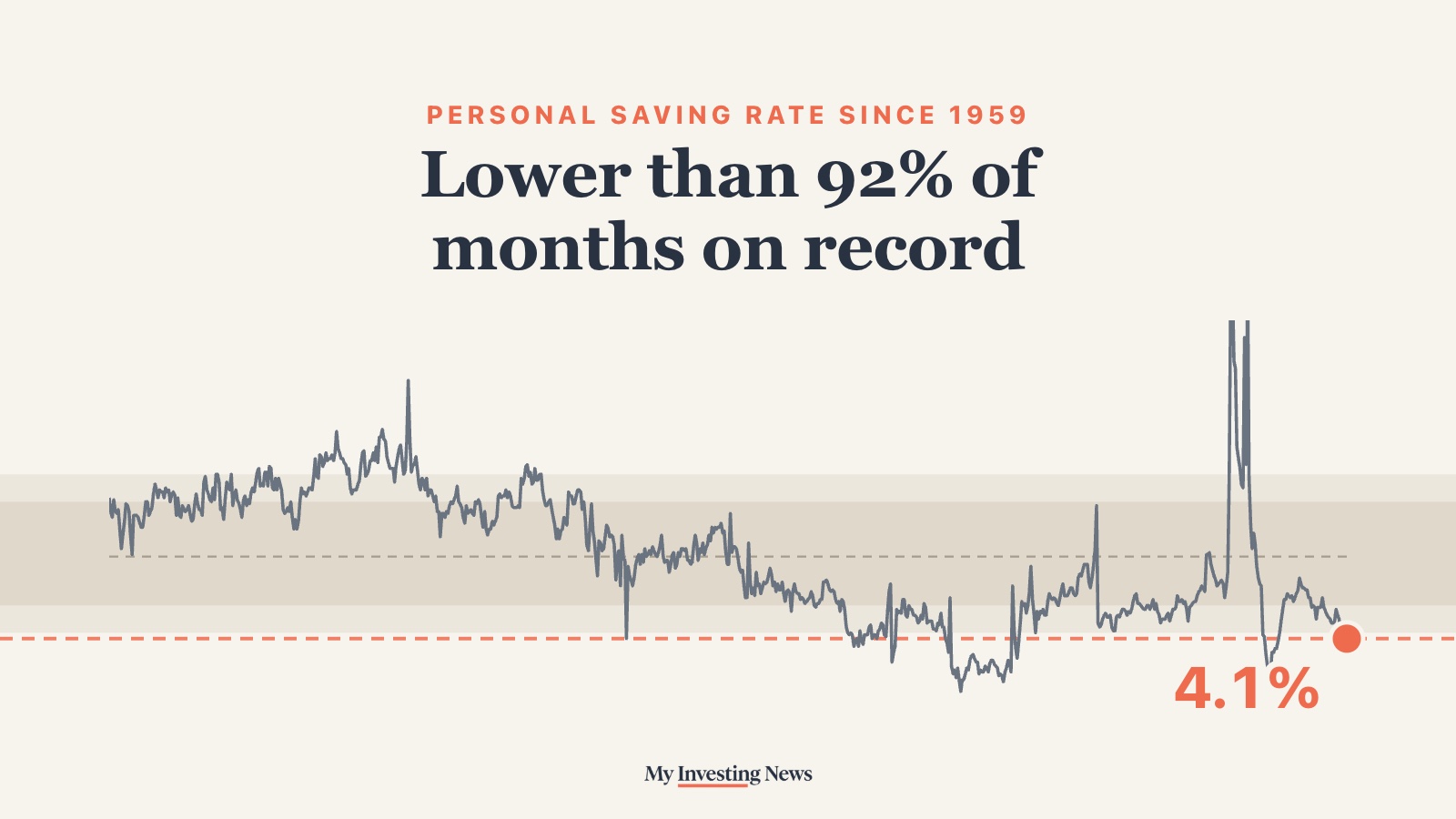
U.S. household data points the same way. The personal savings rate fell to 4.4% in the second quarter of 2026, down from 6.9% in the first quarter of 2024, according to Bureau of Economic Analysis figures. A FINRA survey found a record 26% of adults spending more than they earn.
Americans are saving less of their income than in 92% of months since 1959
The personal saving rate, as a share of after-tax income, every month since January 1959. The shaded bands hold the middle half and the middle 80% of all 812 readings.
Deficits and Data Centers Are Chasing the Same Dollars
Slok listed the projects that need massive long-duration funding: data centers, infrastructure, the energy transition and renewable energy. Government deficits draw on the same pool of capital. With so many borrowers competing, investors demand more yield for long-duration and riskier assets, and that pushes interest rates and credit spreads higher.
A credit spread is the extra yield a company pays over a comparable Treasury bond. It is the market’s price for default risk. Wider spreads make a data center or power plant more expensive to finance. Earlier this month, CoreWeave’s unsecured bonds fell far enough to yield around 15%.
The 10-year Treasury yield stood at 5% on October 23, with the 20-year at 5.37% and the 30-year at 5.33%. The 10-year has eased from 5.24% on October 9, but long-term borrowing remains expensive. Ed Yardeni reads the jump in yields as a sign of a strong economy.
Treasury yields on Oct. 23
Build Times Stretch as Bottlenecks Bite
Capital is one constraint. Time is another. “In some cases, you have to wait up to 20 months before you can build your data center. So even just building data centers is going to take time, which will have negative consequences for the equity holders in data centers,” Slok said.
The segment pointed to shortages of transformers, which step electricity down to usable voltages, and curtainwall, the glass and metal exterior walls of large buildings. Each month of delay ties up capital that earns nothing while financing costs keep accruing.
Others, including HSBCHSBC, see similar strain. This week, Business Insider reported that most AI data centers may never be built, and HSBC’s CEO warned on CNBC that the AI boom won’t make every data center a sound investment.
Who Pays for the Compute Is the Real Question
Compute is the processing power, mostly from AI chips in data centers, that trains and runs AI models. Slok said demand volume is only part of the equation: “It’s not only about the Q, meaning the volume of demand for compute, it’s also the price for that compute.”
In his view, the key question is how willing companies outside the Magnificent Seven, meaning the rest of the S&P 500, are to pay for that computing power. “And the risks are rising that they will not be able to pay as much,” he said.
The segment also identified early signs of weakening in token spending data. Tokens are the small chunks of text that AI models process. Providers bill by the token, so spending on tokens shows directly what customers pay to use AI.
What Investors Should Track Now
Higher rates and wider spreads weigh on long-duration assets, where most of the return comes years from now. Data centers, grid infrastructure and renewable projects all fit that profile.
Demand for AI capacity and the price customers pay are separate variables. Returns depend on whether customers beyond the largest tech platforms pay enough to cover rising build and financing costs. The suppliers feeding that expansion, power, cooling, networking and the rest, are a separate trade from the chipmakers. Signals worth tracking include long-term Treasury yields, corporate credit spreads, data center construction timelines and AI pricing disclosures from cloud and software companies.
A Real Buildout With a Higher Price Tag
Slok sees the AI expansion as real, with a growing list of projects worth funding. Money is no longer free and construction is taking longer, so in his view the return depends on who pays for the compute and how much they pay.
Slok says the savings glut that kept money cheap from 2010 to 2020 has turned into a savings shortage, with data centers, infrastructure, energy projects and government deficits all chasing the same capital. He sees the AI buildout as real. The risk he flags is that higher financing costs and longer build times collide with customers outside the biggest tech companies who may not be able to pay as much for compute.