Where we heard it“Bitcoin Beats Stocks for the Next 5 Years?,” The Pomp Podcast, Nov. 7, 2026, with Jordi Visser, a macro investor and author of the VisserLabs Substack, talking with host Anthony Pompliano.
Jordi Visser thinks most big companies are done growing. On The Pomp Podcast, in an episode released Nov. 7 that also covered the midterm results and the market sell-off, the macro investor repeated a line he credited to Marc Andreessen: of the stocks in the S&P 500, “492 are bonds, eight of them are call options.” In Visser’s view, artificial intelligence leaves most companies without a moat, so their shares should pay something like a bond and not much more.
Asked what kind of return those “bonds” would earn, he pointed overseas.
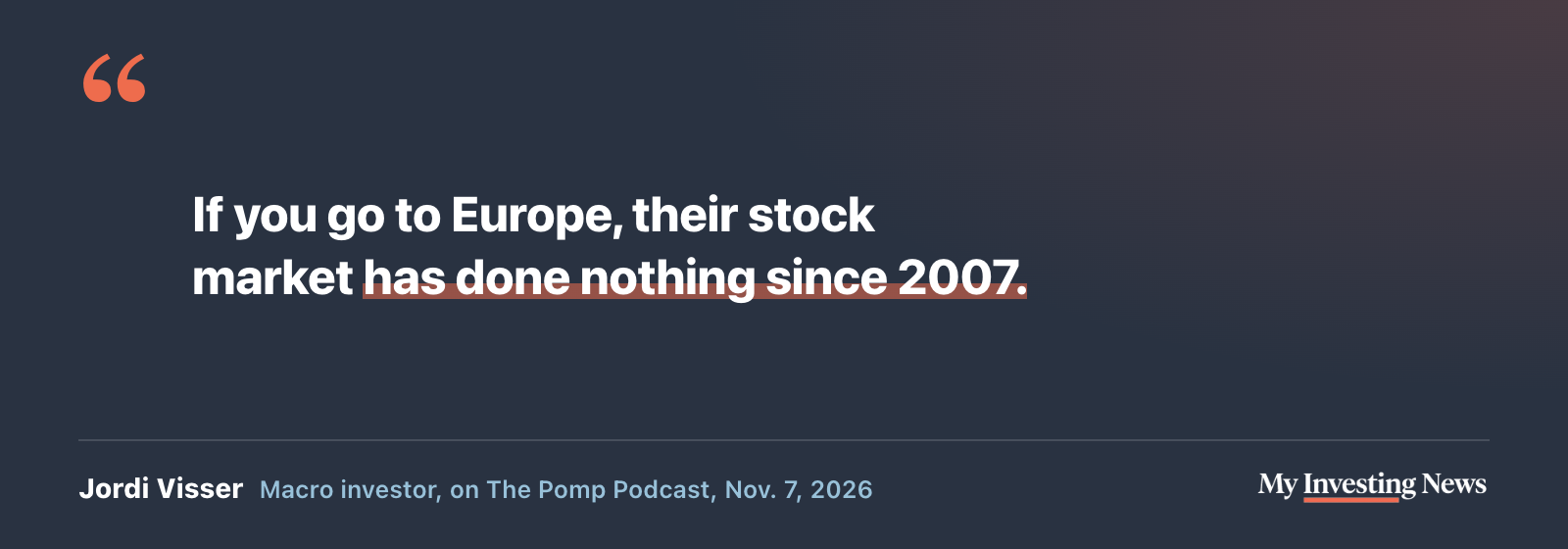
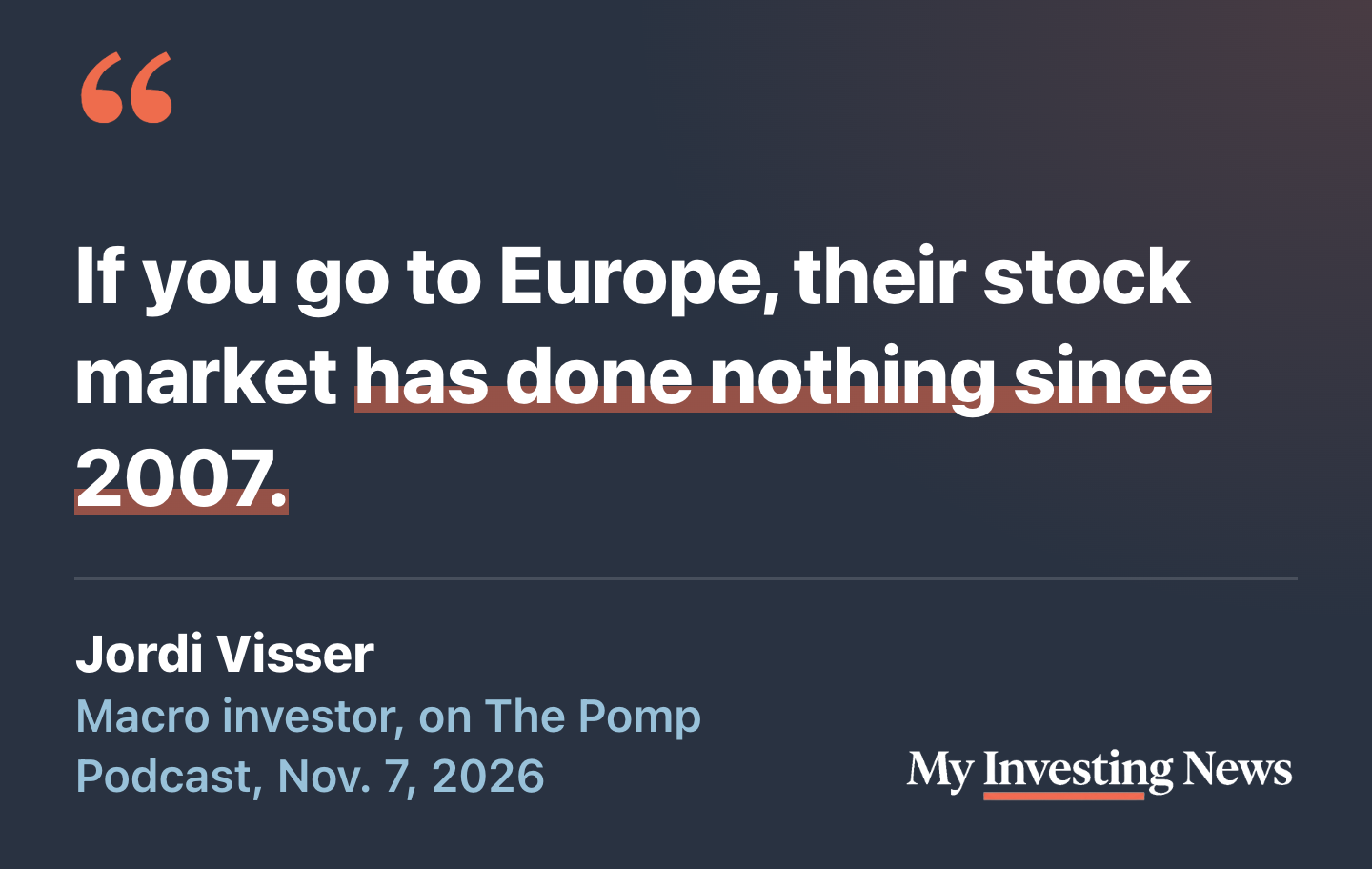
“You go to emerging markets, it’s done nothing,” he went on. “You go through most of the world, it goes through, I mean, a 20-year period where you get less than inflation.”
That is a claim with a long record behind it, so we checked it three ways: on price, with dividends, and after inflation.
On Price, He Is Close to Right
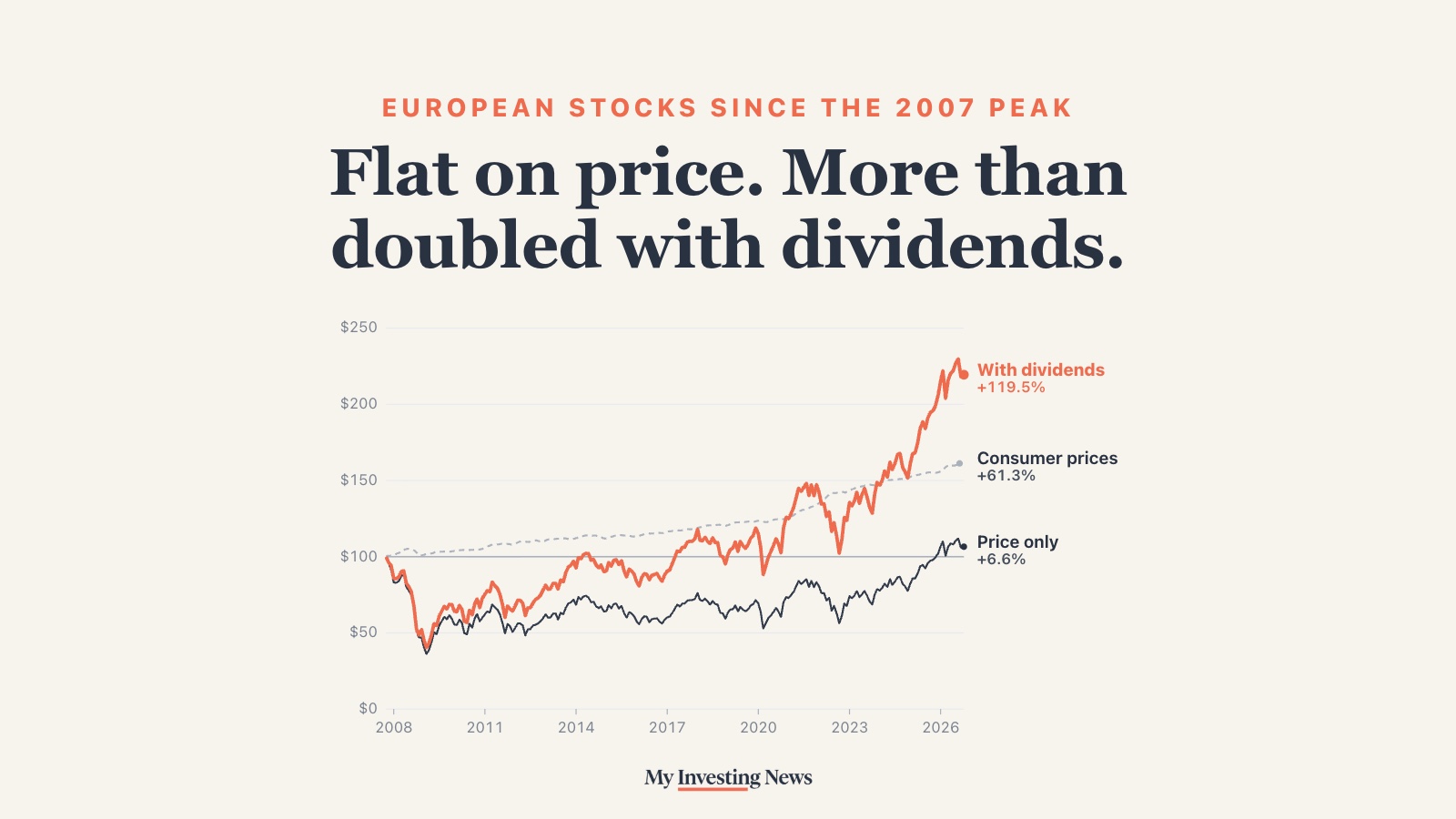
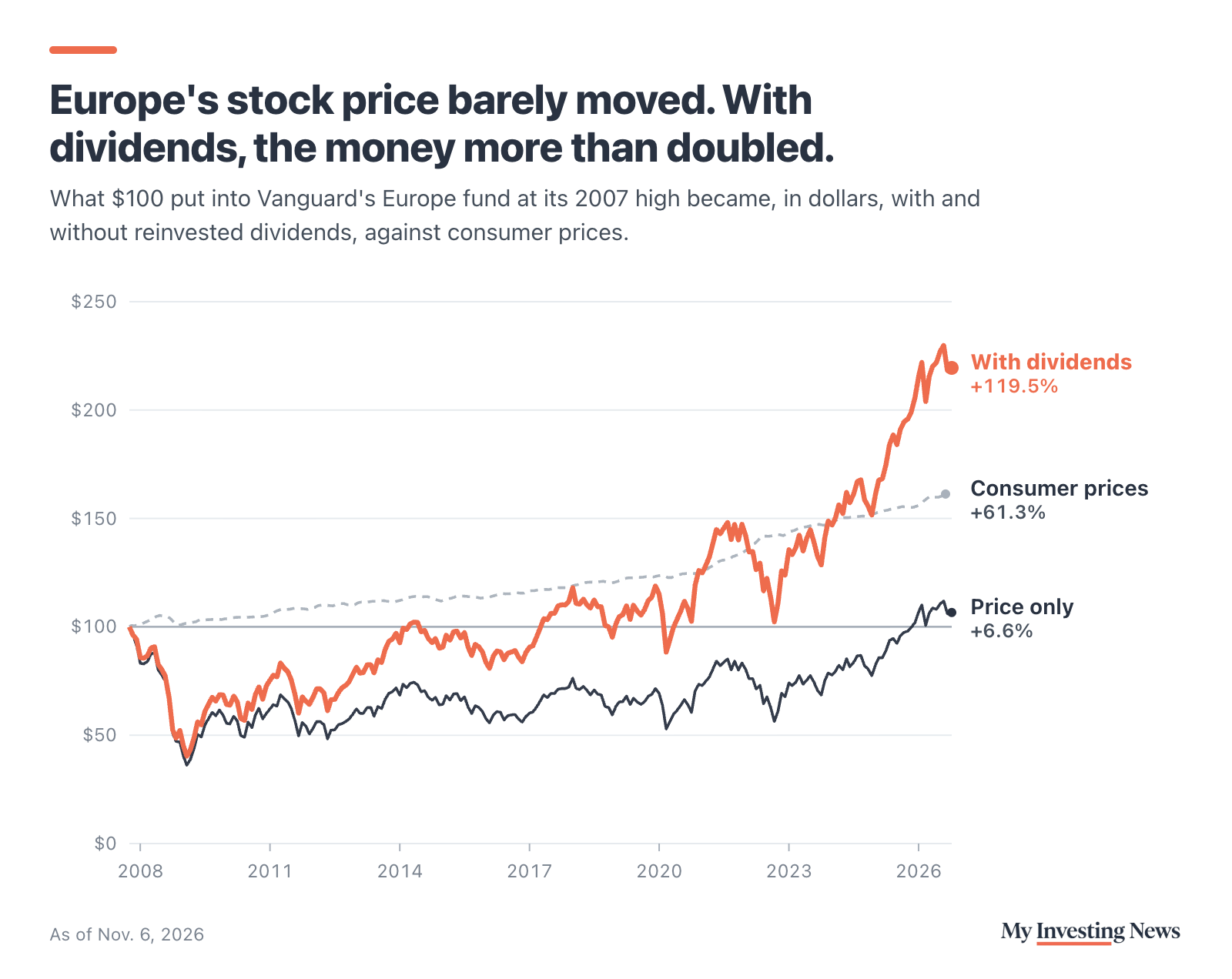
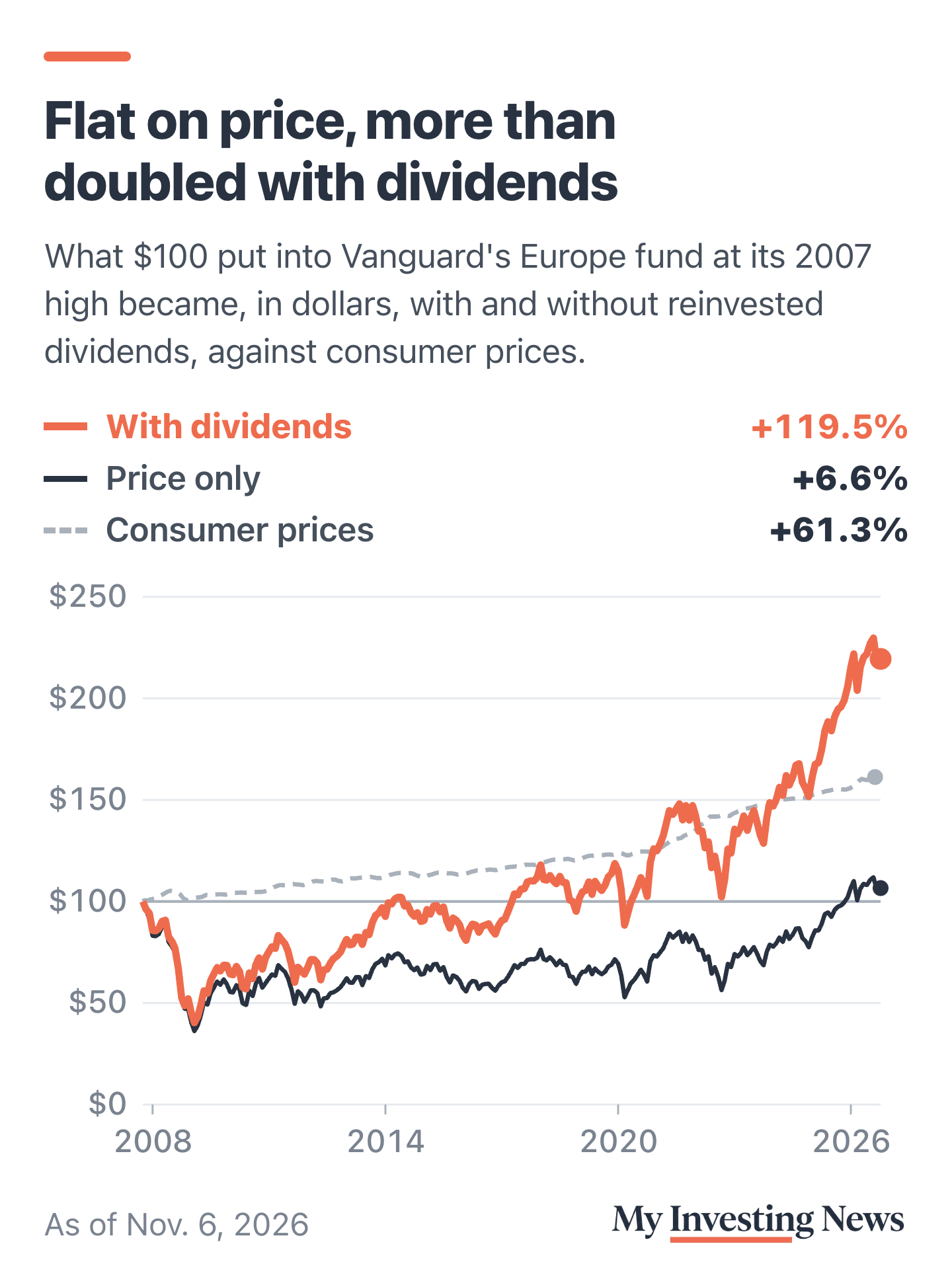
We used the Vanguard FTSE Europe ETF (VGK), which tracks stocks across developed Europe, including Britain and Switzerland, and trades in dollars. Its highest close of 2007 came on Oct. 31, at $81.91. That is the most generous start for Visser’s point, since it is the top just before the financial crisis. As of the Nov. 6, 2026 close, the fund was at $87.31, up 6.6% in 19 years.
Getting there took a long time. The fund fell 67% to $26.76 by March 9, 2009, and it didn’t close above its 2007 high again until Nov. 12, 2025, 18 years later. It set a record close of $93.19 on Aug. 25, 2026, and the Nov. 6 close was 6.3% below that. Emerging markets look almost the same on price: the iShares MSCI Emerging Markets ETF (EEM) was up 6.5% from its own Oct. 31, 2007 close.
The start date matters. Measured from the first trading day of 2007, the Europe fund’s price was up 27.5%.
With Dividends, the Money More Than Doubled
Price is only part of what a stock pays. With dividends reinvested, the Europe fund returned 119.5% from the 2007 high through Nov. 6, about 4.2% a year. $100 became about $220. Reinvested dividends added about 3.9 percentage points a year to the fund’s return, nearly twice the 2.0 points they added for the S&P 500. Dividends account for nearly all of Europe’s gain.
Emerging markets did worse even with dividends: 59.0% in total, about 2.5% a year. The iShares MSCI EAFE ETF (EFA), which adds Japan and Australia to developed Europe, returned 111.7%. None of them came close to the S&P 500. The SPDR S&P 500 ETF (SPY) returned 572.7% over the same stretch, about 10.5% a year.
Oct. 31, 2007 to the Nov. 6, 2026 close, in dollars
After Inflation, His 20-Year Point Fits Emerging Markets
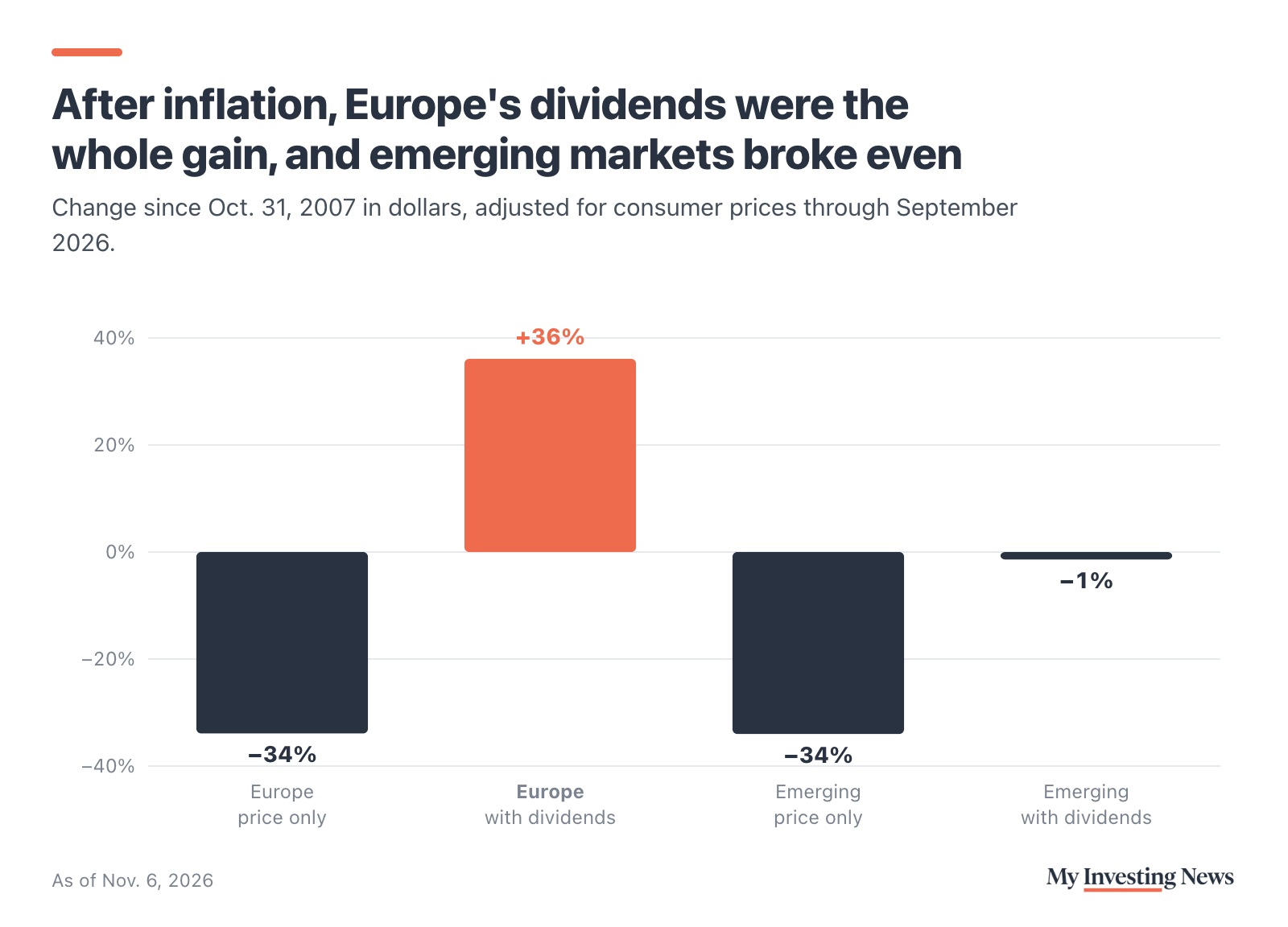
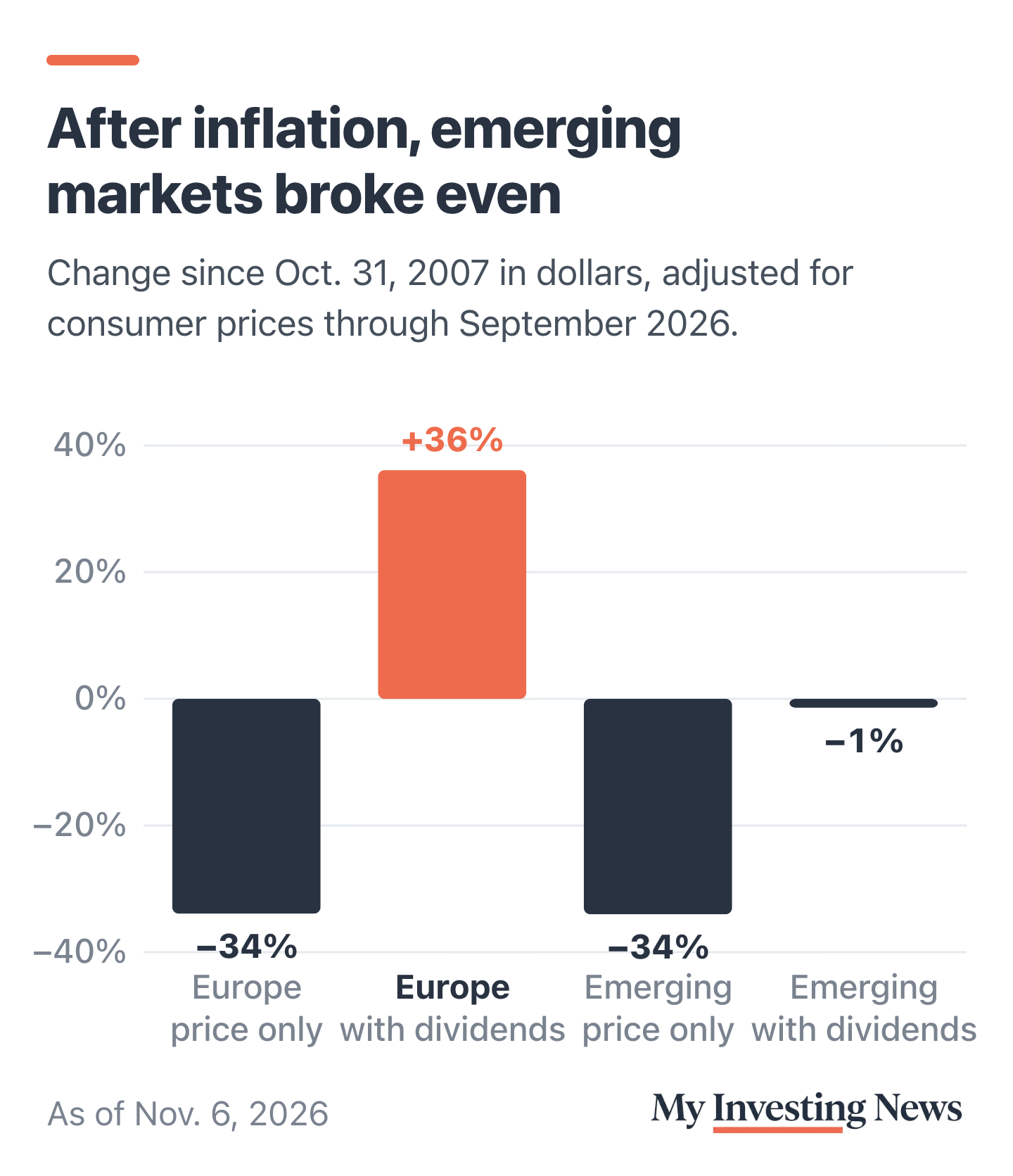
Visser’s second claim was about inflation. U.S. consumer prices rose 61.3% from October 2007 to September 2026, the latest reading published before this story, or about 2.6% a year. Against that, the Europe fund’s total return was a real gain of about 36%: modest for 19 years, but well above inflation. On price alone, it lost about 34% of its buying power.
Emerging markets are where he is right. With dividends, the fund’s 59.0% return trailed the 61.3% rise in prices, a real loss of about 1%. After nearly two decades, an emerging-markets investor had roughly the buying power they started with. Single markets can stall for years too: Indian stocks went nowhere for five years, as we reported in October.
Part of Europe’s weak showing comes from the currency. The euro was worth $1.4472 on Oct. 31, 2007 and $1.1228 on Nov. 6, 2026, a 22.4% drop. In euros, the Stoxx Europe 600 index was up 66.9% on price alone over the same dates. Measured at home, Europe’s market looks a good deal less stuck than it does in dollars.
What to Watch
Visser’s larger argument is about the next decade. He expects AI to squeeze the growth out of most public companies, the way Europe’s market went sideways on price. He has made big calls about whole industries before. In October he warned that banks could follow software stocks lower. Others see Europe turning the corner: Peter Tchir of Academy Securities said on CNBC on Oct. 26 that “you’re going to see Europe explode in a good way.”
Three things will test the claim from here. The Europe fund got back above its 2007 high of $81.91 only a year ago, so a close below it would put the price back where it started. The euro’s path against the dollar decides how much of Europe’s local-currency gain reaches U.S. investors. And dividends, which did nearly all of the work since 2007, depend on European companies keeping their payouts up.
On price, Visser is close: Europe’s market is up only 6.6% in dollars from its 2007 high. Counting dividends, it more than doubled and beat inflation, while emerging markets with dividends trailed prices slightly, as he said. The risk in his reading is the start date and the dollar: a different starting point or a stronger euro changes the answer.