
Where we heard itCatching Up to FI podcast, episode 243, “How to Make Financial Mistakes and Still FIRE!”, released Oct. 18, 2026. Speaker: Bill Yount, emergency physician and co-host, with guest Doug Cunnington of the Mile High FI Podcast.
Doctors earn more than almost anyone, yet physician Bill Yount argues that the path into medicine sets many of them up to fall behind. He explains why in a section of the Catching Up to FI podcast episode “How to Make Financial Mistakes and Still FIRE!”, which features Doug Cunnington of the Mile High FI Podcast. His point is that a big paycheck can lock a doctor in.
First, two terms. FI stands for financial independence, which means having enough invested that work becomes optional. FIRE stands for financial independence, retire early. Yount’s conclusion is that the size of a doctor’s income matters less than the order in which that income gets spent and saved. He is right, and the lesson reaches well beyond hospitals.
From Poor Student to Pent-Up Spender
Yount spent years living as a “poor student.” He says he earned $25,000 a year during his residency in Chicago in the 1990s. He ran up “$30,000 of credit card debt” during those student years and came out of residency with a lot of pent-up demand to spend.
That mix is dangerous. When income jumps sharply, lifestyle inflation follows almost right away. Lifestyle inflation means spending climbs to match each new level of pay. The bigger house, the newer car and the restaurant habit show up before any savings plan does.
Why New Doctors Start Out Deep in the Hole
Yount described the typical starting point frankly: “big money, big debt, late start, you’re in a hole, $750,000, $1 million as a new physician between student loan debt and mortgage debt and consumer debt.”
That debt is the hidden cost behind the high-income label. Lenders have already taken the first years of a new physician’s salary. According to Yount, doctors who don’t manage that first big paycheck well end up on a 30-year financial path instead of a 20-year one.
Compound growth explains why the early years matter so much. Money invested at the start of a career has the longest time to grow. Every dollar spent on interest or lifestyle upgrades in those years misses that growth for good.
Spending Order Is the Real Culprit
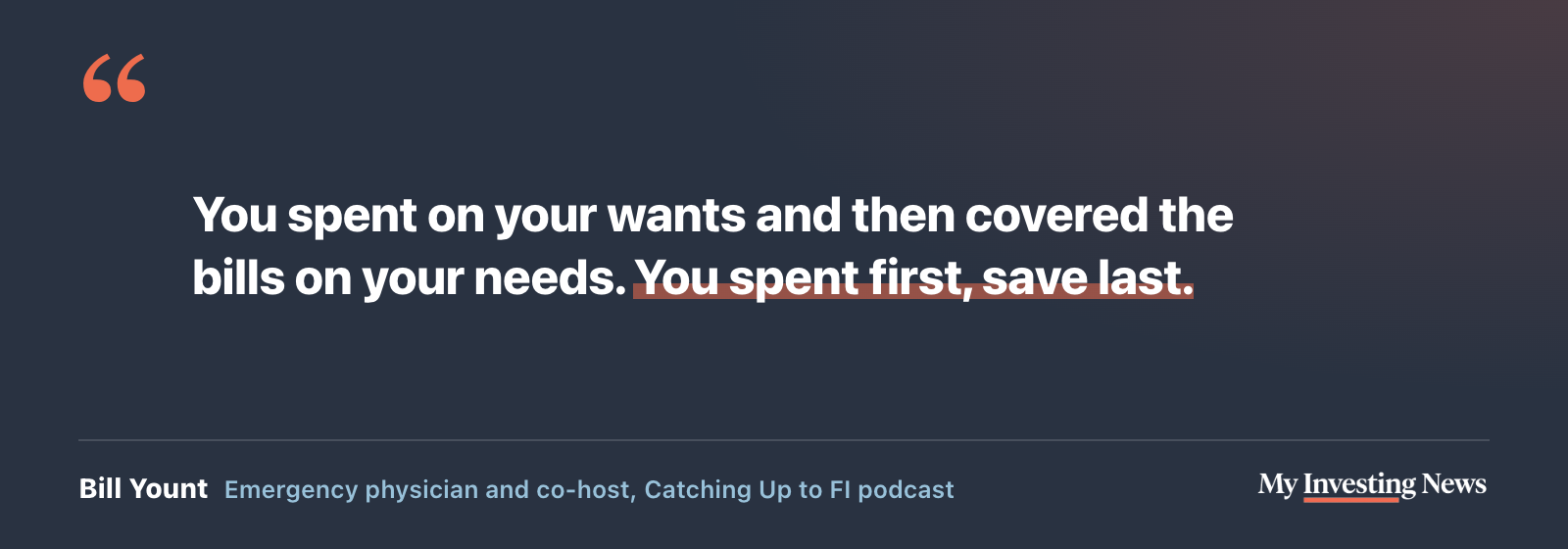
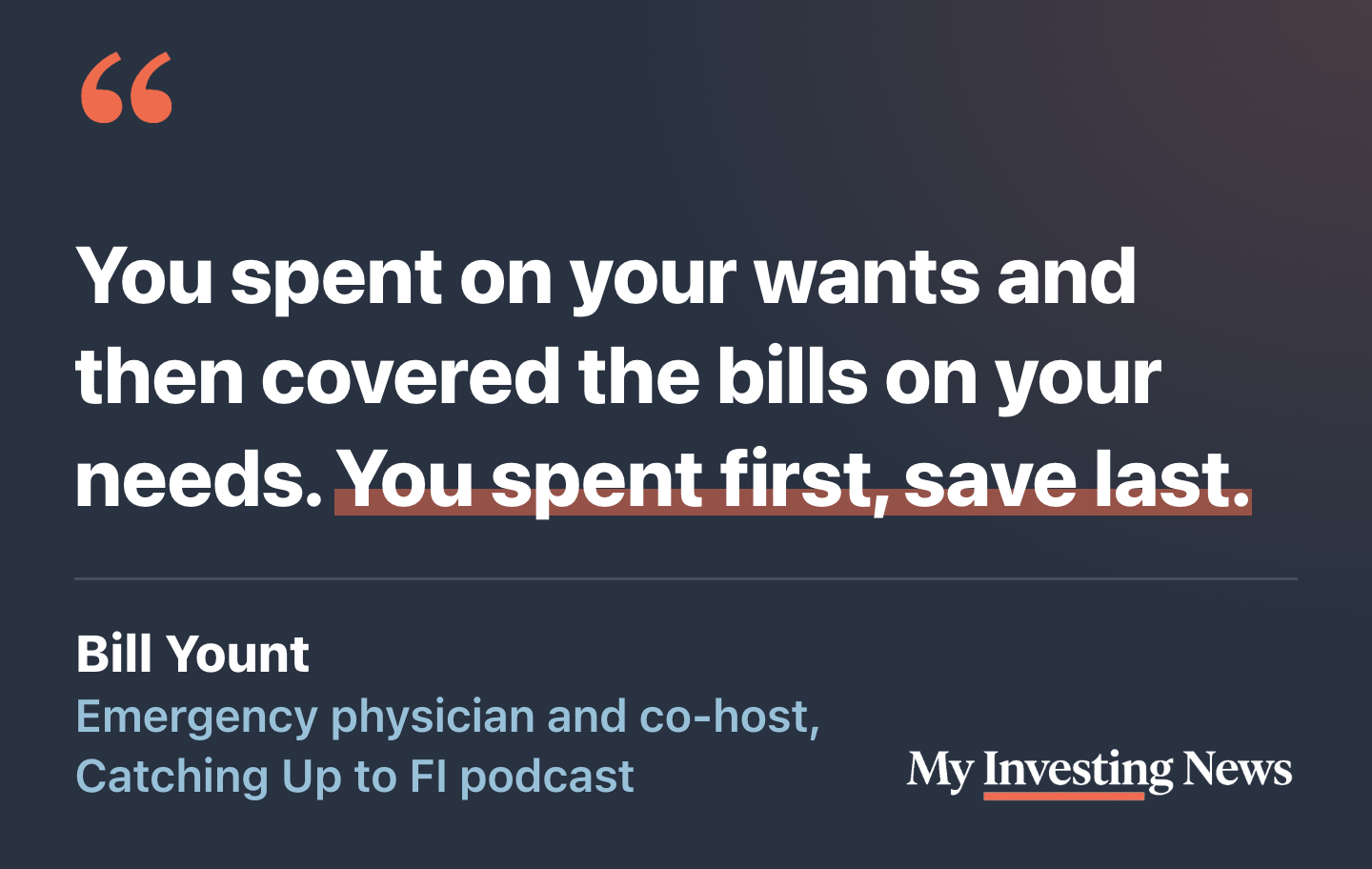
Yount’s diagnosis is about sequence. He described the default pattern this way: “you spent on your wants and then covered the bills on your needs. You spent first, save last.”
In that setup, savings are whatever is left at the end of the month. For most families, high earners included, that leftover shrinks toward zero because spending grows to use up the cash available.
Flip the Script on Day One
His fix is to “pay yourself first.” In plain terms, savings come out of each paycheck first, and spending works with what’s left. Automatic transfers on payday into retirement and brokerage accounts make the habit run on its own.
Yount also tells doctors to “figure out a lifetime savings rate that gets you to financial freedom” within 20 years. The timing matters because, in his words, that is when “mastery is tapering and burnout hits.” At that point, having the option to work less becomes critical.
What new doctors start with
The most important step is dividing up the very first large paycheck. If you set the savings split before lifestyle inflation starts, the higher spending level never takes hold. If you wait a year, cutting back will feel like taking a pay cut.
Treat Money as an Engine Instead of a Scoreboard
Yount describes the FI community’s counterculture mindset with one line: “money is power, it’s potential energy.” That energy has to be turned into investment capital. Over time, that capital becomes an engine that frees you from relying on active income, meaning the pay you earn by showing up to work.
The goal is having choices, with no need for a cold-turkey exit. As Yount put it, “you want optionality, choice, time freedom back where you control what you do and not the consumption industrial complex.” In practice, that could mean part-time work, consulting or turning down an extra shift.
Any Big Raise Is Your Residency Moment
The same lesson fits anyone whose income jumps suddenly. A late-career promotion, a business sale or an inheritance puts you at the same fork Yount faced after residency. The first raise is the moment to set the savings order, before the new spending turns into a habit. A Fed survey found that lower earners got raises and still got poorer.
Late starters can use the same tool. Your current lifestyle already runs on your current pay, so most of each future raise can go straight to savings.
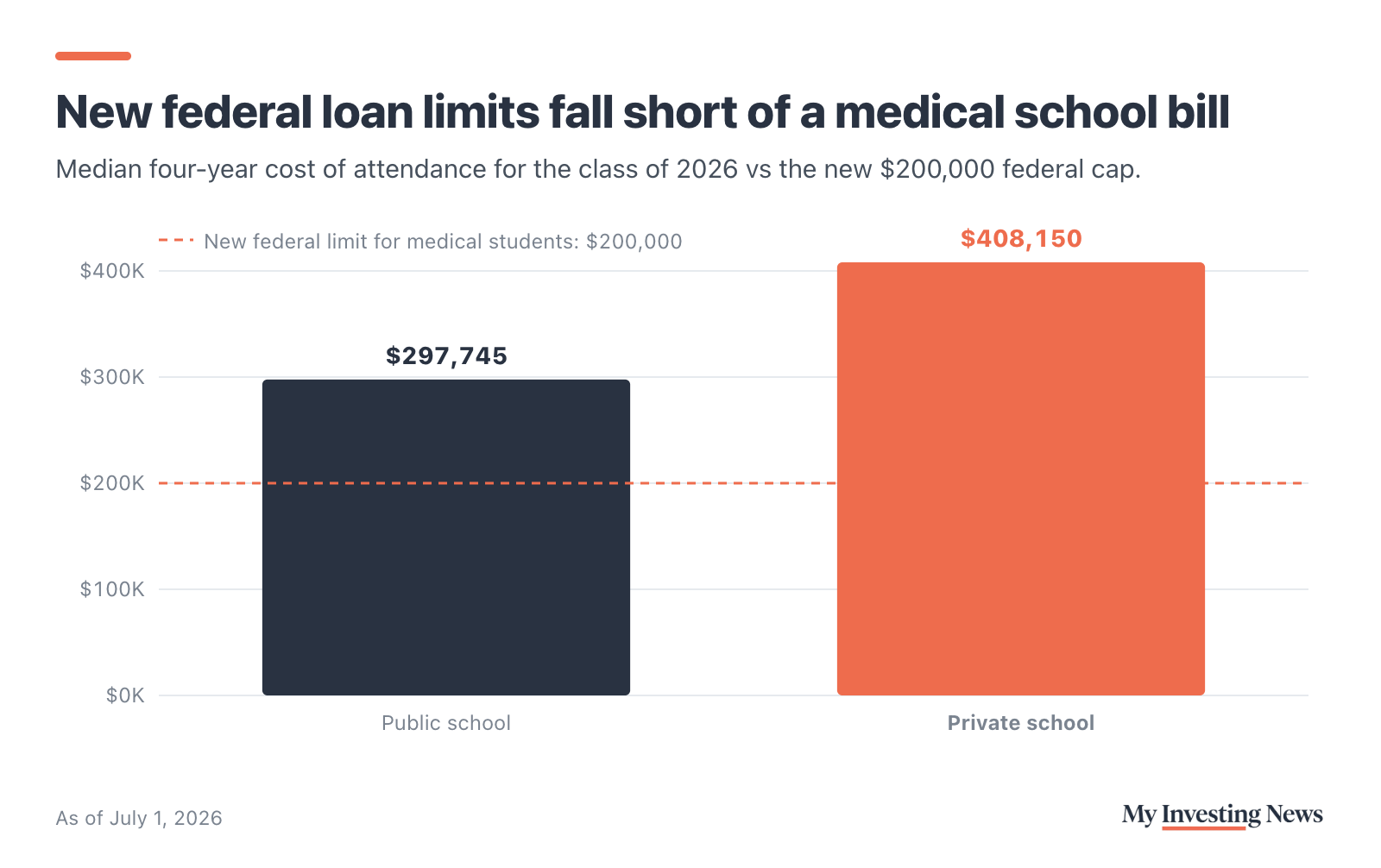
This also matters for parents and grandparents of students starting long training programs. The rules on graduate borrowing are changing. Investopedia reports that the government ended unlimited grad school loans. A conversation about spending order before that first big paycheck could be worth more than any graduation gift.
Moves to Make Before the Next Paycheck
- Set a savings rate and automate it. Schedule the transfer for payday so the money is gone before you can spend it.
- Split your next raise or bonus ahead of time. Write down how much goes to savings before the deposit comes in, then send it there the same day.
- Rank your debts by interest rate. Pay down the most expensive balances first, because high-rate consumer debt grows faster than most investments can.
- Choose a target date for financial freedom. Yount’s benchmark is 20 years. Work back from that date to find the savings rate that gets you there.
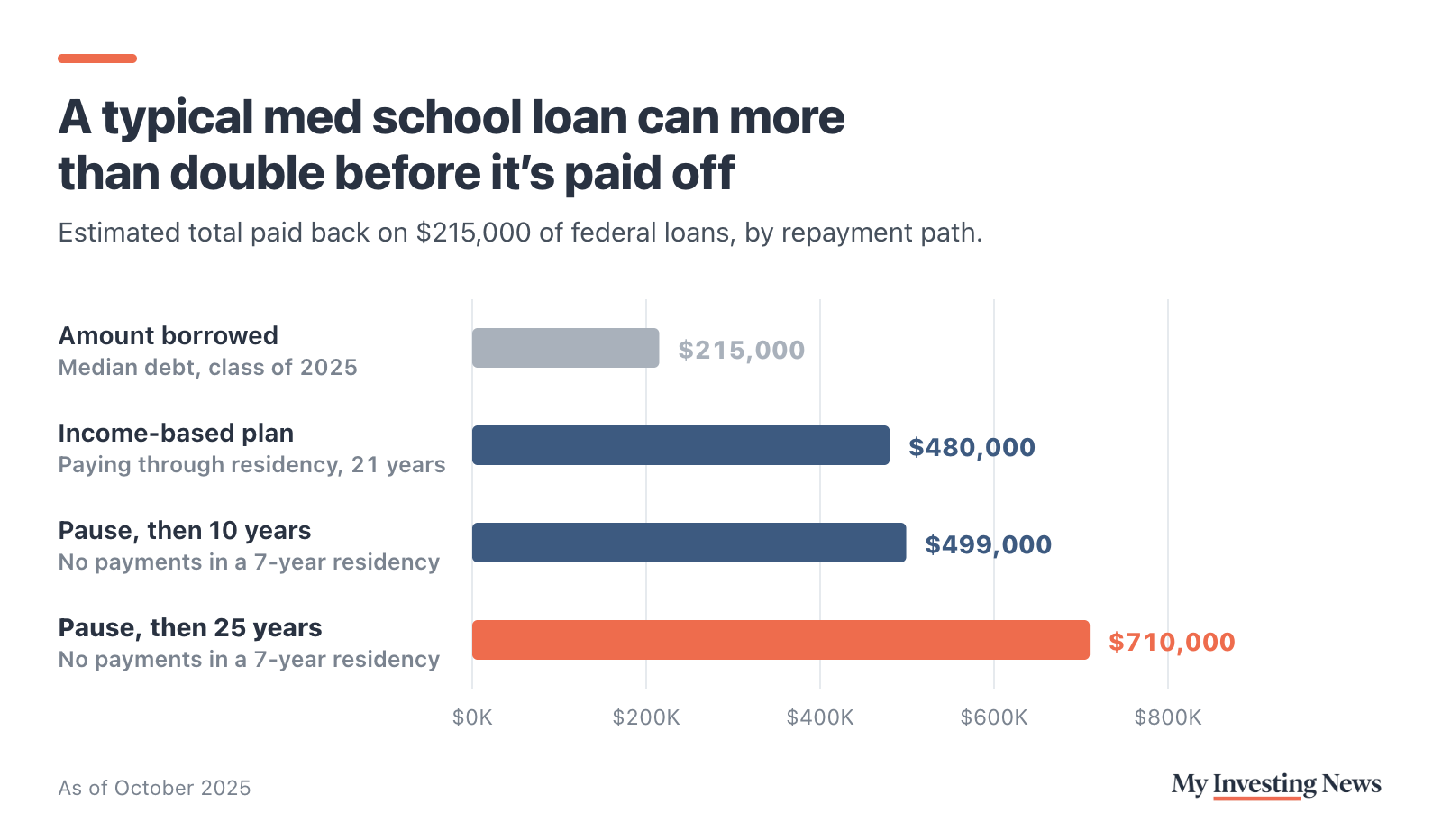
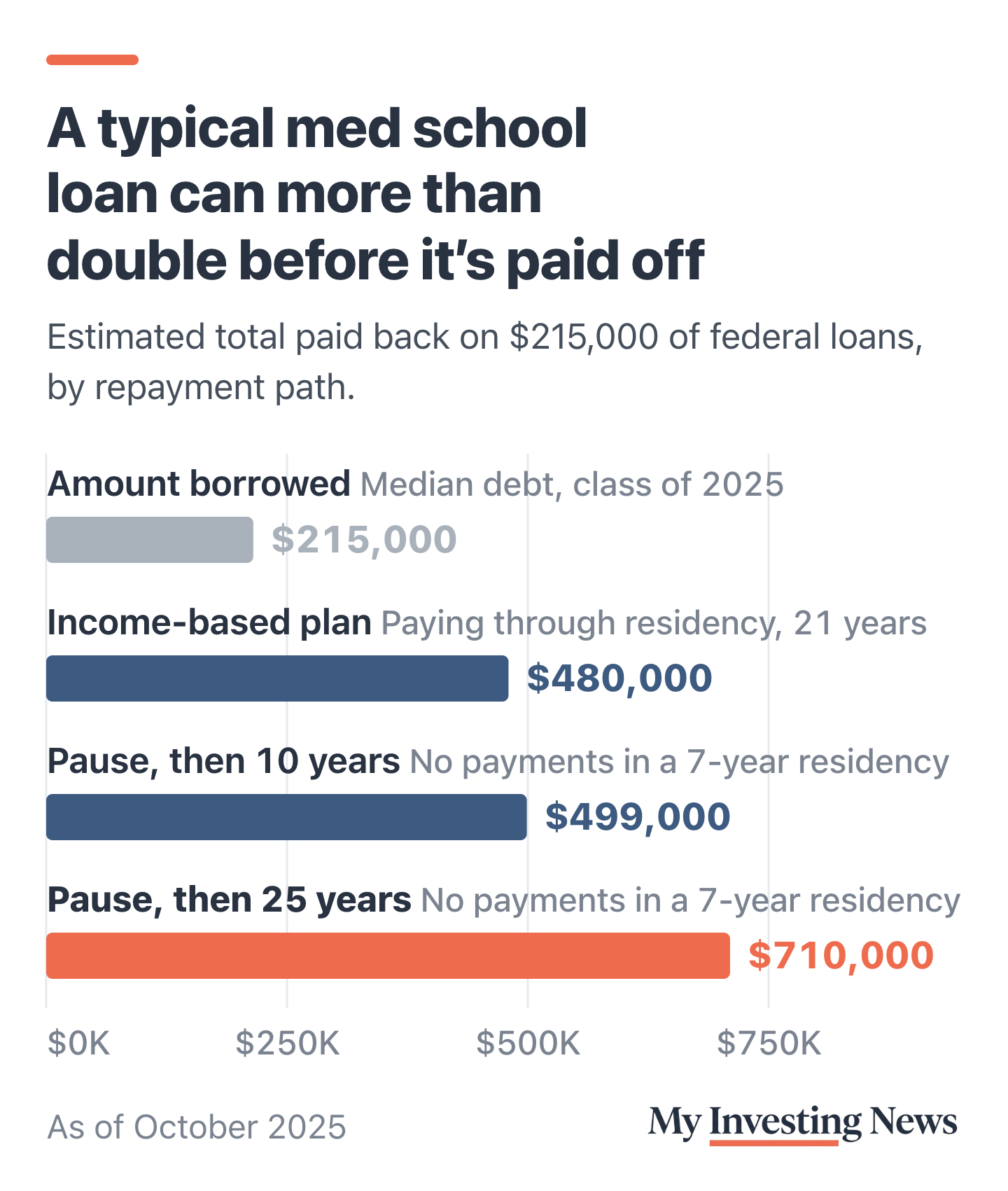
Yount’s view is that a doctor’s road to financial freedom is set by the first big paycheck: save first, spend second, and pick a savings rate that gets you there in about 20 years. The risk is the starting hole. The median 2025 medical graduate who borrowed owed $215,000, and spending that climbs before a savings plan exists can stretch the road to 30 years.