
Where we heard itCNBC’s Squawk Box, Oct. 20, 2026. Speaker: Joe Amato, president and chief investment officer for equities at Neuberger Berman. Watch at CNBC
“October has been a bit of a mess in markets. And I think what the previous segment talked about is one of the reasons why we’ve pulled back our risk a bit.” That’s how Joe Amato, president and chief investment officer for equities at Neuberger Berman, described the month during a CNBC Squawk Box appearance on Oct. 20. Neuberger managed $613 billion as of June 30, 2026, so when a firm that size cuts risk, it tells you how big institutions are reading a market led by artificial intelligence.
Volatility has picked up. The Cboe Volatility Index, Wall Street’s fear gauge, closed at 19.99 on Oct. 16, up from 14.84 on Oct. 9. The most heavily traded fund tracking the Nasdaq-100 was still up 15.5% this year at the Oct. 16 close, but it fell 5.5% that week.
Rate-Sensitive Stocks Are Showing Stress Under the Surface
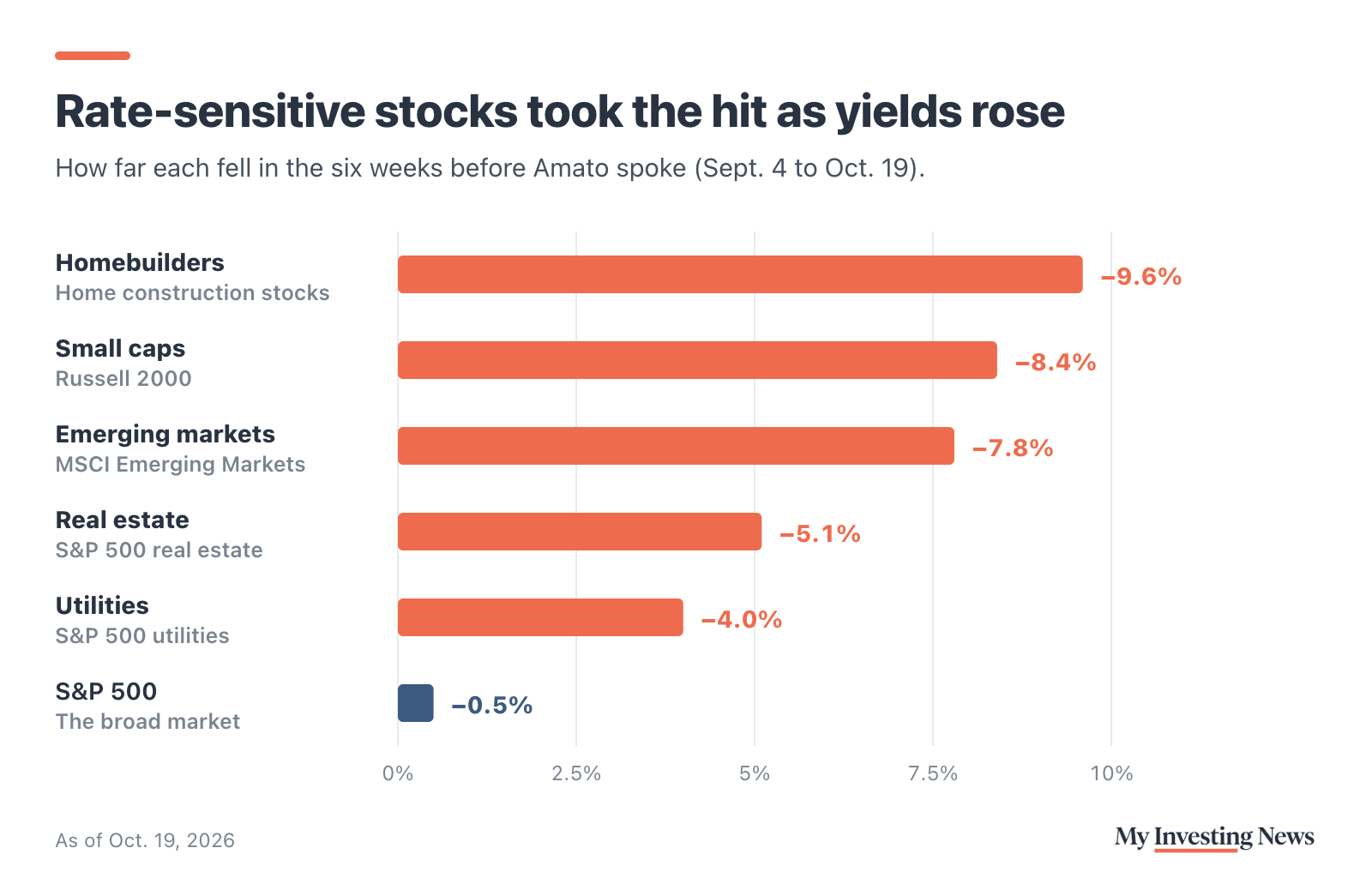
“Those segments of the market that are more interest rate sensitive have seen a pullback pretty significantly in prices over the course of the last six weeks,” Amato said. Rate-sensitive groups include real estate, utilities, homebuilders and smaller companies that lean on borrowed money. When yields rise, their borrowing gets more expensive and their future cash flows are worth less in today’s dollars.
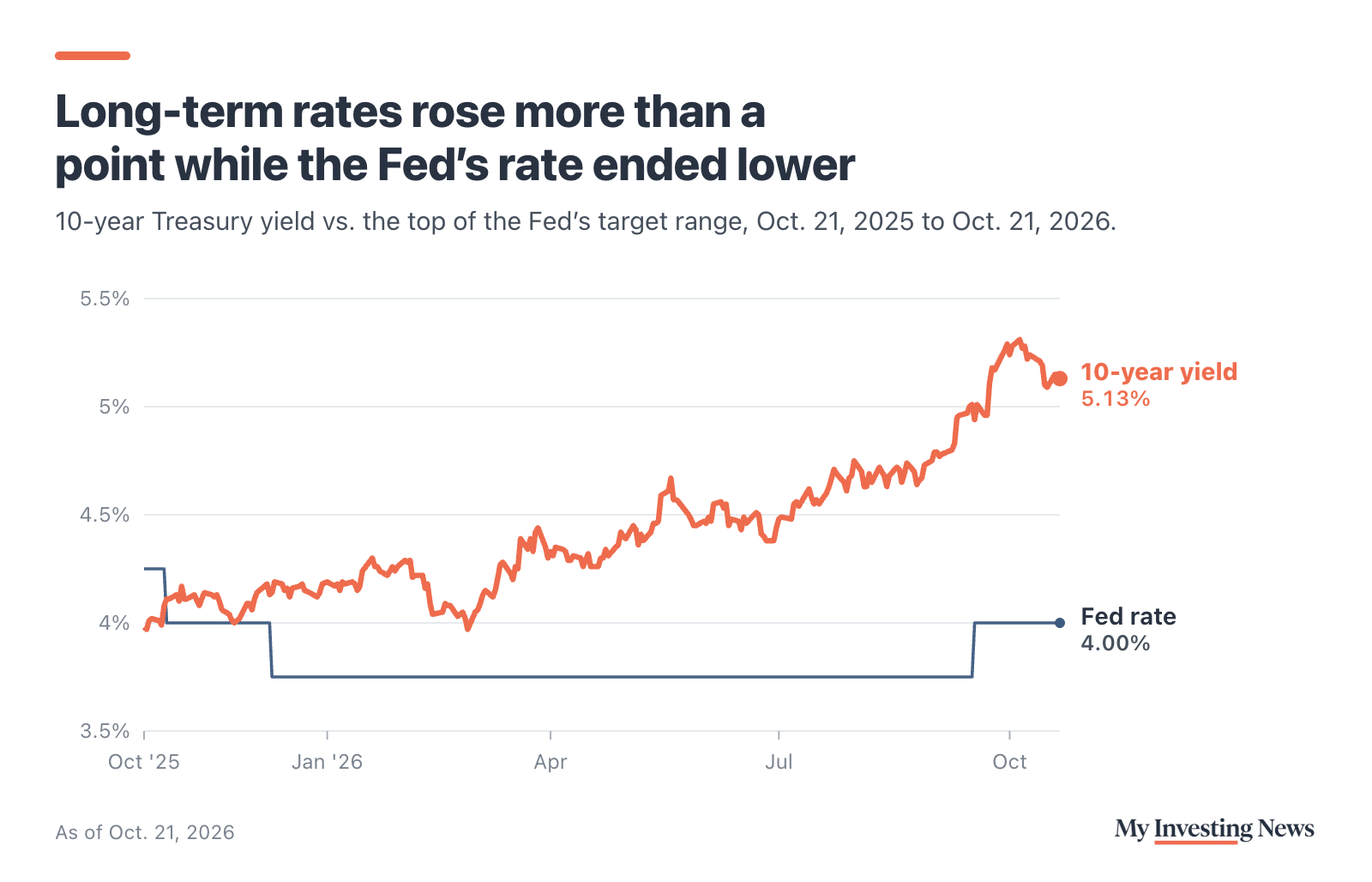
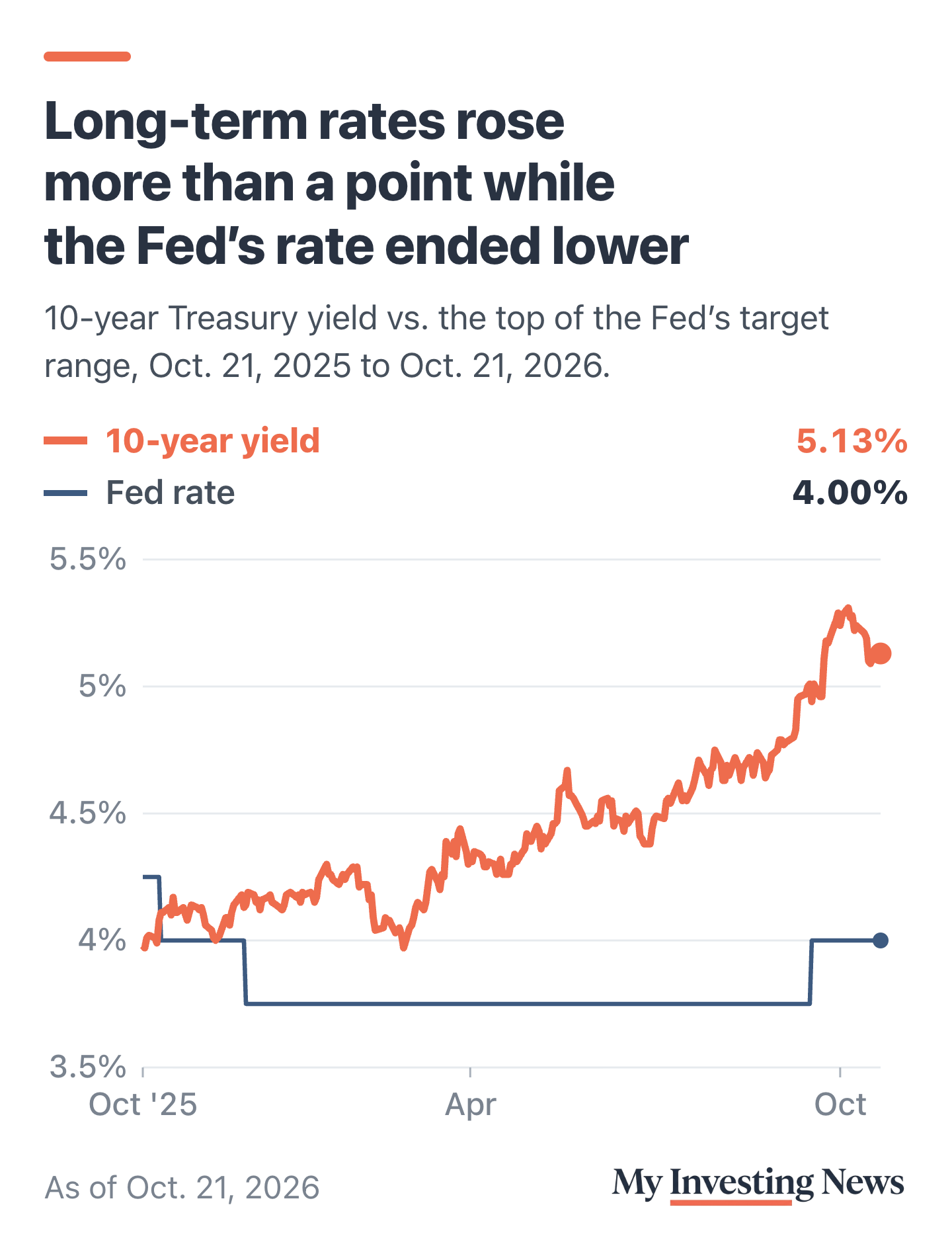
The 10-year Treasury yield reached 5.31% on Oct. 5 and has eased from that high to 5.13% as of Oct. 21, according to Federal Reserve Bank of St. Louis data. Meanwhile, the upper bound of the fed funds rate stands at 4.00%. Amato said spending on AI infrastructure and large federal deficits are both pushing long-term rates higher. Strong nominal U.S. growth explains part of the move in Treasuries, and corporate earnings remain strong (per the CNBC segment), he added.
What Neuberger Changed in Its Allocation
“We had been overweight global equities. We’ve been overweight small mid-cap. We’ve been overweight EM. We pulled that back. We still think US large cap, which is a bit of a safe haven.”
Being “overweight” means holding more of an asset than a neutral benchmark would. EM stands for emerging markets, meaning developing economies whose stocks tend to swing more than those in the U.S. Cutting those positions and leaning on large U.S. companies is a defensive move.
The firm’s published research shows how its stance changed. Its third-quarter asset allocation outlook in July was titled “Staying Pro-Risk in a Broadening AI Cycle.” By Oct. 5, the fourth-quarter outlook carried the title “Repricing Risk, Recalibrating Exposure,” and a CIO Weekly note published that same day was titled “Rising Rates Raise Risks.”
Neuberger’s fourth-quarter calls
Why Amato Wants Investors Looking Beyond AI
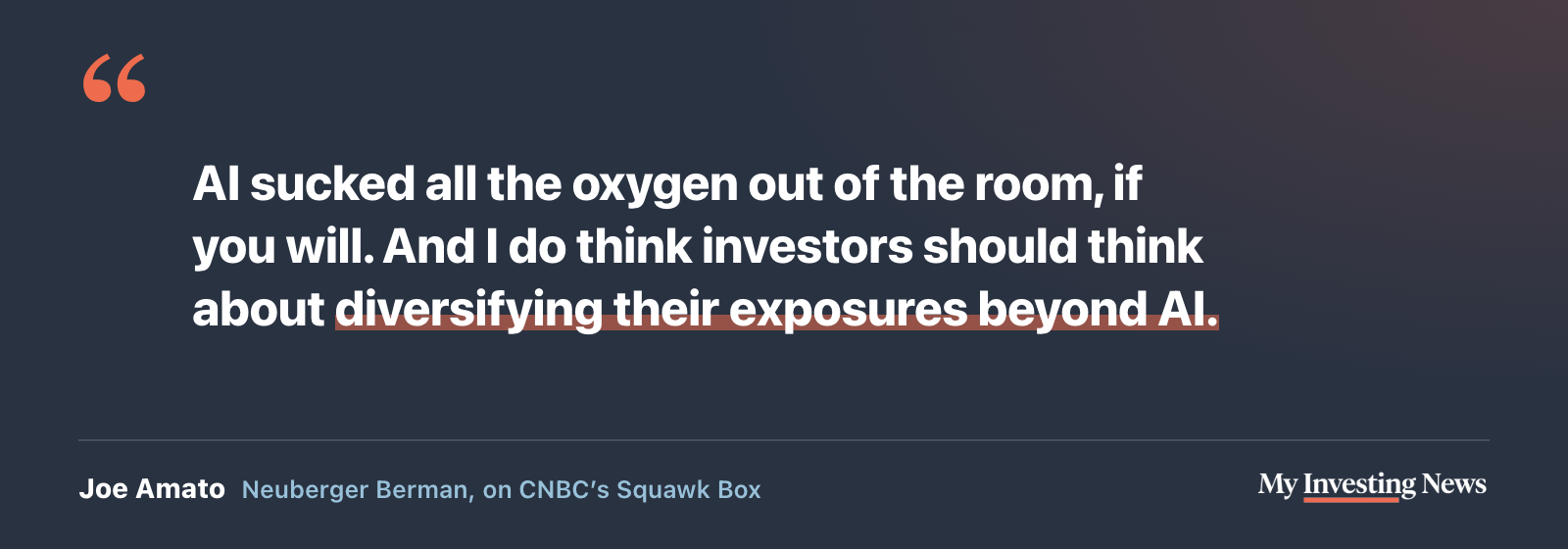
“AI sucked all the oxygen out of the room, if you will. And I do think investors should think about diversifying their exposures beyond AI, right?” He went on: “Direct AI beneficiaries are probably 30, 40% of the market. And then you have the secondary third derivative beneficiaries of AI.”
Direct winners are the chipmakers, cloud providers and data center suppliers selling the picks and shovels. Second- and third-order winners are the companies that buy and use those tools: banks automating back offices, industrial firms streamlining operations, healthcare companies cutting administrative costs. Their return would show up as wider margins and higher earnings. Amato said earnings outside tech are still expected to grow in the high single digits (per the CNBC segment), and that’s the broader pool he wants investors to consider.
How Everyday Investors Can Check Their AI Exposure
Start by finding out what you actually own. Market-cap-weighted index funds put the most money in the biggest companies, and right now many of those are AI names. An investor holding a broad index fund, a tech fund and a few individual tech stocks may be far more concentrated than they realize. Neuberger has made the same point in a podcast episode titled “Know What You Own: Joe Amato on the AI Rally, Mega-Cap IPOs, and the Hidden Risk in Passive.”
Useful checks include:
- Adding up how much of your total portfolio sits in your top 10 holdings across all accounts.
- Comparing your sector mix against areas like financials, industrials, healthcare and consumer staples.
- Reviewing your mix of large, mid and small companies, keeping in mind that smaller firms tend to react more to interest rates.
Strong Earnings, Narrow Leadership
Amato still sees a place for stocks. He says earnings are strong and U.S. large caps still offer shelter. His point is that a market this concentrated in one theme leaves investors exposed if rates keep rising. Peter Boockvar has estimated that 70% or more of third-quarter earnings growth is tied to the AI tech trade. Going forward, the things to track are the 10-year yield, whether rate-sensitive sectors stabilize, and whether companies that use AI start reporting the productivity gains he expects.
Amato thinks AI has crowded out the rest of the market, so Neuberger cut small caps, mid caps and emerging markets back to target and kept its bet on large U.S. companies. He still likes the earnings picture. The risk he flags is concentration: if long-term rates keep climbing, a market this tied to one theme has little cushion.