
Where we heard itCNBC’s Squawk Box, Oct. 14, 2026. Speaker: Meghan Shue, chief investment strategist at Wilmington Trust. Watch at CNBC
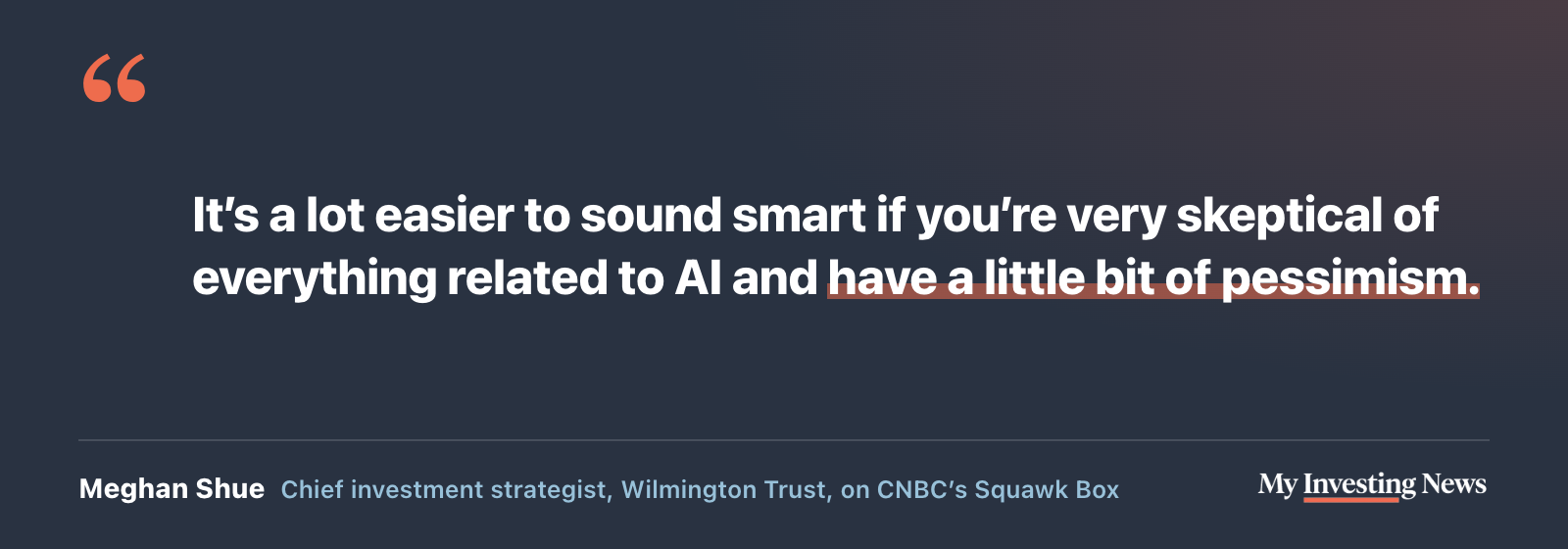
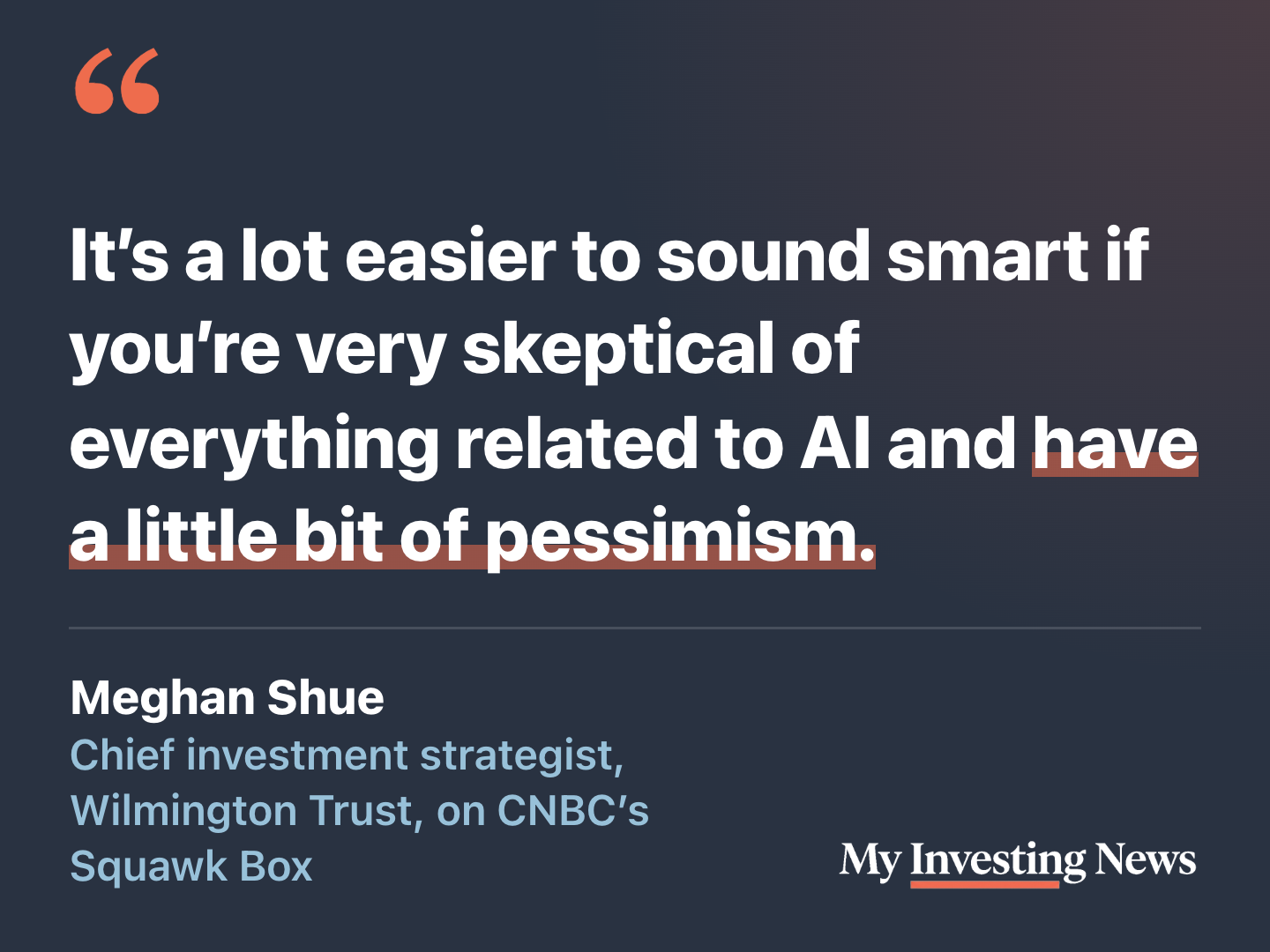
Wilmington Trust strategist Meghan Shue told CNBC it is “a lot easier to sound smart” if you are very skeptical of everything related to AI and carry a little pessimism. She added that the constant desire to treat this market as “an exact analog of the late 90s is probably not right.” Her firm is overweight equities, including small caps, at a moment when small caps are slipping.
What Paul Tudor Jones Actually Argued
Shue was responding to Paul Tudor Jones, who said on Oct. 13 that “2027 is going to be really, really challenging for the stock market.” CNBC reported that Jones expects a tough year because of increased equity supply. On air, he described “the most negative flow picture for the US stock market that we’ve had, say since 2002,” once IPOs, secondaries and unlocks are subtracted from buybacks and M&A, and pointed to SpaceX and the coming Anthropic and OpenAI offerings. Reports say Anthropic’s expected November IPO could be the largest in history.
Jones’s case rests on supply: a wave of new shares competing for the same investor dollars. His argument centers on share issuance.
Shue’s Three Breaks From 1999
Shue cited three differences from the late 1990s: the level of valuations, what she expects from the rate cycle, and the monetization of the technology, which she believes will be more positive for the AI story. These are her firm’s views. She said she expects “a decent year next year.”
On rates, her words were “what we expect in terms of a rate hike cycle.” She did not elaborate in the clip.
Wilmington Trust Is Overweight Small Caps
Shue said being pessimistic and “hoarding cash on the sidelines is rarely a good strategy.” The way to play it, she said, is to look at the progress of the technology and the full ecosystem. Wilmington Trust is overweight equities, including small cap.
Small Caps Are Falling While She Leans In
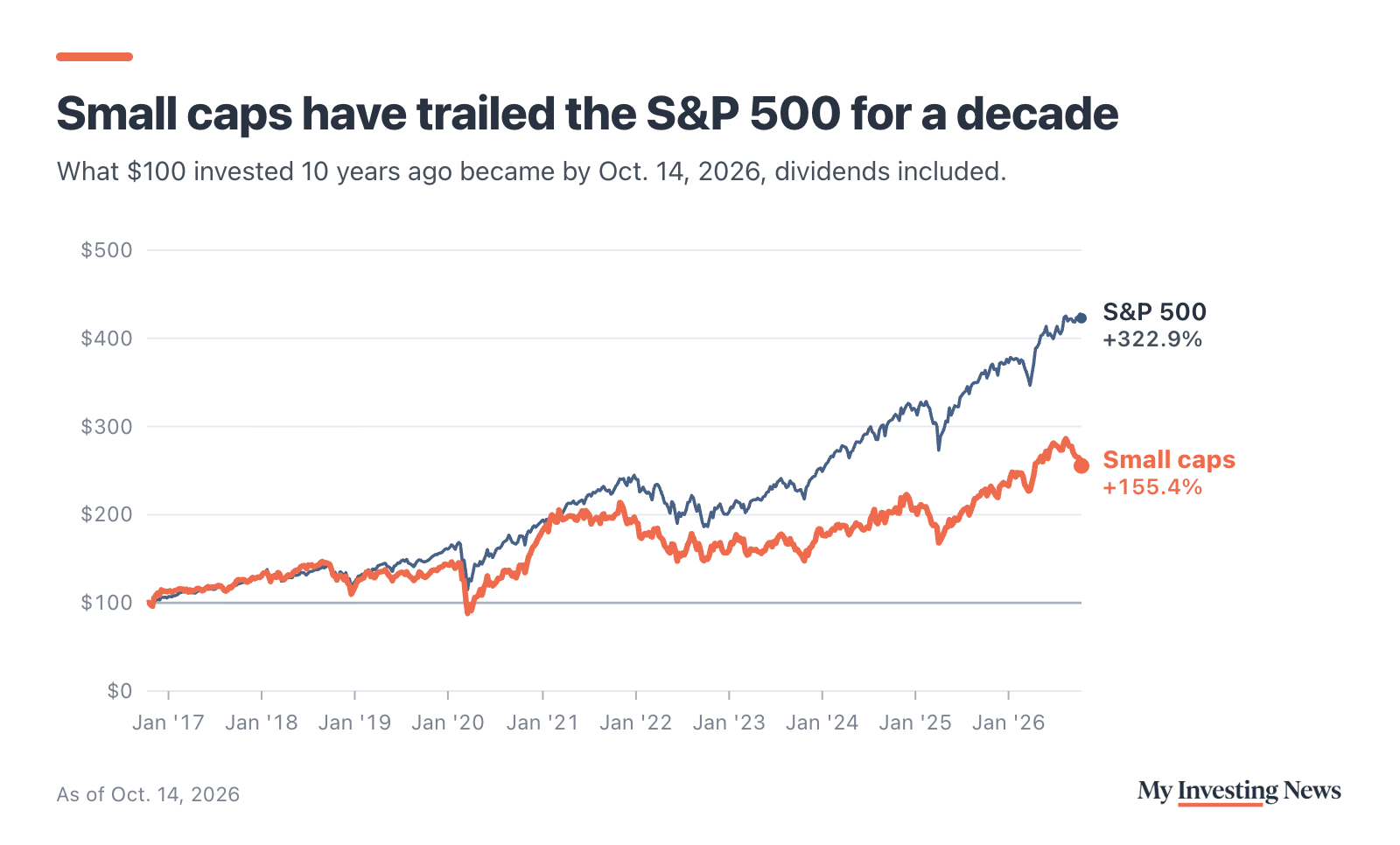
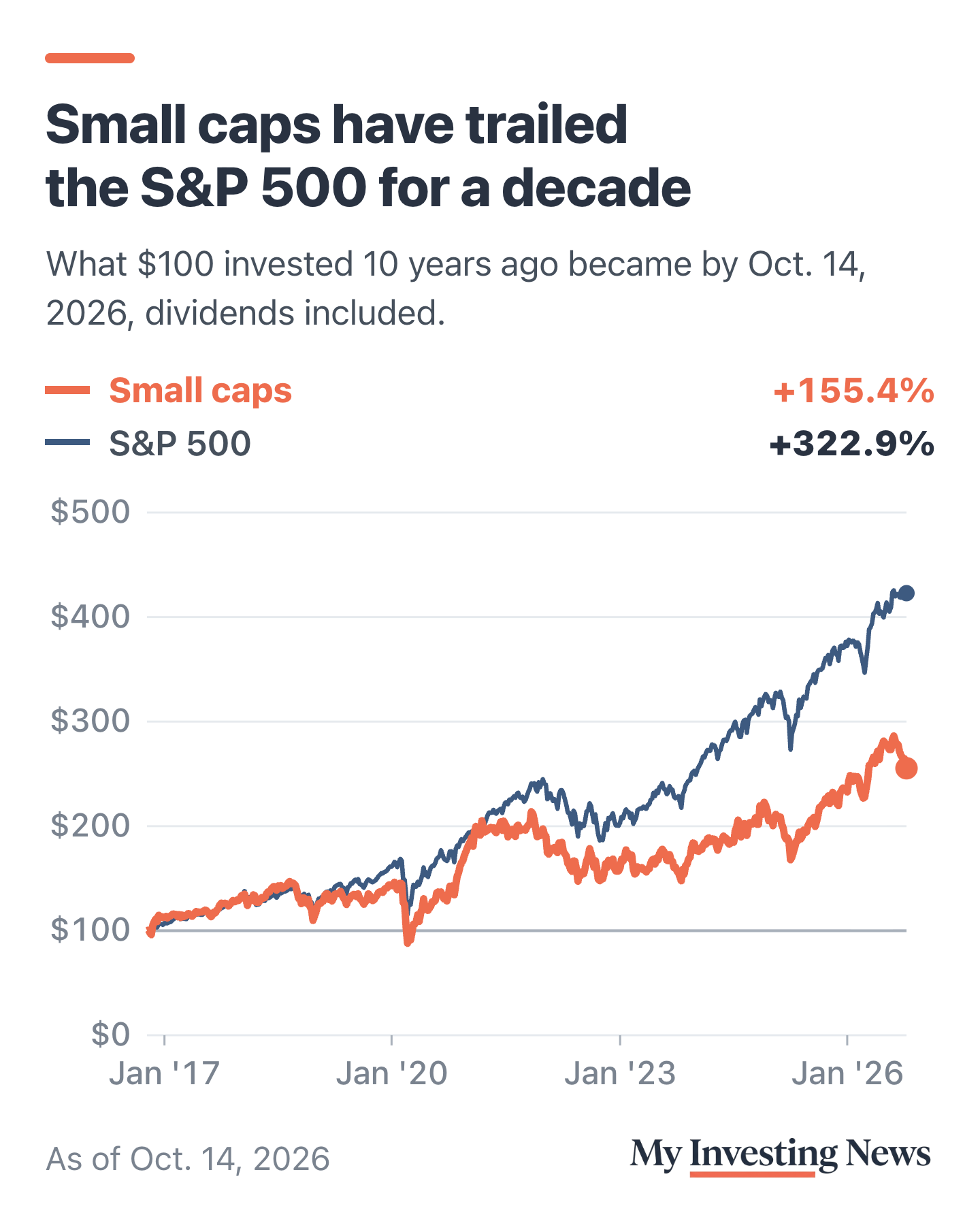
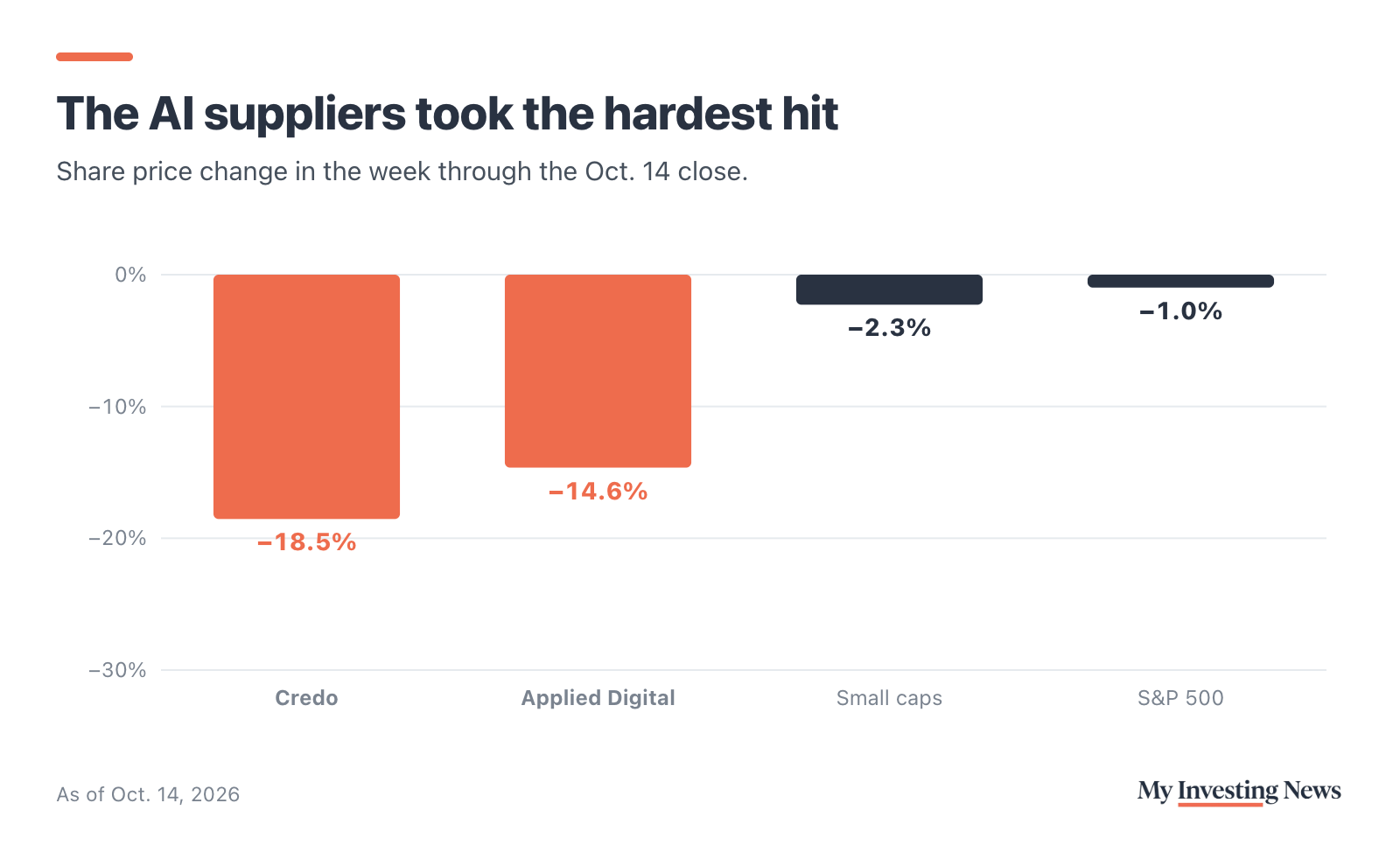
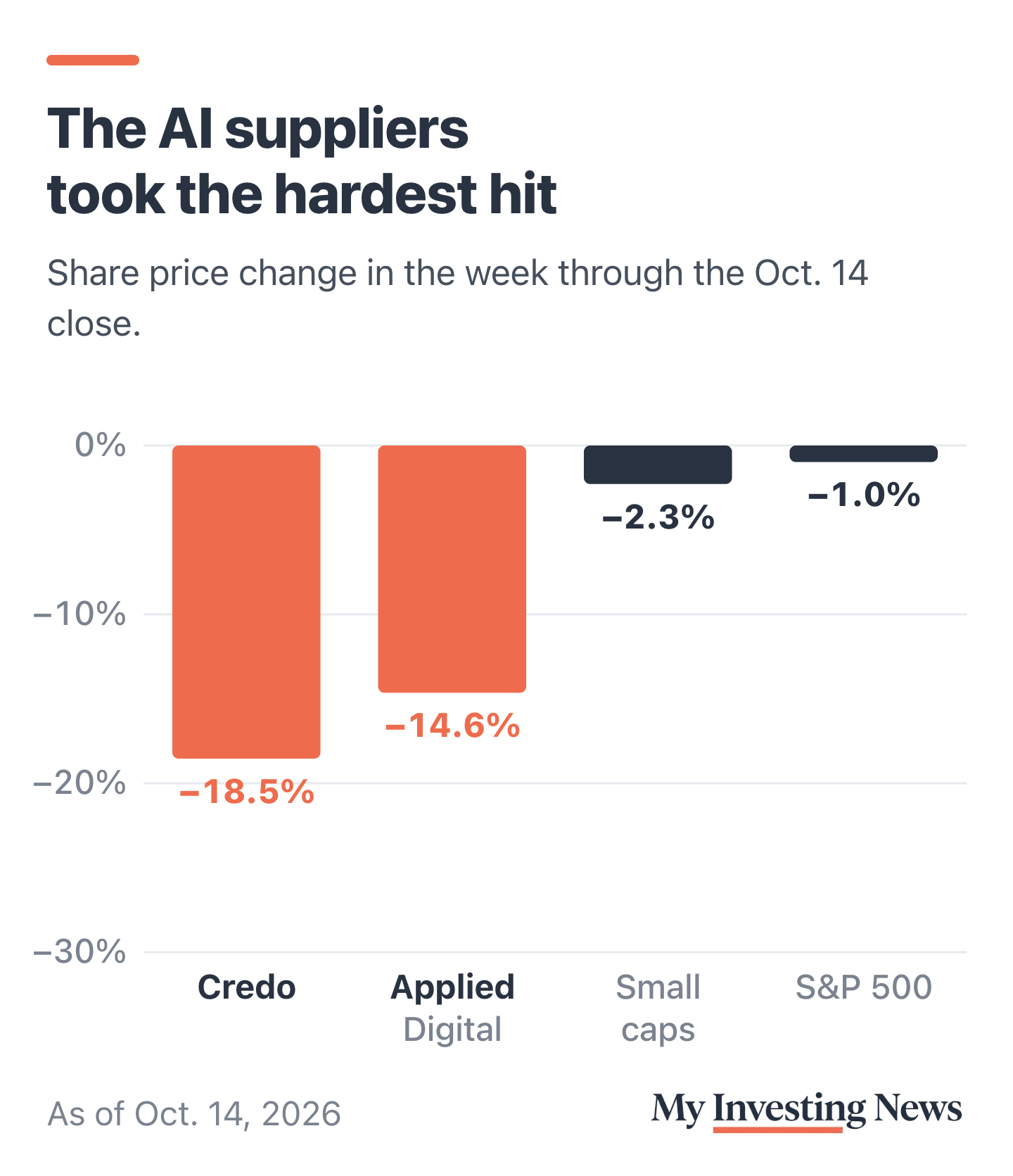
The benchmark small-cap ETF, the iShares Russell 2000 ETFIWM, closed at $271.37 on Oct. 14, down 1.9% on the session. It fell 2.3% over one week and 5.7% over one month. The SPDR S&P 500 ETF TrustSPY fell 1.0% over the same week and 1.1% that session, while gaining 1.1% over one month. Small caps fell over the past month as the broad market rose. Schwab’s Liz Ann Sonders has pointed to the same narrow rally, saying fewer than half of S&P 500 stocks trade above their 200-day average.
Small caps vs. the S&P 500, through Oct. 14
Shue is overweight the part of the market that has fallen behind for years and is falling now. An overweight tilts against recent performance. It carries risk if small caps keep lagging.
AI Infrastructure Names Show the Ecosystem’s Swings
Credo TechnologyCRDO posted fiscal Q1 2027 revenue of $479.0M, up 114.7% YoY, per its SEC filing. Shares still fell 18.5% over the past week to $179.23. Applied DigitalAPLD reported revenue of $341.9M, up 322%, with roughly $36B in signed revenue, yet the stock is down 17.1% year to date. Its $6.4B debt load against $3.7B in cash, cash equivalents and restricted cash shows the leverage behind the expansion.
Shue’s Outlook Remains a Forecast
Shue’s valuation, rate and monetization claims reflect her firm’s views. A strategist’s one-year outlook is a forecast.
Two Different Questions on the Table
Jones is debating about how much new stock hits the market next year. Shue is debating about whether the technology earns its valuation. Both can be true at once. Investors considering small caps can keep an eye on IPO calendars and on earnings from AI suppliers like Credo and Applied Digital.
Shue expects a decent 2027 and says pessimism and cash on the sidelines rarely pay, so Wilmington Trust stays overweight stocks, small caps included. The risk is that small caps have trailed the S&P 500 for a decade and were falling again as she spoke, while Jones warns a wave of new shares could weigh on the whole market next year.