Where we heard itBarron’s “Streetwise” podcast, “America’s Debt Reckoning: 5 Paths Forward,” Nov. 6, 2026, with host Jack Hough and Kent Smetters, director of the Penn Wharton Budget Model.
Jack Hough says interest is the number to watch on the national debt. On his Barron’s Streetwise podcast, built around a cover story on the $40 trillion debt, he said interest “almost single-handedly explains why massive and growing deficits are the new normal,” and then put numbers on it.
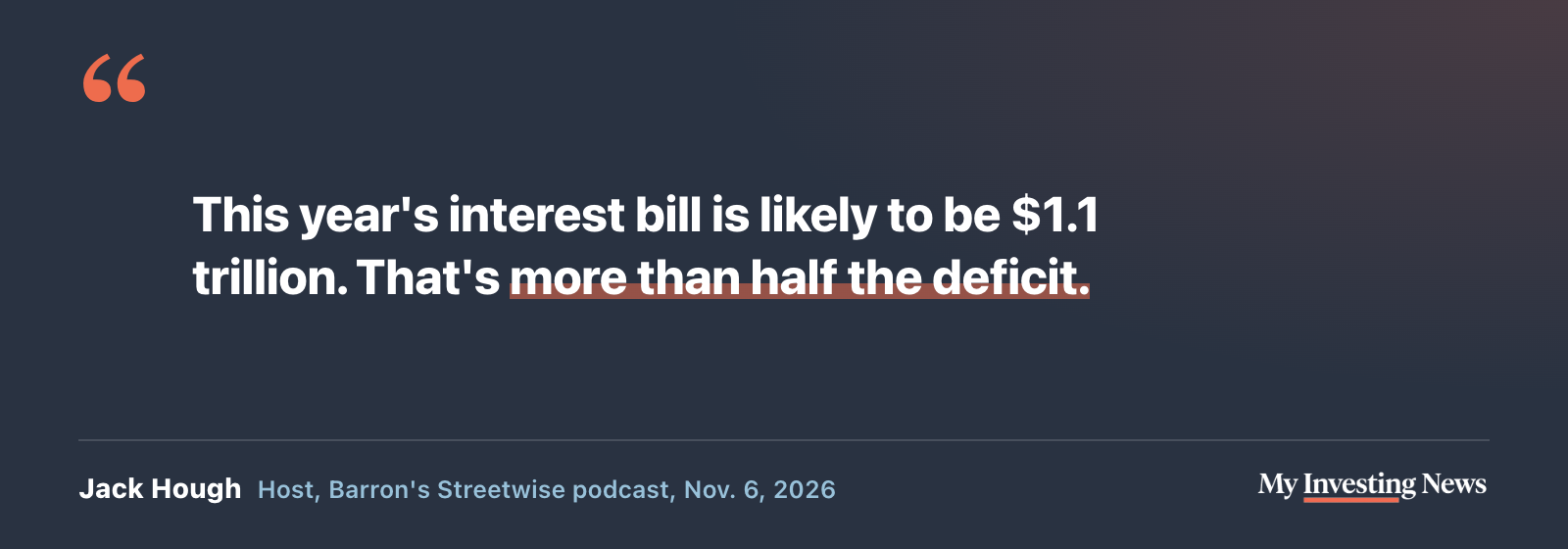
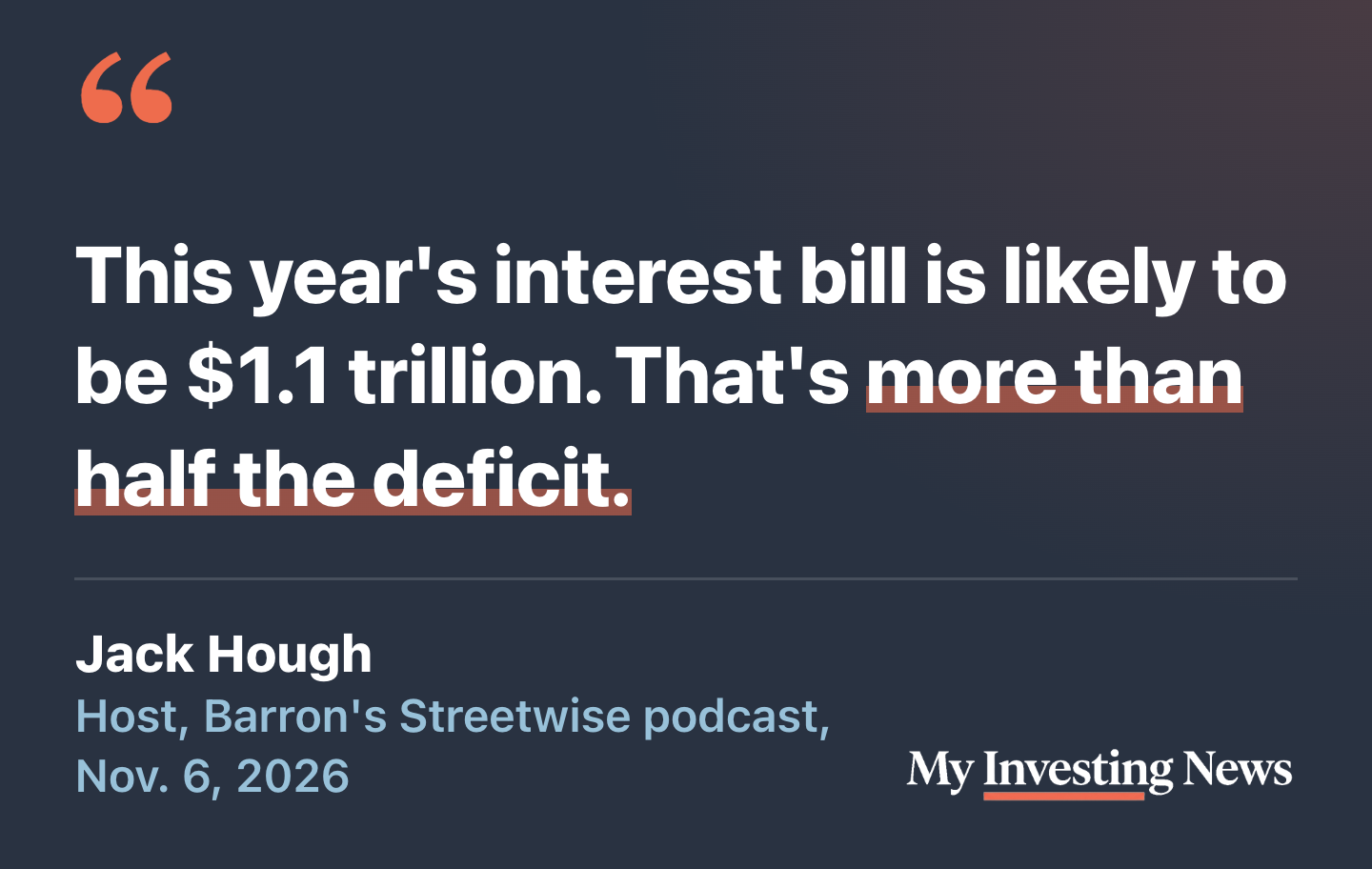
A decade from now, he said, it will be “$2.1 trillion, or 69% of the deficit.” Those figures come from the Congressional Budget Office, and Hough called the projection “almost certainly too optimistic because Treasury bond yields recently jumped above levels the CBO used in its math.”
His numbers match CBO’s February 2026 baseline. For fiscal 2027, which began Oct. 1, CBO projected net interest of $1.11 trillion against a $1.88 trillion deficit, or 59%. For fiscal 2036, it projected $2.14 trillion, 69% of a $3.1 trillion deficit.
Fiscal 2026 Already Crossed the Halfway Mark
The year that just ended shows how close the government already is. Treasury’s statement for fiscal 2026, which ended Sept. 30, puts net interest at $1.05 trillion, up 8.4% from the year before, and the deficit at $1.99 trillion. Interest came to 52.8% of the deficit.
That is the second year in a row above half. In fiscal 2025 the share was 54.7%, and before that, the last year it topped fiscal 2026’s level was 2008. In 2009, when the deficit ballooned during the financial crisis, interest was 13% of it. The share swings with the size of the deficit, and in surplus years it has no meaning at all.
Net interest is the measure that matters here. Gross interest on Treasury securities was about $1.36 trillion in fiscal 2026, but part of that is paid to the government’s own trust funds, and the budget nets that out.
A Record Share of Revenue
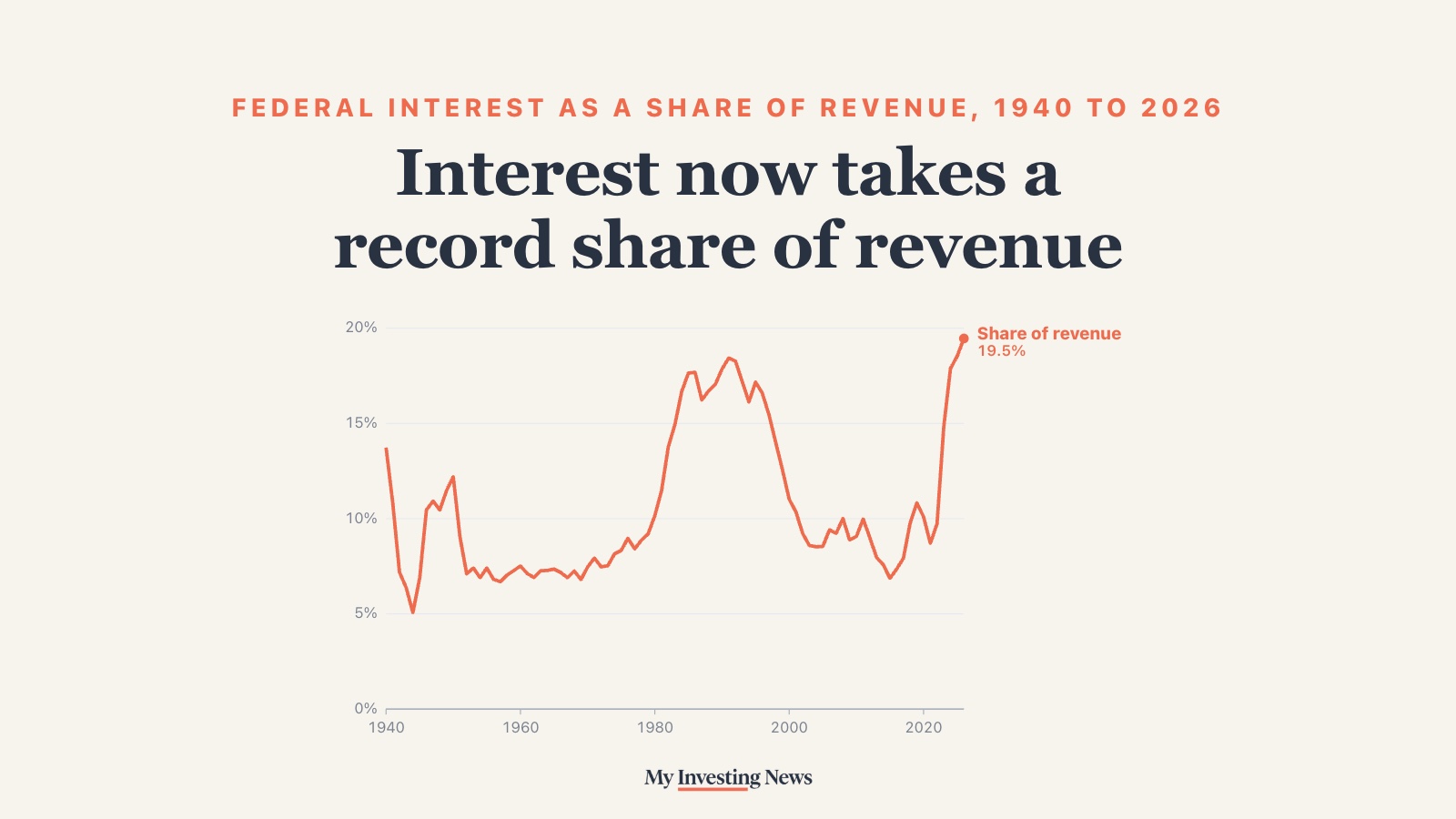
A steadier yardstick is interest as a share of what the government takes in. In fiscal 2026, net interest consumed 19.5% of federal revenue, the highest share in budget records that go back to 1940. The old high was 18.4% in 1991, and as recently as 2015 the share was 6.9%. Put simply, about 19.5 cents of every federal revenue dollar now goes to interest.
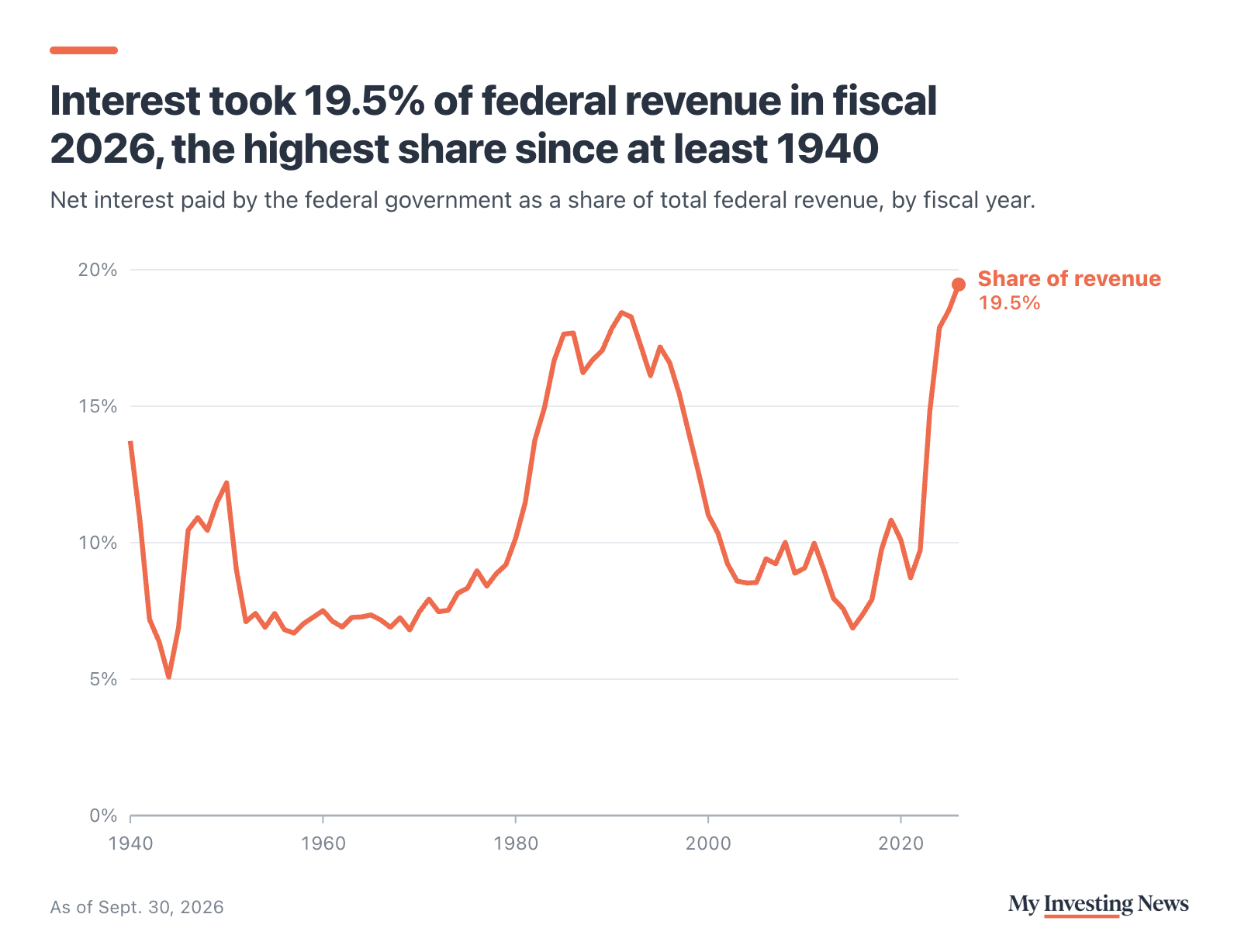
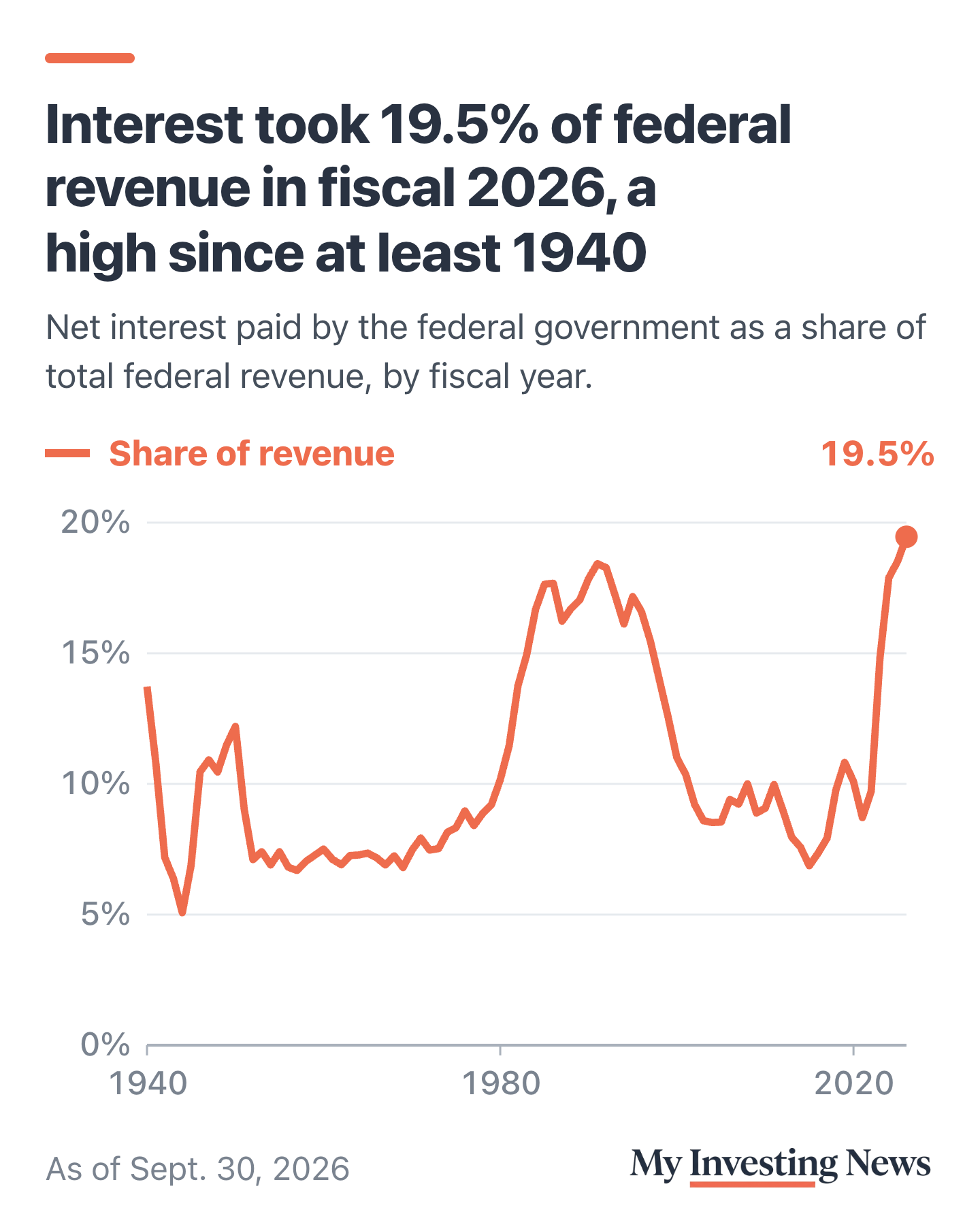
The climb since fiscal 2022 has followed interest rates up, as the Treasury refinances maturing debt and borrows more at higher yields. The 10-year Treasury yield hit its highest in a year in early October.
Federal interest, fiscal 2026 and CBO’s outlook
Is CBO Too Optimistic?
Hough’s doubt has a recent record behind it, and an older one against it. CBO keeps an archive of every baseline it has published. We took the first baseline of each year from 1992 to 2021 and compared its projection of net interest five years out with what the government actually paid. In 23 of those 30 baselines, CBO projected too much interest, mostly in years when interest rates kept falling.
The last three went the other way, and by more each time. The January 2019 baseline was 29% too low for fiscal 2024. The January 2020 baseline was 73% too low for fiscal 2025. The February 2021 baseline projected $361 billion for fiscal 2026, and the bill came to $1,052 billion, almost three times as much.
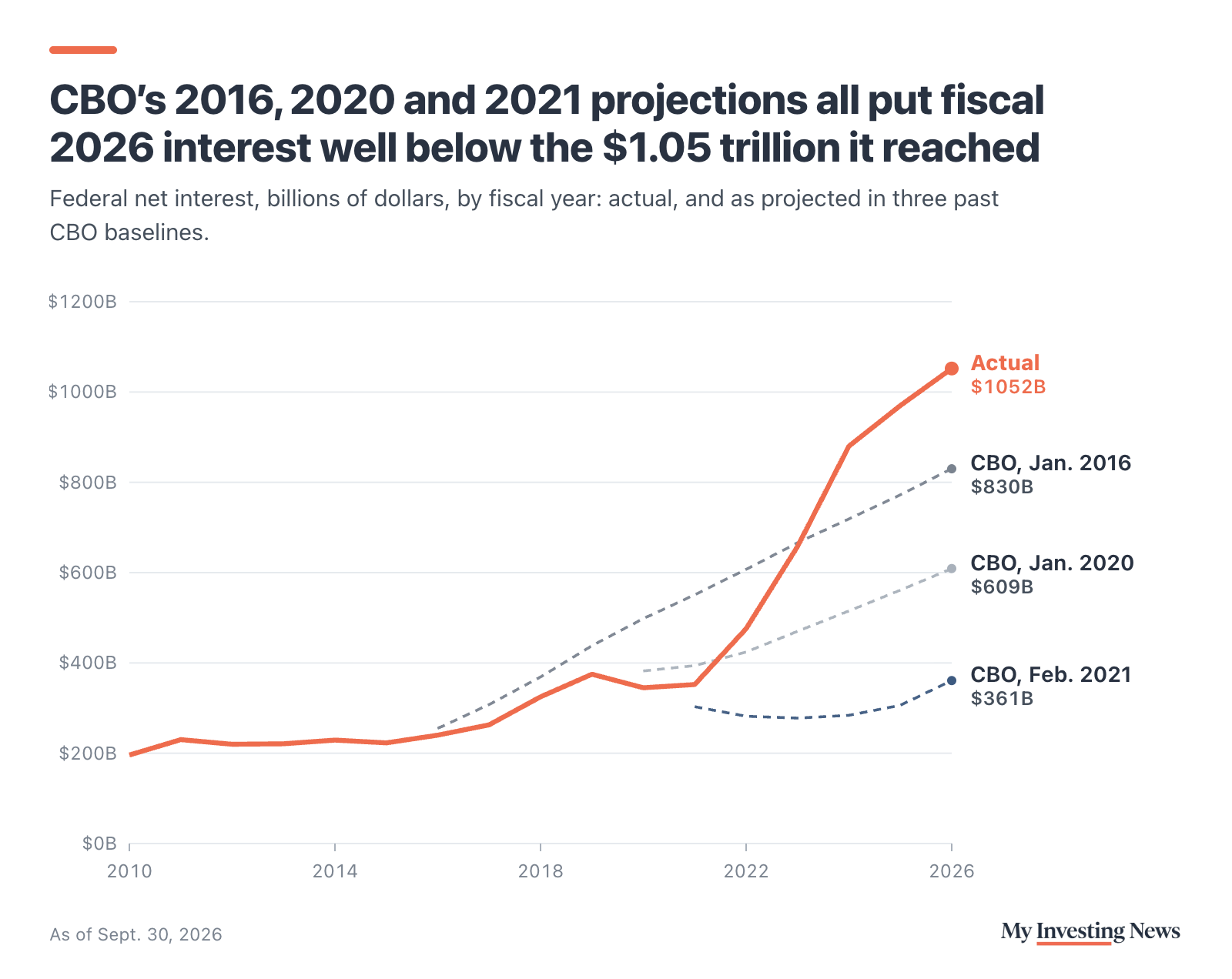
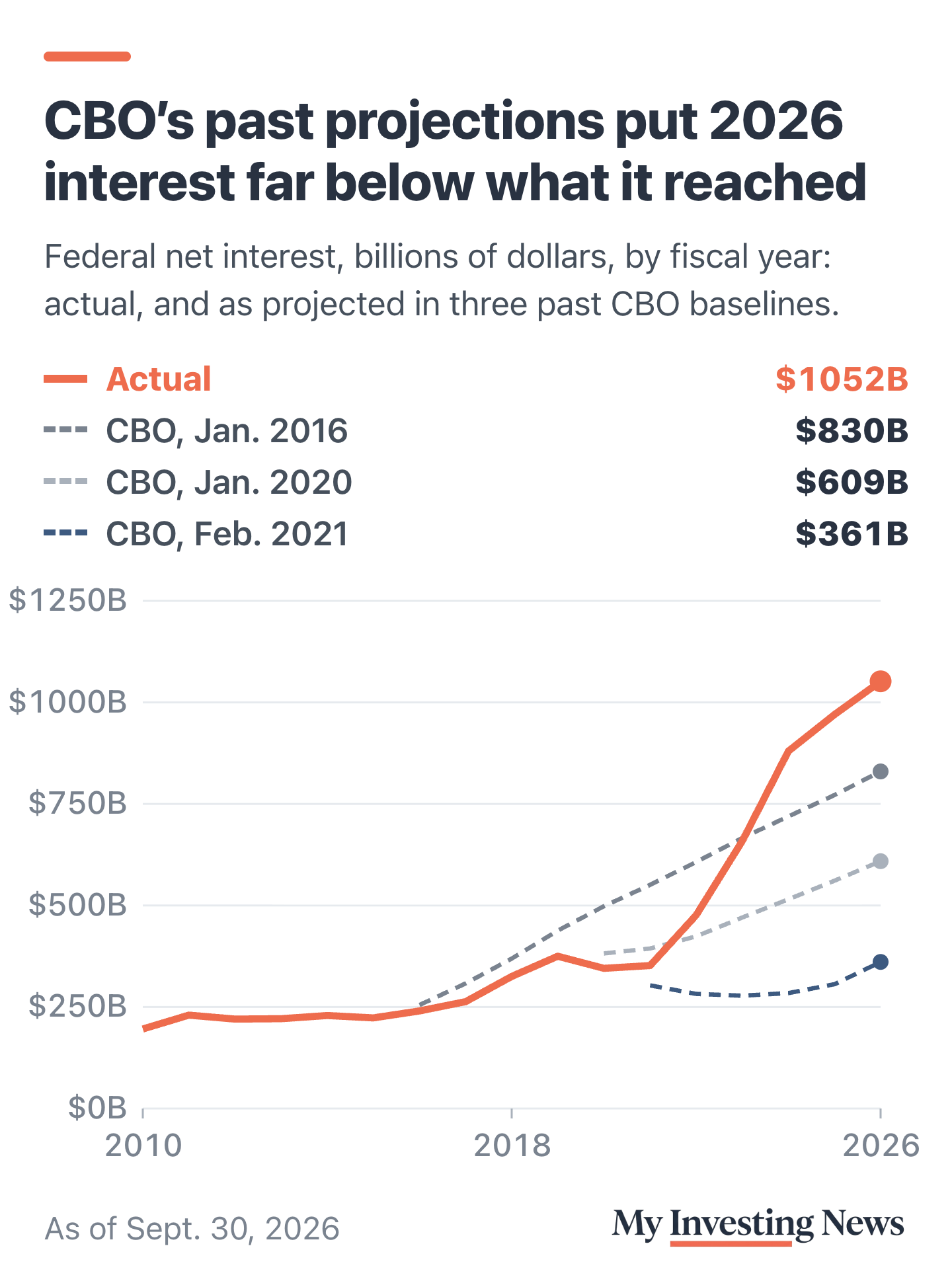
CBO’s newest numbers have held up so far. The February 2026 baseline projected $1.04 trillion of net interest for fiscal 2026, and the actual bill came in 1.2% higher. The deficit missed by more: it came in $133 billion larger than projected, because revenue came in $193 billion short of CBO’s figure.
What to Watch
Kent Smetters, who runs the Penn Wharton Budget Model, told Hough that bond markets “break, not bend,” and that on the debt the country is “at kind of stage one right now,” with time to act before markets force it. Abroad, CNBC’s Sara Eisen has called France’s debt crisis a warning. Smetters also said Social Security’s trust fund is about six to seven years from running dry, close to the trustees’ recent run-out forecasts.
The next markers are Treasury’s monthly statements for fiscal 2027 and CBO’s next baseline, usually published early in the calendar year. If yields stay above the levels CBO assumed, the 2036 figure is the one most likely to move.
Hough says interest will eat more than half the deficit this year, and CBO’s numbers back him at 59%. Fiscal 2026 already got there, at 52.8%, and interest took a record 19.5% of revenue. CBO overestimated interest for most of three decades, but its last three misses all ran low, which is the risk Hough is pointing to.