Where we heard itBloomberg Businessweek podcast, “Apple Growth Decelerates, China Sales Miss,” Nov. 2, 2026: Seth Fiegerman, Bloomberg News AI editor, with hosts Carol Massar and Tim Stenovec. Also: Steve Eisman, The Real Eisman Playbook, Nov. 6, 2026.
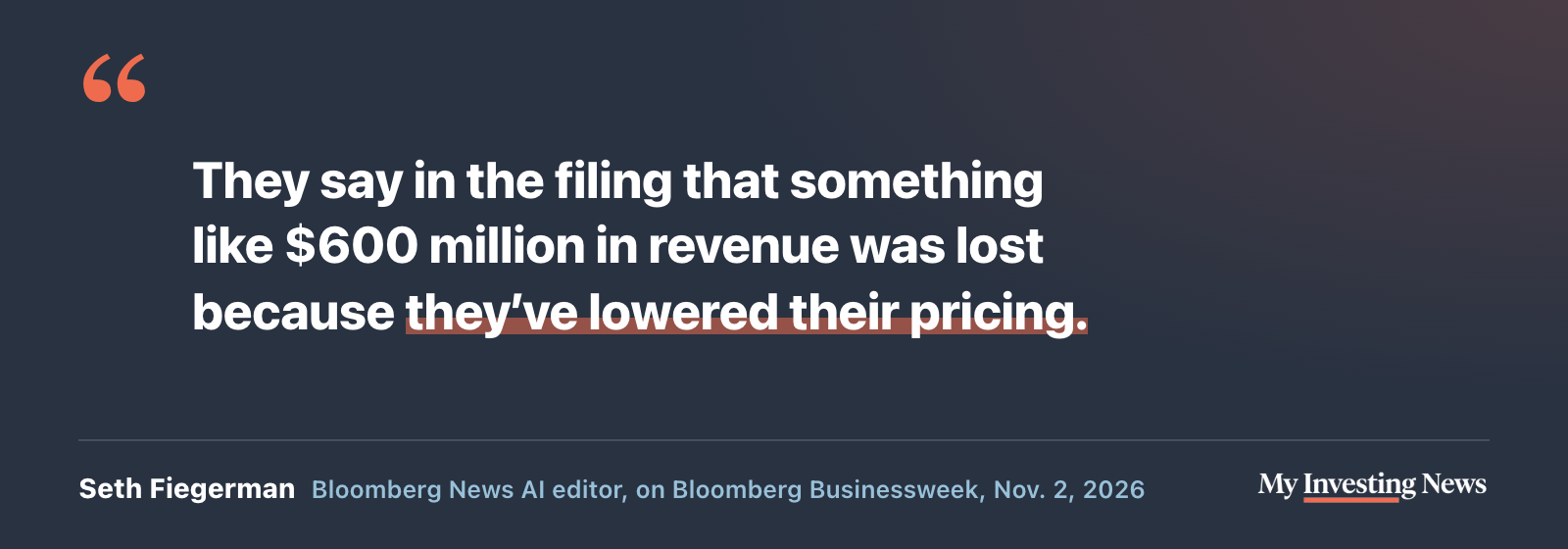
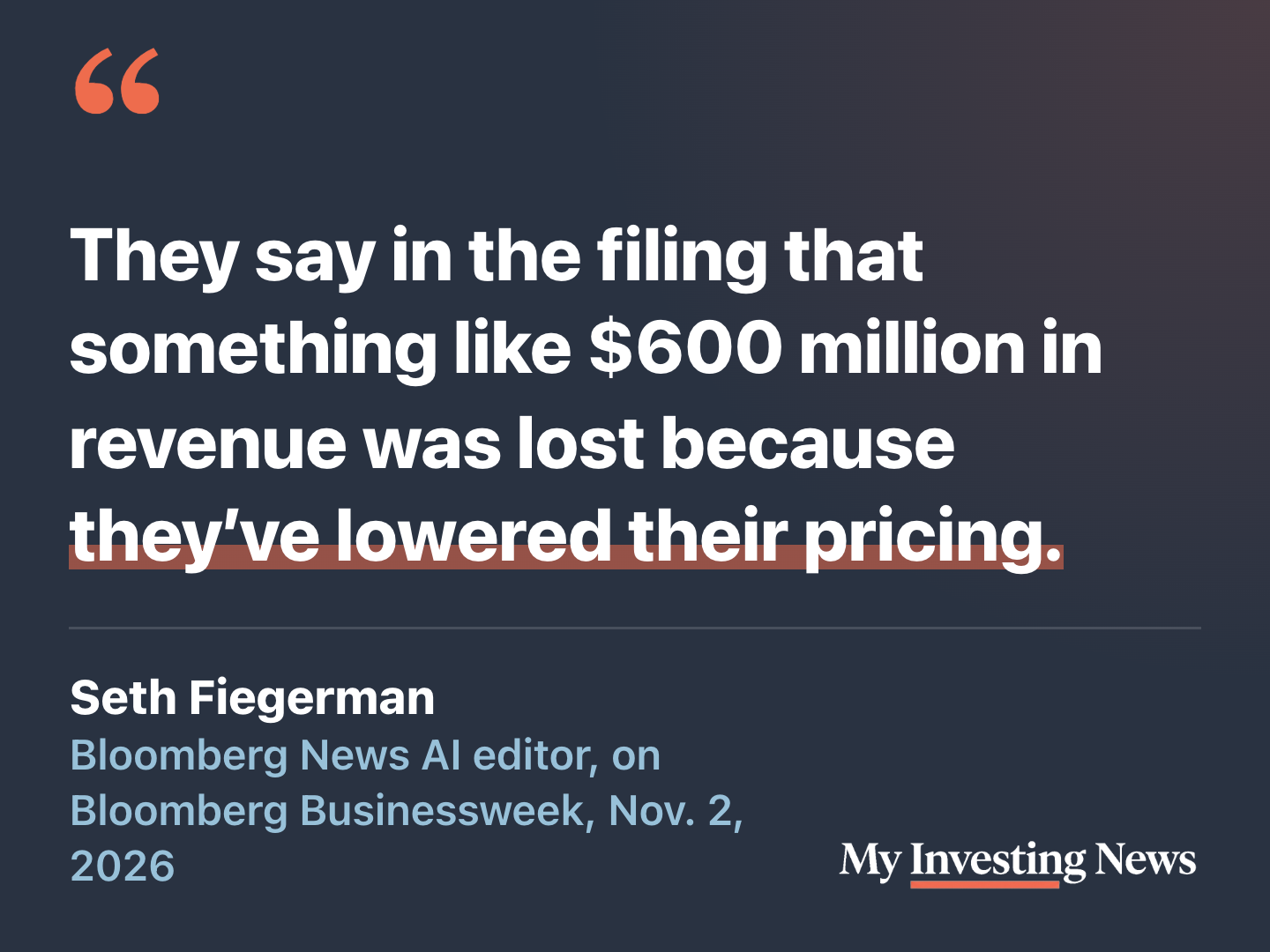
Anthropic’s growth comes with a price tag, and it is in the company’s own IPO filing. “They say in the filing that something like $600 million in revenue was lost because they’ve lowered their pricing,” Bloomberg News AI editor Seth Fiegerman said on Bloomberg Businessweek on Nov. 2. The bull case, he said, is that AI companies “are able to offer competitive services for less money at certain tiers of their products,” while “the other case would be that they’re facing a lot of competitive pressure.”
The filing backs him up. In its amended registration statement of Nov. 2, Anthropic said revenue growth from the second quarter of 2026 to the third was “partially offset by a decrease of approximately $600 million from price reductions introduced as part of new model versions and contractual discounts.” Revenue still rose 47%, to $17.0 billion, and would have risen about 52% without the cuts. The same sentence appears in the amendment filed Nov. 10.
Price Cuts at Five Launches in a Year
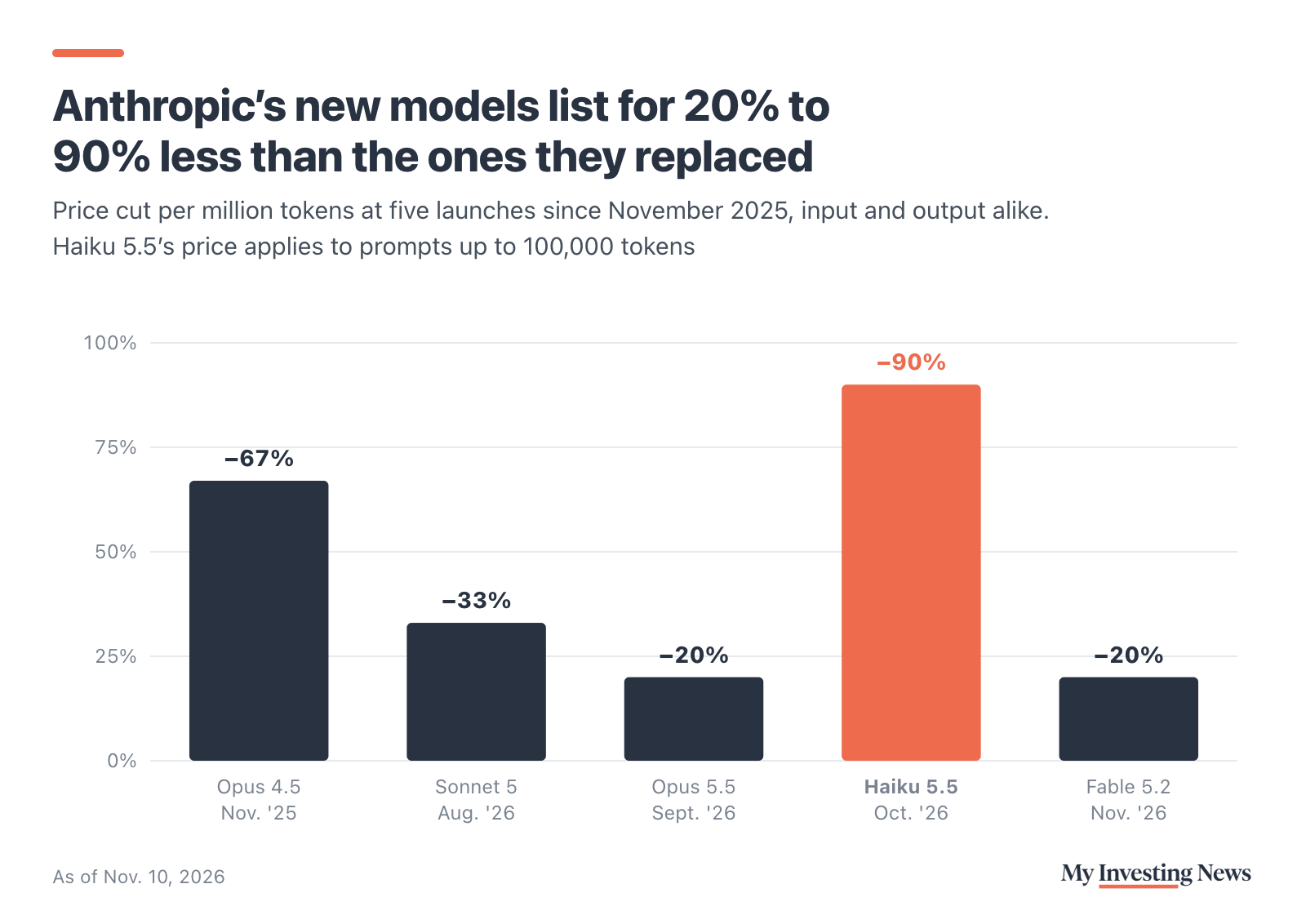
The cuts show up in the list prices. Anthropic cut the price of its top Opus model by two-thirds when it launched Opus 4.5 on Nov. 24, 2025, to $5 per million input tokens and $25 per million output tokens. Opus 5.5, launched Sept. 22, 2026, costs $4 and $20, which Anthropic said is 20% less than Opus 5. On Oct. 7, Haiku 5.5 arrived at 10 cents and 50 cents for prompts up to 100,000 tokens, a 90% cut from Haiku 4.5. Anthropic says that works out to about 75% less on average, partly because its newer models use a tokenizer that counts about 30% more tokens for the same text.
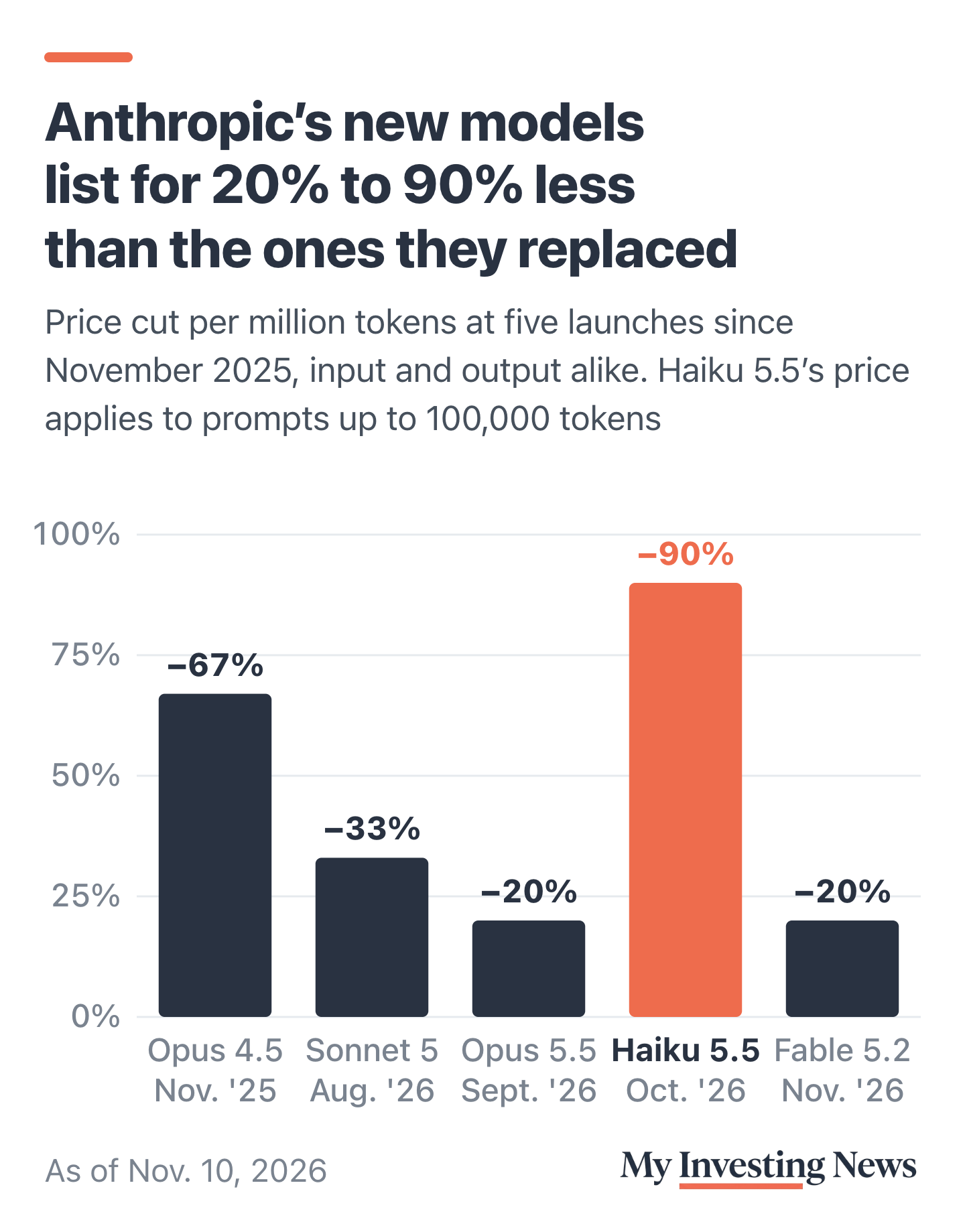
Steve Eisman, on his podcast’s Nov. 6 weekly wrap, read the October moves as a fight for customers. Anthropic “cut its token pricing by as much as 50% in October so as to spark demand,” he said, adding that OpenAI and Google appear to be following. “It looks like a full-blown price war is happening as we speak.” The Oct. 7 launch did halve one price for Sonnet 5.5, on cached input; the Haiku cut was deeper.
Faster Than Any Price Collapse Before It
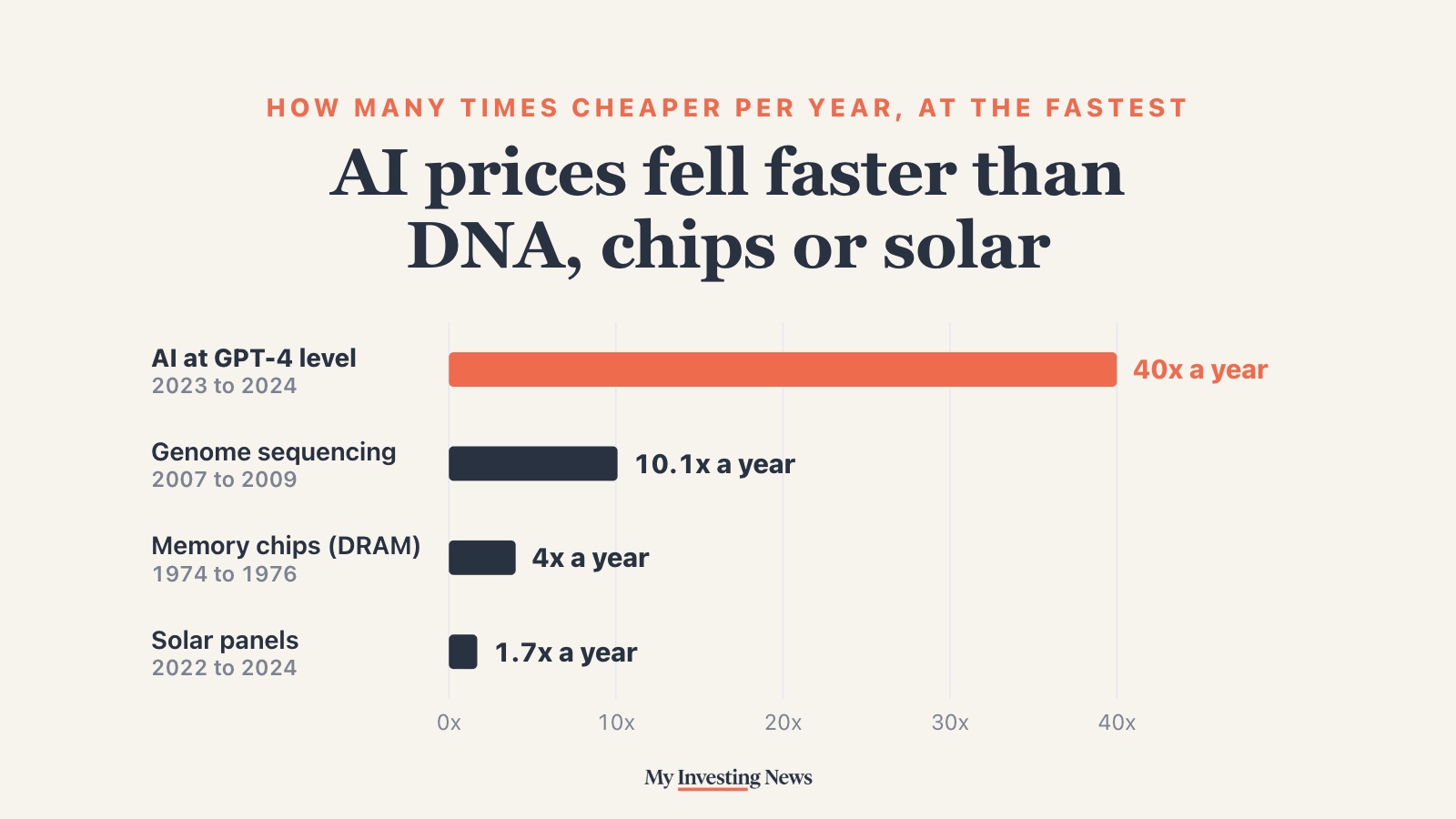
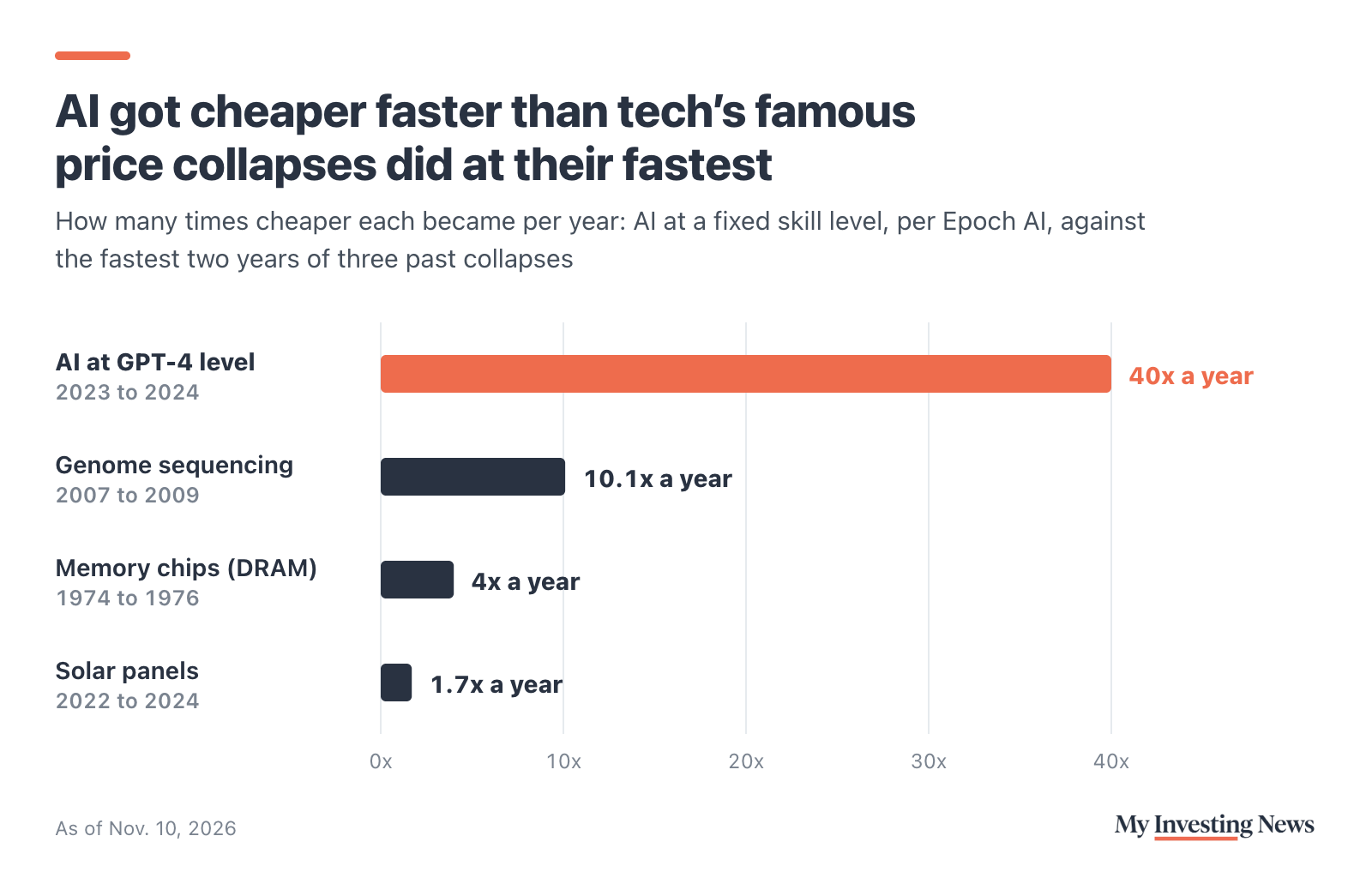
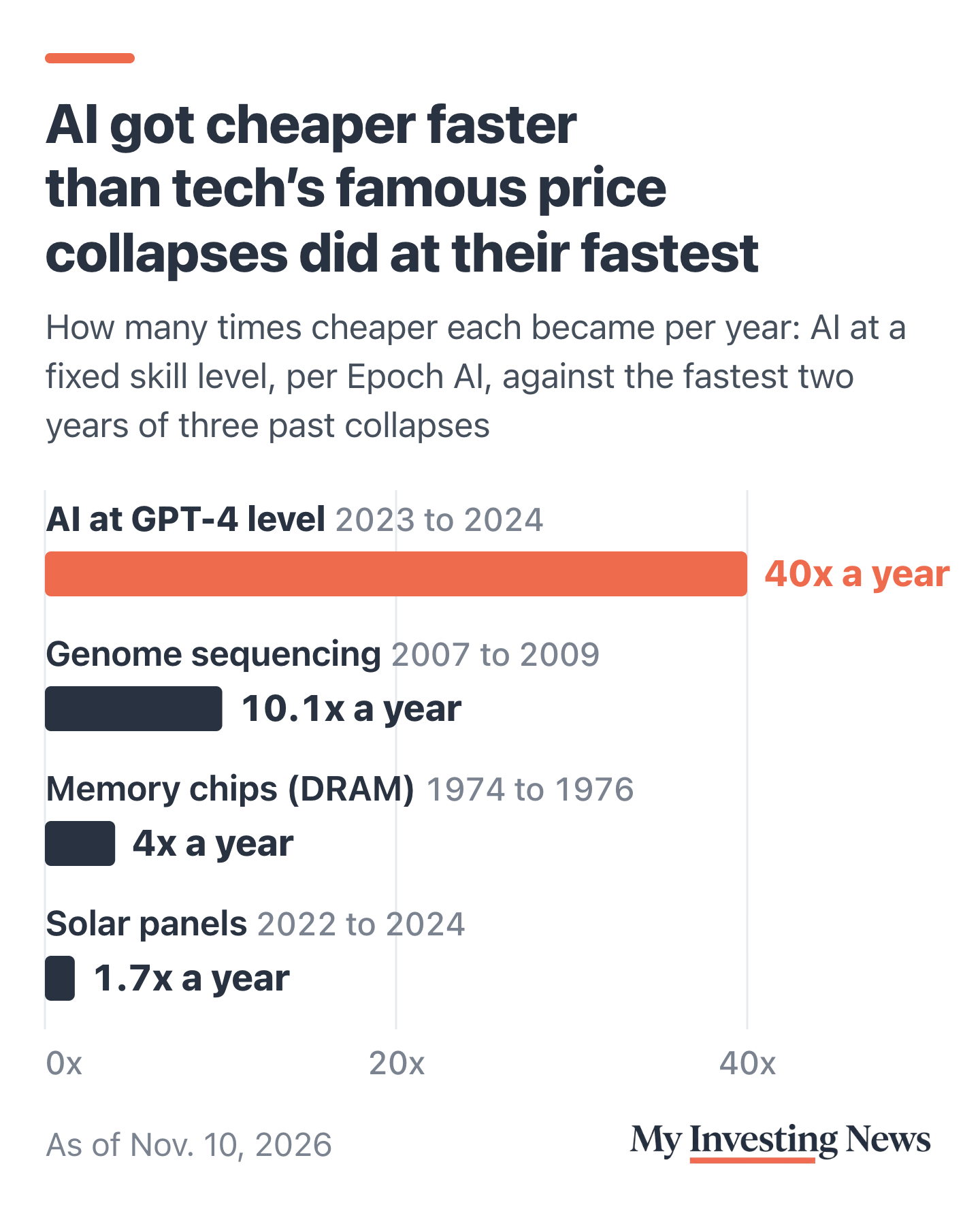
The bigger trend is older than Anthropic’s cuts. Epoch AI, a research group that tracks AI costs, measured the cheapest price that matched GPT-4’s March 2023 score on a set of Ph.D.-level science questions. It fell from $37.50 per million tokens for GPT-4 itself to about 12 cents for Microsoft’s Phi 4 by December 2024, a decline Epoch puts at 40-fold a year, or 97.5%. Across the six tests and skill levels it tracked, the rate ranged from 9-fold to 900-fold a year.
The AI price war, in numbers
None of three famous price collapses we checked kept that pace, even at its peak. In its fastest two years, from 2007 to 2009, the cost of sequencing a human genome fell about 10-fold a year, from about $7.1 million to about $70,000, by the National Human Genome Research Institute’s count. Memory chips got about 4 times cheaper a year in their fastest stretch, 1974 to 1976, and solar panels about 1.7 times a year from 2022 to 2024, in inflation-adjusted prices.
Who Kept the Margins
Past collapses split their industries in two. In memory chips, years of price wars pushed Germany’s Qimonda into insolvency in 2009 and Japan’s Elpida, then the third-largest maker, into bankruptcy in February 2012. In solar, China ended up with more than 80% of every stage of panel manufacturing, according to the International Energy Agency. In genome sequencing, the leading machine maker, Illumina ILMN, kept its gross margin between 67% and 68% every year from 2009 through 2012 while the cost per genome kept falling.
Anthropic says it is on the Illumina side. With Opus 5.5 and Fable 5.1, its filing says, “Because of our compute efficiency, we have been able to make these improvements while preserving our margins.” Its quarterly numbers are less tidy: compute and infrastructure spending equaled 58% of revenue in the third quarter, up from 48% in the second. Cheaper rivals are another pressure, since open-weight models already handle most of the tokens on one big AI marketplace, and a top VC has argued Anthropic could be overtaken.
What to Watch
Watch Anthropic’s next quarterly numbers for a new price reductions figure, and whether compute spending keeps rising faster than revenue. Watch whether OpenAI and Google cut list prices on their newest models. And watch Epoch AI’s next update: its 2025 study warned that the fastest drops came after January 2024, so “it’s less clear that those will persist.”
Fiegerman’s $600 million is in Anthropic’s filing, and the price cuts behind it are on its price list. By Epoch AI’s count, AI at a fixed skill level has gotten about 40 times cheaper a year, faster than genome sequencing, memory chips or solar panels at their fastest. In those industries, the seller with an edge kept its margins and the commodity makers did not. Anthropic says it is the first kind; its compute bill will show whether that holds.