Where we heard itCNBC’s Mad Money, Nov. 3, 2026: Jim Cramer, in a segment on lab-tool and life sciences stocks.
Jim Cramer thinks Washington has turned friendly to new medicines. “The FDA seems to have gotten more interested in both encouraging innovation for new medicines and, probably most important, speeding up the new approval process,” he said on Mad Money on Nov. 3, in a segment on suppliers such as Thermo Fisher Scientific TMO. Earlier in the same segment he said, “The administration seems very pro-new drug.”
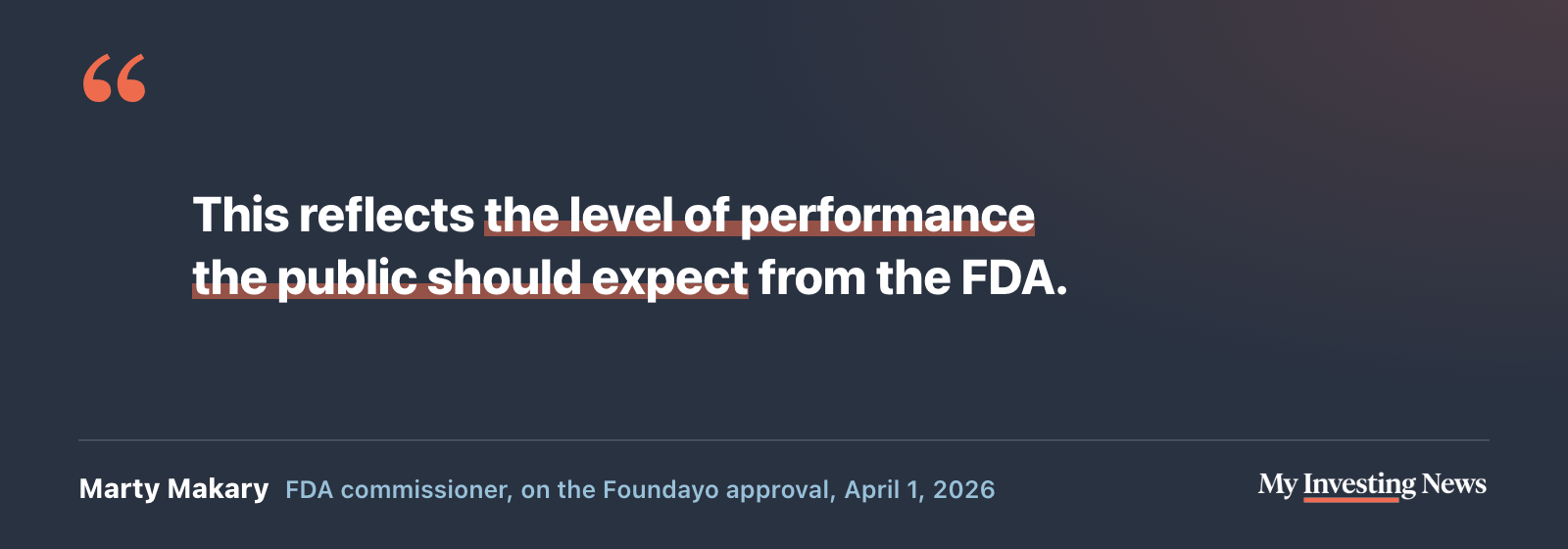
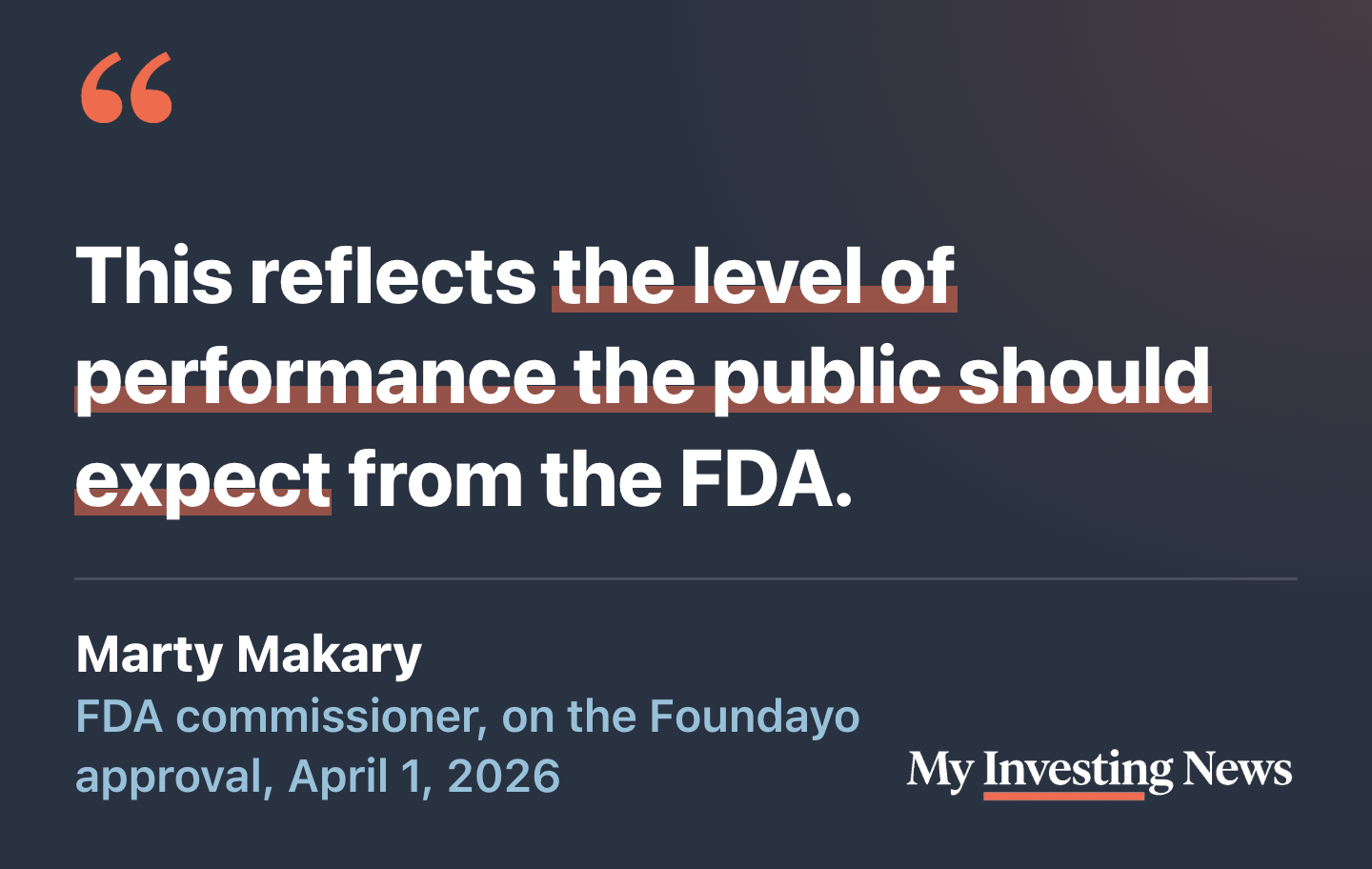
The Food and Drug Administration says the same thing about itself. When it approved Eli Lilly LLY’s weight-loss pill Foundayo on April 1, the agency said the decision came 50 days after filing, “the fastest approval of an NME since 2002,” using its term for a new molecular entity. Then-Commissioner Marty Makary added:
We checked both claims against the FDA’s own records: its list of novel drug approvals for 2026, its compilation of every new drug and new biologic its drug center approved since 1985, and the receipt dates printed in this year’s approval letters. The count backs Cramer up. The typical review time only partly does.
More Approvals Than Any Year but One
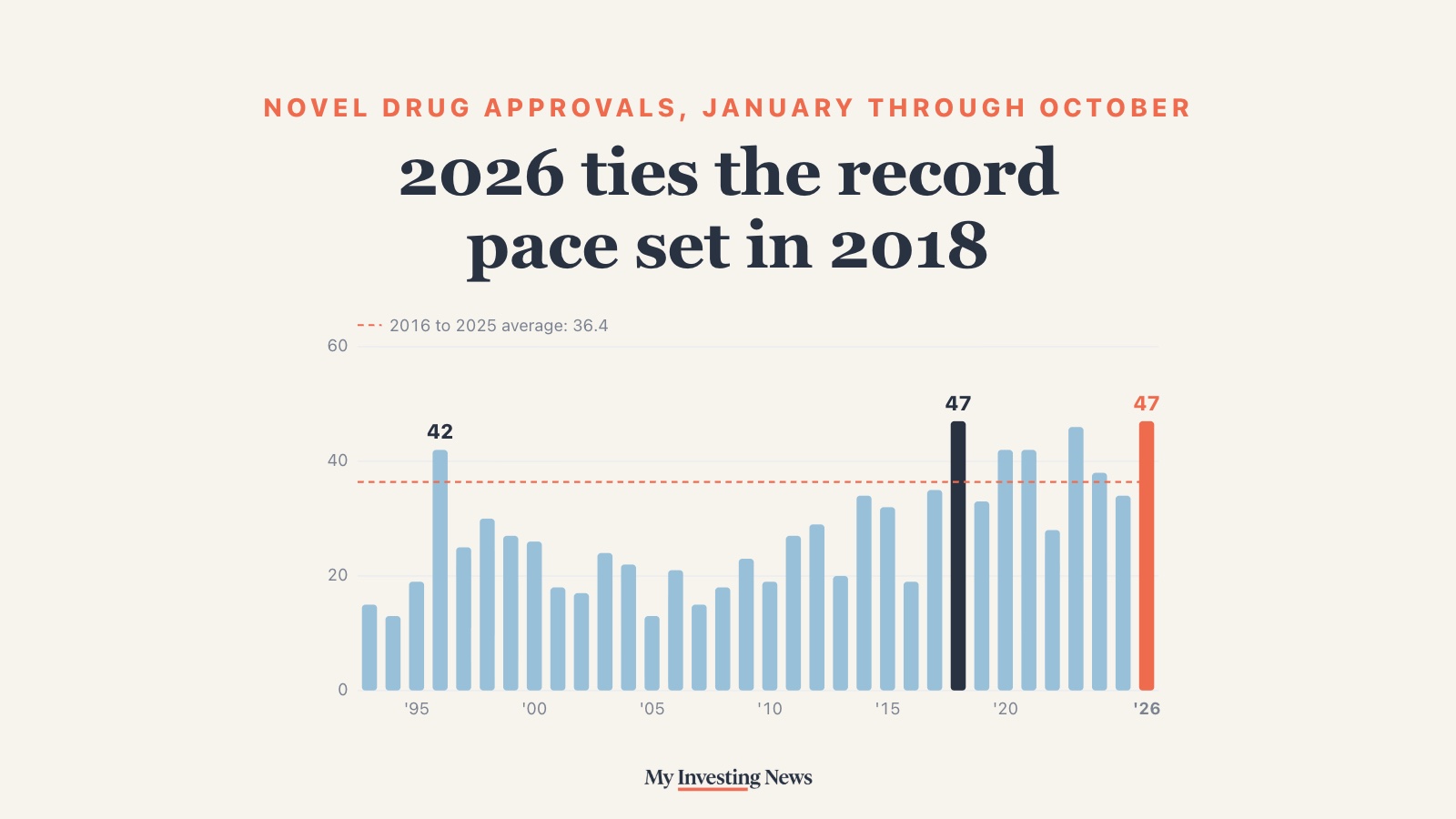
From January through October, the FDA’s Center for Drug Evaluation and Research approved 47 novel drugs, meaning medicines never before sold in the U.S. That ties 2018 for the most in that stretch of any year in the agency’s records. The 2016 to 2025 average for the same ten months was 36.4, and last year’s count was 34. Before 2018, the best January-through-October total was 42, in 1996.
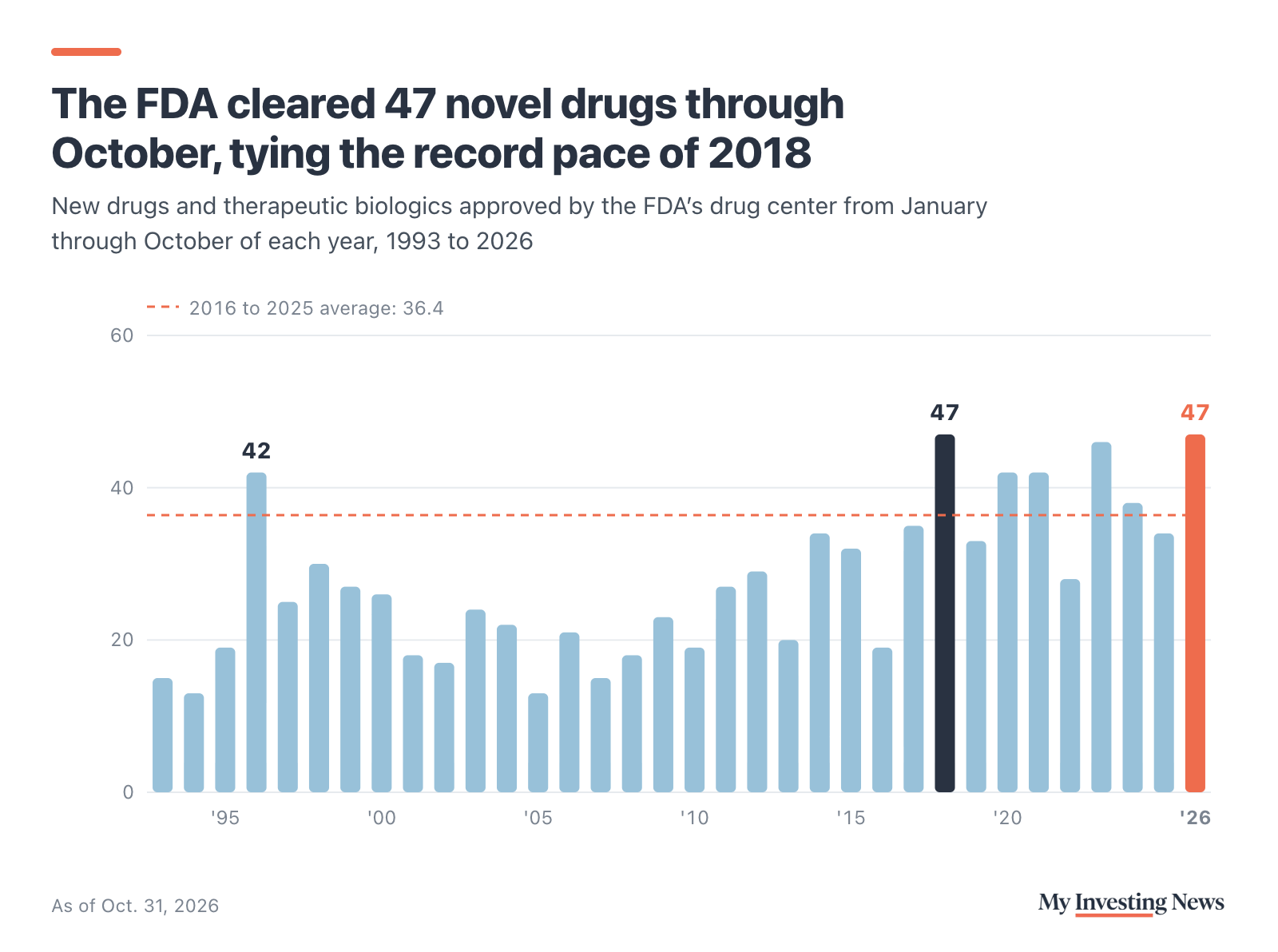
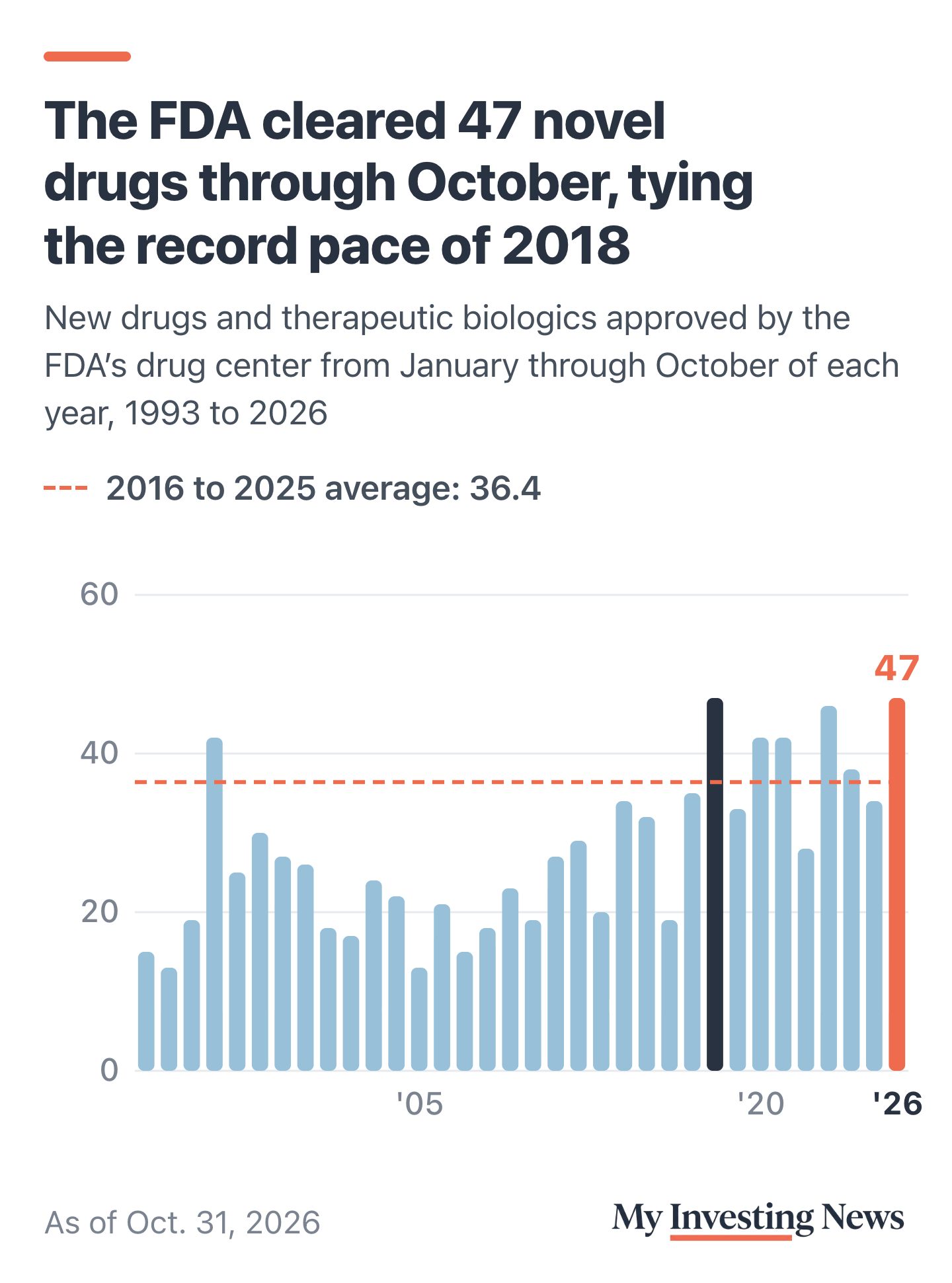
The 48th approval of the year came on Nov. 9. The full-year record is 59, set in 1996 and matched in 2018, so the agency needs 12 more by Dec. 31 to beat it. From 2016 to 2025, November and December added an average of 10.2.
Faster for a Few, Not for Most
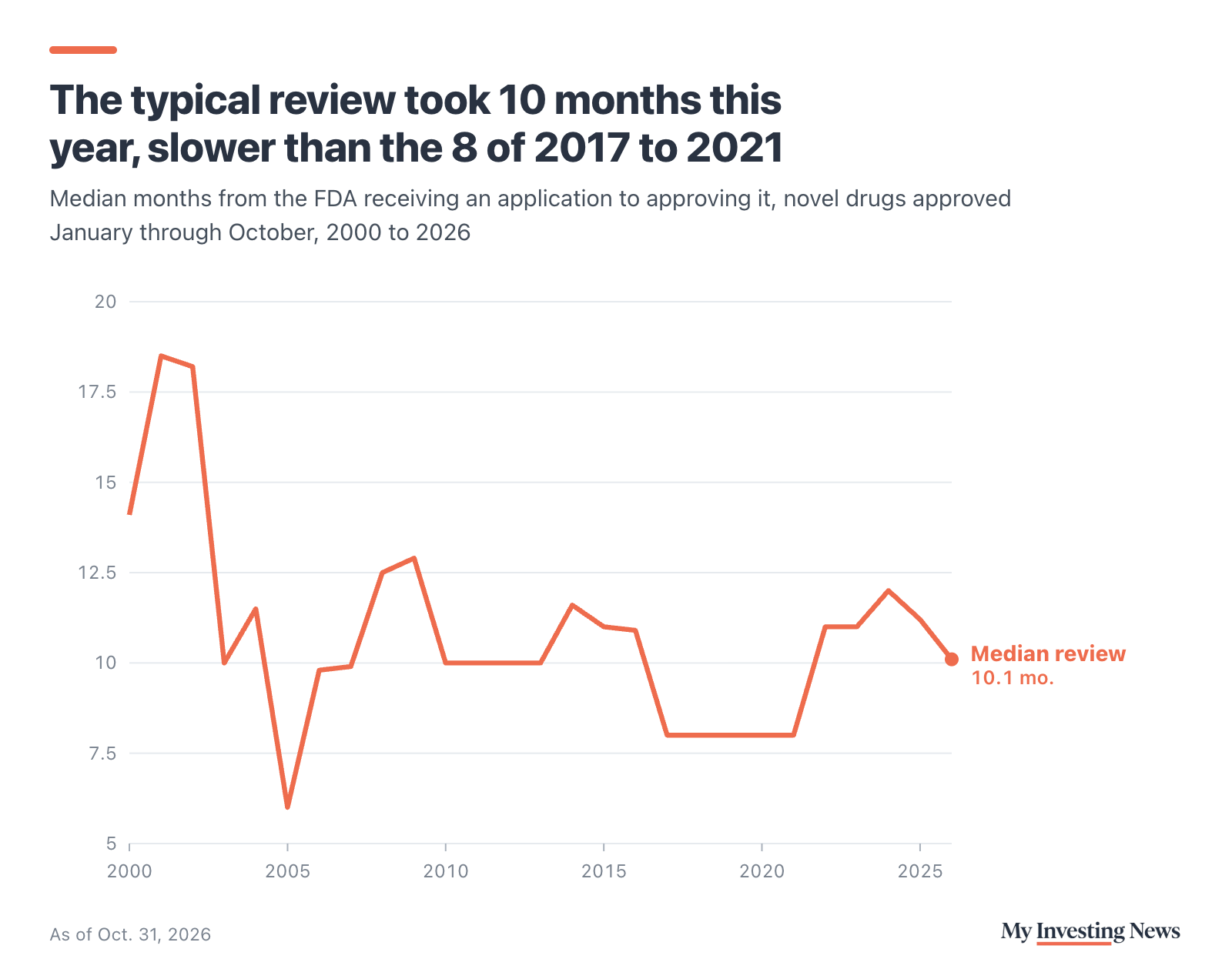
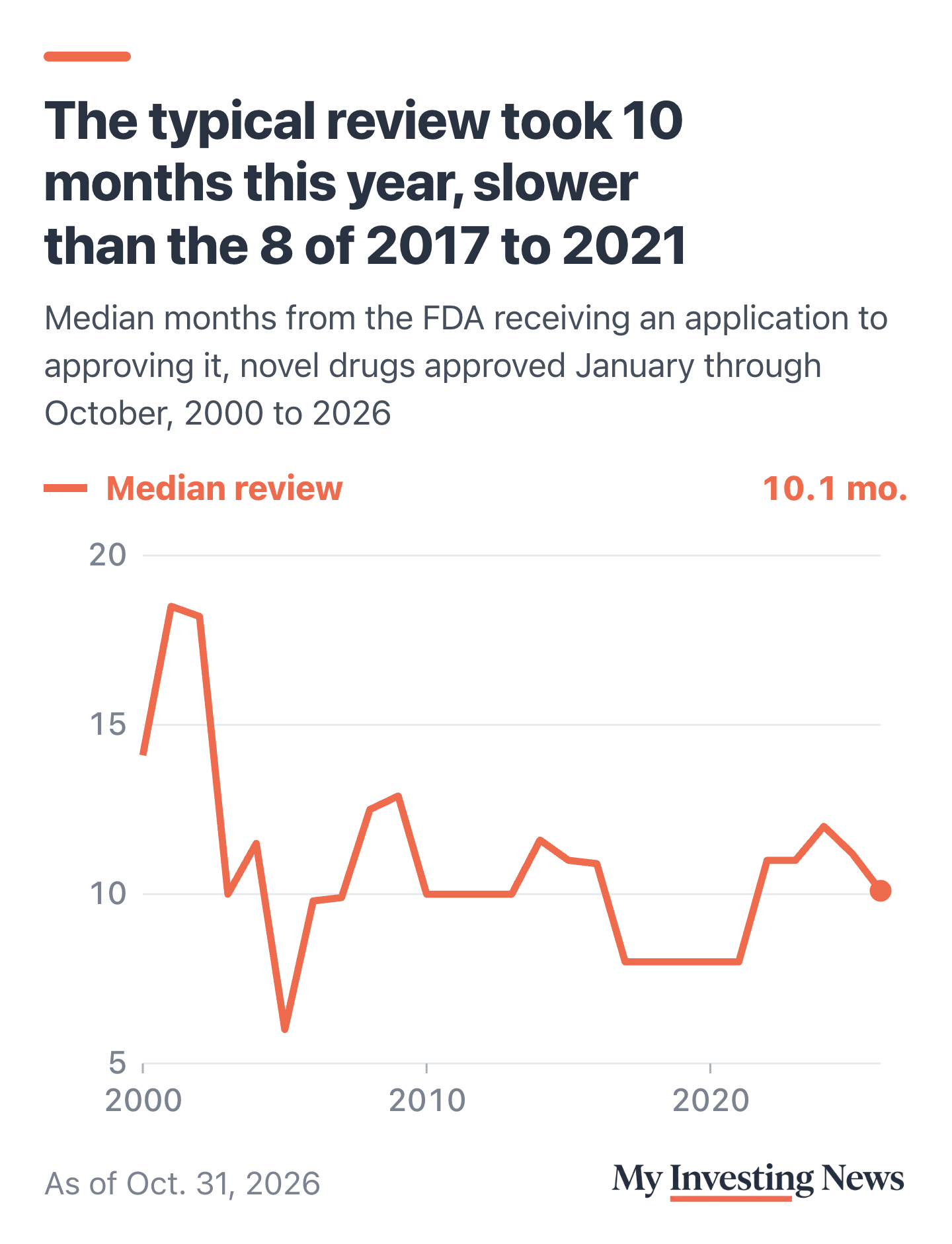
Speed is a different question from volume. For 41 of this year’s 47 approvals, the approval letter gives the date the FDA received the application. The median wait from receipt to approval was 10.1 months. That is quicker than 2022 to 2025, when the same measure ran 11 to 12 months, but slower than 2017 to 2021, when it held at 8 months for five straight years.
The typical review still runs on the user-fee clock Congress set: about eight months from receipt for a priority review and about 12 for a standard one. The mix has not shifted much. Of this year’s 47 novel approvals, 30, or 64%, had priority review, against an average of 65% from 2016 to 2025.
Novel drug approvals, January through October 2026
The speed shows up at the edges. Three novel drugs this year were approved less than three months after the receipt date in their letters, and all three were reviewed under the Commissioner’s National Priority Voucher program, which the FDA started in June 2025 with a target of one to two months. Merck MRK’s cholesterol pill Lipfendra was approved 23 days after its stated receipt date, and Revolution Medicines RVMD’s pancreatic cancer drug Rasonque took 40 days. Those clocks understate the work: the program uses rolling reviews, so companies send in parts of an application before the official receipt date.
At the other end, Four of this year’s approvals had first been filed more than two years earlier and came back after an earlier rejection. Investors have noticed the friendlier tone, and drug stocks now trade at richer multiples than tech by one measure.
What to Watch
The people at the top have changed since the program started. Makary resigned in May, and Kyle Diamantas, who ran the FDA’s food division, has led the agency as acting commissioner since. Congress changes in January, too. Democrats won both chambers on Nov. 3, and the voucher program, which the FDA put up for a public hearing in June, could get a closer look from the new majorities. Drug prices are a likely topic for hearings, and the law that lets the FDA collect review fees from drugmakers runs through September 2027, so the new Congress will have to renew it.
The year-end count is the simplest check. A record would take at least 60 novel approvals by Dec. 31. Cramer’s own record is checkable too: we scored his August buy calls.
Cramer is right that the FDA is approving more new drugs: 47 through October ties the record pace, against a ten-year average of 36. Faster is true mainly for a handful of priority-voucher drugs. The median review took 10.1 months, slower than the 8 months of 2017 to 2021, and a new Congress and an acting commissioner add uncertainty.