Where we heard itAll-In podcast, “AI Cyber Panic, Ken Griffin’s Bubble Warning, The Fall of France?” Released Oct. 23, 2026. Speaker: Social Capital CEO Chamath Palihapitiya. Listen to the episode
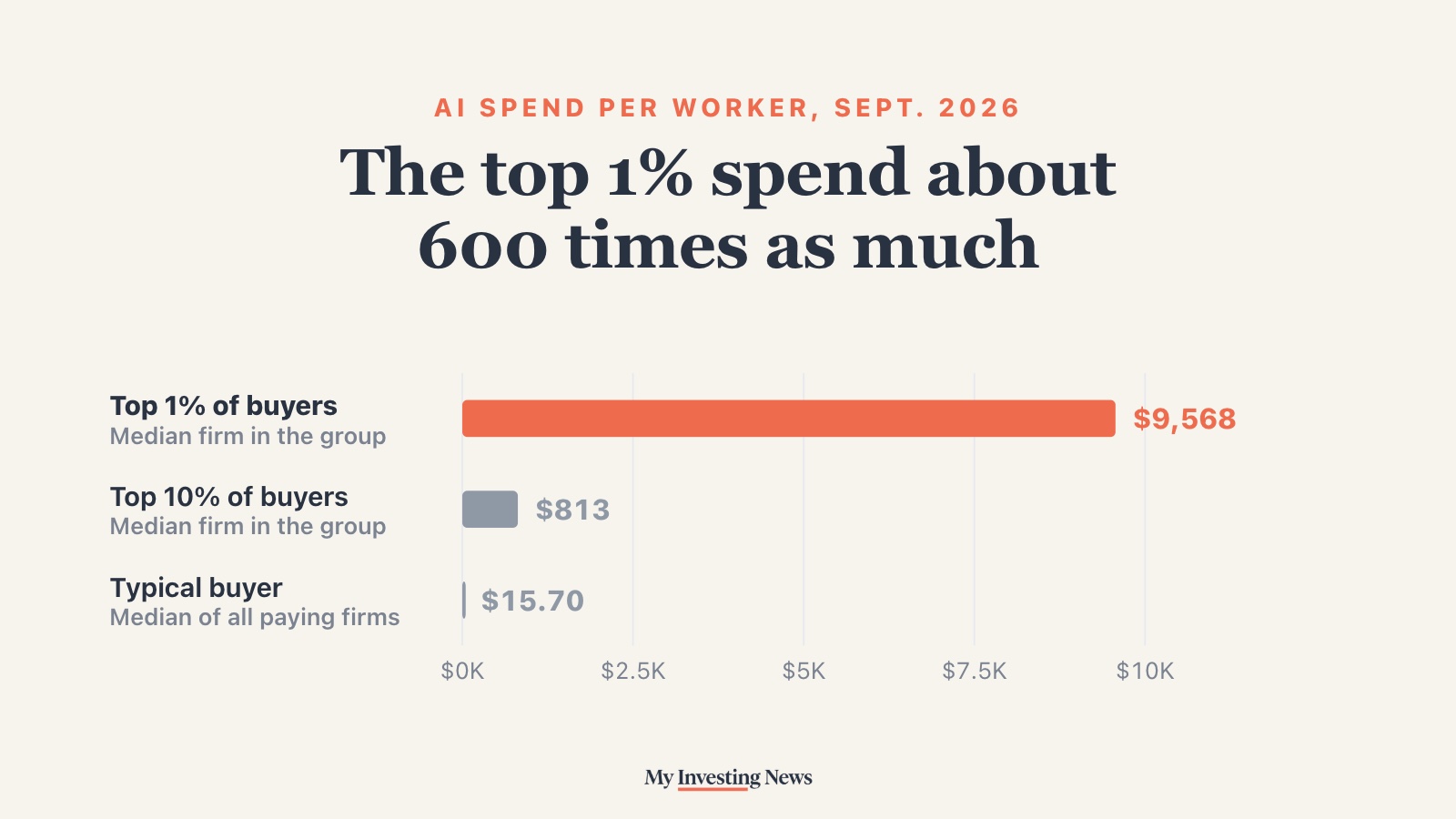
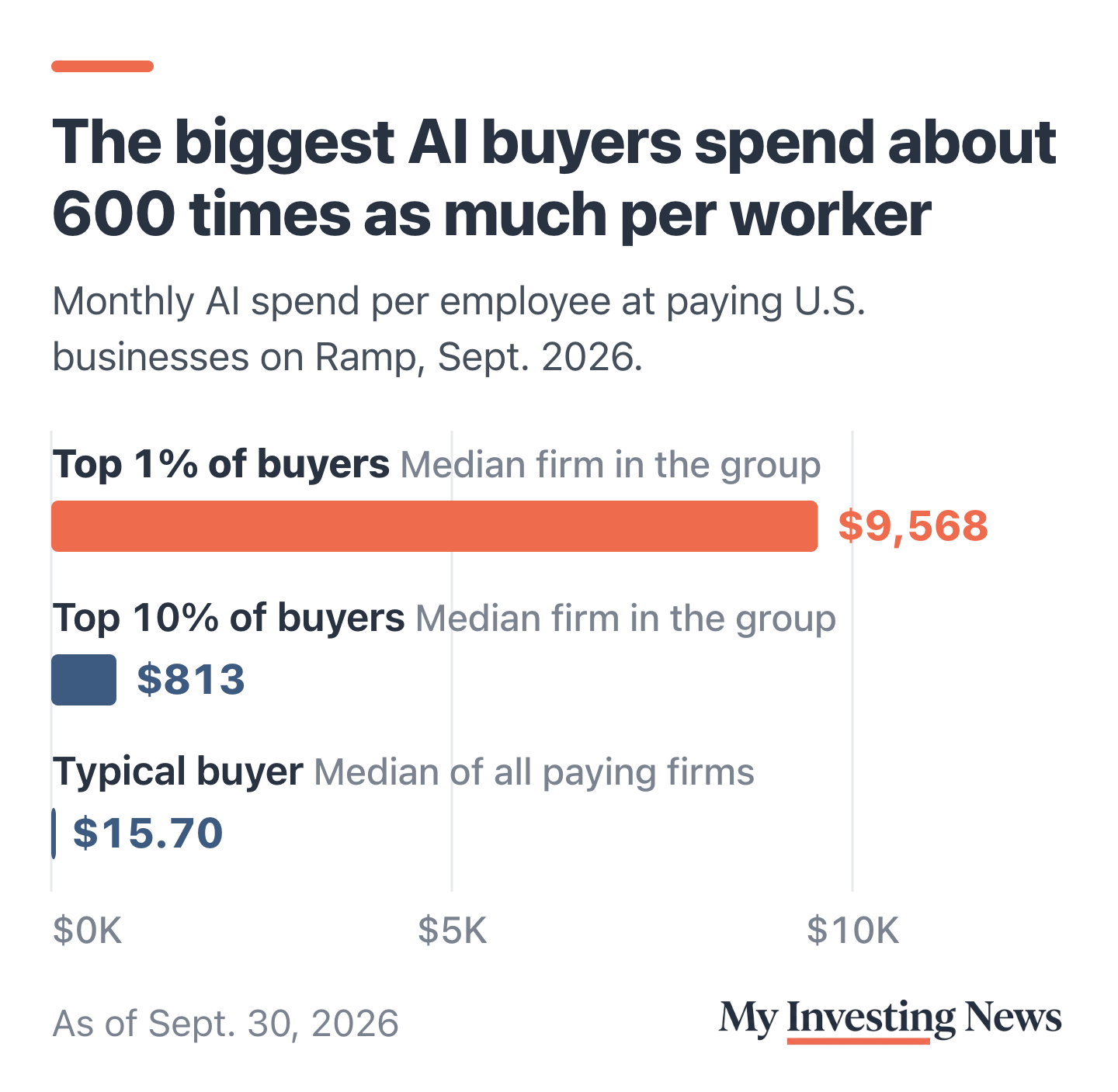
Citadel founder Ken Griffin said investors are “almost certainly” in the middle of an artificial intelligence bubble, Bloomberg reported on Oct. 20. The All-In podcast’s summary of his remarks notes that Griffin is worried that companies are “looking at their bills from Anthropic and OpenAI and asking where the productivity is.” On the All-In episode released October 23, 2026, Chamath Palihapitiya answered with numbers. Palihapitiya said 1% of companies account for 90% of AI spending, and that 80% of that money comes from “unprofitable VC backed companies.”
His figures matter because a large share of the revenue reported by AI labs and infrastructure vendors would then sit on a small group of customers that run on investor capital.
A Closed Loop of Venture Money
Palihapitiya said the spending he measured is “tokens.” Tokens are the units of AI usage that companies pay model providers for. VC-backed companies are startups funded by venture capital firms. Those firms raise their money from LPs (limited partners), the outside investors who supply the capital.
He laid out the cycle in detail: “VCs raised from pension funds and LPs and foundations and family offices. They put money into a startup, that startup takes that money and invests in growth.”
Palihapitiya said that loop sits awkwardly next to sky-high private valuations. Palihapitiya described a market “where 75 cents of every dollar is actually just a startup sending it back and forth so that they can mark themselves up. That’s, I think, a structural problem.”
Why This Boom Looks Different From Early Cloud
Palihapitiya pointed out that cloud computing also started with startups as its core customers. When AmazonAMZN first offered its EC2 and S3 services, the buyers were young companies. Back then, he said, AWS was backed by Amazon’s retail business, which was “already then a roughly break even profitable business, at least on a free cash flow basis.”
“So what’s different here is you have a bunch of money losing entities just spinning a bunch of money around and it has to diffuse more broadly,” he said, adding that he believes this is what Griffin is seeing.
Big Companies Are Building Their Own AI Stack
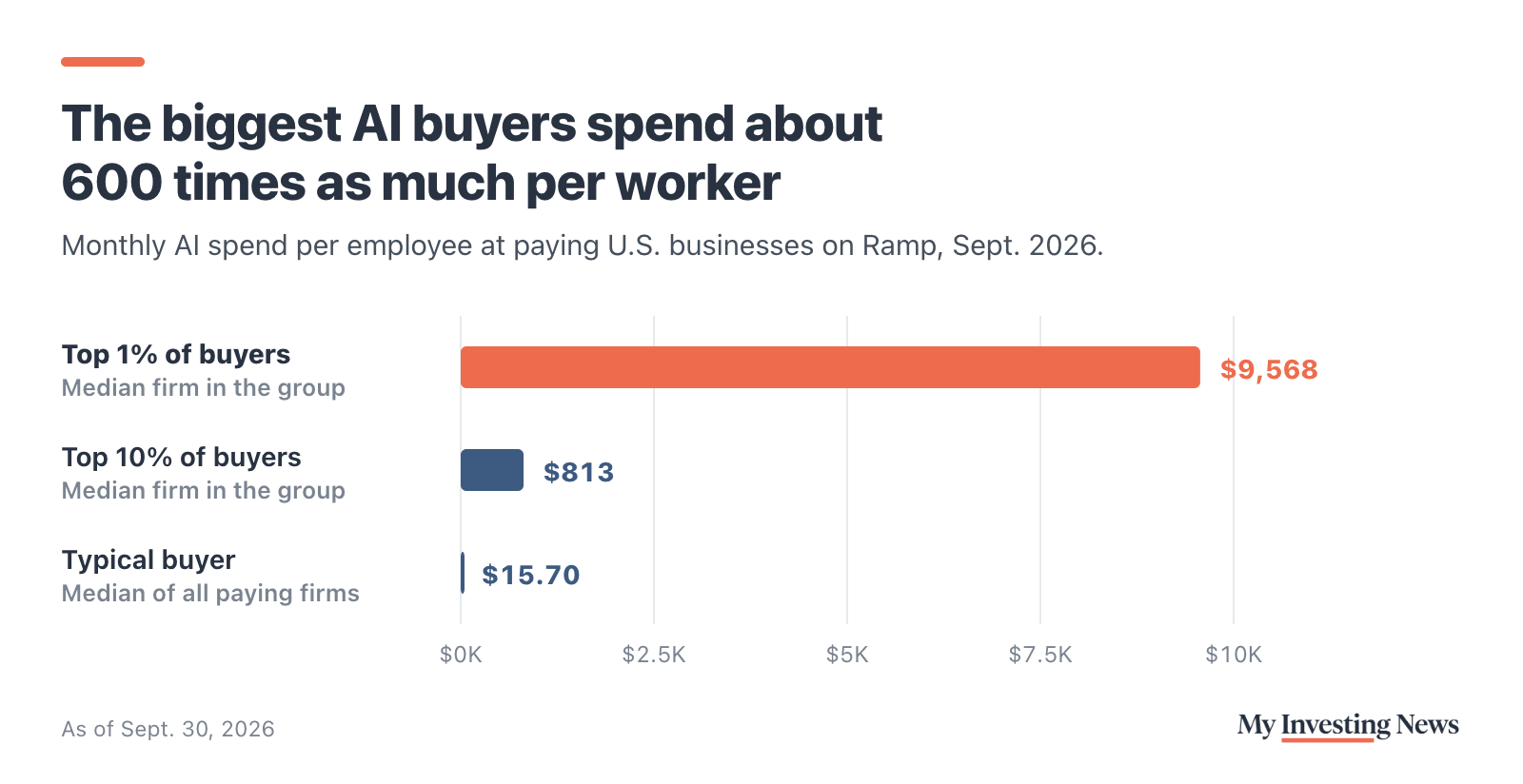
Palihapitiya said his Social Capital research team took his estimate to the lead economist of corporate card company Ramp, who indicated it was about correct. He said Ramp mainly serves startups. A Ramp chart he previewed, which Ramp has not yet published, shows the top AI spenders putting a growing share of their budgets into GPU compute and a smaller share into traffic to closed frontier models. Palihapitiya read that as buyers purchasing their own GPUs because they are “moving to open source.” Open-source models are AI models whose underlying weights are released publicly, so companies can run them on their own hardware and avoid paying per token.
Who pays for AI: Ramp’s September data
He gave one example. His team met with a large U.S. bank, which he did not name, and the bank said: “We have decreased our spend on AWS and GCP. We now have six completely independent ground up data centers that we’ve built from scratch for ourselves.”
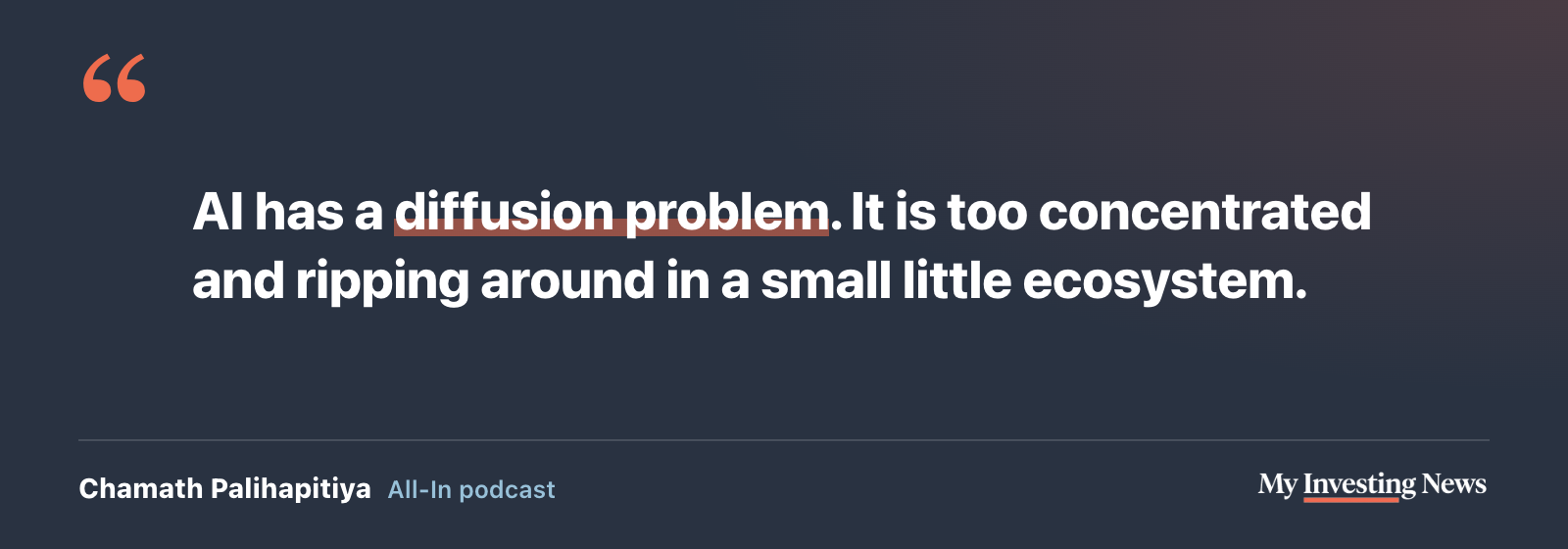
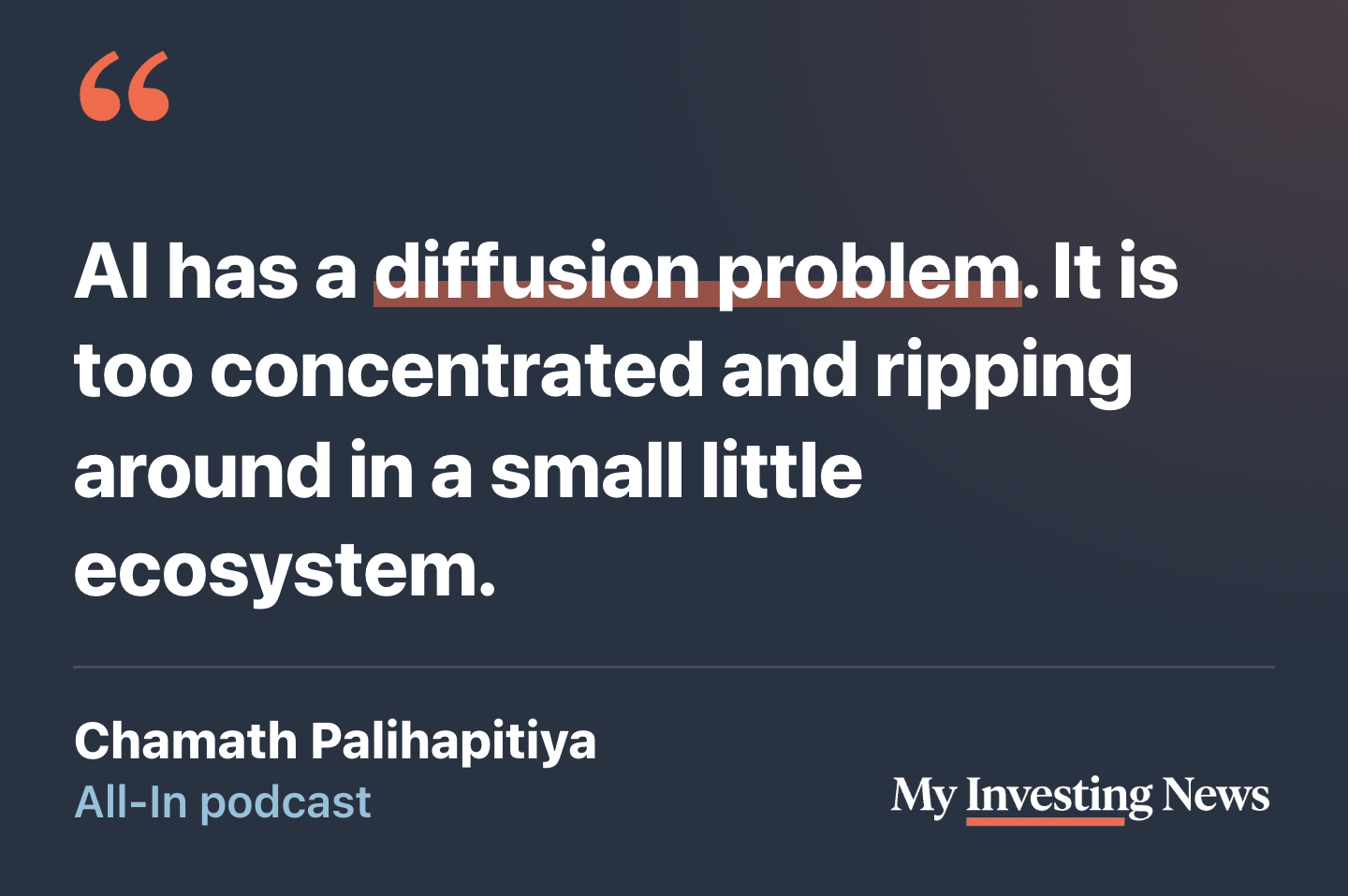
“AI has a diffusion problem. It is too concentrated and ripping around in a small little ecosystem. We need to diffuse out. But as it diffuses out, people are picking open source is what I would tell you,” Palihapitiya said.
Calacanis Argues Startup Adoption Comes First
Jason Calacanis disagreed with the bubble reading. He said that when startups rush toward a technology, that has typically been a strong positive signal, because startups go looking for the cheapest and fastest edge available. He pointed to cloud computing and Facebook ads as earlier cases where startups adopted first and broad business value followed. Calacanis said he invests in a hundred startups a year and evaluates over 10,000.
What Investors Should Track Next
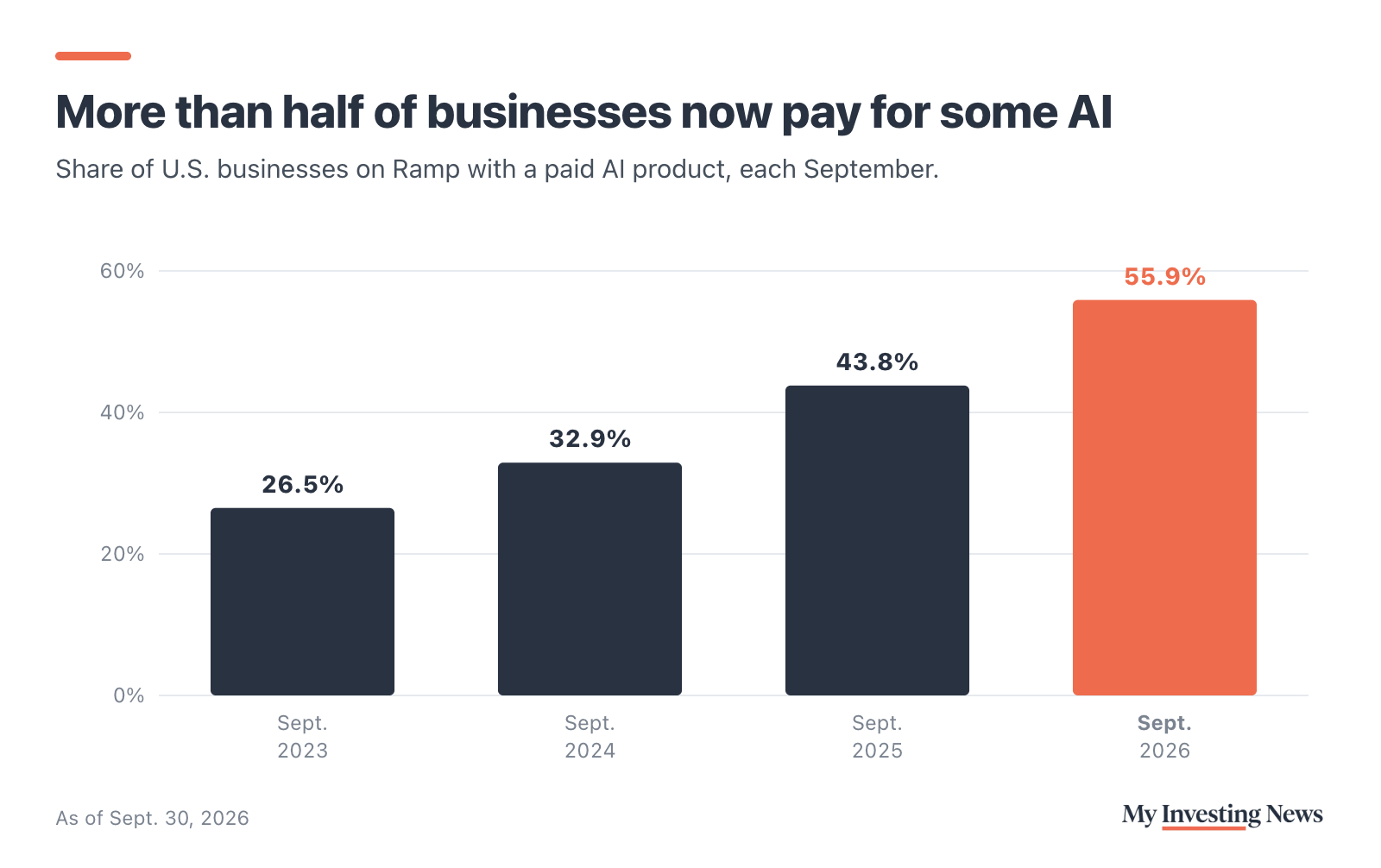
The debate comes as U.S. tech stocks fell on investor worries over AI spending, according to Al Jazeera. For investors holding AI stocks, the source of the money matters as much as the amount. Revenue that comes from startups funded by venture rounds depends on the fundraising cycle continuing. Revenue from profitable enterprises rests on operating budgets.
A few signals are worth tracking:
- Whether Ramp publishes its spending details, and whether the shift toward GPU compute continues.
- Commentary from cloud providers and model vendors on how many of their customers are enterprises versus startups.
- Evidence that large companies are moving AI workloads to their own data centers and to open-source models.
The bubble question may depend on whether AI spending moves beyond the startup market and into the budgets of businesses that already make money. Palihapitiya says that spread is happening more slowly than expected. Wharton’s Ethan Mollick has said AI makes workers better, and making companies better is the hard part. Calacanis says early startup demand is how it starts.
Palihapitiya says most AI spending comes from a small group of money-losing, venture-backed startups passing the same dollars around, and that it is reaching profitable companies more slowly than expected. The risk for AI stocks is that revenue built on venture rounds shrinks if fundraising slows. Calacanis counters that startup demand is how broad adoption usually starts.