Where we heard itClark Howard, consumer advocate, on The Clark Howard Podcast, episode “Clark Answers His Critics on Clark Stinks / Retail Finance Trap: NO,” Nov. 6, 2026.
Black Friday is Nov. 27, and the signs offering no interest for 12 months will be up long before then. Clark Howard calls these deals “no, no, no” plans: no interest, no down payment and no payment for a set period. On his Nov. 6 show he called them “the worst trap out there in retail and financing.” “No, no, no plans generally carry an interest rate higher than virtually any other form of credit,” he said. “Usually mid to high 30s as a percent.”
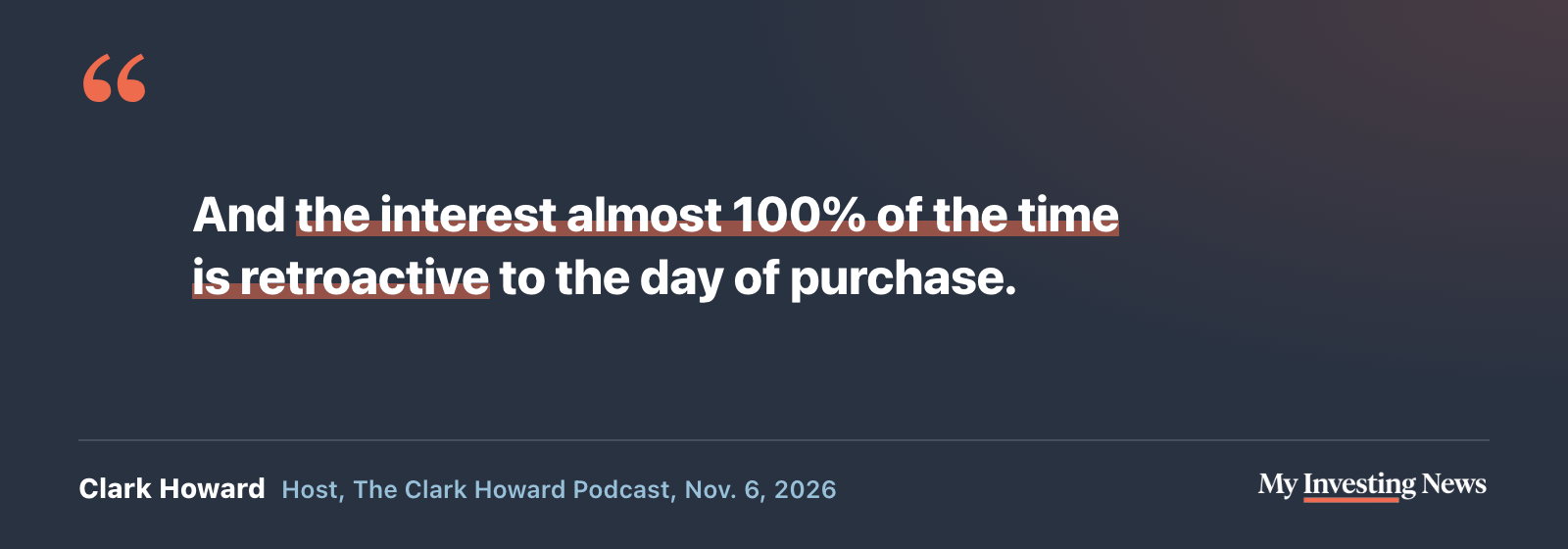
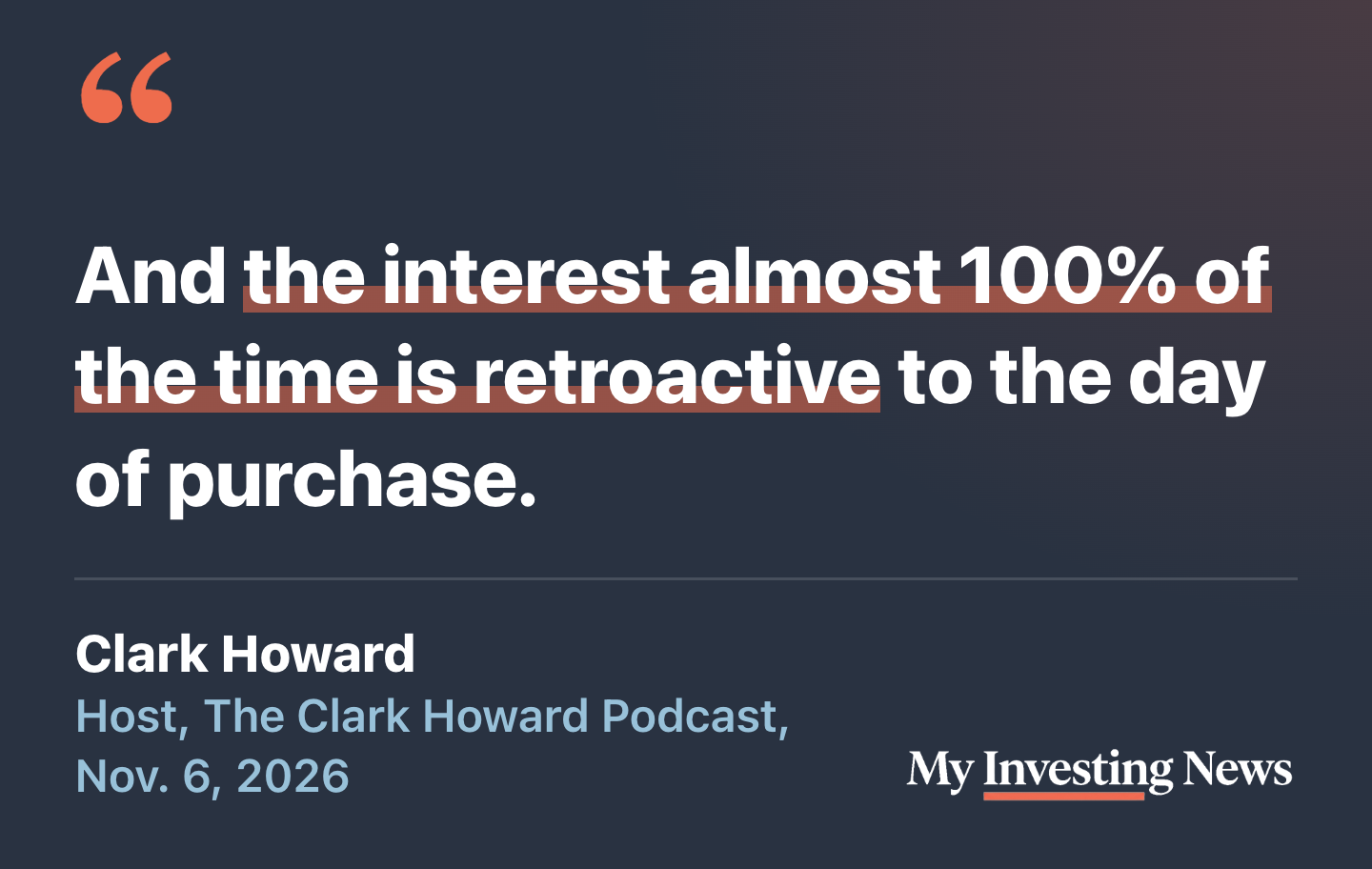
That second point is how deferred interest works. The card issuer tracks the interest from day one at the card’s regular rate. Pay off the whole promotional balance in time and that interest is waived. Miss by even a few dollars and, as the Consumer Financial Protection Bureau puts it, the consumer “will generally have all the deferred interest capitalized into their balance.” So the card’s regular rate matters a lot. We checked Howard’s numbers against the CFPB’s survey of card terms, its 2025 credit card market report and the Federal Reserve’s card rate data.
Card Rates Are Still Near Their Record
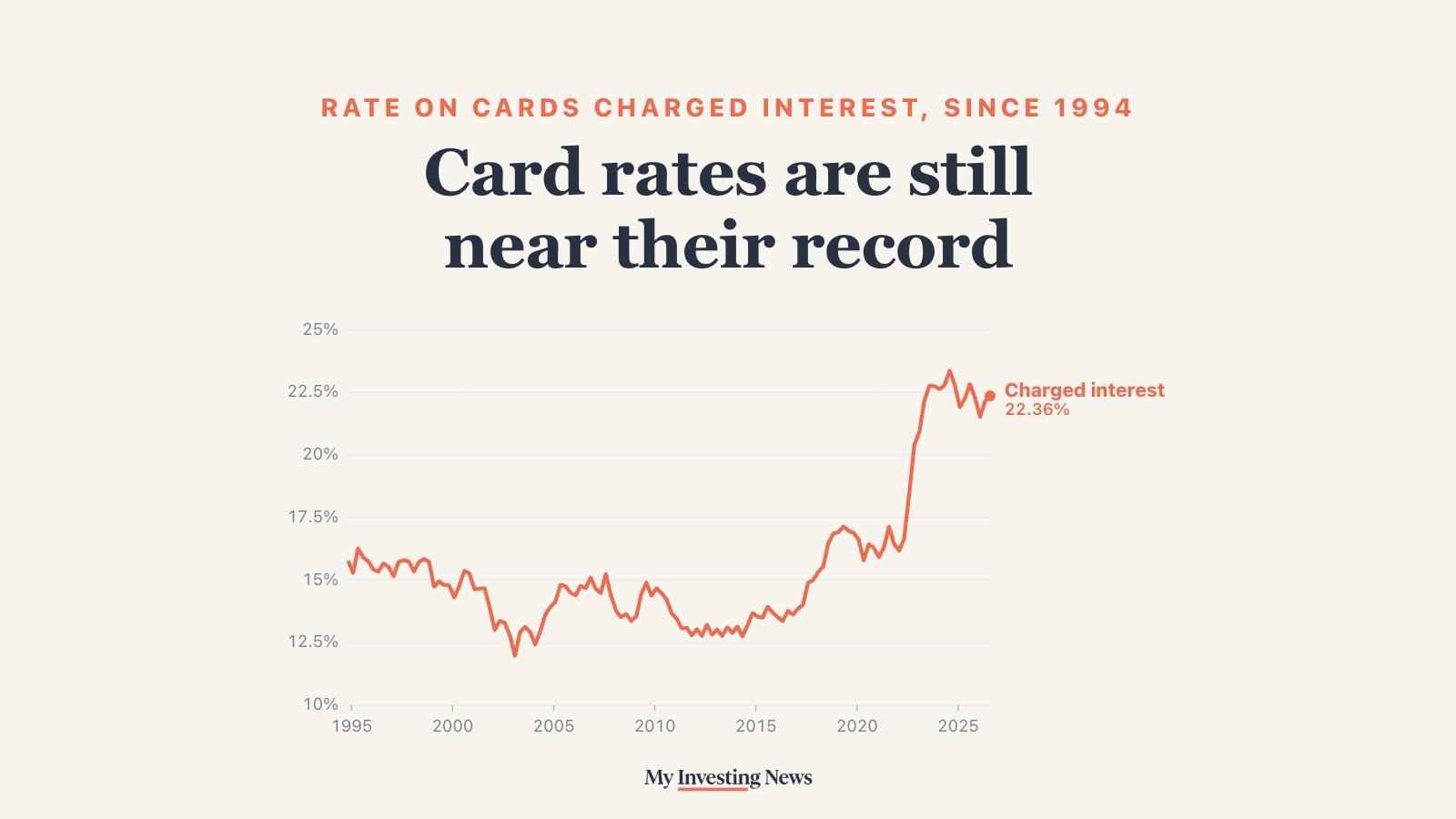
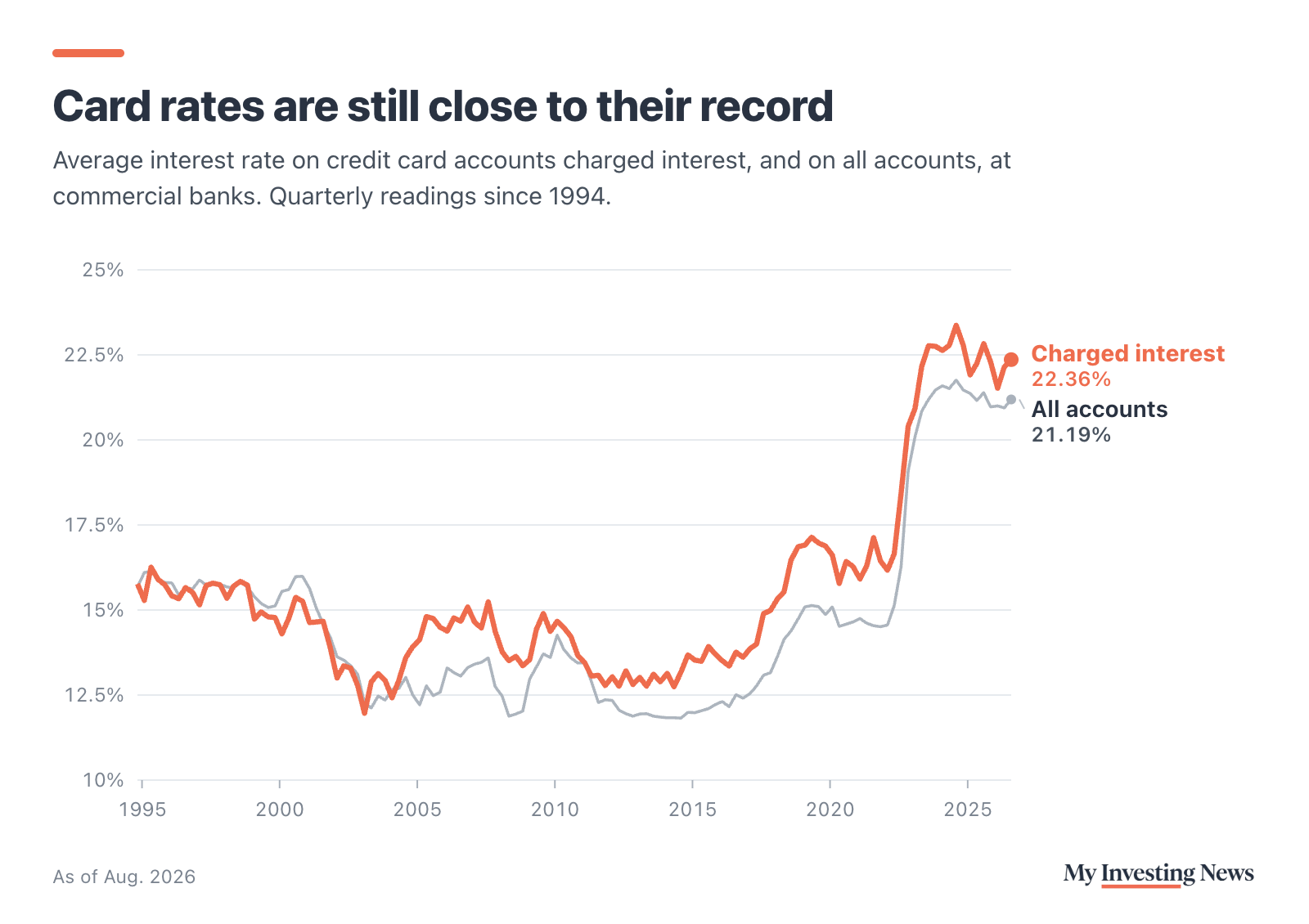
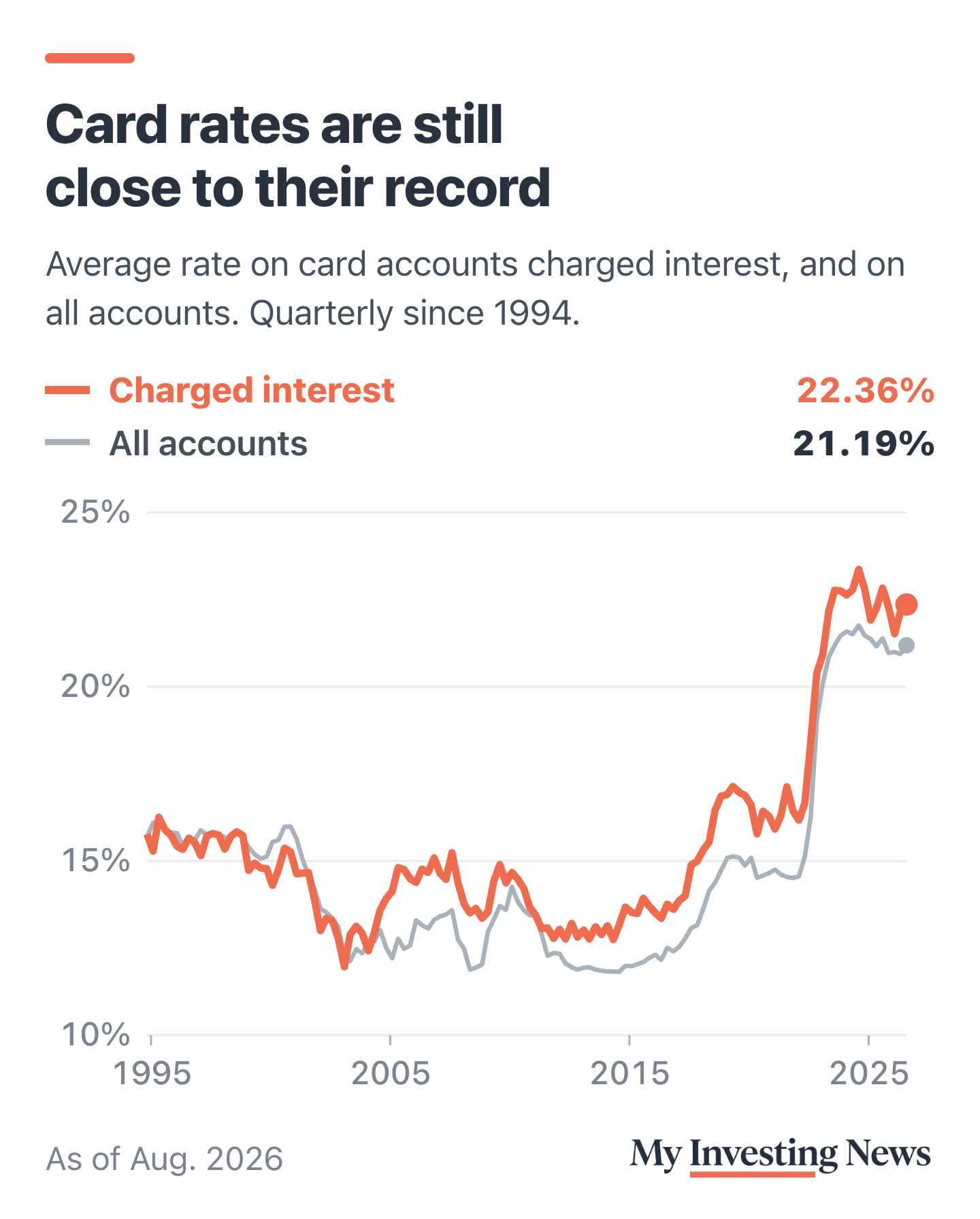
Start with ordinary cards. The Federal Reserve’s latest reading, for August 2026, put the average rate on credit card accounts that were charged interest at 22.36%. The record is 23.37%, set in August 2024. Only 7 of the 128 quarterly readings since 1994 have been higher than today’s, and all of them came after mid-2023. The low was 11.96% in February 2003. Borrowers are handling it so far: card delinquencies at banks have fallen eight quarters in a row.
Store Cards Cost 6 to 10 Points More
Store cards sit well above that. The CFPB’s market report found that private label cards, the kind that work only at one retailer, averaged 31.3% in 2024, the highest since at least 2015, against 25.2% for general purpose cards. Their rates also barely vary with credit scores, so a borrower with excellent credit usually pays the same rate as everyone else.
Howard said a regular card’s rate is “likely gonna be 10 points lower than the interest rate on the no, no, no plan.” Against the Fed’s 22.36% average, the store cards we checked below run about 10 points higher at the middle of the range. Using the CFPB’s own 2024 averages for both kinds of card, the gap is closer to 6 points.
Card rates and store promos
Mid 30s at the Top, Low 30s in the Middle
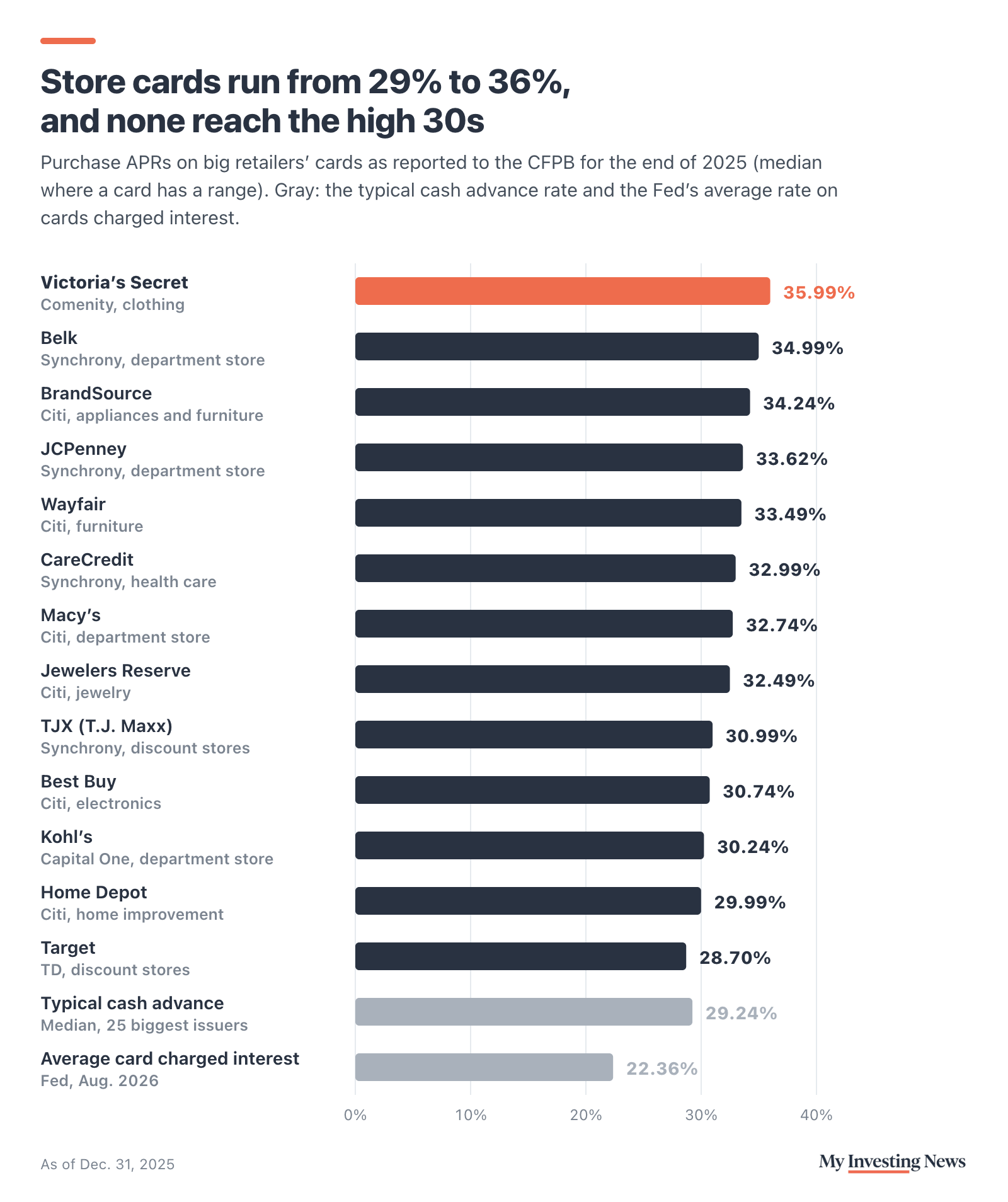
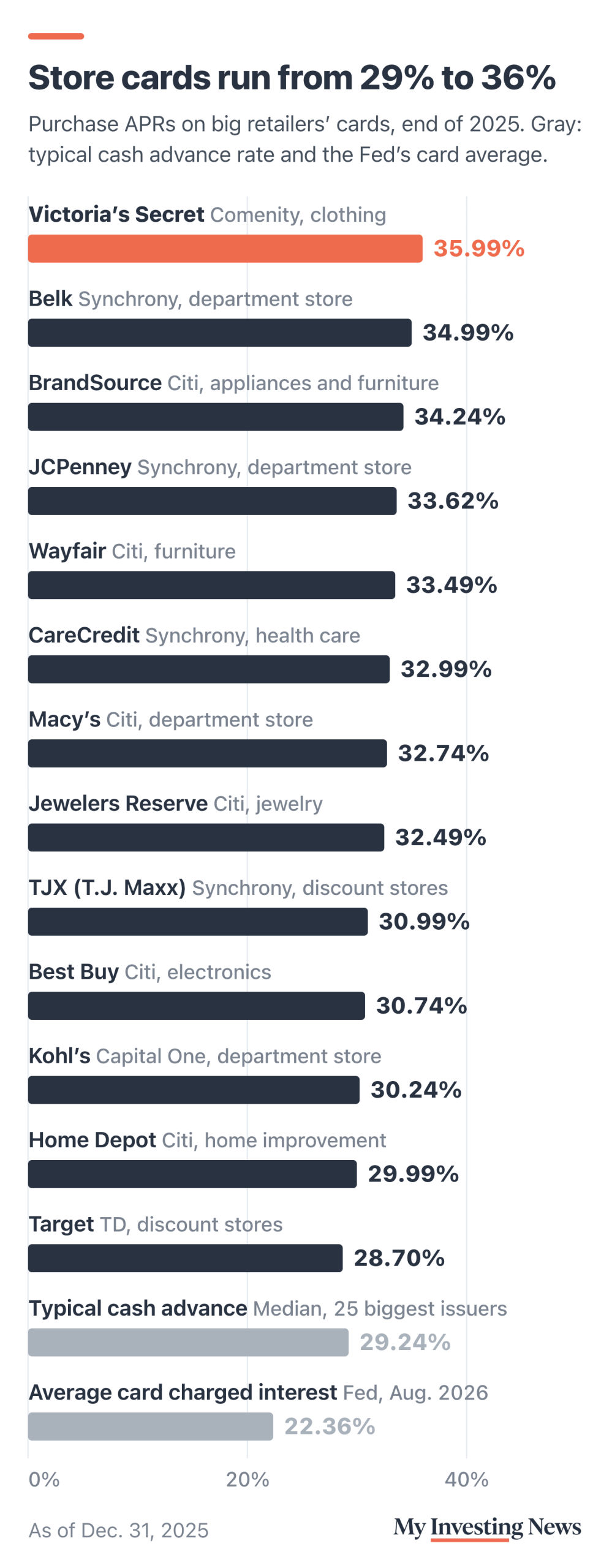
For individual cards, the best public source is the CFPB’s Terms of Credit Card Plans survey, which card issuers fill out twice a year. Its newest edition reports rates as of Dec. 31, 2025. We pulled 13 cards from big retailers, weighted toward the places where these promotions are most common: home improvement, electronics, furniture, health care and jewelry, plus department stores. Their purchase rates ran from 28.70% on Target’s Mastercard to 35.99% on the Victoria’s Secret Mastercard, with a middle value of 32.74% (Macy’s). No card in the whole survey charged more than 35.99% on purchases.
So Howard’s “mid 30s” describes the most expensive store cards, and “high 30s” overshoots. The typical big store card charges in the low 30s. Most of these rates float with the prime rate, which has risen from 6.75% at the end of 2025 to 7% since Sept. 17, so the 9 variable-rate cards in our list probably cost about a quarter point more today. The survey doesn’t list every store card. Lowe’s card, for example, isn’t in it.
Why a Cash Advance Can Cost Less
Howard went further: if the deadline arrives and you can’t pay, he said, “it’s even a better decision at that moment to take a cash advance on a credit card and pay off the no, no, no plan.” Cash advances are pricey too. The median cash advance rate on cards from the 25 biggest issuers was 29.24% in the CFPB survey, a few points below store card rates, and most of those cards charge a fee of 5% of the advance, sometimes with a $5 or $10 minimum.
The math still favors Howard because back interest covers the whole purchase. Take a rough example of our own: $1,200 on a 12-month plan at 30.99% (Best Buy’s rate in the survey plus the quarter-point rise in prime), paid down by $100 a month, with $100 still owed when the promotion ends. The back interest comes to about $201. A $100 cash advance to clear it costs $5 to $10 in fees and roughly $2.44 a month in interest until it’s repaid.
Plenty of shoppers get caught. The CFPB counts more than $70 billion of purchases on deferred interest plans in 2024, across 172 million accounts, with home improvement the biggest category. The share of promotions paid off in time peaked at 84% in 2021 and has slipped since. The deferred interest charged nearly doubled, from just under $2 billion in 2021 to over $3.8 billion in 2024, and it grew fastest for borrowers with below-prime credit scores (up 134%).
What to Watch
Watch the Fed’s next card rate reading, for November, due in early January, to see whether the 22.36% average starts heading back toward the record. Watch the CFPB too: the next edition of its card survey would show whether store card rates moved after the prime rate went up. And watch holiday borrowing. Stretched budgets are a theme this year, with a record share of Americans spending more than they earn. Howard’s own rule is short: “So the real rule here, don’t do a no, no, no plan.” He has been just as blunt about car insurers, whom he calls the adversary.
Howard’s rate claim is a little high: big store cards charged 29% to 36% at the end of 2025, with a typical rate in the low 30s, while the average card charged interest was at 22.36% in August, near its 23.37% record. His core warning holds. If a no-interest balance isn’t paid in full on time, the interest goes back to the day of purchase, and shoppers paid over $3.8 billion of it in 2024.