Where we heard itClark Howard, consumer advocate, on The Clark Howard Podcast, episode “SPEND LESS: Buy Used / The Dash Cam Difference,” Nov. 9, 2026.
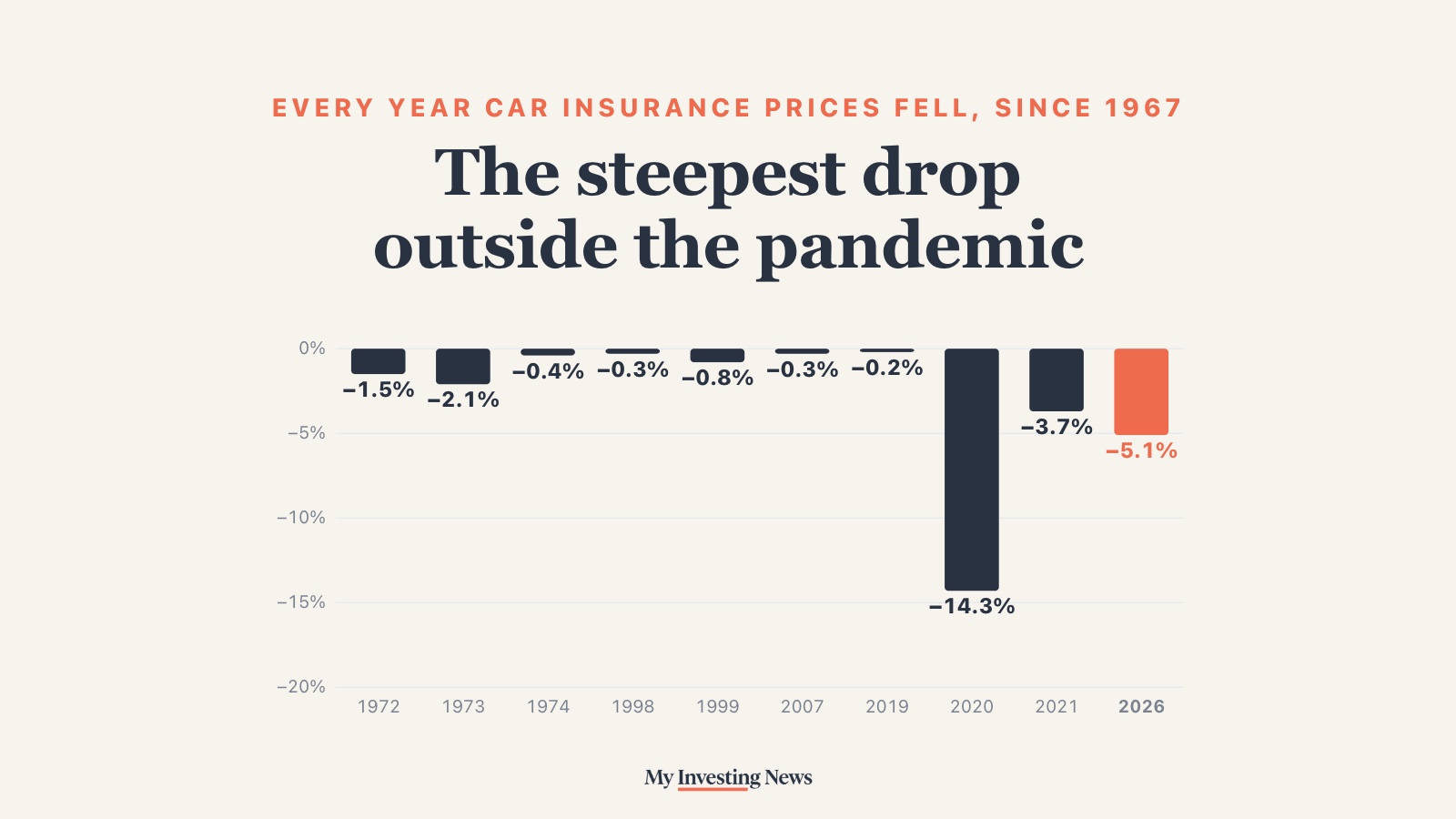
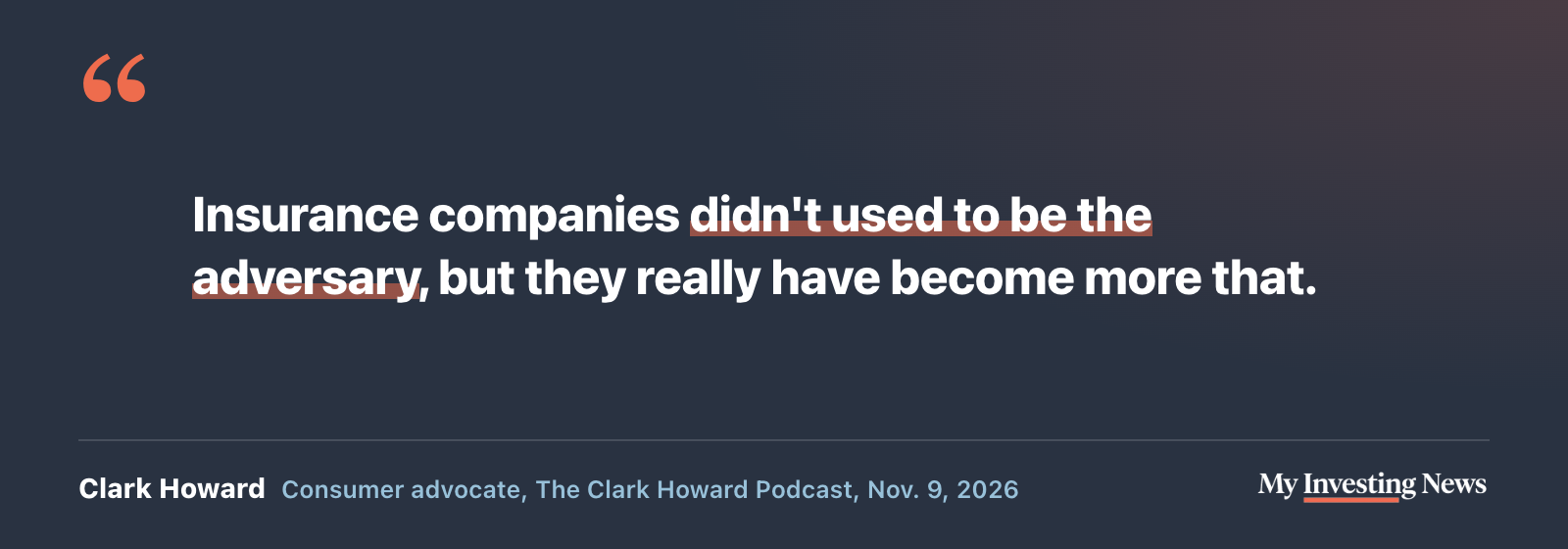
Clark Howard has spent decades telling listeners how to pay less for insurance. On his Nov. 9 show, he sounded more like someone bracing for a fight. Making the case for a dash cam, he said insurers “love to assign you minimal responsibility, 10%” after a crash that wasn’t your fault, and called it a way for auto insurers to raise your rates. Then he went further:
The timing is odd, because by the government’s own measure car insurance is getting cheaper. Prices are falling faster than at almost any point since the Labor Department started tracking them. They are also still far above where they were before the surge that made drivers angry in the first place.
The Steepest Drop Since 1967, Outside the Pandemic
The consumer price index for motor vehicle insurance fell 5.1% in the year to August and 5.0% in the year to September, according to the Bureau of Labor Statistics. The index has been below its year-earlier level every month since May. September is the latest clean comparison: the bureau collected no October 2025 prices during the government shutdown, so the Nov. 10 report has no 12-month change for October.
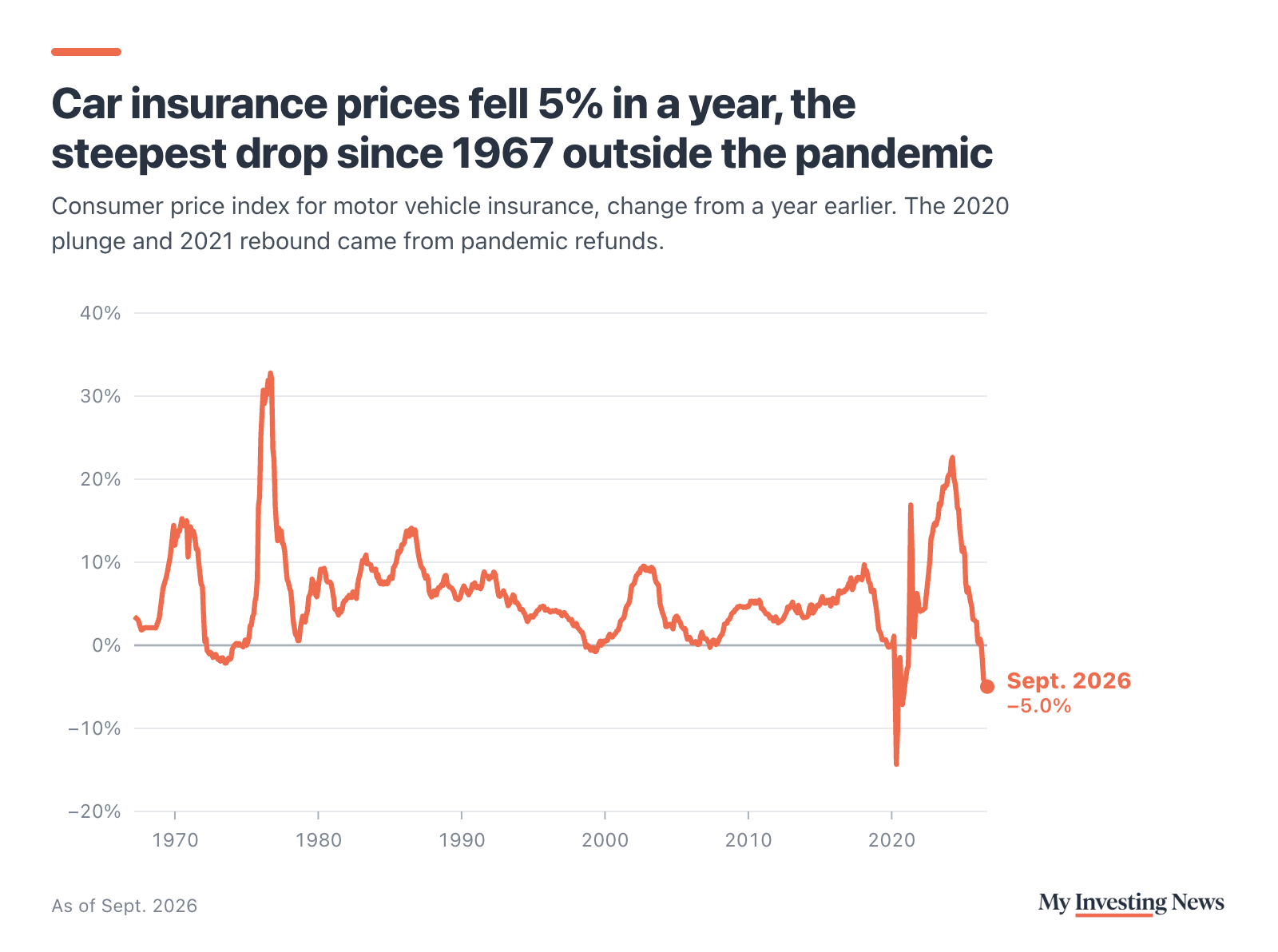
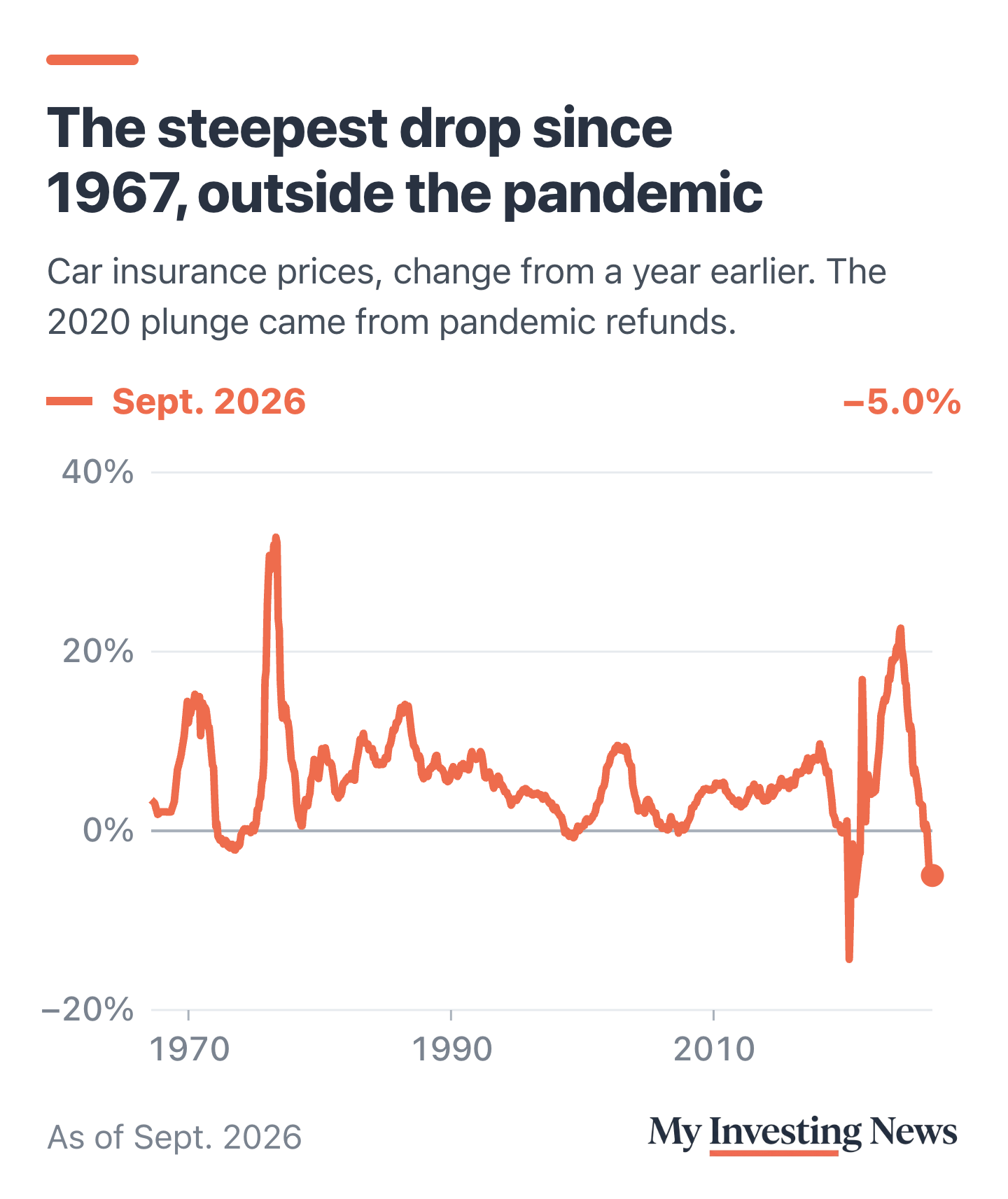
Car insurance prices have dropped from a year earlier in only 9 other calendar years since 1967: 1972, 1973, 1974, 1998, 1999, 2007, 2019, 2020, 2021. The only deeper declines came in 2020, when insurers handed back premiums as lockdowns emptied the roads, with a low of 14.3% in May 2020. Outside the pandemic, the previous record was a 2.1% dip in 1973.
Why Prices Are Falling
The drop follows a historic run-up. As repair bills and the cost of claims climbed after the pandemic, insurers pushed through rate increase after rate increase. The index was up 22.6% from a year earlier in April 2024, the fastest pace since 1976. Those increases restored profits, and now insurers are competing for drivers again.
Progressive PGR, one of the biggest U.S. auto insurers, laid it out in its quarterly filing on Nov. 2. Its average written premium per personal auto policy fell 2% in the third quarter from a year earlier, which it attributed to “aggregate rate decreases taken over the last 12 months in response to increased competition in the marketplace.” It spent $1.6 billion on advertising in the quarter, 18% more than a year earlier.
The cuts haven’t erased the margins. Progressive’s personal lines combined ratio was 87.2 for the first nine months of 2026, meaning claims and expenses took 87.2 cents of each premium dollar and left an underwriting profit of 12.8 cents, before any investment income. Claims are taking a bigger bite, though: losses and adjustment costs ate 67.4% of personal lines premiums in the third quarter, up from 63.9% a year earlier.
Car insurance prices, as of October 2026
Still 51% Above 2021
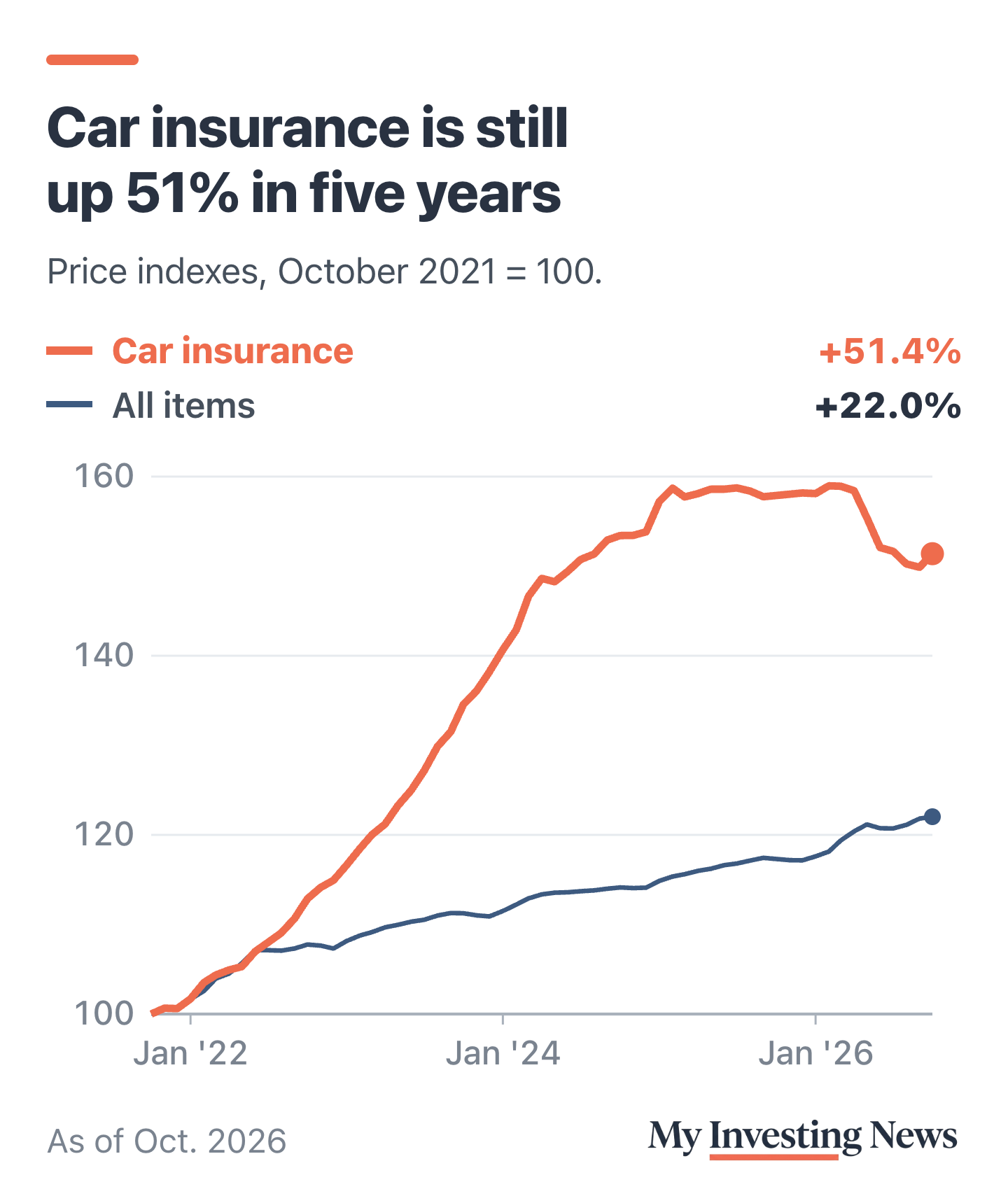
For drivers, the relief is relative. Even after this year’s cuts, the car insurance index in October was 51.4% higher than five years earlier. Prices overall rose 22.0% over the same stretch, and inflation has now run above 2% for more than five years. In September consumer prices were up 3.7% from a year earlier.
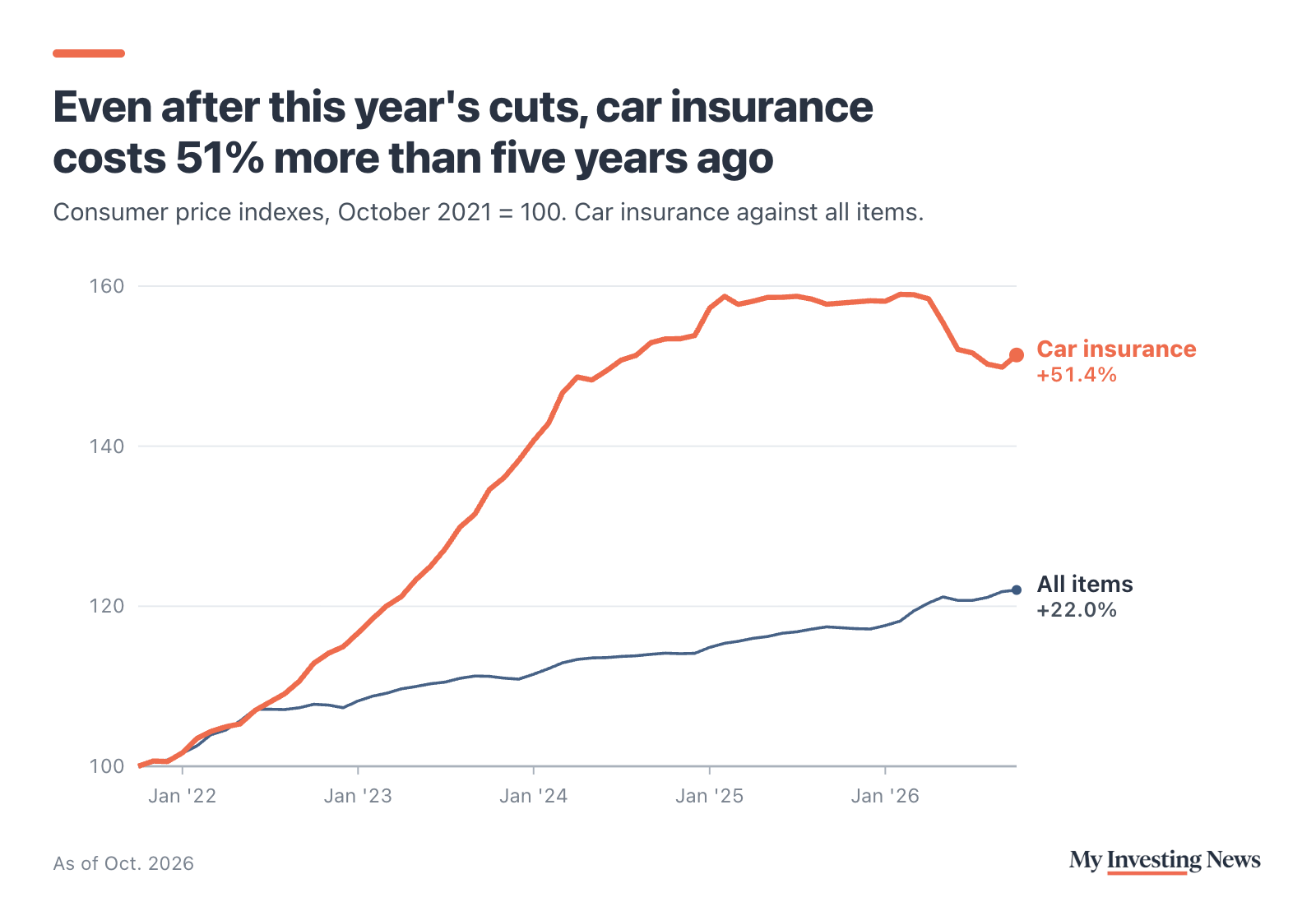
That gap is what Howard is reacting to. An index tracks the price of the same coverage over time, so it can’t show what happens to one driver’s bill after a claim. His point is that a share of fault, even 10% in a crash someone else caused, can count as an at-fault accident and raise a driver’s premium, depending on the state. A falling market rate doesn’t help much if your own surcharge goes up. Households have little room for that: the Fed’s latest household survey found that lower earners got raises and still got poorer.
What to Watch
The decline may be leveling off. The seasonally adjusted index rose 0.7% in October, the largest monthly increase since early 2025, after dropping sharply in May and June. The bureau has no November 2025 reading for car insurance either, so the next clean 12-month change comes with the December index, due in January. Watch insurers’ loss ratios as well. If claims keep rising faster than premiums, the rate cuts that drove this year’s drop will be harder to sustain.
Howard’s complaint lands as car insurance prices fall at the fastest pace since 1967 outside the pandemic, down 5.0% in the year to September. That drop comes after a 51% climb in five years, and insurers like Progressive are still keeping a wide margin. The risk for drivers is that rising claims costs end the price cuts before premiums give back much of the surge.