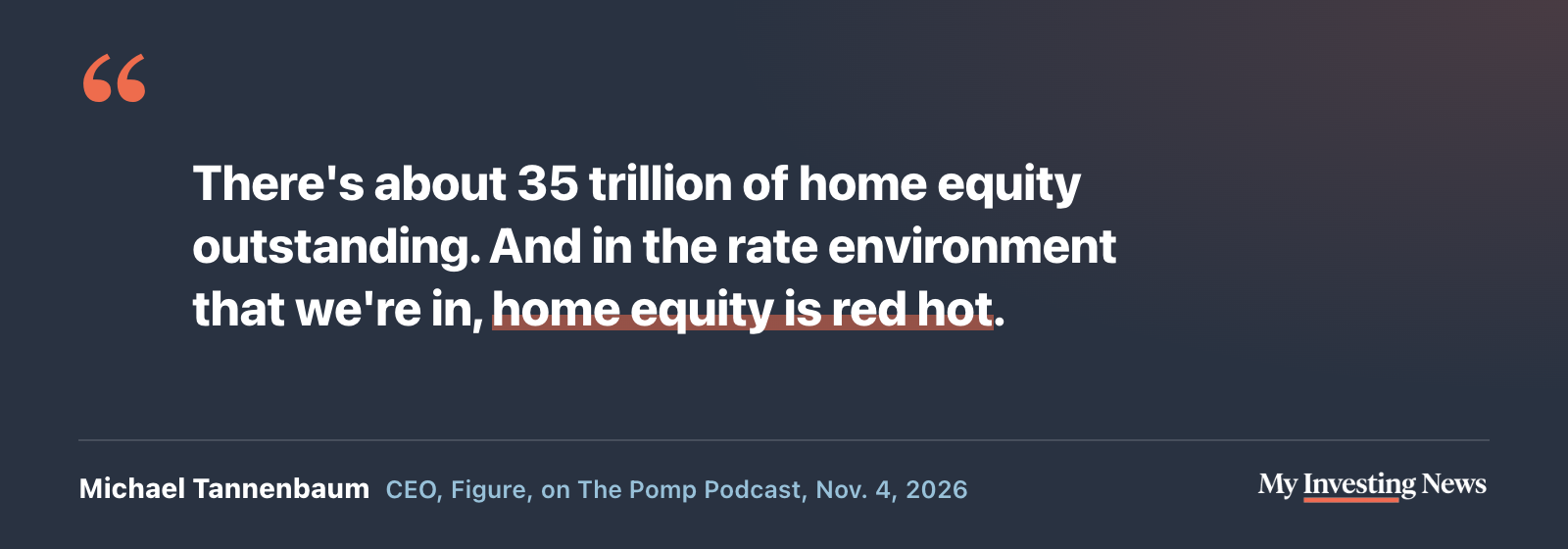
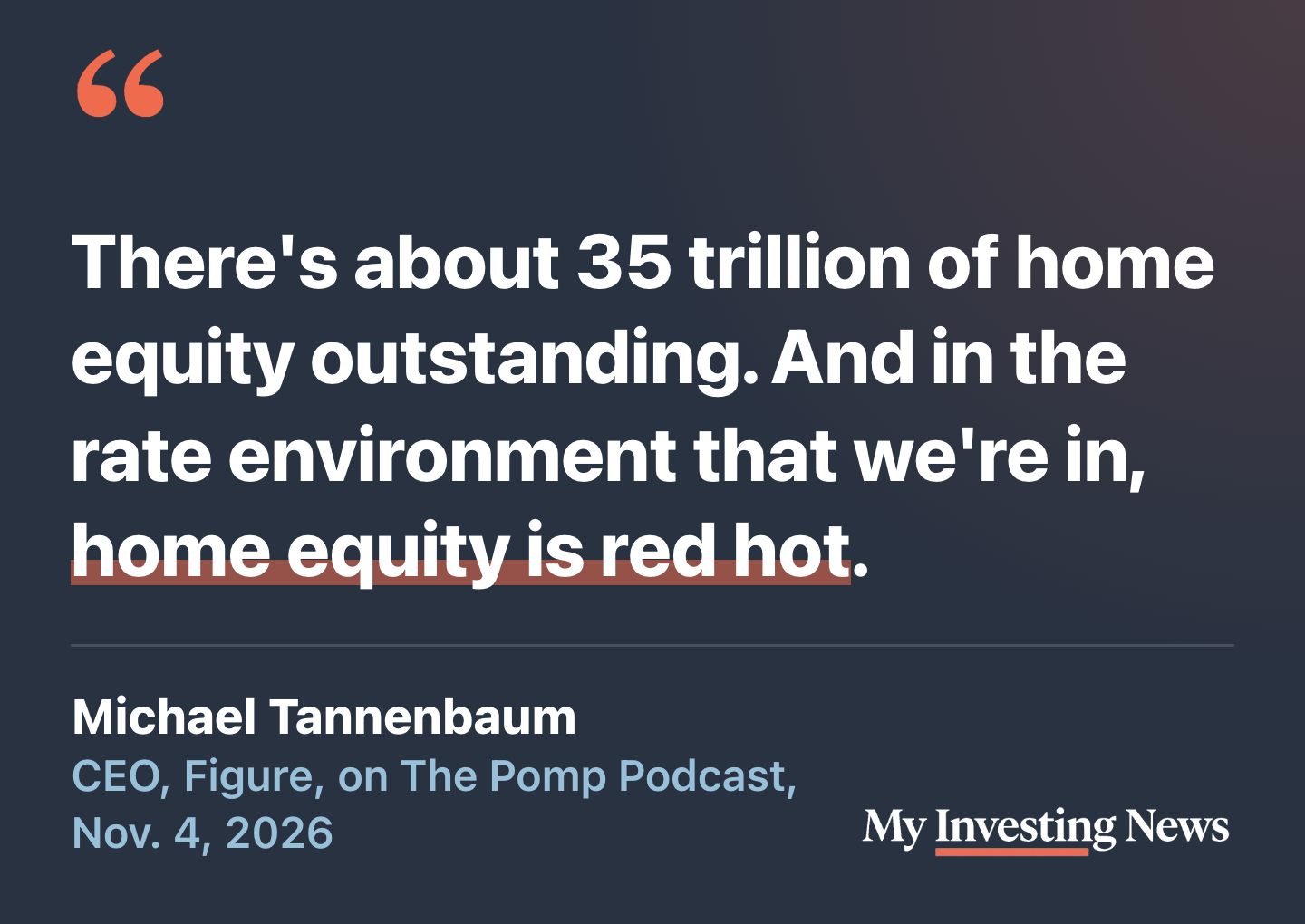
Where we heard itMichael Tannenbaum, CEO of Figure, on The Pomp Podcast, Nov. 4, 2026.
Michael Tannenbaum runs Figure Technology Solutions FIGR, whose marketplace lets banks and other lenders make home equity loans. Asked on The Pomp Podcast on Nov. 4 why lenders are coming to it, he started with the backdrop:
“People are looking to take money out of their homes,” he went on. Five days later, loanDepot LDI said in its third-quarter results that it had shifted toward home equity loans. CEO Anthony Hsieh said the business serves “homeowners seeking access to liquidity while preserving their low-rate first mortgages” and that he believes loanDepot ranked among the top three non-bank home equity lenders in the quarter.
Both halves of Tannenbaum’s line can be checked: how much equity there is, and how hot the borrowing against it has really gotten.
The $35 Trillion Checks Out
The Federal Reserve’s quarterly financial accounts put homeowners’ equity in real estate at $35.81 trillion at the end of June, the latest reading. That is more than four times the $8.25 trillion of early 2012, when the housing bust bottomed. Equity is now 2.56 times the $14.01 trillion owed on mortgages. At the start of 2009 it was 0.94 times, meaning owners collectively had less equity than debt.
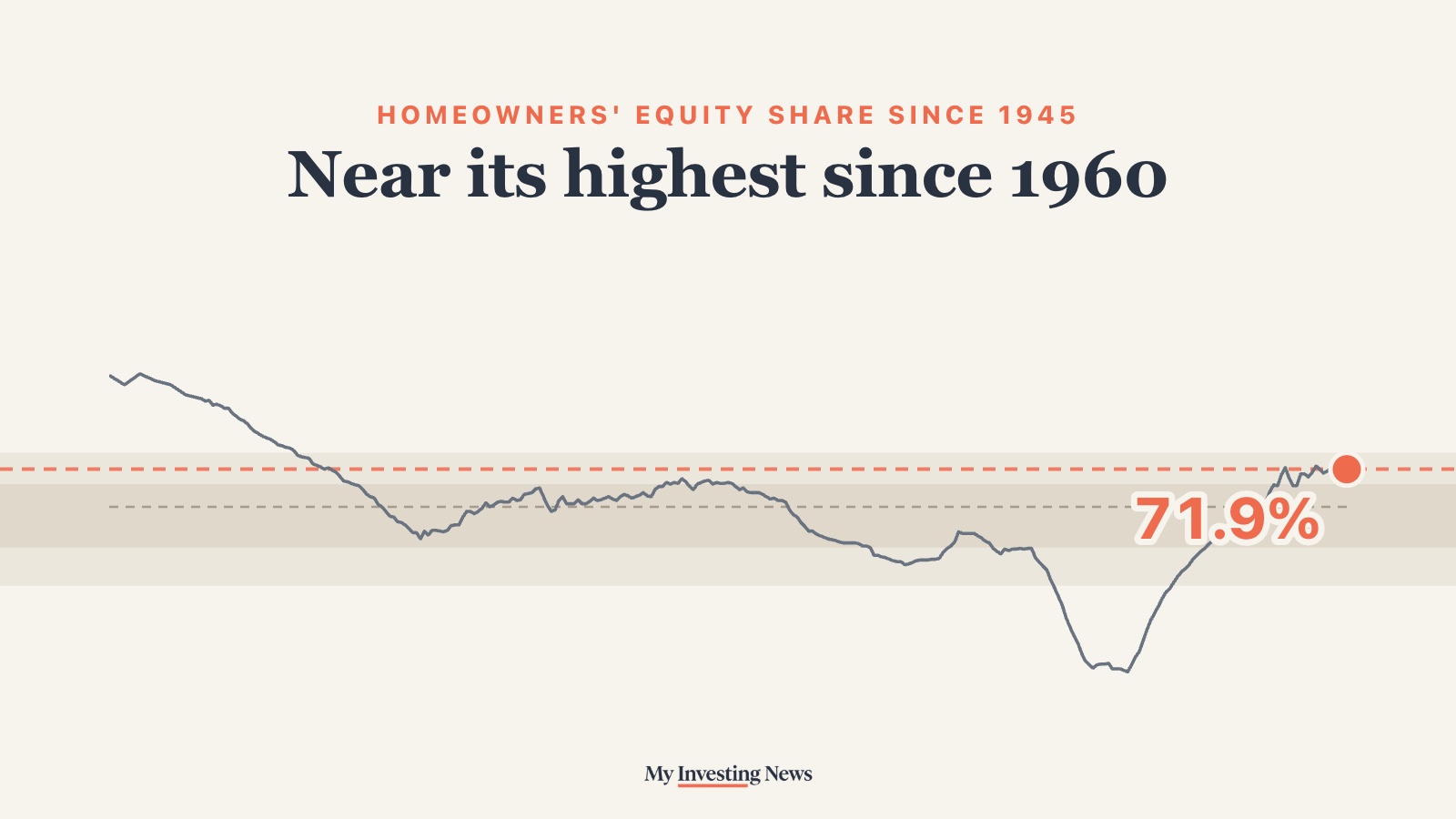
As a share of what homes are worth, owners hold 71.9%. The Fed’s data go back to 1945, and the share has been higher in only 3 quarters since 1960, the second quarters of 2022, 2024 and 2025. The share ran higher in the years after World War II, when mortgage debt was far smaller.
Homeowners own 71.9% of their homes’ value. Only 3 quarters since 1960 were higher.
Owners’ equity as a share of the value of household real estate, every quarter since Q4 1945. The shaded bands hold the middle half and the middle 80% of all 305 readings.
The Borrowing Is Rising From a Low Base
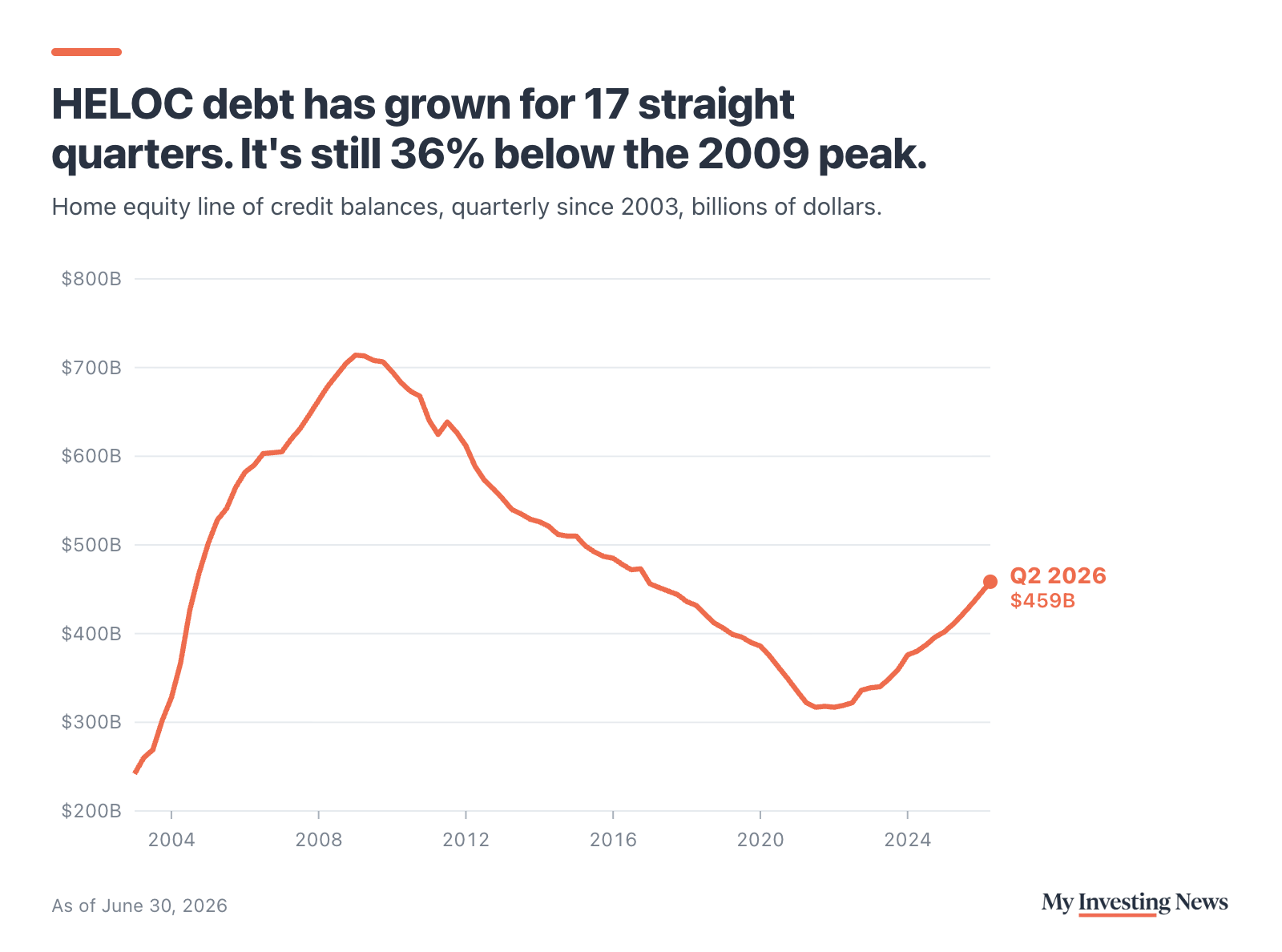
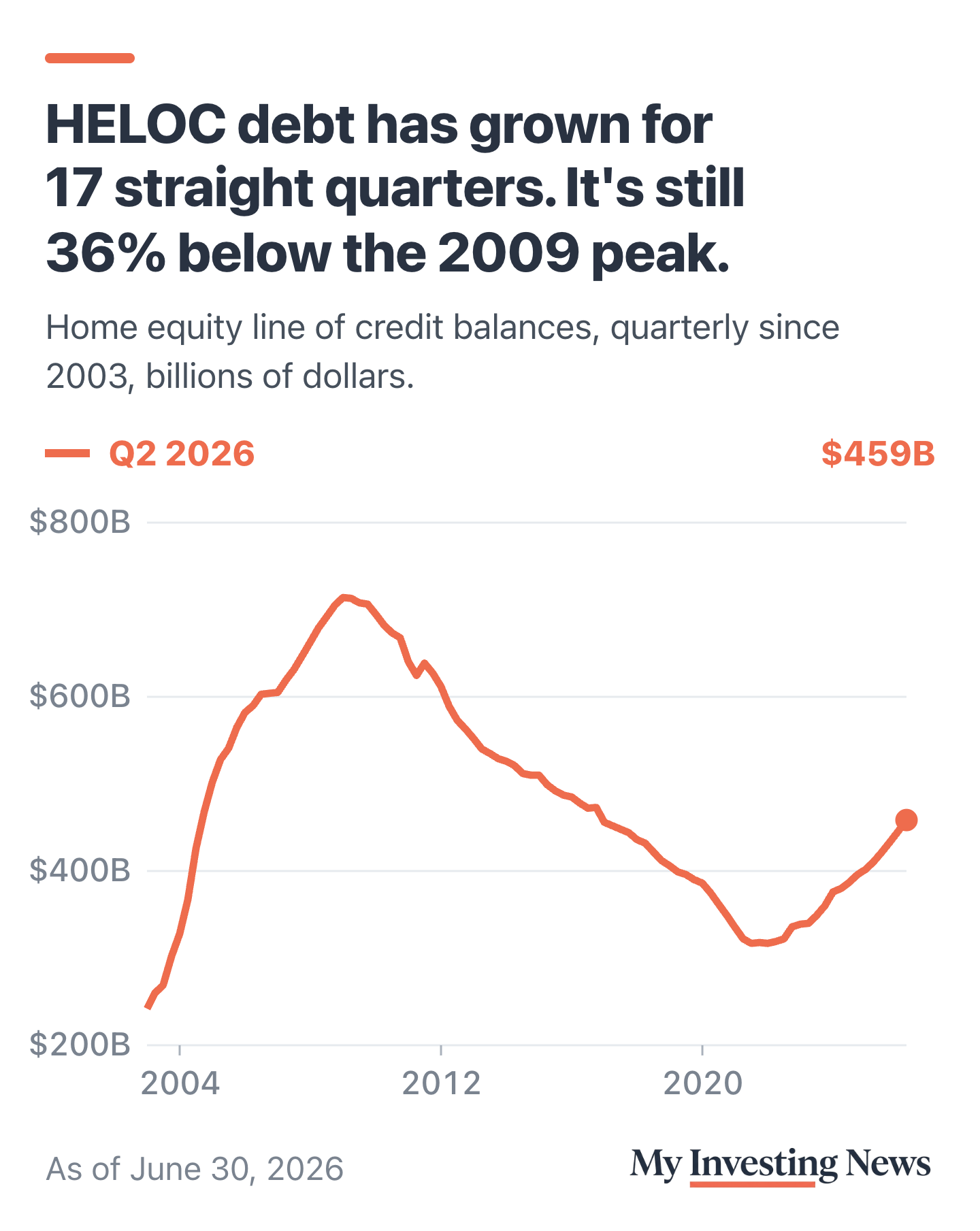
The New York Fed tracks home equity lines of credit, or HELOCs, in its household debt report. Balances were $459 billion at the end of June, up 11.6% from a year earlier and up in 17 straight quarters. Since bottoming at $317 billion in the third quarter of 2021, they have grown 45%. That is the “red hot” part, and it fits what Figure and loanDepot are reporting.
The level is another matter. HELOC debt peaked at $714 billion in early 2009 and is still 36% below that. Measured against the equity behind it, homeowners owe $1.28 on HELOCs for every $100 of equity, down from $7.81 at the end of 2009. They have drawn 43% of the $1.07 trillion in HELOC credit lines open to them.
Home equity (Q2 2026) and HELOC borrowing (Q2 2026)
Why a Second Loan Beats a Refinance Now
Hsieh’s phrase about preserving “low-rate first mortgages” explains the shift. Freddie Mac’s 30-year fixed rate was 7.18% on Nov. 5, a little below the 7.4% it reached in mid-October as mortgage rates climbed to a 52-week high. In January 2021 it got as low as 2.65%. A cash-out refinance would swap an owner’s whole cheap loan for a new one at today’s rate. A HELOC or home equity loan leaves the first mortgage alone and charges the higher rate only on the new money.
High rates have squeezed builders too: their confidence hit a 14-year low in October, which CNBC’s Diana Olick tied to rising mortgage rates. Owners who stay put and want cash have one main route left, which is why lenders are crowding into second liens. So far the loans look healthy. Just 0.99% of HELOC balances were 90 days or more past due in the second quarter, against 4.93% in 2012. Borrowing against stocks is running hotter: margin debt recently hit a record $1.5 trillion.
What to Watch
The New York Fed’s third-quarter household debt report, due Nov. 10, will show whether HELOC balances kept climbing through September. The Fed’s next financial accounts release, for the third quarter, will show whether equity kept growing. Equity can shrink faster than debt: the share owners hold fell from about 62% to 46% between 2005 and 2012.
Mortgage rates matter most. If they fall far enough for refinancing to pay again, some of the demand Figure and loanDepot are chasing would move back to cash-out refis.
Tannenbaum’s $35 trillion is right: homeowners hold $35.81 trillion of equity, near the largest share of their homes’ value since 1960. “Red hot” describes the growth in HELOC borrowing, up 17 quarters in a row, more than its size, still 36% below the 2009 peak. The risk for lenders crowding in is a drop in home prices, which would shrink the equity they are lending against.