Where we heard itScott Bessent, U.S. Treasury Secretary, in a post on X on Nov. 6, 2026, the morning the October jobs report came out.
Treasury Secretary Scott Bessent greeted the October jobs report on Nov. 6 with a post crediting “the re-industrialization and re-privatization of the American economy.” The number he chose was a three-month total:
He also wrote that “manufacturing employment has now risen by over 100,000 in 2026 alone.” Both claims can be checked against the Bureau of Labor Statistics data released that morning. Both hold up. The harder question is what nearly 400,000 private jobs in three months says about the job market, and the long record gives a less flattering answer than the post.
The Count Checks Out
Private employers added 142,000 jobs in August, 78,000 in September and 159,000 in October, according to the BLS data as of the Nov. 6 release. That is 379,000 over the three months, close enough to “nearly 400,000.” Manufacturing payrolls rose 101,000 from December 2025 to October 2026, just over the 100,000 Bessent cited, after factories shed 113,000 jobs in 2025. That is the biggest January to October gain for factory jobs since 2022, and it fits the stronger factory readings that came out in October.
A good part of the total came from revisions. Before the Nov. 6 report, BLS put August’s private gain at 89,000 and September’s at 46,000. The new report raised those two months by a combined 85,000. When each month first came out, the three added up to 332,000. Revisions in the same report also lifted the three- and six-month payroll averages economists watch.
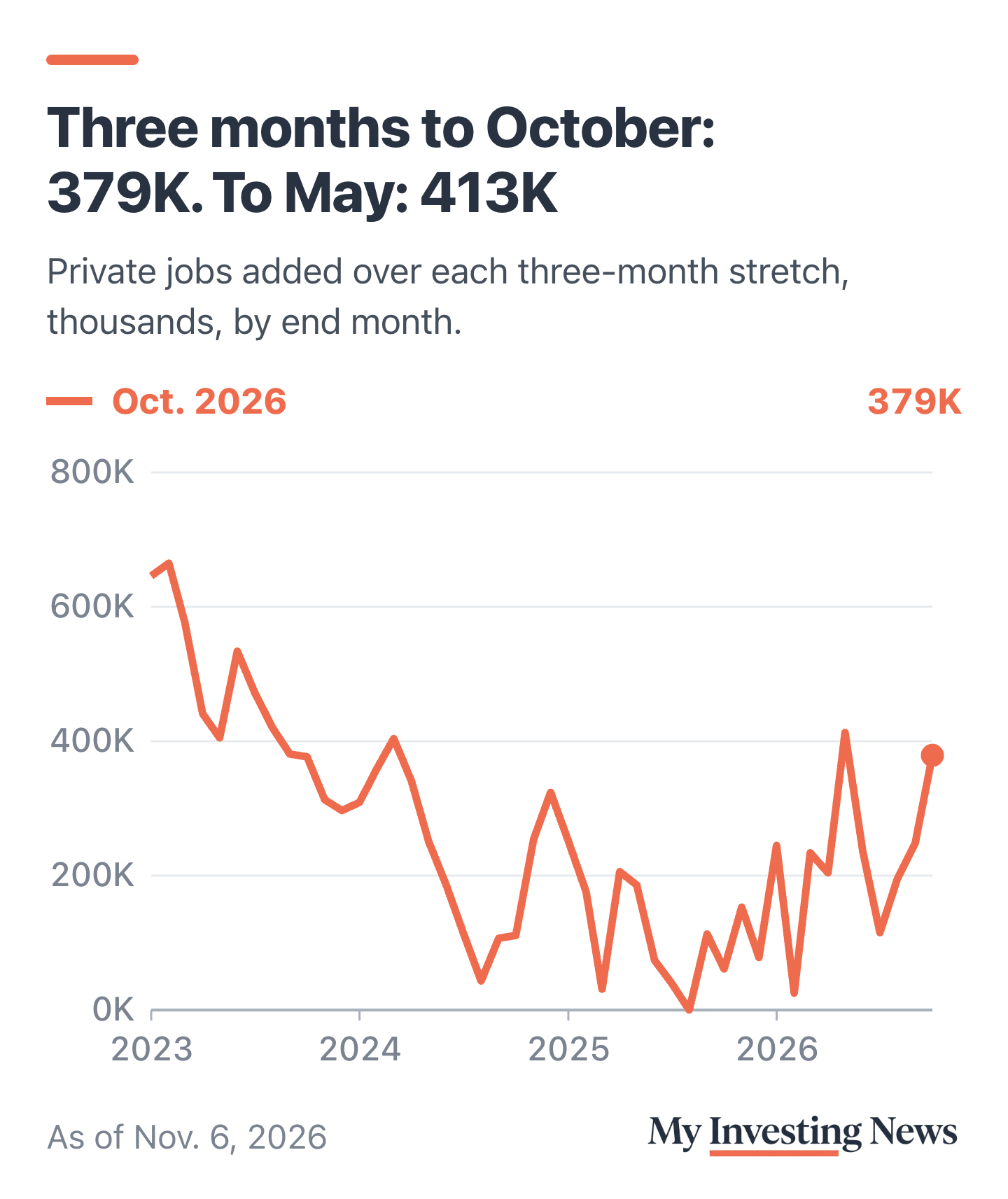
Good, but Not the Best Stretch This Year
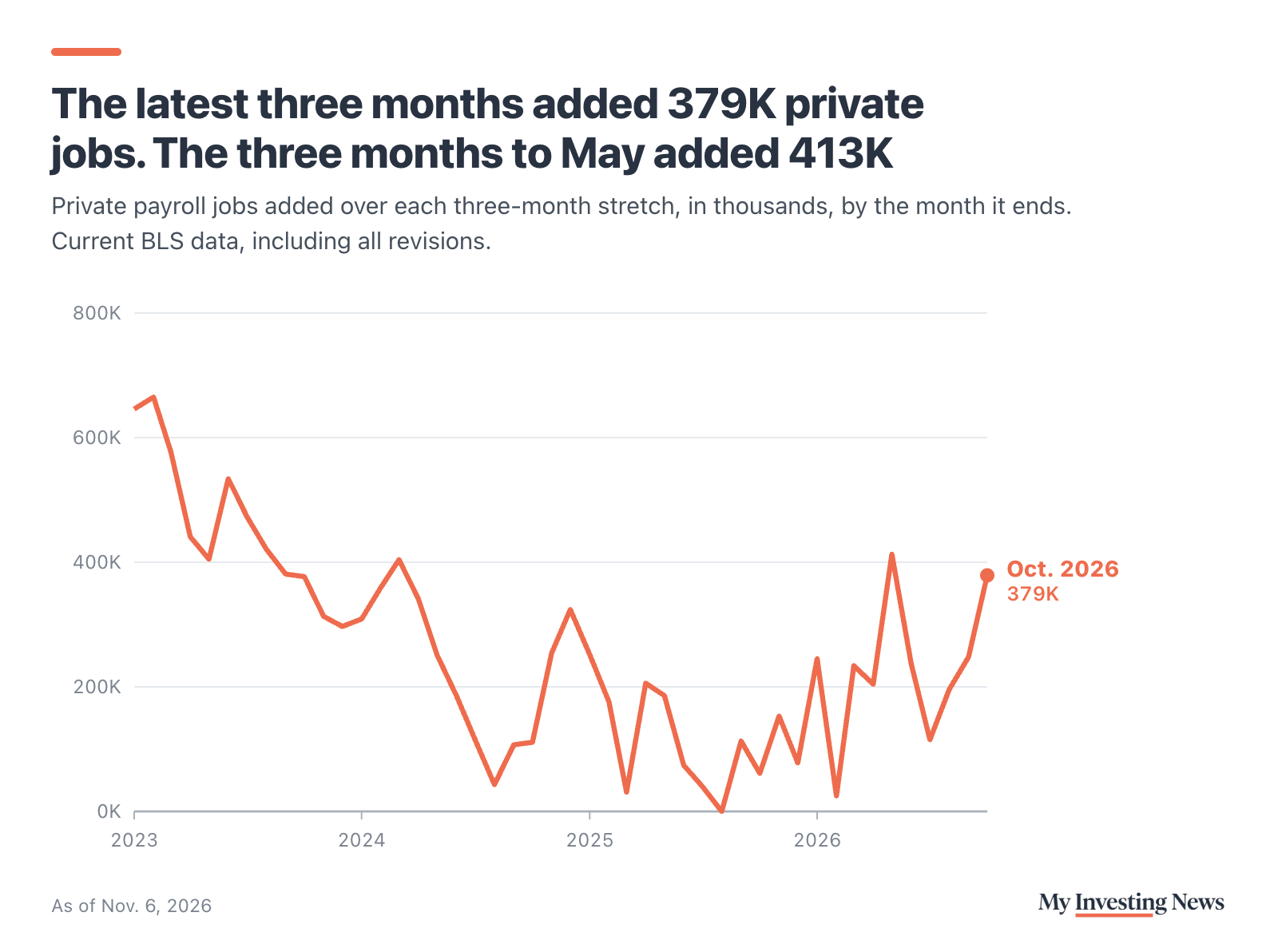
The three months to May added 413,000 private jobs, more than the latest stretch. That figure got a lift from a rebound: private payrolls fell 148,000 in February, then rose 202,000 in March. Going back to January 2023, 11 three-month stretches beat the latest one. Nine came in 2023, one ended in March 2024 and one in May 2026.
The year as a whole looks better than the two before it. From January through October, private employers added 878,000 jobs in 2026, against 231,000 over the same months of 2025 and 693,000 in 2024. Bessent’s point about a shift away from government also has support. Government payrolls fell 180,000 in 2025 and are down 17,000 so far in 2026, though they rose 32,000 over the same three months he cited.
Private payrolls, BLS data as of Nov. 6, 2026
A Slow Quarter by Pre-Pandemic Standards
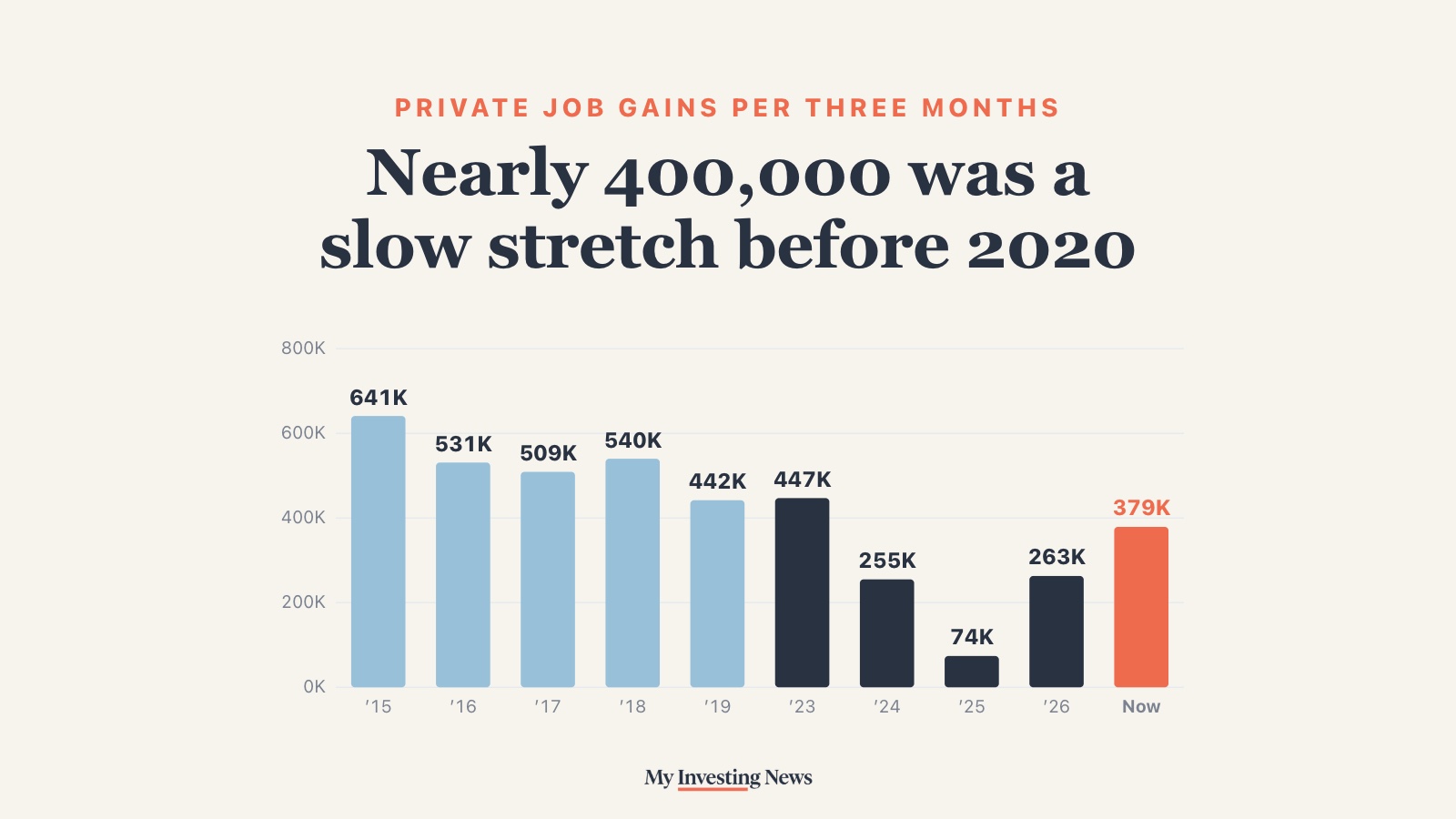
From 2015 through 2019, there were 60 three-month stretches, and 58 of them added more private jobs than the latest one. The typical stretch in those years added about 540,000. Even 2023, a year of cooling after the post-pandemic hiring boom, averaged 447,000 per three months. So far in 2026 the average is 263,000.
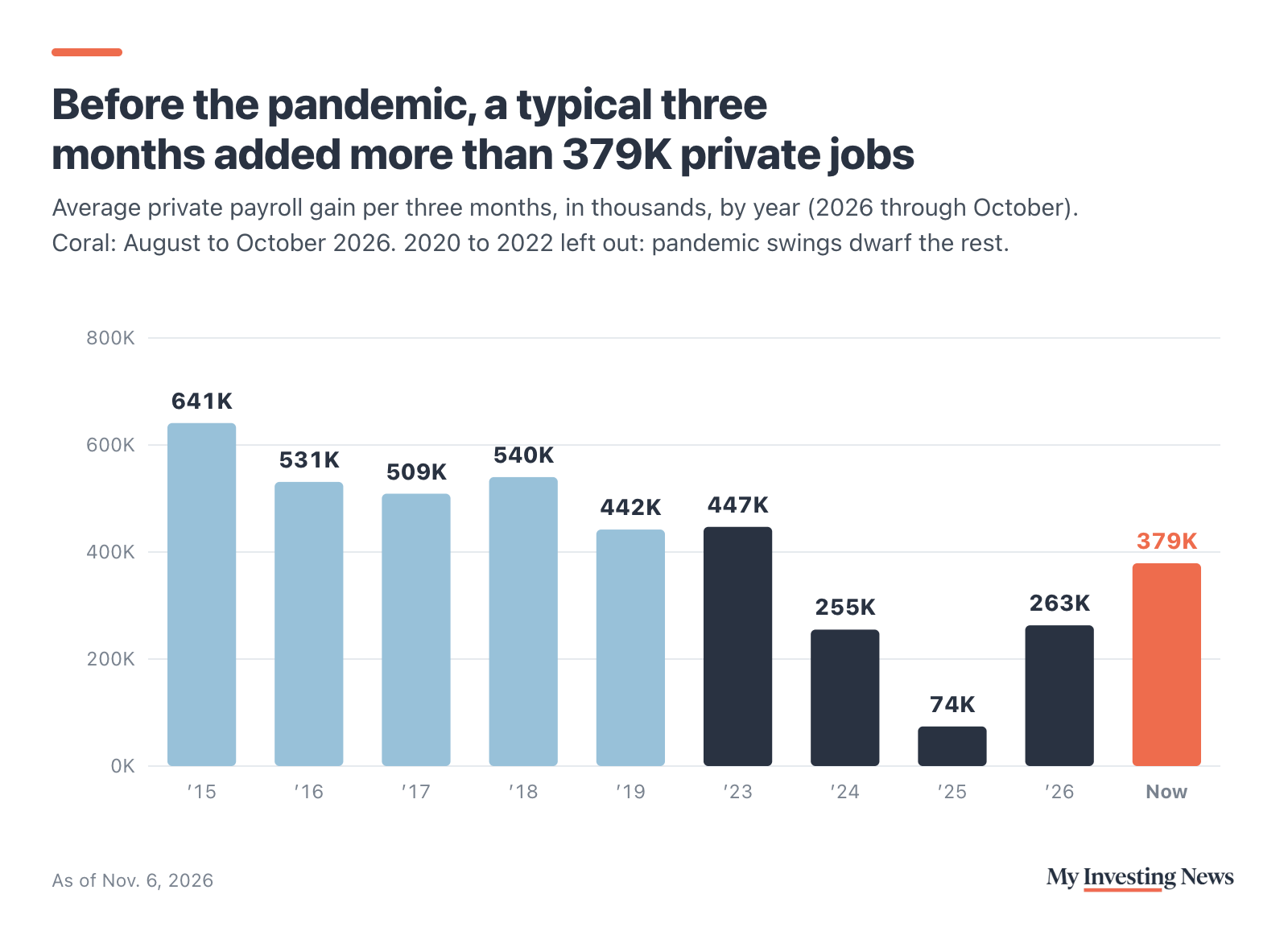
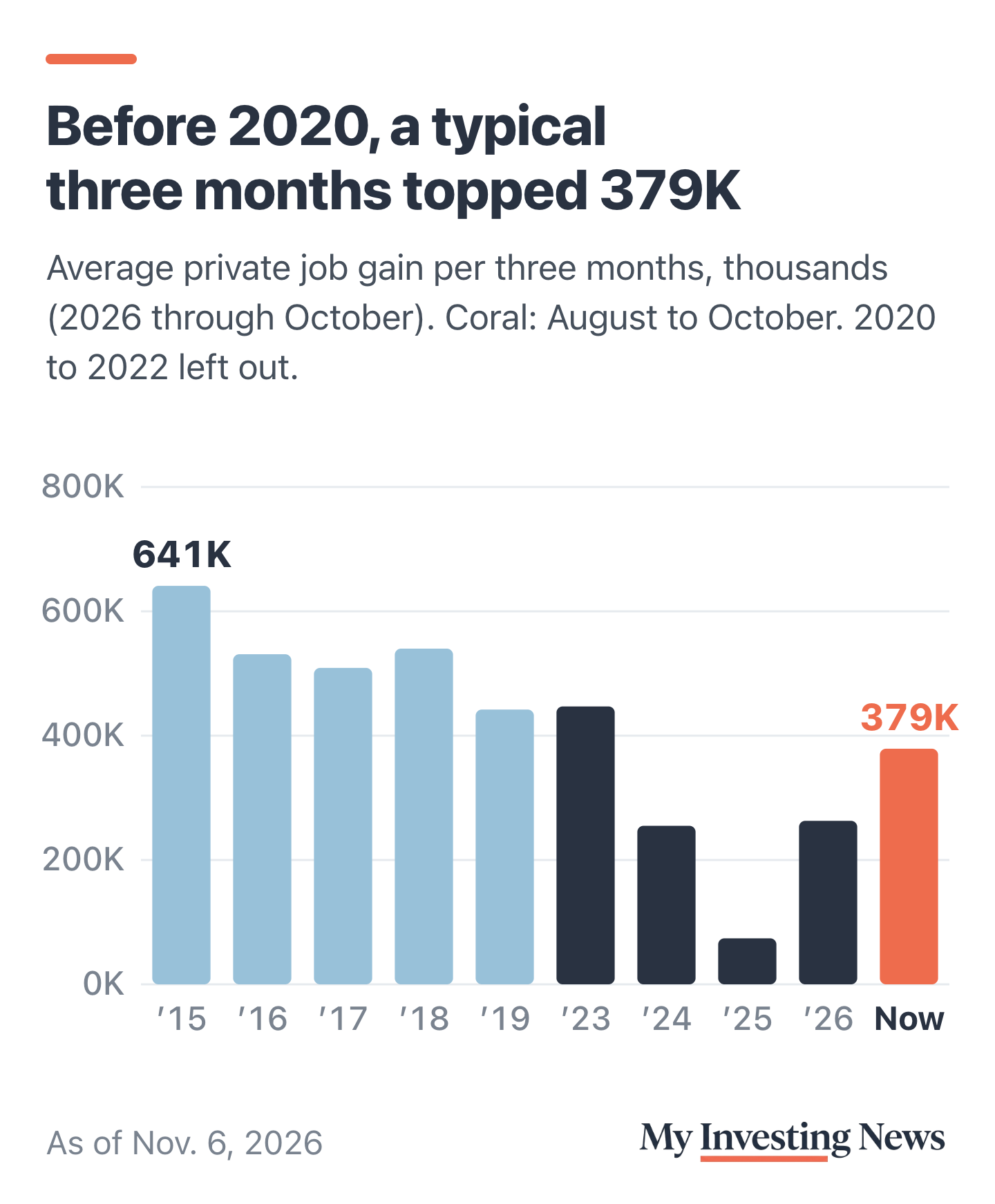
The bar may be lower now. The unemployment rate fell from 4.5% in November 2025 to 4.1% in October, below the 4.2% that Polymarket bettors favored before the report, even with hiring well below its late-2010s pace, which suggests fewer people are joining the labor force each month than in those years. By that test, the job market is holding up. It is still adding jobs at about half the rate it did before 2020.
What to Watch
The next jobs report, due Dec. 4, will revise September and October again, and this year’s first prints have moved by tens of thousands. Last year’s moved much more: private gains for January through September 2025 first added up to 1,059,000. After revisions, including the annual benchmark, they total 218,000. The three-month total Bessent cited rests on two months that will be revised at least once more, and the trend of the next few reports will say more about 2026 than any single stretch.
Scott Bessent’s numbers are right: private employers added 379,000 jobs from August to October, and factories have added just over 100,000 this year. But 85,000 of the three-month total came from upward revisions, the three months to May were bigger, and 58 of 60 three-month stretches from 2015 to 2019 beat it. Hiring has picked up from 2025 without getting back to its old pace.