Where we heard itNicole Kagan, head of research at Kalshi, on Bloomberg Businessweek, “Prediction Markets in Focus After Democrats’ Midterm Sweep,” Nov. 5, 2026.
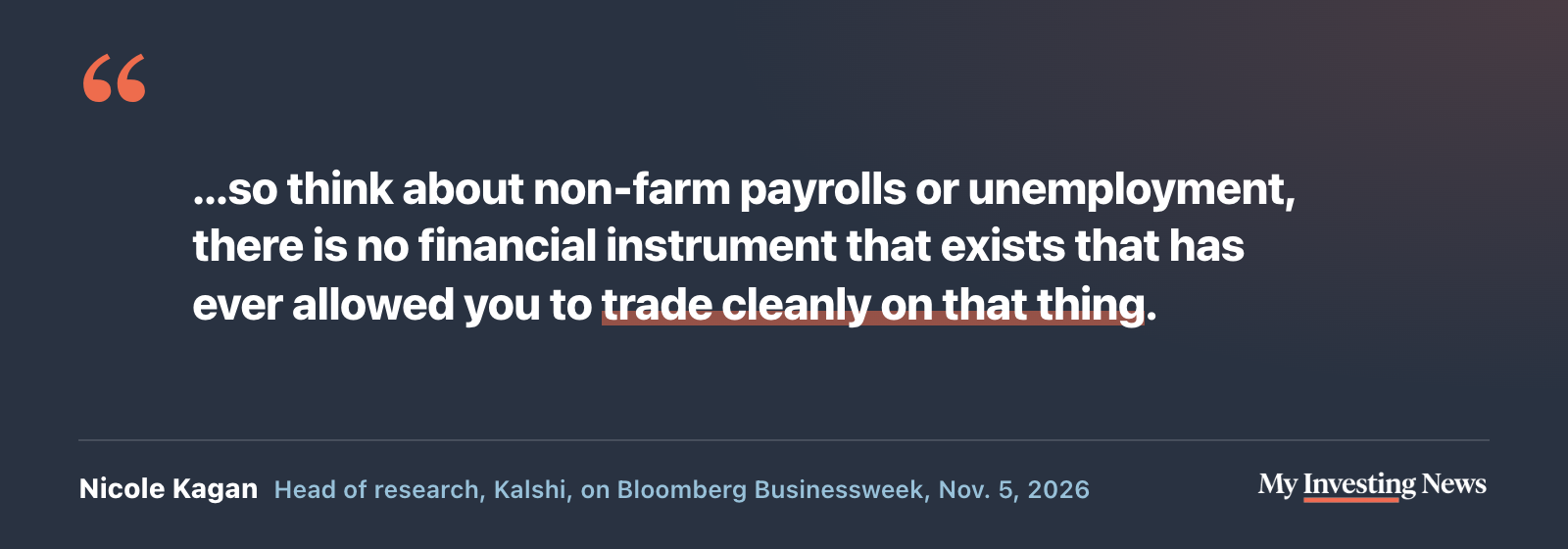
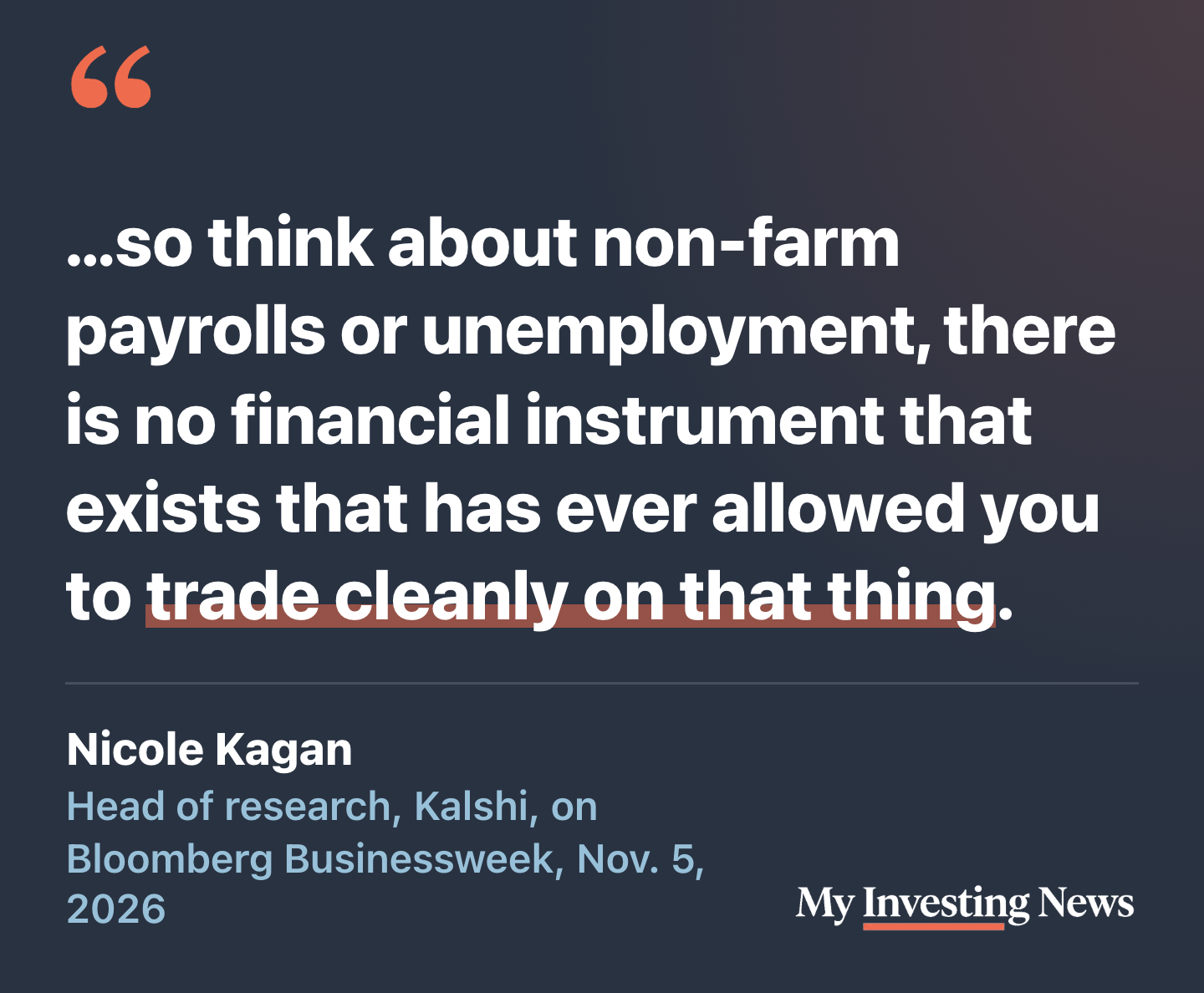
Two days after the midterms, Kalshi’s head of research made a big claim for her industry. On Bloomberg Businessweek on Nov. 5, Nicole Kagan said prediction markets offer something that “basically did not exist prior to these markets existing.” Her example was the monthly jobs report: “Even for the big macro signals that we think about, so think about non-farm payrolls or unemployment, there is no financial instrument that exists that has ever allowed you to trade cleanly on that thing.”
She said the same about elections, recalling her years as a macro investor at a hedge fund: “There’s never really been a way for me to trade that until now.”
On payrolls, the record says otherwise. Wall Street built a market for exactly that number in 2002, and two economists measured how well it forecast. We scored Kalshi’s payroll markets the same way.
Goldman Sachs Sold Payroll Options in 2002
On Oct. 1 and Oct. 3, 2002, Goldman Sachs and Deutsche Bank held what they called the “first-ever auctions of economic derivatives”: options that paid off on the Labor Department’s September payroll number. Traders placed more than $60 million in orders, and $19 million in options was created. “This week, we opened a new frontier in risk management: direct, 100-percent-correlated exposure to macroeconomic risk,” Peter Gerhard, Goldman’s head of macro trading, said at the time.
The first test went to the market. Economists in the Bloomberg survey expected a gain of 7,000 jobs, while the Oct. 3 auction pointed to a loss of 18,000. The report showed a loss of 43,000.
The auctions grew to cover retail sales, the ISM factory index, jobless claims, GDP and inflation, and moved onto the Chicago Mercantile Exchange in partnership with Goldman. In October 2006, the CME added a fifth auction before each payroll report. Like Kalshi’s contracts, they paid off on the first estimate of job growth, before any revision.
The Old Market Beat Economists, Barely
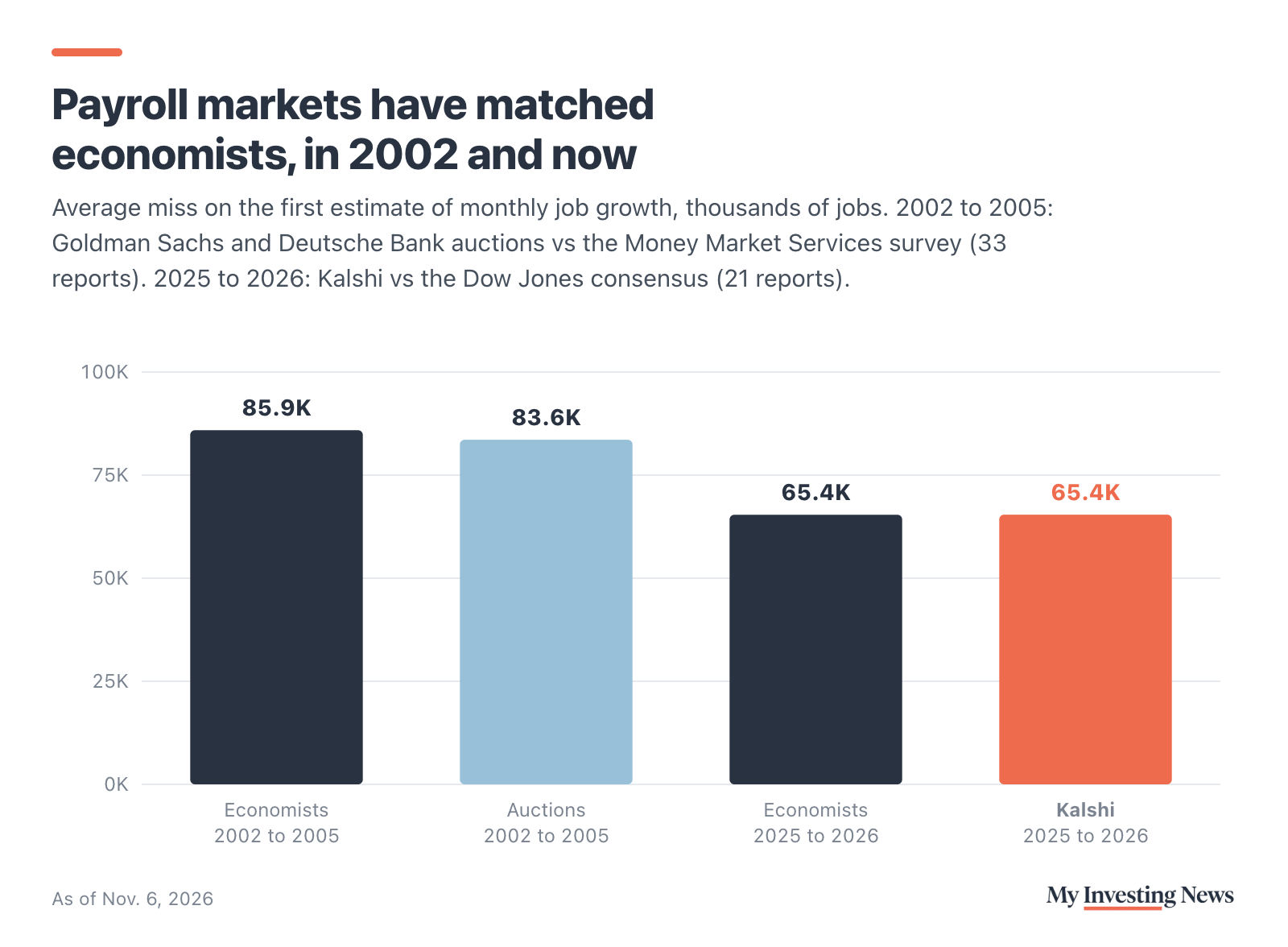
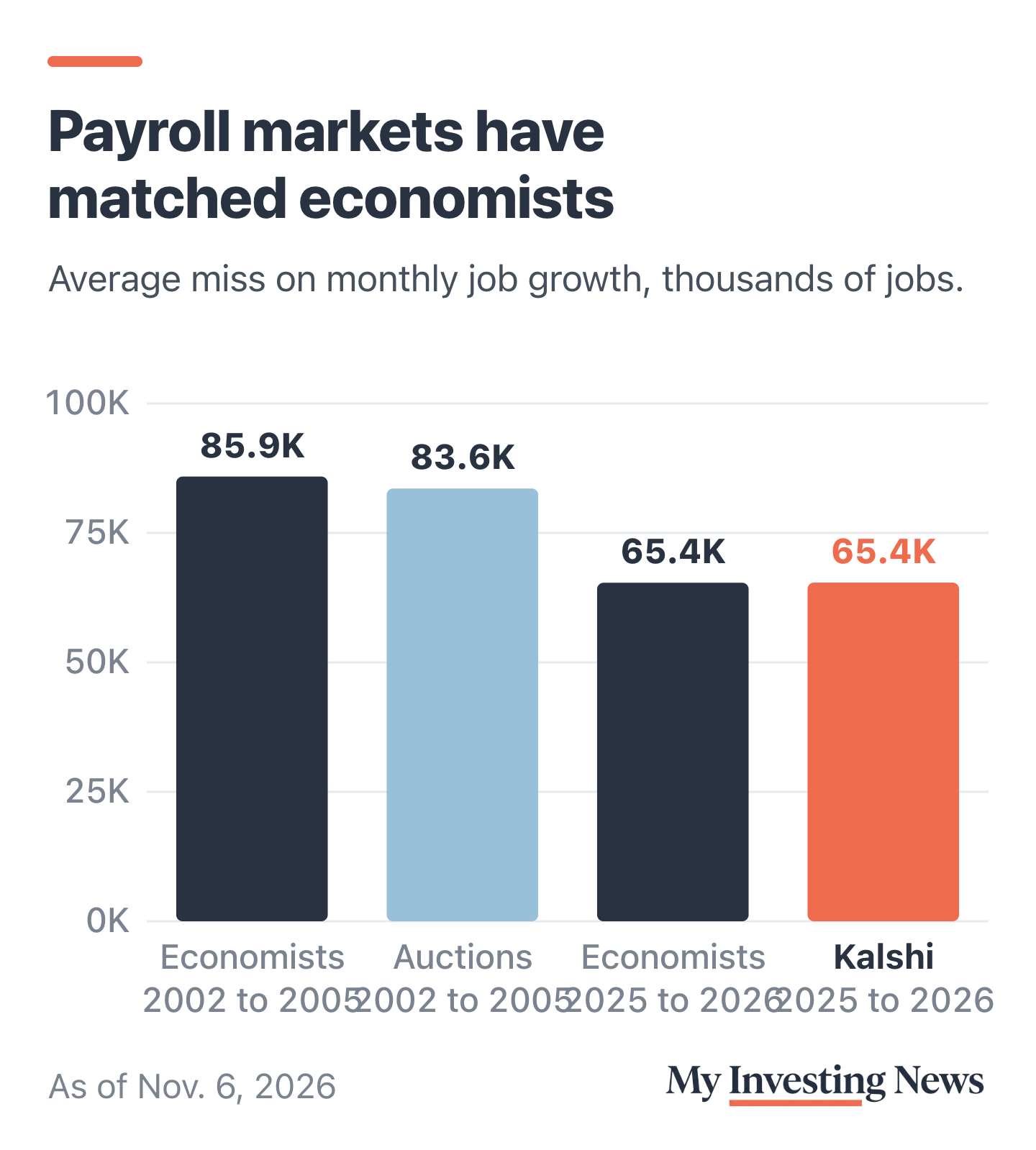
Economists Refet Gürkaynak and Justin Wolfers studied the first 33 payroll auctions, from October 2002 to July 2005, in a 2006 NBER paper. The market’s forecast missed the first estimate by about 83,579 jobs on average. The survey of economists by Money Market Services missed by about 85,891. The market won on all four data series they studied, and they called the gains “meaningful, if not huge.” The market also had a head start: the auctions ran on the morning of the release, while the survey closed days earlier.
Kalshi Has Tied the Economists
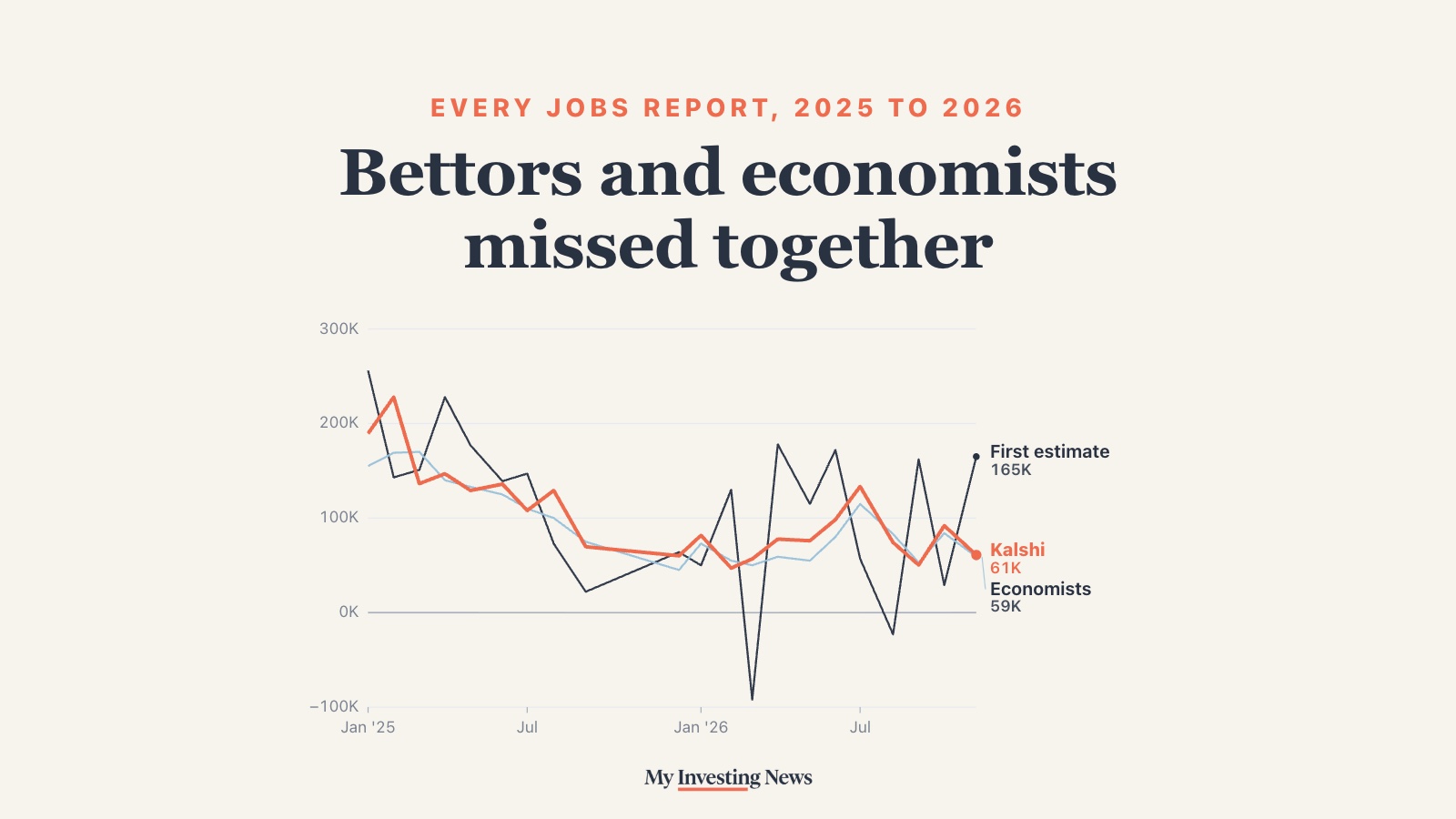
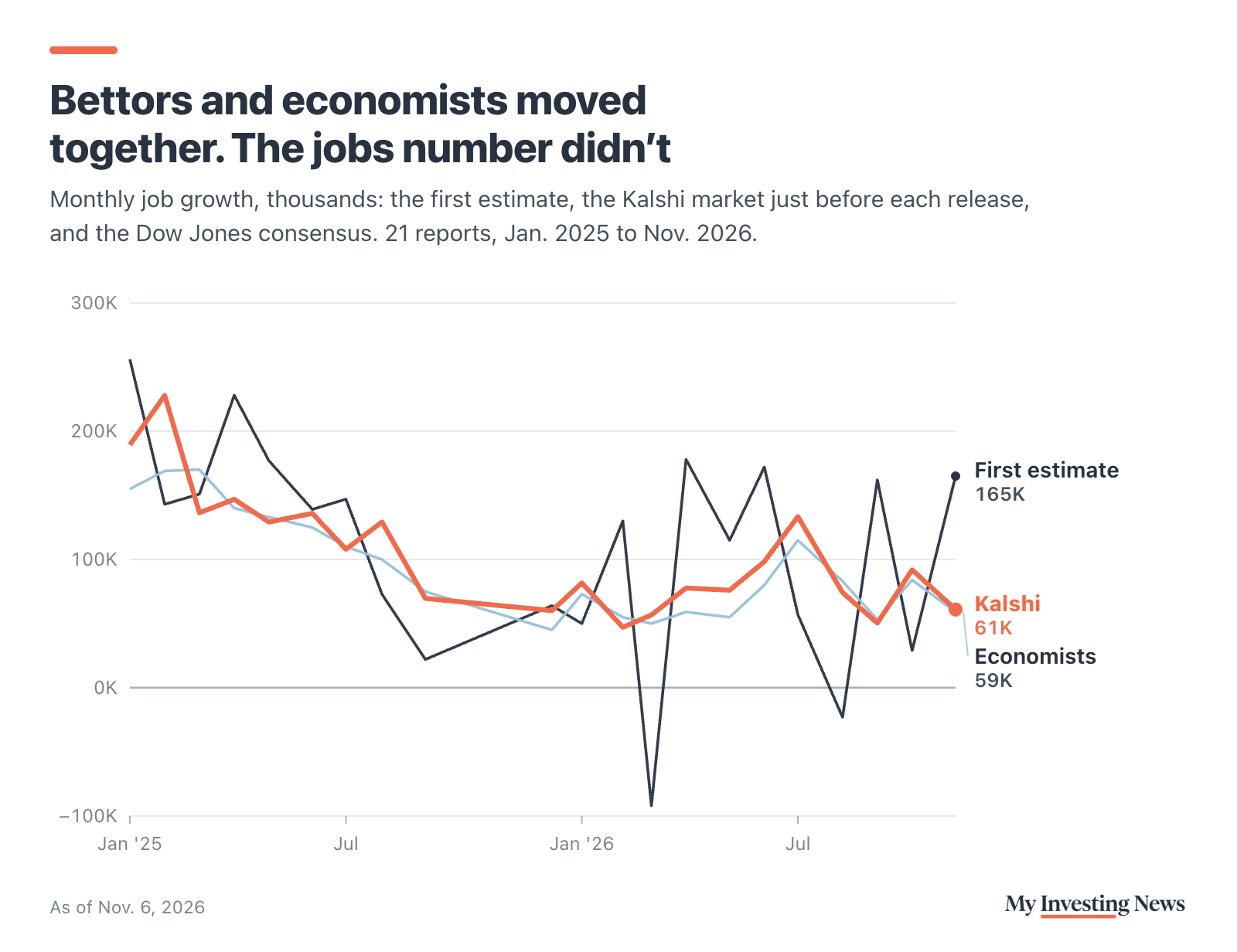
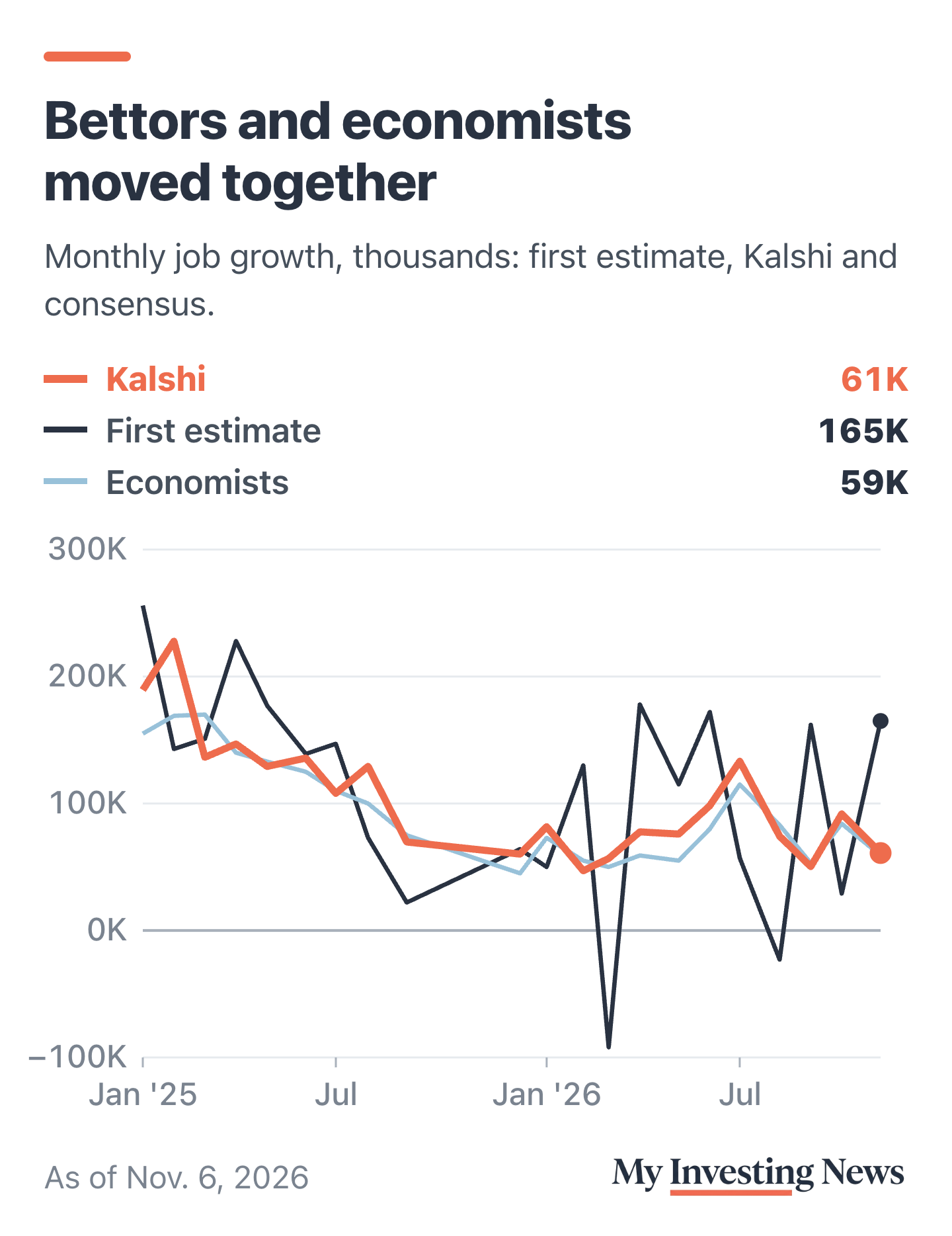
Kalshi has listed monthly payroll contracts since at least March 2023, each a bet that job growth comes in above a set number, such as 50,000. For each report, we took every contract’s price in the last minute of trading, before the market closed at 8:29 a.m. on release day, and found the level bettors put at even odds. Then we compared that forecast, and the Dow Jones consensus as reported by CNBC, with the first estimate for all 21 reports from January 2025 through the Nov. 6 report on October jobs. We left out September 2025, because its market closed seven weeks before the shutdown-delayed report, and October 2025, which had no report of its own.
The result was a tie. Kalshi missed the first estimate by 65,406 jobs on average, and the economists missed by 65,381. Kalshi was closer 11 times out of 21. The two forecasts moved almost in lockstep, with a correlation of 0.92. Using the market’s average instead of its midpoint gives a miss of about 67,000, which doesn’t change the picture.
Betting on the jobs report
Bettors and economists also missed the big surprises together. Before the February 2026 report, economists expected a gain of 50,000 and Kalshi about 57,000. The first estimate showed a loss of 92,000. For the October report released Nov. 6, Kalshi pointed to about 61,000 and economists to 59,000. The first estimate was 165,000.
What to Watch
Kagan does have a point about access. The Goldman auctions ran for about an hour at a time, and every order had to go through Goldman Sachs, Deutsche Bank or the broker ICAP, according to the paper. Kalshi’s payroll markets open weeks before each report and take orders from individual traders. She also said on the same show that “you see the best calibration in our economics markets,” a claim about how well the odds match outcomes, which is different from beating the consensus forecast. We have tested betting odds before: Kalshi’s election favorites priced near 80% lost 17% of the time, and Polymarket bettors’ top pick for the jobless rate was exactly right 8 times in 20.
The next test is the November jobs report on Dec. 4. The number to watch is how far Kalshi’s forecast sits from the consensus the morning of the release. In 21 reports it rarely strayed far, and that is where any edge would have to show up. The rules are still being argued over, too: CME chief Terry Duffy says regulators haven’t denied one of 2,500 self-certified contracts.
Kagan is wrong that no instrument ever let investors trade payrolls cleanly: Goldman Sachs and Deutsche Bank did it in 2002, and that market beat economists by a hair. Kalshi’s version has done no better, missing by 65,406 jobs on average across 21 reports, the same as the economists. Prediction markets make the bet easy to place, and so far the bettors have matched the consensus without beating it.