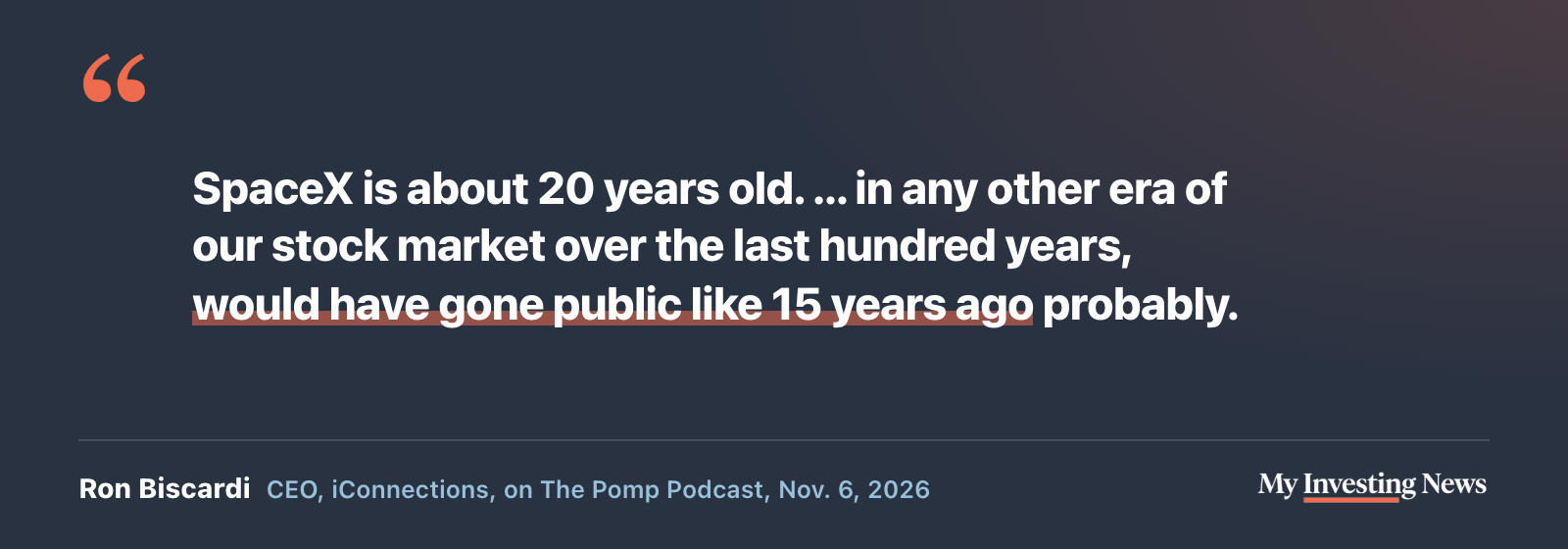
Where we heard itRon Biscardi, CEO and co-founder of iConnections, on The Pomp Podcast with Anthony Pompliano, Nov. 6, 2026.
Ron Biscardi runs iConnections, which holds capital-introduction events where fund managers meet the institutions that invest with them. On The Pomp Podcast on Nov. 6, he said venture funds had “a really hard time raising money for really the last three or four years” because their investments couldn’t reach liquidity, even the successful ones. His example was SpaceX.
“SpaceX is about 20 years old,” Biscardi said. “So here you have this company that in any other era of our stock market over the last hundred years, would have gone public like 15 years ago probably.” He blamed “the change in our public markets” and “the availability of capital in the private markets,” and added: “Companies are just staying private much, much longer.”

SpaceX was founded in 2002, according to its IPO prospectus, and listed in June 2026, so it was 24 when it went public. Going public 15 years earlier would have meant an IPO around 2011, at about age 9. We checked that against the longest record of IPO ages we know of, kept by University of Florida professor Jay Ritter. It starts in 1980 and runs through 2025, so it covers 45 years of Biscardi’s hundred.
An IPO at 9 Was Normal for Most of the Record
Ritter counts age as the IPO year minus the founding year. Across the 9,343 U.S. IPOs he tracks from 1980 to 2025, the median company was 9 years old. For tech companies, it was 8. So a SpaceX listing at about 9 would have been ordinary for most of the past 45 years, which supports Biscardi’s point.
Tech companies went public youngest at the top of the dot-com boom. The median tech IPO was 4 years old in 1999 and 5 in 2000, when 370 and 261 tech companies listed. In the 1980s, the median ran between 5 and 9.
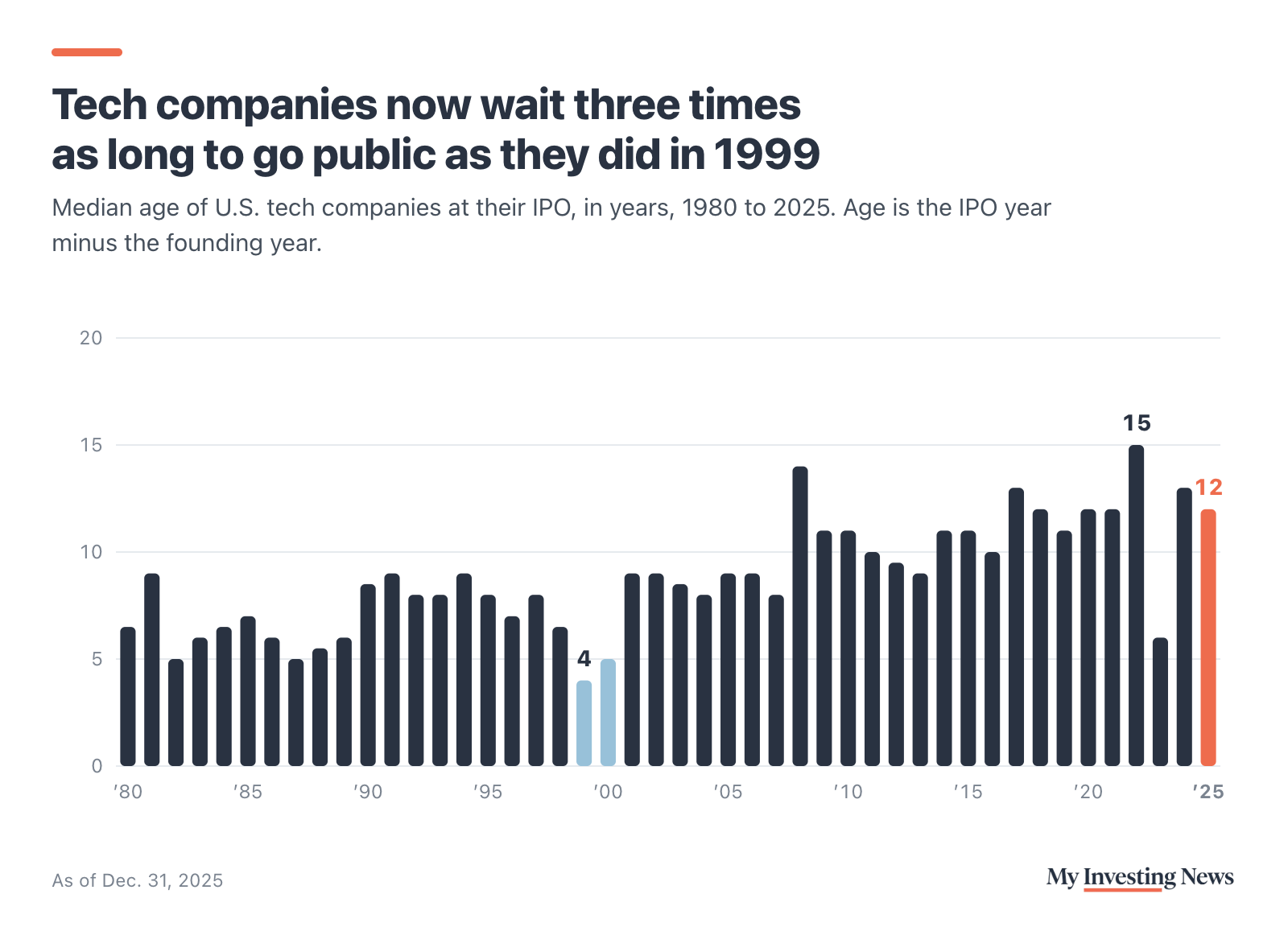
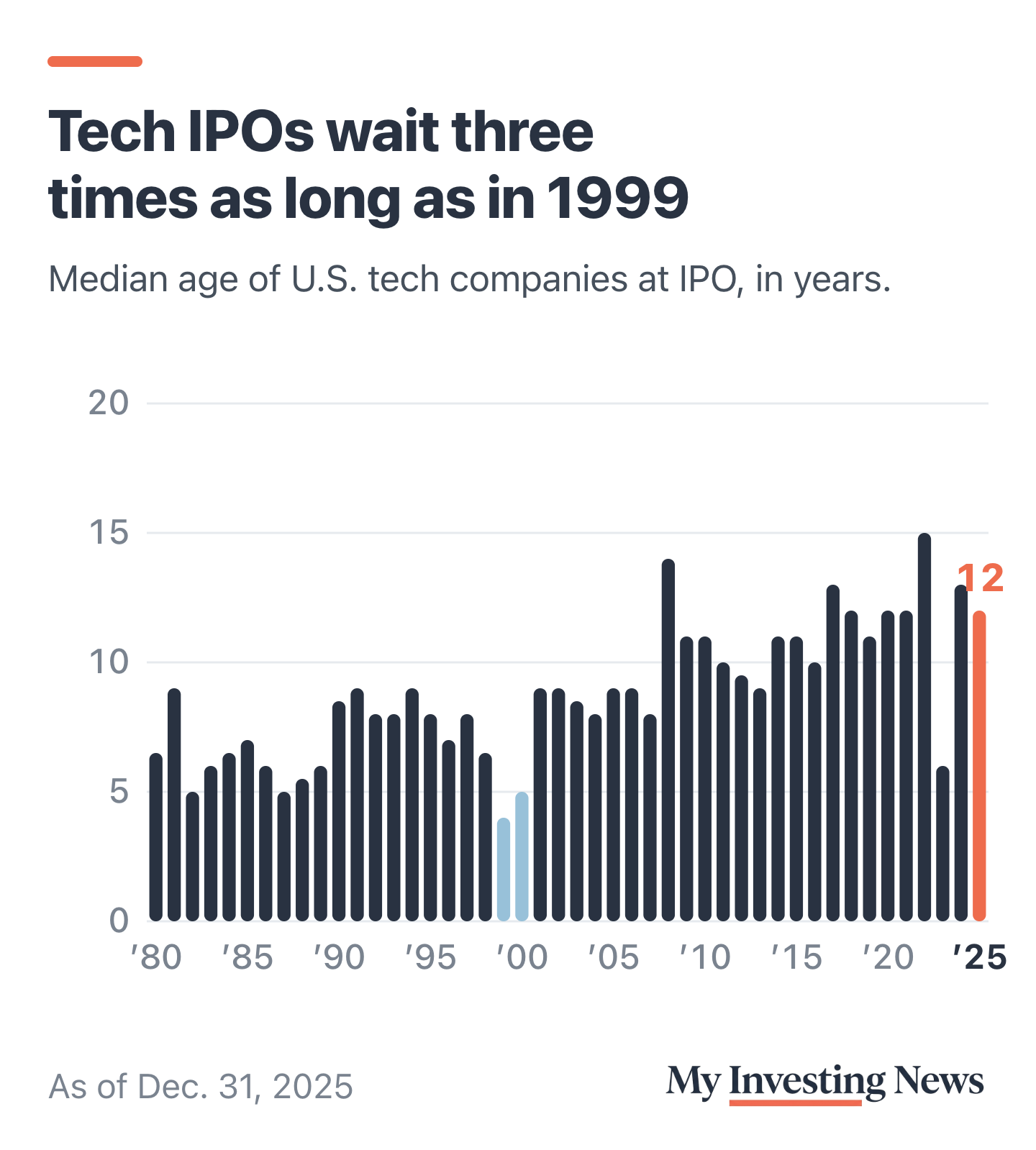
Since 2008, the median tech IPO has been at least 9 years old every year except 2023, when only nine tech companies listed. It peaked at 15 in 2022, and in 2025 it was 12, across 34 tech IPOs. That is three times the 1999 figure. On this measure, Biscardi is right: tech companies now stay private much longer.
SpaceX Was Late Even for This Era
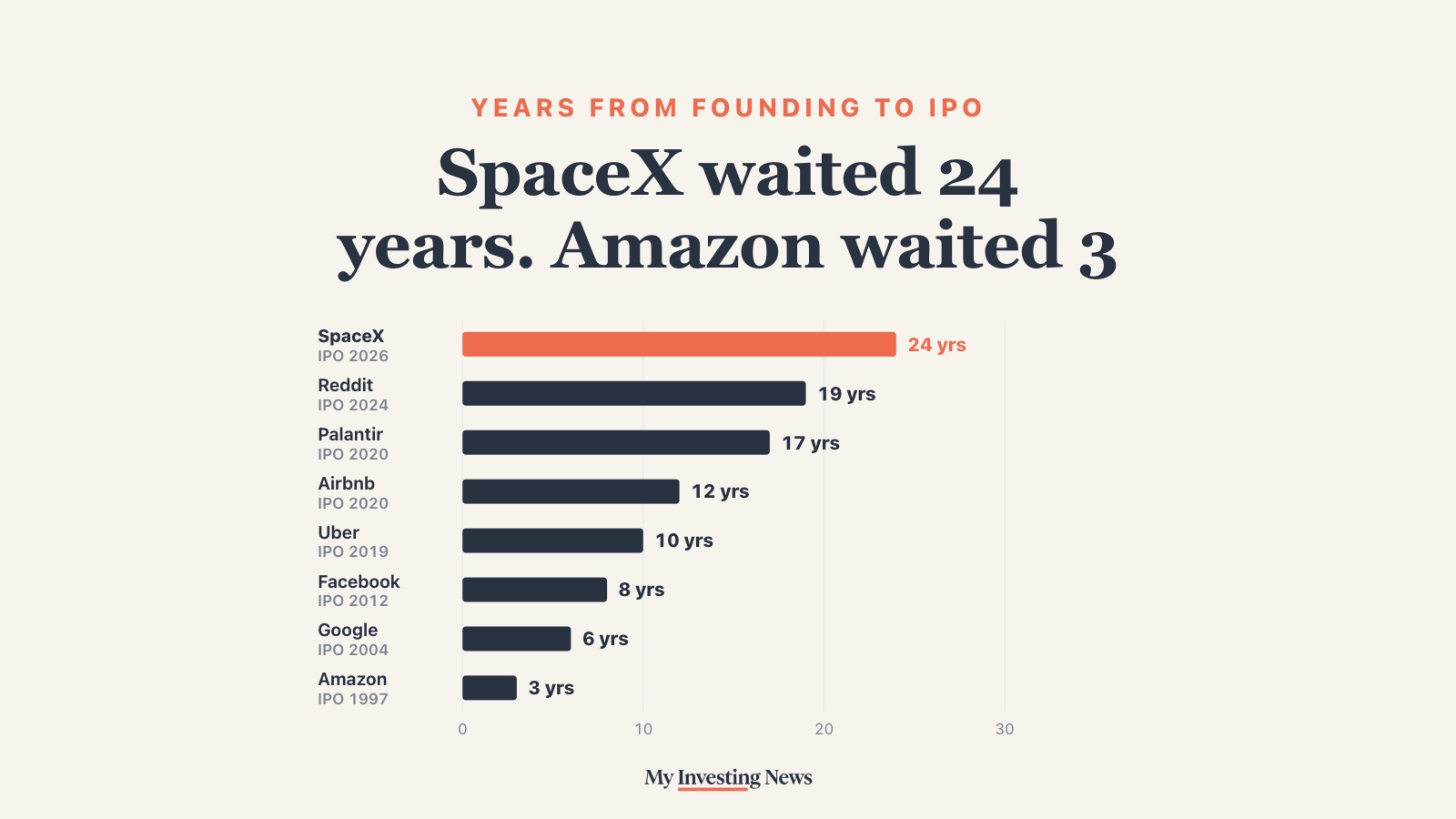
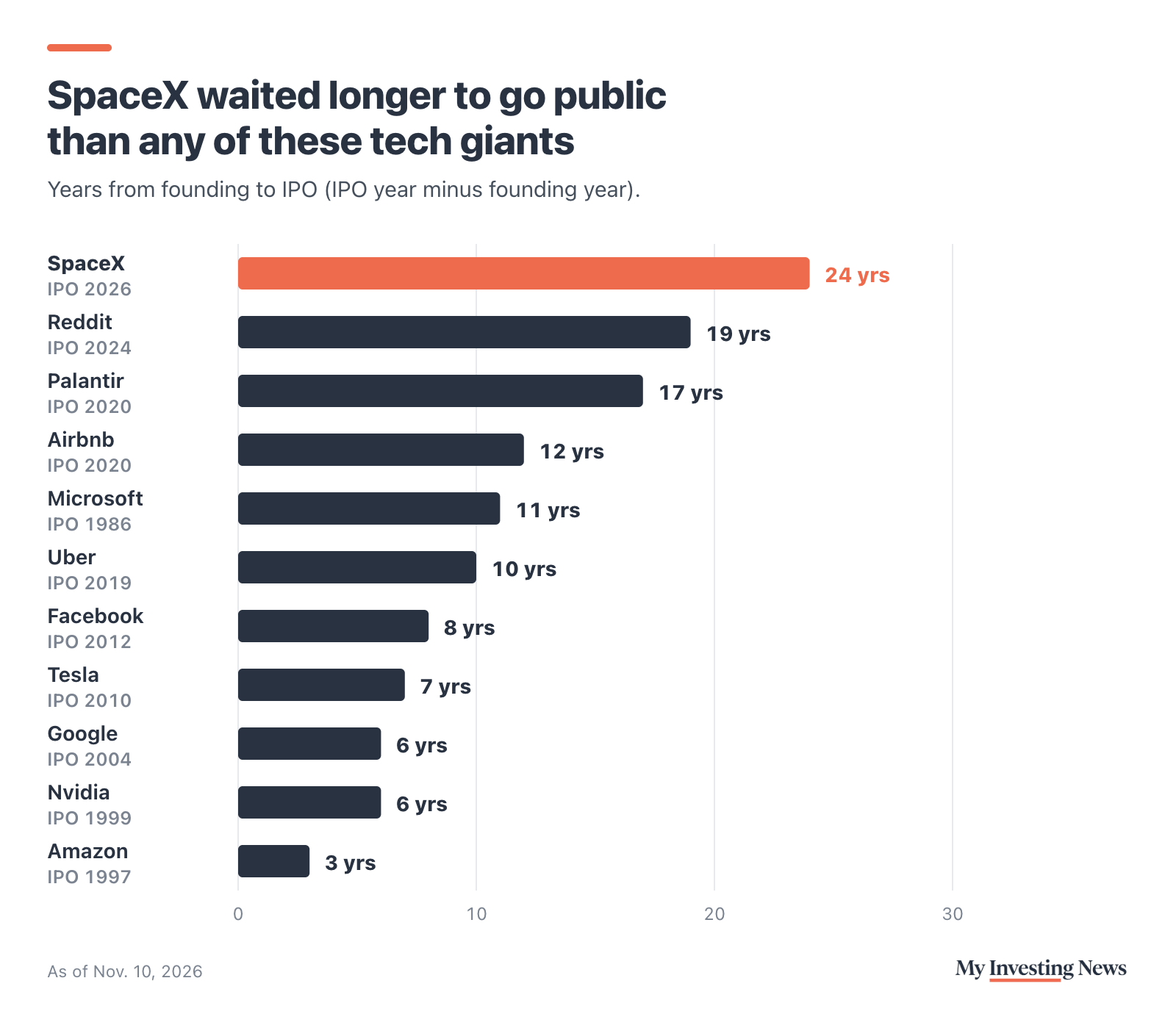
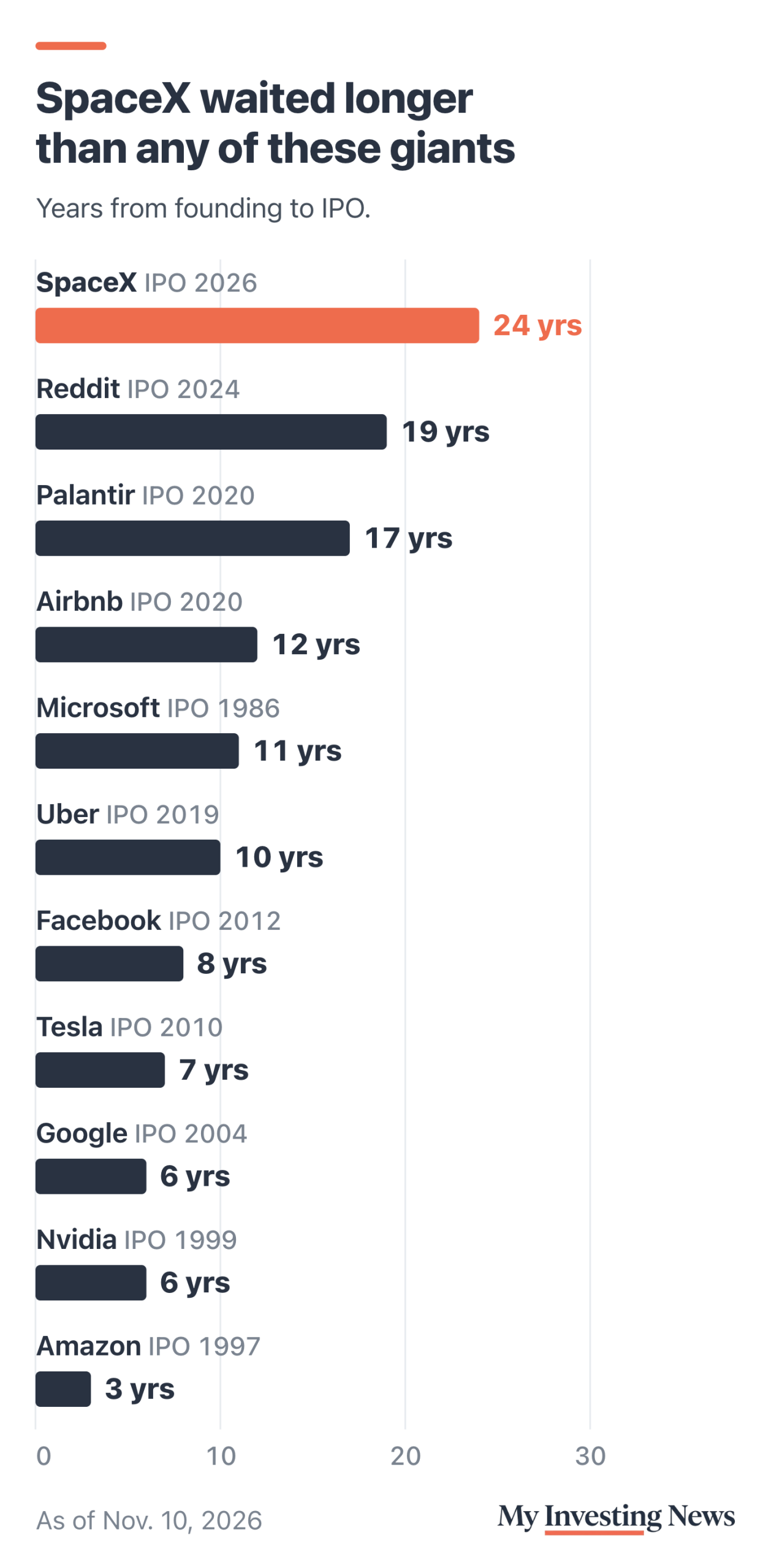
What his sentence leaves out is how far SpaceX ran past even today’s norm. At 24, it was twice as old as the median tech company that went public in 2025. Reddit was 19 when it listed in 2024, and Palantir was 17 when it began trading in 2020. Amazon went public at 3, Google at 6 and Facebook at 8.
How long companies wait to go public
Half the Public Companies Are Gone
The longer wait shows up in the number of companies the public can own. The World Bank counts 3,908 domestic companies listed in the U.S. in 2025, down 52% from the peak of 8,090 in 1996 (World Bank data). Ritter counts 677 IPOs in 1996, after he leaves out tiny deals, SPACs and funds, and 90 in 2025.
For investors, that means more of a company’s growth happens before ordinary buyers can own it. The gains go to venture funds and the pensions and endowments behind them, and those backers wait longer for their cash. That is the strain Biscardi described. He said it eased after SpaceX listed: at his June event in New York, “venture funds were the belle of the ball.” SpaceX also helped push this year’s IPO proceeds past the 2021 record, and Jim Cramer has warned that a flood of new stock can “slay” the bull.
What to Watch
Anthropic is the next test of whether the AI boom shortens the wait. The company was founded in 2021, according to its registration statement, which it amended on Nov. 10. If it lists in 2026, it will be 5 by Ritter’s measure, the same as the median tech IPO in 2000. Biscardi expects the momentum that started midyear to “absolutely carry through” with Anthropic going public. Menlo Ventures’ Matt Murphy has called Anthropic the firm’s biggest bet ever.
Ritter’s 2026 tables, usually updated around year-end, will show whether this year’s class got younger or older. SpaceX itself is now a public test of the wait: its quarterly filings show what investors bought at 24, including how much of its revenue still comes from the federal government.
Biscardi’s history checks out: for most of the past 45 years, the typical company went public at about 9, and tech IPOs are three times older than in 1999. SpaceX, at 24, was an outlier even by today’s longer standard. The risk for ordinary investors is that more of the growth keeps happening before they can buy.