Where we heard itFrank Bisignano, IRS chief executive and Social Security commissioner, in a post on X on Nov. 5, 2026, later reposted by the IRS’s own account. It links to the agency’s Oct. 29 release on fiscal 2026.
Frank Bisignano runs two of the biggest benefit machines in Washington. He is the commissioner of Social Security and also serves as the IRS’s chief executive officer. On the evening of Nov. 5 he gave the tax agency a report card on X, linking to an Oct. 29 IRS release that called fiscal 2026 “record setting.” The release says the IRS collected a record $5.6 trillion in taxes and paid “record high refunds, to more people, and faster than ever before.”


We checked his three claims against Treasury’s daily cash records, the IRS’s own filing season statistics back to 2013, and the Joint Committee on Taxation’s estimates for the new deductions in the 2025 tax law. The dollar figures hold up. The comparison changes once you adjust for inflation.
Treasury’s Books Show a $58 Billion Jump
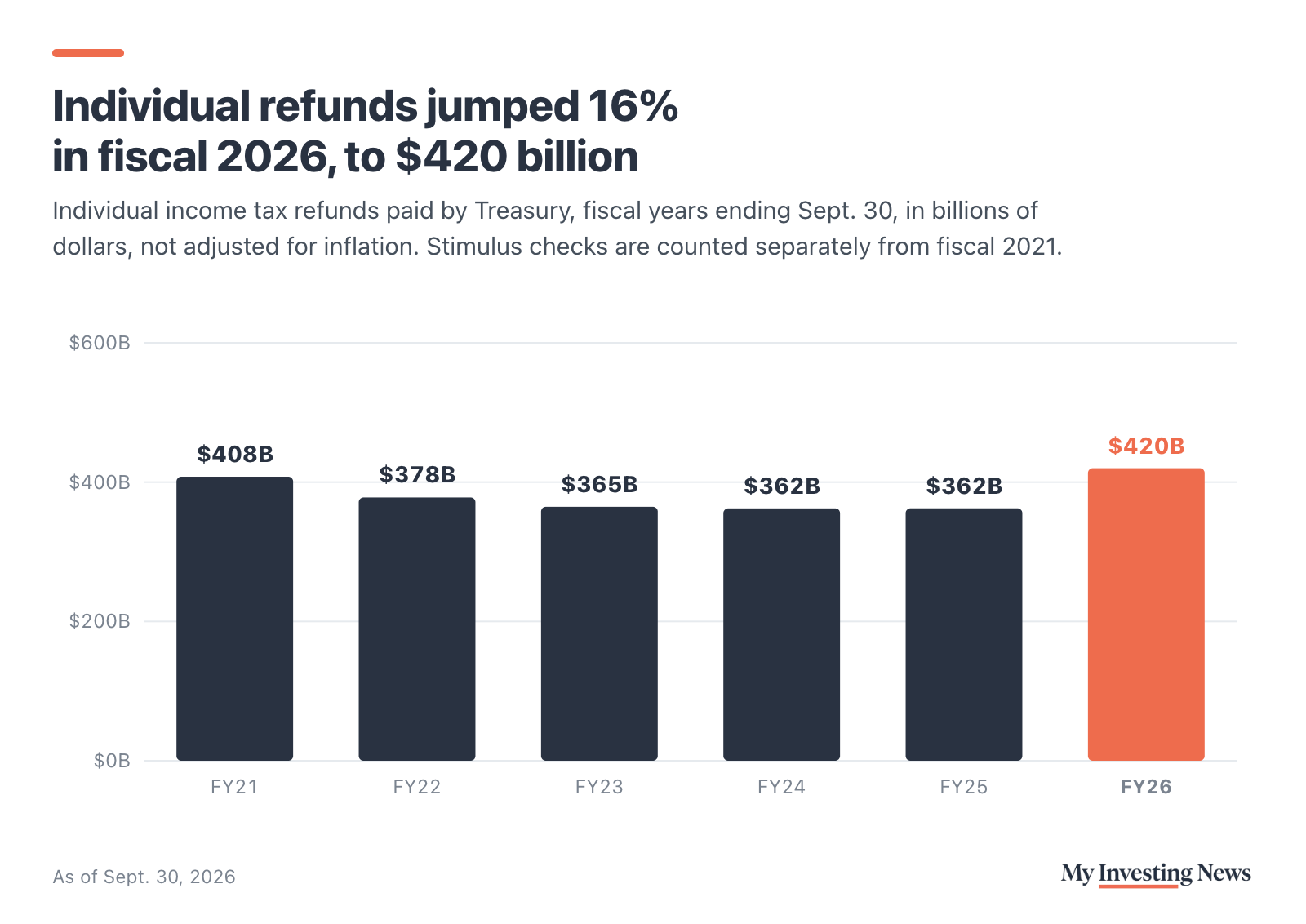
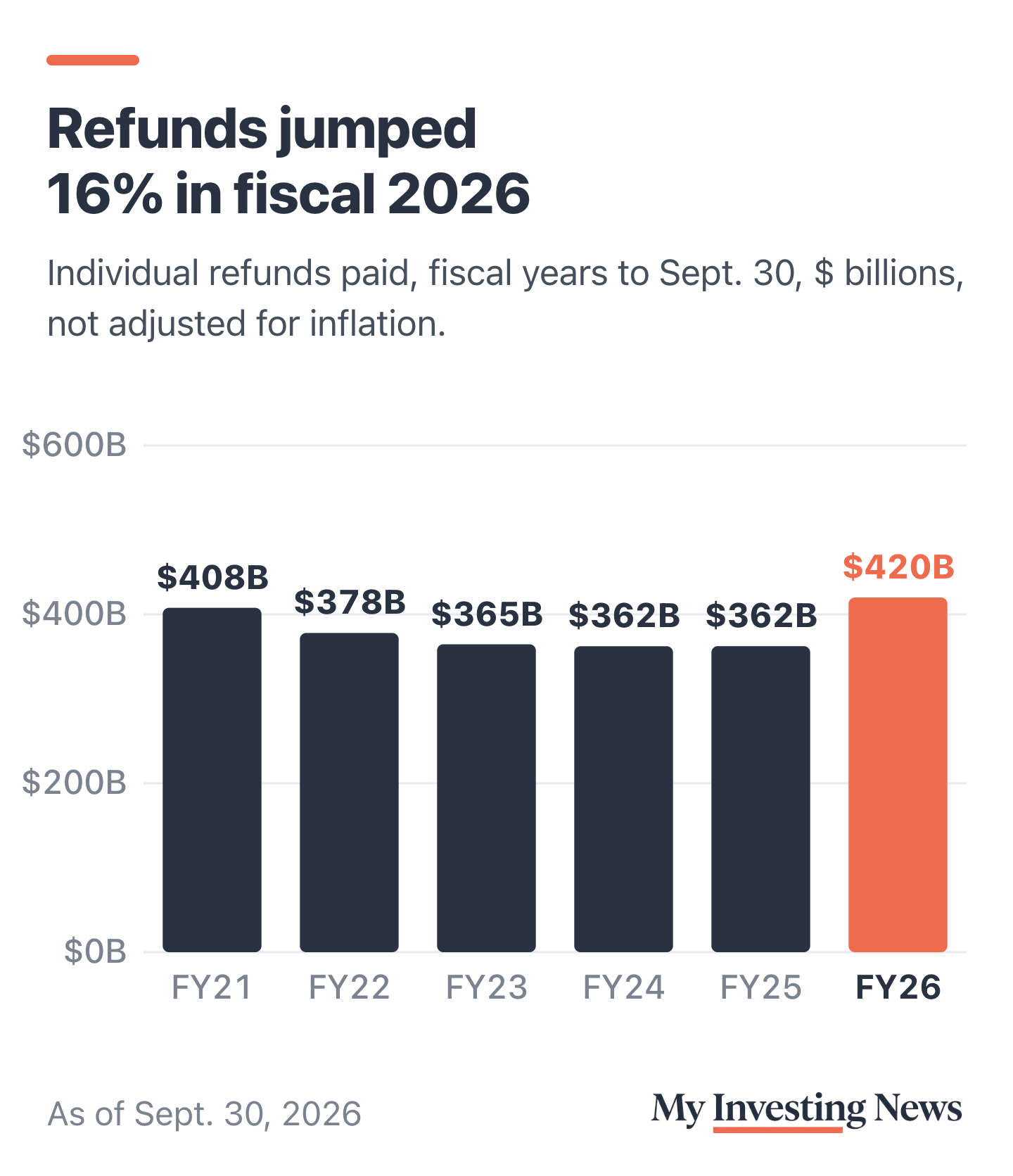
Treasury paid individuals $420.0 billion in income tax refunds in the fiscal year that ended Sept. 30, according to the Daily Treasury Statement. That is up 15.9% from $362.4 billion in fiscal 2025, or $57.6 billion more. It is the largest total in the statement’s records back to fiscal 2006, apart from fiscal 2020, when about $150 billion of pandemic stimulus checks went out through the same line on a single day in April. On a calendar basis, refunds from January through September rose 19.7%, close to the release’s “over 20 percent.”
A narrower measure grew less. The Monthly Treasury Statement, which books refundable credits such as the earned income credit as spending, shows refunds of individual income tax rising 4.3%, to $341.3 billion. Both counts are higher. How much higher depends on which credits you count.
The record $5.6 trillion the IRS collected came in a year when interest on the debt took 19.5% of federal revenue, the most since at least 1940, so the agency’s good news and the budget’s bad news sit side by side.
More Refunds and Bigger Ones, With an Asterisk
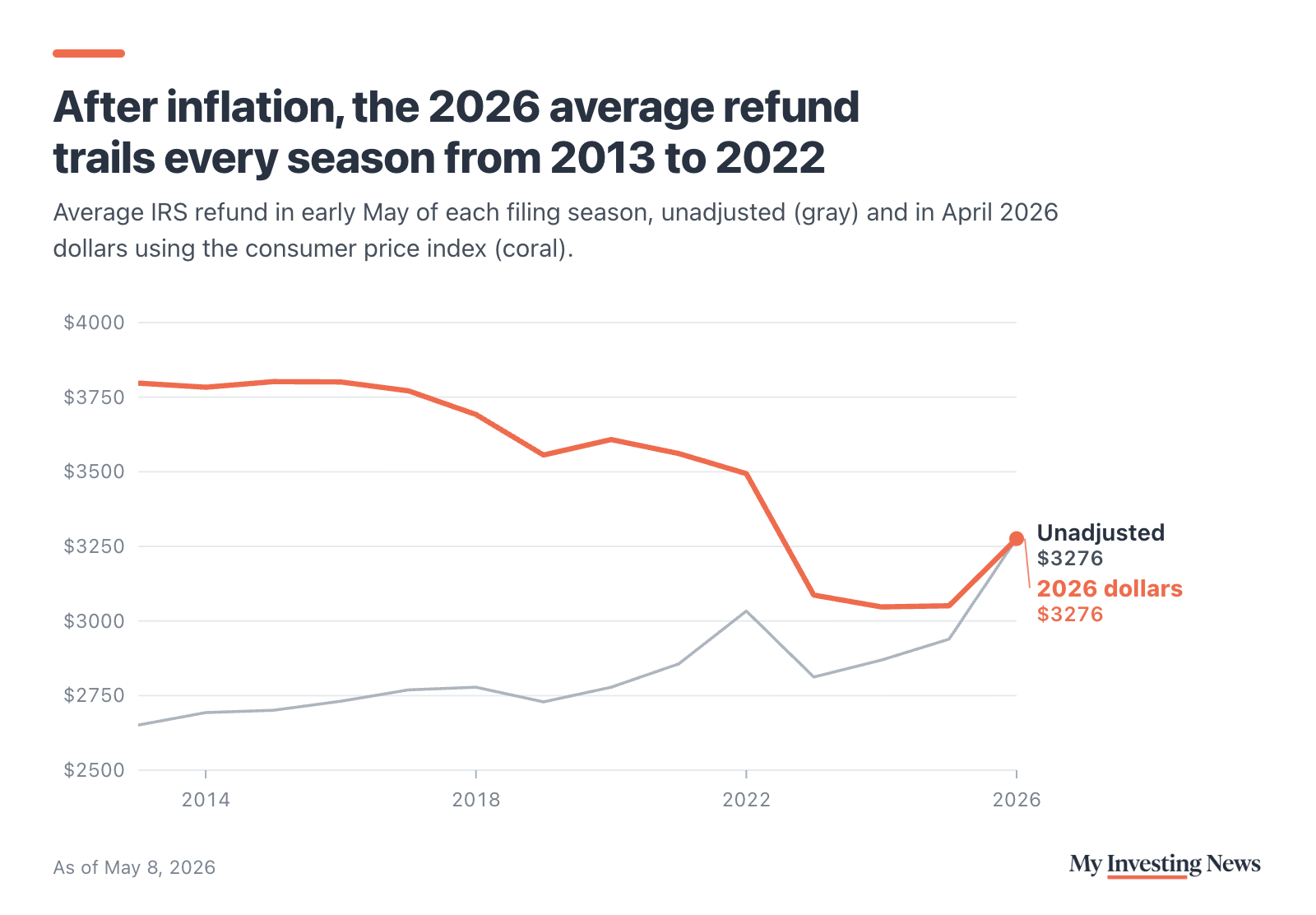
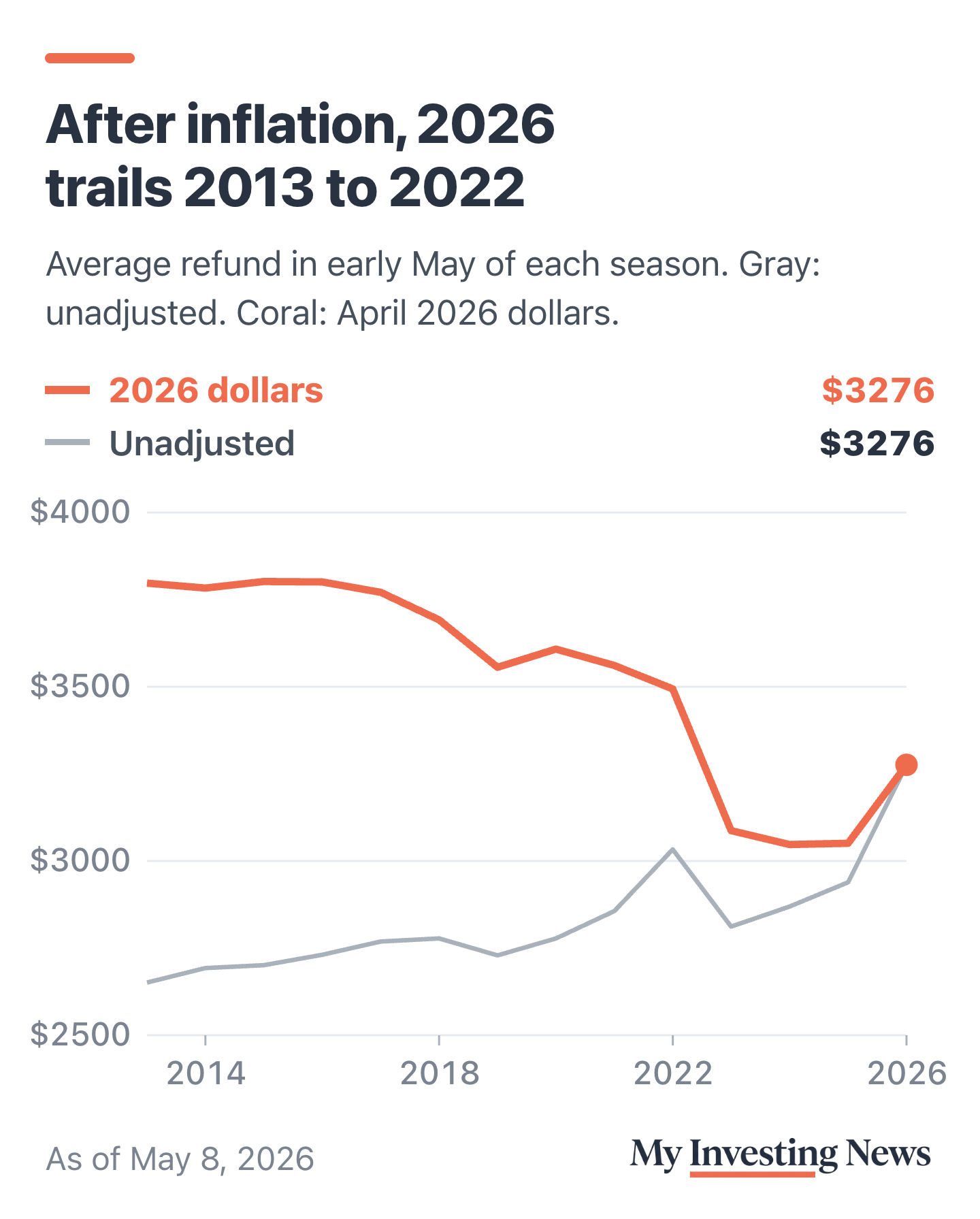
The IRS’s weekly filing season statistics give the season view. Through May 8, it had issued 99.1 million refunds, up 6.0% from the same week of 2025, worth $324.8 billion, up 18.1%. The average refund was $3,276, up 11.5% from $2,939. That is the highest average at that point of the season in the IRS’s weekly reports going back to 2013.
“More refunds” is true against last year only. By early May of every season from 2013 to 2019, the IRS had issued more refunds than it had by May 8, 2026, with a peak of 102.9 million in 2017.
Refunds in fiscal 2026 and the 2026 filing season
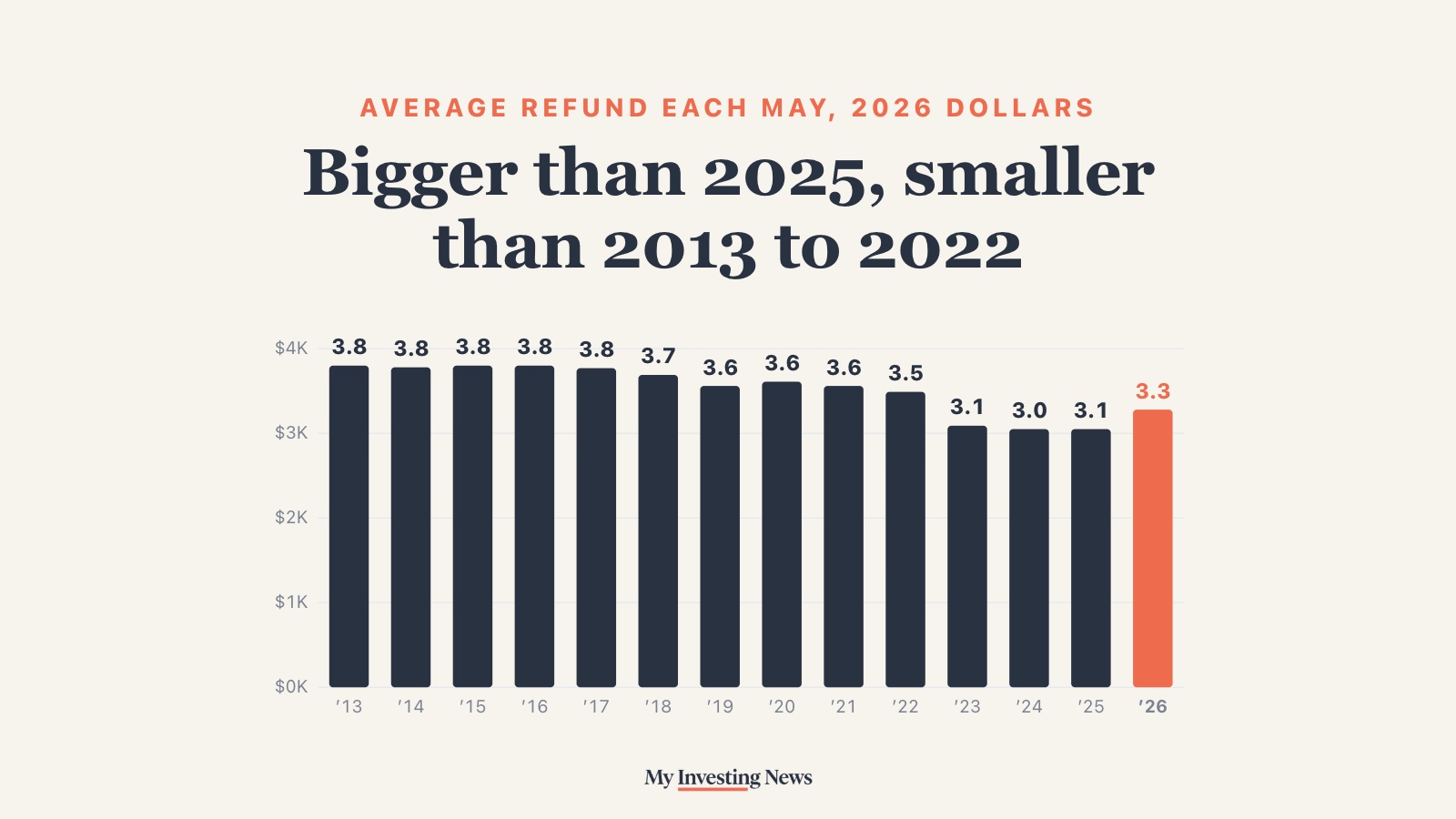
“Bigger refunds” needs the same footnote. Consumer prices rose about 43% between April 2013 and April 2026. In April 2026 dollars, the average refund in early May ran near $3,800 from 2013 through 2017, with a high of $3,802 in 2015, and was still $3,494 in 2022. Then it fell to about $3,050 in 2023 through 2025, as inflation outran refunds. This year’s $3,276 wins back about half of that drop and is still below every season from 2013 to 2022.
The fiscal-year total tells the same story. In today’s dollars, the $420 billion paid in fiscal 2026 trails every fiscal year from 2008 to 2022. Fiscal 2021 alone came to about $506 billion in today’s money.
How Much Came From the New Deductions
The 2025 tax law added deductions for tip income, overtime pay and car loan interest, starting with 2025 returns, plus a larger deduction for people 65 and older. The Joint Committee on Taxation’s July 2025 score of the bill as it passed put the fiscal 2026 cost of the first three at $48.3 billion: $32.8 billion for overtime, $10.1 billion for tips and $5.4 billion for car loans. The senior deduction is folded into a broader line of the score, so it can’t be pulled out. Those estimates measure lost revenue, which doesn’t map one for one onto refunds, but they are the same order of magnitude as the $58 billion rise in refunds.
Quicker? The Taxpayer Advocate’s Count
The release says about 90% of electronic filers got refunds in less than 21 days. The National Taxpayer Advocate, an independent office inside the IRS, called the season “largely successful” in her June report, with a caveat. More than 14 million returns were suspended for extra review, and more than one million taxpayers waited past normal processing times, about five and a half weeks on average. Phones got worse: assistors answered 21% of calls, down from 25% a year earlier, and the average hold time rose to 14 minutes from 8.
What to Watch for the 2027 Season
The tips, overtime and car loan deductions run through 2028. JCT expects them to cost less in fiscal 2027, $41.4 billion, than in fiscal 2026. The first test is the IRS’s weekly statistics once the 2027 season opens, likely in late January as in recent years: the average refund at the same point in 2026 is the bar. Refunds matter most to households with thin cushions, and the Fed’s latest survey found lower earners got raises and still got poorer.
Bisignano’s numbers check out in dollars: individual refunds rose 16% to $420 billion in fiscal 2026, and the average refund hit $3,276, the highest in IRS weekly data back to 2013. After inflation, that average still trails every season from 2013 to 2022, and fewer refunds went out than in 2013 through 2019. The new deductions explain much of the jump, and their cost is expected to shrink next year.