Where we heard itThe Real Eisman Playbook, Episode 80, “Big Short Reunion w/ Danny Moses: Rising Rates, AI & Private Equity.” Published Oct. 19, 2026. Speaker: Steve Eisman, host, with guest Danny Moses.
Steve Eisman, the investor made famous by The Big Short, says he isn’t telling anyone to short the AI trade. What bothers him is how much of it rests on a few buyers. On the Oct. 19 episode of his podcast, The Real Eisman Playbook, he pointed to a line in the latest quarterly filing from NvidiaNVDA, one that most investors skipped past while they cheered the headline growth.
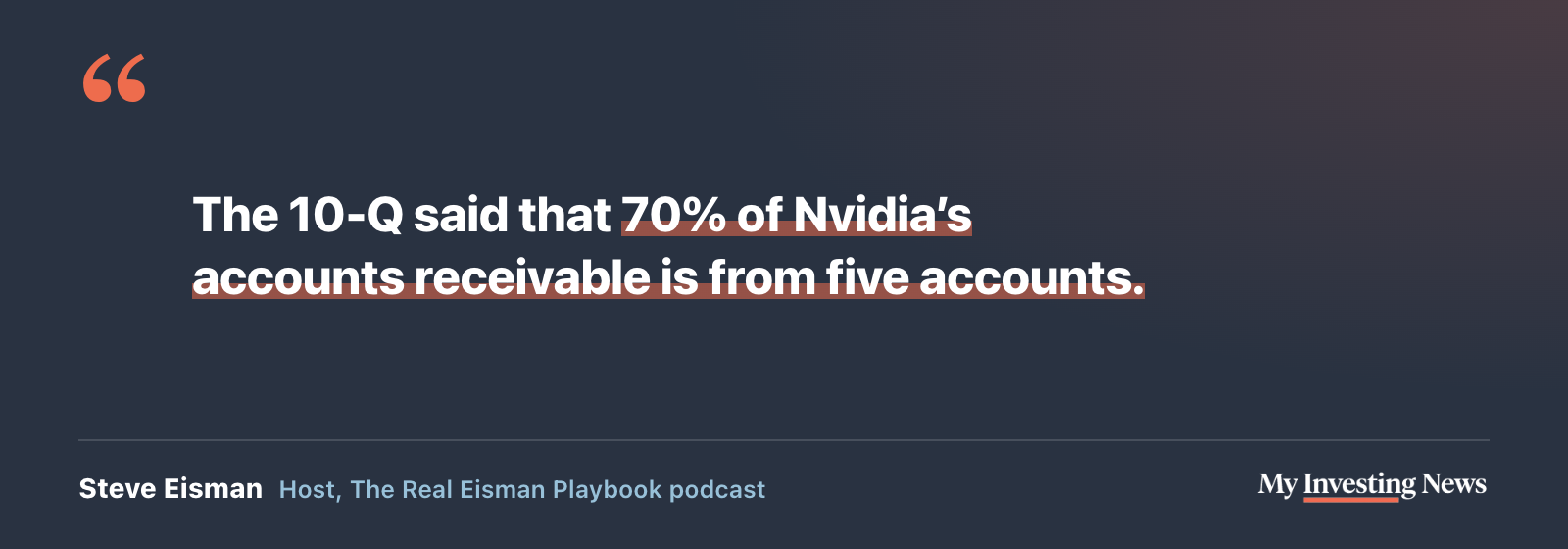
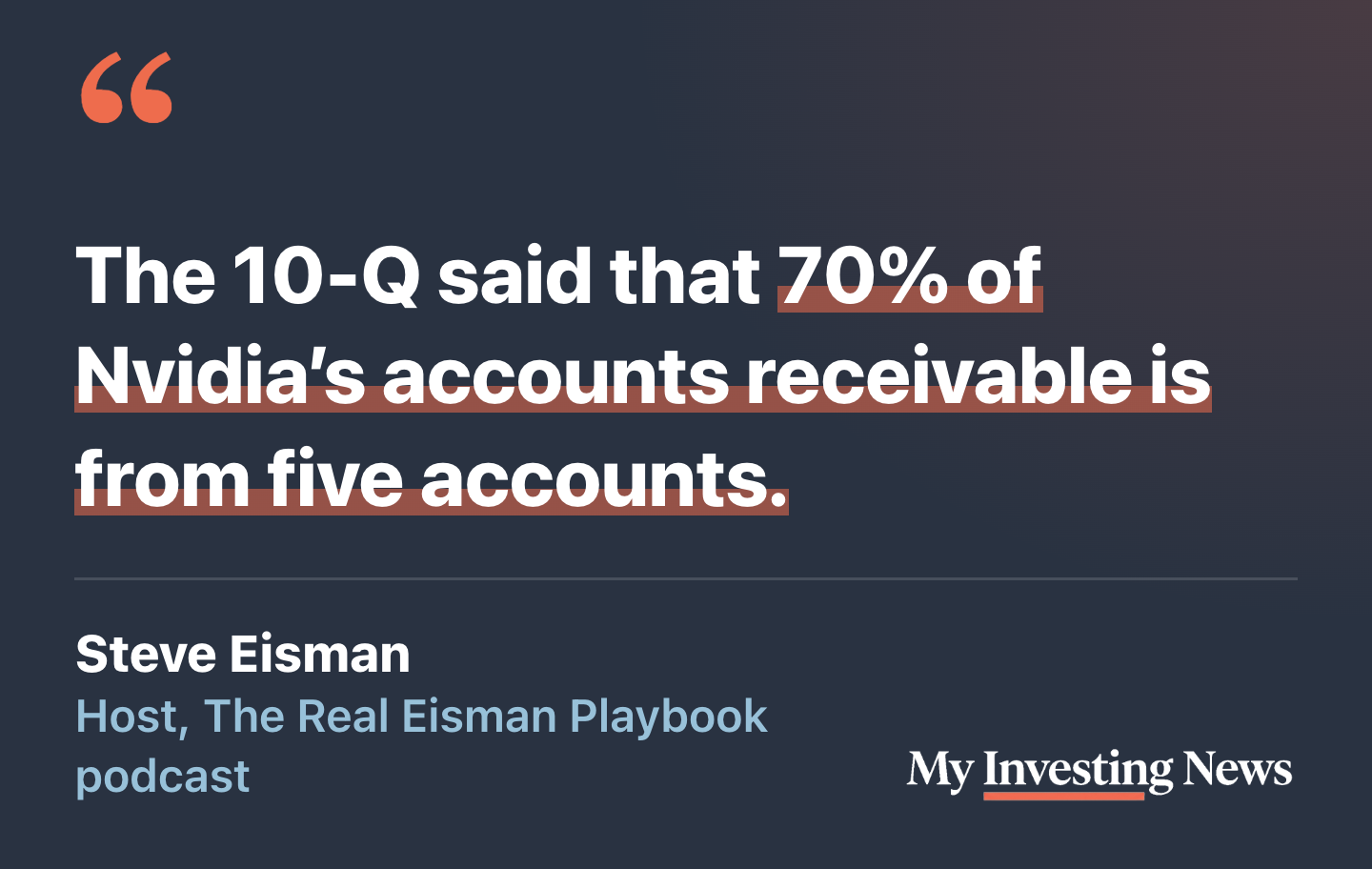
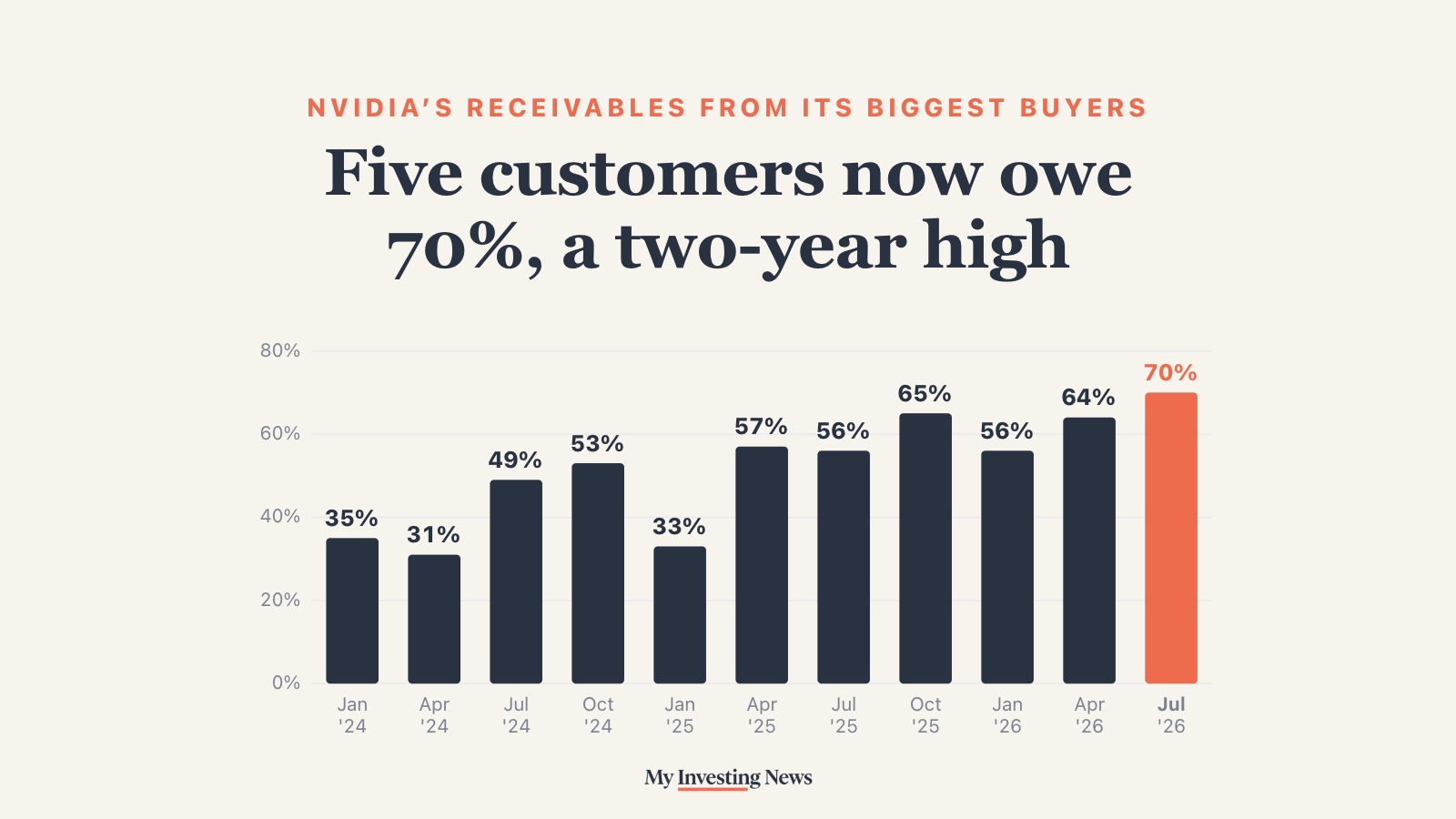
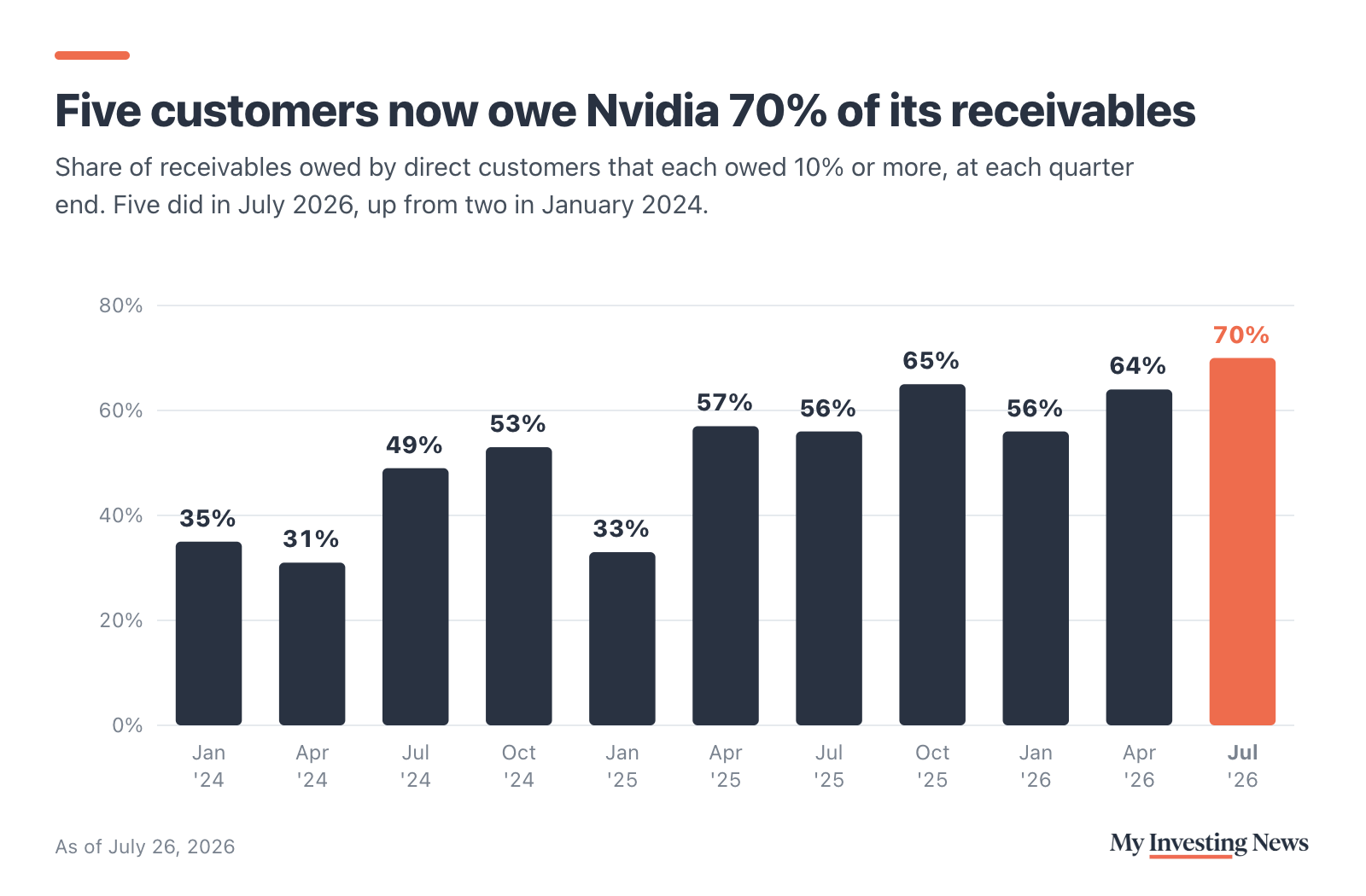
We checked the filing. He has the number exactly right. Nvidia’s 10-Q for the quarter ended July 26, 2026 says five direct customers accounted for 22%, 14%, 13%, 11% and 10% of its accounts receivable. That adds up to 70%. Accounts receivable is money customers owe for chips Nvidia has already shipped and booked as sales.
Eisman then went a step further, calling Nvidia “the largest company in the world” and saying 70% of “its revenue comes from five customers.” The filing doesn’t say that. Receivables and revenue measure different things, and on revenue Nvidia’s customer list looks broader.
What the 10-Q Actually Shows
Nvidia reported second-quarter revenue of $96.2 billion on Aug. 26, up 106% from a year earlier. Eisman said “I think revenue was up 110%,” close to the real figure. He also said the 10-Q came “the next day.” EDGAR’s records show it was accepted at 4:36 p.m. Eastern on Aug. 26, about 15 minutes after the earnings release. Investors cheered anyway. The stock rose 8.7% the next session, to $227.98.
For the quarter itself, only one direct customer bought 10% or more of Nvidia’s products, at 16% of revenue. Over the first half of the fiscal year, three direct customers came in at 16%, 15% and 13%. Direct customers include distributors, server makers and contract manufacturers, so the money behind them often traces back to cloud providers and AI labs further down the chain. Nvidia doesn’t name them.
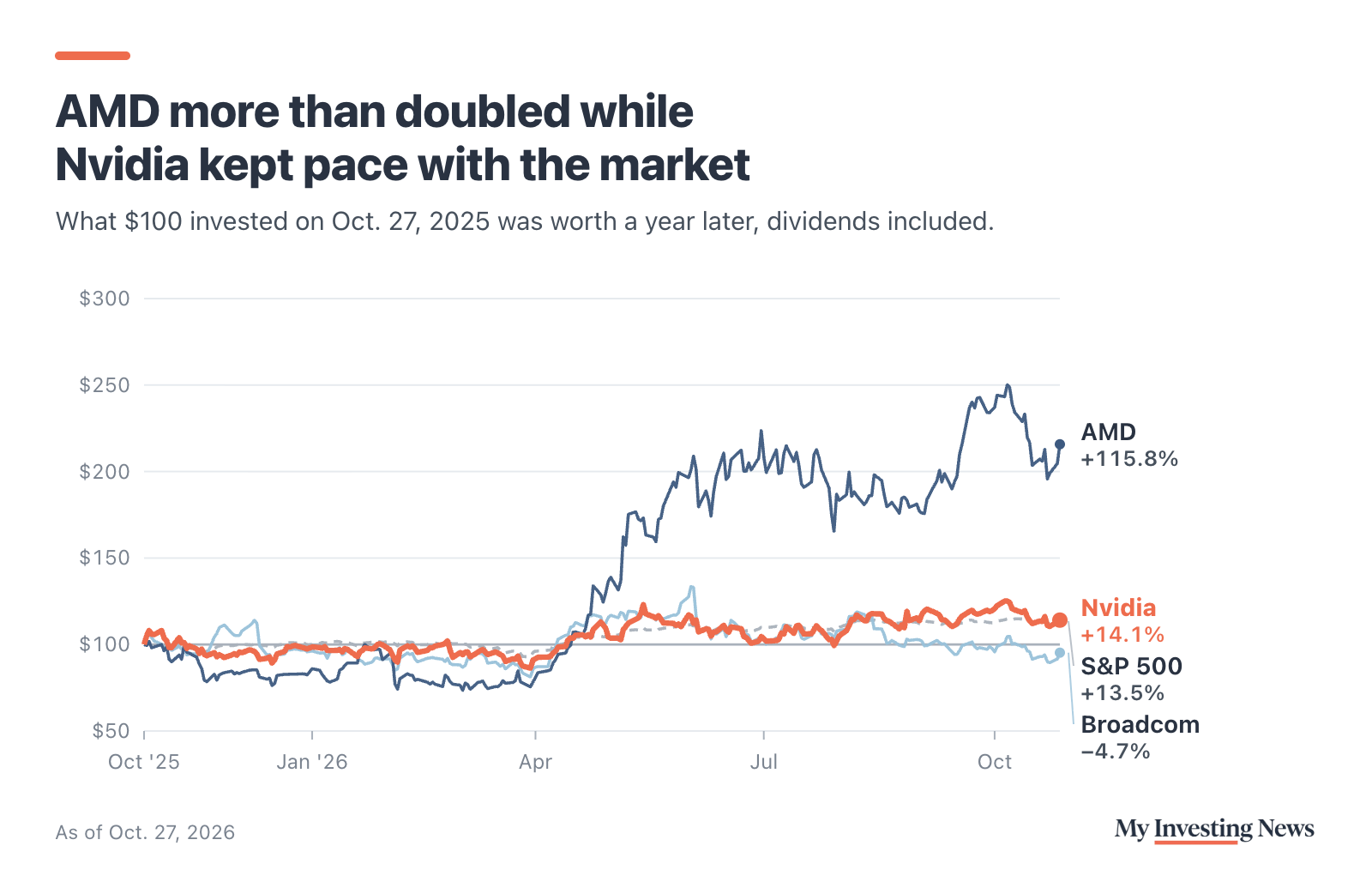
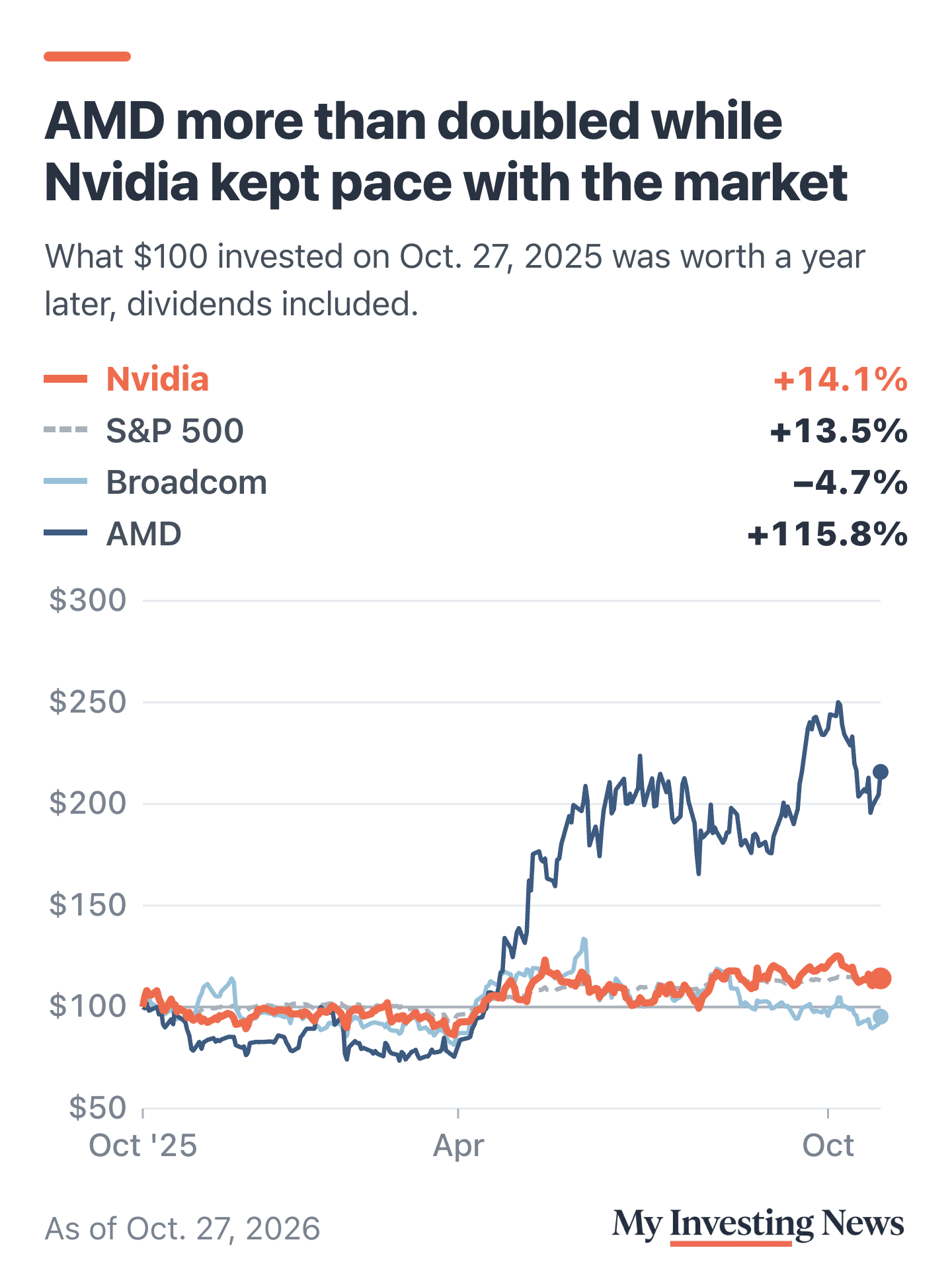
Over the past year the stock has roughly matched the market. Nvidia returned 14.1% including dividends through the Oct. 27 close, against 13.5% for the S&P 500. AMDAMD returned 115.8%, while BroadcomAVGO lost 4.7%. Nvidia closed at $217.94 on Oct. 27, 8.9% below its Oct. 6 closing high of $239.24.
Why the Bills Piled Up
The concentration sits inside a much bigger pile of bills. Receivables jumped to $63.1 billion at the end of July from $40.7 billion three months earlier, a 55% rise in one quarter. In its CFO commentary, Nvidia said days sales outstanding, the average time it takes to get paid, rose to 60 days from 45. It gave the reason in the same sentence: “extended payment terms on large, multi-quarter agreements with certain investment-grade customers.”
The 10-Q spells out how long those terms run. “In certain cases, for investment-grade customer purchases, we have and may in the future provide longer payment terms ranging from 90 days up to one year to assist customers with large data center builds depending on size,” it says. Operating cash flow fell to $24.1 billion in the quarter from $50.3 billion in the quarter before.
Nvidia’s second quarter, by the filing
Longer terms can make receivables more concentrated than sales. A customer that pays over a year keeps owing Nvidia long after one that pays in 30 days has settled up. That makes the 70% a measure of credit exposure: how much Nvidia is waiting to collect, and from whom.
Two Years of Rising Concentration
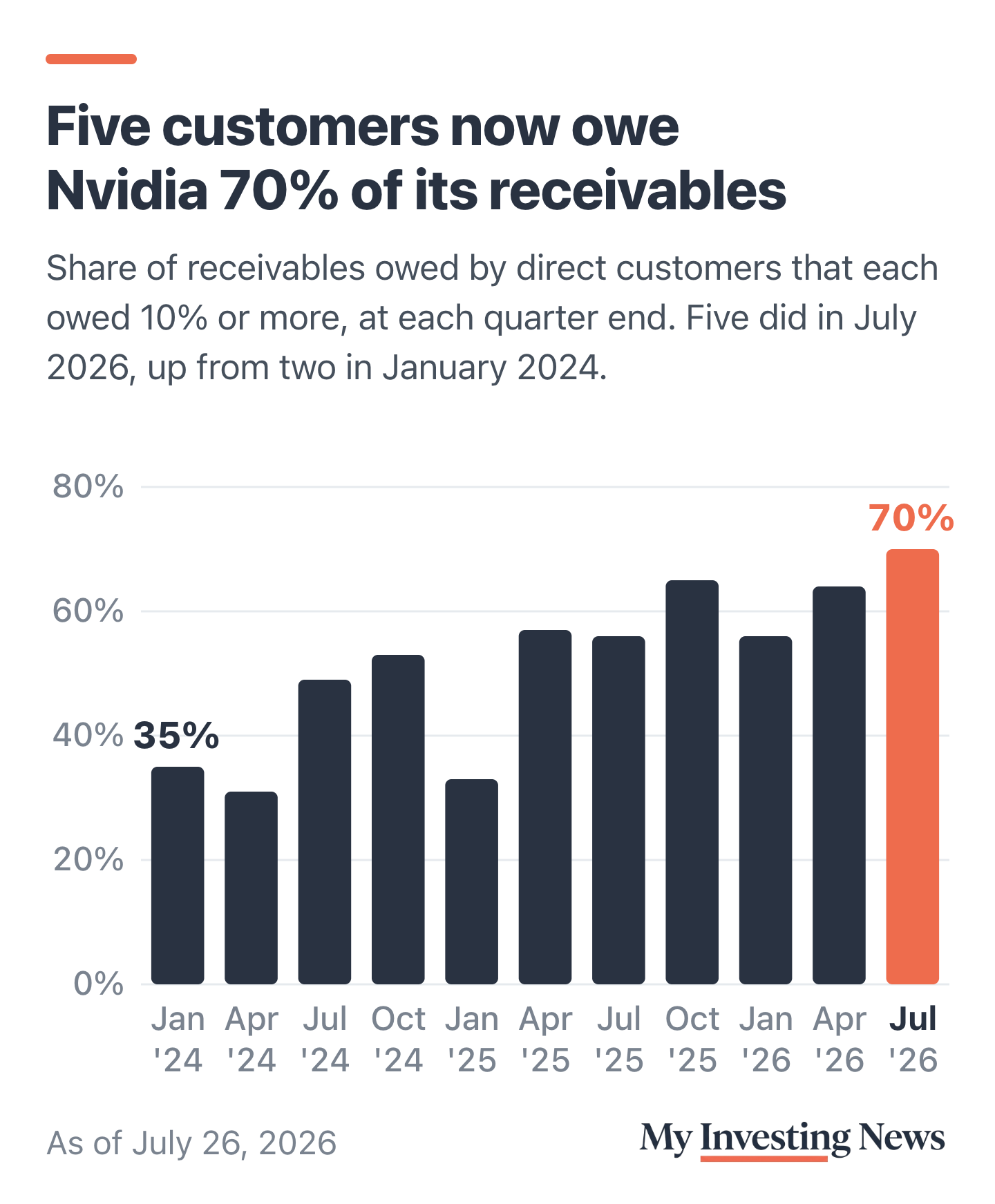
The number has been climbing. In January 2024, two customers each owed Nvidia 10% or more, and together they owed 35% of its receivables. By the end of October 2025 four customers owed 65%. The July 2026 filing is the first in our two-year record with five customers above the 10% line.
Eisman’s larger worry sits further down that chain. He said much of it depends on “the health of OpenAI and Anthropic,” and added, “Nobody can handicap.” Nvidia’s filing says one “AI research and deployment company” contributed “a meaningful amount” of its revenue by buying cloud services from Nvidia’s customers. OpenAI’s numbers in particular are hard to pin down: a Bloomberg reporter has explained why nobody can agree on what OpenAI actually earns. Chamath Palihapitiya has made a related point, that a tiny share of companies drives most AI spending.
What to Watch Next
Nvidia guided to third-quarter revenue of $108.0 billion, plus or minus 2%. The 10-Q that follows that report will show whether the five-customer share and the 60-day collection time kept rising. Look also for how much of the new business comes with long payment terms, and whether any big buyer runs into the kind of financing fears that hit CoreWeave in October.
Eisman’s receivables number is correct: five direct customers owed Nvidia 70% of its $63.1 billion in receivables at the end of July, the highest share in two years of filings. His leap to revenue goes further than the filing, where only one direct customer topped 10% of quarterly sales. The filing shows why the concentration matters: Nvidia is giving some big buyers up to a year to pay, so more of its reported growth depends on a few customers settling those bills.