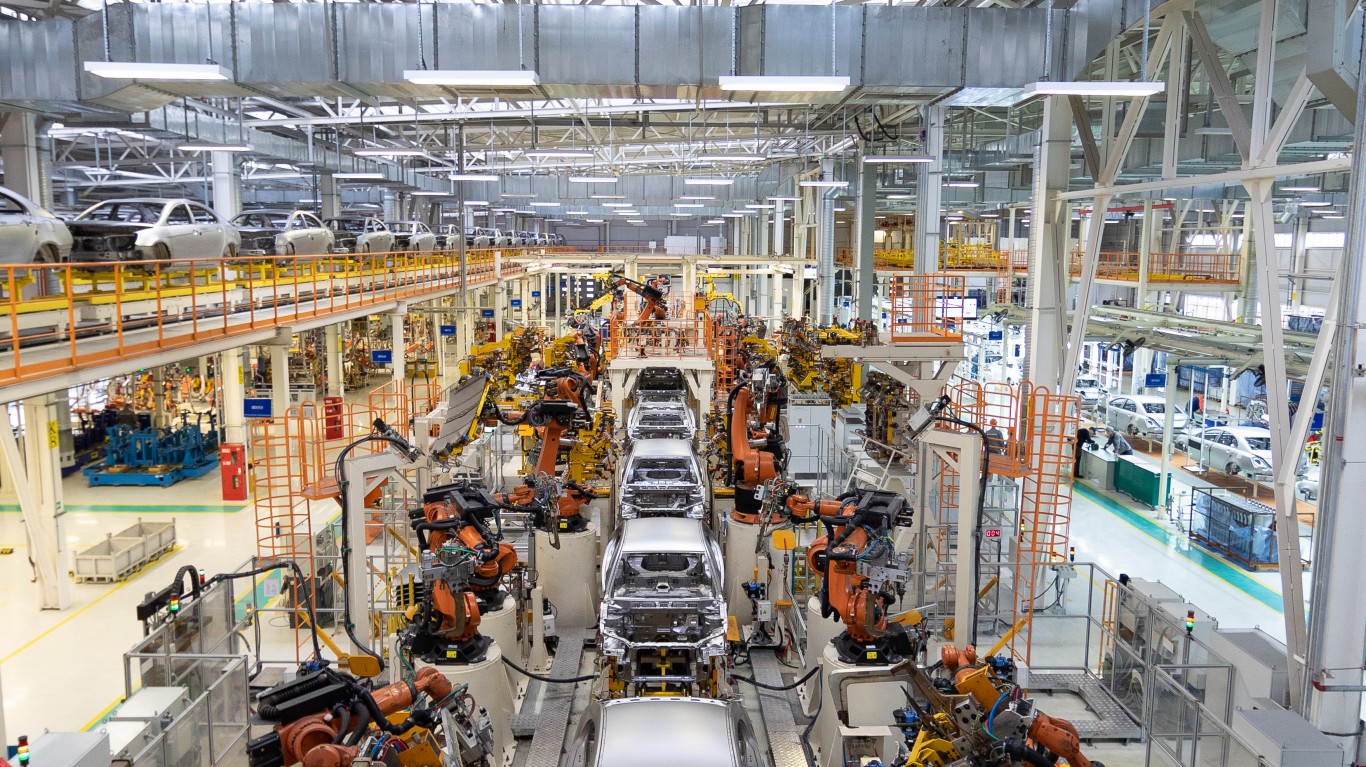
U.S. industrial production rose 0.7% in September 2026, speeding up from August, which CNBC’s Steve Liesman reported was revised up to a 0.1% gain. The Federal Reserve put out the figure in its industrial production and capacity utilization report on Friday, October 16, 2026. The Bureau of Labor Statistics released September import prices the same morning, and the two reports point in different directions for the Federal Reserve.
September Output Hit a Two-Year High
Industrial production tracks physical output at the country’s factories, mines and utilities. September’s gain came in above expectations and raised the index to 103.95. It marks the highest level in the period the data covers. Output was up 2.2% from a year earlier.
Steve Liesman said on CNBC that consumer goods production rose 0.7%. Liesman also reported that non-industrial and construction supplies rose 1%. One category went the other way: Liesman reported that motor vehicle parts production fell 3% in September.
| Month | Industrial Production Index (2017=100) | Capacity Utilization (%) |
|---|---|---|
| September 2026 | 103.9506 | 76.8504 |
| August 2026 | 103.2664 | 76.4184 |
| July 2026 | 103.2006 | 76.4409 |
| June 2026 | 102.961 | 76.3321 |
| May 2026 | 102.7232 | 76.2225 |
| April 2026 | 102.5768 | 76.1792 |
| March 2026 | 101.7336 | 75.6178 |
| February 2026 | 101.9053 | 75.8142 |
| January 2026 | 101.0388 | 75.242 |
| December 2025 | 101.4941 | 75.6422 |
| November 2025 | 101.0344 | 75.3901 |
| October 2025 | 101.2195 | 75.6194 |
The trend has been going up. The index first went above 103 in July 2026 and has stayed there since. September’s reading is the top of a 24-month record whose low was 99.2925 in November 2024.
Capacity Utilization Beat the Forecast
Capacity utilization rose to 76.85% in September. It marks the highest reading in the 24 months of data covered. Steve Liesman reported the result against a forecast of 76.5%. The measure shows how much of the country’s industrial capacity is in use. A higher reading can mean producers have less spare room to meet demand, which gives them more power to raise prices.
Import Prices Were the Week’s Third Inflation Surprise
Liesman reported the import price index rose 1.1% in September. Reuters reported that import prices posted their largest annual gain in more than four years. Liesman said both oil and non-petroleum import prices caused the jump. He called it the third report this week to surprise to the upside on inflation. Import prices matter because they feed into what businesses pay for materials and finished goods, and into the prices consumers pay.
Why Warsh’s Calm Response Matters
The Fed raised its target range on September 16, 2026 to 3.75% to 4.00%, according to Federal Reserve data. That reversed part of an easing cycle in which the upper bound had dropped from 4.50% in 2025.
According to Steve Liesman, Fed Chairman Kevin Warsh described conditions as developing pretty much as expected. Liesman explained that this meant the Fed had been projecting one additional rate hike this year. Liesman’s reading was that Warsh was not surprised by the week’s inflation reports and that the Fed had no need to hike in October. Bloomberg and the Financial Times also reported that Warsh’s comments strengthened market expectations of an October hold.
Markets responded quickly. CNBC reported that market-implied odds of an October hike fell from above 50% before Warsh’s comments to 15% after. That was market pricing at the time of the broadcast. It can shift with each new data release.
Borrowers already face higher long-term rates. Separate from Liesman’s CNBC report, the 10-year Treasury yield stood at 5.19% on October 14, 2026, after reaching a six-month high of 5.31% on October 5, 2026.
Hawks Still Have a Case for Hiking Now
The debate remains open. Liesman noted that some people disagree with Warsh’s patience and think the Fed should to be boosting now. Their case rests on this week’s data: three inflation reports in a row came in higher than expected, import costs rose across both energy and non-energy goods, and factories are using more of their capacity than at any point in two years. Strong output combined with rising input costs is the kind of mix that can keep inflation sticky.
What to Watch Before the October Decision
The October outlook now depends on two things. First, the next inflation releases need to show whether this week’s hot readings were a cluster or the start of a trend. Another upside surprise would weaken the “as expected” framing that Liesman attributed to Warsh. Second, watch the tone of other Fed officials. If policymakers start sounding less patient than the chairman, market pricing for a hike could rise again. Anyone carrying variable-rate debt or holding long-duration bonds should keep a close eye on both signs.