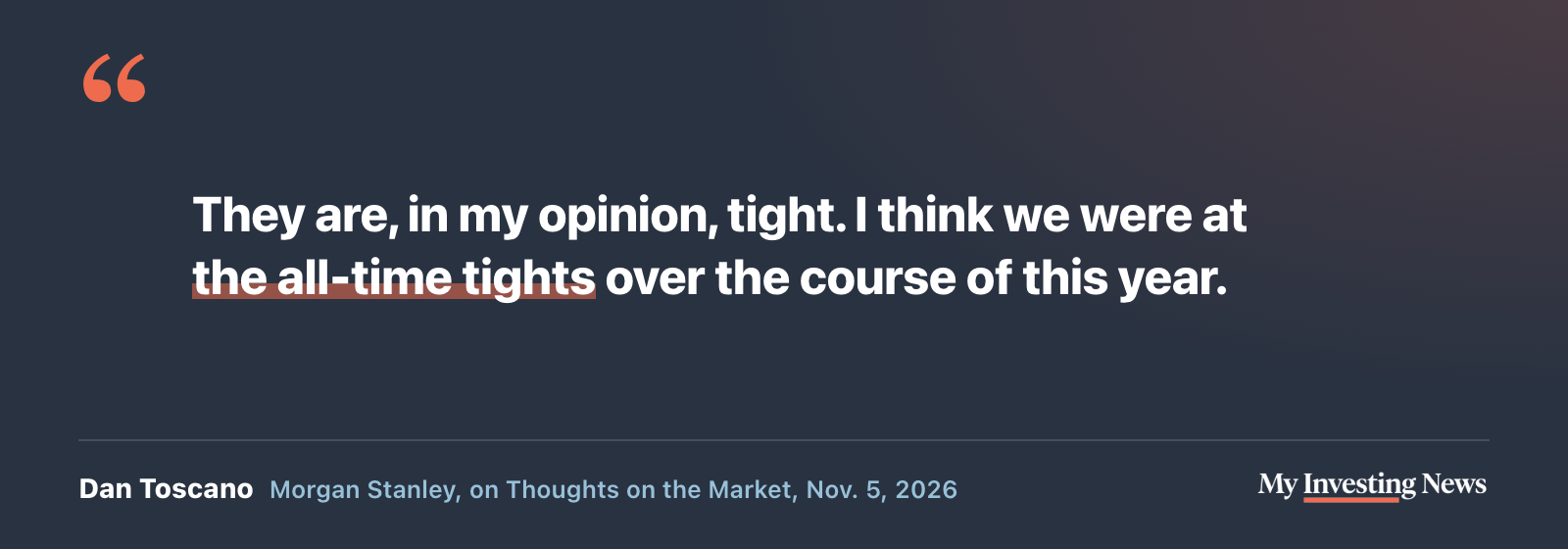
Where we heard itDan Toscano of Morgan Stanley’s investment banking division, talking with chief fixed income strategist Vishy Tirupattur on the firm’s Thoughts on the Market podcast, Nov. 5, 2026, in the episode “A Credit Perspective on the AI Buildout.”
Tech companies are borrowing heavily to pay for data centers, and Vishy Tirupattur, Morgan Stanley’s chief fixed income strategist, opened the question on his own podcast: “Spreads have widened. So, overall borrowing costs for issuers here are clearly higher.” His guest, Dan Toscano, a longtime credit banker the show introduced in January as the firm’s chairman of markets in private equity, pushed back on the idea that AI debt is getting expensive:
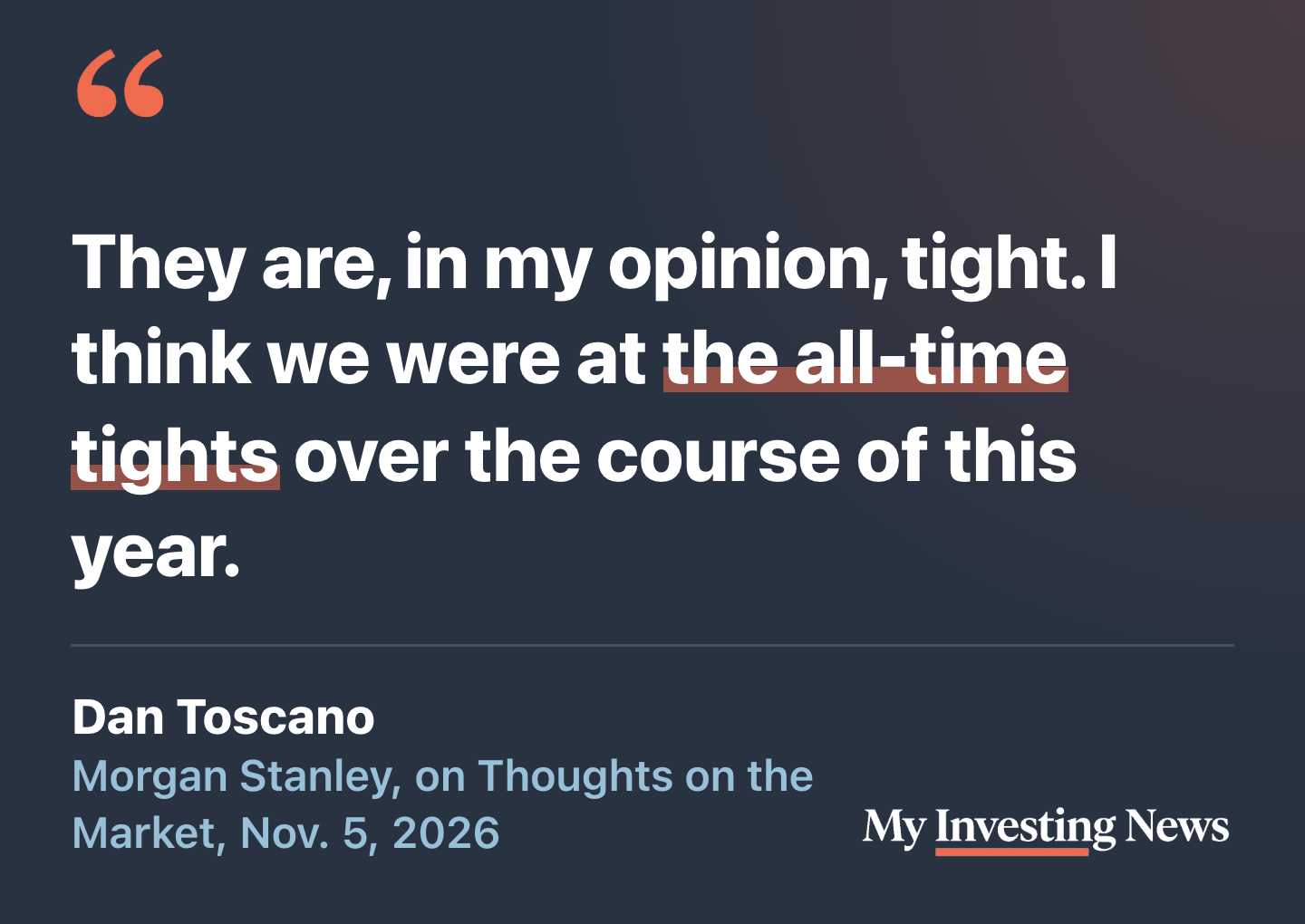
“And so, it’s hard for me to sit here and say all this AI-related financing is driving up the cost of capital,” Toscano went on. “We don’t see it in spreads.” A spread is the extra yield a company pays over a Treasury bond of similar maturity, and it is the market’s price for credit risk. We checked his “all-time tights” against the longest public daily record.
Tight, but Not a Record
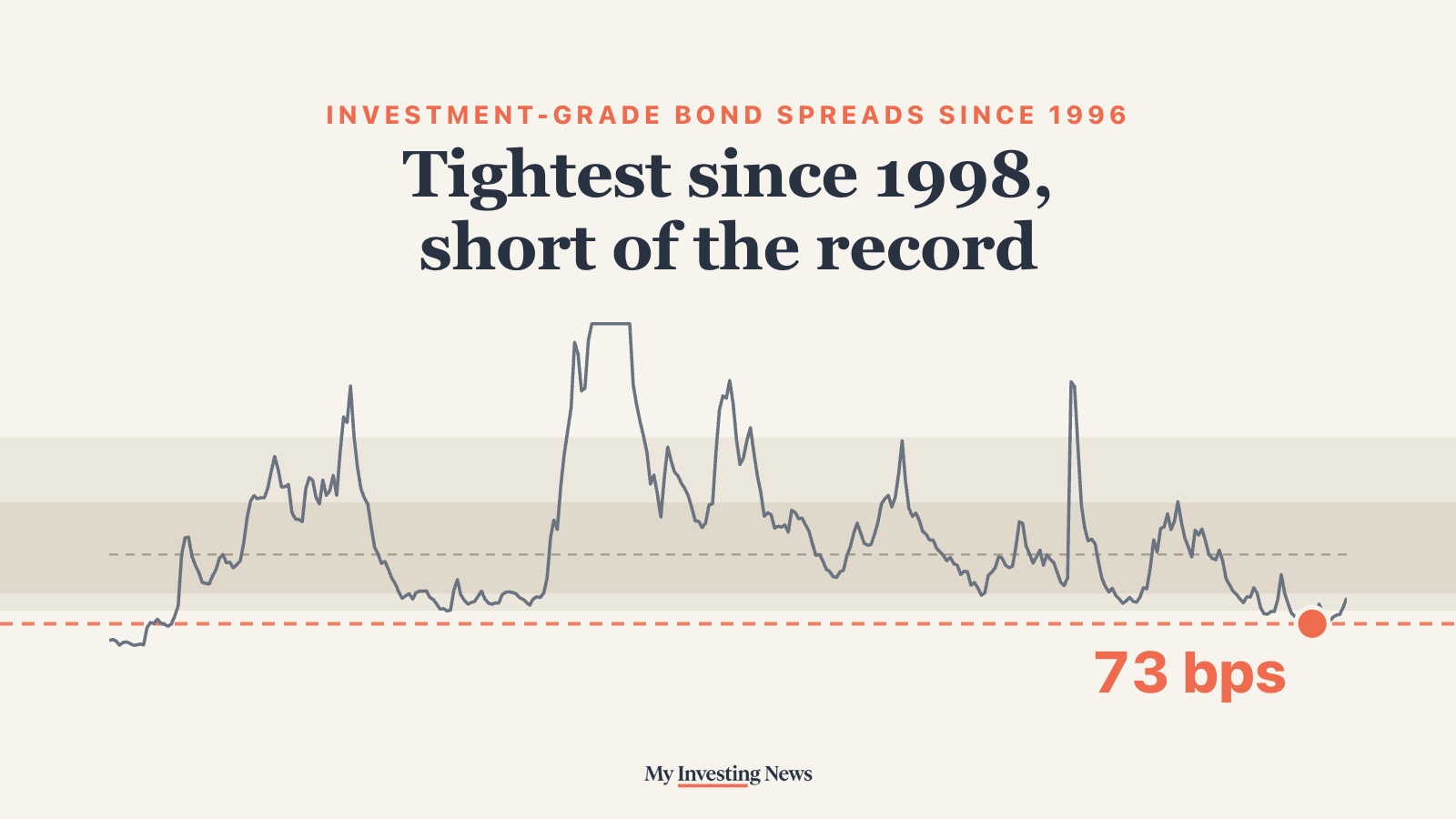
The ICE BofA U.S. Corporate Index, which tracks investment-grade bonds, has a daily option-adjusted spread going back to Dec. 31, 1996, published on FRED. This year it fell to 73 basis points (0.73 percentage point) on Jan. 22 and touched that level again in late May and mid-June. That is the lowest since June 1998. The record is 53 basis points, set on Oct. 3, 1997. In nearly 30 years, the spread has been lower than this year’s low on only 3.8% of days, all of them in 1997 and 1998.
So Toscano is close. Each of the last three years set a new low for the post-1998 era: 77 basis points in 2024, 74 in 2025 and 73 in 2026. Measured from July 1998 on, this year’s low is the record. By the index’s full history, he is about 20 basis points off.
Investment-grade spreads hit their lowest since 1998 this year, still 20 basis points above the 1997 record
Extra yield on U.S. investment-grade corporate bonds over Treasuries (ICE BofA option-adjusted spread), basis points, monthly averages since Dec. 1996. Bands hold the middle half and middle 80% of 7,795 daily readings. The coral line marks 2026’s low.
Wider Since the Low, and Still Cheap Money
Tirupattur’s point holds too. By the Nov. 6 close the investment-grade spread was 93 basis points, 20 above its January low and one point below its 2026 high of 94. The midterm vote barely moved it: it was 93 on Election Day, Nov. 3. Even after the widening, the spread was tighter than on 80% of days since 1996, and well below the long-run median of 126 basis points. That is the core of Toscano’s claim, and it holds: the premium lenders charge high-grade companies over Treasuries is still low by the standard of the past three decades.
Credit spreads, as of the Nov. 6 close
The Junk Market Has Moved More
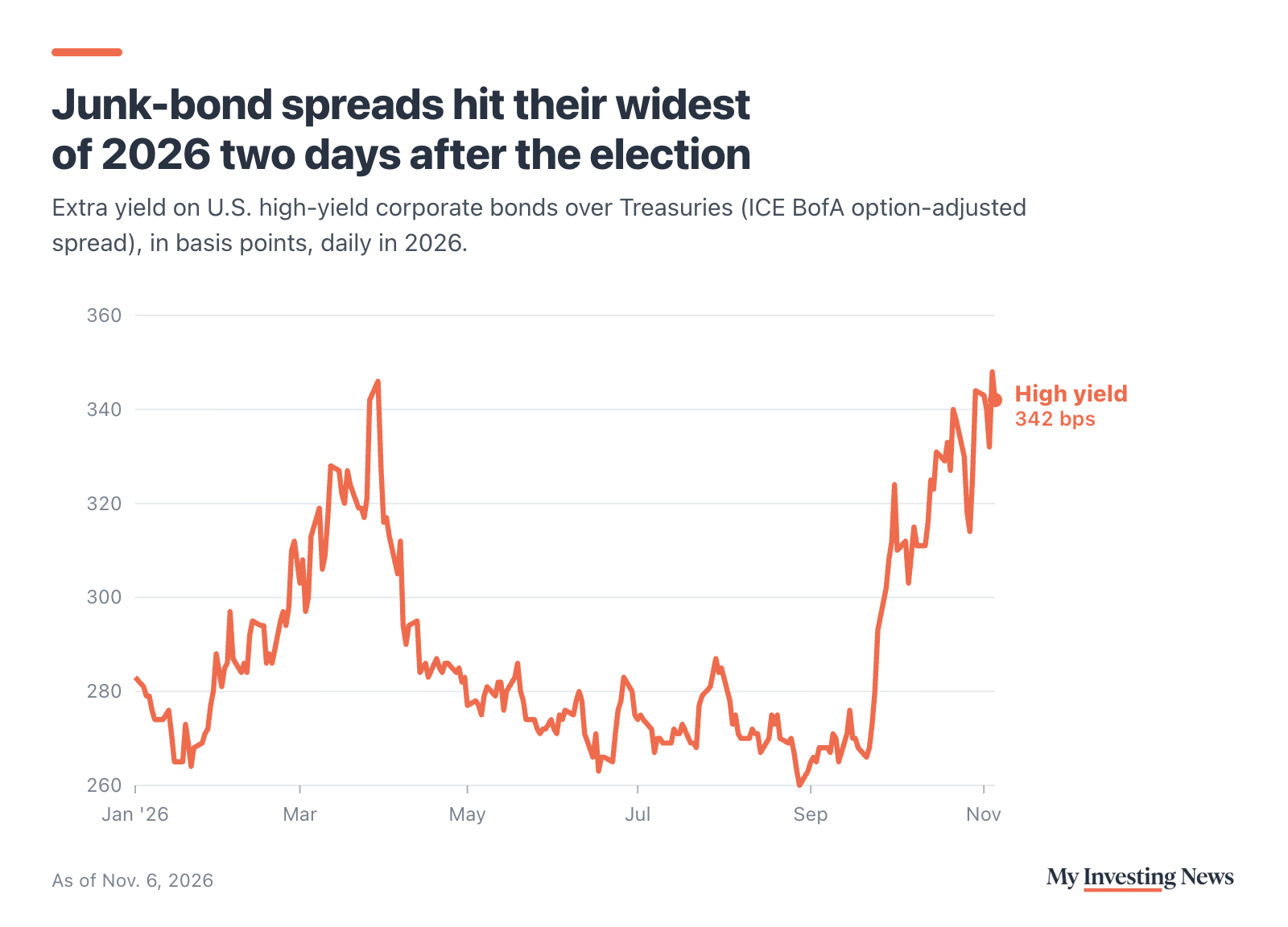
Of non-investment-grade credit, the market he spends the most time in, Toscano said “it’s been quiet now for months.” Prices there tell a busier story. The ICE BofA high-yield spread hit its 2026 low of 260 basis points on Aug. 28, a hair above 2025’s low of 259 and short of the 241 record from June 2007. Since then it has climbed. It reached 348 on Nov. 5, two days after the election and the widest of the year, and closed at 342 on Nov. 6.
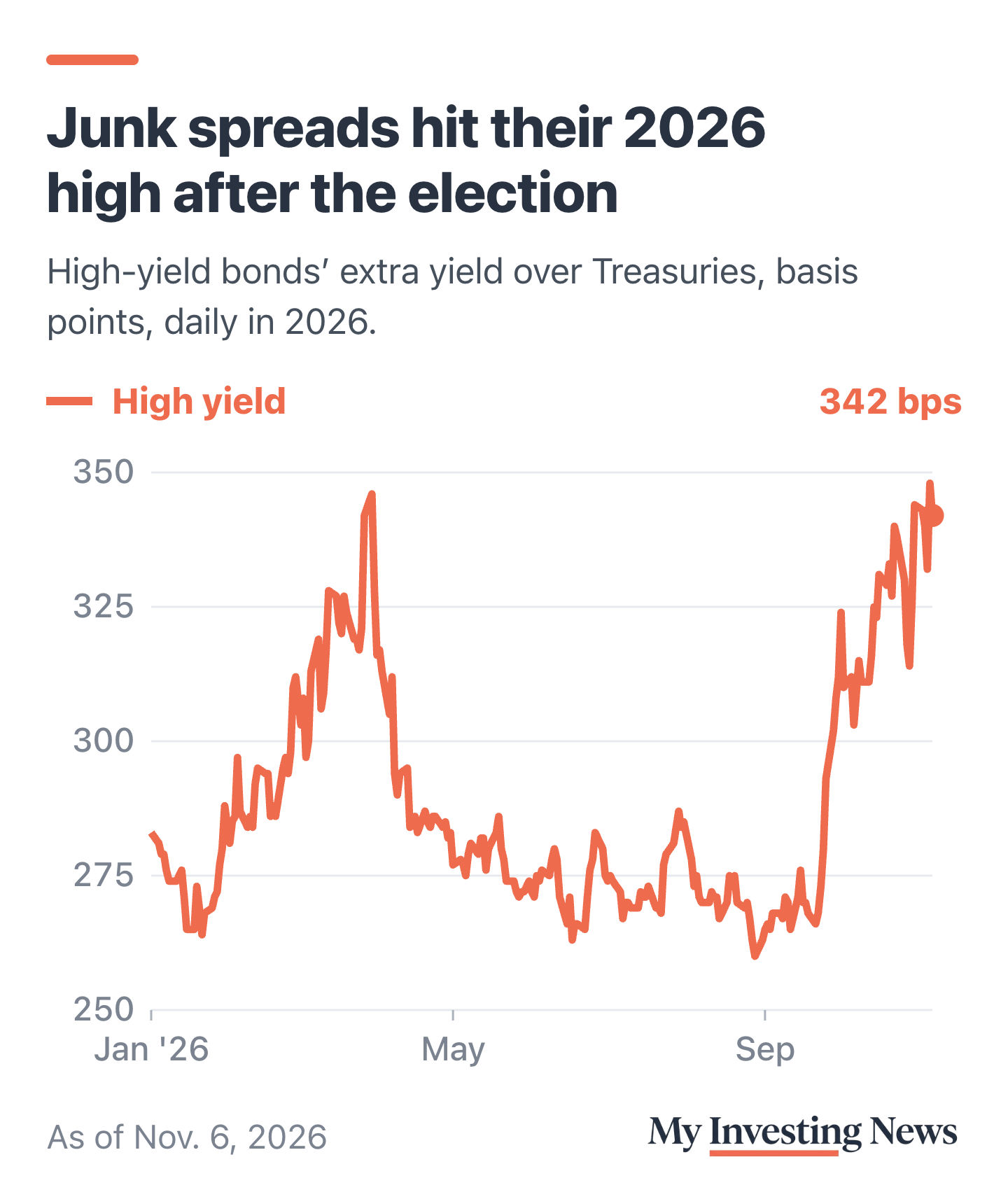
The stress has also shown up in single names tied to the AI build-out. CoreWeave’s bonds now yield about 15%, and SpaceX’s credit default swaps hit a record high in October as it lined up borrowing for chips. Steve Eisman has argued that AI borrowing is crowding out Treasuries, a claim about the volume of debt; spreads measure its price, and on that score the investment-grade market has barely flinched.
What to Watch
Toscano said the impact of the trillions of dollars that still need to be raised “has yet to play out in the marketplace.” The levels to watch are the 2026 extremes: 73 and 94 basis points for investment grade, and 260 and 348 for high yield. A move in the investment-grade spread above this year’s high while Treasury yields hold steady would be the first sign that lenders are charging AI borrowers more for the risk itself. FRED posts both series each business day.
Toscano says AI borrowing isn’t showing up in spreads, and the record mostly backs him: the investment-grade spread hit 73 basis points this year, its tightest since 1998, though short of the 53-point record from 1997. Spreads have since widened, more in junk bonds than in high grade. The risk is that the heaviest borrowing is still ahead.