Where we heard itMatthew Shay, president and CEO of the National Retail Federation, in NRF’s 2026 holiday forecast, released Oct. 15, 2026.
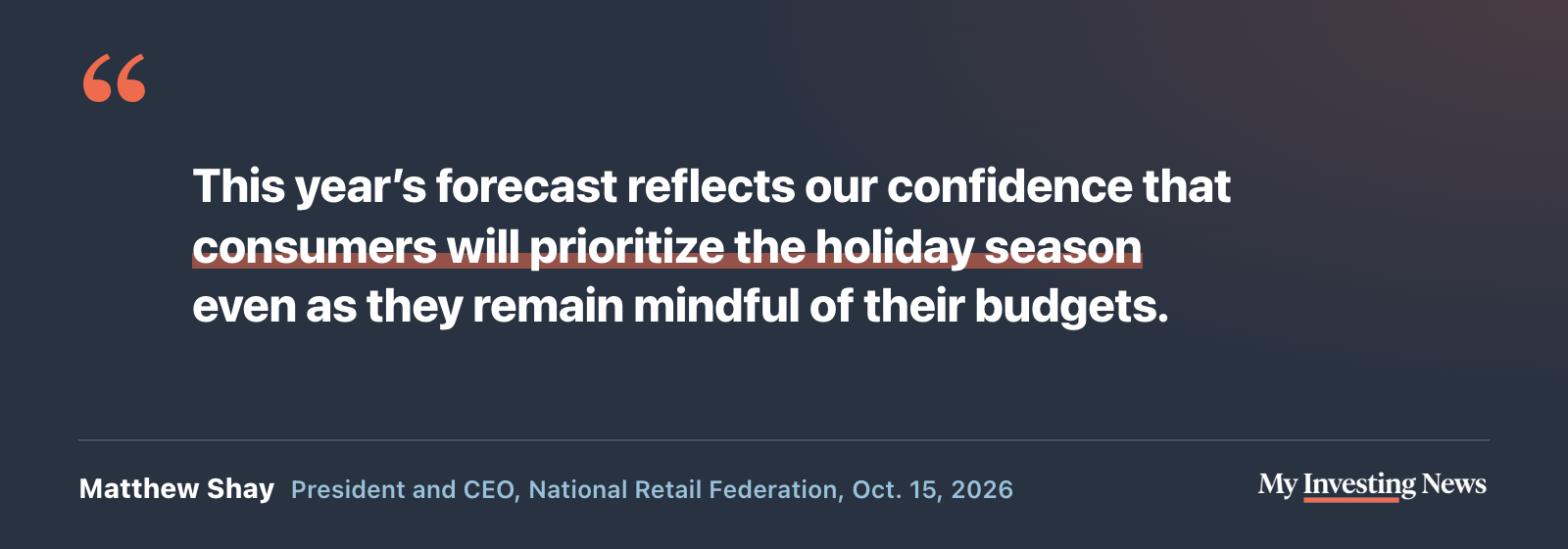
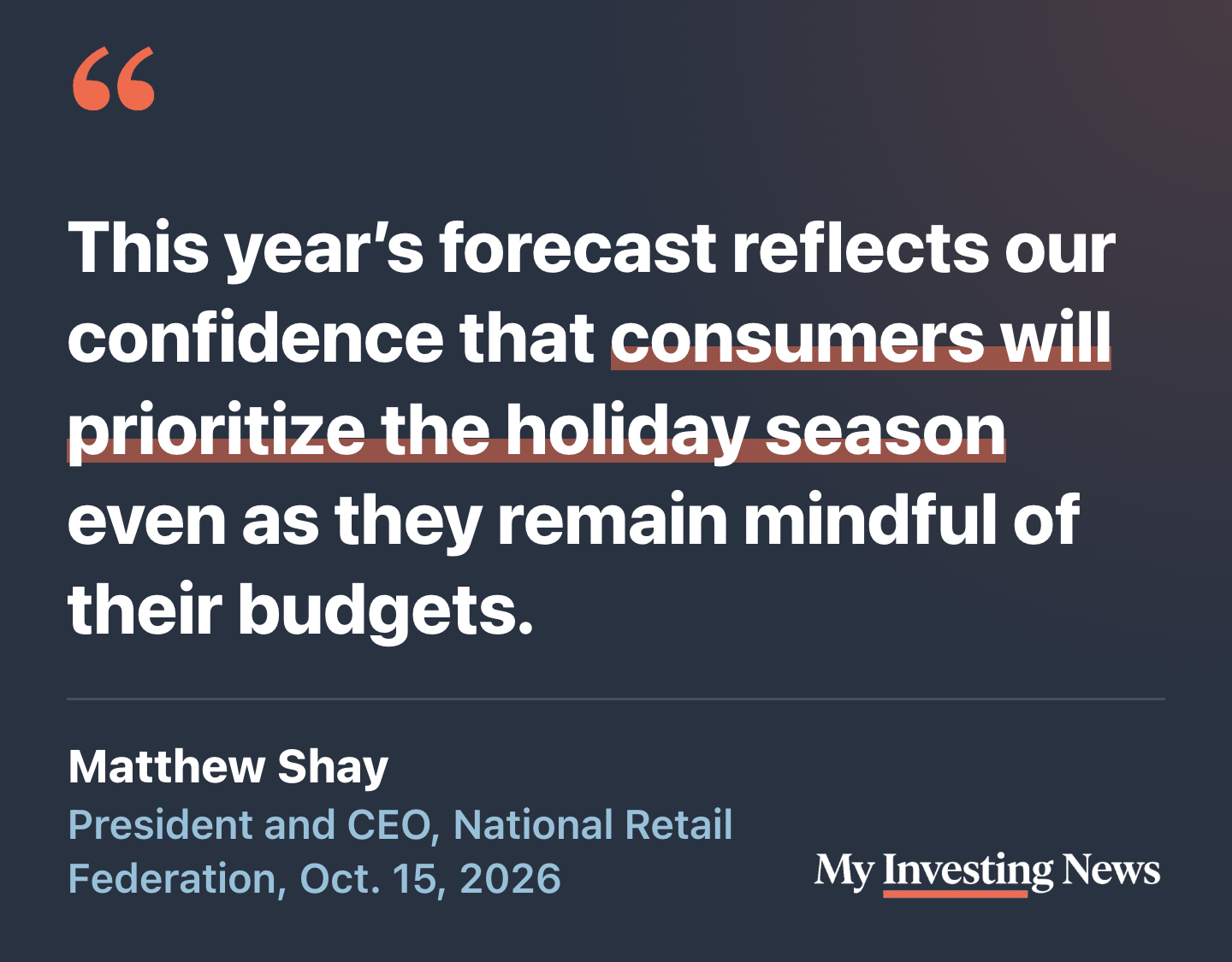
The National Retail Federation says this is the year holiday shopping crosses $1 trillion. In its Oct. 15 forecast, the trade group said sales in November and December will grow 4.2% from last year to $1.013 trillion, after rising 3.1% to $972 billion in 2025. NRF’s president and CEO put it this way:
NRF’s forecast is the most quoted number of the shopping season, so we scored it. For every season since 2010, we lined up the first forecast NRF announced in the fall against the growth NRF itself reported once the Census Bureau’s numbers came in. NRF counts retail sales from Nov. 1 through Dec. 31, leaving out car dealers, gas stations and restaurants, and doesn’t adjust for inflation.
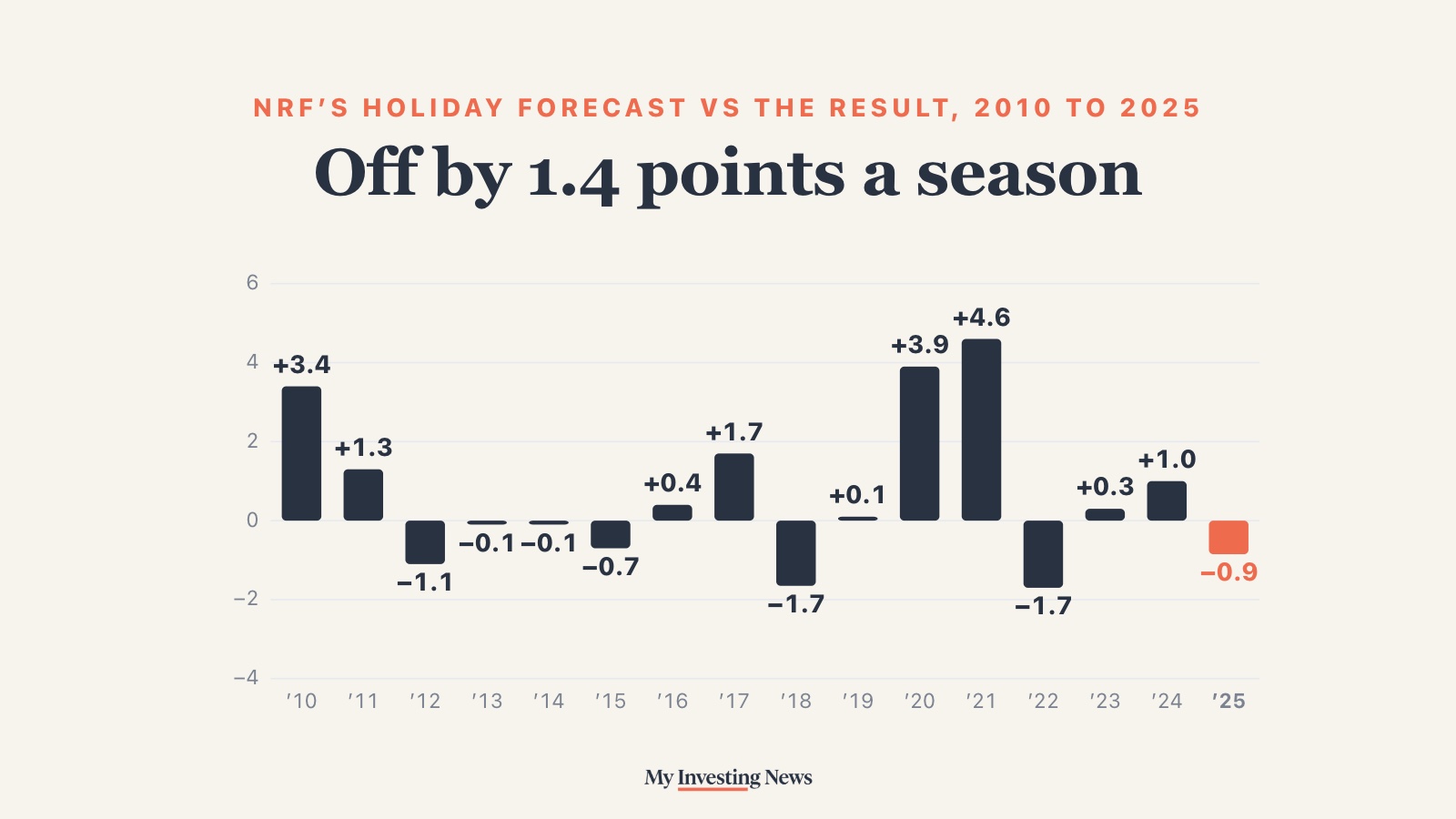
Off by 1.4 Points a Season
Over 16 seasons, the result landed an average of 1.4 percentage points from NRF’s forecast, measured from the midpoint when NRF gave a range. Leave out 2020 and 2021, when pandemic spending blew past every forecast, and the average miss is about 1 point. Sales beat the forecast 9 times and fell short 7 times, so the misses don’t lean hard one way.
NRF came within a tenth of a point three times, in 2013, 2014 and 2019. Its biggest miss was 2021: it forecast growth of 8.5% to 10.5%, and sales rose 14.1%. The worst shortfalls came in 2018, when sales grew 2.9% against a forecast of 4.3% to 4.8%, and in 2022, when they grew 5.3% against 6% to 8%.
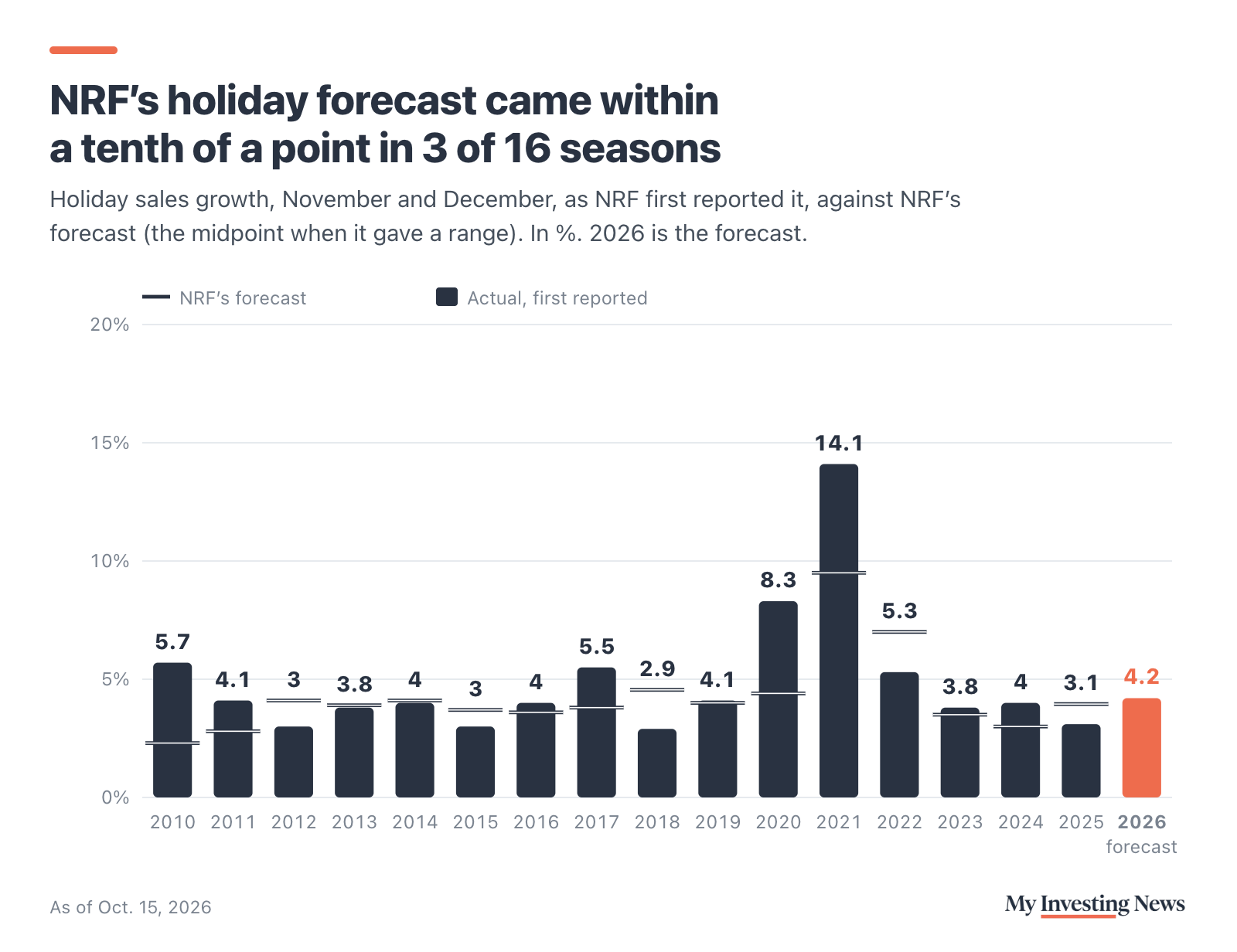
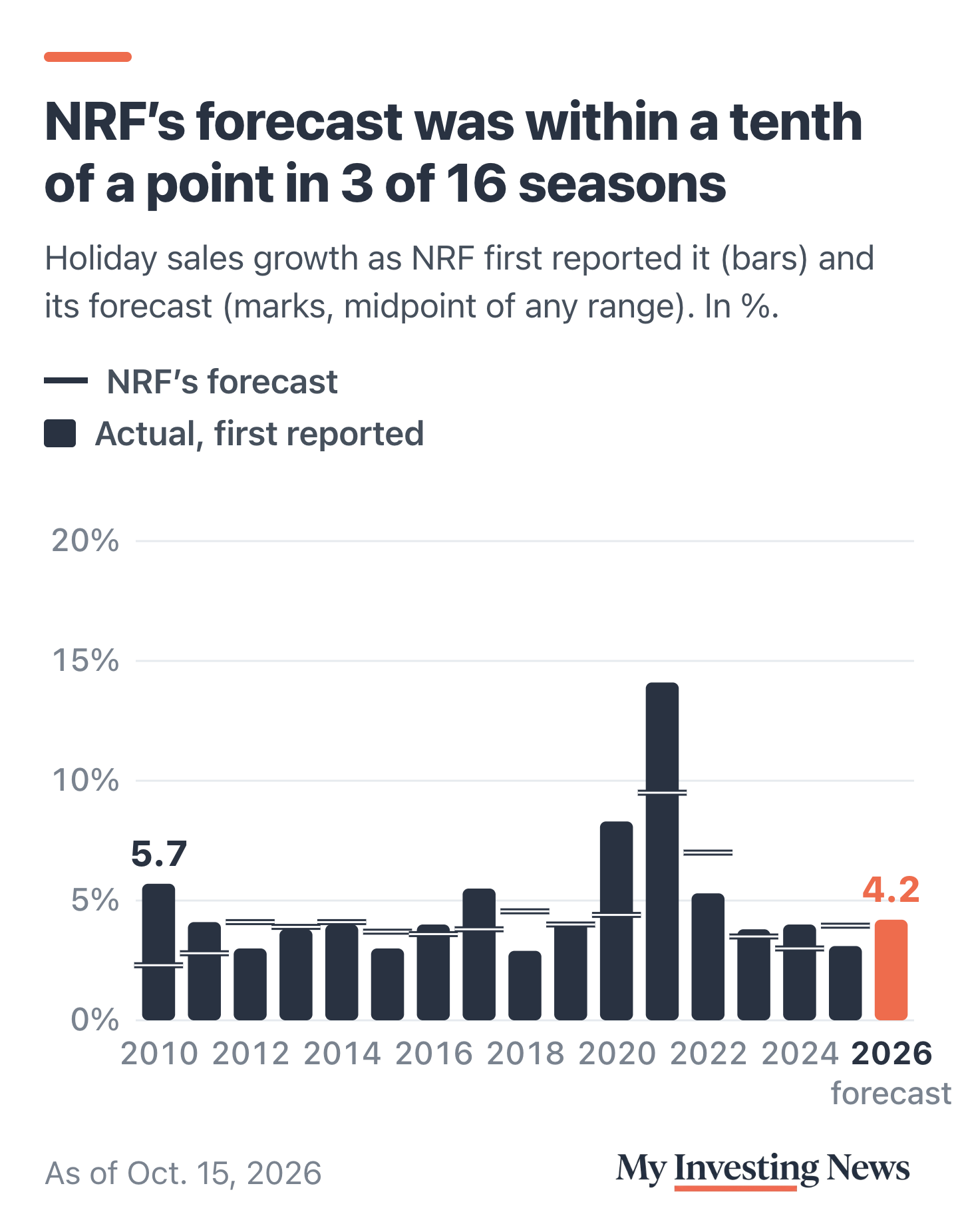
In 2017, NRF started publishing a range “rather than the usual fixed percentage,” citing that fall’s hurricanes. The ranges caught the result in two of nine seasons, 2019 and 2023. Four times sales came in above the range and three times below it. This year NRF is back to a single number, from a forecasting approach it built with Oxford Economics, as it explained in its March annual forecast.
The Trillion That Came and Went
NRF made the same call a year ago. Its Nov. 6, 2025 release was titled “NRF Expects Holiday Sales to Surpass $1 Trillion for the First Time in 2025,” on growth of 3.7% to 4.2%. In January, using card data from its CNBC/NRF Retail Monitor, NRF said 2025 holiday sales grew 4.1%, “near the top of NRF’s forecast.”
The Census numbers then moved under it. On the data as published before September, NRF’s definition of holiday sales comes to $1.011 trillion for 2025, up 3.6%, by our calculation. The Census Bureau’s annual revision on Sept. 28 cut both. The current figures put the season at $972.3 billion, up 3.1%, which matches what NRF now reports. The same revision lowered 2024’s growth to 3.6% from the 4.3% NRF cited a year ago.
Revisions make the record look worse. Against today’s Census figures, none of NRF’s nine ranges since 2017 contains the result, and the average miss grows to 1.7 points. A forecaster can’t see a benchmark revision coming, which is why our scorecard uses the numbers NRF first reported.
NRF’s holiday forecast, scored
What a 1.4-Point Miss Means for $1 Trillion
From last year’s revised $972.3 billion, sales need to grow about 2.85% to pass $1 trillion. So the milestone has some cushion, though not much. A shortfall the size of NRF’s average miss, from 4.2% down to about 2.8%, would land near $999 billion, just under the line. NRF’s forecast has run that far too high only twice in 16 seasons, in 2018 and 2022.
Some of the growth will be prices. Consumer prices were 3.7% higher in September than a year earlier, the Bureau of Labor Statistics said, and NRF’s total counts dollars, not units. NRF chief economist Mark Mathews flagged the strain in the release: “At the same time, inflation, rising gas prices and pressure on household spending will affect consumers differently across income groups.” Gas was about $4 a gallon heading into Thanksgiving, a holiday record before adjusting for inflation.
What the Season So Far Says
Going in, store sales were running ahead of the forecast. The Census Bureau’s advance estimates of retail sales, excluding autos and parts, gas stations and restaurants, were 4.6% above a year earlier in September and up 4.2% for the first nine months of 2026. NRF’s own Retail Monitor, built from card data, showed a slower 3.73% gain in core sales for September.
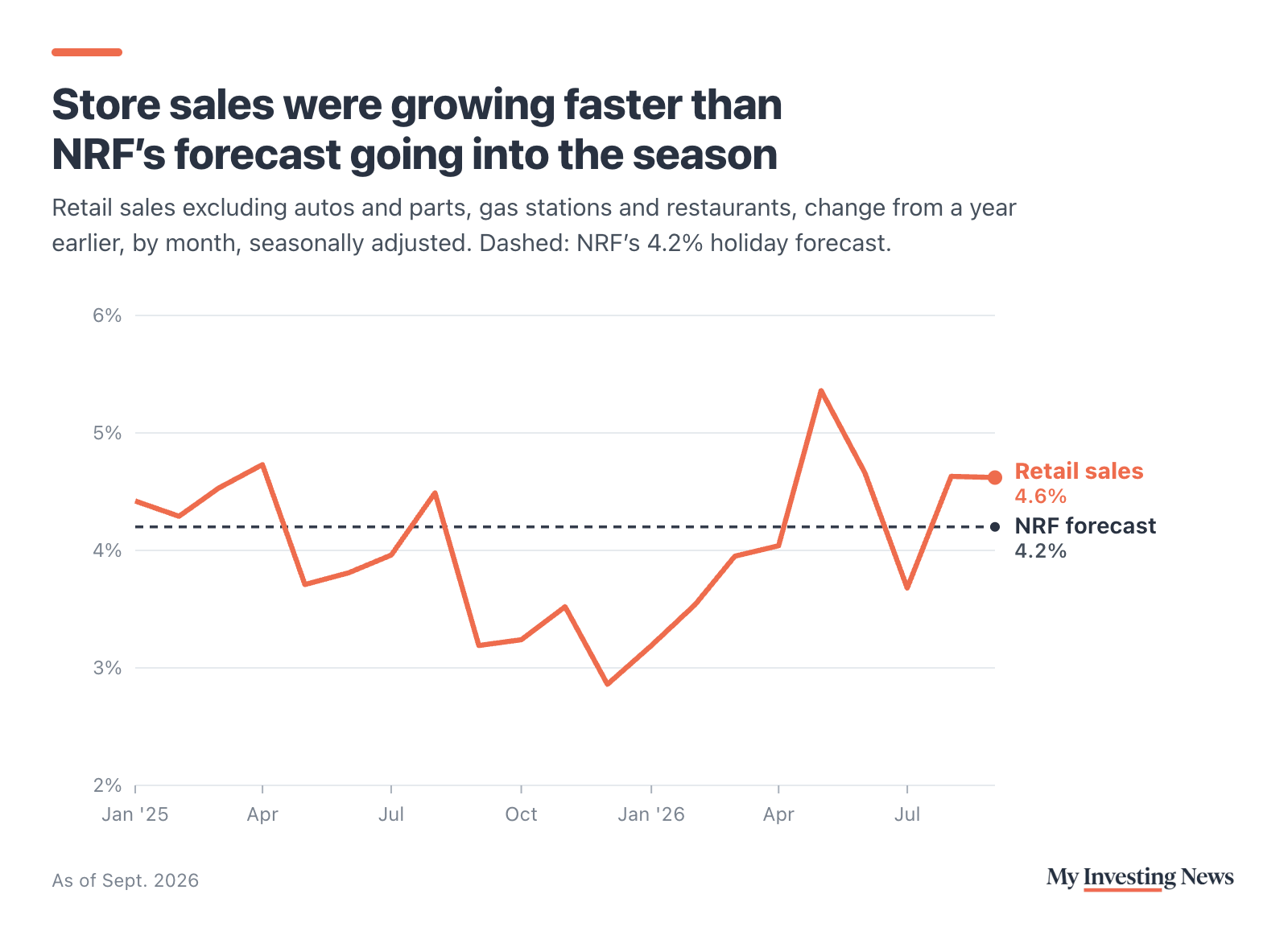
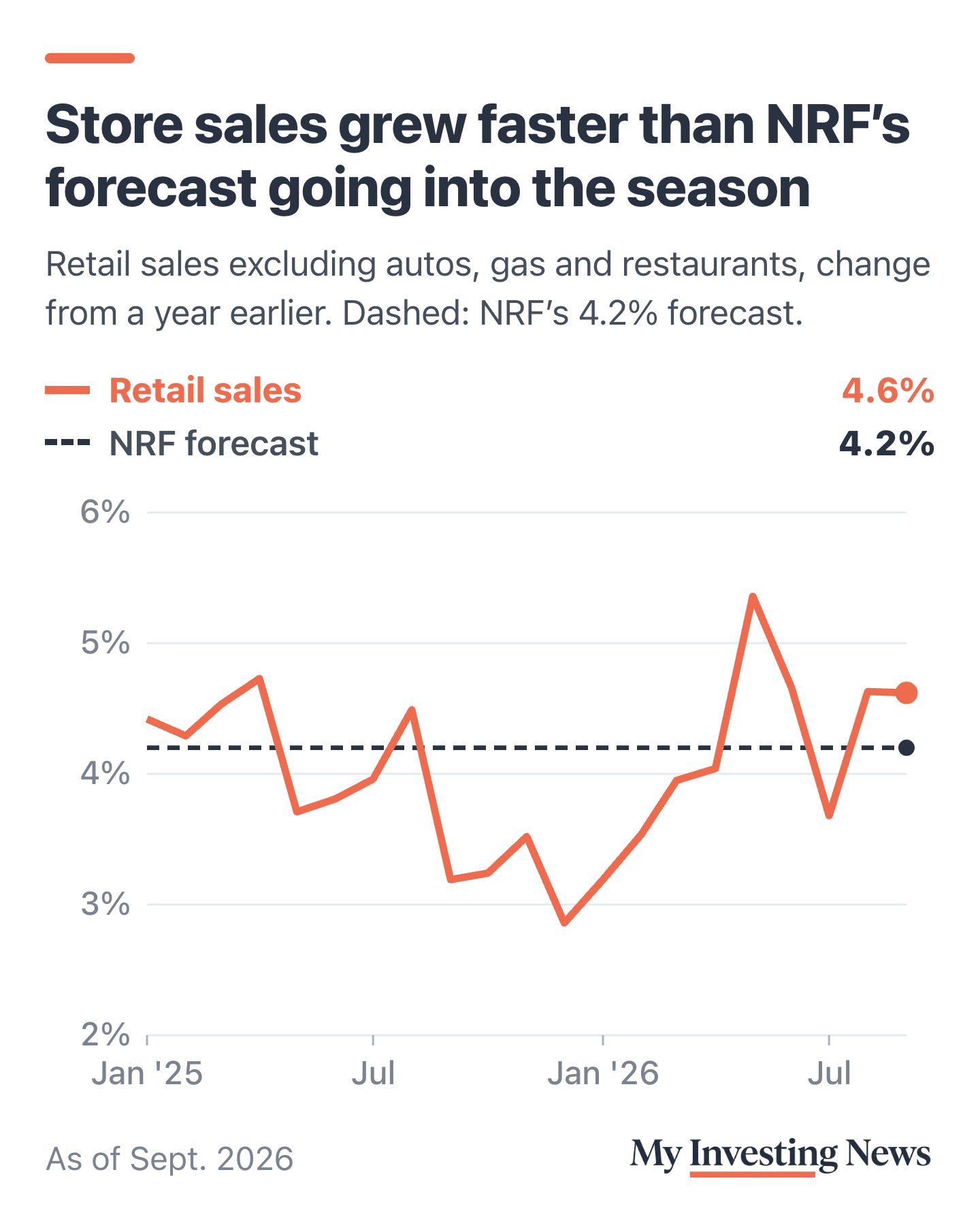
The same gauge flagged last year’s miss. In September 2025 it was running 3.2% above a year earlier, below the 3.7% to 4.2% NRF forecast weeks later, and the season came in at 3.1%. This year the gauge sits above the forecast. Shoppers are still choosy: Kroger’s CEO has called them resilient but more intentional, and FINRA found a record share of households spending more than they earn.
What to Watch
The Census Bureau’s November retail sales figures are due Dec. 16, the first official read on the season, and the full season won’t be known until the December report in January. NRF’s Retail Monitor fills in each month with card data. Then comes next September’s annual revision, which can move the answer again, as it did for 2025.
NRF expects 4.2% growth and the first $1 trillion holiday season, a call it also made last year. Since 2010 its first forecast has missed by 1.4 points on average, and a miss that size to the low side would leave sales just under $1 trillion. Sales were running at 4.6% going into the season, a better start than last year’s.