Where we heard itQualcomm fiscal fourth-quarter results release, Nov. 4, 2026, and CNBC’s Halftime Report, Nov. 5, 2026. Speaker: president and CEO Cristiano Amon.
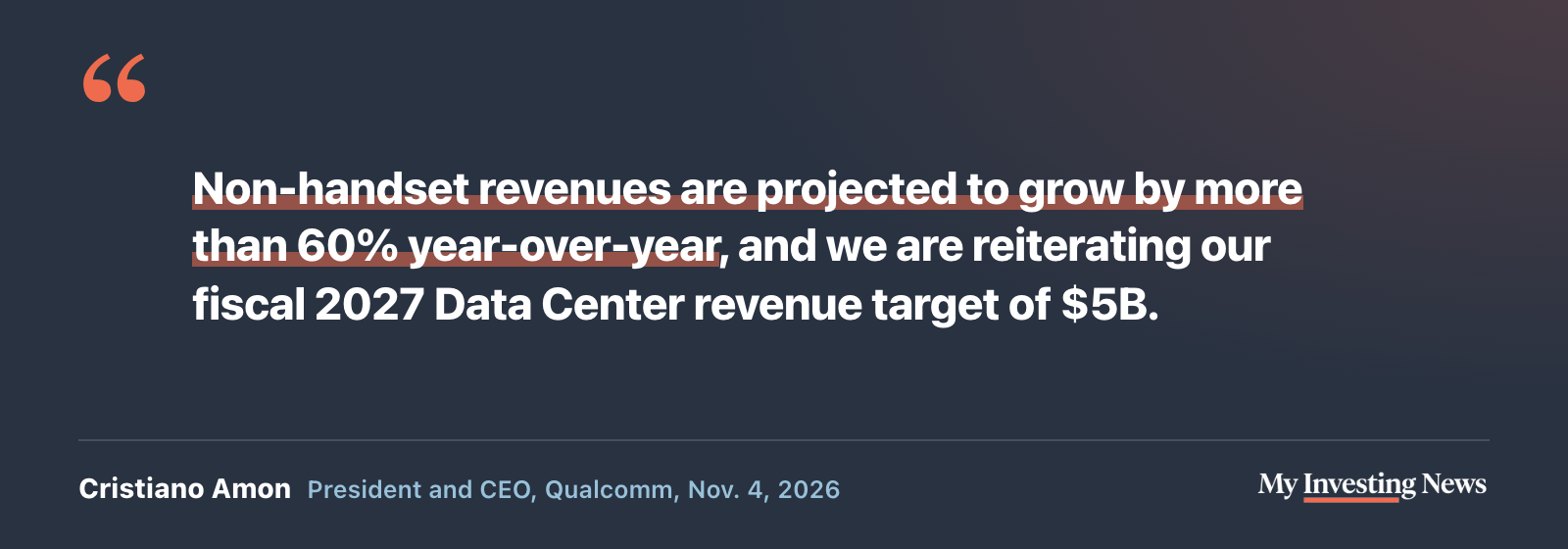
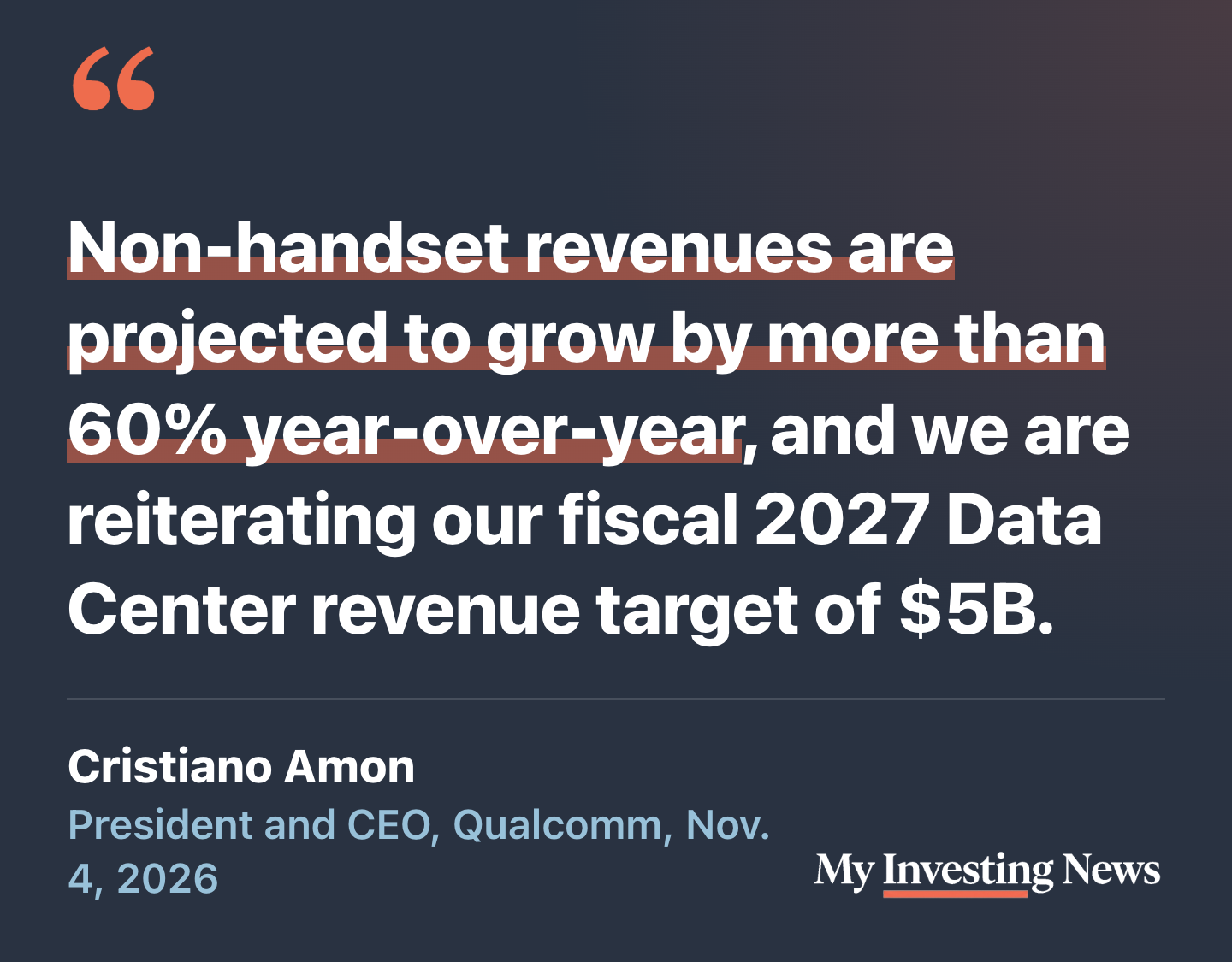
Qualcomm QCOM closed its fiscal year with a promise about the next one. In the Nov. 4 results, Cristiano Amon said revenue outside phones would grow more than 60% in fiscal 2027 and reiterated a $5 billion data center revenue target for that year. A day later, with chip stocks sliding, he told CNBC’s Halftime Report that the target is “not demand bound. It’s all supply bound,” adding, “If I have more supply, I’ll probably do better than five” billion dollars.
The quarter itself got a rough reception. Handset revenue fell 13% for the year, a decline Amon tied on CNBC to Apple, and the stock dropped 9.5% on Nov. 5. So the bet now rests on the diversification story. Amon has been putting dated numbers on that story since he became CEO in 2021, and enough deadlines have passed to check how they turned out.
The Targets Whose Deadlines Have Passed
At his first investor day in November 2021, Amon set four goals for chip revenue, and Qualcomm raised its car target the next September. Measured against the company’s own annual results, two of those five targets were hit, and both were in cars:
- QCT chip revenue grows at a mid-teens rate a year through fiscal 2024 (set Nov. 2021): 7.1% a year. Missed.
- QCT operating margin of 30% or more by fiscal 2024 (set Nov. 2021): 28.7% (segment EBT). Missed.
- IoT revenue of up to $9 billion in fiscal 2024 (set Nov. 2021): $5.4 billion. Missed.
- Automotive revenue of about $3.5 billion in five years (fiscal 2026) (set Nov. 2021): $6.0 billion. Hit.
- Automotive revenue of more than $4 billion in fiscal 2026 (set Sept. 2022): $6.0 billion. Hit.
Chip revenue grew 7.1% a year from fiscal 2021 to 2024, about half the promised pace, held back by a 22% drop in handset revenue in fiscal 2023. The chip unit’s pretax margin reached 28.7% in fiscal 2024, just short of 30%, and slipped to 27.1% in fiscal 2026. IoT revenue peaked at $7.4 billion in fiscal 2022 and was $5.4 billion in fiscal 2024, well below the $9 billion ceiling. One more 2021 goal, for handset and radio-frequency revenue to keep pace with a market forecast, can’t be scored cleanly because Qualcomm stopped reporting radio-frequency sales separately in fiscal 2023.
Cars Beat Both Fiscal 2026 Goals
The automotive business is the clear win. Revenue grew from $1.0 billion in fiscal 2021 to $6.0 billion in fiscal 2026, about 6 times as much. That is 72% above the 2021 goal of about $3.5 billion and 50% above the raised goal of more than $4 billion. The fourth quarter alone brought in $1.99 billion, which Qualcomm called the unit’s first $2 billion quarter.
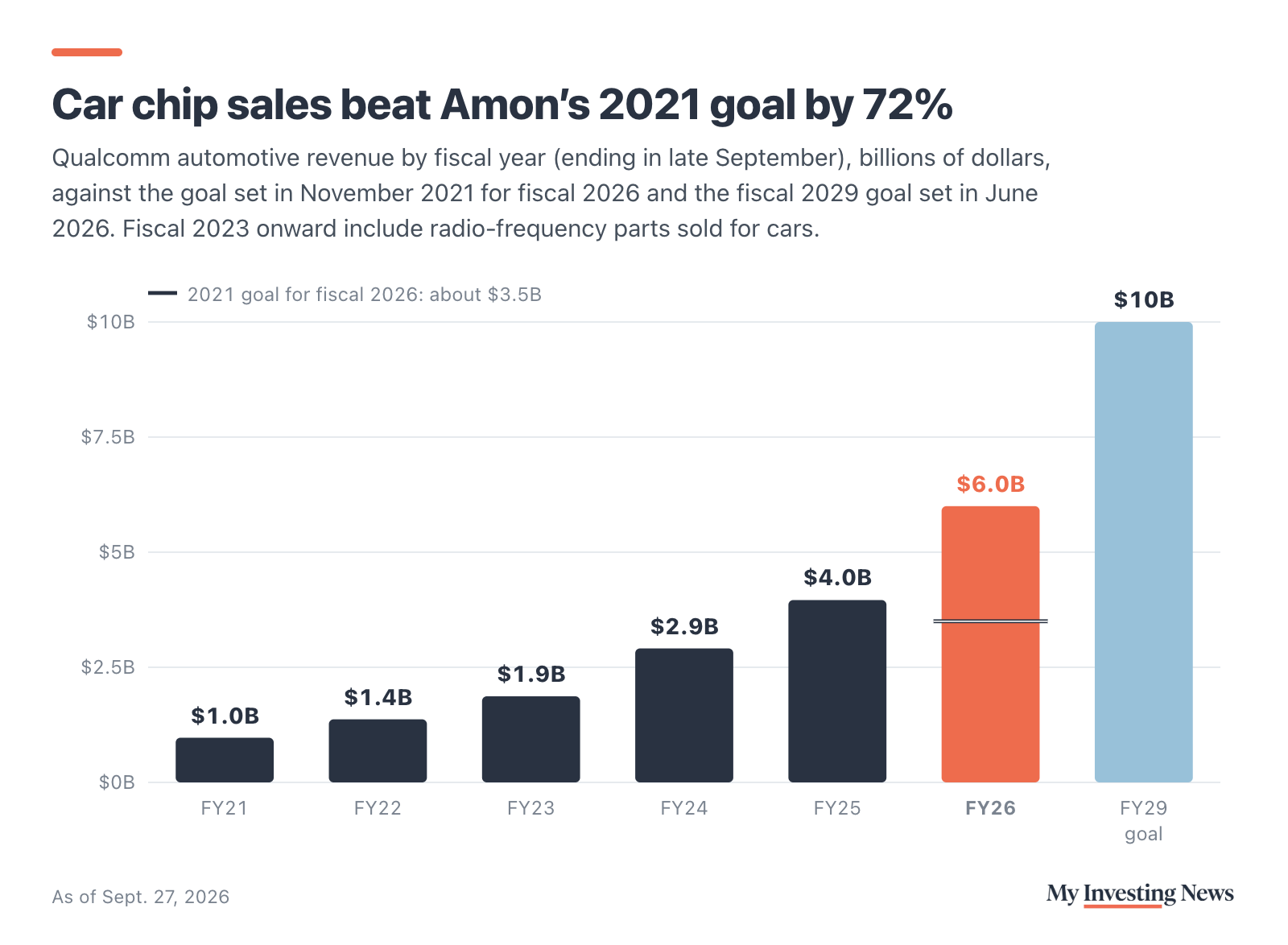
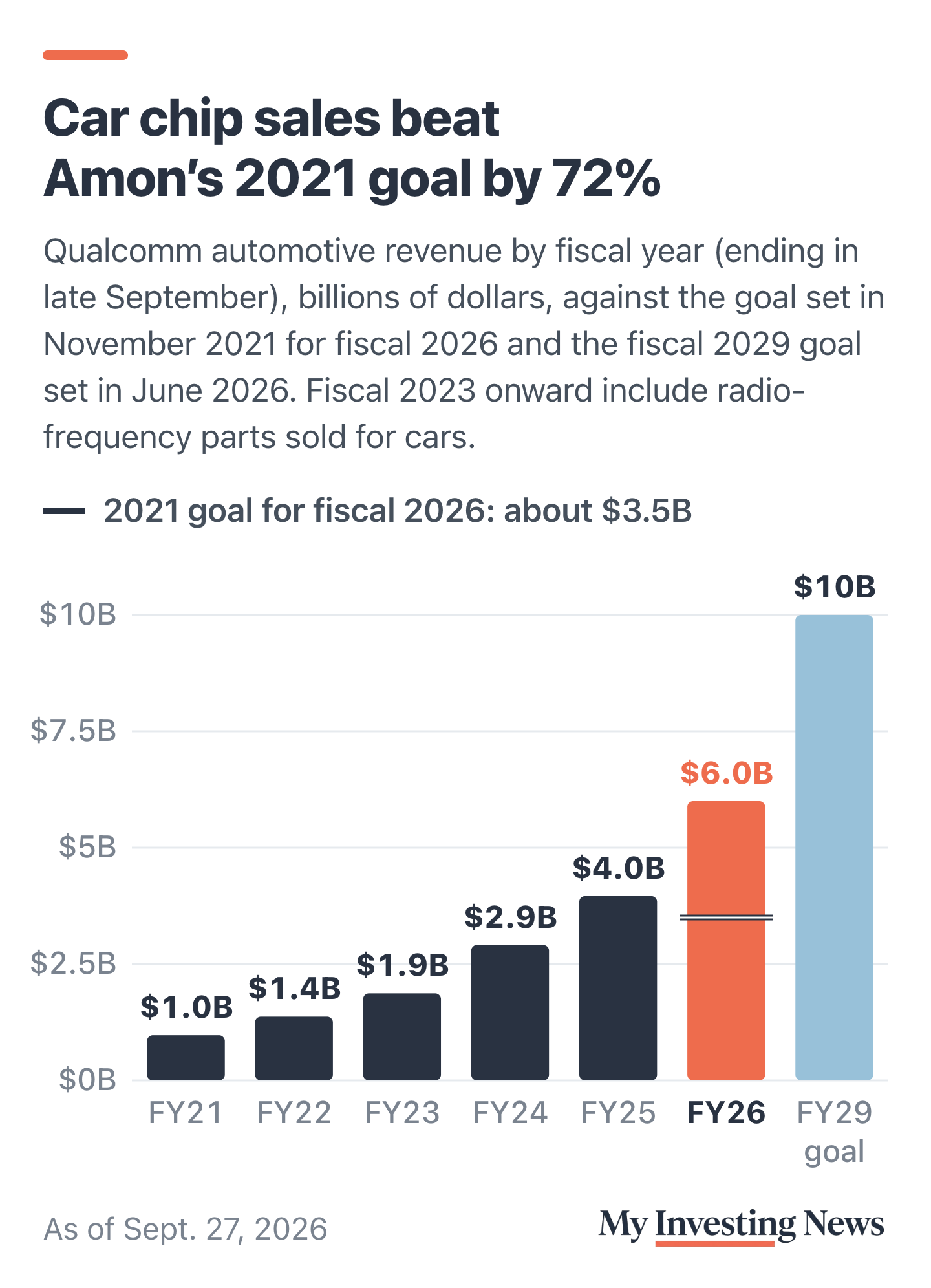
Qualcomm keeps moving the car goalposts up. At its November 2024 investor day it set $8 billion for fiscal 2029, and in June 2026 it raised that to $10 billion. The same June event doubled the fiscal 2029 target for all non-handset revenue to $40 billion and added more than $15 billion from data centers.
Amon’s dated targets, scored as of fiscal 2026
What the New Targets Require
Non-handset revenue, counted as automotive plus IoT, was $13.1 billion in fiscal 2026. Growth of more than 60% would put it above $21.0 billion in fiscal 2027, close to the $22 billion Qualcomm set for fiscal 2029 only two years ago. The data center business, which has no reported revenue line yet, has to supply a big piece of that. Amon told CNBC most of the fiscal 2027 amount will come from connectivity and custom chips, the same kind of work behind Marvell’s $30 billion custom chip target.
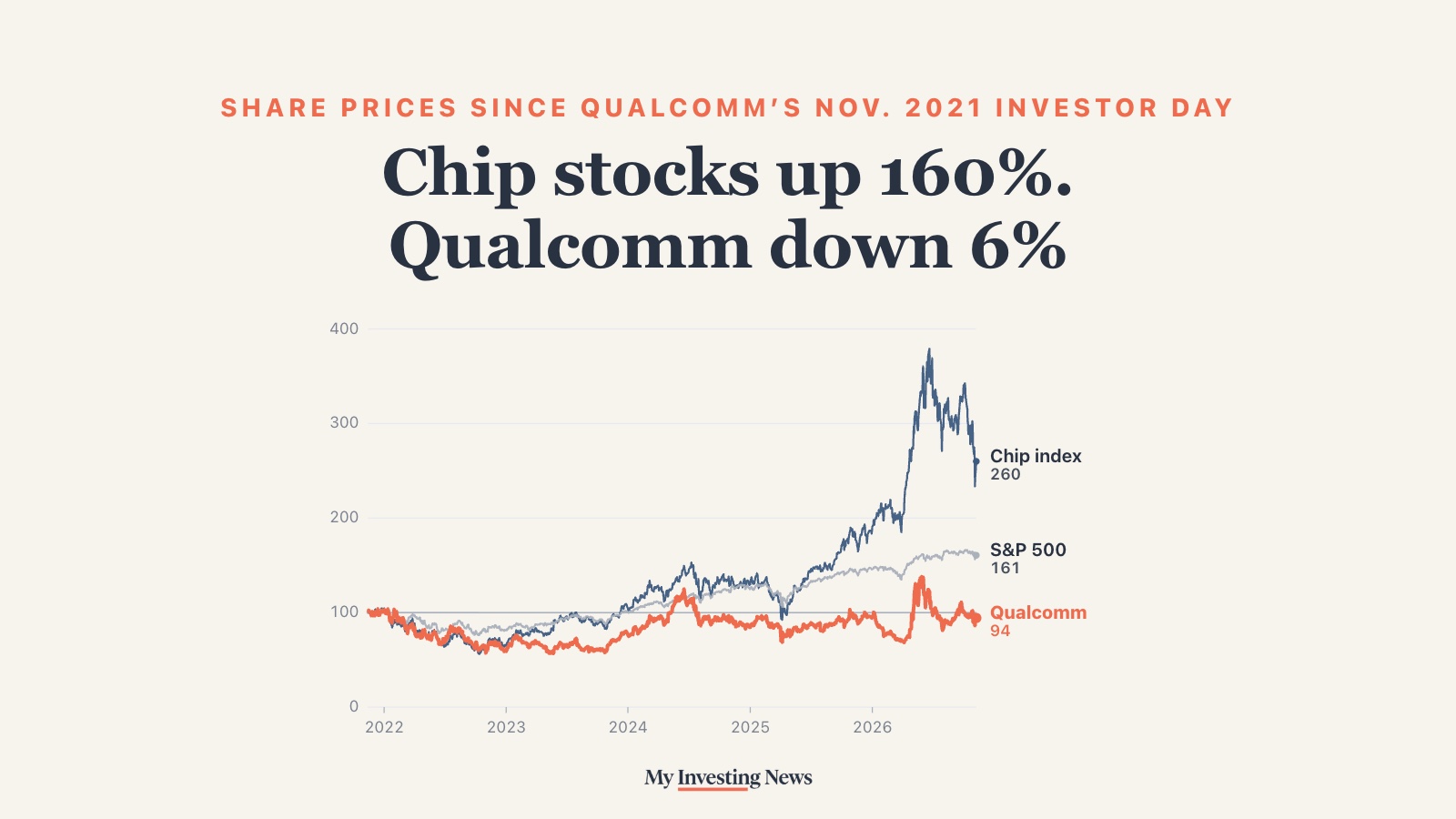
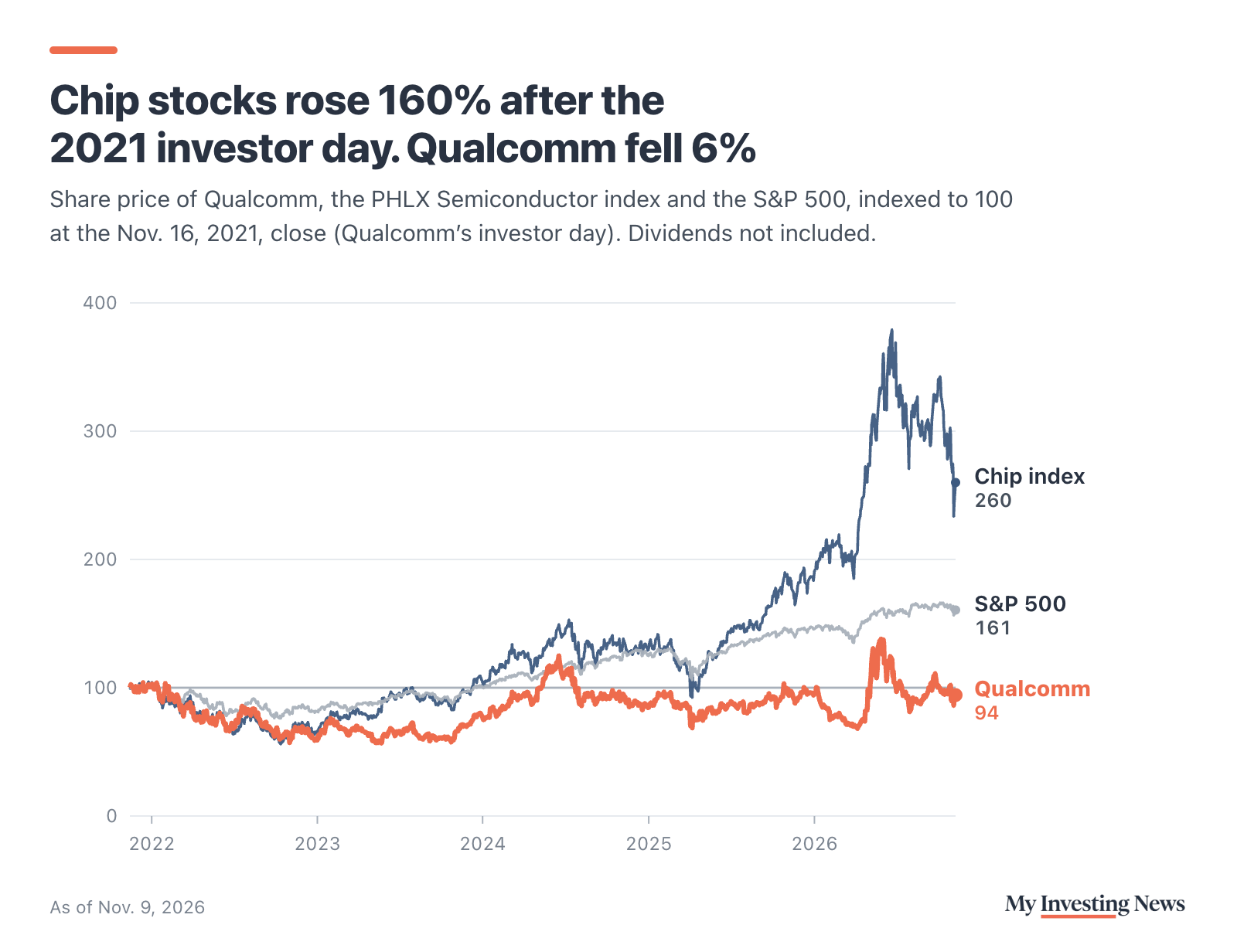
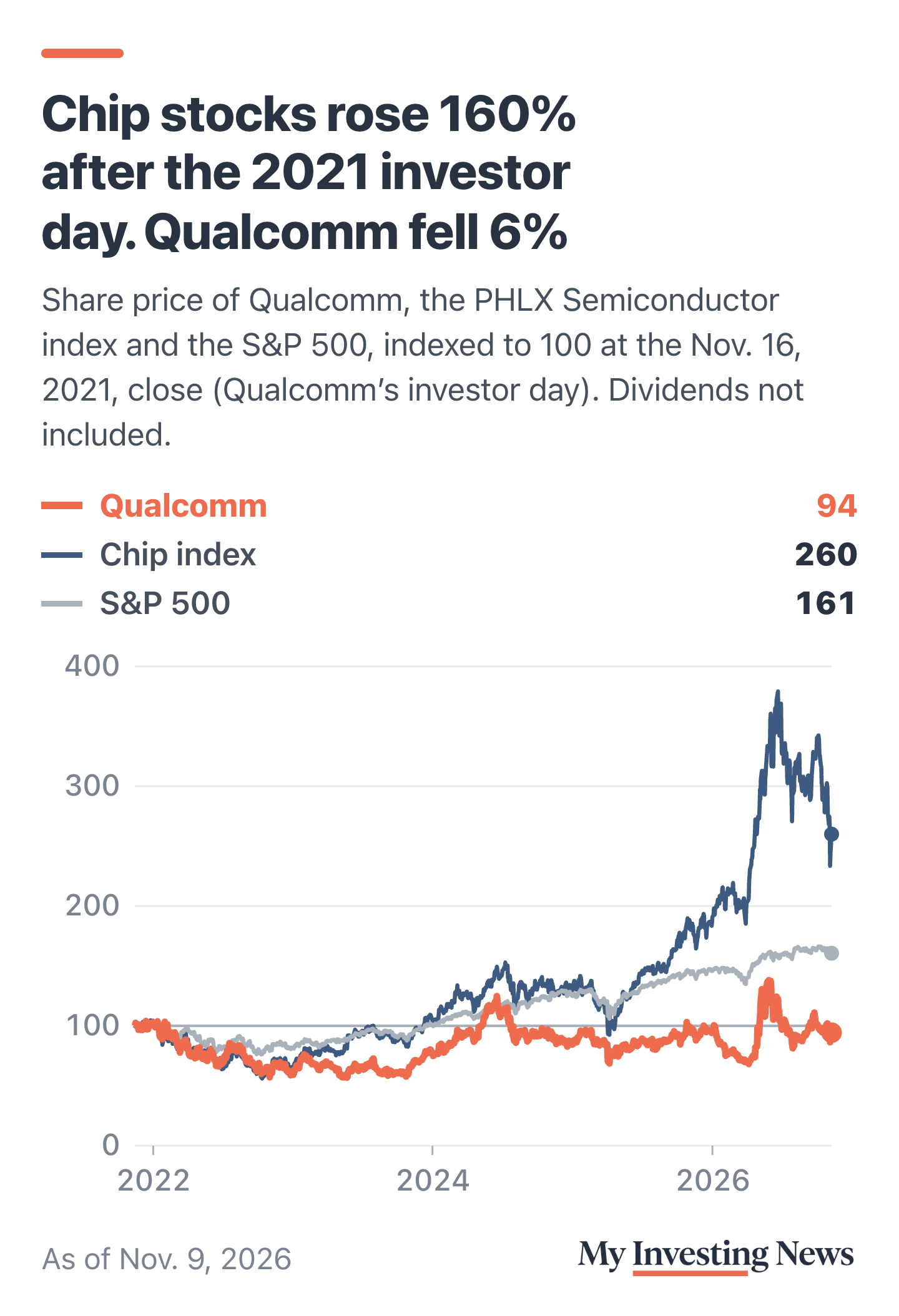
Investors have not given the diversification story much credit so far. Since the 2021 investor day, Qualcomm’s share price is down 6%, while the S&P 500 is up 61% and the broader chip group has surged 160%, as of the Nov. 9 close.
What to Watch
Qualcomm usually reports its fiscal first quarter in early February, the first period of the year the $5 billion data center target covers. Watch whether the company starts reporting data center revenue as its own line, which would make the target checkable, and whether car revenue keeps its pace now that it has passed every goal set before 2024. The IoT line is the one to watch for the 2029 plan: it has yet to reach the $9 billion first promised for fiscal 2024, and the June target calls for more than $14 billion.
Amon says the $5 billion data center target is limited only by supply. His record on dated targets is mixed: two of five hit, both in cars, where Qualcomm beat its 2021 goal by 72%, while the chip revenue, margin and IoT goals for fiscal 2024 fell short. The fiscal 2027 numbers depend on a business that does not yet report its own revenue.