Where we heard itIan King, Bloomberg semiconductor reporter, on the Bloomberg Businessweek podcast, episode “Nvidia Scandal Creates Risks for Whole AI Industry,” Nov. 9, 2026.
Ask where the money for the AI build-out comes from, and a lot of the answers lead back to Nvidia NVDA. On Bloomberg Businessweek on Nov. 9, Bloomberg’s Ian King said the build-out increasingly turns on “who has a relationship with who” and “who’s buying capacity for who,” and that Jensen Huang has had “an absolutely integral role in a lot of those deals.”
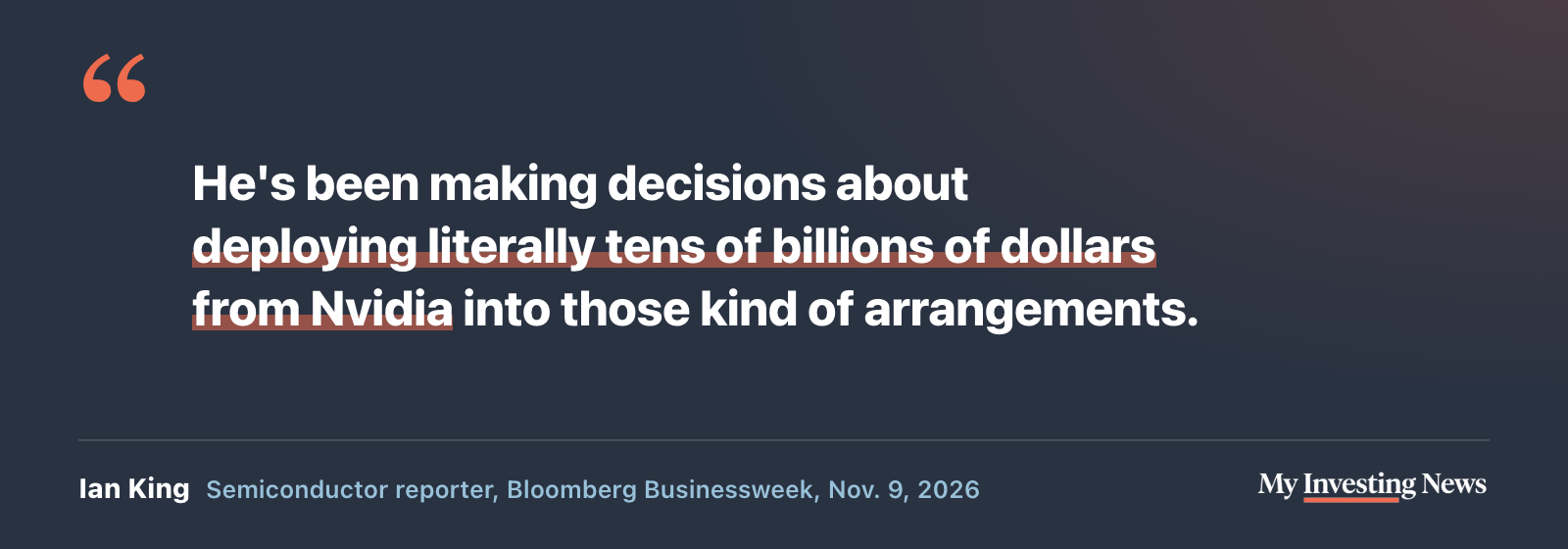
King was speaking in a segment about the investigation Nvidia’s board has opened into Huang. This story leaves that aside and looks only at the money. King also noted Huang’s standing defense: the sums are large in dollars, but small as a share of Nvidia’s revenue and profit. That is a claim the filings can test, and the obvious yardstick is the telecom equipment makers that lent heavily to their own customers in 2000.
What Nvidia Has Put on the Line
Nvidia’s latest quarterly filing, for the quarter ended July 26, shows four kinds of support for the companies around it, and they work differently:
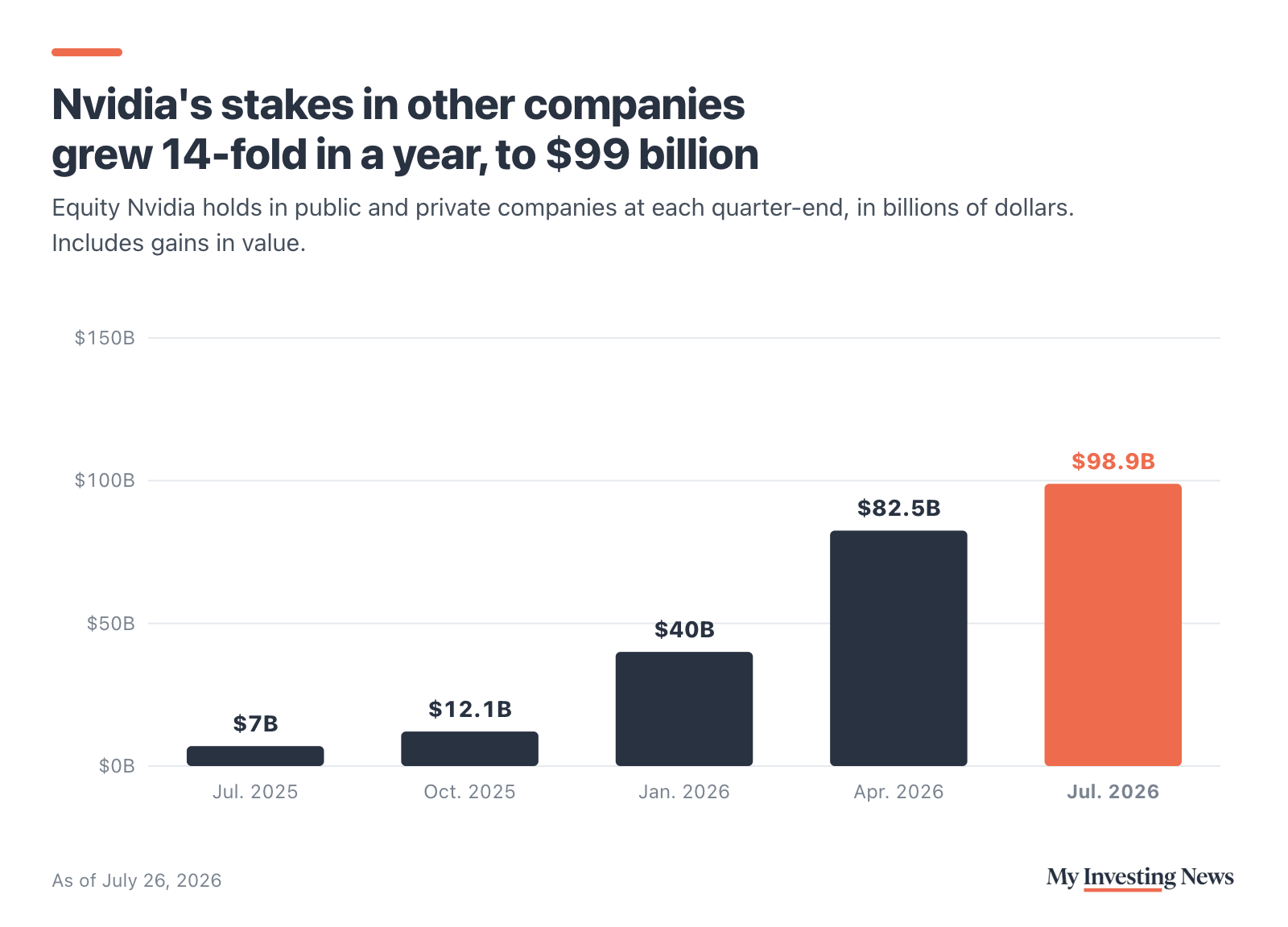
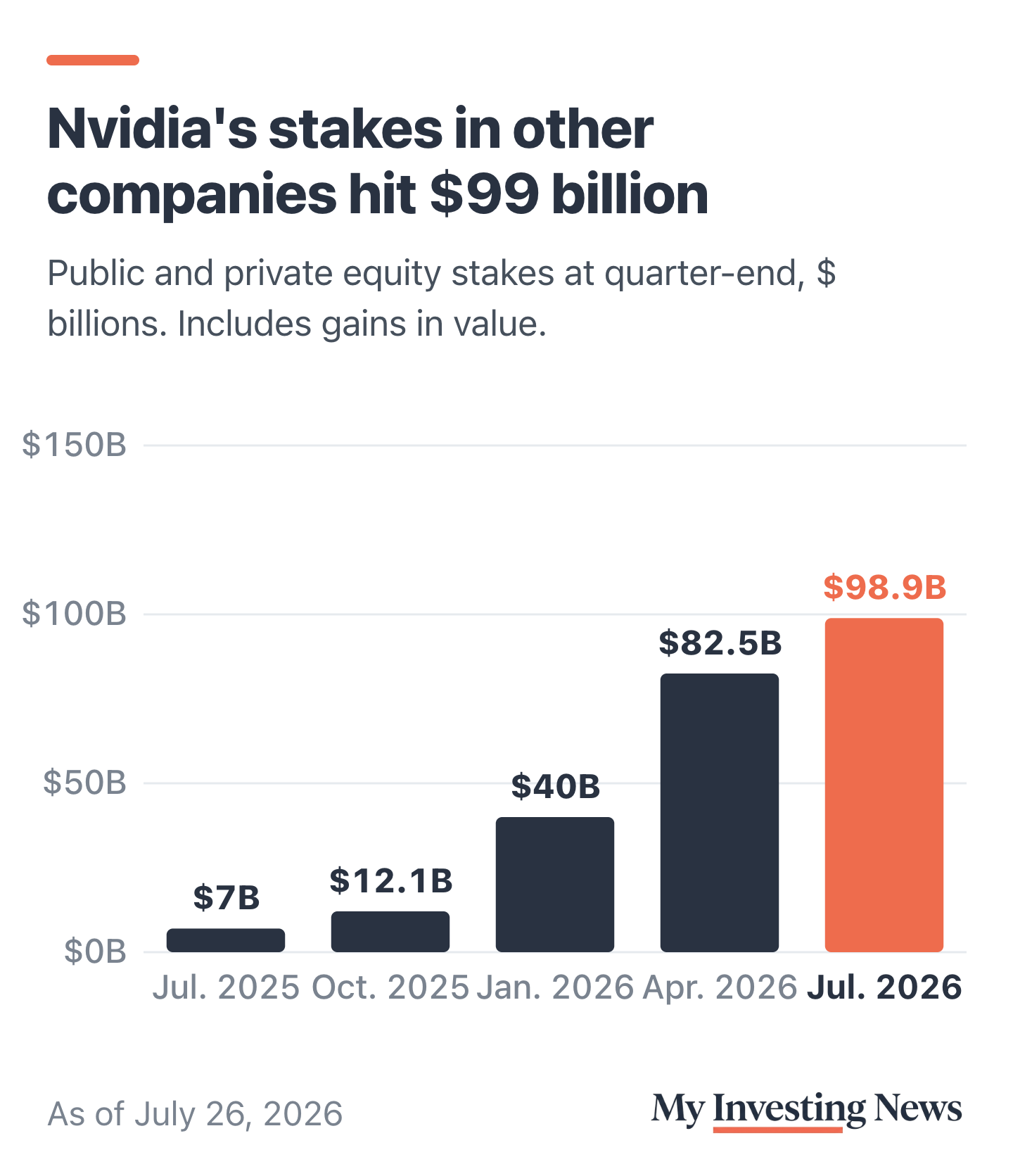
- Equity stakes: $99 billion of shares in public and private companies.
- Promised stakes: $25 billion more it has committed to invest in AI model makers, infrastructure financiers and other private companies.
- Capacity buybacks: $36 billion of commitments, typically six years long, to buy computing capacity from AI cloud companies that can’t sell it to other customers.
- Guarantees: up to $108.5 billion of credit support on data center leases, almost all of it a $105 billion cap on guarantees signed in August for an Ohio campus leased to an OpenAI affiliate.
The stakes have grown fastest. Nvidia held about $7 billion of equity in other companies a year earlier. Part of the rise is gains in value: the private stakes alone carried $9.1 billion of unrealized gains in July.
How Lucent, Nortel and Cisco Did It in 2000
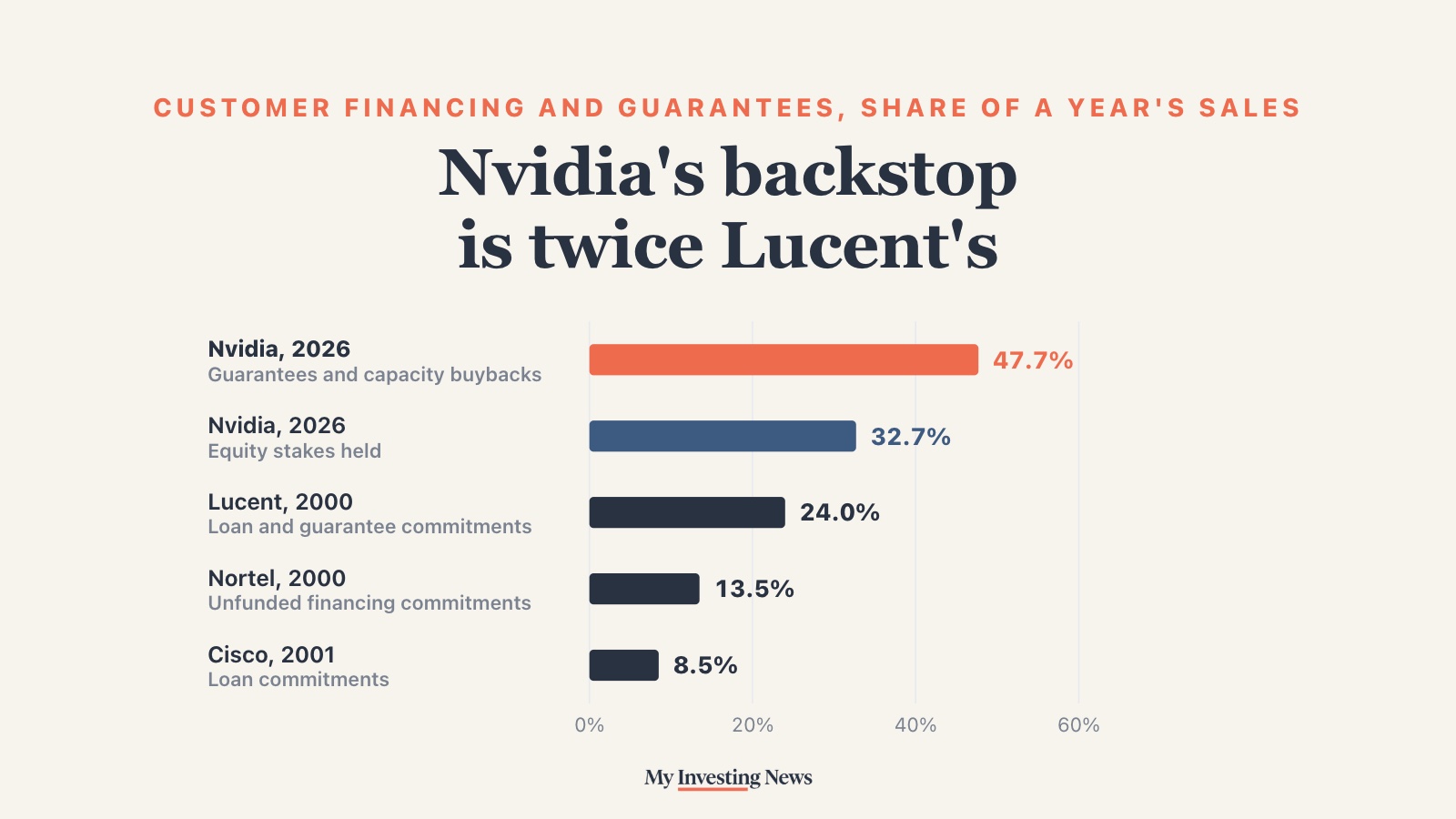
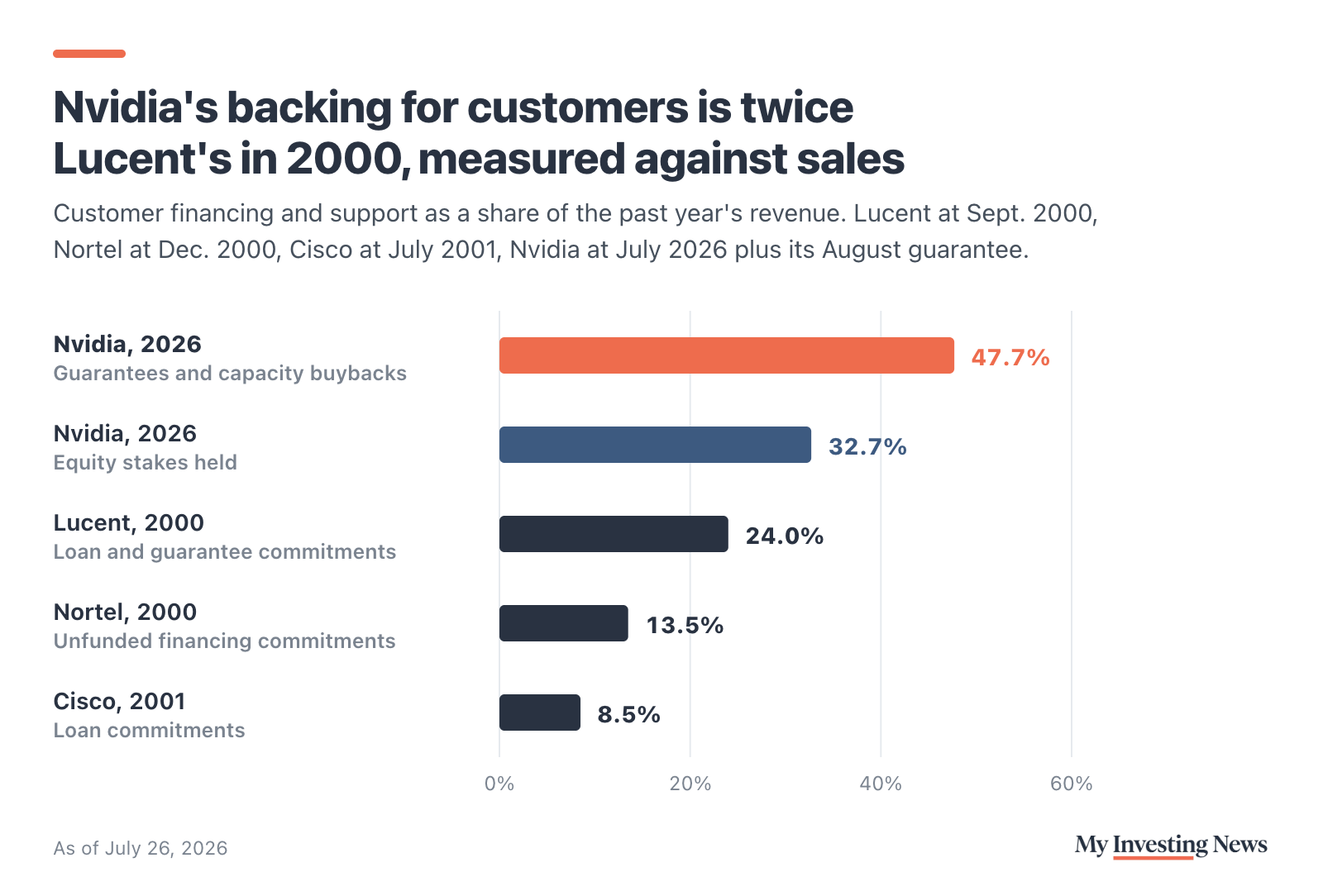
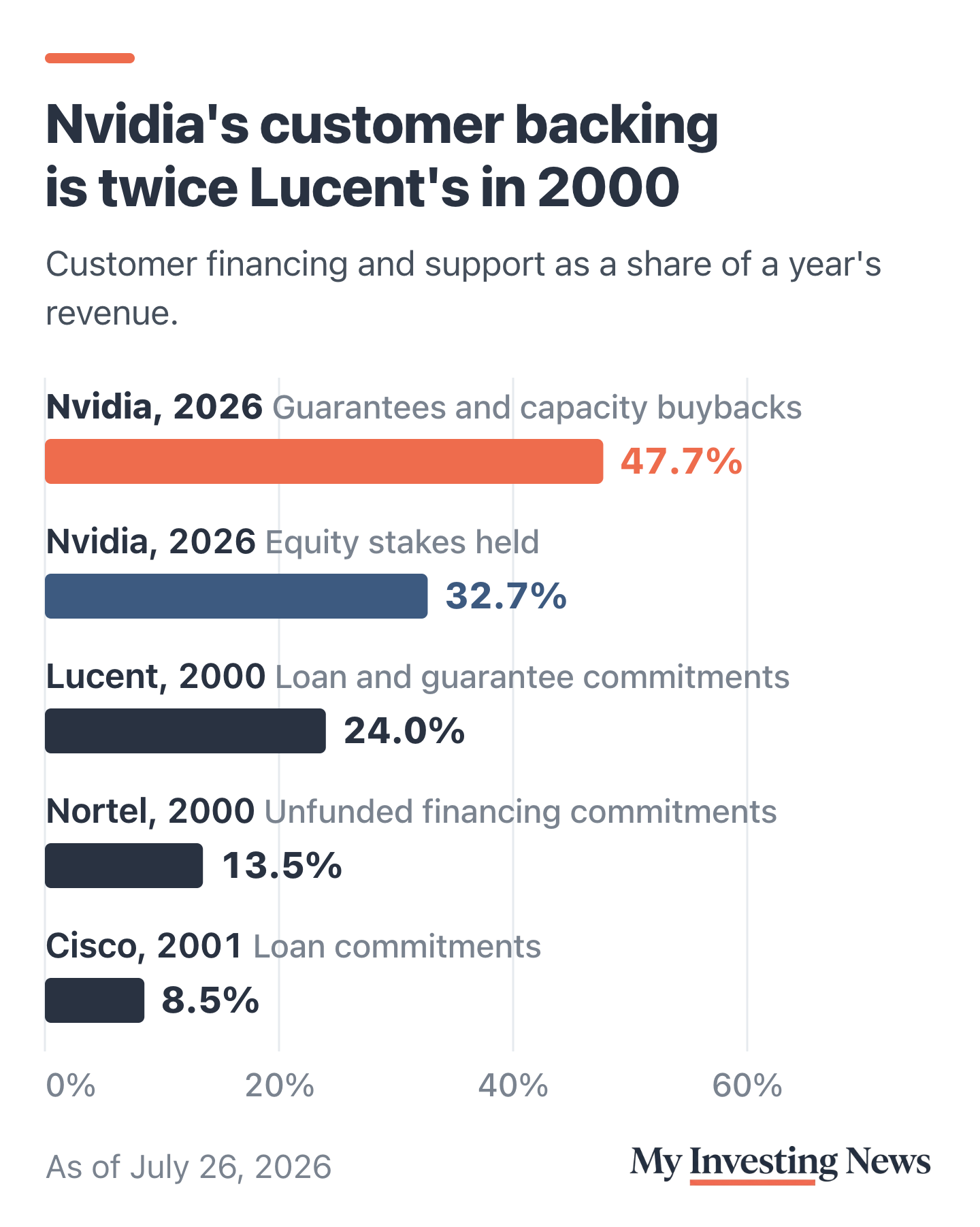
Vendor financing was the telecom bubble’s signature move. Equipment makers lent to new phone and internet carriers so they could buy more equipment. At Sept. 30, 2000, Lucent had committed to lend customers about $6.7 billion and to guarantee another $1.4 billion of their debt. That $8.1 billion came to 24.0% of its $33.8 billion in annual revenue. Only about $2.1 billion, or 6.1% of revenue, had actually been drawn.
Nortel Networks reported up to $4.1 billion of unfunded customer financing at the end of 2000, 13.5% of revenue. Cisco’s loan commitments were about $1.9 billion in July 2001, 8.5% of revenue. Many of the carriers that borrowed failed in 2001 and 2002, and the equipment makers took large write-offs.
Customer support, as a share of a year’s revenue
Measured Against Sales, Nvidia’s Backing Is Twice Lucent’s
Nvidia’s revenue over the four quarters through July was $303 billion. Its guarantees and capacity buybacks, the pieces closest to Lucent’s loans and guarantees, add up to $144.5 billion, or 47.7% of that. That is about 2 times Lucent’s share in 2000. The equity stakes, which Lucent had no real match for, add another 32.7%.
The comparison has limits, and they cut both ways. Almost all of Nvidia’s guarantee figure is the August OpenAI campus deal, which is a cap, phases in as nine data centers open starting in fiscal 2029, and shrinks as rent is paid. Without it, Nvidia’s guarantees and buybacks come to 13.0% of revenue, below Lucent. Nvidia also has far more cash and profit behind it than Lucent did. On the other side, the figures leave out the longer payment terms Nvidia gives some large customers, which have swelled its receivables, and the stakes go up and down with the value of companies that also buy its chips. Josh Brown has argued that Nvidia’s valuation looks nothing like Cisco’s at the 2000 peak; its customer financing is the place the comparison gets closer.
What to Watch
Nvidia’s next quarterly filing, due with its results later this month, will update every one of these figures. Watch whether the equity stakes keep climbing, whether the AI cloud buyback commitments grow, and whether the financing platforms Nvidia discussed in August with large capital providers turn into signed deals. Also watch the borrowers: CoreWeave’s financing scare showed how fast confidence in the customers can shift.
King’s “tens of billions” undersells it: Nvidia’s filing shows $99 billion of stakes plus $144.5 billion of guarantees and buyback promises. Measured against revenue, the guarantee-style support is about twice what Lucent had in 2000, though most of it is one capped deal that phases in from fiscal 2029. The risk is that the customers Nvidia backs are the same ones buying its chips.