Where we heard itCNBC’s Fast Money, Oct. 27, 2026, the evening of Boeing’s third-quarter report. Speakers: Guy Adami, with Steve Grasso and Karen Finerman. Also: Jim Cramer on Mad Money the same night.
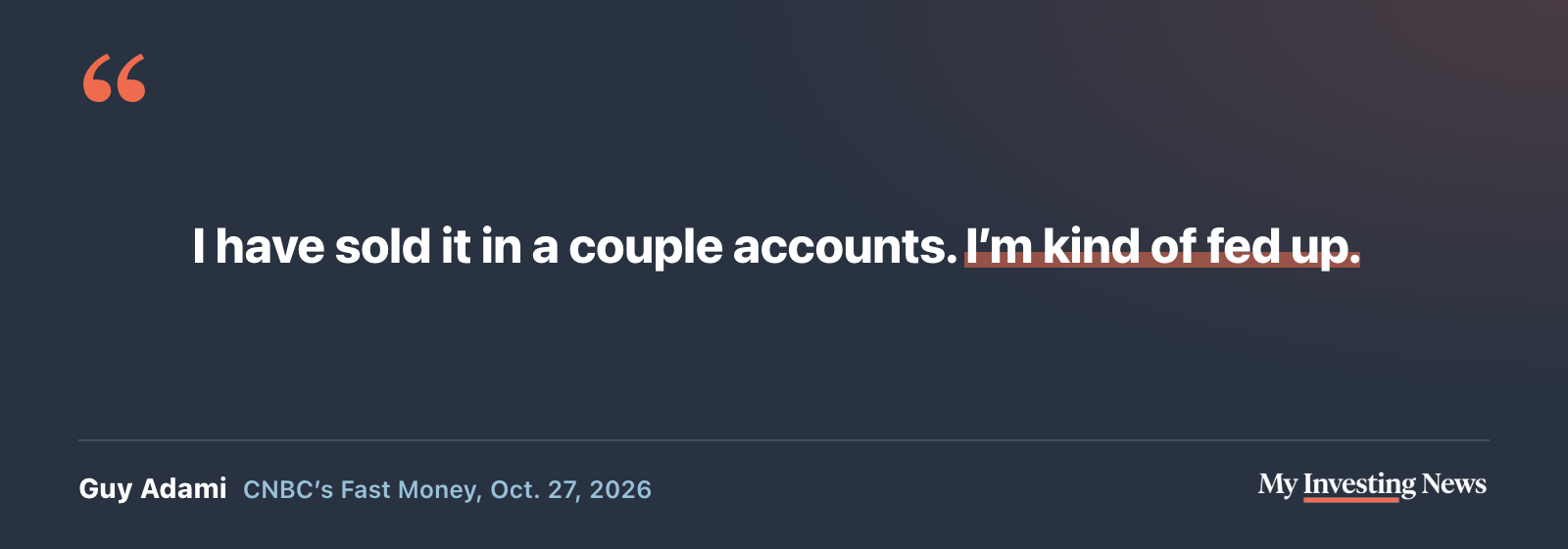
BoeingBA shares fell 10.7% on Oct. 27, 2026, to $168.18 from $188.31, after the company reported a third-quarter loss and laid out its first multiyear cash plan in years. That evening on CNBC’s Fast Money, Guy Adami said he was done waiting: “I’ve been so bullish, so unnecessarily on Boeing for so long.”
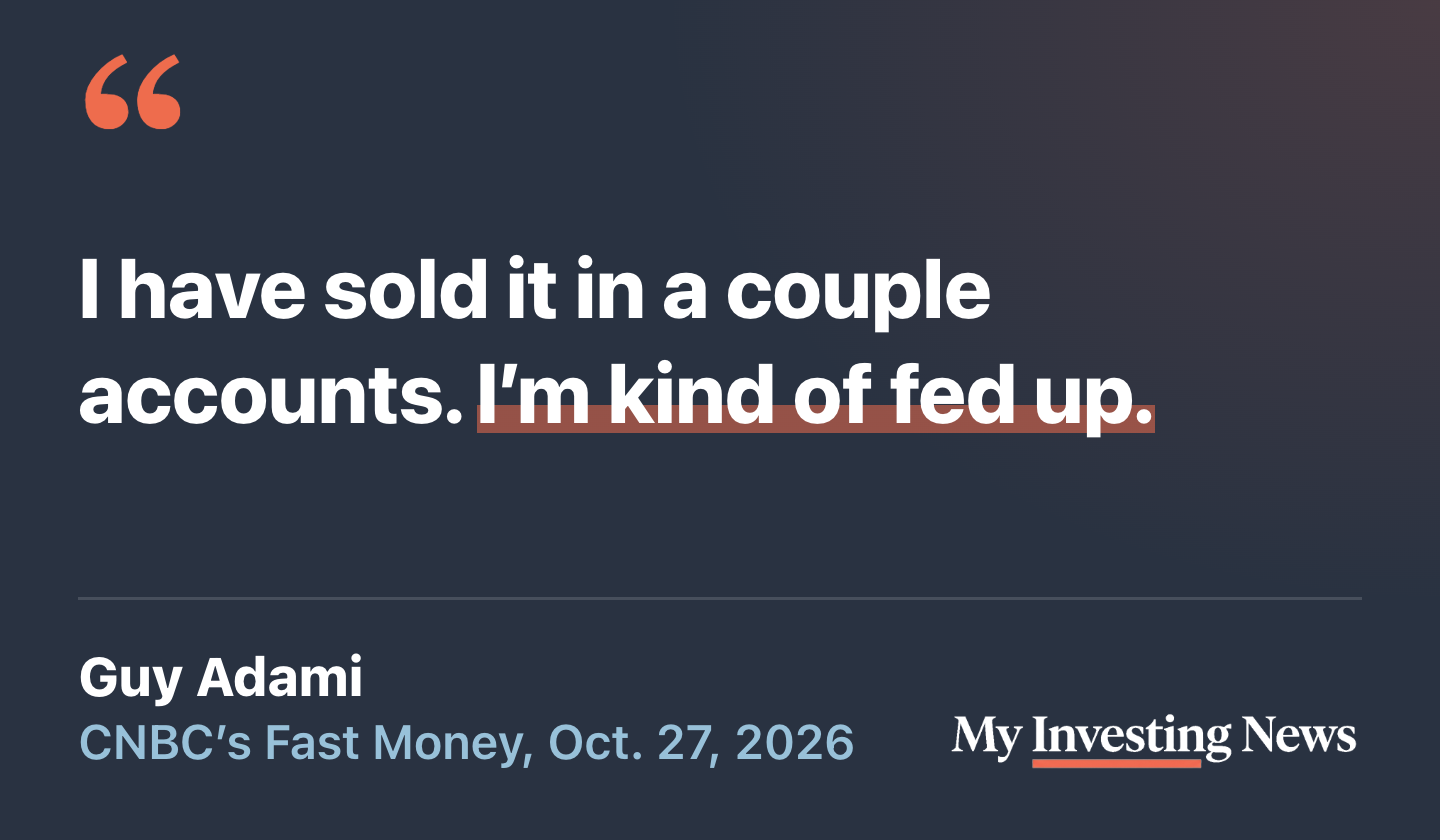
He said the cash he had counted on keeps slipping. “They are more than a year behind on free cash flow,” Adami said, before adding that he had sold the stock in a couple of his accounts.
What Boeing Said on Oct. 27
The quarter itself was mixed. Revenue rose 4% to $24.2 billion, and Boeing posted a net loss of $116 million, or $0.26 a share, according to its third-quarter release. Free cash flow was $464 million. Total backlog reached a record $745 billion, including more than 6,300 commercial jets.
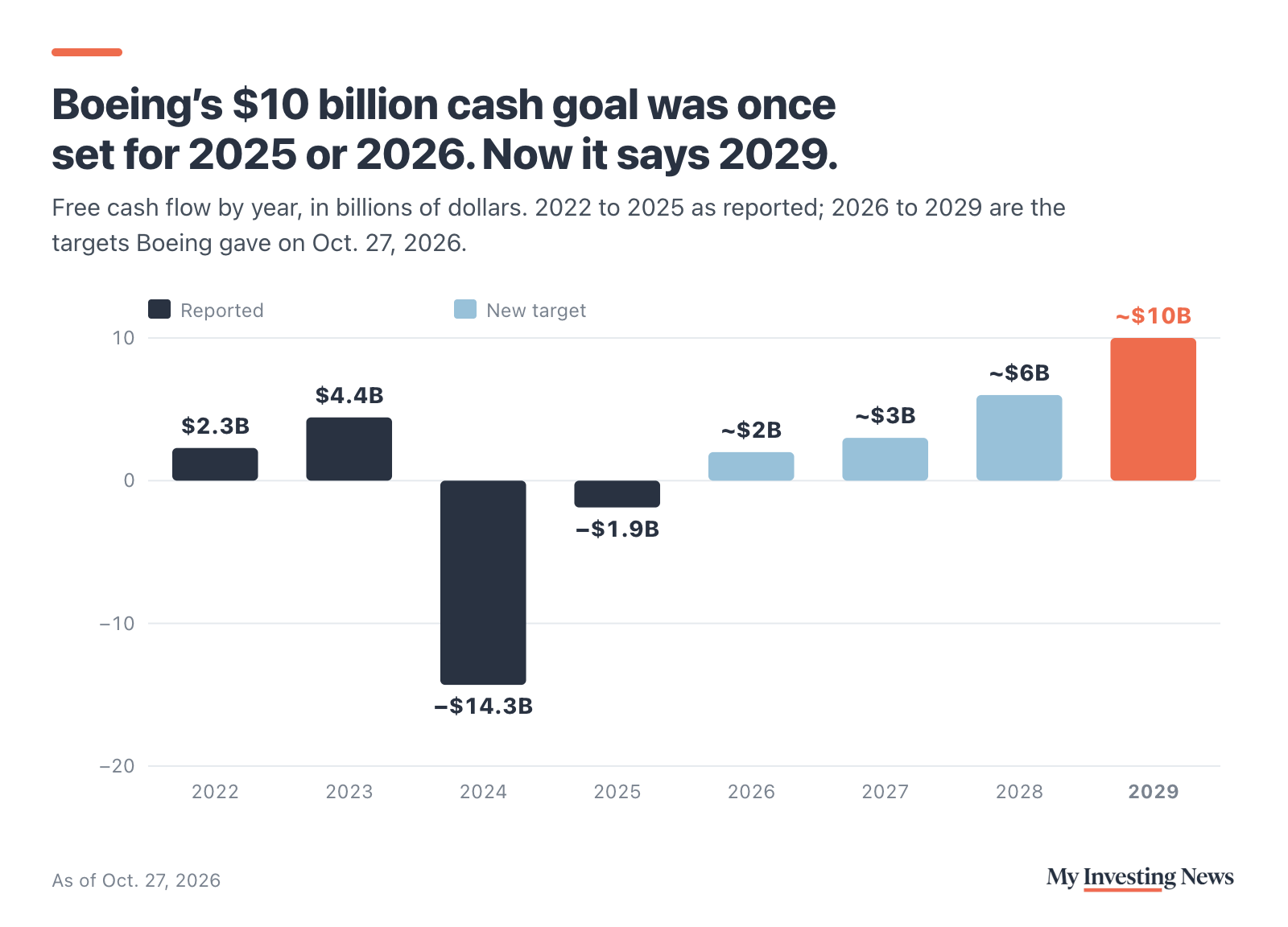
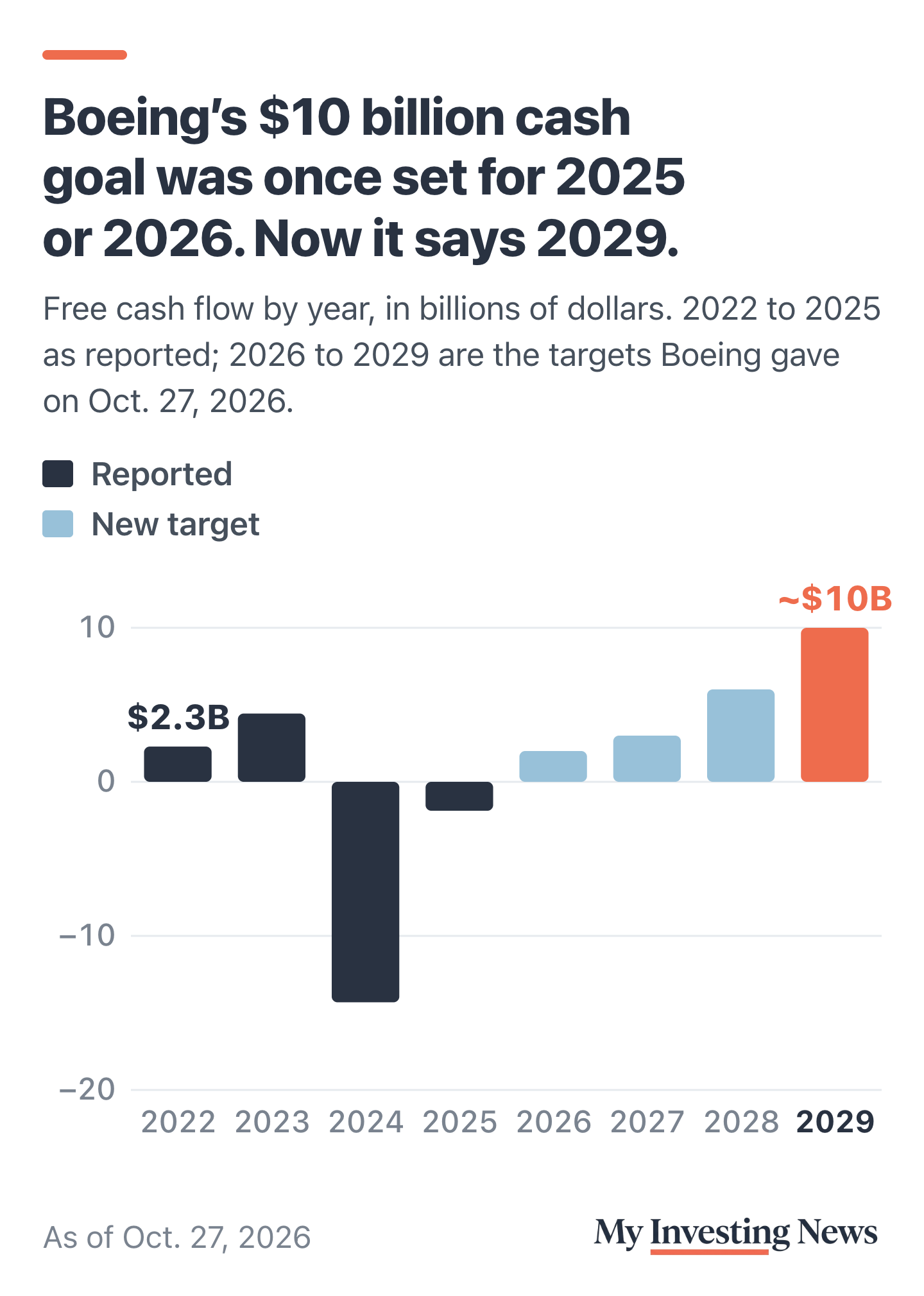
The cash outlook moved the stock. On the earnings call, Boeing said it expects about $2 billion of free cash flow in 2026, about $3 billion in 2027, about $6 billion in 2028 and $10 billion in 2029. The 2027 figure includes about $1 billion of extra capital spending, partly for the Navy’s F/A-XX fighter, which Boeing won in September and which is not yet in its backlog. Chief Executive Kelly Ortberg also said it will take into next year to get fully stable at 47 737s a month, and that the plan targets 52 a month in the back half of 2027.
Is Adami Right That Boeing Is Behind?
By Boeing’s own record, he is understating it. In November 2022 Boeing set a goal of about $10 billion of free cash flow in 2025 or 2026, and repeated it on its January 2023 call. That same month, its fourth-quarter 2022 release said the 737 would ramp to about 50 a month in the 2025 to 2026 timeframe. The new plan puts $10 billion in 2029, three years after the end of that window.
The years in between went the other way. Boeing generated $4.4 billion of free cash flow in 2023, then burned $14.3 billion in 2024, the year a door plug blew out of a 737 MAX 9 in flight, regulators capped 737 output and machinists went on strike for more than seven weeks. It burned another $1.9 billion in 2025.
Karen Finerman said she still holds the stock but compared herself to Charlie Brown waiting for the football: “there’s going to be cash flow, there’s going to be cash flow.” She noted that a year ago, when investors were counting on that cash, the stock was higher. It was: Boeing closed at $223.00 on Oct. 27, 2025, and is down 22.5% since the end of 2025.
Checking the Production Claims
Steve Grasso put the problem in planes: “they’re at 41, 42 planes per month. They need to be at somewhere in the mid-50s to actually change the narrative on the story.” His first number checks out. Boeing delivered 124 737s in the third quarter, about 41 a month, and said it would fall short of its 500-plane 737 delivery target for the year.
His Airbus comparison runs ahead of the record. Grasso said “Airbus is about 65 per month going to almost 80.” Airbus’s own delivery data show it handed over 157 A320 family jets in the third quarter, about 52 a month, with a peak of 73 in June. Its stated goal is 70 to 75 a month by the end of 2027. The gap is real, but smaller than his numbers suggest.
Boeing’s quarter at a glance
A Reaction With No Precedent Since 2004
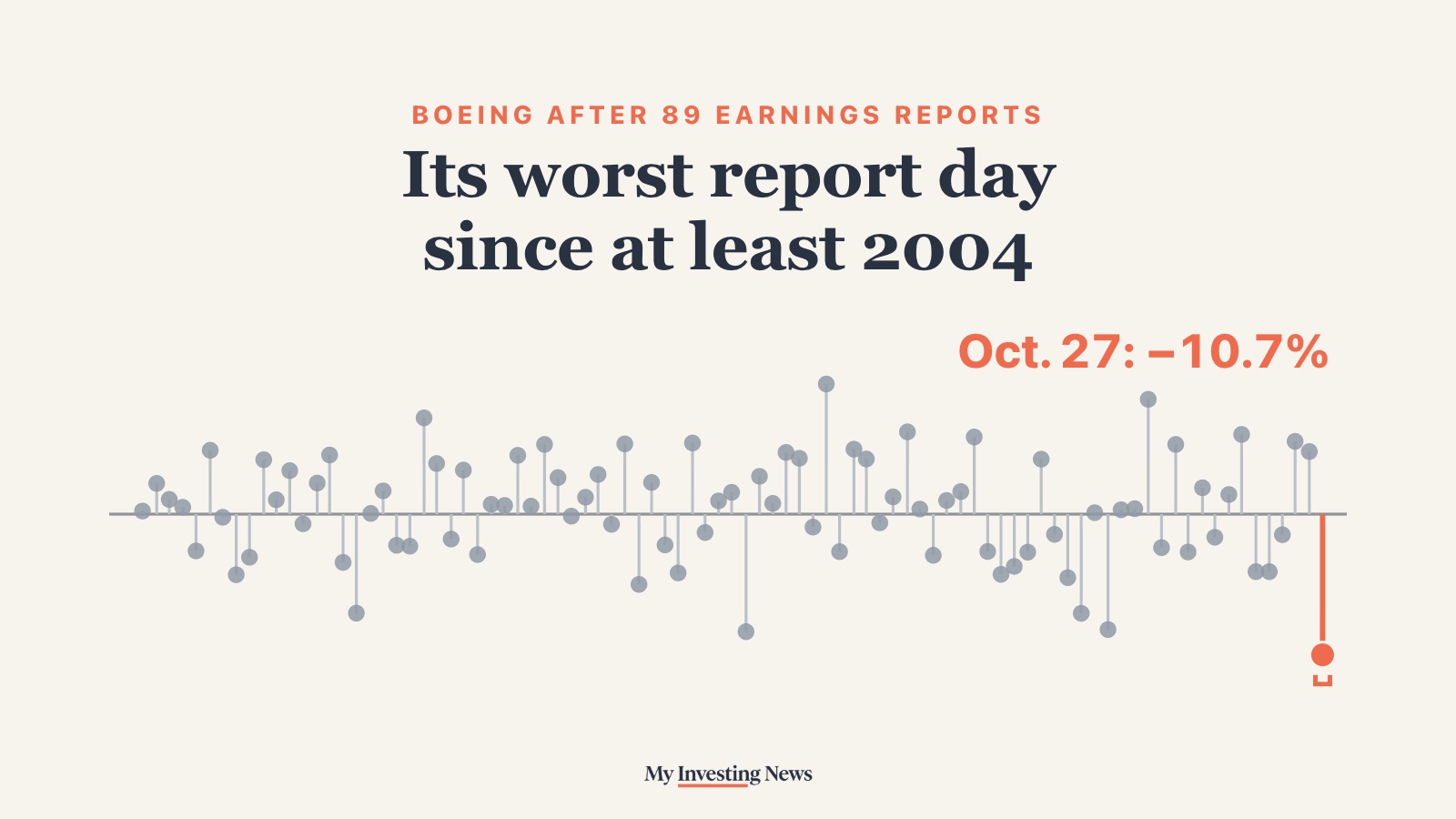
The drop stood out even for a stock used to bad news. Across all 89 Boeing earnings reports since October 2004, no report day drew a bigger fall. The next worst were 8.9% in January 2016 and 8.8% in October 2022. It was Boeing’s worst session of any kind since June 11, 2020, a point CNBC’s Mike Santoli made on the show, and its lowest close since April 22, 2025.
Boeing just had its worst earnings day in 89 reports
Boeing’s stock move on each earnings report day since 2004, close to close. Boeing reports before the market opens. Coral is Oct. 27, 2026.
Jim Cramer took the other side on Mad Money. He said Boeing “threw the kitchen sink at it,” meaning it put every bad number out at once, and argued the reset could clear the way for more realistic targets. “If you sold it today, you’re going to be right for four points, maybe even five points. But I think you’re going to be wrong for 200,” he said. He made a similar point on X. A $200 gain would put the stock near $368, a close Boeing has not reached since November 2019. Cramer called Dell an opportunity earlier this month after an 11% drop, too.
What to Watch Next
- Rate 47, then 52: whether Boeing holds 47 737s a month early in 2027 and stays on its plan for 52 in the second half.
- The 777X: the cash plan assumes certification by mid-2027 and first delivery that year.
- Demand: Cramer argues higher fuel prices will not kill jet demand. Airlines facing higher fuel costs are raising fares, which tests that view.
Adami sold because Boeing’s cash keeps arriving later than promised, and the record backs him: the $10 billion goal first set for 2025 or 2026 now sits in 2029. Cramer sees a reset that clears the decks. The risk for both sides is execution, since the new plan still depends on a faster 737 ramp and a 777X certification that have both slipped before.