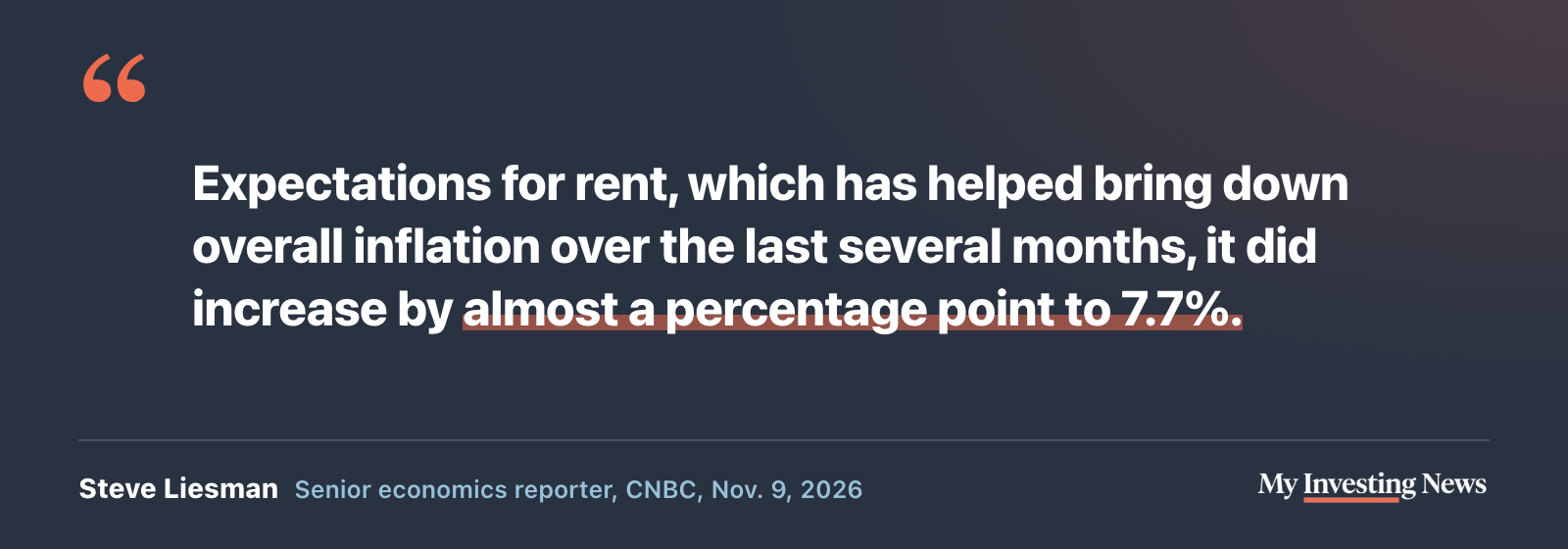
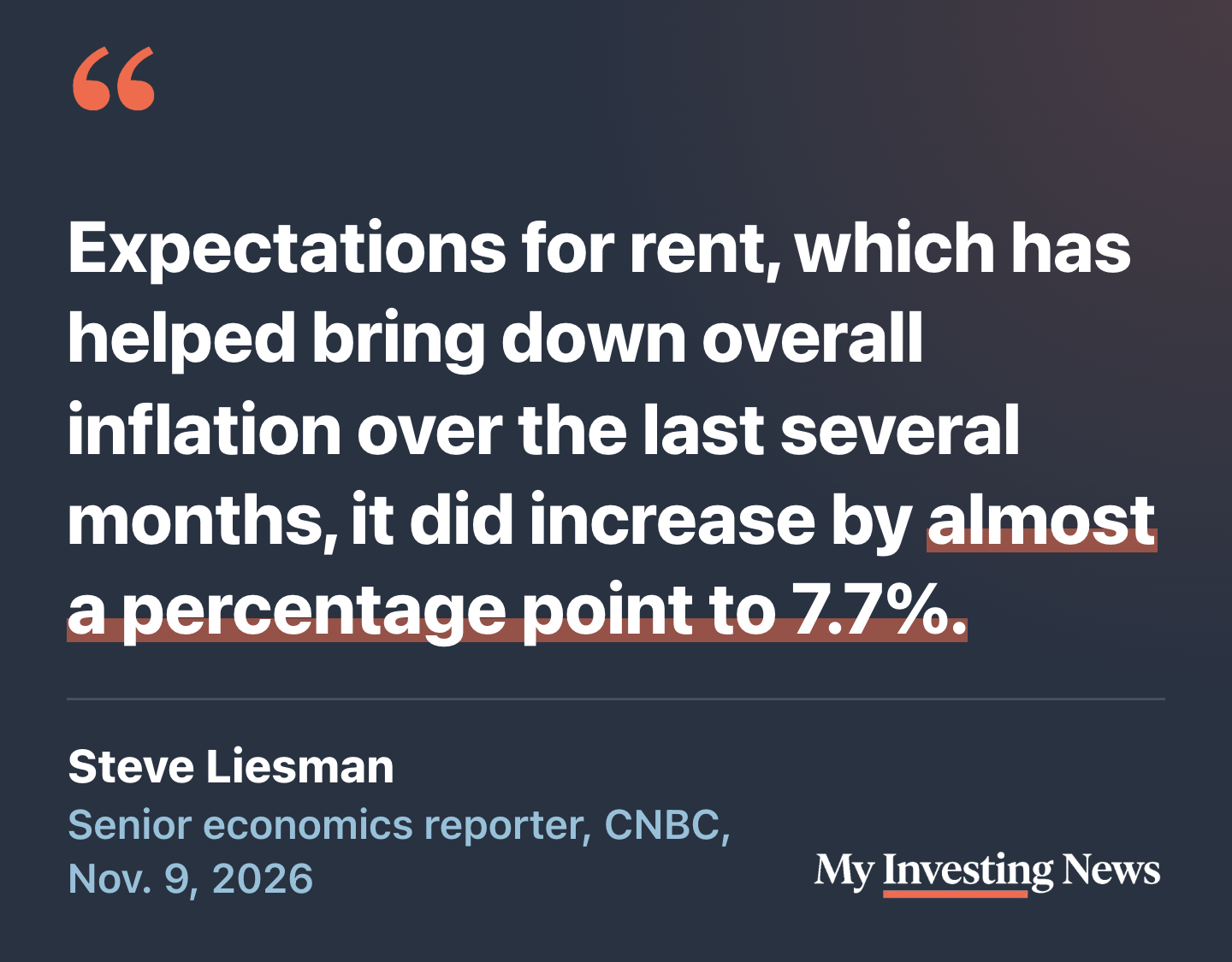
Where we heard itCNBC, Steve Liesman on the New York Fed’s consumer survey, Nov. 9, 2026. Survey results: Federal Reserve Bank of New York, October 2026 Survey of Consumer Expectations.
Americans expect rents to keep climbing fast. The New York Fed’s Survey of Consumer Expectations, released Nov. 9, found the typical household expects rents to rise 7.7% over the next year, up from 6.8% a month earlier, even as expected inflation overall held at 3.9%. CNBC’s Steve Liesman singled out the rent jump on air, noting that rent is the category “which has helped bring down overall inflation.”
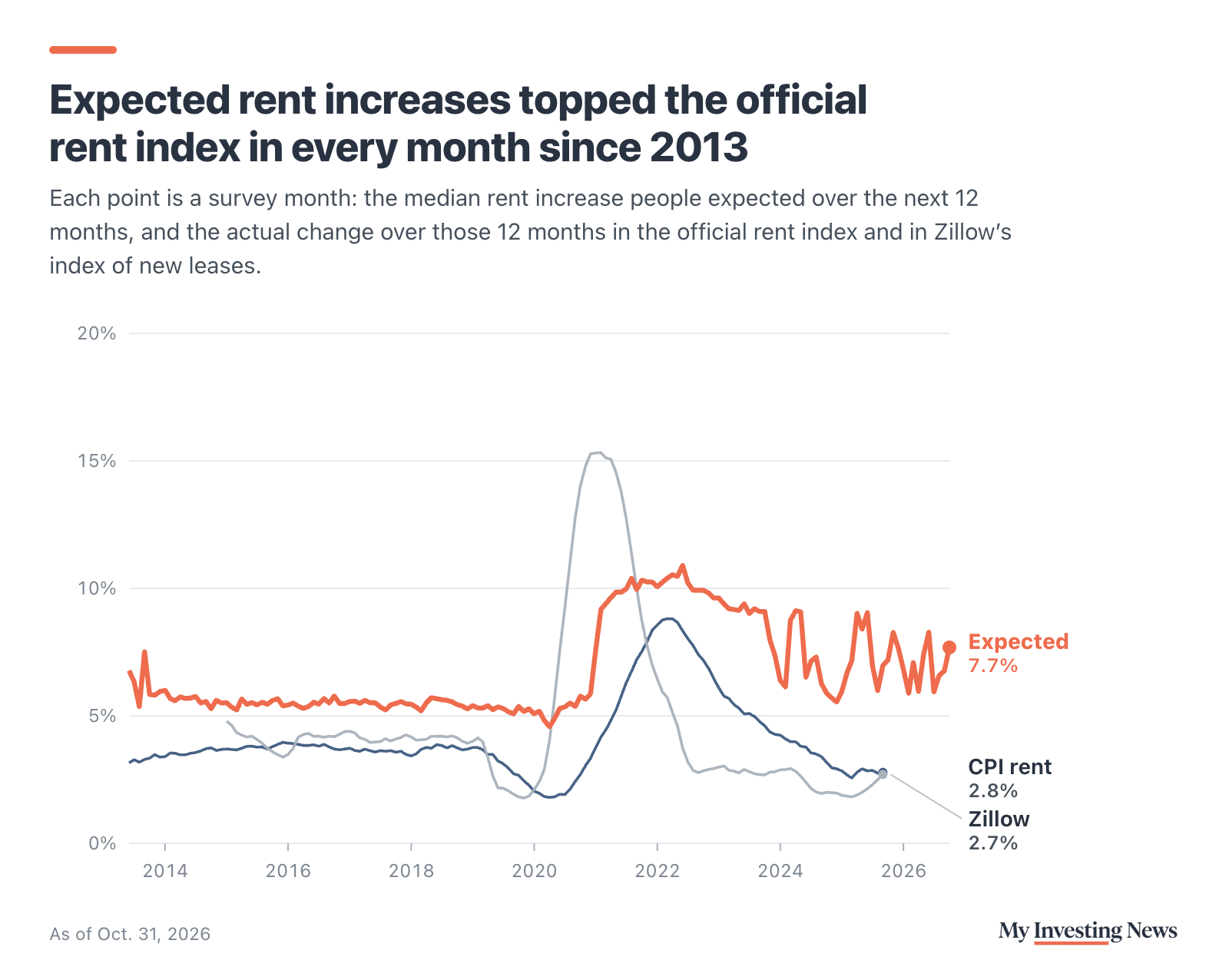
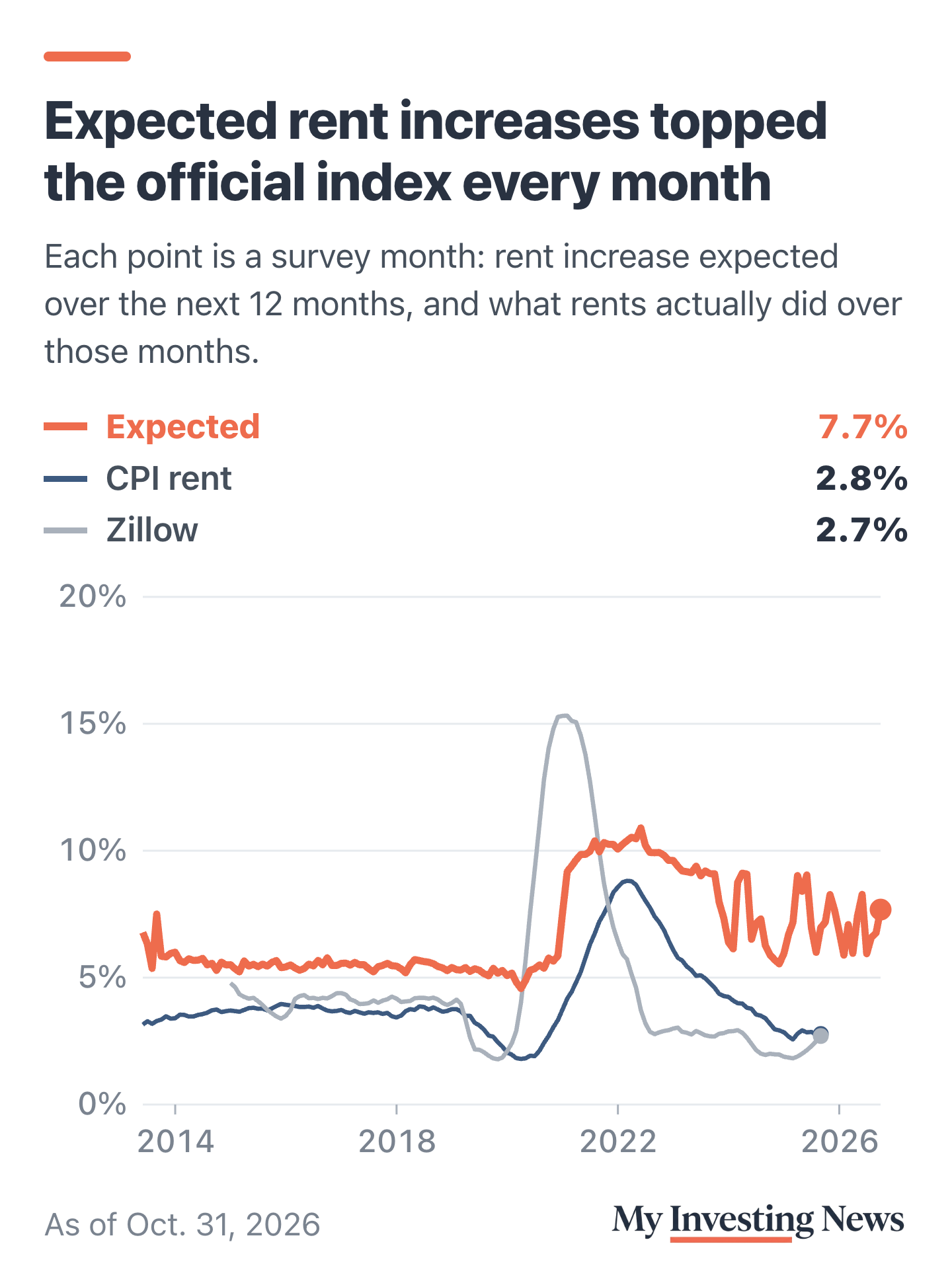
Liesman is right about the role rent has played. The government’s index of rent for primary residences rose 8.8% in the year to March 2023, its peak, and 2.8% in the year to September 2026. The October consumer price report, released Nov. 10, showed rent up 0.2% from September, but it carries no year-over-year figure because October 2025 prices weren’t collected during the government shutdown. Zillow’s index of asking rents on new leases was up 2.7% in the year to September. So the 7.7% people expect is close to three times what rents have actually been doing. That raises an obvious question: how good have these expectations been?
We Scored Every Month of the Survey
The New York Fed has asked about rent every month since June 2013, and publishes the median answer. For each survey month we compared that expectation with what the official rent index actually did over the following 12 months. That gives 147 months to score, from June 2013 to September 2025, whose 12 months ended in September 2026. (The October 2024 survey can’t be scored because there is no October 2025 reading.)
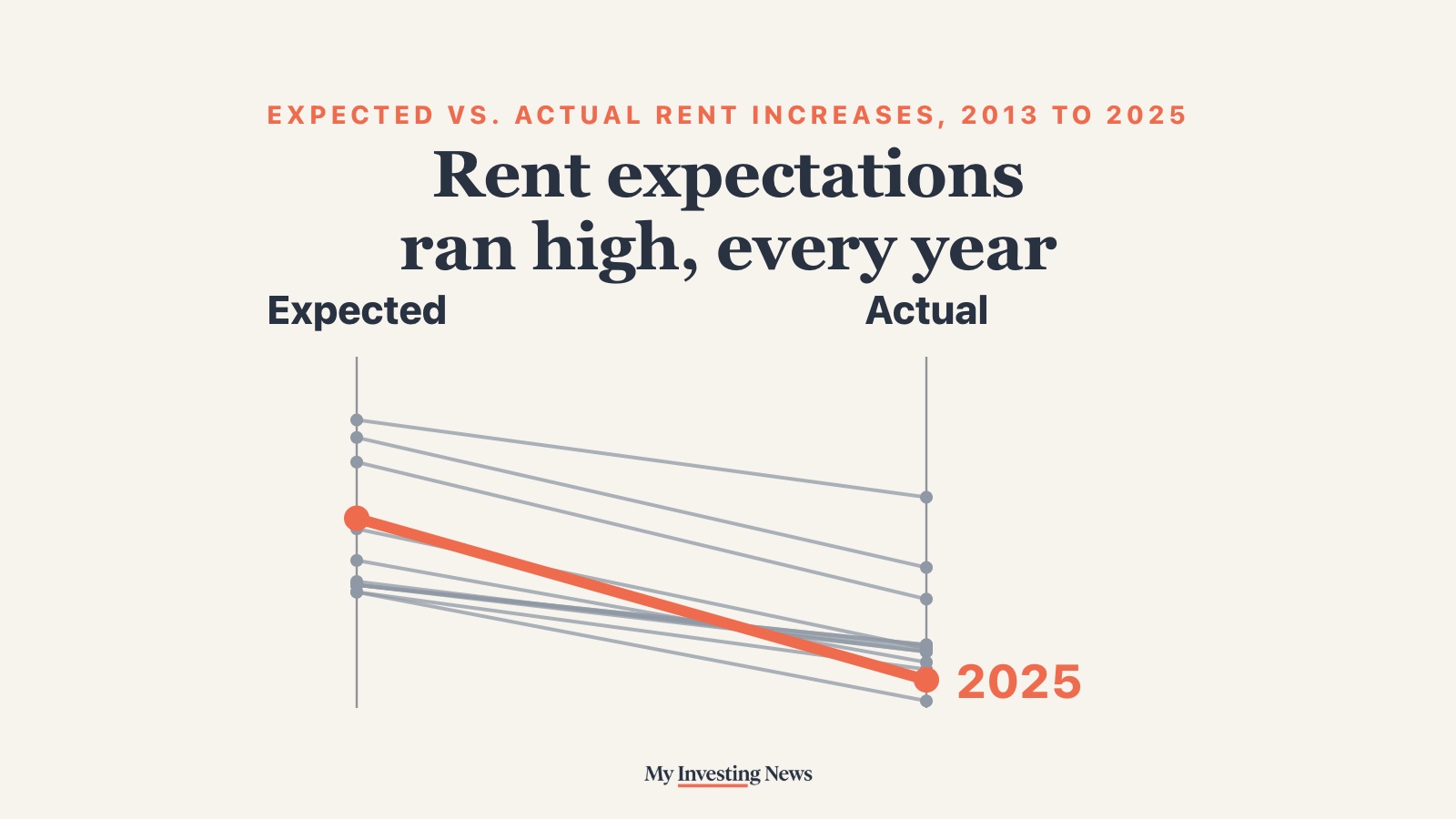
In all 147 months, people expected rents to rise faster than the official index did. On average the expectation was 2.6 percentage points too high. The closest the survey ever came was a miss of 1.4 points, in December 2015. Against Zillow’s new-lease rents, which move faster, the survey ran high in 112 of 129 months since 2015, by 2.2 points on average. The exceptions were the 17 surveys from May 2020 to September 2021, when market rents surged after the pandemic and outran what anyone expected.
The Gap Has Grown Since the Pandemic
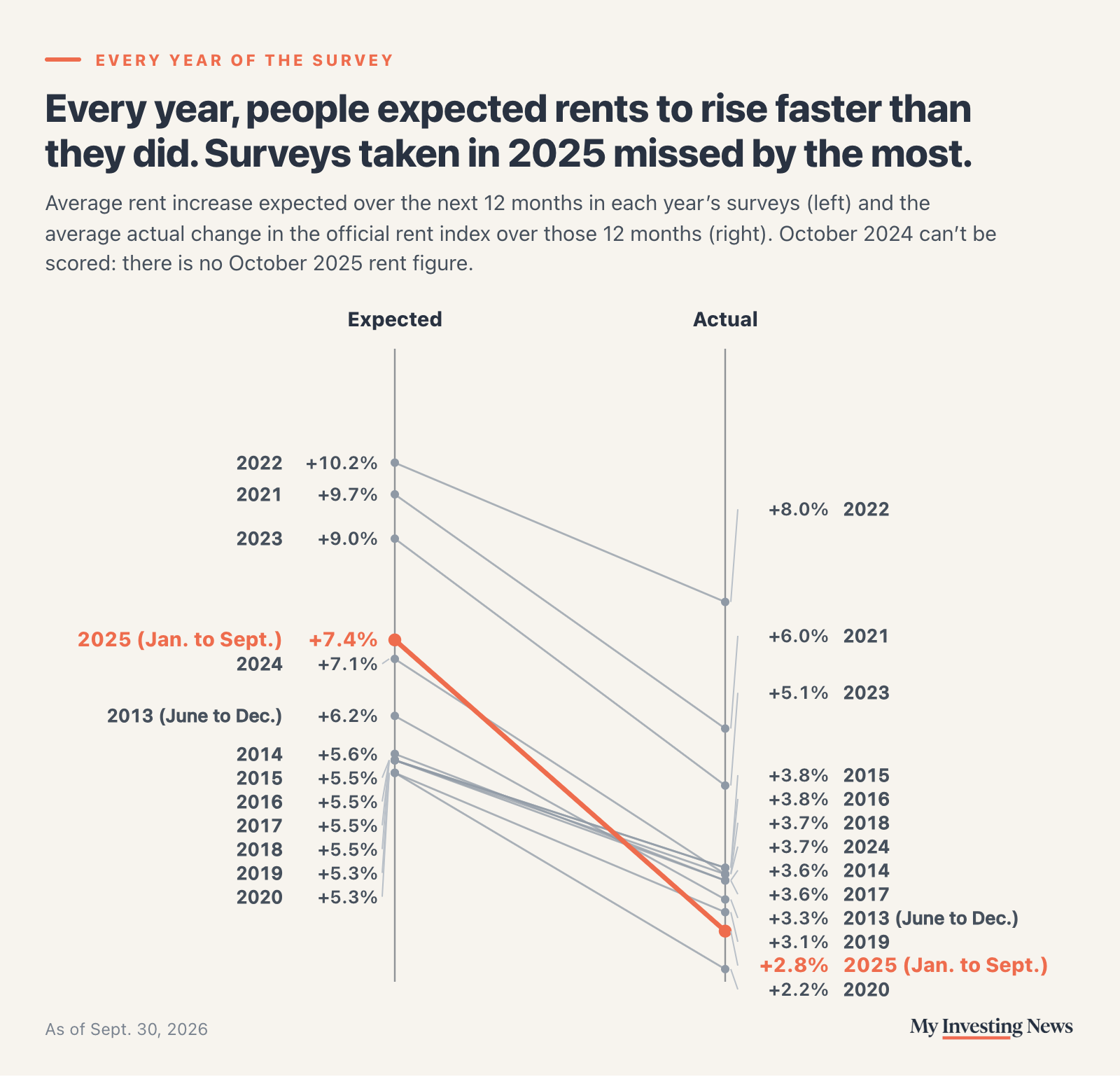
Before 2020 the survey was steady and steadily high. Households expected about 5.5% a year, and the official index delivered a little under 4%. In the 2015 surveys, for example, people expected 5.5% and got 3.8%. Expectations jumped with the rent surge of 2021 and 2022, peaking at 10.9% in June 2022, and have come down far more slowly than rents themselves. In the 2023 surveys people expected 9.0% and got 5.1%. In the 2024 surveys it was 7.1% against 3.7%. The surveys from January to September 2025 expected 7.4% and got 2.8%, a miss of 4.6 points, the widest of any year.
Rent: what people expect and what happened
One month’s move also deserves caution. The New York Fed notes that from August 2025 to June 2026 its price-expectation questions counted only people answering on a desktop computer, while it tested a new mobile version, and that phone users were added back in July 2026. The rent figure fell from 8.3% in June to 5.9% in July, when the change took effect, and has climbed back since. This year it has ranged from 5.9% to 8.3% and moved more than a full point in a single month 4 times, so a 0.9-point rise is not unusual. Surveys of how people feel about the economy have their own quirks, as Nate Silver argued about the University of Michigan’s sentiment survey.
What to Watch
Rent matters to anyone watching inflation because shelter is the biggest piece of the consumer price index. The October report left the year-over-year picture blank, and inflation has run above the Fed’s 2% target for years. The New York Fed’s November survey comes out in December, and so does the November consumer price report, which should again carry a year-over-year rent figure. If the survey’s record holds, the 7.7% figure says more about how households feel than about what the next lease will cost.
Americans now expect rents to rise 7.7% over the next year, while the official rent index rose 2.8% in the latest year and Zillow’s new-lease rents 2.7%. In every one of the 147 months we could score since 2013, the survey’s expectation ran above what the official index delivered, by 2.6 points on average, so the jump is a better read on households’ worries than on rents.