Where we heard itBloomberg Businessweek, “Midterms Notch Records on Early Voting, Ad Spending,” Nov. 3, 2026, with Rick Davis, partner at Stonecourt Capital, Bloomberg Politics contributor and national campaign manager of John McCain’s 2008 presidential campaign.
Rick Davis spent part of election day explaining why he didn’t trust the odds. Prediction markets “are primarily based on polling,” the Republican strategist said on Bloomberg Businessweek on Nov. 3, and the polls feeding them have a problem: “They’re wrong most of the time.”
His own read of the data pointed one way. Midterm turnout favors college-educated suburban and urban voters, he said, so “my guess is today they’re going to get underestimated. And Republicans are going to get overestimated.” Asked for a contrarian call, he went big.
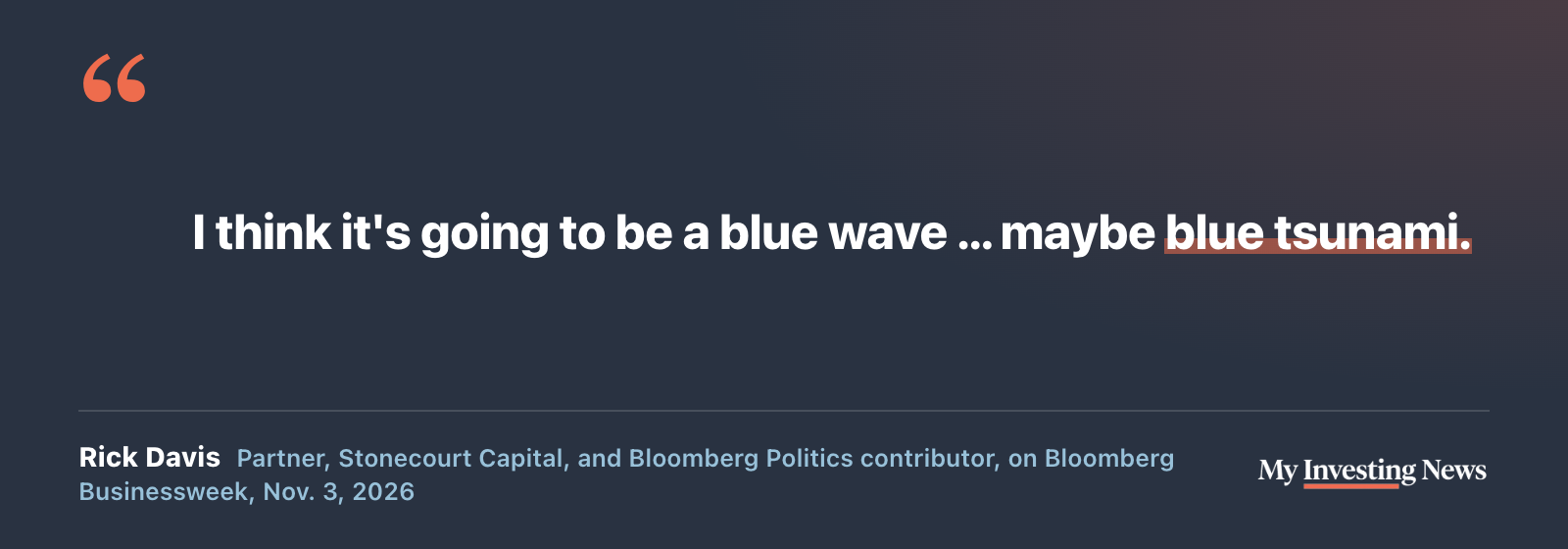
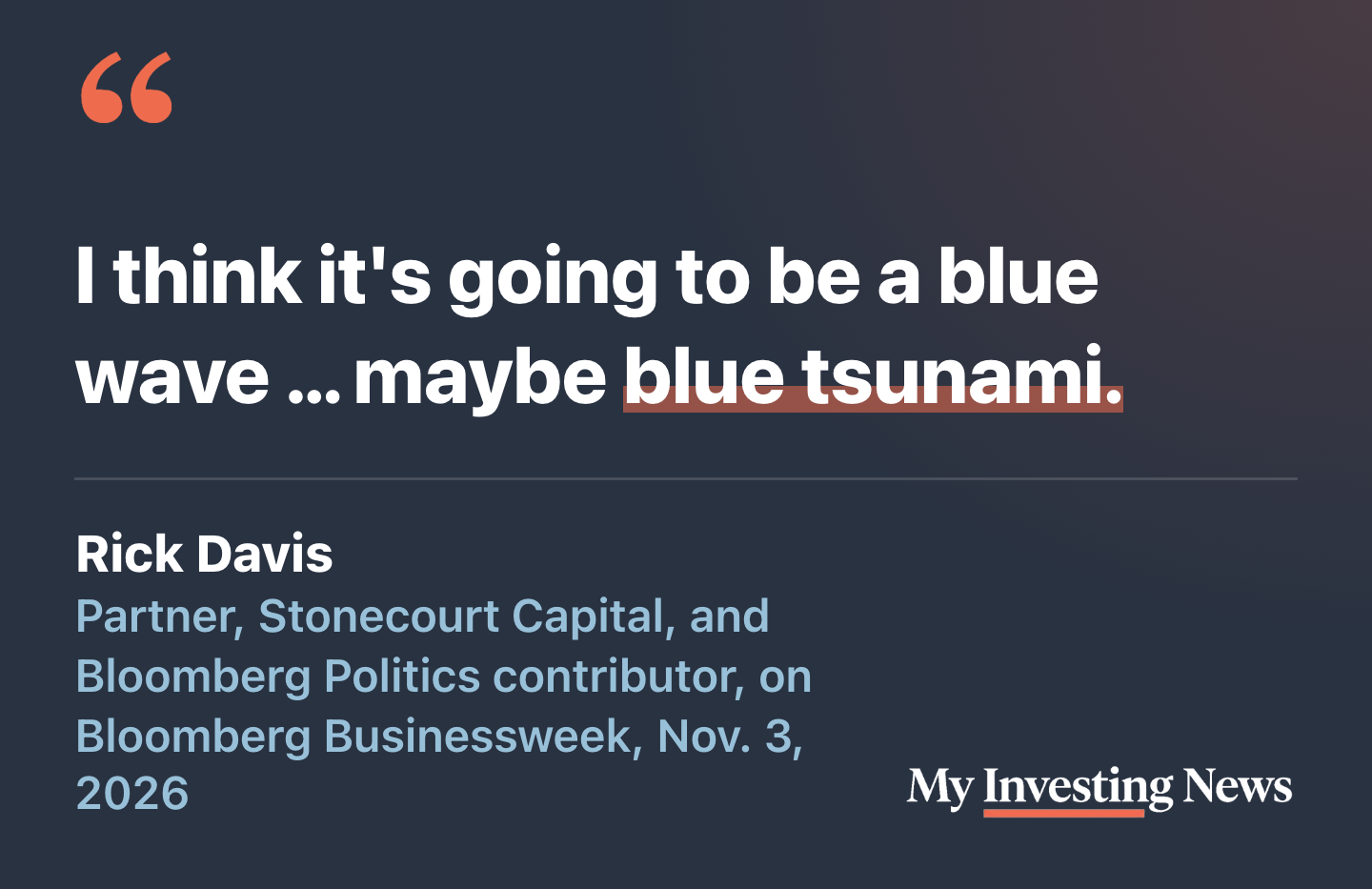
He expected Democrats to win both chambers “with good margins.” The direction was hardly contrarian: bettors agreed on that part. The size is where the betting came up short, and Polymarket’s Senate seat-count markets let us measure by how much.
What Bettors Paid For on Election Morning
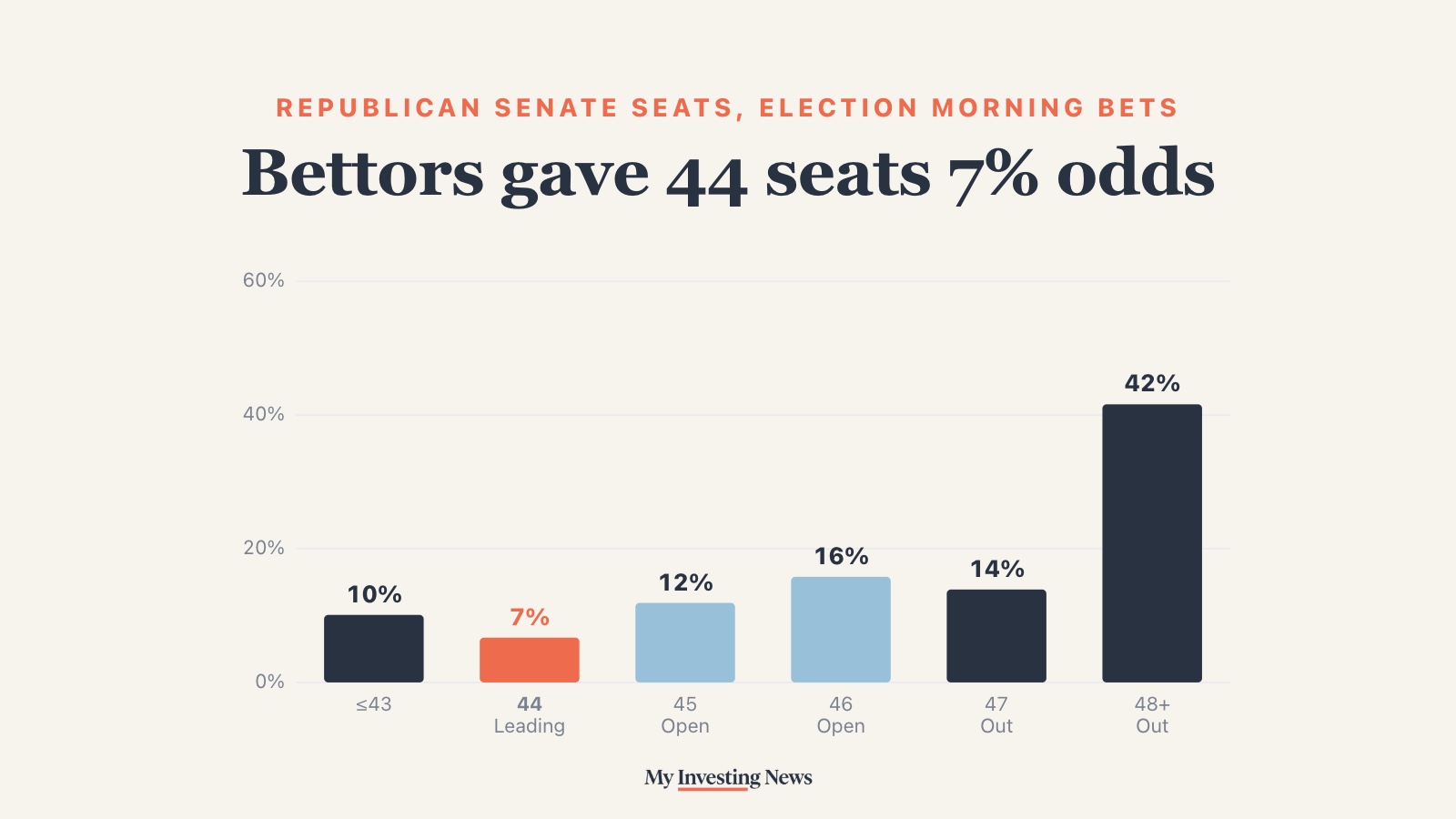
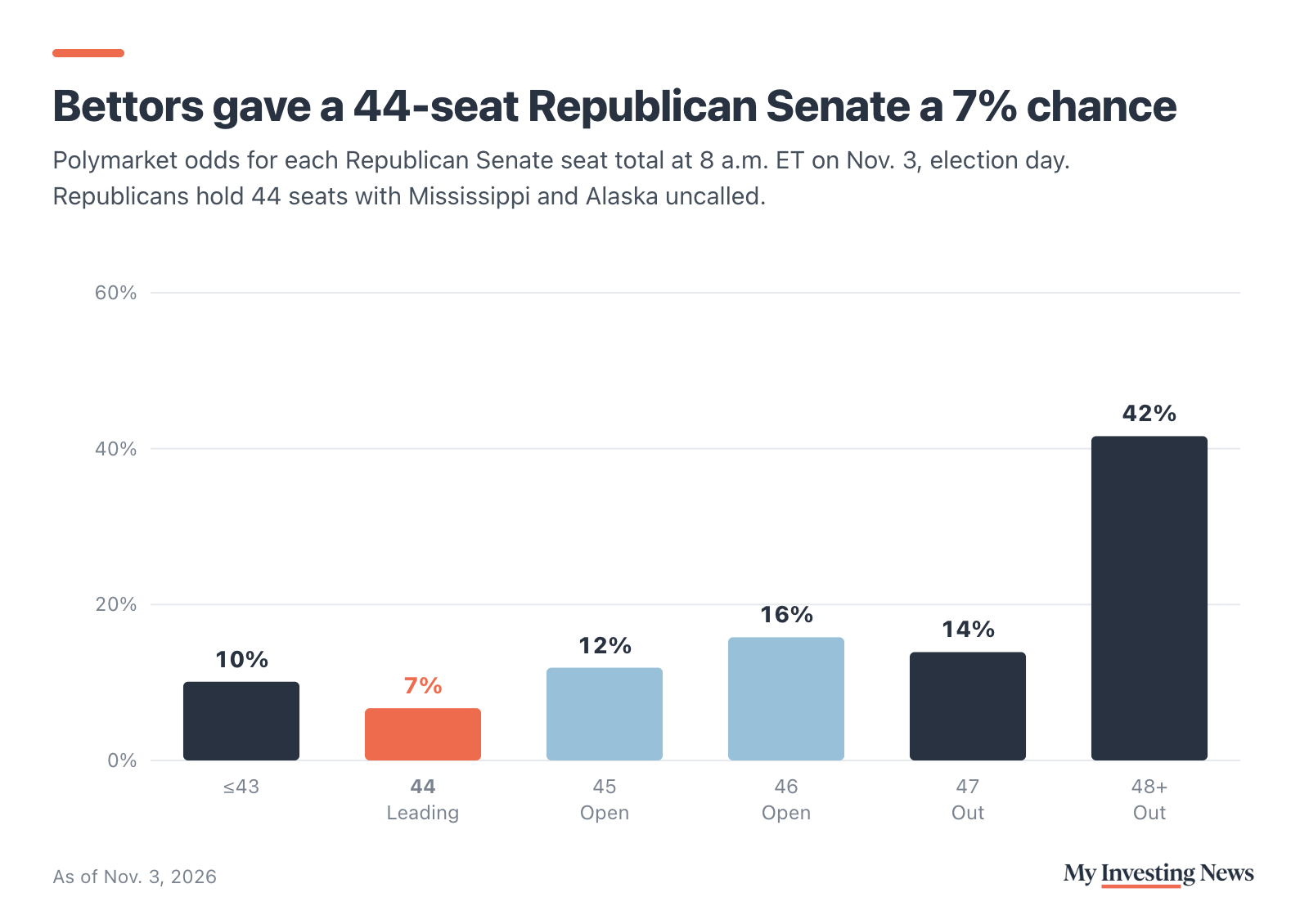
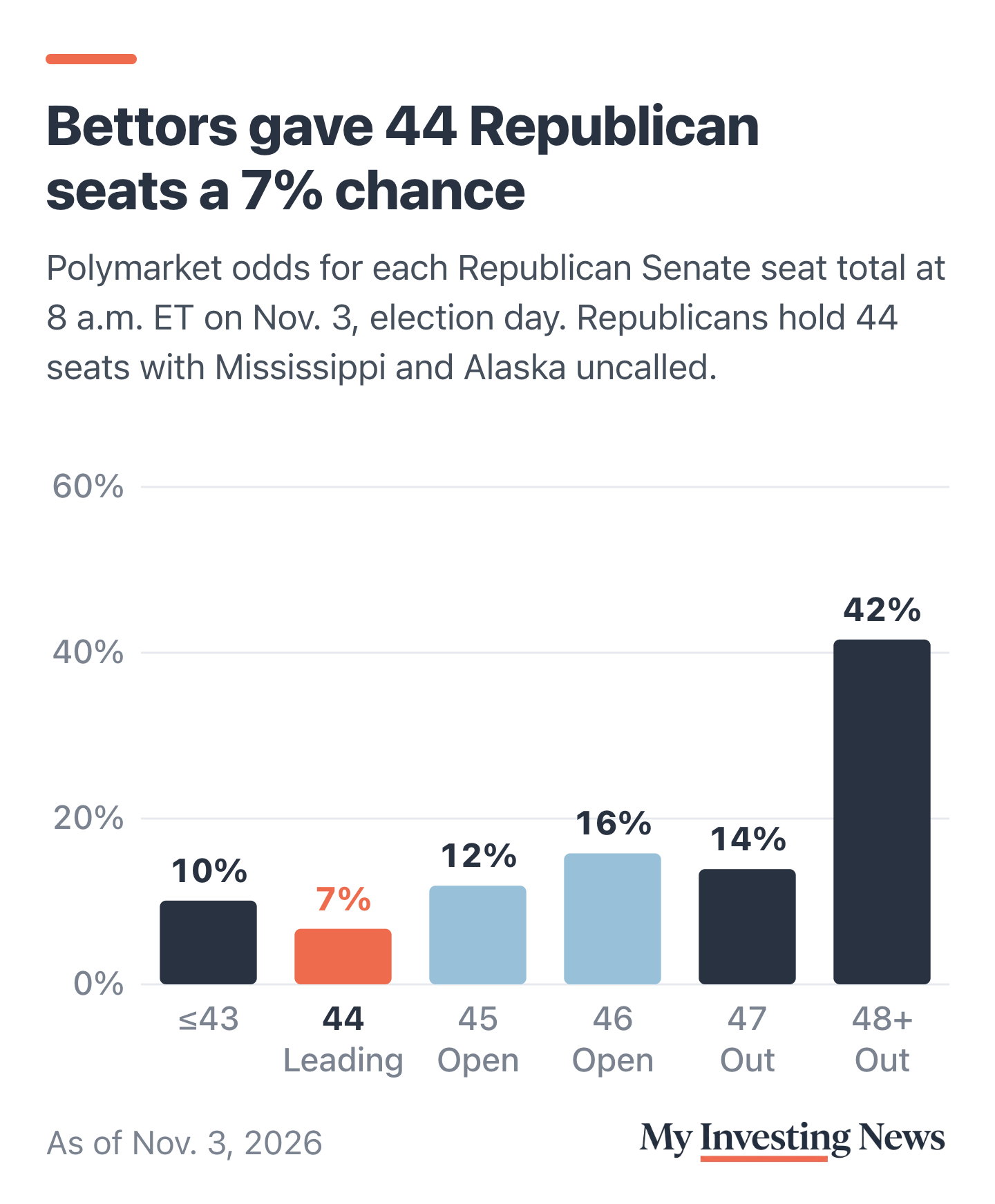
At 8 a.m. ET on Nov. 3, bettors on Polymarket put Democrats’ odds of winning the Senate at 77.5% and the House at 94.5%. Republicans held 53 Senate seats going in. On the seat-count market, the middle of the betting was 47 Republican seats: a six-seat Democratic gain, enough for control with a little room.
Bettors put 42% on Republicans keeping 48 or more seats, a narrow Democratic Senate or none at all. A 44-seat Republican Senate, a nine-seat swing, got 7%. Every outcome of 44 or fewer added up to 17%. Those are normalized odds: the bracket prices summed to 104.5 cents, so we scaled them to 100. The 44-seat contract itself sold for 7 cents.
Where the Senate Count Stands
As of Nov. 10, NBC News, using Associated Press race calls, had Democrats at 54 Senate seats and Republicans at 44, with Mississippi and Alaska uncalled. Democrats have flipped seven seats: Iowa, Kansas, Maine, North Carolina, Ohio, South Carolina and Texas. Democrats lead in both uncalled races.
In Mississippi, Democrat Scott Colom led Sen. Cindy Hyde-Smith by more than 2,500 votes on Nov. 9, with counties due to certify their results by Friday, Nov. 13, WLBT reported. In Alaska, former Rep. Mary Peltola led Sen. Dan Sullivan by 2,517 first-choice votes in the Nov. 9 update, the Anchorage Daily News reported. Ranked-choice ballots could still decide it, and the state expects to count the last ballots on Nov. 18 and certify on Nov. 25.
Some of the score is already final. Republicans can finish no higher than 46 seats, so the outcomes bettors gave 55.5% odds on election morning are gone. If Democrats hold both leads, Republicans end at 44, the bracket bettors priced at 7%. On Polymarket, that contract traded at 98.5% as of the morning of Nov. 10.
The Senate bets, scored so far
Davis Versus the Market
On the big calls, the market and Davis landed in the same place. Bettors picked the right party for both chambers, and the race-by-race markets did well too. Davis questioned how thin Kansas polling could support an “80% chance a Republican’s going to lose” there. Polymarket’s price for Democrat Adam Hamilton in the Senate race that morning was 63.5%, and Hamilton won the seat. In Ohio, the example raised on the show, Democrat Amy Acton went in at 84.5% to win the governor’s race, and she won.
Picking winners in single races is where these markets have a decent record: bettors’ Senate favorites won 14 of 18 races in 2022. Adding up the seats is where they fell short this time. The seat-count market spread its odds as if several close races could break Republican, and Democrats instead took seats in states such as Texas, South Carolina and Kansas. That fits the pattern Davis described: Democrats underestimated in a midterm.
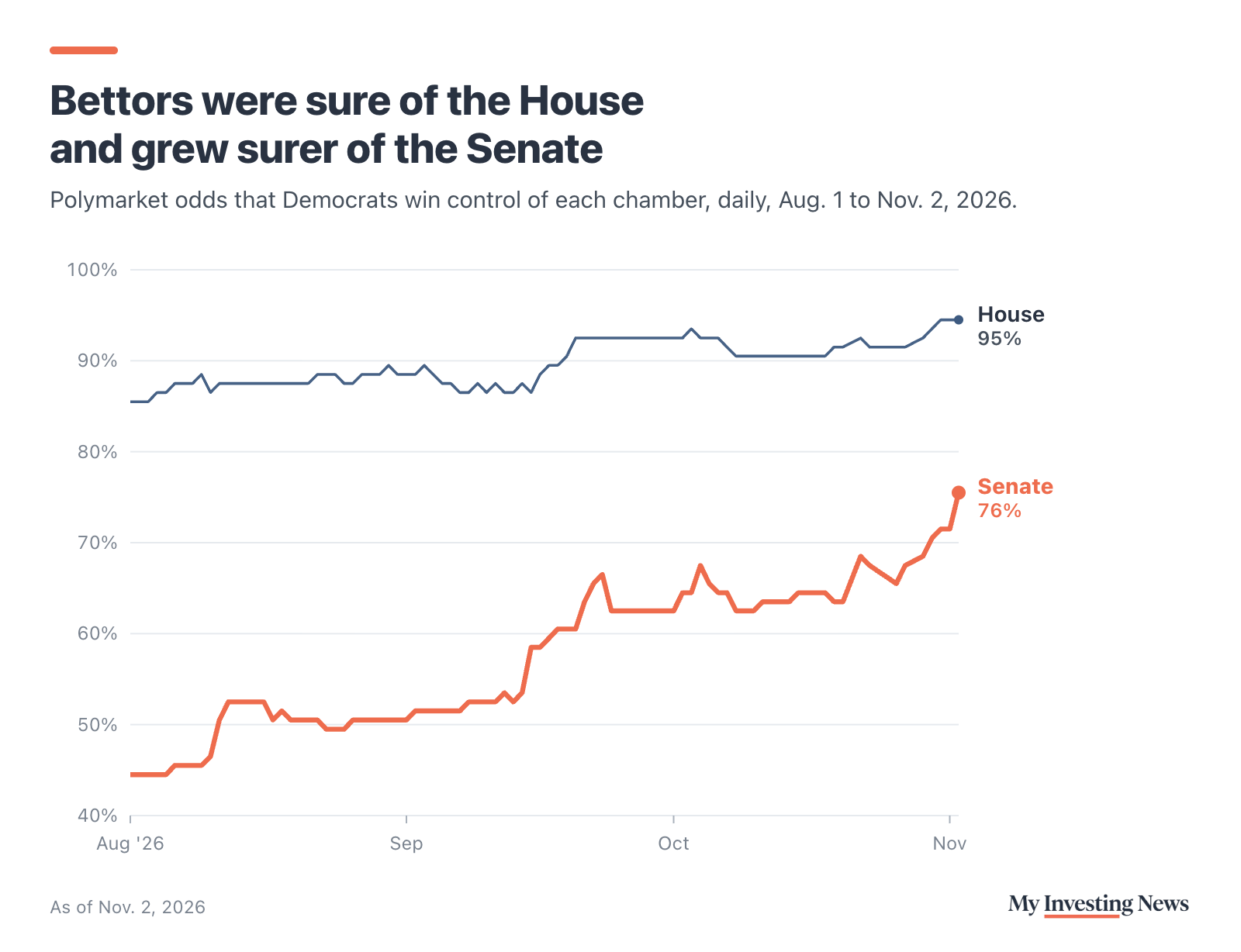
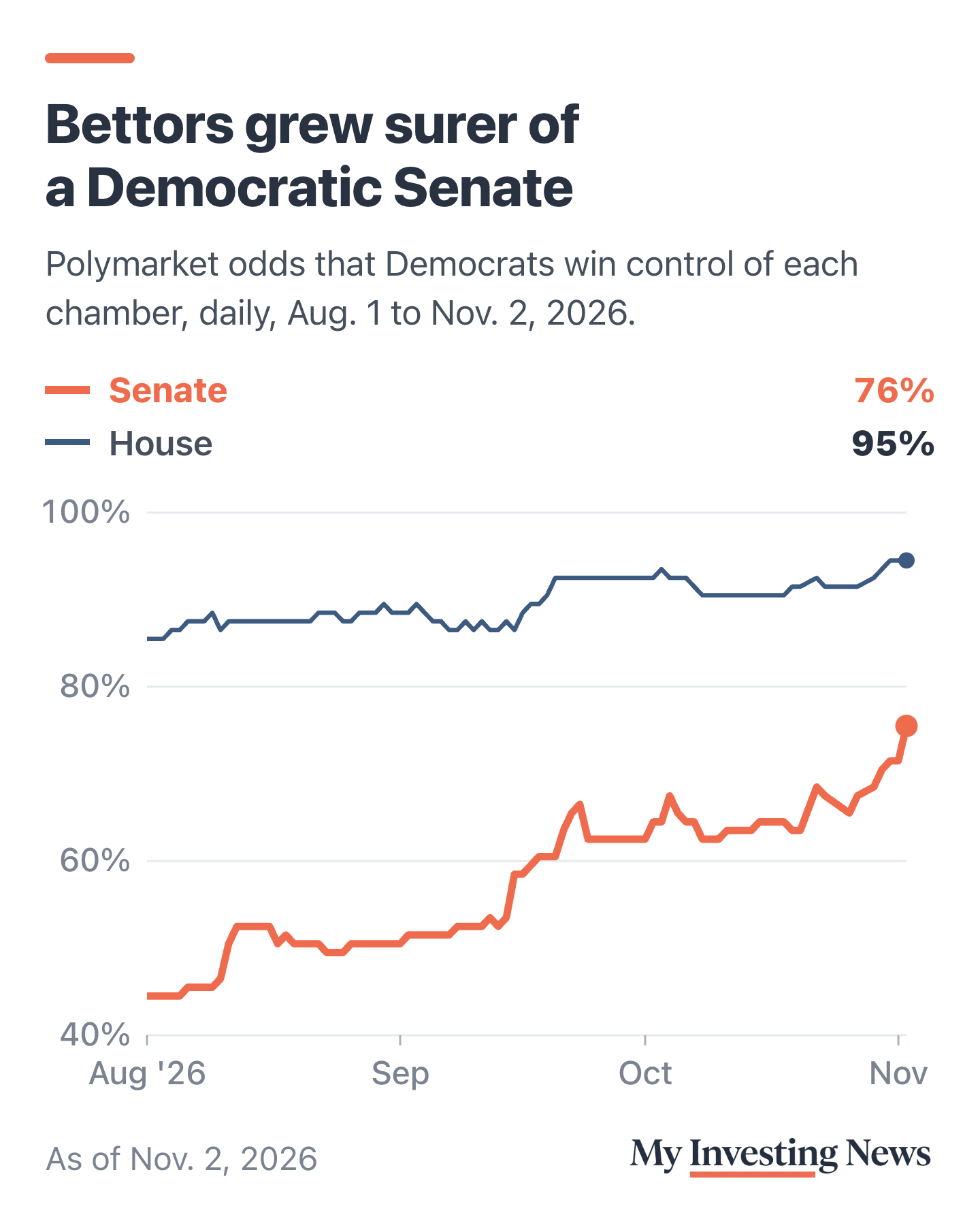
The market got there slowly. Democrats’ Senate odds were 44.5% on Aug. 1 and 75.5% on the eve of the vote. Around the time markets gave Republicans a 36% shot at the Senate, on Oct. 10, the middle of the seat-count betting was 48 Republican seats, and bettors gave 47 or fewer only 37%. By election morning the middle had moved down one seat, to 47. Republicans will finish one to three seats below that, depending on the two open races.
The House was never in much doubt for bettors, and the wave there was large as well. Before the vote, Bloomberg’s Josh Wingrove argued that a 2018-size swing would flip fewer House seats on today’s maps. As of Nov. 10, NBC News counted 43 House seats flipped to Democrats, with 17 races uncalled.
One caution on the scoring: the seat-count market is small. The lower-bracket event had traded about $1 million, against about $31 million on Senate control. Thin markets can carry stale prices, which is one reason the brackets summed to more than 100%.
What to Watch
Mississippi’s counties certify by Nov. 13, and Mississippi has no automatic recount. Alaska’s last ballots are due to be counted on Nov. 18, and ranked-choice tabulation could still move that race. If either seat goes Republican, the final count becomes 45 or 46, brackets bettors priced at 12% and 16%. Either way, the 47-plus outcomes that bettors favored are out.
Davis called a blue wave and said the polls behind the betting would underrate Democrats. Bettors got the direction right, with 77.5% odds on a Democratic Senate, but put 55.5% on Republican seat totals that are now out of reach. If the Mississippi and Alaska leads hold, the result is a 44-seat Republican Senate, an outcome the market priced at 7%.